Home Blog Page 193

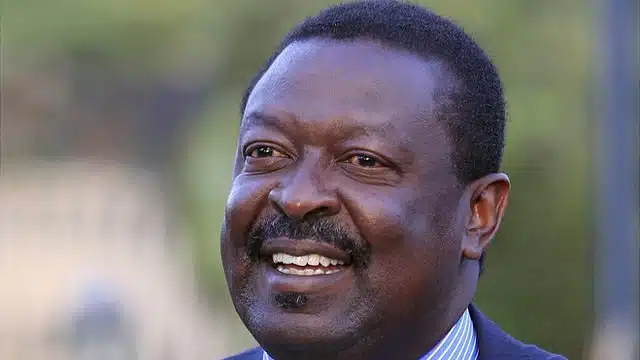
Mudavadi urges swift action on Peace Building Report

0

By OPCS Press Service in Nairobi.

Prime Cabinet Secretary Musalia Mudavadi has called for urgent implementation of the Peace Building Architecture Review Report. He emphasized the need for swift action to ensure lasting peace and stability across Kenya.

Mudavadi spoke during the report’s launch at the Kenyatta International Convention Centre in Nairobi. The event brought together key stakeholders, including government officials, international partners, and peace-building experts.

He noted that the report’s findings and recommendations provide a clear pathway to address the nation’s challenges in sustaining peace.

“The findings and recommendations from this review resonate with the challenges we face in sustaining and deepening peace in Kenya,” said Mudavadi.

Mudavadi also Cabinet Secretary for Interior and National Administration, highlighted the need to tackle modern threats to peace, especially in the digital space.

“This process will demonstrate our resolve to deal with the escalating digital threats to our peace, including fake news, online toxic content, and incitement,” he stated.

PCS tasked Principal Secretary Dr. Raymond Omollo with spearheading the implementation process. Mudavadi directed the formation of a broad-based team to ensure inclusivity and engagement from all sectors.

“The moment is here for us, individually and collectively, to articulate a new national agenda for peace and shared prosperity,” he added.

Mudavadi emphasized the government’s commitment to funding peace-building initiatives. Despite existing financial constraints, he assured that the government would allocate adequate resources to the process.

Let me reaffirm the government’s commitment to enhancing funding for this initiative, even as we appreciate the resource constraints we face,” said Mudavadi.

He also acknowledged the contributions of international partners, including the United Nations, Sweden, and Norway. Their technical and financial support has been instrumental in advancing Kenya’s peace agenda.

“Your support, including helping us establish a Peacebuilding Fund, will strengthen our journey toward a more peaceful country,” he noted.

Mudavadi stressed that implementing the report’s recommendations would be a critical step in demonstrating the government’s responsiveness to citizens’ voices.

The event brought together members of the National Steering Committee on Peace Building, representatives from international organizations, and other stakeholders.

The Peace Building Architecture Review Report is expected to guide Kenya’s efforts in fostering peace, stability, and shared prosperity for all its citizens.

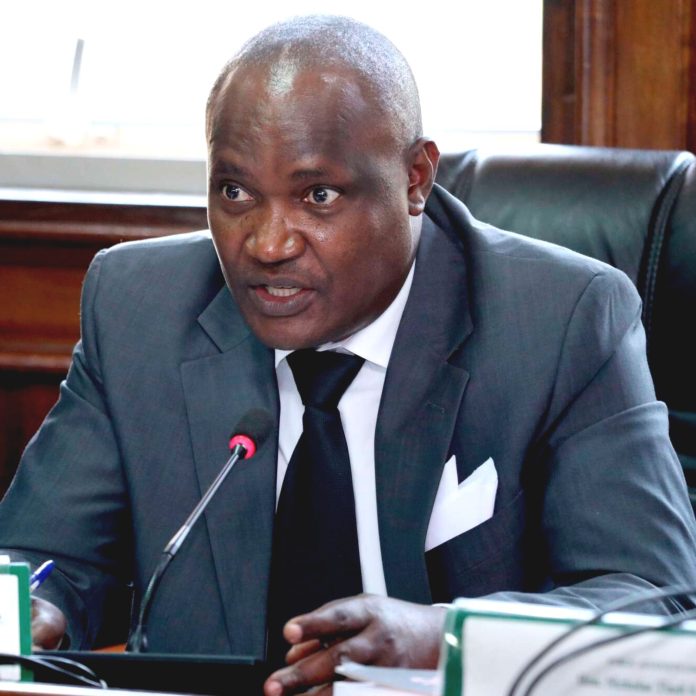
Mbadi pledges loyalty to Ruto andshowcases his achievements as CS

0


By Anderson Ojwang


President William Ruto seems to have harvested heavily in his
recent move to form a broad-based government with Orange
Democratic Movement (ODM).


The move to appoint top ODM leadership to his government is
paying off with ODM allied cabinet secretaries pledging loyalty to
him.


President Ruto’s charm to confidants of opposition leader Raila
Odinga is yielding fruits with a majority of them pledging loyalty to
him and are now his main defenders of his government, they
previously criticized.


Leading the loyalty pledge is the Cabinet Secretary for Treasury
and Economic Planning John Mbadi who has declared that he will
not betray President Ruto.
The President can give you any ministry but not the ministry of
finance. With the kind of confidence and risk Ruto took in
appointing me as the treasury cabinet secretary, it will be very
difficult for me to betray him,’
Mbadi said.


Mbadi has lately been in a campaign trail in most parts of Nyanza
selling President Ruto’s government agenda and pleading with the
residents to support the president.


Mbadi at a function in Ndhiwa sub-county in Homa Bay county
narrated and showcased his achievements in the Finance docket
within the last four months.

When I took over as the CS Ministry of Finance, there were
challenges in this country. These challenges were not as bad as
the time President Uhuru Kenyatta left office. Uhuru Kenyata left
when the budget deficit of the Republic of Kenya to GDP was at
8.1 percent.

As we speak we are reducing it to 4.3 percent and by
next year it will be 3.8 percent and by the time we will go to
elections in 2027, the budget deficit must be below 3 percent.
When I took over the shilling was volatile and it was exchanging
at a very high rate. There was a time this year when the shilling was
exchanged at Sh 160 to a dollar. Today, the shilling is exchanged
at sh 129 to a dollar.

When I took over the government of Kenya was borrowing at 15.5
percent. When Ruto took over, we were borrowing at 17 percent.
When I took over as CS under the leadership of President Ruto
we were borrowing at 15.5 percent. Today we are borrowing at 11
percent.
Today, our inflation is at 2.8 percent, another record.. We are
paying the salaries of public servants by the 5th of every month. I said I do
not want civil servants to be paid on the 18th of a new month. At worst
should be the 5th of the new month.
As we speak today, all counties I have given them money up to
November. There are no arrears for the counties, we released the
last one yesterday Sh 32.9 billion to the counties.

Constituency Development Fund (CDF) I promised to give them
Sh 5 billion, gave them Sh 7 billion two months ago
We are working with the president to make sure this economy
works. We are working with the cabinet to make sure this economy works.

We are hardworking, we are determined that things will get better.
Just give us an opportunity. I am not here to lie to Kenyans. Things
are not perfect but they are getting better. I know the middle class
have issues with their pay slips. The taxation, we want to
streamline Kenta Revenue Authority for a year so that we can
lower the Pay as you earn (P.A.Y.E),
” he narrated.


Other cabinet Secretaries Opiyo Wandayi, Hassan Joho and
Wycliff Oparanya have come out strongly to support the Ruto’s
administration.


They have been campaigning for President Ruto’s re-election in the
2027 with Mbadi and Wandayi pleading with the Luo community
to support the government and the president.

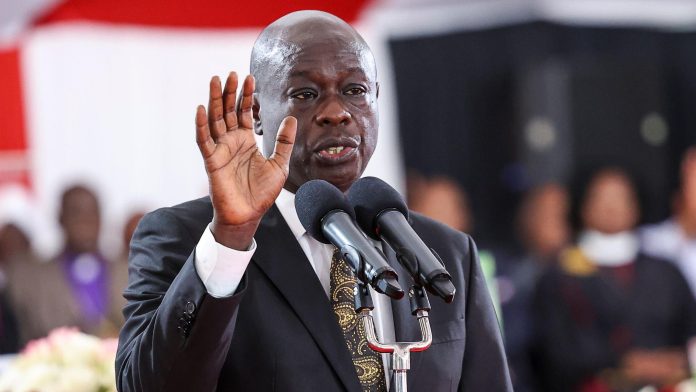
Rigathi out to fence off Murima from President Ruto’s clutches

0

By Anderson Ojwang


Impeached Deputy President Rigathi Gachagua has ungloved
for a battle with his former boss President William Ruto and has
embarked on a mission to fence the Murima from outsiders and
‘unwanted visitors’.


Rigathi could be reading from the old script of the first vice president
the late Jaramogi Oginga Odinga, who resigned from the
government of the founding President the late Mzee Jomo
Kenyatta.


Odinga fenced the Luo community from the Kenyatta
government, through attending funerals, church services,
wedding and various cultural events in the region to decampaign
against President Kenyatta’s regime.
The strategy was so effective that President Kenyatta and
subsequent regimes were viewed as anti-community, with
Nyanza suffering marginalization.


Odinga became the sole spokesperson in Nyanza and the mantle
has remained closely guarded by his family with his scion, Raila
Odinga, upstaging the then Ford-K vice chair and the heir
apparent James Orengo to the throne.
Currently, Rigathi is closely rewriting and reinventing the wheels
to lock out President Ruto from Murima handed him
Presidency in the 2022 general elections.

Rigathi led President Ruto’s brigades in Murima in the last
general elections to make the then-president Uhuru Kenyatta and
his candidate Raila Odinga to eat the humble pie.
Rigathi stood out during the campaigns to deconstruct President
Uhuru and his high voltage team in the Murina hand Ruto the
much-needed votes to cruise to the victory.
For instance, in Kirinyaga County, the home turf of Raila’s running
mate Martha Karua, Ruto got 84 percent of the votes accounting
for 220,752 votes while Raila got a paltry of14 percent
accounting for 37,978 of the votes.


In Kiambu County, the home ground of President Uhuru, Ruto
managed 72.9 percent of the votes amounting to 606,105 votes
while Raila only managed 25 percent accounting for 210,495
Again in Nyeri county, Rigathi’s village, Ruto received 82.79
percent of the votes amounting to 272,577 of the votes while
Raila got 15.3 percent accounting for 52,043 votes.


Finally, in Muranga Ruto got 81 percent of the votes accounting
for 343,421 while Raila got a paltry 17 percent which accounted
for 73,539 votes.


Using Odinga’s script, Rigathi has resorted to churches, funerals,
vernacular radio and TV stations in the Murima to whip the
residents to his new political ideology.


Rigathi is also employing the power of social media platforms to
reach the various political divides in his Murima.
Just like Odinga who ventured into Dholuo as the language of the
communication, Rigathi more often than not uses the Gikuyu
dialect to appeal to the people.


The local languages have coded messages and signals that are
best understood by the users of the language and this has a much better, safer and shrewd way of communicating and alienating the opponents from the discourse.
Rigathi in his recent speeches in the church and other functions
has promised to restore the dignity of Mt Kenya after he claimed
the Limuru funeral was aimed at killing him.


“We are planning, within a short time, we will reclaim back our
pride and dignity as a people.

It is true what you are saying the mountain is angry. It is not just
angry it is very angry. Why the mountain is very angry, is because it
is a betrayal.
We will plan as a community and within a short time we will
reclaim back our pride and dignity as a people
,’ he said.


But former Nairobi Governor Ann Kananu who spoke on the local
vernacular FM station, Getu said “ I salute President Ruto for
appointing Prof Kindiki Kithure as deputy president and fostering
unity in the country. Gachagua should understand that when he
says “ the mountain the has been shaken “ he is not the
mountain. We do not want to divide the mountain. Let us not mix
politics with business and church matters”.


Kakamega Deputy Governor Ayub Savula in a recent TV interview
with KTN argued that the inclusion of former President Uhuru
Kenyatta in Ruto’s agenda will help the latter reclaim a huge stake
in the mountain.


“Uhuru holds a huge political constituency in Mt Kenya and the
decision by President Ruto to bring him into the fold is telling.
Rigathi will soon be rendered politically irrelevant by next year,”

he said.
On November 2, 2024, when he spoke during a funeral service of
Anna Wanjiru, grandmother of Baragwi mca David Mathenge, Rigathi said there was anxiety and confusion in the region after he was impeached.


” I am not quitting politics, my political ambition is unstoppable
and I ask my people who feel as if they have been left without a
leader to be patient. I will soon show them the political route to
follow;
Let my supporters prepare for the next elections with the
events of 2024 in mind. Religious leaders, residents and
professionals have been calling on me saying the region has
been left without a spokesperson. They want me to declare my
political stand. I want to tell them I am holding discussions with
opinion leaders and I will give them a clear direction at the right
time.
I will show you the way forward. I want our people not to fear at
all. God is faithful and can’t be defeated,”
he said.


Wiper leader Kalonzo Musyoka, who is angling to benefit from the
fall out in the Murima, claimed former President Uhuru will not
support Ruto’s second bid.


The question that begs an answer is whether Rigathi will be able
to fence off Murima from Ruto after his mtego failed him
disappointingly to snare Raila from State House or will Rigathi finally walk to Murima to the opposition to claim the seat that the lake has occupied for the past five decades?

Tournaments have nothing to show in terms of development.

0

By Gabriel Riako

For decades, end-of-year tournaments have been a fixture in local sports calendars, drawing large crowds and generating excitement.

However, beneath the surface, this model is deeply flawed and does little to foster sustainable talent development. The practice of assembling teams from different villages, often made up of players in their 30s and 40s, undermines the very essence of nurturing young athletes. Instead, it focuses on winning short-term prizes, leaving no meaningful legacy.

This begs the question: How does recruiting mature players for hastily assembled teams contribute to talent development?

The answer is simple, it doesn’t. If we are serious about sports as a vehicle for growth and empowerment, we need to shift our approach entirely.

Addressing the Infrastructure Gap

One of the biggest hurdles to this vision is the current state of infrastructure. Many of the existing sports facilities are dilapidated and unsafe, more akin to death traps than centres of excellence. To realize this dream, there must be substantial investment in modern, safe facilities, including well-maintained fields, gyms, and training equipment.

Mobilizing the Community

This vision cannot be achieved in isolation. It will require buy-in from the entire community—leaders, businesses, and international partners. Local businesses could sponsor teams and events, while government and non-governmental organizations could provide funding and resources. Community members can also play a role by volunteering time or raising funds to support the initiative.

Creating a Talent Pipeline

Sports academies would not only focus on training but also provide pathways for athletes to progress.

Local leagues could be established to ensure consistent competition and exposure. Partnerships with professional clubs and scouts could open doors for exceptional talent to rise to the national and international stage.

The Road Ahead

To turn village tournaments into centres of talent and culture, a shift in mindset is essential. The focus must move away from one-off tournaments that yield little value and toward a structured, sustainable approach. It will take time, effort, and resources, but the potential rewards, a thriving community, empowered youth, and a legacy of excellence, are worth it.

The question is no longer whether we can afford to invest in such a vision, but whether we can afford not to.

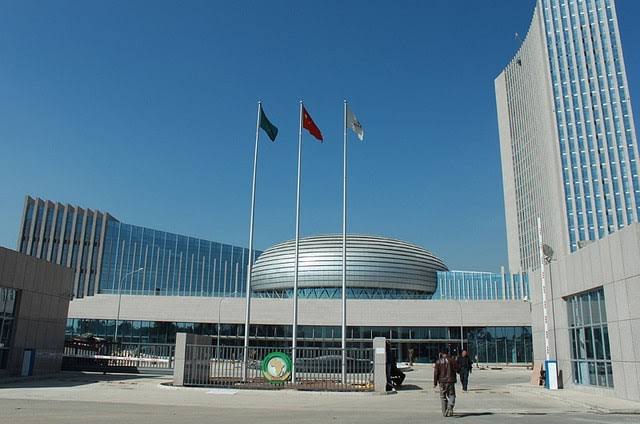
ECOSOCC: African Union’s highest policy-making organ gets new leadership amid favouritism claims.

0

By Barack Oduor

The African Union’s Economic, Social and Cultural Council (ECOSOCC) convened the Second Ordinary Session of its fourth Permanent General Assembly (PGA) in Nairobi on Friday, during which it chose new members in the wake of disgruntlement.

The ECOSOCC, through its General Assembly, is considered the highest decision and policy-making body of ECOSOCC. It is composed of two Civil Society organisations from each African Union Member State, ten Civil society organisations operating at the regional level and eight at the continental level, provisions are also made for twenty Civil Society Organisations representing the African Diaspora as defined by the Executive Council.

The election comes at a time when the leadership of the African Union and ECOSOCC faces a barrage of criticism over favouritism and the use of underhand tactics to deal with critics within it could face fresh challenges.

According to a statement released by the organisation and obtained by The Western Insight, the members of the General Assembly elected an office comprising the Presiding Officer (PO), Deputy Presiding Officers and chairs of sectoral cluster committees. Louis Cheick Sissoko of Mali was elected as the Presiding Officer while several candidates got elected as deputy presiding officers and chairpersons of sectoral cluster committees respectively.

Those elected also officially took the Oath of Office on the occasion. The Disciplinary Committee is composed of one ex-General Assembly member from each of the five regions.

In his speech, Presiding officer-elect, Sissoko expressed his gratitude for being elected and shared his vision for his tenure to focus on three strategic axes: strengthening impact within the African Union and internationally, optimizing internal functioning, and mobilizing resources through innovative financing strategies.

“For two years, marked by pressing challenges and renewed hopes, we have collectively established ECOSOCC as a true lighthouse of resilience and a sanctuary of participatory governance,” he concluded.

The Western Insight sought clarification from Head of Secretariat William Carew on why individuals from countries suspended from the African Union got elected into the body. In his reply that was guided by the ECOSOCC legal team, he claimed that ECOSOCC is an advisory organ made up of civil society organizations (CSOs) and not representatives of AU Member States or governments.

This distinction is fundamental to understanding the election process and the eligibility of candidates. Individuals from CSOs based in AU-suspended countries, such as Mali and Niger, can indeed be elected to ECOSOCC structures, including ECOSOCC leadership,” said William.

A section of those opposed to the inner workings of ECOSOCC argues that the body practices double standards as it had in the past suspended a Sudanese from vying with claims that his country was suspended from AU membership.

The election of candidates from AU-suspended countries shows clear double standards in the leadership and working of ECOSOCC. It should then explain why they suspended a Sudanese and a Sierra Leonean candidate from the body and from contesting respectively,” claimed a source who spoke on the condition of anonymity.

The explanation of the ECOSOCC secretariat is that according to rules governing it, eligibility for membership is determined by the accreditation and selection process of CSOs, and not by the political status of their home country’s government.

The election process for ECOSOCC structures is governed by its own statutes and rules, which are distinct from elections within the AU’s intergovernmental processes.”

In 2022, divisions rocked the body when AU suspended some members from ECOSOCC. Two Nigerians, Tunji Asaolu and John Oba, were part of the seven members who were suspended indefinitely for alleged misconduct.

Others include Abozer Elligai Elmana (Sudanese), Abdurrahman Mokhtar (Libyan), Roll Stephane Ngomat (Gabonese), El Hacene Abdallah Bah Mbareck (Mauritanian), and Shem Ochuodho (Kenyan).

According to a statement issued by the AU, a report by a probe panel set up to investigate allegations against the seven persons made “findings of misconduct/infringement of AU legal norms (violation of Rule 8 of the Rules of Procedure of ECOSOCC and provisions of the AU Code of Ethics and Conduct).”

The matter of the suspended matters has been in court with at some point counsels representing the outgoing AU Chairman Moussa Faki failing several times to appear in Nairobi.

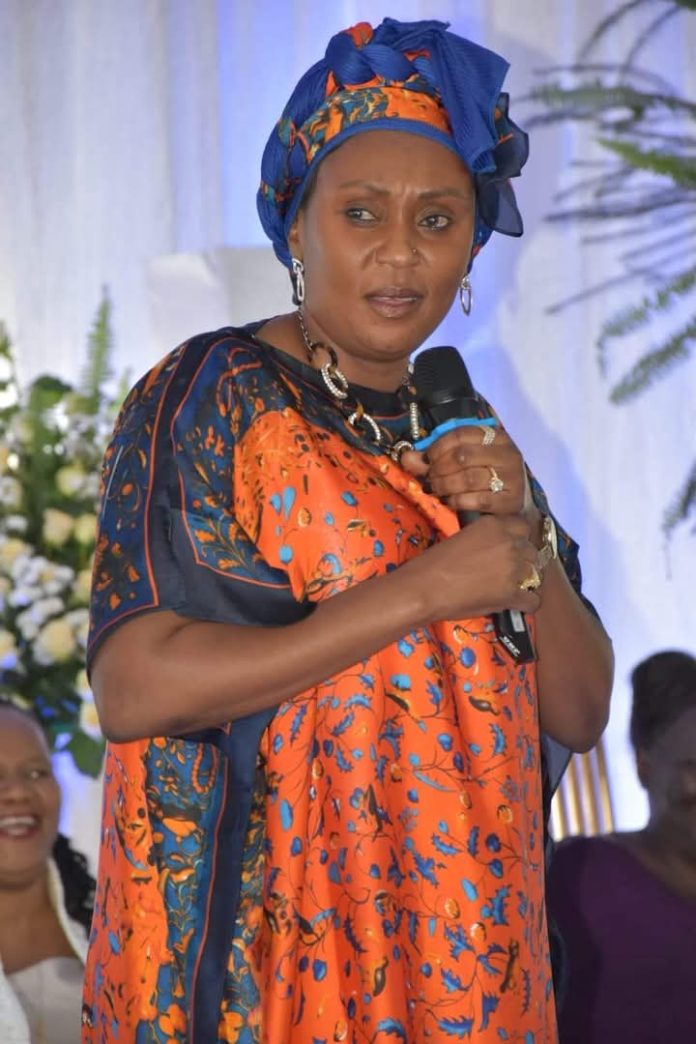
Migori Woman Representative sacks driver over allegation of indecent behaviour

0

By Erick Otieno

The Migori County Woman Representative, Hon. Fatuma Mohammed, has terminated the employment of her official driver following allegations of gross misconduct involving an unlawful act.

In a formal statement, Hon. Fatuma announced the immediate dismissal of the driver, unidentified as his name was withheld for legal reasons, citing his alleged involvement in inappropriate conduct with an underage girl.

The Woman Representative described the allegations as a “grave and utterly unacceptable violation of ethical and moral standards” expected of anyone holding such a position.

“It has come to my attention that the driver whose name is withheld engaged in highly inappropriate conduct with an underage girl, which raises significant legal and reputational concerns.

Such actions reflect an utter disregard for the dignity and integrity required of all my employees,” said Hon. Fatuma in her letter.

Attempts to get a comment from the sacked employee were unsuccessful as he did not answer the calls.

The Woman Representative emphasized that the decision to sever ties was taken after thoroughly considering the facts surrounding the incident.

Given the gravity of the actions and the irreversible damage caused, I have no alternative but to sever all professional ties with the driver, effective immediately,” the letter stated.

She further directed the driver to return any office property and clear any outstanding formalities in relation to his employment. His final entitlements, according to the statement, will be processed in line with his contract and prevailing legal regulations.

Hon. Fatuma underscored her commitment to upholding professionalism, respect, and accountability within her team. “The need to maintain the highest standards of conduct has left me with no choice but to take this action,” she added.

The dismissal of the driver serves as a stern message on the importance of ethical behavior and legal compliance, especially for individuals entrusted with positions of responsibility.

The incident has sparked concerns over the conduct of public office staff and the measures in place to prevent such violations. Authorities are expected to look into the allegations further, ensuring justice for the aggrieved party.

She said the matter has been referred to police for investigation and possible prosecution of the suspect

A village in Kochia collects sh 3.3M for 600 vulnerable students to avoid school dropout

0

By Reporter

A village in Kochia ward, Rangwe constituency has come up with an initiative to fight school dropout among students faced with financial challenges.

The residents of Kowili Location initiated the programme by raising funds to support the education of students whose parents are financially vulnerable.

Through the Kowili Education Recovery Foundation, the residents are undertaking the programme by collecting money from individual clan members.

In the initiative, every clan in the area contributes money. Then money is pooled and shared out among the beneficiaries.

Upon completion of the collection, the committee assigns every clan through the assistance of clan and village elders to select the neediest students from every village.

When the clans have held their meetings in villages, the names of the selected students are submitted to the committee which finally awards bursary cheques to the selected students.

The beneficiaries are students who learn in secondary schools, tertiary colleges and universities.

Chairman Kennedy Ogindo and Organizing Secretary Edward Odhiambo said they had collected Sh3.3million. The money will be distributed to about 600 students when term one kicks off.

“Kowili Education Recovery works closely with clan elders to identify needy students. We have delegated the role of selecting the students to villagers because they know one another well,” Ogindo said.

Speaking to journalists at Ligisa Secondary School in Kochia ward, the officials emphasized that the selection of the vulnerable children is done by villagers themselves to ensure only the deserving students benefit.

The selection method enhances transparency.

On Sunday, Odhiambo said, “The money is distributed to the students based on their vulnerability.”

We focus on the level of vulnerability of the selected students to determine the amount of money given. The distribution of money is done transparently,” Odhiambo said.

He said the initiative is aimed at promoting education and ensuring that Kowili has productive people in future.

Kajwang Nyadundo, a village elder, and Sarah Ong’ondo said they are collaborating with assistant chiefs in the area for the success of the programme.

“We secure letters from assistant chiefs allowing us to spread the message on the programme. The government officials know the economic status of each family,” Ong’ondo said.

Vitalis Oganda, a parent, said the programme will transform the area through education.

“Orphan students cannot acquire education because they lack fees. But this programme will enable many vulnerable students to continue with education,” Oganda said.

The informal settlements are in need of improvement, no doubt.

0

By Atieno Otieno.

Chief officer Public Communication and Governor spokesperson.

Governor Gladys Wanga, through the Kenya Informal Settlements Improvement Programme II [KISIP II], is spearheading infrastructural projects in Shauri Yako, Makongeni, and Sofia settlements.

These projects include road works, street lights, drainage systems, market infrastructure, recreational facilities, and sanitation facilities. These developments aim to attract modern housing infrastructure and pave the way for gentrification in these areas, enticing investors to build modern housing units.

Additionally, the municipality, in collaboration with Akiba Mashinani Trust, is developing a People’s Adaptation Local Physical and Land Use Development Plan for Homa Bay. This plan will not only establish a planning and development control framework but also address the unique needs of informal settlements within the municipality. The ongoing profiling exercise is a crucial step in this process.

We’re focused on making Homa Bay a city.

Homa Bay town with endless potential of mabati structures as demand for modern housing knocks

0

By Anderson Ojwang.

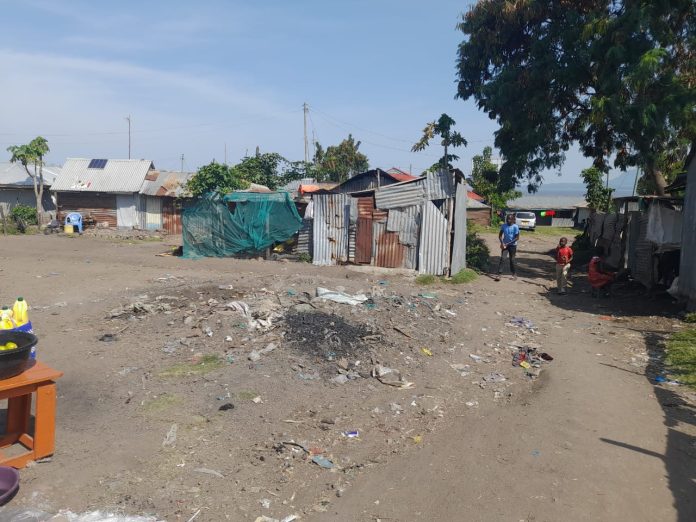
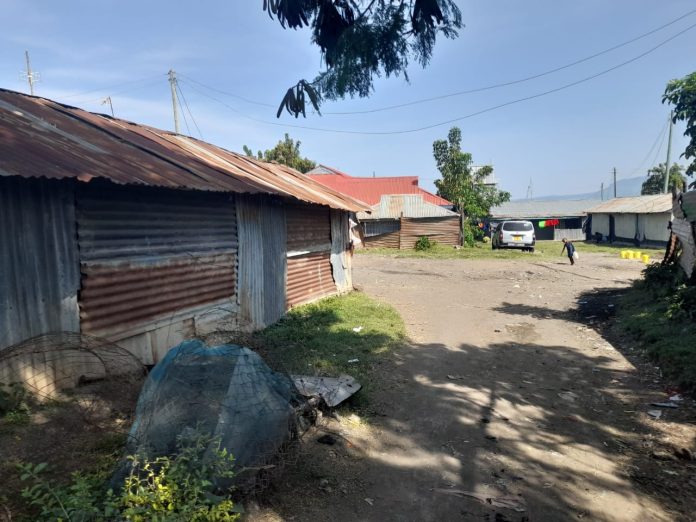
From any direction you drive into Homa Bay Town, either from Kendu Bay to Homa Bay or from Migori to Homa Bay and from  Rangwe to Homa Bay, one will be greeted by the site of derelict, rickety, delipidated and crumbling Mabati structures. 

Driving into the town centre, the sight of dusty, rusty and laughing mabati structures become more prominent and it becomes very difficult for the first-time visitor to the county of endless potential to know the actual and exact town centre.

Homa Bay the county of endless potential can be viewed as the only town in Kenya with the highest number of estates with Mabati structures as demand for modern houses knocks.

Out of the 12 estates in Homa Bay town, only three have modern housing facilities while the rest are made up of mabati structures.

A glimpse of hope for modern housing facilities in the town has been provided by the Government’s affordable housing program which has 200 houses that are ready for occupation and a further plan to build another 1000 houses, which is still way below the demand, a drop in the ocean.

Once the headquarters of the greater Southern Nyanza that included Migori, Kisii and Nyamira, Homa Bay has remained in slumber as the three counties witness real estate boom and development.

Kisii, Nyamira and Migori counties have witnessed heavy investments in real estate in residential and commercial with modern housing facilities and skyscraper offices and hotels in the region.

For Homa Bay, more Mabati structures have continued to mushroom with the demand for houses by university students, the business community and civil servants.

The following estates in Homa Bay boast of modern housing facilities and include Site, Arunda and Alendu while  Shauri Yako, Sofia, Makongeni, Misita, Junction Kodoyo, and Kapita are all mabati structures.

Recently, Homa Bay Governor Gladys Wanga requested President William Ruto to make the town the next city as it had adequate facilities to be a city.

And President Ruto promised that he would make Homa Bay town one of the cities. Currently, Kenya has five cities namely, Nairobi, Mombasa, Kisumu, Nakuru and Eldoret.

“We are planning to make Homa Bay a city and I will ensure it is done,” he said.

Requirements for a town to acquire city status include:

For a town to be granted city status, the Senate Committee on Devolution and Intergovernmental Relations is required to approve.

According to the Urban Areas and Cities (Amendment) Act, 2019, to classify a town as a city, it must have a population of at least 250,000 residents in line with the final gazetted results of the last population census.

The town is also required to have the capacity to effectively deliver essential services to its residents and must actively engage them in the management of its affairs.

Other requirements include proper infrastructure including roads, street lighting and markets. Disaster management should also be prioritized.

Additionally, a town must also have an effective waste disposal system to become a city.

However, as it stands, Homa Bay does not meet some of these requirements.

Plans by the government, including development projects, could however enable the region to meet the qualifications for elevation to city status.

Governor Gladys Wanga, who hosted the Head of State, is on record saying her administration will make Homa Bay a city in 10 years. She said she wants to go down in history books as the county boss who led Homa Bay to new heights.

According to University don Eng Lawrence Gumbe, there is an urgent need to plan the town properly and that the plans are implemented to spur growth and development in the town.

‘As a child growing up in Kisumu, my father was in charge of housing in the city. I witnessed how they planned and developed housing, parks, social halls and other infrastructure. I saw estates including Ondiek, Makasembo, Arina, Arguing’s Kodhek, and Tom Mboya being developed and occupied.

Later, as a member of the Kisumu city board and chair of the planning and infrastructure committee says, “We developed pertinent plans and oversight construction. This is the route the county government of Homa Bay must take to change the image and development of the town” he says.

A planner and University don Prof G Nyotumba says town development is need-based and on demand as they say begets supply.

“ For spectacular real estate development to occur in Homa Bay, it must be as a result of the demand.  That kind of transformation is referred to as gentrification. It is already happening in Homa Bay albeit at a slow pace.” he argues.

However, Nyotumba says certain things must be done and put in place to spur the growth and boom in the real estate in Homa Bay town.

The county government must strictly enforce physical planning handbook guidelines, work on walkability which involves tarmacking, paving drainage, sun-shielding canopies and encourage economic activities within the town that attract both residential and commercial tenants thus pushing up the demand for decent permanent buildings.

“The county government should encourage the residents to pool resources for real estate development unlike currently where it is generally undertaken by sole individuals,’ he argues.

Nyotumba says there is a need for the provision of adequate quality services for residents like electricity, water and sewerage, efficient public transport, affordable and dependable health services, security and financial services.

Former Chief Principal Mr. Paul Otula says the county government could be losing hundreds of thousands of shillings inform revenues in construction and fees payable to the county government.

“Its unfortunate that most of the estates in the town are mabati structures this makes the town as one with the lowest returns in terms of rent income and this is not good for investors,” he says.

Otula argues that mabati structures make the town more of an informal settlement and slums and this negates development and investment.

A resident Mr. Benard Obop says that currently there is a housing crisis in Homa Bay and developers have opted to construct mabati structures to meet the demand.

“It is high time, the county government stopped construction of mabati structures and gave a guideline on what kind buildings to put up in the town” he argues.

PS Omolo challenges youths to exploit sports talent for economic empowerment

0
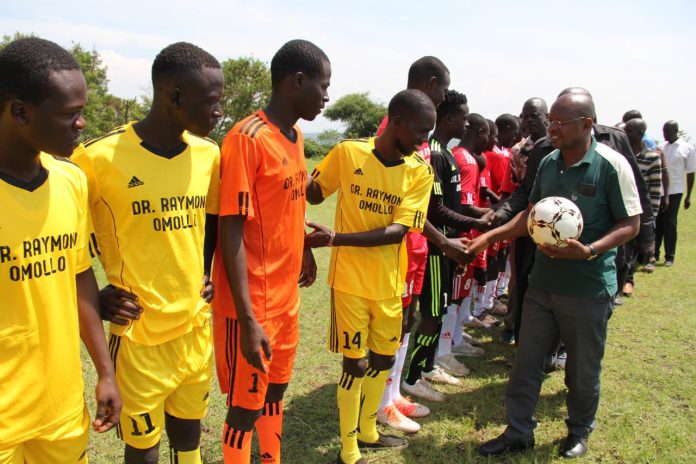
interior PS Raymond Omollo representative Michael Odari greets players at Wachara Karungu in Nyatike, Migori county

By Reporter

Internal security Permanent Secretary Dr Raymond Omolo has challenged youths to exploit sports talent for economic empowerment.

Omolo asked the youths to involve in sport tournaments to enhance the fight against teen pregnancies and HIV infections.

Omollo is supporting such sporting activities during this December long holiday for the youths to eradicate drug abuse and HIV infections.

Omolo wants to make the target group busy and refrain from engaging in social ills.

Through his representative and coordinator of the activities Michael Odari said sports tournaments was one of the activities they want to reduce idleness associated with people who indulge in drug abuse.

According to this year’s report by the National Syndemic Disease Control Council (NSDCC), Nyanza counties such as Homa Bay, Kisumu, Siaya and Migori lead in HIV prevalence.

It is reported that the high prevalence is attributed to the social behavior of the people living in the beaches.

National government through the National Authority for Campaign against Alcohol and Drug Abuse (NACADA) is also undertaking its awareness campaign across Nyanza region during the holiday.

“The sporting activities we promote among the youths and adolescents will enable them to avoid idleness. We’re keeping at bay the social ills the children can indulge in because they idle,” Odari said.

Speaking on Friday when he donated football kits to Wachara Karungu and Uloya football clubs at Wachara Karungu primary school in Nyatike constituency, Migori County, Odari said the program is also meant to nurture talents of the youth.

In the program, they are giving out jerseys, footballs, captain tags, goal posts among others.

More than 30 football clubs across the four Nyanza counties have benefited.

“The focus is also on talent development among the youths. Some talented footballers have been exposed and will be linked to major football clubs in the country,” he added.

Wachara football team manager Boaz Okech and his Uloya counterpart Joseph Okumu argued that provision of the kits will motivate the youths in the area.

He said business activities will also thrive during football games.

“We have people who will just be attracted by the new football jerseys the clubs have received. Many youths will come and watch games as these reduce idleness,” Okech said.

Okumu reiterated the significance of such football games in the fishing community. He said they are also in support of the ban of disco matanga during the December holiday.

“Let parents be vigilant and monitor their children during the long December holiday. They should also encourage their children to engage in sports to avoid idleness,” he said.