Home Blog Page 194

Social Health Insurance: The Case Against Funding Private Healthcare with Public Resources

0
Junior Secondary Schools
By Billy Mijungu

The use of Social Health Insurance Fund (SHIF) to finance private healthcare has become a contentious issue, raising questions about the proper allocation of public resources. While private healthcare can complement public systems by offering specialized services, the continued and significant funding of private health facilities with public money poses fundamental contradictions. Other essential sectors, like education, agriculture, housing, and infrastructure, do not receive public funds in the same manner. This brings us to a critical discussion: why should social health insurance exclusively fund public health ventures rather than extending those resources to private healthcare?

  1. A Broader Perspective: Public vs. Private Sectors
    Public Resources in Other Sectors
    In many areas of public service, the government ensures equitable access by investing exclusively in public institutions:

Education: Public money primarily goes toward funding public schools, ensuring that all children have access to basic education. Private schools, even though they cater to a section of society, do not typically receive direct public funding. They rely on tuition and private contributions, not government subsidies.
Agriculture: Public resources support state-run agricultural programs or cooperatives designed to uplift the broader community. Private farms or agribusinesses usually rely on their own resources or private financing.
Housing: Government funding is used for public housing projects to provide affordable housing to lower-income populations. Private developers, while essential to the real estate sector, operate without direct public funding.
Infrastructure: Governments build public roads, railways, and public transport systems to serve society at large. Private roads, tolls, and transportation services are typically funded by private investors.
Private Healthcare: The Outlier
Yet, despite the precedent set in these other sectors, private healthcare providers are often the beneficiaries of public resources through Social Health Insurance. This creates a stark contrast: while other private entities must survive through self-financing or private investment, private healthcare facilities are consistently supported by public funds meant to serve public interest.

  1. Why Public Funding for Private Healthcare Is Problematic
    A. Misallocation of Public Resources
    Social Health Insurance is meant to ensure that all citizens have access to healthcare, but when those funds are directed toward private hospitals and clinics, they are often diverted away from public facilities that serve the vast majority of the population. This misallocation:

Favors wealthier individuals who can afford private care, leaving vulnerable populations reliant on underfunded public hospitals.
Exacerbates inequalities by providing financial backing to private providers, which can charge higher fees, undermining the principle of universal, equitable access to healthcare.
If public schools or public infrastructure were neglected in favor of funding private counterparts, there would be a public outcry—and rightly so. The same scrutiny must be applied to healthcare. If social health insurance can serve private healthcare, why not private schools or private roads? The inconsistency in these policies highlights the unjustifiable favoritism toward private healthcare.

B. Profit vs. Public Service
Public healthcare facilities are designed to serve public interest, while private healthcare operates on a for-profit basis. Using public money to support private healthcare ventures introduces a conflict of interest. Private providers, though offering essential services, often prioritize profit margins over broad public health outcomes, leading to:

Higher costs of care, which in turn inflate the expenses covered by social health insurance, straining the system.
Selective treatment of patients, where private providers may opt for more lucrative cases while avoiding complex or expensive treatments that would impact their profitability.
In contrast, public healthcare facilities operate on a non-profit basis, ensuring that every citizen has access to healthcare regardless of their financial situation. Public funds should remain focused on enhancing public service, not enriching private enterprises.

  1. A Focus on Public Ventures: Ensuring Sustainable Development
    A. Universal Access and Equity
    When public resources are directed solely toward public healthcare, they ensure that all citizens, especially the poor and marginalized, have equal access to quality health services. Public schools, for example, are open to all, providing an inclusive education system. Similarly, public healthcare should be strengthened by social health insurance to serve all citizens equally, ensuring that no one is left behind in accessing critical healthcare.

Private healthcare, like private schools, is an option for those who can afford it, but public resources should focus on universal, non-discriminatory access. By exclusively funding public ventures, governments can ensure that public healthcare systems are well-resourced, well-staffed, and capable of serving everyone.

B. Public Accountability and Sustainability
Public institutions are accountable to the public through government oversight, audits, and regulations. Private healthcare facilities, however, operate with less public transparency, meaning that public funds allocated to them may not always be used efficiently or in the best interest of citizens. By restricting social health insurance to public ventures, we ensure that the allocation of funds is transparent, justifiable, and traceable, bolstering public trust in the system.

In sectors like education, housing, and infrastructure, public funding is tightly controlled and directed toward public institutions that are transparent in their use of resources. The same should hold true in healthcare.

  1. Preventing the Commercialization of Essential Services
    Healthcare is a public good, not a commodity to be traded for profit. When public resources are used to fund private healthcare facilities, it commodifies healthcare, shifting focus from care to profit. This privatization trend threatens to turn essential services into products accessible only to those who can pay, leaving public institutions underfunded and overstretched.

If public resources were similarly allocated to private schools or private housing, it would lead to an over-commercialization of essential services, further widening inequalities. Public funds should be directed toward public goods, ensuring that basic needs are met for every citizen without creating barriers to access based on financial means.

  1. Encouraging Private Investment Without Public Dependency
    There is a clear role for private healthcare in complementing public systems, particularly in offering specialized services. However, like private schools or private infrastructure projects, they should be funded through private investment rather than relying on public resources. Public-private partnerships can exist without undermining the public health system, ensuring that private providers add value without drawing essential funds away from public services.

Conclusion: Public Resources for Public Good
The essence of social health insurance is to create a system where healthcare is accessible to all, without barriers of cost or inequality. By exclusively funding public health ventures, we can ensure that public resources are used effectively to serve the common good. Just as we do not fund private schools, private roads, or private housing with public money, we must ensure that private healthcare remains self-sustaining while public healthcare receives the investment it needs to thrive.

This approach promotes equity, transparency, and sustainability, ensuring that public funds are used where they will have the greatest positive impact on society.
MP Fatuma Mohamed launches factory for Reusable Pads and Uniforms for Vulnerable Students in Migori

0
Fatuma Mohamed
By Erick Otieno

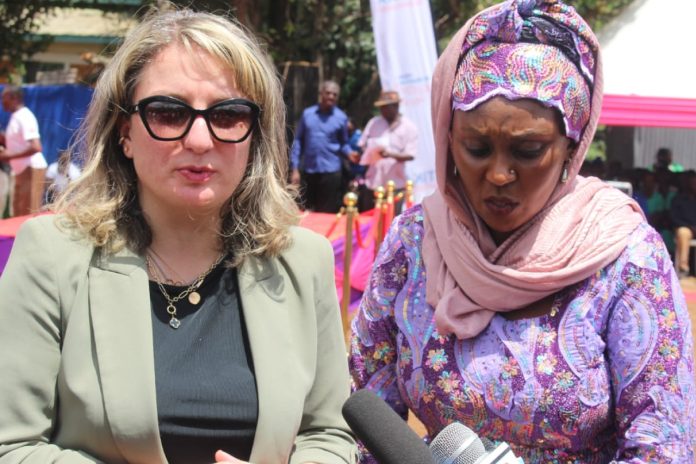
Migori County Woman Representative, Fatuma Mohamed, through her Fatuma Fullnetwork Foundation, in collaboration with the Turkish government agency TIKA (Turkish Cooperation and Coordination Agency), has launched a factory dedicated to producing reusable sanitary pads and school uniforms for vulnerable pupils and students in Migori County.

Speaking at the event, Fatuma expressed her gratitude to the Turkish government for their unwavering support since her election as the Migori County MP.

 She highlighted the various projects TIKA has helped implement in the county, including the sinking of water boreholes in several regions.

“The reusable sanitary pads produced by this factory, when used properly, can last for up to six years,” Hon. Fatuma noted. 

She explained that she initiated the project due to the challenges faced by students, stating that since her election, the Kenyan government has only distributed pads twice. 

She also added that the factory has already employed sixty people directly, providing a significant boost to the local economy.

Ms. Aspen, TIKA’s Country Director for Kenya, also addressed the media, emphasizing that the agency was partnering with other counties, including Makueni and Eldoret, to roll out similar projects aimed at improving access to basic needs.

TIKA is a Turkish government agency tasked with implementing development cooperation projects across various countries, including Kenya. The agency focuses on sectors such as education, health, agriculture, infrastructure, and social development.

Other dignitaries who graced the event included Dr. Ida Odinga, Migori First Lady Dr. Agnes Ayacko, and the CEO of the National Government Affirmative Action Fund (NGAAF), among other key stakeholders.

Jinx: Jaramogi’s Oginga’s resignation precedent that shapes the country’s political terrain

0
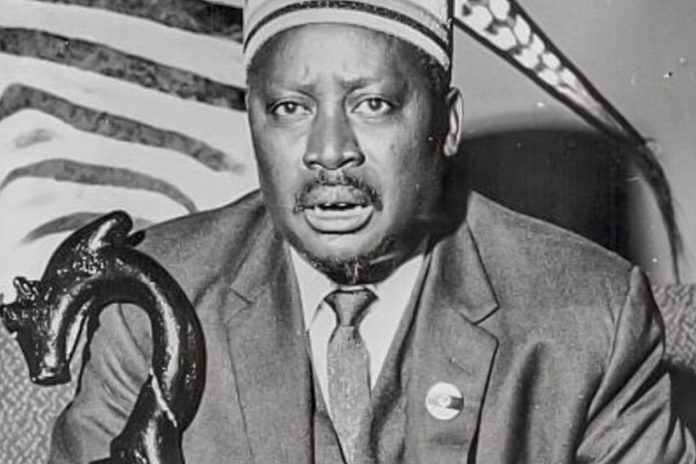
Jaramogi
By Anderson Ojwang  

Fifty-eight years ago, Kenya’s first Vice President, the late Jaramogi Oginga Odinga set a precedent by digging a political pit that has turned out as graveyard for successive politicians who have walked in his path.

The decision by Oginga has continued to shape the country’s political landscape and left high-profile politicians in the obituary.

Currently, the country is witnessing a falling out in President William Ruto’s government where his deputy Rigathi Gachagua is facing an impeachment in the national assembly, a replica of 1966.

On April 14, 1966, Oginga shocked and shook the nation by bowing to the pressure from his opponents and made history as the first vice president in a post-colonial era to resign.

“It is fairly clear that there is pressure and desire that I should leave the government, the authority concerned however, showed reluctance to say openly to the public.

If I thought there was the slightest chance to put things right from within the government, then the desire to remove me from the office would not worry me, as indeed, it has not done for the last year, however, Wananchi my honest opinion is that the present government has reached a point of no return. It can only do for the people the little that the underground master allows it to do.

I, therefore, find it impossible to be part of it and my decision, from now on I should be free and join wananchi that their voice be heard,’ Oginga said at his resignation.

And by that, Oginga opened the country’s pandora box to resignation and political grave that has destroyed and consumed the careers of politicians in the country.

After his resignation, Oginga formed Kenya’s People Union (KPU) as his political vehicle.

The friction between Oginga and President Jomo Kenyatta continued, and in 1969 the former vice president was arrested after a public spat at a chaotic opening of Russia Hospital currently New Nyanza Teaching and Referral Hospital in Kisumu.

At the chaotic function, at least eleven people were killed, and dozens were injured in riots. 

 After the incident, KPU was banned making Kenya a de facto party state under KANU. 

Oginga was detained along with other KPU members for eighteen months until the Government decided to free him on 27 March 1971. 

Subsequently, Oginga was consigned to political limbo until after Kenyatta’s death in August 1978. 

However, President Daniel Arap Moi tried to reintegrate Oginga into national politics by appointing him as the chairperson of the Cotton Lint and Seed Marketing Board.

He did not last long in the post, after he allegedly accused Jomo as a land grabber and that was why they had differed. 

Oginga attempted to register a political party in 1982, but The Constitution of Kenya (Amendment) Act, 1982 (which made Kenya a de jure single-party state), foiled his plans.

After the failed 1982 coup, Oginga was placed again under house arrest in Kisumu.

In 1990, he tried in vain with others to register an opposition party, the National Democratic Party but in 1991 he co-founded and became the interim chairperson of Forum for Restoration of Democracy (FORD).

 The formation of FORD triggered a chain of events that were to change Kenya’s political landscape, culminating in 2002 ending KANU’s 40 years in power – eight years after Odinga’s death.

FORD split before the 1992 election with Oginga vying for the presidency on Ford Kenya ticket and finished fourth with a share of 17.5% votes. 

However, he regained the Bondo parliamentary seat after he was forced out of parliamentary politics for over two decades. 

Nairobi advocate Patrick Ouya says Oginga’s political precedent of resignation altered the country’s politics and will continue to dictate the pattern of the game.

He says former cabinet ministers who have resigned from the government have become and remained political deadwoods.

“Any politician who has resigned from the government has been confined to oblivion. They have never made it back to the system and have died miserably and frustrated. The living ones are pale shadows of their former self,” he says.

He cites minister Kenneth Matiba who resigned, contested for presidency lost, and died miserably.

Similarly, the first country’s minister for Information and Broadcasting, the late Achieng Oneko, resigned to join Oginga in KPU and was only politically resuscitated by the 1992 general elections and served a single term as Rarieda MP.

Political analyst Dr. Obondi Otieno says Kenya’s Iron Lady Martha Karua’s political career came crashing down after she resigned as the minister for Water in the coalition government.

“The fiery and iron in Karua is long gone. She is a pale shadow and that is why they performed poorly in Mt Kenya in the last presidential election where she was the running mate to Azimio La Umoja candidate Raila Odinga, “he says.

He says resignation takes the gas from the political feet of the politicians and makes them seen as cowards and ones who cannot sustain a fight to a logical conclusion.

Ouya said, that when the late Masinde Muliro resigned from the Ministry of Public for voting against the government in the parliament over the JM Kariuki probe, he died in the opposition.

Former vice president Josephat Karanja was forced to resign after a censure motion to discuss his conduct was tabled in the house.

But today, Rigathi is sitting tight for a duel with his boss and the assembly and may rewrite Oginga’s story and change the narrative of political resignations in the country.

The First African Republic: Raila Odinga and Africa’s Political Future

0
Raila
By Billy Mijungu

In February 2025, Africa will witness a moment reminiscent of the historic day in 1990 when Nelson Mandela walked free from prison, signaling the dawn of a new era. This time, however, the scene will not be set in South Africa but within the African Union. Raila Odinga, a towering figure of political resilience, is poised to assume a role at the helm of the African Union, marking a transformative period for the continent. Like Mandela before him, Raila’s influence carries the weight of hope, resilience, and the promise of a brighter future.

As Africa stands on the cusp of a new chapter, Raila Odinga’s entry into the African Union should be seen as a call to action. His leadership, steeped in decades of championing democracy and governance, uniquely positions him to steer the continent toward unity and progress. In a political landscape that often prioritizes individual national interests, Odinga embodies the Pan-African ideal—a leader whose mission extends beyond borders.

For too long, African politics has been disjointed, often characterized by regional rivalries and slow-moving bureaucracy. The African Union, though vital, has struggled with inefficiency, especially when it comes to translating policy into action. Odinga, with his tenacious approach to governance, is the right person to break this inertia. Policy, after all, is the apex of politics, and it is only through its effective implementation that Africa can truly unlock its potential.

A reformed African Union under Raila Odinga could catalyze the politics of integration—prompting member states to donate more power to the AU, particularly in areas such as trade and economic management. Africa’s fragmented markets and conflicting policies have stunted the continent’s growth for decades. But with a leader of Odinga’s caliber, the continent could see a new era where the AU acts as a unifying force, guiding member states toward collective economic prosperity.

Raila’s legacy in Kenya offers a glimpse of what he could achieve on the continental stage. In Kenya, he set firm foundations for constitutional reform, economic transformation, and political inclusivity. If he could accomplish that in one country, imagine what he could achieve across an entire continent.

Key to this transformation is Raila’s vision of an African Union that moves beyond symbolic chairmanship to one with executive power. By transitioning from a model of temporary chairs to a presidency and a more structured African cabinet of commissioners, the AU can become a more functional and effective body. While the notion of a unified African government remains distant, the image of a strong and influential AU presidency will inspire Africans to believe in a future of political and economic integration.

Furthermore, the idea of a progressive African Centre for Multiparty Democracy is crucial. It can serve as a platform to strengthen democratic institutions across the continent. Additionally, unifying languages like Swahili and Arabic can help bridge cultural divides and foster a deeper sense of African identity.

The future of Africa rests on the selflessness of its current leaders and the visionary steps they take. Raila Odinga’s leadership offers the hope that Africa can realize its potential by embracing unity, policy-driven governance, and integration. The possibilities are endless, and the world knows it. Under Odinga, the African Union can finally become the force for change it was always meant to be.

Written by Billy Mijungu,
2022 Senate Candidate for Migori County #Forward #TusongeMbele

Mwaura: Government to waive Sh 2 billion debt by Coffee farmers

0
Coffee
By Habil Onyango

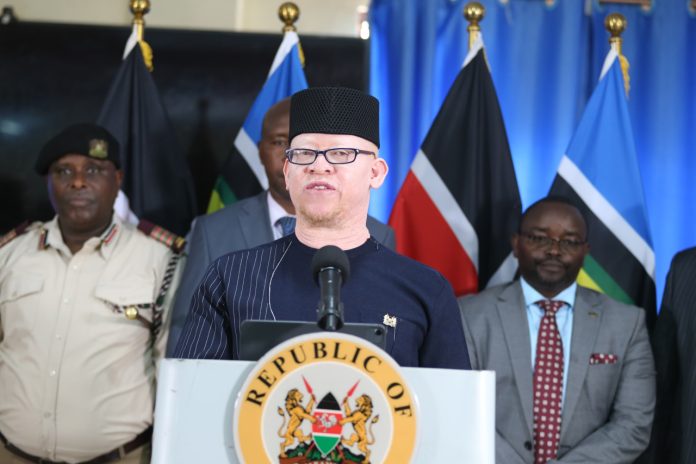
Good news to coffee farmers as the government plans to waive Sh 2 billion debts in this financial year.

Government Spokesperson  Dr Isaack Mwaura said coffee farmers in the 26 counties will benefit from the grant.

He said the action follows the formation of the Coffee Cherry Advance Revolving Fund which was mandated to provide an affordable, sustainable, and accessible cherry advance to smallholder coffee farmers, (those with less than 20 acres of land under coffee).

Mwaura said the new Kenya Planters Cooperative Union (N-KPCU), KPCU was mandated to manage and administer the fund as per the Public Finance Management Act (Coffee Cherry Advance Revolving Fund) Regulations 2020.

He said it was further enhanced by President William Ruto’s administration and was currently being disbursed at the rate of 40 percent of the prevailing average sales price at the coffee exchange at factory level and Kshs. 20 per kilogram of cherry delivered or 40 percent of the payment rate to members by a cooperative society for the immediate past crop year.

 “The Coffee Cherry Advance Revolving Fund does not accrue any interest, farmers are only charged a one-off 3 percent administrative fee,” said Mwaura.

“A smallholder coffee estate or smallholder coffee grower is eligible to benefit from the fund if one is a Kenyan citizen, member of a registered coffee cooperative society or affiliated to the N-KPCU and needs to just have an identity card, or passport and a membership card,” he added

Mwaura said the N-KPCU, has in the last two years disbursed credit totaling Ksh.4.95 billion to 365,872 coffee farmers spread across the 26 coffee-growing counties through the Coffee Cherry Advance Revolving Fund according to records.

He said in the Central Region, the four coffee-growing counties of Kiambu, Kirinyaga, Murang’a, and Nyeri received a total of Kshs.2.309 billion benefitting 182, 827 farmers.

“There was also an increased coffee milling activity nationally, at the N-KPCU mills, with 8,470 metric tons of coffee milled in the Financial Year 2023/2024 against 878 tons in Financial Year 2022/2023,” said Mwaura.

 He said that the revamped N-KCC is currently serving 60,000 dairy farmers through 300 dairy cooperatives, majorly from the Central Region.

He added that the New KCC has a processing capacity of 875,000 where a total of 2,221 metric tons of milk powder was produced using this installed capacity during the FY 2023/2024.

He said, “The government has allocated more funds in the current Financial Year 2024/25 for milk powder processing and completion of the last phase of the N-KCC modernization project,”

Government allocates Shs.1.135 billion for affordable housing in Mt Kenya

0
Goverment
By Habil Onyango

With the ever-increasing employment crisis in the country, the government is working on strategies to open up employment opportunities in the informal sectors.

Lack of formal employment has precipitated frustrations and disappointment in the youths despite acquiring skills and various academic qualifications.

But in Central Kenya, the government is engaging the youths to explore and exploit employment opportunities arising from the ongoing national Affordable Housing Units (AHU) projects which are being undertaken in the five Counties within the region.

Government Spokesman Dr. Isaac Mwaura said the Government has allocated Shs.1.135 billion for the Jua Kali and MSMEs for the Central region to boost their income.

“The, ongoing AHU in the Central region has already created job opportunities where an average of 2,130 daily workers are on site, with an additional 5,000 skilled and low-skilled workers engaged directly and indirectly off-site across the housing economic value chain in the region,” he said

He said the beneficiaries are involved in the production of steel doors, steel windows, wooden doors, joinery, and balustrades, as well as landscaping on-site in the 14 projects.

He said that the State Department for Housing and Urban Development and the National Housing Corporation (NHC) were in the process of constructing 1,000,000 AHU throughout the Country in five year

He said the Central region has 7,628 AHUs under construction which has created employment opportunities for both skilled and unskilled labour

Mwaura spoke in Kirinyaga Central, NG-CDF Hall during his weekly briefings, he said “In Ruiru, we found a group which calls themselves Ruiru bypass fabricators who have benefited from a Sh 107 Million contract,” he said.

Mwaura said under the project, the Government has already certified 213 artisans due to having prior experience, and also at the same time, they are keen on those who might have not gotten an opportunity to go to school to register at the Open University of Kenya, where 3289 are enrolled so that they can get certified.

Mwaura appealed to the youths to embrace good work ethics to ensure continued engagement by the employers.

“The 14 AHP projects include; two in Kirinyaga county (Kirinyaga AHP with 100 units and the Gichugu AHP, 110 units), two in Nyeri county (Nyeri Blue Valley AHP with 381 units and Ruring’u AHP in Nyeri Town, 478 units),” said Mwaura.

“Three in Nyandarua (Kinangop North AHP with 220 units, Ol Kalou AHP by the National Housing Corporation with 100 units, and the Ol Kalou AHP by the State Department for Housing with 420 units),

He said the Government was undertaking another project in Murang’a county at Makenji where 220 units were being constructed.

In Kiambu six projects are ongoing which are in, Ruiru AHP (1050 units), Thika AHP-Kings Orchid (975 units), Thika Depot AHP (436 units), Thika Bustani AHP (996 units), Kikuyu Kabete AHP (1,404 units) and the Limuru AHP with 738 units.

Will Musalia fulfill the Luhya prophesy of the presidency through the Lake?

0
Musalia
By Anderson Ojwang

The Luhya community politics have been influenced greatly by a religious sect Dini Ya Msambwa founded by prophet Elijah Masinde.

Masinde has remained a cog in Luhya politics through his prophecies and actions during colonial times, which continue to shape the community’s political destination.

In the 1940s and 1950s, the Bukusu resisted the British under the leadership of Masinde, after the prophet demanded the return of their lands

In 1944, Masinde took on the colonialists by attacking a chief in Kimilili; he was jailed on February 14 after he refused to execute a bond of Sh500 to keep the peace after being found guilty of assault.

Consequently, in 1955, DC C J Denton warned that Elijah posed a greater threat to law and order than Mau, which had started a rebellion in central Kenya. 

On the Luhya community’s ascension to the presidency, Masinde prophesied that the community leadership would come through Lake Victoria.

Historically, Ford-K, the dominant party in Bungoma County was founded by the late Jaramogi Oginga Odinga who later passed the baton to the late Vice President Wamalwa Kijana, 

Today, Ford K is viewed as a Luhya party, with National Assembly Speaker Moses Wetangula leading it. For Wetangula, the Jaramogi’s party has heralded him to various political destinations in the country.

With the current shifting political dynamic, the falling out in the ruling party between President William Ruto and his deputy Regathi Cachagua, the formation of a broad-based government, and the regrouping of original Orange Democratic Movement (ODM)  pentagon luminaries, the Luhya community could be looking at Nyanza to fulfill the dream,

Despite cabinet secretary Mr. Musalia Mudavadi hailing from the Luhya community, his political destiny could lie in the Luo community.

The Luhya community is the second largest community in Kenya with a population of 6,824,482 according to a 2019 report and is composed of twenty-one clans.

The twenty-one clans are Bukusu), Idakho, Isukha, Kabras, Khayo, Kisa, Marachi, Maragoli, Marama, Aba-Nyala, Aba-Nyole, –Samia -Tiriki, Abatsotso, Wanga, and Batura and the Abasiaya, with the Bukusu and Maragoli being more politically prominent, dominant, and bitter rivals.

Western Kenya’s political landscape has been and will continue to be dominated and determined by the two rival clans namely the Bukusu and Maragoli.

The Bukusu community has produced top politicians in the late Masinde Muliro, the late Vice President Wamalwa Kijana, and Wetangula among others.

But for the Maragoli clan, the political baton has remained in the hand of the late Moses Mudamba Mudavadi’s lineage for the last 25 years to date.

After Moses’ death, Musalia’s political stars shone brighter, and he was thought to be one of the possible successors of then President the late Daniel Moi.

But with Moi anointing Uhuru Kenyatta as the heir apparent, a fallout in Kanu emerged with Musalia and other top party officials defecting to the opposition.

 But Musalia would later make a political summersault by defecting back to Kanu and was subsequently appointed the vice president.

The political summersault cost him the Sabatia parliamentary, and he consequently, declined the parliamentary nomination and was therefore confined to a political obituary.

But Musalia’s political reincarnation into the limelight began in 2004 following the death of Liberal Democratic Party (LDP) chairperson, Mr. Joab Omino, which left the seat of Kisumu Town West vacant.

A clamor emerged in Kisumu, with residents and political leaders led by then LDP Nyanza spokesperson Mzee Odungi Randa asking Musalia to contest the vacant seat.

Randa, who is the current chairperson of the Luo Council of Elders believed Musalia was a future presidential material who should never be left to waste out in the political oblivion.

Musalia politely declined the gesture, but it marked his political rebirth as he became a prominent figure in the 2005 constitutional referendum.

Former Nyakach MP Pollyns Ochieng Daima says during the prayer service for the victims of the constitutional referendum in Kisumu, LDP leader Raila Odinga introduced Musalia at Kisumu’s Moi Stadium to the public where he received a rousing welcome.

Raila was the driving face behind the anti-draft constitution and was leading the orange wing against the Banana of President Mwai Kibaki.

Raila and his team later formed the Orange party, the Orange Democratic Movement (ODM.

Daima says after the prayer service in Kisumu, Raila, and the team went for a campaign in the Western region where Musalia was given the onus of leading the campaign.

“Musalia quickly rose to the rank and became one of the luminaries of ODM, the leader of the No campaign in Western Kenya, and subsequently Raila’s running mate in the 2007 presidential elections.

Daima says Musalia is more acceptable in Nyanza than Western Kenya his birthplace and has a huge support base and could easily pass as Raila’s heir apparent in the region.

He says the rivalry between Bukusu and Maragoli usually negates Musalia’s grasp of the vote-rich community, and this has undermined his presidential ambition.

In the 2013 Presidential elections, Raila beat Mudavadi in all the counties in Western Kenya save for only his home county of Vihiga where he won by more than 5,000 votes.

Trans Nzoia92,03524,762
Bungoma185,419107,868
Kakamega303,120144,962
Vihiga77,82582,426
Busia189,16118,608

Political analyst Dr Obondi Otieno says the future of Musalia’s political destiny rests in Nyanza, a people who are united and follow a common political path as a bloc.

“he is our close neighbor, in law, diplomatic, and has been with us in Pentagon and Cord and he is not abrasive. Currently, it is easier to sell Musalia’s candidature in Luo than any other candidate from outside the community,’ he says.

Dr Otieno says the decision by Musalia to lead Raila’s African Union (AU) chair bid has endeared him more to the community.

“Nyanza will one day propel Musalia to the presidency. As things stand, he is more likely to lead the country one day and Nyanza will be his stronghold,” he says.

Rigathi’s impeachment a ‘poisoned chalice’ for Kalonzo in the Mountain

0
Kalonzo
By Anderson Ojwang

Could the former Vice President, Mr. Stephen Kalonzo Musyoka have been served a ‘poisoned chalice’ in his journey from Tseikuru village of the lowland Mwingi county to the Mountain ahead of the 2027 presidential contest?

The planned impeachment of Deputy President Rigathi Gachagua by the National Assembly could turn out to be a mixed political grill served cold to Kalonzo by President William Ruto and his allies.

It could either embolden Kalonzo’s climbing of the Mountain or render him to the periphery should Rigathi survive the storm.

Kalonzo has for over four decades remained the de facto leader of Ukambani politics and has determined the voting pattern in all the elective posts including the presidency.

In the last general elections, Wiper dominated the parliamentary elections in Machakos county where it won four seats of the eight while in Makueni, it dominated by bagging five of the six slots, and in Kitui the party took home six seats of the eight to allow Kalonzo to cement his political might in the region.

In the presidential election, Kalonzo gifted Azimio Presidential Candidate  Raila Odinga’s basket with 76 percent of the total votes cast in the region accounting for 769,892 while Ruto took home 24 percent which translates to 250,188 votes.

In the three counties namely Machakos, Raila led with 305,300 votes against Ruto at 101,437 while in Kitui the Azimio La Umoja leader got 235,405 against Ruto at 89,420, and finally in Makueni, the ODM leader received 229, 187 against Kenya Kwanza candidate 59,331.

And now after 15 years of futile fishing expeditions in Lake Victoria for the presidency, the Wiper Party leader has opted to try his luck by climbing the Mountain for the presidential contest.

Kalonzo’s dalliance with the Mountains dates back to the disputed 2007 Presidential election when he joined President Mwai Kibaki to form a new government.

Kibaki gifted Kalonzo, the vice President seat for sticking with him during the post-election violence that birthed a coalition government with Raila, which was brokered by former UN Secretary General Koffi Annan.

The exit of Raila in the local political scene leaves Kalonzo as the current probable main challenger to President Ruto. Kalonzo has strained his eyes on the Mountain to deliver his presidential ambition.

In the last general election,  President Ruto received 2,938,938 votes in Mt Kenya to propel him to victory against Raila’s 847,709 despite the latter enjoying the support of then-President Uhuru Kenyatta.

With the emergence of tremors and restiveness in the mountain, Kalonzo is positioning himself to inherit the region and possibly harvest from the falling out in the Kenya Kwana government.

But with the new political dynamics emerging, Kalonzo has to now contend with the fact that the sponsor of the impeachment motion against Rigathi is from his backyard of Makueni county.

The MP for Kibwezi West, Mwengi Mutuse is the sponsor of the impeachment motion and is raring to make history by slaying the political Goliath.

But in a swift move, Kalonzo confidant and Makueni Senator  Dan Maanzo has also filed a censure motion against President Ruto in the Senate, accusing him of failing to protect Kenyans and address critical national issues.

In the motion, Maanzo lists several concerns, including what he describes as Ruto’s failure, in his role as Chairperson of the National Security Council (NSC), to address issues such as police brutality and abductions.

Interestingly, the presenters of all the two motions are from Makueni county, Kalonzo’s political bedrock, and where he enjoys near fanatical support.

Kalonzo who has lately softened criticism of Rigathi, has opposed his impeachment.  The Wiper party has stated its position, before the tabling of the motion in the parliament in a statement.

“ Any attempts to link the party to the impeachment drive were unfounded,’ read the statement. 

The party leadership made it clear that they were focused on promoting unity and supporting the country’s development agenda rather than engaging in politically divisive actions.

And immediately after the tabling of the Motion, Wiper again issued another statement that read “Mutuse is a member of Maendeleo Chap Chap Party associated with Cabinet Secretary For Labor and Social Protection Dr. Alfred Mutua.

“This distinction is important in understanding the political alignments and affiliations in Kenya,” read the statement.

Lately, Kalonzo has been traversing the Mt Kenya region in the accompany of several local leaders who issued a clarion call to unite the GEMA community ahead of the  2027 Presidential elections.

Kalonzo has claimed that he has the support of former president Uhuru and urged the community to support his bid.

Former Kiambu Governor  Ferdinand Waitutu declared that Kalonzo would be the region’s candidate.

“Now that President Ruto has deserted us, it is important to have Kalonzo to lead us and bring back the GEMA community unity for the future. We as Mt Kemya are solidly behind him” he said.

Jubilee Secretary General Jeremiah Kioni said it was important for the Mt Kenya community to open their eyes to a new political dawn and realignment emerging in the country.

‘This time, it is Kalonzo walking with us after ODM joined the government. He is one of us and we must open our eyes and walk with him,” he said.

Kioni said they were building a strong team that would include all the right-minded persons who are interested in changing the destiny of the nation.

“They have regrouped just like the 2007 to isolate us and this is not an empty talk.  Even former President Uhuru Kenyatta is a worried person because we know they are plotting against us. When you see us and Kalonzo crisscrossing this region you know something is happening outside there,” he said.

The tragicomedy which Kisumu County is becoming in tendering of lucrative contracts

0
Finance
By Anderson Ojwang

Is Kisumu County government emerging as the tragicomedy in tendering of lucrative contracts in the country, where the politically correct, influential personalities and blue-eyed companies dictate the tender awards and sub-contracts?

Picture this scene 1, two politically correct persons with no known registered business company walk to the County, negotiate for a lucrative donor-funded tender, and after a month walk away with Sh 111M World Bank-funded improvement of Kisumu Sports Ground.

Excited by the breakthrough, the duo quickly goes on a search for a company in which to undertake the contract.

With millions on the air, they approach a friend with an offer of Sh 5 million, and with the harsh economic times, the lady luck dances on their side, and subsequently they are granted joint attorney and open a bank account with one of the local commercial banks in the town.

For them, the tendering process is just but a formality to comply with the procurement law as the winner is already predetermined at the high table of kings and queens.

Picture scene 2, The Kisumu City Manager writes to the Client’s Bank requesting that it suspend any transaction on the account held contractor with immediate effect until guided otherwise.

The bank acting on the instruction of the Kisumu City Manager suspends writes to the client suspending operations of the account until further notice.

And hell breaks lose with flying counter-accusations from by contractor and Kisumu City Board that spill the rot at both the county and the board.

First, the contractor alleges that after signing the contract and payment mobilization fees they were allegedly summoned to a meeting where they were directed to subcontract a blue-eyed company in the lake city to undertake the civil works.

But they declined the directive and subsequently, the bank account was frozen and another meeting was scheduled where they agreed to sub-let the contract.

Welcome to Kisumu City, the third-largest city in Kenya after the capital, Nairobi, and Mombasa, and the second-largest city after Kampala in the Lake Victoria Basin.

Where lucrative donor-funded projects are a preserve for the high and mighty, the politically correct persons, and the blue-eyed companies known to the power that be.

Where the local and emerging business entities hardly secure lucrative contracts despite participating in the tender bidding processes.

Importantly, the County Government and the City  Board have in the last two decades, received hundreds of billions of shillings for various donor-funded projects funded by the World Bank, the French Government, the German Government, and other International Development Partners.

Back to the Jomo Kenyatta Sports ground improvement project, the two business persons are former member of Kisumu County Assembly  (MCA) Mr. Bob Otieno Ndolo Owiyo and the current nominated MCA Emily Mildred Anyango Oginga, the younger sister to former Prime Minister Raila Odinga.  Note, that the tender was awarded in July 2020 before Emily was nominated as a member of Kisumu County Assembly.

According to Ndolo, he says Emily is his partner for the Kisumu Sports ground contract and they were forced to look for a company to apply for the tender.

Emily also confirmed that Ndolo is his partner in the project and they had their own special arrangement for the project.

“I do not want to comment further than that. Kindly, let the matter come to a rest,”  she said in a telephone interview.

“We approached the proprietor of Brama Logistics Enterprise to give us the power of attorney to seek for a tender with Kisumu city Board, We paid him Sh 5m and we the two were granted the power of Attorney,’ he said.

The agreement of power of attorney was drawn by Olel Onyango, Ingutia, and company and signed on  14th July 2020 and was signed by  Mr. Gabriel Atieno Ochieng and Wilfred  Akinyi Ogada and commissioned by Odhiambo E Ouma advocate and Commissioner of Oaths.

Similarly, a contract award between the City of Kisumu and Brama Logistics Enterprises LTD was dated July 2020  and was described as  County Government of Kisumu, City of Kisumu, Kenya Urban Support Program (KUSP0, Improvement of Jomo Kenyatta Sports Ground.

Ndolo says a month after signing the contract, the city board released  Sh 22M for mobilization and was invited for a meeting by the acting City Manager Mr. Abala M. Wanga.

In his letter to the World Bank Country Director, Ndolo claims “I was summoned by the acting  City Manager, during the meeting, I was informed that the higher authorities had directed us to subcontract all civil works within our projects to Kisumu Concrete Products(KCP)”.

Ndolo says after consultation with his partner, they realized that the civil works component was the only area where they could generate a modest profit from the project and subsequently rejected the proposal.

“Upon conveying  our decision  to the Acting Manager, he retaliated  by writing  to our bank and instructed  the bank manager to suspend  any further  activities  related to our account,’ he alleges

A letter dated 17th  November 2020, signed by Abala M Wanga, Ag City Manager,  to the Branch Manager, Ecobank, Kisumu  Branch captioned Re Suspension of operations of Brama Logistics account.

It reads in parts “  Reference is made to the contract No, CGK/CoK/KUSP/V/2019-2020/03-1 signed between Brama Logistics and the City of Kisumu of the contract Jomo for improvement of Kenyatta Sports Ground.

Since, the release of the advance payment to the firm and subject to our assessment, we have confirmed that there is a problem in the execution of the contract.

We therefore wish to instruct the bank to suspend any transaction in the account held by the firm with immediate effect until further notice,”. 

The bank acknowledged the receipt and stamped the letter, as inward mail.

The Bank also responded immediately to Brama Logistics Enterprises, in a letter dated  17th/November 2020 captioned:  Re- Suspension of Transactions on Brama Logistics Account No. 6616007641 and signed by Mr. Thaddeus Okwaro, for and on behalf of, ECOBANK Kenya Limited.

The letter reads in parts “ The attached letter, Ref CGK/CoK/CM/KUSP/Vol1/2 from the County Government of Kisumu here refers.

We hereby confirm that any transaction on Brama Logistic account number 6616007641 has been put on hold with immediate effect until further notice.

Should you require any further clarification regarding the above subject, do not hesitate to contact the county government of Kisumu”.

Ndolo says  the situation forced them to subcontract to Kisumu  Concrete Products by giving them  all  the civil works for a sum of sh36m,

Our efforts to get comment from Kisumu Concrete Products were unsuccessful after Mr Rabadia Lalji Chano did not pick up our calls and did not respond to our text by the time of going to the press.

One of the responses by Abala to Ndolo claimed that the latter was out in a smear campaign to disparage and dent the image of the county through blackmail and extortion tactics.

“In light of these circumstances, my office has formally submitted a statement to the Directorate of Criminal Investigations. They may consider contacting you to clarify your position regarding your defamatory claims,” he wrote.

Interestingly, on 2 August 2024, the Board wrote to the project consultant about the release of retention monies.

It reads in part ‘ We are in receipt of the contractor’s request to release the final retention for the above project. The defect notification period has since ended and we would wish to be furnished with the certificate of making the good report and performance certificate as per GCC11.9

The contractor by this letter is advised to liaise with you in the application of the final certificate and issuance of the final payment certificate to be submitted together with the above to allow for swift release of the retention,’ reads the letter signed by Abala M Wanga.

A faith based organization constructs 5,020 houses for widows in Homa bay county

0
houses
By Sandra Blessings

A section of widows from Homa Bay County have a reason to smile after a Christian-based organization responded to their call for better housing.

The organization, which is based in Kasipul constituency of Homa Bay county is rewriting the story of needy and vulnerable persons in the area, Kabondo Kasipul, Ndhiwa, Karachuonyo, and both Suba North and South sub-counties through a new housing program.

Apart from Homa Bay County, the organization named God Will Provide has extended its tentacles to Siaya County where they have constructed 11 houses, Kakamega County where they have built 8 houses and Kisumu County where they also constructed six houses.

“We have 5,020 houses for widows so far. And we anticipate to constrict additional ones this year and next year,’  said Mr. Newtone Ogada, the Director of the organization.

He says the organization was moved by the deplorable state of most houses and found it necessary to intervene.

Mr. Ogada says the delipidated houses exposed the widows and their children to health and security risks.’

“As a Christian organization, we seek to give hope and a new dimension of life to the widows and the vulnerable in the region,” he says 

Mr. Ogada says most of the widows in the area were exposed to harsh conditions because of the poor conditions of their houses.

“ We plan to construct additional houses to tackle the housing problem in the area. Most of these widows have deplorable houses,” he says.

Mr. Ogada says the organization was supporting  210 orphans who are housed at the organization providing free education and other basic needs.

He says the orphans who are both in primary and secondary schools board in the institution, while they pay school fees for those in colleges.

“We provide health care, education, clothes, and full board facilities to the orphans. The orphans are from every part of Homa Bay county and the neighboring ones like Kisii,” he says.

Mr. Ogada says the organization has also constructed a primary and secondary school where the children undertake their studies.

He says the organization also has put 319 families on the NHIF medical scheme and this has helped address emerging health concerns in the area.

Mr. Ogada says through the medical scheme the economic potentials of the families have been realized and emerging health concerns have been tackled.