Home Blog Page 195

Kisumu County owes Sh 2.3b to decree holders as panic grips the government

0
Kisumu
By Team

Drama unfolded at the County Government of Kisumu offices on Monday after an advocate moved to execute a court decree over unpaid certificate due to a contractor.

A Kisumu-based advocate Mr. Okungu stormed the county offices accompanied by two police officers to execute the decree by arresting and committing the county’s chief financial officer (CFO) to a civil jail.

Panic gripped the ever-busy CFO office and the Treasury Department as business was paralyzed at the county headquarters with a section of staff taking off to avoid arrest.

The advocate’s client was seeking Sh 8M, including interest for the court decree for the payment of the certificate to the contract he undertook.

However,  to avert the arrest of the CFO, the county government administration entered into an arrangement with the advocate to pay part payment as it sought other finances to settle the balance.

Already, the Kisumu County Government is yet to pay  Sh 2.3b  to decree holders in the form of contractors’ certificates, advocates fees, and service providers. 

The court gave 40 decree holders authority to execute the order between September to November.

During the fiscal year, Kisumu County received a total of KES. 10,142,864,470 in revenue, comprising Own Source Revenue, Grants, and sharable revenue, representing 84% of the revenue target set against budget revised estimates of KES. 12,045,283,582.

The panic has further been heightened by the resignation of the legal advisor and immediate former acting county Attorney Mr. Ouma Njoga.

Sources intimated to Western Insight Media claimed that Mr. Njoga raised the issue of court decrees but the legal advice was allegedly ignored.

Njoga subsequently resigned and when we sought his comment he said ‘I am bound by an oath of secrecy. What do you want to write in the newspaper,”.

Interestingly, the Kisumu Public Service Board recently appointed a new county attorney who was vetted by the assembly and is yet to be sworn in because Governor Prof Anyang Nyong’o has been away from the workstation.

But the County Secretary Mr. Hesborn Hongo when contacted for comments referred us to the county Attorney for comment.

“We are waiting for the new county attorney to be sworn in and he is the best person to comment on the matter as that is his department,’ he said. 

when the Kisumu court released a list of pending decrees up for execution named the various entities owed by the county government including suppliers, contractors legal firms, and traders whose businesses were demolished among others.

A once popular fish-eating point along the Lake Victoria shores whose property was demolished got a court decree for Sh 75M. At the same time, a consultant firm received a similar amount against the County Government of Kisumu and the Kisumu City Board for unfilled contract obligation.

A prominent Kisumu lawyer was allowed to undertake decree enforcement for Sh 115,000,000.

A prominent Kisumu-based law firm is seeking Sh 475,000,000 for advocate and client bills of cost.

Raila Amolo Odinga: Africa’s Mandela Moment at the African Union

0
Billy Mijungu
By Billy Mijungu

In a continent yearning for transformational leadership, the candidacy of H.E. Raila Amolo Odinga for the Chairperson or President of the African Union Commission presents a defining opportunity for Africa to claim its rightful place in global affairs. With his unmatched political pedigree, Raila Odinga embodies the leadership Africa has been waiting for—a true Pan-Africanist who, like Mandela before him, has the potential to unite, transform, and propel the continent into a new age of prosperity.

As a former Prime Minister of Kenya, Raila has demonstrated his deep commitment to democracy, peace, and infrastructure development. He has stood at the forefront of major political reforms, guiding Kenya through constitutional transformations and championing national unity amidst diversity. These qualities make him the perfect candidate to take Africa to new heights as the leader of the African Union Commission (AUC).

A Vision for Peace and Democracy

At the core of Raila’s vision is peace and democracy—values he has relentlessly pursued throughout his political career. As Chairperson of the AUC, Raila would be uniquely positioned to lead a new era of democratic governance across Africa, solidifying peace-building mechanisms and ensuring political stability. A bold proposal under his leadership would be the creation of a Center for African Political Parties, fostering ideological cohesion among parties across the continent. This center could promote a unified African political culture grounded in democratic principles and transparent governance, ultimately driving sustainable development.

By fostering ideological homogeneity, Raila’s African democracy model would focus on inclusive politics, enabling the continent to avoid the pitfalls of division and political stagnation. As a man who understands the value of dialogue, Raila could steer Africa toward a future where political parties rally around ideas that unite rather than divide.

Unifying Africa Through Language and Trade

Raila has long been a proponent of continental unity, and one of the boldest, yet most pragmatic, steps he proposes is the promotion of Swahili and Arabic as the two languages of Africa. East Africa should become the main supplier of Swahili teachers across the continent, while North and West Africa should focus on supplying Arabic teachers. This simple yet profound initiative would not only promote cultural integration but also enhance communication across the African Continental Free Trade Area (AfCFTA), creating a common linguistic framework for business and cooperation.

As Chairperson of the AUC, Raila would champion this linguistic unification, turning language into a tool of empowerment. By facilitating seamless communication between African nations, these two languages would boost intra-continental trade and cooperation, aligning Africa’s diverse regions under one unifying banner. It would be a monumental step toward breaking down barriers that have historically divided the continent, setting Africa on a path of unprecedented unity and growth.

Infrastructure and a Free African Sky

For Africa to reach its potential, infrastructure development must be at the heart of any transformation. Raila Odinga’s tenure as AU High Representative for Infrastructure has proven his commitment to this mission. Under his leadership, a free African airspace would revolutionize continental trade, opening up new corridors for business, tourism, and cultural exchange. This move alone could unleash untapped economic potential, boosting intra-African trade beyond what the common African has ever imagined.

Complementing the free airspace, Raila envisions a connected continent through modern roads, railways, and energy networks. He recognizes that Africa can no longer be left in the dark or remain inaccessible. His goal is to create an integrated infrastructure network that links Africa’s urban and rural areas, fostering greater economic interdependence and collaboration.

The 4th Industrial Revolution: Africa’s Leap Forward

Raila Odinga’s candidacy represents more than just leadership for today—it is a visionary plan for Africa’s future in the Fourth Industrial Revolution (4IR). Africa still lags behind in adopting technologies from the first, second, and third industrial revolutions. But with Raila at the helm, the continent can leapfrog into Industry 4.0, embracing automation, AI, big data, IoT, and advanced manufacturing to transform its industries and economies.

Raila would ensure that African nations are prepared to capitalize on these technological advancements by advocating for the development of smart infrastructure—flexible, innovative, and resilient. His tenure would focus on mainstreaming 4IR technologies into African infrastructure projects, from energy systems to transport networks, thus fostering the next phase of industrialization.

Through a continental sensitization campaign, Raila would educate African leaders and entrepreneurs on the opportunities within the 4IR, ensuring that Africa doesn’t miss out on the technological revolution that is reshaping the global economy. He would push for the adoption of smart city policies, creating digitally connected urban centers that drive innovation, efficiency, and sustainability.

Transforming Adversity Into Hope

Africa faces immense challenges, but under Raila Odinga’s leadership, these challenges would be seen as opportunities. His track record speaks for itself—transforming adversity into hope, division into unity, and stagnation into progress. His vision for an African Trade Commissioner would solidify Africa’s position in global trade negotiations, advocating for common external tariffs and ensuring that Africa benefits from fair, transparent, and advantageous trade deals.

Raila’s leadership would transform the African Union into a body that not only sets bold agendas but also delivers on them. His legacy in Kenya of guiding the country through constitutional reforms demonstrates his ability to build lasting institutions. As AUC Chairperson, he could do the same for Africa, laying the groundwork for a continent that is democratic, peaceful, united, and economically powerful.

A Mandela Moment for Africa

This is a Mandela moment for Africa, and Raila Odinga is the man to lead it. His candidacy is not just about an election—it’s about charting a new course for Africa. A course where democracy thrives, where infrastructure binds us together, where language unites us, and where technology powers our economies.

Raila Odinga’s leadership would give Africa the bold, visionary, and transformational leader it has always needed. The time for change is now, and Raila Odinga is the leader who can make it happen.

Opinion Piece by:

Billy Mijungu 

2022, Senate Candidate, Migori County

mijungucampaign@gmail.com

#Forward

#TusongeMbele

Treasury releases Sh.7.8billion for the construction of classrooms for JSS

0
Mbadi
By Habil Onyango

The government has released Sh 7.8 billion for the construction of classrooms for the Junior Secondary Students in various Schools across the Country.


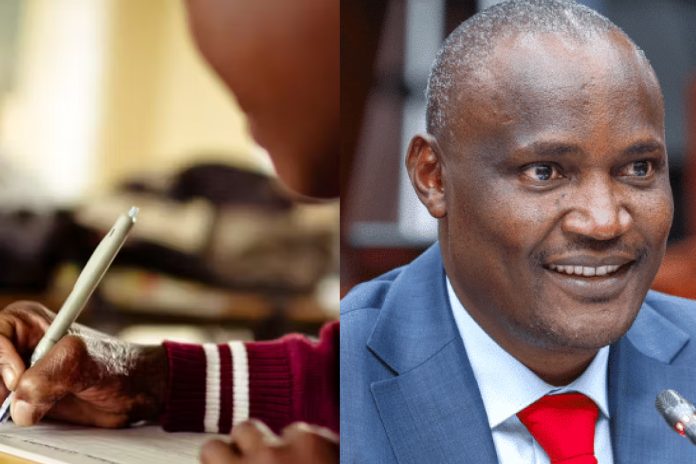
According to the Treasury Cabinet Secretary John Mbadi, the funds were released on Friday 27th 2024 to ensure that necessary infrastructure is in place for the smooth operation of the JSS.


In a response to a report that appeared in a section of media houses alleging that the funds have not been released for the construction of classrooms, Mbadi said the funds that were released were dedicated specifically to the construction of the JSS classrooms.

According to the CS, the treasury has disbursed Sh 3.4 billion to the National Government Constituency Development Fund Board as the Ministry of Educations shared He said that another Ksh3.4billion was given to the NG-CDF as matching funds while Sh.1billion was disbursed to Nairobi County for the activity. “The national treasury would like to address reports circulating in certain sections of the media alleging that funds have not been released for the construction of JSS classrooms, leading to supposed funding challenges,” noted Mbadi.
“We wish to categorically state that the reports are inaccurate. On Friday 27 September 2024, the National Treasury disbursed a total of Ksh 7.8 billion dedicated specifically to the construction of JSS classrooms,” he said.

Will Mbadi slay the pending bill dragonto have works begin on stalled roads by December?

0
Mbadi
By Habil Onyango

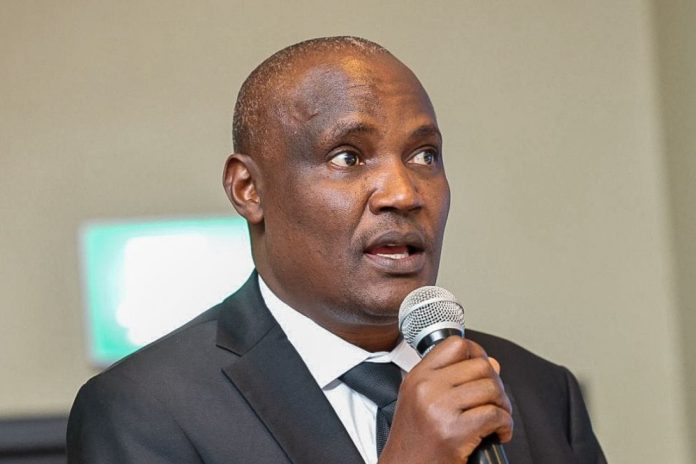
Newly appointed Treasury  Cabinet Secretary, Mr. John Mbadi is gearing up for a battle to slay the pending bill dragon that has terrorized the country for ages.

The man from Suba is spitting fire and promising a titanic duel with the dragon that he believes by December this year, he shall have put to the grave.

The immediate former Orange Democratic Movement (ODM national chairman, the new biblical David has trained his eyes on the Goliath, the pending bill that has driven hundreds of Kenya’s business persons and families to a squalor. 

Now Mbadi is promising that the State will spend  Sh166 billion to pay roads’ pending bills and to allow work to begin on all the stalled road projects throughout the Country before the end of December 2024.

Mbadi said they already have a strategy in place to mobilize funds to enable them to pay the contractors and ensure they get back on site before December this year.

“The biggest challenge we have had in the Country is the poor funding structure for our roads where the contracts are awarded and there is no money to do the work,” said Mbadi.

“As the CS for National treasury my biggest job is to help President Willian Ruto to get funds to do development and to complete all the stalled projects,” said the CS.

Speaking in Migori the CS said it was poignant that when moving across the country, almost all stalled projects are mainly roads.

“I am going to make sure that I help the President get resources to resume the construction of stalled roads across the country and to ensure that the pending bills of Sh166 Billion for roads are paid and have the contractors back on site,” said Mbadi.

The former ODM nominated MP however revealed that a number of the stalled roads are in the Nyanza region.

In Suba constituency, where Mbadi was a former MP had witnessed the Sori-Gwasi-Mbita road stalled for over three decades with the subsequent government using it as a campaign chip.

He said the roads that the President promised to tarmac in the Nyanza region during his recent visit will also be allocated funds.

The construction of the 74 km Mbita-Sindo-Magunga-Kiabuya road has stalled since 2011 after the former contractor abandoned the work after only constructing a 7KM between Sindo and Mbita constituencies.

During his recent tour in Homa Bay, President Ruto revealed that the construction of the Sh2.9 billion road is ongoing since the contractor who had left is back on site.

A milestone-based method.

During his recent tour of the project, the director of the Presidential Delivery Unit Silvance Osele revealed that the government will use a milestone-based method to enhance speed and accountability in tarmacking the road.

The method involves paying the contractor upon completion of every 7.4 Kilometers of the link road which had suffered delay and abandonment during the era of the Jubilee government.

He said that the method will ensure that the government prudently use her funds only for completed works
Osele said in the past, a number of contractors have been taking advantage and abandon their works before completion after receiving full payments.

He said that this will see the government pay the contractor at least ten times since the road is 74 km long.

“We have devised a milestone-based method in this project where the contractor is paid after completing construction of every 7.4km in the road,” Said Osele

He said that already, the Government has awarded a new contracted China Civil Engineering Construction Company and the construction works are ongoing in the road which is expected to boost transport and communication in the region.

When the trapper becomes the trapped as Rigathi stares at impending impeachment

0
Rigadhi
By Anderson Ojwang

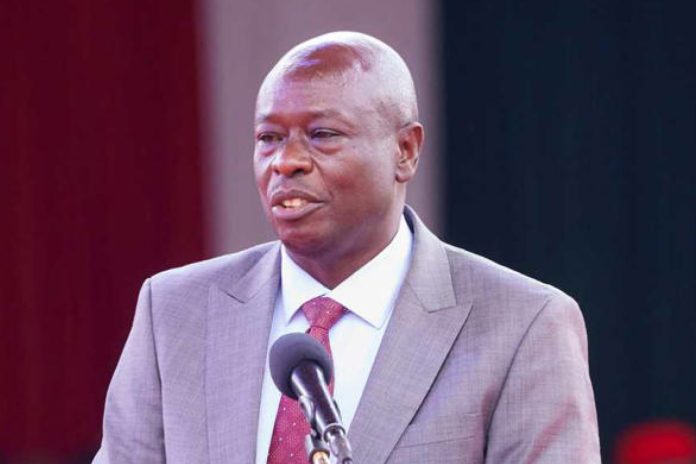
When Deputy President Rigathi Gachagua thought, he had laid all the traps in every corner of the State House to snare the dreaded political nightmare from accessing the State House, but he was deadly wrong.

And like the traps, he had informers and spies to notify him immediately, should former Prime Minister Raila Odinga be sighted within the precinct of the State House, and that became his nightmare and Waterloo.

The move by Rigathi was meant to protect President William Ruto from being accessed and influenced negatively by Raila.

Again, it was our time to eat after a successful hunting expedition and a moment to share the spoil of the ‘catch.’

It was the time for shareholders of the steak to eat while others watched from a distance.

Rigathi traversed the Mountain preaching about the shareholders and how he had laid traps and placed informers in State House to ensure Raila did not gain access.

‘My work is to keep the President safe from Raila Odinga. He has destroyed successive governments, and I cannot allow him to destroy ours. That is why I have laid traps everywhere and have spies all allover to inform me,” he said.

Alas, Raila, an old hand in the political dynamics of the country soon found himself dining with the King at the high table while the self-confessed Truthful man was displaced to the periphery.

 Currently, the bromance between President Ruto and Raila is so telling. as the former leads the campaign for the latter for the seat of African Union (AU) chair.

The trap maker, Rigath today finds himself in unfamiliar turf, he is the hunter turned the hunted, the trapper who became trapped by his own trap and is today staring at his own impeachment.

Rigathi, the trapper consequently became the trapped and first victim of his own mechanizations after he was removed from the State House WhatsApp group.

In a recent Interview by Citizen TV, Rigathi claimed that Ruto’s private secretary Reuben Miayo expelled his team from the President’s diary a week ago hence he has been nescient and cannot grace functions of the head of State.

“About a week ago, we were removed from that diary so we were not able to follow what was going on and so we cannot align. When I am aware of where the President is, I am always there. When I am not aware, there is nothing I can do about it,” Rigathi said.

“There is mischief to remove me from the Presidential diary so that once I do not attend Presidential events, it can be purported that I am absconding duty. I hear that was one of the grounds for impeachment. Sometimes they want me to appear late so that it can appear I am disrespectful,” he said.

Rigathi appealed to President Ruto and the people responsible to include his team in the President’s diary, underscoring his position as the second-in-command so that he could fulfill his mandate to the people.

“I am the DP elected by the people and I am the principal assistant of the President. It is only right and fair that I have access to the presidential diary so that I align his diary with my diary because he is the boss,” he said.

But the leader of the Majority in the National Assembly dismissed Rigathi’s allegations saying he was preaching tribalism instead of uniting the country.

In his cryptic message, the Kikuyu Member of Parliament dismissed Rigathi’s allegations and instead urged him to join alternative WhatsApp groups such as the Chepsaita WhatsApp group which he claimed was open to all and sundry.

“I am urging all those lamenting that they have been removed from WhatsApp groups, let them join us in the Chepsaita WhatsApp group,” he said.

Currently, Rigathi is shuttling from one interview to another trying to salvage and endear himself to the President and the public as the clock ticks. He has traversed the Mountain and Nairobi and has developed a slogan usiguze murima.

Rigathi is also staring at his ally’s destiny with the court after they were accused of being behind the recent Gen Zees demonstrations that rocked the nation and forced the withdrawal of the contentious finance bill.

 The Directorate of Criminal Investigations (DCI) sought to have current and former MPs allied to the DP and a number of his staff charged over June anti-government protests.

In a letter to the Director of Public Prosecutions (DPP), DCI’s Abdalla Komesha stated that their investigations revealed that Embakasi North MP James Gakuya and Embakasi Central MP Benjamin Gathiru MejjaDonk had a hand in the demonstrations.

Others implicated in the case include former Embakasi West MP George Theuri, former Nyeri Town MP Wambugu Ngunjiri, and Mr. Gachagua’s private secretary Pius Munene.

“The Director, Directorate of Criminal Investigations, received intelligence reports of planning, mobilizing and financing of violent protests that were witnessed in the country on 25th June and subsequent days where Benjamin Gathiru Mwangi and James Gakuya among others were implicated following several meetings that took place at Hotel Boulevard within Nairobi,” the letter dated September 24 reads in part.

Rigathi alleged that President Ruto and Cabinet secretaries close to the president were using DCI and the office of the DPP to haunt him out of government.

“The use of the criminal justice system to manage politics is an outdated political strategy used in the past. I am embarrassed that we are back to where we were. Harassment of my Office staff and Members of Parliament perceived to be close to me, has been going on for the last two months,” Rigathi said.

The Office of the Director of Public Prosecution (ODPP) has approved the prosecution of the suspects.

As a trapped man, attempts by Rigathi allies to have the court stop the National Assembly from discussing the impeachment failed miserably.

“Upon careful perusal, the DPP has directed that there is sufficient evidence to charge the suspects with the offense of conspiracy to commit felony contrary to section 393 of the Penal code,” read the statement.

And today, the Speaker of the National Assembly Moses Wetangula will notify the MPs at the plenary of receiving a motion seeking the removal of the deputy president from office by impeachment.

But Rigathi has said he was ready for his impeachment and will not resign and that he will defend himself.

Government seeks to reduce  cost of sending money from Diaspora as remittance grows to $2.8 billion

0
Money
By OPCS Press Service and Hope Barbra

The Government is seeking to reduce the cost of sending money from the diaspora back to respective countries of origin for greater economic impact.

Similarly, Diaspora remittances grew to USD 2.8 billion from January to July 2024, compared to USD 2.4 billion during a similar period last year.

Prime Cabinet Secretary, Musalia Mudavadi has said there have been lengthy discussions on the need to decrease costs associated with sending money from members of the diaspora back to their countries of origin.

“The remittance costs remain high despite calls for a reduction. For the viability of social benefits portability, the transaction costs must be reduced. I therefore encourage all stakeholders to join together, in Kenya, regionally and globally, to bring the costs of remittances to the global target,” he added

The focus is on the need to limit the cost of remittance to 3 percent of the value of the money transfer, in line with the United Nations Sustainable Development Goal (SDG) 10 (c).

“Discussions include policies and initiatives that will ensure that fees, charges, and hidden costs that remittance service providers impose are kept at a minimum, thereby maximizing the amount of money that reaches the intended beneficiaries,” said Mudavadi.

Mudavadi said the analysis of the trend over the first seven months of 2024 points to a projected rise in annual remittances from USD 4.19 billion in 2023 to USD 4.8 billion in 2024, a 14.6 percent increase.

“This exponential growth puts the country on track towards attaining the remittance target of Sh1 trillion annually by the end of the Strategic Plan period in 2027,” the CS stated.

He said the increase in remittances not only enhances investments but also helps to strengthen Kenya’s Balance of Payments and reduce the Kenya shilling’s vulnerability to external pressure.

“Kenyans abroad make direct investments locally, providing social support or creating an enabling environment for Kenyan exports. Their contribution is evident in various sectors of the economy including education, health, housing, agriculture, tourism, and trade,” the Prime CS stated.

Mudavadi, who is also the Foreign and Diaspora Affairs Cabinet Secretary, was speaking at Kenya School of Government (KSG) where he launched the first strategic plan for the State Department for Diaspora Affairs, a department under his ministry.

At the same time, he urged the State Department to take up the leadership role in a conversation about a framework that will allow the diaspora to move back to their countries of origin comfortably.

Whereas some diaspora Kenyans are ready to return home, the Prime CS said they grapple with their social benefits tied to their host countries, and if they leave, they lose the benefits.

“Facilitation of social benefits portability will allow the diaspora to migrate back safely and in an orderly manner, in line with article 22 of the Global Compact for Migration. Social benefits portability has key advantages including reducing the cost of remittances and enabling access to mental health services for those returning home,” he explained.

At the same time, Mudavadi said that his office will enhance diaspora trust and confidence by championing their welfare and protecting their rights and also their contribution to GDP growth through higher remittances.

He also said his office will spearhead initiatives aimed at positioning Kenya as a global leader in skilled labor export, deepening collaboration and strategic partnerships with the diaspora, and strengthening the policy, legal, and institutional frameworks underpinning diaspora affairs.

Taking advantage of the ever-growing digital space, Mudavadi said the department has also onboarded critical services for the diaspora on the eCitizen platform, making it easier for the diaspora to access government services seamlessly at any time from anywhere.

Some of the achievements he said have so far been made include the development of the Diaspora Policy 2024 to respond better to the needs of the diaspora, evacuation of Kenyans from high conflict areas in various parts of the world, including Sudan, Israel, Palestine, and Lebanon and strengthened dialogue and partnership with the diaspora.

The department has also created an enabling environment for diaspora investments and developed a global labor market strategy.

Diaspora Affairs Principal Secretary, Roseline Kathure Njogu, stated that the growth of the State Department took concerted effort and invaluable support from the 3-4 million Kenyan Diaspora across the globe.

Since inception, she said the State Department has made progress including strengthened diaspora partnerships through high-level engagements with Kenyans in over 19 countries during State and High-Level visits.

“The high-level visits were complemented by virtual diaspora engagements on a range of topics, such as investment, mental health, consular services, and information sharing,” she said.

She said that there has also been evacuation and Repatriation of over 1,400 Kenyans from various countries. provision of Mobile Consular Services ((MCS) to over 13,000 Kenyans in about 150 cities across 46 countries.

The services, she said, included the issuance of IDs, passports, certificates of good conduct, birth certificates, documents attestation, dual citizenship, emergency travel documents, and Regaining of Citizenship.

Health experts express concern over use of heavy chemicals in gold mining as residents of Migori count losses in livestock poisoning

0
Livestock
By  Erick  Otieno

Health and Environmental experts have sounded alarm over serious health risks and environmental degradation as a result of the use of heavy chemicals in gold mining in Nyatike and other parts of Migori county.

They said continued exposure of the residents, livestock, and other animals to heavy metals such as mercury, and methane among others could result in widespread kidney and heart conditions and cancer outbreaks in the area.

While the experts sounded out their concern, a farmer in Nyatike  was counting losses after his  livestock reportedly  consumed chemically contaminated water from a nearby Chinese-owned gold processing plant

The affected site belongs to H-NUO Kenya Company and is located in Kowuor village, within Macalder Kanyarwanda ward.

Efforts to reach H-NUO Kenya Company for comment were unsuccessful. One of the company’s directors, Mr. Khalaf, initially promised to respond but later became unreachable.

In a phone interview,  with one of the affected farmers, Mr. Maurice Abuya Oluoch, expressed concern over the incident. 

He revealed that he had lost five cows, while six others were showing symptoms of poisoning after drinking water tainted with chemicals from the company’s gold leaching activities.

Mr. Oluoch called for urgent dialogue between the local community, the government, and the investors to prevent future incidents of poisoning. 

“It’s disheartening that such a major investment can’t have measures in place to address these kinds of emergencies,” he said. He also voiced his concern over the potential danger to children who regularly pass by the plant on their way to school. “One day, it might not just be the livestock. What if children are affected?”

Migori Governor Dr Ochilo Ayako said they were addressing the emerging issues to avoid such incidents reoccurring in the county.

“I have scheduled a meeting with my team to respond to the emerging issues and we will give a detailed guideline on the matter,” he said.

Medical Expert Dr. James Obondi Otieno said the use of mercury to clean the gold could result in an upsurge of kidney and heart failure in humans and livestock and other chronic diseases.

“The continuous exposure of human beings and livestock to heavy metals is a disaster.  There need to have in place health safety guidelines by the county government and the investors,” he said.

Dr Otieno said during rains the chemical is washed down and this compromises the lives of all animals in the area.

Dr Otieno said the degradation of the land was compromising agricultural activities.

The poisoning has caused growing anxiety among local farmers, who fear more losses unless immediate action is taken to address the environmental and health risks posed by the mining operations. Authorities are expected to take swift measures as investigations unfold.

Revealed: The inside story of Homa Bay County Employment scandals

0
farmers
By Team

Homa Bay  County could be turning out as the theatre of the absurd where allegations of employment scandals such as claims of employment ‘auctioning’ and issuance of fake employment letters to unsuspecting and innocent job seekers are the hallmark.

Similarly, allegations of interference and manipulation of interview results are also rife with fingers being pointed at some senior officers at the county government.

Our investigations revealed that any employment advert by the country’s government has allegedly been turned into money taps where some unscrupulous employees at the county connive with crooks to con innocent job seekers of hundreds of thousands of shillings.

And now, a fresh storm could be brewing over the just concluded interviews for the employment of sub-county and ward administrators, where allegations of bribery for appointments have emerged.

The interviews were conducted for nine vacant positions for  Sub County administrators and another five for Ward administrators and could have been bedeviled by allegations of corruption.

Sources who spoke to Western Insight Media but did not want to be quoted revealed that some officers were allegedly demanding between Sh 300,000 to  Sh 500,000 to secure employment for the interviewees.

“It’s unfortunate how some people have turned employment opportunities at the county into money-milking ground. They harass any officers who want to have things done right. Some interventions need to be undertaken urgently to address this vice,” they said.

Our investigations also revealed that for instance for Early Childhood development education (ECDE), the job seekers part with Sh 20,000- Sh 50,000 to secure employment but most have been conned of their hard-earned money without landing any employment.

“Some of these suspects work in some of the top offices in the county government, The closeness with the administration has enabled them to swindle unsuspecting victims,” they said.

Another source revealed that the suspects must be exposed because they were tainting the image of the administration negatively.

“ Those suspects need to be exposed. They are giving the county and the governor a bad image. The governor cannot; police all the staff but this matter must be exposed to bring order in the county, “ our sources said.

Both at the county offices and in Homa Bay town, the allegations of employment scandals have dominated the informal conversations.

When we contacted the County secretary Prof  Benard Muok for a comment he said “ I am in a meeting can you text please”.

However, after writing the text, Prof Muok did not respond to us by the time of going to the press.

Also, our attempts to contact Homa Bay County Public Service Board Charman Mr. Isaya Okoto were unsuccessful after he did not answer our calls and did not respond to our text messages.

Last Week, we exclusively reported how a Homa Bay Man  allegedly lost Sh 240,000 in a fake job racket at the county

Subsequently, the victim wrote Homa Bay County Governor Gladys Wanga over his ordeal and possible intervention.

In his letter he claimed, he lost the money to individuals working closely with the County Public Service Board members.

In a letter dated 26th September 2024, one Jactone Oduor claimed that a person named withheld for legal reasons conned him of the said amount in exchange with a letter of appointment for his son Evance Henry Opiyo for a revenue clerk (I) position on 12the June 2023.

He said despite his son receiving an appointment letter on 1st May 2023 for the position, his son is yet to absorbed.

“The above-named is my son and I am writing this complaint letter on his behalf as one who was swindled by fraudsters,” reads in parts the letter copied to Homa Bay County PSB, Intelligence Office, DCI Homa Bay, and the Homa Bay County Attorney.

“He (Evance) was given an appointment letter for the above post which has not materialized up to date,” he claimed.

.

“First I sent an M-Pesa payment of Sh80,000 on demand by the suspect on the pretense that the available position was for revenue Clerk (III).” Reads the letter.

“Then he demanded another Sh.60,000 claiming that the boy was overqualified for the above post being that he is a graduate with a Bachelor’s degree in Commerce and a CPA (IV), hence he needed my son to be placed on Revenue Clerk (I),” he claimed

The complainant however claims that the suspect demanded that he take the boy to the CBSB immediately after the appointment letter was out which had a seal and a rubberstamp where he demanded some requirements like a file and a certification document plus another Sh100,000 before handing over the signed appointment letter to the applicant.

“For the record the accomplish received the Sh100,000 in cash, in the presence of my son; then he handed over the appointment letter,” he alleges.

“A total of Sh.240,000 was given to the suspects.  He alleged the two were working in cohorts with some CPSB officials whom they can mention.

“Hon Governor, I am still stranded with my son at home and humbly request for your intervention so that my son Evance can secure employment,” said Oduor.

According to the appointment letter issued and signed by Homa Bay County Secretary and Head of Public Service Prof. Benard Muok reference number HB/PSB/APP2023/VOL1/10 Evance was appointed to Revenue Clerk One position and was to earn Sh31,270 per month with house allowance of Sh.5,800, Commuter allowance of Sh4,000 and another leave allowance of Sh4,000 per annum.

The letter was also signed by Evance upon reception.

I am pleased to inform you that following the successful interview held for the above position, the Public Service Board has approved your appointment to the position of revenue clerk.

This appointment takes effect from 1st May 2023.

However, according to Muok, the signature appearing in the appointment letter was fake.

“This is not my Signature. It is fake and I am not sure if the two are working for the County Government, but it is difficult to help when people are conned outside,” said Muok.

“The best would be to report to the Police,” replied the County Secretary to our WhatsApp message.

New health scheme comes in operation with patients expectant for better health care

0
mwaura
By Habil Onyango

The new health scheme, the Social Health Authority (SHA) starts operation tomorrow.

As the  Government will on October 1st this launches the scheme, confusion was still evident in a section of members.

Several Kenyans are still not knowledgeable in differentiating between the SHA and the National Health Insurance Fund (NHIF).

The SHA, which is set to replace NHIF, aims to provide affordable, accessible, and quality healthcare services to all Kenyans.

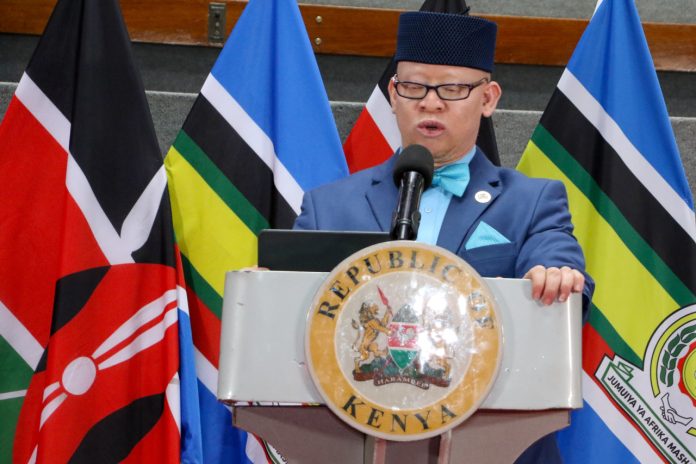
The Government Spokesman Isaac Mwaura has said SHA will offer more benefits to Kenyans as it will offer access to medical care by all, through enhanced Government financing.

Mwaura said the Bottom-Up Economic Transformational Agenda (THE BETA PLAN) prioritizes Universal Health Coverage for all Kenyans, regardless of their financial status.

“This initiative was built on four key pillars: Sustainable Health Financing, Effective Supply of Health Care Products and Technologies (HPT), Adequate Healthcare Workforce, and Comprehensive Integrated Health Information Systems,” said Mwaura.

He said sustainable financing has been a challenge under the NHIF, which primarily relies on contributions from employed individuals.

He said this has hindered broader health financing, which is essential for providing equitable healthcare services, to all Kenyans.

The Government has come up with SHA as an alternative way to address the challenges faced by NHIF,” said Mwaura.

He said the SHA aims to include all adult Kenyans in contributing to a sustainable fund that covers a wider range of health services.

“Unlike NHIF, which mostly required additional community fundraising efforts, SHA ensures that every citizen can access quality healthcare, through enhanced Government financing,” said the spokesman.

“This is possible through the newly introduced legal frameworks aimed to facilitate the transition to Universal Health Care,” he said

According to Mwaura, the frameworks include; the Primary Healthcare Act, the Social Health Insurance Act, along the Emergency, Chronic, and Critical Illness Act.

“Together, these frameworks will create three thematic funds; the Primary Health Care Fund, the Emergency, Chronic, and Critical Illness Fund, both of which will be publicly financed, and the Social Health Insurance Fund, to be financed through individual contributions.

He said the shift aims at providing comprehensive, quality, and equitable healthcare for all Kenyans, including those in the informal employment sector which will be done through the engagement of Community Health Promoters (CHPs),” he said.

“SHA envisions a system in which preventive and promotive healthcare services work towards early diagnosis and treatment, further lessening the disease burden and Kenyans should embrace it,” he said in a press release.

Under NHIF, registered members contribute a minimum of Kshs.500 per month, regardless of their financial situation.

However, according to Mwaura, upon registration with SHA, Kenyans will gain access to consultation, diagnostic, laboratory services, drug administration, and treatment for various diseases, including non-communicable diseases.

“These services will be available in Levels two, three, and selected Level four facilities,” he added.

He told Kenyans that SHA will also expand coverage for chronic and critical illnesses such as cancer, specialized surgical procedures like organ transplants, and end-of-life care.

“Another key feature of SHA is the enhanced Linda Mama package, which supports maternal and child healthcare,” he said.

“This package addresses high maternal and infant mortality rates by covering all antenatal, delivery, and postnatal care services, unlike NHIF, which provided antenatal and delivery care only,” said Mwaura.

“Additionally, essential newborn care including immunizations and management of neonatal complications will be available at Levels 2-6 hospitals. This comprehensive approach ensures better health outcomes for mothers and their children, reinforcing the commitment to universal health coverage in Kenya,” he said

How G-7 is repositioning Women for the Country’s leadership ahead of next elections

0
ida odinga
By Anderson Ojwang

A new political landscape is fast unfolding in the country ahead of the 2027 general elections. It could lead to a scramble for top positions in the government, elective, and party seats, respectively. 

In a radical shift from once passive players in the country and county political landscape, today women have become the pullers and pushers of the political agenda in the nation.

The formation of G-7, a caucus that brings together the country’s seven women governors and patronized by Mama Ida Odinga is out to cash on the UN meeting of 1995 in Beijing, which laid out the third gender rule.

The G7 group includes Anne Waiguru, the current Chair of the Council of Governors and Governor of Kirinyaga, alongside Wavinya Ndeti of Machakos, Kawira Mwangaza of Meru, Susan Kihika of Nakuru, Fatuma Achani of Kwale, Cecily Mbarire of Embu, and Gladys Wanga of Homabay.

Previously, the United Nations had organized four world conferences on women. These took place in Mexico City in 1975,  Copenhagen in 1980,  Nairobi in 1985 and Beijing in 1995. 

The 1995 Fourth World Conference on Women in Beijing marked a significant turning point for the global agenda for gender equality. 

The Beijing Declaration and the platform for action, adopted unanimously by 189 countries, is an agenda for women’s empowerment and is considered the key global policy document on gender equality. 

With the endorsement of mainstreaming of the third gender rule by President William Ruto and the immediate former leader of the Orange Democratic Movement (ODM) Raila Odinga, G-7 is out to change the country’s socio-economic and political matrix.

During the launch of the Women Governors Caucus G7 Strategy in Nairobi, Ruto said that his government has pursued radical strategies to actualize the constitution’s gender inclusion threshold and will lead at the front in highlighting his pledge.

He therefore tasked the UDA party chairperson Cecily Mbarire to formulate a new set of laws that will require a male presidential candidate to have a female running mate and vice versa.

“When Riggy G (DP Rigathi Gachagua) and myself agree on how things will go in the future we must also agree that going forward if a man is a candidate for president the woman must be a running mate and if a woman is a candidate then a man should be the running mate,” Ruto said amid a cheering crowd then.

He added: “We must be deliberate and intentional about it otherwise it will never happen. The same should also be made mandatory for Governors and all leadership positions within the party,” he said.

Already, the caucus recently achieved a milestone after it supported the appointment of Homa Bay governor Gladys Wanga to ODM national chair, a powerful seat that was previously male-dominated after the party came into existence in 2007.

Mama Ida in an Interview with The Western Insight Media said the G-7 will be a game changer in the country’s social-economic and political landscape of the country.

“We are not only driven by politics but the general welfare of women and how to economically empower them and to reduce dependency ratio. How can we give women both in leadership and outside leadership power to make informed choices and generate wealth?” she said.

Mama Ida said the agenda of the caucus was to ensure that in the next general elections, the number of female governors should have tripled from the current seven to at most twenty-four.

She said it was unfortunate that men currently hold forty governor seats, and this defeats the sole objective of gender equality.

‘It is sad that out of the seven we have; men are already scheming to take one away. This is why we are united for a common purpose/ watch the space. We will change the conversation,’ she said.

Mama Ida said the caucus has arranged a series of meetings across the country with the main objective of capacity-building the women and economic empowerment.

She said that the last two meetings in Kirinyaga and Machakos counties witnessed the provision of various economic drivers to women groups to enhance wealth creation and financial stability.

“In Kirinyaga county, women groups from Mwea received rice processing machines and driers, similarly in Machakos, they received sunflower seeds, beekeeping facilities, and poultry among other incentives. We want to draft our own story in the economic empowerment,’ she said.

Mama Ida said the caucus was also thinking of forming a G-7 bank for women where they can save and get loans to empower themselves.

She said financial stability would go a long way in enabling the female folk to achieve their political agenda without having to rely on men for funds and ‘donation of political seats.’

Mama Ida said the women folk were repositioning themselves for a stab in the country’s presidency, governor, national assembly, and county assembly seats.

“We have already rolled out our campaigns that within the next three years, we shall have strategically identified our candidates and mobilized enough resources to support their campaigns,” she said.

Mama Ida said 60 percent of votes cast in all elections in the country are from women and it was important that they cash on their numerical advantage to take over various leadership cadres in the nation. Governor Waiguru, there is a need to accelerate bridging the gap in top leadership positions.

“Women are not just beneficiaries of development efforts but are powerful agents of change, catalysts for economic growth and pillars of societal stability thus the need to invest in their empowerment,” she said.

 Governor Ndeti who also spoke in Kirinyaga called on her counterpart Anne Waiguru to seek national office.