By Anderson Ojwang.
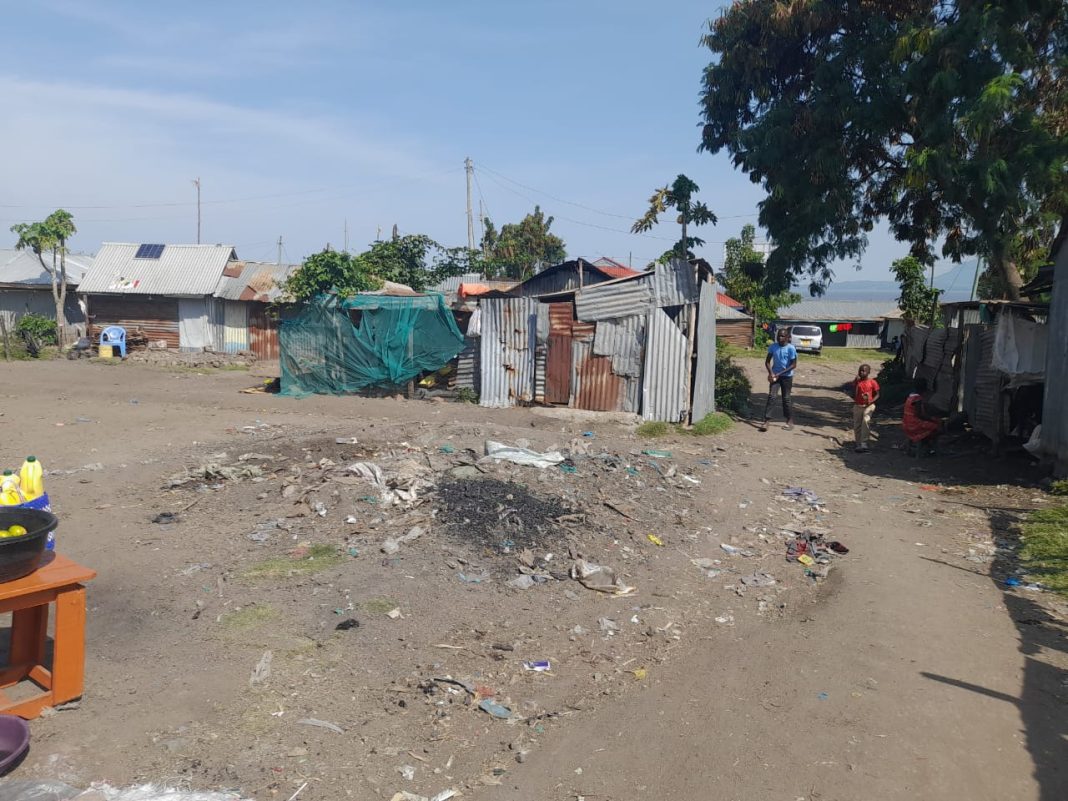
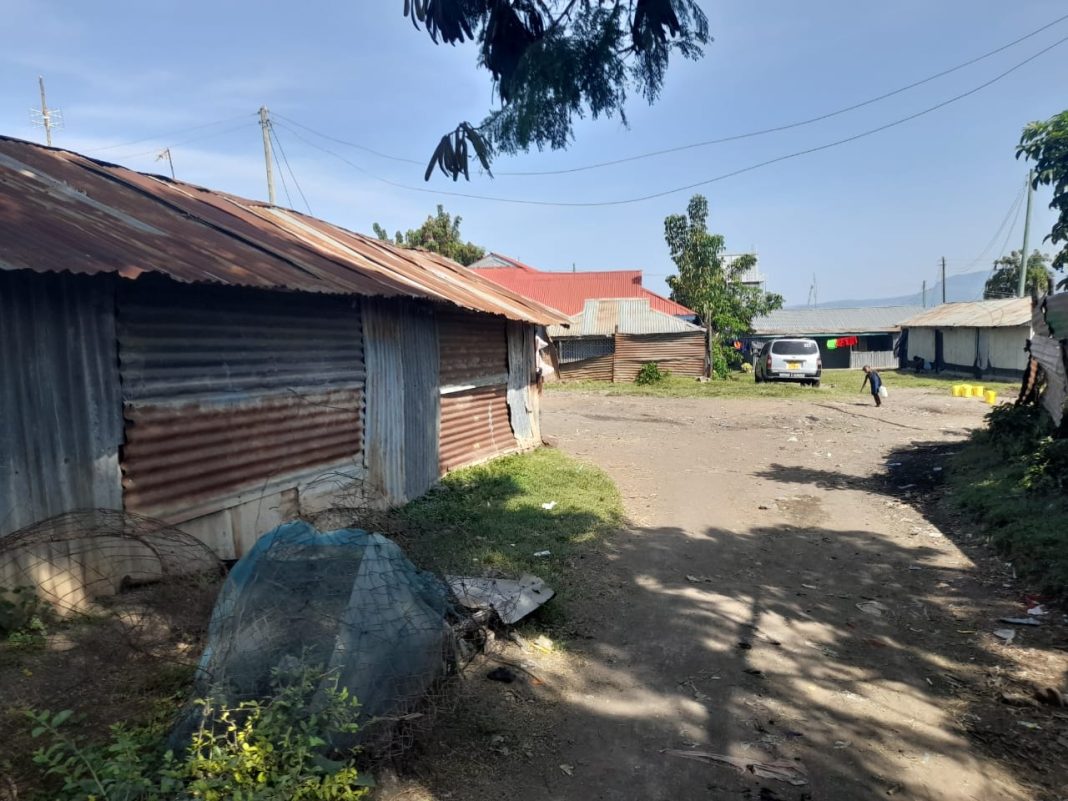
From any direction you drive into Homa Bay Town, either from Kendu Bay to Homa Bay or from Migori to Homa Bay and from Rangwe to Homa Bay, one will be greeted by the site of derelict, rickety, delipidated and crumbling Mabati structures.
Driving into the town centre, the sight of dusty, rusty and laughing mabati structures become more prominent and it becomes very difficult for the first-time visitor to the county of endless potential to know the actual and exact town centre.
Homa Bay the county of endless potential can be viewed as the only town in Kenya with the highest number of estates with Mabati structures as demand for modern houses knocks.
Out of the 12 estates in Homa Bay town, only three have modern housing facilities while the rest are made up of mabati structures.
A glimpse of hope for modern housing facilities in the town has been provided by the Government’s affordable housing program which has 200 houses that are ready for occupation and a further plan to build another 1000 houses, which is still way below the demand, a drop in the ocean.
Once the headquarters of the greater Southern Nyanza that included Migori, Kisii and Nyamira, Homa Bay has remained in slumber as the three counties witness real estate boom and development.
Kisii, Nyamira and Migori counties have witnessed heavy investments in real estate in residential and commercial with modern housing facilities and skyscraper offices and hotels in the region.
For Homa Bay, more Mabati structures have continued to mushroom with the demand for houses by university students, the business community and civil servants.
The following estates in Homa Bay boast of modern housing facilities and include Site, Arunda and Alendu while Shauri Yako, Sofia, Makongeni, Misita, Junction Kodoyo, and Kapita are all mabati structures.
Recently, Homa Bay Governor Gladys Wanga requested President William Ruto to make the town the next city as it had adequate facilities to be a city.
And President Ruto promised that he would make Homa Bay town one of the cities. Currently, Kenya has five cities namely, Nairobi, Mombasa, Kisumu, Nakuru and Eldoret.
“We are planning to make Homa Bay a city and I will ensure it is done,” he said.
Requirements for a town to acquire city status include:
For a town to be granted city status, the Senate Committee on Devolution and Intergovernmental Relations is required to approve.
According to the Urban Areas and Cities (Amendment) Act, 2019, to classify a town as a city, it must have a population of at least 250,000 residents in line with the final gazetted results of the last population census.
The town is also required to have the capacity to effectively deliver essential services to its residents and must actively engage them in the management of its affairs.
Other requirements include proper infrastructure including roads, street lighting and markets. Disaster management should also be prioritized.
Additionally, a town must also have an effective waste disposal system to become a city.
However, as it stands, Homa Bay does not meet some of these requirements.
Plans by the government, including development projects, could however enable the region to meet the qualifications for elevation to city status.
Governor Gladys Wanga, who hosted the Head of State, is on record saying her administration will make Homa Bay a city in 10 years. She said she wants to go down in history books as the county boss who led Homa Bay to new heights.
According to University don Eng Lawrence Gumbe, there is an urgent need to plan the town properly and that the plans are implemented to spur growth and development in the town.
‘As a child growing up in Kisumu, my father was in charge of housing in the city. I witnessed how they planned and developed housing, parks, social halls and other infrastructure. I saw estates including Ondiek, Makasembo, Arina, Arguing’s Kodhek, and Tom Mboya being developed and occupied.
Later, as a member of the Kisumu city board and chair of the planning and infrastructure committee says, “We developed pertinent plans and oversight construction. This is the route the county government of Homa Bay must take to change the image and development of the town” he says.
A planner and University don Prof G Nyotumba says town development is need-based and on demand as they say begets supply.
“ For spectacular real estate development to occur in Homa Bay, it must be as a result of the demand. That kind of transformation is referred to as gentrification. It is already happening in Homa Bay albeit at a slow pace.” he argues.
However, Nyotumba says certain things must be done and put in place to spur the growth and boom in the real estate in Homa Bay town.
The county government must strictly enforce physical planning handbook guidelines, work on walkability which involves tarmacking, paving drainage, sun-shielding canopies and encourage economic activities within the town that attract both residential and commercial tenants thus pushing up the demand for decent permanent buildings.
“The county government should encourage the residents to pool resources for real estate development unlike currently where it is generally undertaken by sole individuals,’ he argues.
Nyotumba says there is a need for the provision of adequate quality services for residents like electricity, water and sewerage, efficient public transport, affordable and dependable health services, security and financial services.
Former Chief Principal Mr. Paul Otula says the county government could be losing hundreds of thousands of shillings inform revenues in construction and fees payable to the county government.
“Its unfortunate that most of the estates in the town are mabati structures this makes the town as one with the lowest returns in terms of rent income and this is not good for investors,” he says.
Otula argues that mabati structures make the town more of an informal settlement and slums and this negates development and investment.
A resident Mr. Benard Obop says that currently there is a housing crisis in Homa Bay and developers have opted to construct mabati structures to meet the demand.
“It is high time, the county government stopped construction of mabati structures and gave a guideline on what kind buildings to put up in the town” he argues.