Home Blog Page 130

80 Percent of Children Under 14 Vaccinated Against Measles and Typhoid in Homa Bay

0

By Habil Onyango

Homa Bay County has achieved 80 percent of its target in the recently concluded integrated Measles-Rubella and Typhoid Conjugate Vaccine campaign.

The campaign, which launched on July 1 and ran until July 14, 2025, aimed to boost child immunization coverage and reduce the burden of these preventable diseases.

It targeted children aged 9 months to 59 months for the Measles-Rubella vaccine and those aged 9 months to 14 years for the Typhoid Conjugate Vaccine.

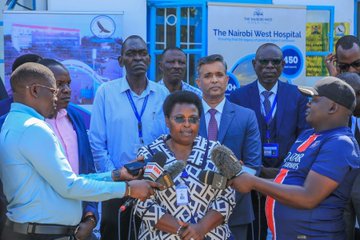
According to Dr. Kevin Osuri, Homa Bay’s Health Chief Officer, the goal was to vaccinate 143,000 children against Measles-Rubella and 650,000 against Typhoid across all eight constituencies in the county.

“We are pleased to have achieved over 80 percent coverage for our targeted age group of 9 months to 14 years in our campaign against these two diseases,” he stated.

Dr. Osuri highlighted that Typhoid fever continues to impact thousands of families in Homa Bay, particularly in informal settlements and rural areas with limited access to clean water and sanitation.

He explained that the Typhoid Conjugate Vaccine provides strong protection for at least four years with just one dose and has now been incorporated into the national routine immunization schedule at 9 months of age.

Dr. Osuri noted that Homa Bay has been experiencing an increase in cases of these diseases, which pose significant challenges and mortality risks to children.

“There have been several cases reported in various health facilities, including those involving hospitalized children and fatalities,” he added.

He admitted that both diseases have developed resistance to available medications, which is a primary reason for launching the vaccination campaign.

“With the rise of drug-resistant strains, treatment has become more difficult and costly, with our children being the most affected,” he explained.

Dr. Osuri revealed plans for a mop-up exercise scheduled for today (Tuesday) at all identified outreach sites, including churches, mosques, and schools, to ensure that any children who missed their vaccinations are accommodated.

The county has been utilizing Community Health Volunteers and other health workers to administer vaccines, with support from UNICEF and Lwala Community Alliance.

“We have organized follow-up visits to several institutions to conduct mop-ups, ensuring that no child is left out of this vital campaign,” he said.

“I want to take this opportunity to thank our healthcare workers and Community Health Volunteers, who are the backbone of our health system, and to express gratitude to our development partners for their support and the success of this campaign,” he concluded.

The vaccines were administered free of charge at all public health facilities and outreach sites.

Siaya’s County Solicitor threatens to sue Gem MP over alleged defamation, demands apology

0

By Reporter 

Siaya County solicitor has threatened to sue Gem MP Elisha Ochieng Odhiambo over alleged defamation and wants him to publicly apologize to him.

Leonard Okanda through his Advocate, Rakewa Otieno and Co. advocates, he wrote “Demand for retraction, apology and admission of liability for defamatory statements.”

He alleges that on separates dates of July 27th 2024 and July 12th 2025, Odhiambo at a funeral and memorial service in Nyachwinya village in Alego Usonga constituency uttered scandalous and inherently defamatory statements, suggesting criminality, dishonesty, corruption and professional misconduct on Okanda.

Otieno wrote “The natural and ordinary meaning as well as the client’s innuendo, conveyed by your words is that our client:

Knowingly and unlawfully withheld a sum of  Sh 232M owed to the late Evans Oruenjo, that he demanded a bribe before releasing Sh 102M to the late Evans Oruenjo.

That he intended to benefit personally from money due to a, misappropriated or diverted funds meant for the support of children of the late, implying theft, deceit and dereliction of duty.

That he is corrupt, dishonest and unfit to hold public office.”

Otieno said his client Odhiambo knew that his client does not owe the late Evans Oruenjo any money, personally or professionally and that he had no contractual, legal or fiduciary obligation to the deceased or to hie estate.

He said his client is a civil servant employed by the County Government of Siaya and that county government of Siaya is a distinct legal entity, separate and independent from Okanda  as an individual.

“Any liabilities or dealings relating to county finances, if any related, would rest solely with county government of Siaya and nor our client in a personal or professional capacity, “he wrote.

Otieno said should the Mp fail to apologize within the prescribed time frame, he will institute appropriate legal proceedings against him.

When we contacted Odhiambo, he neither picked our calls nor responded to our text messages.

The forgotten Deputy Governor: Will Oduol Denge have the last laugh?

0

By Anderson Ojwang’

Currently, Dr William Oduol Denge is the country’s forgotten deputy governor, pushed to the periphery by the power that be at the county government. After surviving an impeachment, Oduol became a pariah and can only be seen but not to be heard.

Despite his contribution to the election victory, Oduol is unwanted man, scorned and disliked at the County Government for his alleged anti-corruption crusade and a fall out with the Governor James Orengo.

Oduol for the second time in his political stint, has borne the wrath of the power that be after 2013 Orange Democratic Movement (ODM) nomination for the governor seat, where he was denied victory after emerging stronger candidate to Dr Oburu Oginga, the current Siaya senator.

Oduol’s victory was nipped from the bud after the party leadership opted to award the certificate to little known Cornel Rasanga Amoth.

Rasanga went to win the contested gubernatorial election.

Rasanga’s victory was short lived after the Kisumu High Court nullified his election. In the repeat election, Rasanga won and Oduol took a political leave in 2017.

But in 2022 general election, ODM and Orengo opted to recruit Oduol into their camp and made him the running mate that catapulted them to victory.

But after election, a fall out between Orengo and Oduol occurred over alleged corruption in the administration and other malpractices.

The Siaya County assembly passed the motion that impeached Oduol, but the senate rescued him from the jaws of his enemies and gave him a new lease of life.

But as fate, would have it, the administration drove him to the oblivion, and he became a stranger in his own turf.

“The office the deputy governor has completely been disabled.

All staff have been directed not to communicate neither take instructions from the DG.

The DG does not get invited to cabinet meetings and his benefits and allowances withdrawn including fueling his official county car on his own,” Oduol said.

But over the weekend an open letter penned by a resident, one Julius Owino Oluoch Ahere opened a can of worms about the pain and suffering of Oduol.

He wrote “Dear Governor Orengo,

I am writing to you as a concerned resident of Siaya County to express my deep concern regarding your prolonged absence from official duties as Governor of Siaya for now more than three weeks and severally before. 

You are a public servant to all of us irrespective of afflictions. We are all concerned Dear Governor.

Your absence from public view and official duties has raised serious questions and concerns among residents about the continuity of governance and leadership in our County.

We, as citizens, have a right to know the whereabouts of our elected officials and the reasons for their absence, particularly during times when important decisions and policies are being formulated and implemented.

Therefore, I request a clear and transparent explanation regarding your current location and the reasons for your absence from the Governor’s office and public engagements.

This information is crucial for maintaining public trust and confidence in our state’s leadership.

Article 182(4) & (5) provide that if a Governor is unable to fulfill their duties, the Deputy Governor assumes the office.

If both offices are vacant, the Speaker of the County Assembly acts as governor for a limited period, with an election to be held within 60 days.

Recently we saw the Speaker received a PS for the state department of Livestock – Hon Jonathan Mweke and commissioning County Government projects (in place of the CGS Governor Orengo and or The Deputy Governor Hon William Oduol). 

I look forward to your prompt response and clarification on this matter.”

Oduol in his response said he was happy that he had vindicated after Orengo fell out with majority MPs from Siaya.

He wondered why if President William Ruto and former prime Minister Raila Odinga were able to have a handshake at the national level, what has stopped a similar gesture at the county level.

Oduol said despite the senate recommending that they work together for the betterment of Siaya, Orengo has completely refused to accept him back.

“Currently Siaya County is on auto pilot.

The governor is away in India, but he has not handed over to me as the deputy governor to act in his absence, so no one knows what is going on in Siaya.

We have a situation where you have the governor’s PA and security giving orders on who and what needs to be done.

Similarly, we have a situation, where we have critical finance positions that is the CEC Finance and Chief officer of finance both in acting capacity with no supervisory undertakings from either the governor or his deputy.”

Oduol said his enemies and cartels in the county are very happy with the situation because they fear his distaste for graft and plunder.

“The assembly on the other hand has also abdicated their oversight role preferring and instead have reverted to getting involved in implementation function, a preserve of the county executive.

Why would the speaker of the county represent the governor in his absence on an executive role while the governor is away?

Why not the DG?

And if the DG cannot represent why not someone senior from the executive?” He quipped

Oduol said his attempts to reconcile with Orengo have been rebuffed and he has opted to take a back seat and watch from the sides.

I have made many attempts to reach out to Orengo without any luck. I have decided to take a back seat, but I am happy that I have been vindicated. 

All the MPs from Siaya have raised the same issues that I raised in 2022, over lack of leadership, graft, lethargy and hands off management style amongst many others,” he said.

2nd edition of Roan half marathon to curtain raise for Devolution conference

0

By Habil Onyango

Homa Bay County is set to host the 2nd edition of the Roan Antelope Half Marathon at Ruma National Park from August 10 to 11, 2024.

The event, organized in collaboration with the County Government and the Kenya Wildlife Service (KWS), will also serve as a curtain-raiser for the Devolution Conference, scheduled for August 12-15.

This conference is expected to attract over 12,000 delegates from across the country and beyond.

Ruma National Park is the only park in Kenya that is home to the endangered roan antelope species, with a current population of just 24.

During a mock run at the park, Governor Gladys Wanga emphasized that the Half Marathon will help showcase Ruma National Park to a global audience.

“This event is a partnership between the County Government, KWS, and the Kenya Tourism Board.

We want to use it to market our only National Park in the western circuit and ensure it appears on the global map,” Wanga stated.

She added that the park’s existence aims to economically benefit the local communities, which have not yet fully utilized this potential.

According to Wanga, Ruma has the potential to attract a large number of tourists, and with effective marketing, it can significantly boost the economic status of the locals and the entire county.

“We have several endangered species in the park, including roan antelopes, black rhinos, and Rothschild giraffes.

Through this run, we want to showcase these unique animals to the world,” she said.

Wanga announced that the event will officially begin on August 10 in Homa Bay Town, where skaters and cyclists will participate in a curtain-raiser for the Devolution Conference.

This will be followed by tours of several islands in Lake Victoria, including Takawiri, using water buses and other boats.

Visitors will enjoy lunch before docking at Sindo Beach and proceeding to their final destination for game drives.

There will also be a hackathon for visitors from across the country, where they can discuss their visions for the future of devolution in Kenya.

Wanga challenged the local business community to take advantage of this event to enhance their incomes.

The Governor was joined by the Minority Leader in the National Assembly, Junet Mohamed, and Captain Kenneth Ochieng, who represented KWS Director General, Dr. Erustus Kanga.

Junet commented that if well-marketed, Ruma National Park has the potential to improve Homa Bay County’s economy in the same way that the Maasai Mara National Reserve has benefitted Narok County.

“One of the factors boosting Narok County’s economy is Maasai Mara.

If Ruma is marketed effectively, it could elevate Homa Bay to one of the richest counties in Kenya,” he said.

However, Junet noted that there is a need to construct luxurious hotels and expand existing airstrips to accommodate visitors.

On his side, Kanga added that the marathon serves as a rallying call for the survival of one of Kenya’s most iconic critically endangered species and reflects a collective commitment to conservation and sustainable development.

Kanga stated that the government, through KWS, is committed to restoring and enhancing the park, which is less visited than other tourist destinations.

“Plans are underway for infrastructural development and investment opportunities for luxury accommodations, which will improve the livelihoods of the local community and contribute to the economic growth of the country,” he said.

He highlighted that the Western circuit has been neglected for some time, but there is now a realization that collaboration is essential to achieve KWS’s vision of thriving wildlife and healthy habitats for all.

The park is currently home to diverse animal species, including 24 roan antelopes, over 800 Nubian giraffes, and viable populations of both black and white rhinos.

“The Roan Antelope Half Marathon is a shining example of what can be achieved when national and county government entities unite for a vital cause,” Kanga remarked.

He commended the Governor for her vision and dedication to this initiative, which is instrumental in the conservation of the roan antelope.

The Battle of the Principals against the Deputies: Who will blink first, and will it hold to 2027 elections?

0

By Anderson Ojwang

In what was viewed as a win-win situation and was never contemplated as loss-loss situation for Mt Kenya ahead of the 2022 general elections, has currently turned out to be a battle royale between the principals against their deputies.

In the run up to the presidential election, Mt Kenya region negotiated for their son and daughter to be the running mates of the two leading presidential candidates, Kenya Kwanza coalition led by the then deputy president William Ruto and Azimio la Umoja coalition of former Prime Minister Raila Odinga.

In an intensive negotiation between Raila and the Mt Kenya business community and professionals, the former Prime Minister was prevailed upon to drop his running mate, former vice President Kalonzo Musyoka for former Justice Minister Martha Karua.

Ruto also defied his allies to settle on the now the impeached deputy President Rigathi Gachugua  after he was floored in a secret ballot election by the current deputy President Prof Kithuri Kindiki that nearly resulted in a fall out.

Ruto and Gachagua  team rode to victory as Raila and Karua leaked their wounds after the loss both at the ballot and Supreme Court.

But the plot for a win-win situation has turned to be a nightmare for the Murima after Gachugua was hounded out of the office while Karua broke away from the Azimio Coalition to chart a new political journey.

The emerging political realignment in the country brought Raila and president Ruto together to cobble Broad based government that allowed experts from the Orange Democratic Movement to join the Kenya Kwanza government.

Karua and Gachagua  have now become close allies and are currently visiting United States of America (USA) to meet Kenyans in diaspora to sell their political agenda.

Gachagua while speaking in Seattle, USA said the work of the boys was to take care of their sisters and that is one of the reasons he accompanied Karua to the function.

“I come here to escort my sister and if anyone person had ulterior plan against my sister. I will protect her.

When I looked at how things are going in Kenya and the struggle we are having with Kasongo, I decided to go look for my sister, because she has been the struggle to liberate the country for a long time. She has fought for the struggle and is more experienced than us.

I went to her house in Kirinyaga, and I told her my sister, I have come, this battle is not easy.

We need all of us to be together.

And she was very receptive, and she said to me, my brother, welcome, lets walk this journey together,” he said.

Gachagua also claimed that Raila’s political value has diminished and that his support for Ruto will not stop them from winning the presidency in 2027 elections.

Karua speaking at the same function said the opposition must stick together even though they are many who harbor presidential ambition and she also declared her candidature.

“I am done with running mate business. I finished that era in 2022.

I am also ready to support, if another candidate is chosen and I will support.

Kenya is bigger than all of us.” she said

Ruto and Raila have become like Siamese twins with the former Prime Minister rubbishing the one ‘wantam’ (One Term) mantra and asking his political backyard to stop political activism and instead concentrate on development.

In response Ruto has held series of development meetings with leaders and stakeholders from Nyanza that has opened the region to government tray full of development projects.

In a recent meeting with leaders from Kisumu, Ruto said unity government was not conceived by Raila and himself but God.

“The Broad-based government is neither a creation of Raila nor Ruto, but it is God sent and was aimed at uniting the country for prosperity,” he said.

ODM National Chairman Gladys Wanga has maintained that the ODM will not walk out of the broad-based government and that they support President Ruto agenda of uniting the country and development programs.

Before he exits from the coalition, Karua’s party wrote “Kindly take note that our stay in Azimio La Umoja One Kenya Coalition is not tenable due to the prevailing political developments,” the letter by Narc Kenya Acting Secretary General Asha Bahir addressed to the Azimio Secretary Junet Mohammed read.

“As NARC Kenya, by way of this letter, we are giving notice to exit the coalition as stipulated in the exit clause (s)in the Coalition Agreement.”

“Our goal with this rebrands is to let people know that we are now the People’s Liberation Party, a party rooted in liberation,” Karua stated.

“We have introduced new colors—purple, lilac, and white—while maintaining our identity as a flower party.

Previously symbolized by a green rose, we now embrace the purple rose, which represents love, friendship, and peace. Our slogan is ‘Unite – Liberate.”

But Gachagua has declared that his party DCP was the only political party in   Mt Kenya region and that is what the region will use to seek alliance with other political outfits and leaders.

“Now we have our party DCP. You know our party.

That is the party for this region. 

We will use this party to seek alliance from other regions. 

The bedrock of DCP is Mt Kenya.

We must have a strong party with over 150 MPs to protect our interest in the parliament.

We must have over 20 senators to protect our interest in the senate and we must have over 800 MCAs to protect our interest in the county assemblies,” he said.

This declaration may ahead of the general elections bring discomfort between Karua and Gachagua  during the elections while analysts are in wait whether Raila will walk with Ruto to the ballot.

Kenya Officially Borderless for Africans, Open to Business

0

By Billy Mijungu

Kenya has taken a bold and historic step by officially removing visa requirements for all African countries and most Caribbean nations, ushering in a new era of openness, opportunity, and Pan-African unity.

With no entry forms, no prior approvals, and no waiting periods, visitors from across the continent can now simply arrive no restrictions, just a heartfelt Karibu.

This move signals more than just a change in immigration policy.

It is a strategic invitation to African businesses, creatives, students, and investors to come and engage with Kenya’s dynamic economy.

The country has thrown open its doors to cross-border innovation, trade partnerships, cultural exchanges, and the tourism boom that is already beginning to take shape.

With only Libya and Somalia exempted for now due to ongoing instability, Kenya’s message to the rest of the continent is clear.

We are ready to lead a future without artificial borders. We are open for business, for collaboration, for community.

In the days following the announcement, Nairobi has seen a surge of interest from African entrepreneurs and creatives. Hotels are reporting early bookings from Accra, Lagos, and Harare.

Travel companies are designing holiday packages for African families and youth travelers.

Event organizers are planning continental expos, music festivals, and knowledge-sharing forums.

Tourism is only the beginning. Kenyan fintech companies are already exploring joint ventures with West African counterparts.

Agribusiness firms are linking up with partners in Zambia and Ethiopia. Nairobi’s tech ecosystem is expanding its reach into Francophone markets with fresh vigor.

Local artisans and designers are collaborating with Senegalese, Ivorian, and Ghanaian counterparts to showcase an Afrocentric lifestyle to the world.

The new policy also places pressure on infrastructure planning.

Airports, roads, hospitality sectors, and local government systems must prepare to accommodate the growing wave of inter-African movement.

It is an opportunity to expand jobs, improve services, and rethink mobility across East Africa and beyond.

Kenya’s decision stands as an example to the rest of the continent.

Free movement of people is no longer a theory waiting for approval.

It is a lived experience now.

And it will inspire conversations about reciprocal access, visa-free blocs, and the long-awaited dream of a single African passport.

This is also a call to African airlines to reimagine air travel across the continent.

Affordable and direct connections are no longer optional.

The market will demand them.

The people are ready to move, to build, and to transform Africa together.

In the spirit of this vision, Kenya is not just opening its borders.

It is opening its heart.

The future of Africa must be built by Africans together, freely, and boldly.

With this single stroke, Kenya has stepped into the future.

Let the journey begin.

The Shadow Play: Gachagua’s Gambit? DCP leader rhetoric sparks fear of ethnic manipulation

0

By Remmy Butta

Former Deputy President Rigathi Gachagua’s continued public pronouncements, fueled by a bitter fallout with President William Ruto, are increasingly raising alarm.

Gachagua’s strategy, born from palpable anger and resentment, may involve dangerously playing the ethnic card, specifically aiming to incite the Kikuyu community against the Kalenjin, risking the reopening of wounds barely healed since the 2007/08 post-election violence.

A Man Seething, A Mission Unfolding?

Gachagua’s dramatic fall from grace – becoming the first sitting Deputy President in Kenya’s history to be impeached – has left him politically isolated and visibly aggrieved.

His attacks on President Ruto, his former boss and ally, have escalated from policy disagreements to intensely personal and tribal rhetoric.

His combative history is noted; this is a leader who previously turned against his one-time ally, former President Uhuru Kenyatta.

Now, targeted at Ruto, his actions suggest a man driven by a singular, personal mission, one that prioritizes vengeance over national stability.

The Dangerous Card: Kikuyu vs. Kalenjin?

The most chilling aspect emerging from Gachagua’s narrative, particularly highlighted in his press conference before leaving the country, is the perceived attempt to frame current national challenges through a purely Kikuyu lens of victimhood allegedly orchestrated by a Kalenjin presidency.

By repeatedly emphasizing perceived marginalization of the Mt. Kenya region and invoking historical injustices, Gachagua is deliberately crafting a narrative designed to stoke resentment among the Kikuyu populace.

This tactic strikes at the heart of Kenya’s most painful recent history.

The 2007/08 post-election crisis, primarily pitting Kikuyus against Kalenjins and other communities, resulted in over 1,000 deaths and hundreds of thousands displaced.

The specter of that violence, and the ICC cases that followed (including President Ruto’s, which were eventually terminated due to witness interference and lack of evidence), remains a potent and dangerous memory.

Gachagua’s rhetoric is a deliberate, cynical ploy to resurrect these tribal animosities for political gain.

“Kenya Will Not Burn” – But Concerns Mount.

While Gachagua may couch his language in terms of “fighting for his community,” the subtext and the inflammatory nature of his accusations are causing deep unease.

The implied threat – that the unresolved tensions he claims to highlight could boil over – is unmistakable.

His focus on the shelved ICC cases in the context of current grievances is seen by many as a particularly reckless attempt to link past trauma to present politics.

Kenya has worked hard to rebuild since 2008.

The 2010 Constitution, devolution, and concerted efforts towards national healing, however imperfect, represent significant strides.

Gachagua’s strategy, if it indeed involves weaponizing ethnicity as alleged, poses a direct threat to this fragile progress.

A Nation and World on Alert

The Kenyan nation has every right to be worried.

Political competition is healthy, but deliberately sowing division along ethnic lines for personal or factional advantage is a dangerous game with potentially catastrophic consequences.

The international community, which invested heavily in helping Kenya recover from 2008 and has a stake in the stability of this regional economic powerhouse, is also watching with heightened concern.

A return to large-scale ethnic violence in Kenya would have devastating regional repercussions.

Playing with Fire

Rigathi Gachagua’s current path appears increasingly defined by bitterness towards William Ruto.

The emerging fear is that his chosen weapon is the deliberate and dangerous exploitation of historical Kikuyu-Kalenjin tensions.

By invoking the ghosts of 2007/08 and framing complex national issues through a lens of tribal persecution, he risks igniting a fire that could consume far more than just his political ambitions. Kenyans across all communities have repeatedly declared, “Kenya will not burn.”

Upholding that resolve requires vigilance against rhetoric that seeks to divide, and a collective rejection of leaders who prioritize personal vendettas over the unity and peace of the nation.

Gachagua’s words and actions in the coming weeks will be scrutinized more closely than ever, as the nation hopes his hidden cards do not include the match that could light the tinderbox.

Kenya has been down this path before, and the cost was catastrophic.

The nation cannot afford a repeat.

It is imperative that all leaders, including Gachagua, exercise utmost responsibility, prioritize national unity over personal or factional interests, and unequivocally reject any rhetoric or action that threatens to reopen the healed wounds of the past.

The Kenyan people deserve peace and progress, not a descent into manipulated conflict fueled by the bitterness of a single individual.

Vigilance from civil society, the media, religious leaders, and the international community is crucial to ensure that Kenya’s hard-won stability is not sacrificed on the altar of one man’s political vendetta.

Why the construction of Kipchoge Keino stadium in Nandi is a milestone in sports development in the country

0

By Remmy ButTa

In a landmark moment for sports development in Kenya’s athletics heartland, Nandi County Governor.

Stephen Sang witnessed as the official site for the transformative Kipchoge Keino Stadium was handed over to a contractor.

This marked the commencement of its highly anticipated construction.

This event signifies a monumental stride towards realizing a long-held dream and solidifying Nandi’s global reputation as a cradle of champions.

The ambitious project, now firmly under the capable stewardship of the Ministry of Defence and the Ministry of Sports, Culture, and The Arts, promises to deliver an ultra-modern sporting complex that meets the highest international standards.

Governor Sang, speaking during the event, hailed the handover as “a bold leap forward in our county’s sporting journey,” a journey intrinsically linked to the legendary Kipchoge Keino, whose legacy the stadium proudly bears.

A Beacon of Excellence:

Once completed, the Kipchoge Keino Stadium will be a world-class facility boasting: A modern tartan track compliant with World Athletics standards.

A 10,000-spectator seating capacity, State-of-the-art amenities designed to host international competitions and Comprehensive facilities supporting elite athlete training and development.

The 10,000-seater stadium, built to CAF and World Athletics standards, addresses a critical need, providing Nandi’s world-renowned athletes with a much-deserved, top-tier training and competition ground within their own county.

Its significance is further amplified by its designation as an official training ground for the upcoming 2027 Africa Cup of Nations (AFCON) tournament, bringing international prestige and opportunity directly to Kapsabet.

Governor Sang, speaking on behalf of the people of Nandi, extended profound gratitude to His Excellency the President of the Republic of Kenya, Dr. William Samoei Ruto, for his pivotal role in actualizing this transformative project.

“His commitment to uplifting sports infrastructure across the country continues to inspire hope and unlock the immense potential residing in our youth,” Governor Sang stated.

The official site handover ceremony was led by a high-powered delegation reflecting the project’s national importance. Key figures present included: Dr. Patrick Mariru, Principal Secretary, State Department for Defence, Mr. Elijah Mwangi, CBS, Principal Secretary, State Department for Sports, Dr. Ouma Oluga, Principal Secretary, State Department for Medical Services (Representing Health CS), Brigadier Titus Sokobe, Chief of Special Projects, Defence Headquarters, Hon. Rose Angira, CECM for Sports, Hon. Dr. Philemon Bureti, CECM for Administration.

The presence of these senior officials underscored the collaborative effort and national significance attached to delivering this premier facility.

With the site now formally handed over and construction set to begin, the vision of a world-class sporting citadel in Kapsabet moves decisively from blueprint to reality.

The Kipchoge Keino Stadium stands poised to become a crucible for future champions, a hub for international events, and an enduring symbol of Nandi County’s unwavering commitment to sporting excellence and progress.

Give Caesar What Belongs to Caesar- Ruto’s Development Agenda Deserves Credit

0
Raila

“Give to Caesar what belongs to Caesar, and to God what belongs to God. “Jesus Christ (Mark 12:17)

By Kepher Otieno

This age-old biblical maxim, while deeply spiritual, carries a profound political and civic message: render credit where it is due.

And in Kenya today, that message is timely.

Despite mounting criticism and political opposition, President William Ruto’s government has in recent months demonstrated an active and deliberate shift in its economic approach.

Recognising the distressing state of the economy upon taking office, Ruto has not merely sat back.

Instead, he has rolled up his sleeves and embarked on ambitious, grassroots-focused development — most notably through the Economic Stimulus Projects (ESP) and affordable housing programmes.

In Kenya today, nearly every county, if not every constituency, are witnessing the construction of modern, government-funded markets.

A walk through Kisumu, Kisii, Migori, or Homa Bay for example is enough evidence of this quiet but powerful revolution.

These markets, under the ESP banner, represent a new thinking in economic planning model- fix the base to stabilize the top.

This aligns with the government Bottom-Up Economic Transformation Agenda (BETA).

Markets are not just trading spaces — they are economic engines, cultural hubs, and social glue.

Countries like Ghana, Rwanda, and even South Africa have long recognized this.

Ghana’s Kejetia Market in Kumasi, for instance, is one of the largest in West Africa and contributes massively to regional commerce.

In Europe, Portugal’s Mercado do Bolhão and Spain’s Mercado de San Miguel are not just tourist destinations; they are powerful economic zones supporting small traders and preserving national culinary heritage.

When Kenya replicates this model — building modern, sanitary, accessible, and structured markets — it is creating safe spaces for micro, small and medium enterprises (MSMEs) to thrive. Good idea.

In a country where the informal sector contributes over 80 percent of employment, this is not just smart; it’s visionary.

Turning to another ther area where the Ruto administration has quietly but significantly scored is in the affordable housing agenda.

With Kenya’s population growing exponentially — and urbanization continuing at an unrelenting pace — the need for dignified and affordable housing has never been more urgent.

centers like Nairobi, Mombasa, Kisumu, Nakuru and Eldoret are grappling with a triple challenge- slums, unaffordable rentals, and overstretched infrastructure.

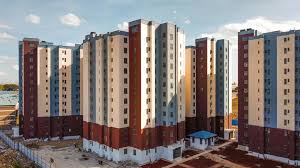
The President’s decision to invest in housing units across the country not only addresses shelter but opens up a pipeline of economic benefits.

Construction creates jobs, stimulates the cement, steel, and transport sectors, and offers middle- and lower-income earners a pathway to property ownership.

For the first time, ordinary Kenyans can pay low monthly installments and eventually own homes in planned, serviced neighborhoods — a far cry from the exploitative rental arrangements that have long drained incomes.

While the program cannot serve all at once, its long-term sustainability means that more citizens will be looped in over time.

This is how real economic reform begins: through tangible initiatives that touch real lives.

That said, Kenya’s Achilles’ heel remains its toxic politicization of development.

Even noble ideas are quickly framed as either “ours” or “theirs.”

Unfortunately, we have cultivated a culture where applause is rare, and criticism is automatic.

But as the political philosopher Hannah Arendt wisely pointed out, “Politics aims at the highest good.”

Development, especially when it improves livelihoods, creates jobs, and offers dignity, is that “highest good.”

Opposition is healthy, but not when it becomes the enemy of reason or progress.

Yes, the Ruto administration has areas where it must improve — transparency, efficiency, and inclusivity among them.

But to fail to acknowledge the genuine progress in certain sectors is to be unjust, and injustice is no friend of patriotism.

Moving forward let us step back from blind opposition and partisan posturing. Let us uplift what works and fix what doesn’t.

Development must be de-linked from politics if Kenya is to rise.

The President has shown that he is willing to act, build, and deliver. That momentum needs support — not sabotage for industrious conscious minds.

As we give to God what belongs to God, let us also be fair enough to give to Caesar what belongs to Caesar.

God bless Kenya. God bless our President. Let us build, not just debate. Peace be to you good people.

Let’s build Kenya and not tear our Nation for political creed or nuanced opinions.

Kenya is ours.

We owe it good philosophies that builds.

The author is a senior writer with the People Daily, Media consultant and regular advocate for better governance and democracy in Africa.

Kepherpeace@gmail.com

His Riches Is About Changing African Lives! Solution Oriented Entrepreneur

0

By Billy Mijungu

Aliko Dangote is not just Africa’s richest man.

He is its most industrious and solution-oriented entrepreneur.

While many wealthy individuals park their billions in luxury and fleeting prestige, Dangote continues to cement his legacy in concrete, crude oil, food production, and fertilizer.

For him, wealth is not a destination, it’s a tool, a lever to move the continent closer to self-reliance.

Speaking candidly during a tour with members of the Global CEO Africa from Lagos Business School, Dangote raised eyebrows by declaring his doubt that Nigeria’s state-run refineries, Port Harcourt, Warri, and Kaduna, would ever function again.

These facilities, he said, have swallowed over 18 billion dollars without a single consistent output.

And yet, out of that vacuum, he built the largest single train oil refinery in the world, right in Lekki, Lagos, with a capacity of 650,000 barrels per day.

It already dedicates over 50 percent of its output to Premium Motor Spirit (PMS), more than double what government run refineries ever managed.

But for Dangote, it is not just about oil.

From food to fuel to fertilizer, his empire spans the full spectrum of what Africa needs to rise.

His cement plants dominate the skylines across Nigeria and beyond. His sugar and salt refineries are household names.

And his boldest promise yet, made during the Afreximbank meeting in Abuja, is that “in the next 40 months, Africa will not import fertiliser from anywhere.”

His Lagos based 3-billion-dollar fertiliser plant, currently running at half capacity, is gearing up for full throttle expansion.

A listing on the Nigerian Exchange (NGX) may soon follow, opening the door for broader African ownership of a truly continental asset.

Not content with just Nigeria, Dangote’s eyes are firmly set on the continent.

In mid-July 2025, he is expected to sign a 3-billion-dollar deal with Ethiopia to build a fertilizer plant.

That same Ethiopia will also benefit from a 400-million-dollar expansion of his Mugher cement facility, which will double its output to 5 million tonnes per year.

These are not just numbers, they are futures being written in concrete and granules, lifting agriculture and infrastructure hand in hand.

His impact is also felt beyond the factory gates.

In Namibia, he plans a 1.6-million-barrel fuel storage tank to serve Botswana, Zambia, Zimbabwe, and Namibia, a move that turns Lekki into the continent’s beating petrochemical heart.

His approach is in sharp contrast to the prevailing culture among many wealthy elites. As he once remarked, “Corruption exists everywhere in the world.

The difference is that when our people steal, they fly the money out of the continent.

If they continued to invest here, the economy would grow.” Dangote invests here, again and again.

Not in mansions in Dubai or vaults in Switzerland, but in factories that churn out jobs, production lines that power economies, and plants that reduce Africa’s shameful dependence on imports.

From cement and salt to trucks and tomatoes, every corner of his empire points to one truth. This is wealth that works.

As Nigeria grapples with economic shocks, currency depreciation, and inflation, Dangote’s wealth has paradoxically soared, not through speculation or hoarding, but through production, risk taking, and long term vision.

He recently reclaimed his spot as Africa’s richest man from South Africa’s Johann Rupert, hitting over 2.4 trillion Kenyan shillings in July 2023. And he did it by building, not just businesses, but hope.

Unlike so many who hoard opportunity and gatekeep capital, Aliko Dangote breaks doors open.

His investments are strategic, his methods precise, and his intentions unmistakably pro Africa. His factories employ thousands.

His decisions shift policies. His voice echoes with credibility.

He is a businessman who would rather be stuck in a lift talking about power solutions and grain production than profit margins alone.

Dangote’s riches are not about status, they are about substance, and that is why he stands apart.