Home Blog Page 144

Let Raymond Finish the Job

0
PS Omollo

By Billy Mijungu

In the shifting sands of Kenyan politics, positions come and go with tides of favour, factionalism, and regional calculations. But some positions carry weight beyond mere politics. They carry national consequences. The role of Principal Secretary for Interior is one such docket. It is not ceremonial. It is the bedrock of security, coordination, national cohesion, and the delivery of government services across all corners of Kenya.

And right now, that responsibility lies with Dr. Raymond Omollo, a son of the Luo community and of the Republic. The deal, for those who care about stability, fairness, and Kenya’s future, is simple. Let Raymond finish his work.

A Technocrat, Not a Politician

Unlike many appointees who climb the ranks through political manoeuvring, Raymond Omollo came through the door of competence. A data scientist and administrator, his journey to Harambee House was marked by quiet diligence and strategic thinking. His work at the Lake Basin Development Authority reflected transparency, order, and efficiency. These are values often in short supply in our public institutions.

In a docket as sensitive as Interior, where trust, professionalism, and neutrality are required, Raymond fits the bill. The question therefore is not just whether he should remain, but whether we can afford not to keep him.

The Constitutional Reality

We must also be honest about the nature and limits of the Interior Ministry today. Under the constitutional architecture of 1963 to 2010, the Interior docket wielded sweeping powers. It was virtually the nerve center of state authority. From Provincial Commissioners to chiefs, the system was designed for control—often authoritarian, centralized, and unchecked.

But with the promulgation of the 2010 Constitution, Kenya transitioned to a devolved, rights-based governance framework. The Interior Ministry remains important, but it no longer controls provincial administration in the old sense. Today, the role of the Principal Secretary is more about coordination than command, more about policy than policing.

That is why our expectations of what Raymond Omollo can and cannot do must be measured. He cannot be judged by the yardstick of 1963 authoritarianism. He is not the old-style power broker some imagine him to be. He is a servant of a constitutional order, not an enforcer of executive decrees.

Regional Equity and Political Symbolism

Appointments to Cabinet and Principal Secretary levels have always carried deep symbolic weight in Kenya. They are viewed as signals of inclusion or exclusion. For the Luo community, historically marginalized in the national executive, Raymond’s appointment was a rare recognition. To lose him now through what appears to be orchestrated internal sabotage and political gamesmanship would be a brutal symbolic blow.

More dangerously, it would feed a narrative that Luos are welcome to the table only as long as they stay silent, compliant, and invisible. That cannot be acceptable. Not in 2025, and not in a constitutional democracy.

Competence Over Convenience

There have been whispers. Political crossfires. Blame games. Speculative media reports. But none of that diminishes the fact that the Ministry of Interior has remained stable under Omollo’s stewardship. National celebrations have been coordinated without incident.

Security frameworks have been maintained. Regional commissioners, county commissioners, and the entire administrative arm of government have functioned in a manner that suggests order, not disarray.

That should be the yardstick. In an era where public officials are often judged more by how loudly they praise their masters than how effectively they serve the country, Raymond has taken a different path. One of quiet delivery. That is not weakness. That is leadership.

We Must Stop Eating Our Own

Sadly, much of the hostility Raymond faces comes not from outside the community, but within it. The Luo tendency to turn on its own once they step into national service is a pathology we must confront. We cannot continue to ask for inclusion in government only to undermine our own once they get there.

Where other communities circle the wagons around their own, defend their leaders, and bargain politically for space and longevity, we often seem eager to offer up our brightest as political sacrifices.
Let us be clear. If Raymond Omollo were from elsewhere, the chorus defending him would be deafening.

Let Him Finish

Leadership is not about loudness. It is about legacy. Raymond Omollo may not dance to political tunes, but his professionalism speaks louder than slogans. Let him finish the work he started. Let competence, not noise, guide the decision.

As for us in the Luo nation, let us learn to defend our sons when they take up the burden of service. You cannot seek equity with a torch in one hand and firewood in the other.

The future is not for those who sabotage it. It is for those who build it. Let Raymond build.

Changing political tides, which way?

0

By Billy Mijungu

Kenya’s political atmosphere has shifted rapidly over the past few weeks, less like a storm, more like a tide: slow, deliberate, but ultimately sweeping.

This subtle recalibration of power and personalities quietly redraws the country’s political landscape.

Perhaps the most symbolic development was the return of Dr. Fred Matiang’i, once a towering force in the previous administration, now welcomed back home to a reception that was more housing than hostile.

His decision to align with Wamunyoro, Kalonzo Musyoka, and the Broad-Based Government raises serious questions about the direction of his political relevance.

Will the sharp, commanding bureaucrat thrive in this coalition, or will the collective nature of this new alliance dilute his former influence?

Time will reveal whether Matiang’i is a phoenix or a footnote.

Tragedy also struck the nation with the fatal shooting of Hon. Ong’ondo Were, MP for Kasipul.

The loss sent tremors through the fragile threads holding the Broad-Based Government together.

However, swift action by security agencies led to the arrest of suspects closely tied to local political networks, exposing an undercurrent of criminal infiltration in grassroots politics.

Ironically, the incident reinforced rather than weakened the Broad-Based Government, exposing the emptiness of those who rushed to weaponise grief for political mileage.

The message is now clearer than ever: stability is still the currency of power.

The new appointees under the Broad-Based arrangement are already settling into rhythm.

President Ruto’s recent Nyanza tour was accompanied by a fresh cast of regional and national leaders, their presence both symbolic and strategic.

Among the most striking is CPA Carren Ageng’o, newly appointed to lead the Children Welfare Services.

In just under two weeks, she has erected institutional structures where others may have struggled for months.

Her quiet efficiency in transitioning from the State Department for Social Protection is earning her admiration as one of the fastest rising technocrats in this administration.

Meanwhile, the broader economic picture offers a mixed bag.

Kenya’s fiscal deficit has been shaved down to 4.5%, which is a commendable feat, considering the turbulence of the past year.

The Gen Z revolution and the controversial clipping of the 2024 Finance Bill were political tsunamis that forced the government to rethink spending priorities.

Growth has slowed, but it is disciplined, a painful yet necessary recalibration for long-term sustainability.

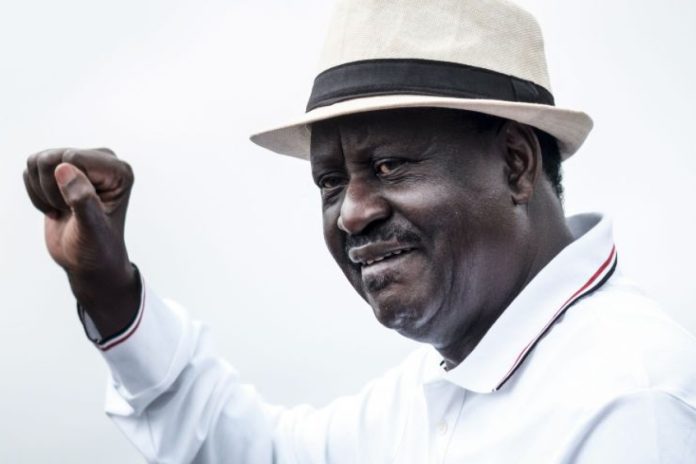
On the opposition front, Raila Odinga has masterfully cooled the fires among ODM’s rebellious fringes.

By urging restraint in criticism of the Broad-Based Government, he has reaffirmed the party’s independence while signalling a strategic détente.

Leaders like Prof. Anyang’ Nyong’o and James Orengo, long seen as ideological stalwarts, continue to walk the fine line between opposition and national cohesion.

In all, Kenya’s political tide has not just changed, it has matured.

The stormy populism of the past months is giving way to tempered collaboration.

The Broad-Based Government is no longer a fragile experiment; it is beginning to look like a functioning consensus.

The road ahead is still full of bumps, but the wheels of statecraft are in motion.

We watch, we wait, and we learn, as tides always return.

Restore Africa Trains Journalists in Fight Against Climate Change in Narok

0

By Erick Otieno

Narok, Kenya – In a bold step to combat climate change and restore degraded lands, Restore Africa, a flagship initiative under the Global EverGreening Alliance, has embarked on training journalists from Migori and Narok counties. The training, conducted in Narok County, sought to enhance media capacity in reporting climate change and sustainability, while underscoring the role of carbon credit as a new economic frontier for smallholder farmers.

What is Restore Africa?

Restore Africa is one of the world’s largest community-led, nature-based carbon removal initiatives, led globally by the Global EverGreening Alliance. In Kenya, it is spearheaded by World Vision Kenya in collaboration with implementing partners including World Agroforestry (ICRAF), Africa Harvest Biotech Foundation, JustDiggit, the Green Belt Movement, and Self Help Africa. The program aims to restore 250,000 hectares of land and directly benefit 250,000 smallholder farmers across five counties: Narok, Migori, Elgeyo Marakwet, Kilifi, and Kwale.

Where and How is the Project Being Implemented?

The project, spanning from 2022 to 2052, is being implemented through farmer-managed natural regeneration (FMNR) and tree planting activities. It is currently active in targeted areas across the counties. In Migori County, the intervention focuses on Kachieng and North Kadem wards in Nyatike Constituency, where 14,009 households are set to benefit. The project aims to restore 6,416 hectares of degraded land by growing 840,000 trees, including avocado, mango, indigenous species, and promoting agricultural activities like bee-keeping, poultry, and sorghum cultivation.

In Narok County, the project covers Narok North, South, and Transmara West sub-counties, aiming to impact 50,206 farmers and restore 77,508 hectares through planting 3,012,360 trees, focusing on avocado and indigenous species.

Who is Benefiting and Why?

So far, 3,265 farmers in Nyatike have signed consent forms to join the program, with 210,000 trees already planted. In Narok, 9,000 farmers have been recruited and 375,000 trees planted. Farmers like Mr. Amos in Narok North have already dedicated parts of their farms to the project. “I received 176 seedlings and have seen significant transformation on my land,” he said, expressing hope for increased support in future planting seasons.

Why is this Important?

The Restore Africa project is not only a climate action strategy but also an economic empowerment program. With the growing global market for carbon credits, smallholder farmers stand to earn additional income by reducing atmospheric carbon through afforestation and agroforestry. According to Dr. Faith Muniale, Director of World Vision Kenya, “Our mission is to restore degraded lands and ensure that farmers benefit both from increased agricultural productivity and access to carbon markets. The carbon credit system will create a sustainable source of income for participating communities.

The Role of Journalists

Recognizing the power of the media, the project has prioritized training journalists to shape public understanding of climate resilience. “Journalists are vital in raising awareness, mobilizing communities, and translating technical information into actionable knowledge,” said Dr. Muniale during the training.

Looking Ahead

With $2.4 million earmarked for Migori and Narok counties between 2023 and 2027, Restore Africa is setting a precedent for large-scale, sustainable land restoration. As the effects of climate change intensify, such interventions offer hope for food security, environmental recovery, and economic empowerment for thousands of Kenyan families.

When the Public and Political class read from different scripts, What Next?

0

By Anderson Ojwang

The fluidly Kenya’s political landscape is fast witnessing a unique and a precedential moment where the master and the servants who previously read from the same script, currently have a departure from the norm.

The political class and the public are currently witnessing a departure, with the latter charting their own destination while the former is still glued to the old script that they used to determine the present and the future.

For eons, the political class have dictated the scripts while the gullible and vulnerable public have swallowed without any form of contestation and followed the script to the letter.

But currently, the public has woken up from the ages of slumber and are charting their own destination while the political class have gone into sleep believing that the status quo remains constant.

The Genz rebellion seems to have triggered the awakening power in the public and a new dawn is fast emerging and unfolding in the country.

The political class have failed to read the public mood and the kind of leadership the public desires.

The public needs a servant leader who cares about their needs, food, jobs, education, mainly basic needs but these have not been forthcoming, and instead the current political class have been lording over the public and only thinks about himself, relatives and cronies

The trends and events in the recent past and currently towards the political class, are if anything to go by, then what awaits them is so consequential and could radically change the country.

The backlash that marked the death of son to MP Beatrice Elachi and the death of Kasipul MP Charles Ongondo Were is a pointer to what the future holds.

The recent Migori incident, where a shoe was thrown at  President William Ruto, in Kehancha, in Kuria, where he received most of the presidential votes is so telling.

Medic and political analyst Dr Alfred Obengo says there is an ongoing social phenomenon going on unnoticed.

The political class are on their own. The public’s empathy towards them is gone.

My hunch is that the open and insensitive display of opulence by the political class could be one of the major reasons for the deep fissure between them and the public.

The political class are our work. They are the modern-day Marie Antoinettes: “Give them a cake if there is no bread.”

The political class is no longer in touch with the thinking of the hoi polloi.

Mr. Sam Ochieng, a political commentator, argues that the public and the political class are not reading from the same script.

He attributes this to  several factors that contributed to this disconnect and include:

Different priorities: The public often prioritises basic needs like resource management, fair distribution, and project implementation. Politicians might focus on political survival, power dynamics, or personal gain.

Lack of transparency and accountability: Insufficient information and opaque decision-making processes can lead to mistrust.

 Manipulation: Politicians might manipulate projects or resources for political mileage, rather than serving the public interest.

 Communication gaps: Inadequate engagement between the public and politicians can exacerbate misunderstandings.

Ochieng says the disconnect can result in ineffective governance, unmet public expectations, and decreased trust in institutions.

Medic and Political Analyst Prof Otieno Obondi disagrees saying the public is so gullible and vulnerable to read from different script from the political class.

The public will always obey the law, the law of inertia and move with the whims of the political class. Nature abhors a vacuum and that is why the political class cannot allow the public to create that Vacuum,” he argues.

 He says the public will be manipulated by the political class, and they will create a common ground that the public will follow.

What we are currently witnessing are just artificial moments, soon the public will recoil back to the status quo and will dance to the wish and whims of the political class,” he says.

He says the politicians have learnt the art and tact of enslaving the public and that they have remained indispensable in their lives.

Prof Otieno says currently the public are in political holiday and pretending to be reading from a different script with the political class.

The public is on holiday and currently removed from reality. But they are confused and in the bondage of the political class.

The political class will ensure they remain in the cocoon because they are the custodian of thinking for the public.

They will vote what the political leadership will tell them and will surrender their lives and dance to the whims of the politicians,” he says.

Prof Otieno argues that the political class have identified the poor and illiterates to be pivotal in their colonization of the public mindset.

The political class will ensure the status quo is maintained and will remain the custodian of thinking and agenda setting. Politicians have taken away our common sense. The elites should be in the forefront to reverse the situation,” he says.

Nyong’o to hold roundtable discussions with Stakeholders over land investment in Kisumu City

0
Anyang' Nyong'o Governor of Kisumu County

By Sandra Blessing

In a bid to unlock the economic potential of Kisumu City, the Governor, Prof Peter Anyang Nyong’o, will hold a round table discussion with stakeholders in the region.

In the roundtable discussion scheduled for 14th May 2025, target land owners in the city mainly Manyatta B, Milimani, South West Kisumu, Nyalenda A, Nyalenda B, Migosi,  Railways, Shauri Moyo/ Kaloleni, Kajulu, Kondele, Central Kisumu, Kolwa Central, Kolwa East,  Kisumu  North and all the stakeholders.

The deliberations will be on the  land use optimization and the event will be held at Tom Mboya Labor College.

The Roundtable discussion seeks to  engage  land owners , investors , government agencies and  built environment  stakeholders  on the  strategic  use of land  to unlock  economic potential  of  rapidly growing Kisumu city.

The forum will focus  on  strategies  to develop  idle and underutilized  land  in line  with  the approved  Kisumu  city local physical and land use development plan.

Strengthening  compliance with building laws and zoning  regulations to enhance  orderly development

Addressing outstanding land rate arrears through flexible and innovative payment arrangements.

Exploring public-private partnerships to drive sustainable investments in infrastructure and real estate.

The City is owed billions of shillings in rate arrears by various government agencies, private investors and the public.

Kenya recorded upsurge of seasonal influenza in the month of March

0

By Sandra Blessing

The government has declared an upsurge of influenza in the country and asked the public to practise caution to prevent the spread.

In March this year, the government recorded a notable rise in cases of the disease.

Public Health Principal Secretary Mary Muthoni Muriuki, in a memo to all county directors of public health, said an upsurge of seasonal influenza A/H3N2 and pdm09H1 was recorded during the month of March.

“The Ministry of Health conducts sentinel site surveillance for influenza viruses and other respiratory pathogens in the country. This is primarily to understand and monitor the influenza subtypes that are circulating in the population, as well as to detect unusual activity and new subtypes that may pose a public health threat.

Influenza viruses usually circulate throughout the year, with two peaks of infections—from late February to April and between July and November.

From the ongoing surveillance, the main influenza subtypes that have been circulating in the Kenyan population are the seasonal influenza A/H3N2 and pdm09H1, with a notable upsurge in the number of cases in the month of March 2025,” she wrote.

Muthoni said influenza was a highly contagious viral infection affecting the respiratory system—primarily the upper respiratory tract, though it can also cause severe lower respiratory diseases.

She added that the disease is caused by the influenza virus, which has four types—A, B, C, and D—with humans most commonly affected by influenza A and B viruses.

“Influenza B is currently circulating in Kenya’s Victorian lineage. Most patients with influenza usually present with symptoms of fever, cough, sneezing, malaise, and a sore throat.
Typically, seasonal influenza infections are self-limiting, but they may also lead to severe disease presentation,”
she said.

She added that the disease has adverse effects on the elderly, young children, pregnant women, and those with underlying health conditions, who are at higher risk of severe illness.

She issued a public health advisory warning that the disease could culminate in hospitalisation and even death for high-risk groups.

“It is advised that these groups seek medical attention promptly upon experiencing influenza-like symptoms.

To avoid and reduce the spread of influenza and other respiratory illnesses, the public is urged to avoid close contact with individuals who are sick.

Employ cough and sneeze etiquette, practise hand hygiene, avoid touching your face, wear masks, clean and disinfect frequently touched surfaces, and get vaccinated,” she said.

She concluded that the Government of Kenya remains vigilant in combating infectious diseases and ensuring the health and safety of its citizens.

Efforts are ongoing to provide quality healthcare services and protect the public from influenza outbreaks.

Unpacking the Finance Bill 2025, A Turning Point for Tax Policy in Kenya

0
Junior Secondary Schools

By Billy Mijungu and Steve Okoth

The Finance Bill 2025 has landed on the desks of taxpayers, employers, entrepreneurs, and policy watchers with significant changes that reflect the government’s evolving fiscal strategy. Set to take effect from July first, unless amended after public participation, the bill outlines sweeping tax reforms touching income tax, value added tax, excise duty, and tax administration.

At the heart of the proposals is a clear intent to balance revenue generation with economic stimulus, though not without trade-offs. For employees and the everyday citizen, the increase in the per diem allowance limit from two thousand to ten thousand shillings and the full exemption of retirement gratuity from Pay As You Earn are welcome developments.

These measures inject direct relief into the pockets of salaried workers and retirees. Employers now bear the responsibility of automatically applying tax reliefs such as those for insurance and mortgage in their monthly PAYE computations, an administrative shift that should simplify life for many.

For small and medium enterprises, the full write-off of capital expenditures on tools and equipment in the year of purchase is a bold incentive aimed at stimulating investment. However, the deletion of the one hundred percent investment allowance and the narrowing of this incentive even within Special Economic Zones may temper optimism among larger investors. Corporate tax for housing developers rolling out four hundred residential units or more annually is set to rise from fifteen to thirty percent, a reversal that could affect affordable housing ambitions.

Digital asset taxation sees a positive tweak, with the rate halved from three to one point five percent. This signals the state’s recognition of the emerging digital economy while still asserting its tax claim. Withholding tax continues to widen its net, covering scrap sales at one point five percent and goods supplied to the government at zero point five percent for residents and five percent for non-residents. Notably, software-related royalties are now subject to withholding tax across all forms of payments, whether for licensing, development, support, or distribution.

On the global tax compliance front, Kenya moves to align with OECD frameworks by introducing a fifteen percent minimum top-up tax under Pillar Two and a provision for Advance Pricing Agreements, valid up to five years. Services provided over the internet, not just via digital marketplaces, will also fall under the Significant Economic Presence tax, indicating the state’s growing digital surveillance capacity.

The VAT proposals contain a mixed bag. While refund timelines for excess input tax and bad debts have been shortened, several goods previously zero-rated will now be exempt, cutting off the right to claim input VAT. Affected sectors include pharmaceuticals, animal feed producers, tea and coffee exporters, and even electric vehicle manufacturers. Meanwhile, fuel and vehicle-related imports for aid projects and housing developments lose their exemptions and face standard VAT rates going forward.

Excise duty sees a clarifying provision on digital consumption. Any service consumed via the internet by persons in Kenya is now deemed locally supplied and taxable. There is a welcomed removal of duty on imported eggs, onions, and potatoes. However, imported plastic products face steep duties of twenty-five percent or two hundred shillings per kilogram unless sourced from within the East African Community.

The procedures governing tax compliance are not left behind. KRA will now be compelled to justify any amended assessments, and where a taxpayer fails to deduct withholding tax, they will not be penalized so long as the recipient has declared and paid the due tax. Input VAT can no longer be used to offset other tax liabilities, which will change how companies manage cash flow. KRA also gains new powers to enforce ERP and point of sale integrations, ushering in a digitized tax enforcement era.

Perhaps most reassuring are provisions shielding taxpayers from penalties and interest where issues arise due to glitches in the Electronic Tax System, a nod to the frustrations many have faced under the digital regime.

In summary, the Finance Bill 2025 presents a bold recalibration of Kenya’s tax regime. It offers targeted reliefs, especially for employees and SMEs, while tightening compliance and widening the tax base, particularly in the digital and software sectors. Yet, sectors like housing, manufacturing, and clean energy will need to navigate new challenges as long-standing incentives are trimmed. With public participation still ongoing, there remains a window to refine some of the proposals before they become law.

Whether these changes will fuel growth or strain recovery will depend on how implementation unfolds and whether the government can strike a fair balance between ambition and economic reality.

LBDA adopts innovative technologies to strengthen the aquaculture value chain

0

By Sandra Blessing

Lake Basin Development Authority (LBDA) has adopted innovative technologies to strengthen its aquaculture value chain in the 21 fish ponds and a modern fingerlings hatchery plant (Recirculating Aquaculture System—RAS).

LBDA Managing Director Wycliff Ochiaga said that with the adoption of the innovation, they expect to boost fingerlings production to between 2 million and 4 million fingerlings per month.

He said they have adopted advanced aerator systems in the fish ponds to ensure optimal dissolved oxygen levels, which are crucial for healthy fish growth, improved feed efficiency, and reduced mortality.

“This technology not only boosts fish productivity but also aligns with our commitment to sustainable aquaculture, food security, and economic empowerment to communities along the Lake Basin region,” he said.

He explained that the technology of aeration in fish ponds involves mechanical or natural systems that increase the amount of dissolved oxygen (DO) in the water—essential for fish health, feed efficiency, and waste breakdown.

Ochiaga said the purpose of aeration is to maintain optimal oxygen levels:

“Fish require oxygen to survive, grow, and reproduce. Prevents fish kills, especially in warm weather or high-density ponds where oxygen can drop rapidly. Improves water quality: Oxygen supports beneficial bacteria that break down waste (ammonia, nitrites). Enhances productivity: Higher DO means better feed conversion and faster growth,” he said.

The MD said the core components of aeration technology include an air supply system through solar-powered blowers/pumps, a distribution system using pipes and tubing to carry air, and diffusers or mechanical devices to introduce air into the water.

Others include fine bubble diffusers to release micro-bubbles for better oxygen transfer, paddle wheel aerators to agitate the water surface to absorb oxygen, venturi injectors to mix air and water using pressure, and fountains and propeller aerators to create turbulence that draws in oxygen.

The MD said that for power sources, they use solar power, which is eco-friendly and ideal for off-grid areas.

“We have integration in the aquaculture value chain to support high-yield fish farming, reduce mortality and losses, improve product quality for the market, and increase the efficiency of other systems like feeding and water reuse,” he said.

Top legal brains recommend Advocate Atieno’s new books

0

By Reporter

Top legal minds have lauded four books released by flamboyant lawyer Julie Atieno Ogolla. Her love for research and writing, especially in the area of Alternative Dispute Resolution, spurred her passion to pen books worth studying within legal circles.

During the launch of the four books in a colourful ceremony attended by the country’s top legal professionals on April 30, 2025, Atieno’s books were recommended for the legal fraternity and law enthusiasts.

Legal practitioner, academic and consultant Muthomi Thiankolu said Atieno’s book on time management in legal practice titled, “Lawyer in Progress: 365 Days to Success – Planner for Undergraduate and Bar Exam Students,” was timely.

He also vouched for, “Beyond the Books: The Law Student’s Guide to Passing the Bar Exam,” for all lawyers who want to save time in their trade.

“The reason I recommended these two books was because they teach how to efficiently manage our time,” said Muthomi.

He advised upcoming lawyers that if they maximised the use of their professional time, they would likely have happier clients—and more fame, glory, and success.

“Something I taught Atieno in her class was about time management. One of the hypotheses I have sold to the Judicial Service Commission is about time management. A country’s fortunes, in terms of socio-economic advancement, is inversely proportional to the number of lawyers in a country,” argued Muthomi.

Muthomi attributed delays in court cases to lawyers’ lack of time management.

Law Society of Kenya President Faith Odhiambo was categorical in her recommendation of Atieno’s book on Alternative Dispute Resolution, “From Tradition to Modernity: The Role of ADR in African Justice Systems.” She referred to it as timely, and one that should ignite the legal fraternity to deeply explore other ways of solving disputes beyond court processes.

“This book is humbling as it gives practical solutions that we can inculcate in our justice system. ADR is an area that is fast catching up locally, regionally, and internationally. Our aim is to position Nairobi as the cradle or centre of mediation or arbitration in the region,” said Odhiambo.

Law lecturer and former Makueni Governor Prof. Kivutha Kibwana, who was the Guest of Honour, noted that Atieno’s books were dearly needed now that the study of law has expanded to higher institutions beyond the Kenya School of Law.

“Atieno’s books really need to go to law schools, and to the lawyers who are already in practice to help them improve or further build their practice,” said Kibwana.

Alternative Dispute Resolution (ADR) is the mechanism of resolving disputes through means other than the court process. These include mediation, conciliation, negotiation, arbitration, and traditional dispute resolution mechanisms.

Her books aim to reshape legal education, practice, and spiritual growth for aspiring and practising lawyers. Each of her books provides a unique perspective on legal success, professional development, and the role of faith in the legal profession.

Atieno provides a thought-provoking analysis of ADR’s role in enhancing access to justice, particularly in regions where formal legal systems often face challenges related to accessibility and efficiency. The idea of ADR first excited her when she realised how effectively it helped resolve cases that might otherwise drag on in court for years.

“My book on ADR implores the importance of using it as an alternative way of solving disputes in our societies. If wholly embraced, ADR can be used to ensure that there is no backlog of cases in our courts across the country,” says Atieno.

Judge Asenath Ongeri, widely known for her memoir “The Making of a Judge,” was also present.

Speaking during the launch, Atieno Ogolla shared, “These books are the culmination of my passion for law, education, and mentorship. Each of them addresses a critical gap in legal education and practice, offering students and practitioners the tools they need to succeed academically, professionally and spiritually.”

Photo credits to Nuwira Studios and Lensically Creative Media

Coca-Cola reduces price for 500ml products in a new promotion targeting Western Kenya

0

By Reporter

Coca-Cola has announced a 17 percent price reduction on its popular 500ml glass bottle in Nyanza and Western as part of a new regional campaign dubbed ‘Shika Mzito’.

Consumers in the region can now enjoy their favourite Coke, Fanta or Sprite for just KES 50—down from KES 60—in celebration of the community’s hard work, resilience, and vibrant spirit.

The three-month campaign will roll out across ten counties: Kisumu, Homa Bay, Migori, Siaya, Kisii, Nyamira, Kakamega, Bungoma, Vihiga, and Busia. It honours the region’s deep sense of community connections by making their favourite pack affordable and available to be enjoyed by all during this campaign.

“Nyanza and Western are known for their strong community bonds, Coca-Cola’s iconic 500ml pack has always been a part of these connections,” said Weslene Orwoba, Senior Marketing Manager, Coca-Cola Kenya.

“Whether it’s after a long day in farms, during a break, or while cheering on a favourite football team, these are moments that bring people together—and nothing complements them better than an ice-cold Coke. ‘Shika Mzito’ is our way of celebrating those moments and making them even more enjoyable with an affordable refreshment.”

Popularly known as ‘madiaba’, the 500ml bottle is being positioned as a symbol of pride and recognition—an everyday reward for the region’s unsung heroes: farmers, fishermen, football fans, boda boda riders, teachers, artisans, and many others who uplift their communities in meaningful ways.

Coca-Cola has long been part of the region’s vibrant football culture and community celebrations, in a place proud to be home to legendary teams like Gor Mahia, AFC Leopards, Kakamega Homeboyz, Shabana FC, and many more.

“Community is everything in Nyanza and Western regions, and celebrations big or small, are part of the culture. ‘Shika Mzito’ is our way of joining in those moments and creating even more reasons to come together,” added Ms Orwoba.

With this price reduction, Coca-Cola is not just offering value—it’s reaffirming its commitment to the traditions, passions, and values that define Nyanza and Western Kenya.