Home Blog Page 145

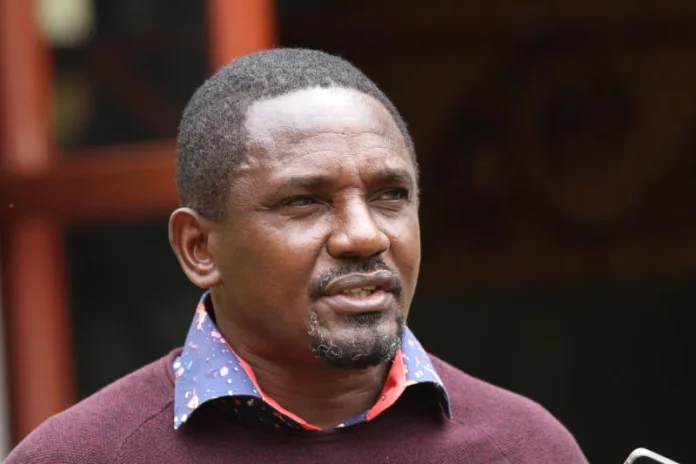
Oburu to Orengo: Stop vomiting on us from within, ship out, create your space

0
CREATOR: gd-jpeg v1.0 (using IJG JPEG v80), quality = 82

By Anderson Ojwang

The clock could be ticking for Siaya Governor James Orengo, and his time in the Orange Democratic Movement (ODM) could be coming to an abrupt end.

Orengo, once a close confidant of former Prime Minister Raila Odinga, is finding himself increasingly isolated over his opposition to the broad-based government.

Orengo could be waking up to the sudden reality that ODM and the Odingas have long discarded the hard edge of politics played in the public gallery and streets for a more accommodating approach.

Orengo could still be stuck in the old age of politics of activism, the public gallery, and public protests, unaware of what the office of the Governor bestows on him in terms of service delivery and accountability to the public.

On Sunday in Migori County, during President William Ruto’s tour of the region, Siaya Senator Dr Oburu Oginga asked Orengo to ship out if he was against the broad-based government.

Oburu also asked Orengo to deliver on his mandate as the Governor of Siaya instead of concentrating on the politics of activism.

“Personally, I am a very truthful man and I am pained. I come from Siaya, and when my own Governor stands up and says that he is annoyed, I don’t know who he is annoyed by, or what he is annoyed about. And he says he just wants to talk about the truth – the truth? What truth?
Me, I never lie. I always say the truth.

And the truth of the matter, Your Excellency, is that we are in a broad-based government, not as individual Members of Parliament and not as individual Senators.

We are in this broad-based government as a result of a resolution of our party, ODM. And the party signed a ten-point agreement with the UDA government, and all of us were there.

Those who are annoyed and who think this broad-based government is not right, they are actually vomiting on us from within. Why don’t you get out and vomit from without?

Because we want our party ODM to have a nice smell, and we want to move on with our people. And before these agreements were signed, there was a lot of consultation. Raila went round the country as the party leader of ODM, consulting the people.

I therefore want to say, Your Excellency, we are talking for our people. When we are being told we have to talk for our rights, Your Excellency, that is what we are fighting for.

That is why we are elected – to do the same. The Governor is not given a mandate to fight for his people’s rights. He is given a mandate to serve his people.

He is given resources to serve his people. This is the time to serve your people. This is not the time to fight for their rights. Which rights do you want to fight for more than what they eat? What and which right are you fighting for?

Which rights are you fighting for more than roads, hospitals, water, and electricity which one do you want us to fight for?

Which one do you want us to go to the streets to fight for? If you want to fight, there is a lot of space elsewhere where you can do that fighting. For us, our people are waiting for service. This is the time to work, and we are not waiting to eat anyone’s share.

We are going to eat our share given to us rightfully because we are taxpayers. We are Kenyans, and we have a right. I do not know where else you want to go and fight. Let the President do his part, and the Governor should do his part.

When elections come, let those who are opposed to what we are doing come out, and we will compete in a democratic process – space created by our Constitution and the rule of law,” he said.

But Orengo had earlier declared that he shall speak the truth and was ready to go to jail and join demonstrations against the current government.

“The truth shall make you free, and we must have leadership nationally and continentally that believes in the law. And the truth.

I, James Aggrey Bob Orengo, who believes in the rule of law and I believe in the Constitution, trained by the late Jaramogi Oginga Odinga, and I have worked with Raila Amolo Odinga.
I cannot let Kenyans and my community down by not speaking the truth. I will continue speaking the truth.

And if there is anybody who wants to take any action against me, I want to tell them that me, I have been through those trials and tribulations. I am a tested iron bar. I don’t fear anything in this world. I have been through the trenches. Even those who fear night runners, who cannot go out at night, want to challenge Orengo?

I am prepared to go back to jail. I am prepared to go back to the streets. This is not a country to be proud of. This is a country where young people – the Gen Z – you have to come out, and we are prepared to join you,” he said.

Alego MP Sam Atandi dismissed Orengo’s declaration that he was ready to go back to jail and to the streets, saying that his age doesn’t allow him.

“We are in the government to bring transformation to our people. Jail is like hell. We have the opportunity to work with the government, and that is what we are doing here,” he said.

Strategic Intervention Department for Children in Kenya Exists

0

By Billy Mijungu

As Kenya intensified its commitment to child welfare, a new pillar was quietly but firmly established within the Directorate of Children Services.

Known as the Strategic Intervention Department, this unit was created to address emerging and urgent challenges facing children across the country.

It was not born out of convenience, but out of necessity, with a clear mandate to protect the most vulnerable in moments of crisis.

At the heart of the department’s mission is the protection of children during emergencies.

Whether responding to floods, droughts, disease outbreaks, or situations where children are at risk, the department plays a central coordinating role.

It is a member of the Kenya National Food Security Working Group and conducts regular assessments in arid and semi-arid regions.

Officers stationed in twenty-three counties provide critical services, supported by guidelines that have already been rolled out to several counties.

The National Child Helpline, accessed through the toll-free number 116, is another vital arm of the department.

It operates around the clock from Kabete and Eldoret, handling nearly one hundred thousand cases annually.

Since its beginnings in 2006, and with ChildLine Kenya joining the effort in 2008, the helpline has grown into a lifeline for countless children.

It now includes mental health chatbot services, and despite challenges like staffing and operational costs, it remains a vital refuge for those in need.

Another key area of focus is the management of child protection cases.

This section ensures that both government and civil society actors are aligned in how they respond to children in need.

Guidelines launched in 2021 have guided over twelve hundred stakeholders from twenty-two counties.

Still, limited resources have slowed full nationwide implementation.

The department also champions access to justice for children.

It works closely with the judiciary and the National Council on the Administration of Justice to build capacity for children’s officers across the country.

Hundreds of officers have been trained on key legal procedures such as bail, diversion, and plea bargaining, ensuring that children caught in legal systems are treated fairly and with dignity.

An ambitious model for Child Protection Centers has also taken shape, inspired by the one-stop approach seen in Huduma Centres.

These hubs bring together legal, social, and medical services under one roof.

Although six centers have been launched in Nairobi, Nakuru, Garissa, Kilifi, Siaya, and Kakamega, sustainability remains a challenge.

A model for integrating these services into existing county infrastructure is currently under review.

The work of the Strategic Intervention Department is ongoing and dynamic.

It is developing assessment tools linked to food security and child protection, training officers for emergency response, and preparing a roadmap for deeper collaboration with partners like ChildLine Kenya.

The department envisions a future where child protection services are seamlessly integrated, supported by robust data, efficient communication systems, and well-equipped emergency command centers.

Despite financial and logistical hurdles, the Strategic Intervention Department is a living testament to Kenya’s evolving response to the needs of its children.

It stands as both a guardian and a guide, offering hope in times of crisis and structure in times of reform.

For every child who faces danger, neglect, or injustice, this department exists quietly working to ensure that no child is left behind.

Government to grow agriculture to Sh3.9 trillion in five years

0

By OPCS Press Services

Prime Cabinet Secretary Musalia Mudavadi has said the government targets to grow agriculture’s Gross Domestic Product (GDP) by six percent annually to Sh3.9 trillion by 2029, driven by high-impact value chains in dairy, horticulture, rice and grains.

Mudavadi said that the small holder farmers will be at the centre of that agricultural transformation journey.

Speaking at the International Livestock Research Institute (ILRI) in Nairobi, Mudavadi said that the target will be achieved through input financing, digital platforms, agribusiness training, and infrastructure investments.

“We aim to raise the average incomes of 3.3 million small-scale producers by at least 35 percent, lifting communities out of poverty and building their resilience to climate shocks,” said Mudavadi.

The success of the government strategy Mudavadi said, will depend on how they managed climate change risks, including prolonged droughts, unpredictable rainfall, floods and soil degradation.

Mudavadi said there was need for an urgent response that includes setting ambitious targets in the National Climate Change Action Plan and the Kenya Climate Smart Agriculture Implementation Framework.

“These include reducing greenhouse gas emissions by 32 percent, increasing our national tree cover to over 10 percent, restoring degraded lands and expanding climate smart agriculture,” said Mudavadi.

He noted that the government was investing more in soil health, agroforestry, renewable energy, efficient rice production and sustainable land management.

“Greater collaboration with ILRI and CGIAR, particularly in data, technology, financing and capacity, will enable us to achieve our goals. Let us engage our youth in climate smart agribusiness, and jointly develop climate resilient technologies and decision tools,” he said.

PCS said the government was tackling systemic challenges to the growth potential of the agricultural sector including high post-harvest losses, inadequate market linkages and rural infrastructure, and low access to affordable financing.

During a roundtable with the leadership of Consultative Group for International Agricultural Research (CGIAR) institutions, Mudavadi pointed out that the government aimed to be achieved through input financing, digital platforms, agribusiness training, and infrastructure investments.

“This gathering of leaders, scientists, researchers, partners and stakeholders of the CGIAR institutions underlines our joint commitment to transforming agriculture and building a food secure world for all humanity,” said Mudavadi.

Present in the meeting were, Jonathan Mueke, Principal Secretary, State Department for Livestock Development and Prof. Appolinaire Djikeng, Director General, ILRI alongside senior government officials, and Leaders of ILRI and CGIAR Research Centres.

He thanked ILRI, for developing strong partnership with the Government and the people of Kenya in the agricultural sector, public health systems and climate action agenda.

“Kenya is proud to host ILRI and other CGIAR research centres.

You have established a world-class science hub that supports transformative programs in livestock genetics, vaccine development, land restoration, climate adaptation and innovative food systems that enormously contribute to the global knowledge on agriculture and food security,” said Mudavadi.

He said ILRI has a long-standing collaboration with the Ministry of Agriculture and Livestock Development and key institutions under the ministry, including the Kenya Agricultural and Livestock Research Organization, Department of Veterinary Services, Kenya Animal Genetic Resources Centre and Kenya Dairy Board.

Paul Otula: Kenya’s Towering Giant Bows Out

0

By Anderson Ojwang

The arguably Kenya’s giant in terms of his height, size and performance as administrators in education, sports, and leadership, Mr. Paul Agali Otula is dead.

Otula, the country’s towering giant, bowed out, after what family suspects to be as a result of cardiac arrest. 

Otula was one of the country’s finest education and sports administrators, former Kenya International basketball player, and a respected author.

Otula was a man with a golden hand and whatever he touched glowed and turned into gold. 

Success followed Otula everywhere he went, from classroom, to the office and into the gym, where he transformed his subjects into the country’s finest products.

Otula was a man of the first, honors, accolades and awards became part of his world.

Otula, the educationist, administrator and author, was a believer in performance with his driving philosophy of nurturing an all-round individual.

He was a strong believer in excellent performance, ability  and honesty, the driving principles that shaped his administration and leadership.

From a classroom as an English and Literature teacher, in Mbita High School, he was transferred to Mangu High school, where he rose to become the Chief Principal, and was later transferred to Maseno school. 

From Maseno school, Otula briefly became the Chief Principal of Sunshine Secondary School.

In his career as a teacher and administrator, Otula transformed Mangu High school, Maseno School and Sunshine Secondary School to be top schools in the country.

From school management, Otula was one of the best sports administrators and the longest serving chairman of Kenya Basketball Federation(KBF).

He was a member of the National Olympic Committee (NOC) and led Kenya’s Olympic team to France in 2024.

He had a declared interest for the seat of Deputy Treasurer in the coming NOC election.

Otula transformed the game and took the country to the continental limelight where Kenya’s National Basketball teams are ranked highly.

From a once empty basketball gym, Otula made basketball to be a loved sport and currently, the gym is filled to the brim.

Otula also oversaw the actualization of a new KBF constitution that is in tandem with the Sports Act as required by the constitution.

The news of Otula’s death shook the country from all quarters, within the teaching fraternity, sports, former students, colleagues, politicians, friends and relatives.

Former chairman of Maseno School alumni and board, member during his tenure Mr. Charles Gitau described Otula as an honest and sincere person who meant well for the students and the country.

“Otula was such a resource to be close to. 

He had unique management and leadership skills. 

He turned Maseno school around to be an academic giant once again,” he said.

Gitau said the country had lost a person who had no boundary, a nationalist and was a principled person.

Former Maseno school Parents and Teachers Association (PTA) chairman during Otula’s tenure, Prof James Obondi Otieno described him as an icon who sacrificed all for the success of his students.

Otieno said Otula stirred a positive competition in Schools in Western Kenya and his presence in the region had a positive impact on the general performance in the region.

“I spoke to Mwalimu Otula in the evening before he died the next day. 

We shared on very important engagements that we had envisaged for Nyanza. 

He was so passionate about education and sports that in all his talks, rotated around that,” he said

Deputy Chief of Staff in charge of Performance Contracting Mr. Eliud Owalo wrote “It’s with deep sorrow that I have learnt of the sudden death of long-serving Kenya Basketball Federation (KBF) Chairman Paul Otula.

Otula had a chequered career as a teacher of no mean repute;Principal of both Mangu High School and Maseno School; and an icon in basketball circles.

I have over the past decade worked closely with the late Otula in supporting various Basketball initiatives through the Eliud Owalo Foundation.

At this moment of grief, I convey my condolences to his family, relatives, and friends plus both the teaching and basketball fraternity in Kenya.

May his soul rest in eternal peace.”

An alumni Toni Simba wrote on Maseno alumni X handle “Ask  Maseno School. Mangu, or Sunshine, Paul A Otula was a legend.

You don’t get them like him anymore.

He once made me run five laps around Maseno rugby pitch for being late to basketball practice, a fond memory from 2015, form 1”.

Another alumnus wrote “A good man has rested.

Mr. Paul Otula, former principal of Maseno school, has left behind a legacy of excellence in education.

Even those who never interacted with him were inspired by his dedication to academic excellence.

Mwalimu positively impacted many lives.”

Former colleague, Duncan Owiye said Otula taught them the virtue of honesty, discipline, hard work and service to community.

“Otula frowned against short-cuts, he would never accept that.

He changed the Maseno school staff room, and we are what we are because of Otula,” he said.

Another colleague Mr.Mangla Okanda described Otula as father to teachers, students and the subordinates.

“Otula gave his all.

He was an incorruptible person.

He was simple but very firm and decisive.

He was liked by students and the staff.

He has left a legacy that will tell his story for years,” he said.

A friend and strategist Mr. Robert Ogindo said Otula supported education activities in all schools in Karachuonyo and his influence impacted positively in the region.

“Otula supported our education activities and schools benefited immensely.

He mentored several teachers in sports. 

He is the MP Karachuonyo people never had,” he said.

From Children Homes to Children Programs in Alternative Family Care, Government of Kenya Transitions.

0

Narration By Billy Mijungu

There is an important and transformative effort underway in our country that many people may not yet be aware of. It is taking place quietly within the government, and it involves something deeply personal and profound the lives and futures of our children.

I speak of the transition from institutional care of children to alternative family care, a process being led by a dedicated and passionate team in the Alternative Family Care Department.

For many years, the common solution for children who had lost or been separated from their families was to place them in institutions, commonly known as children’s homes or orphanages.

While these facilities were often set up with good intentions, we have learned over time that no institution, no matter how well run, can replace the love, stability, and nurturing that comes from growing up in a family.

That is why Kenya made a bold and compassionate commitment in the Children Act of 2022. This law recognizes that the family is the natural and best environment for the growth and development of every child.

It sets out a clear path for the country to transition all children’s institutions into family and community based care systems over a ten year period, from the year two thousand and twenty two to the year two thousand and thirty two.

The department at the center of this effort is the Alternative Family Care Department within the State Department for Social Protection. Its mandate is to safeguard and protect the rights and welfare of all children in alternative care.

The department is led by experienced professionals who work to design and oversee the implementation of alternative care programs. These include kinship care, guardianship, foster care, adoption, supported independent living, and temporary shelters.

The goal is to ensure that children who cannot live with their biological parents are still able to grow up in a safe and loving family environment. The department also maintains a National Foster Care Register, conducts situation analyses, raises awareness, builds capacity among care practitioners, and supports case management and reintegration processes.

There has already been significant progress. Over one thousand two hundred children have been placed in foster care, and more than eight hundred have been successfully reintegrated into their families.

These are not just statistics. Each number represents a child who now has a better chance at life a chance to grow up in a family rather than in an institution.

However, there are challenges. Funding remains inadequate. Many institutions are resistant to change. Awareness about alternative care remains low in many parts of the country. There are also many children with disabilities who still lack proper care. Despite these difficulties, the department and its partners continue to move forward with courage and determination.

The good news is that the foundation for success is already in place. Kenya has strong legal and policy frameworks. We are seeing growing support from both the government and the community.

Some institutions have already transitioned children back to families and are now champions of this reform. Our cultural values still honor the family as the cornerstone of society. And perhaps most importantly, we have a resilient and adaptive people who understand the value of giving every child a fair chance.

As a nation, we must come together to support this journey. Let us advocate for more funding, encourage our communities to welcome children in need, and ensure that no child is left behind simply because they lack parental care.

Let us remind ourselves that every child deserves not just shelter, but a home. Not just care, but love. Not just survival, but a future.

Utalli CEO challenges students to avoid Gambling and focus on Career Development

0

By Sandra Blessings
Kenya Utalli College Principal and Chief Executive Officer has challenged the students to avoid the urge to gamble but instead focus on their career development.

The Principal, Mr. Mark Ogendi, while addressing the first year at the institution, warned them that gambling was a deterrent to the development of their careers and results in dropouts.

“Gambling is not only affecting the youths but all sectors of the country population, I ask you to be very responsible with your finances.

“I advise you not to list betting as one of the sources of income.

Betting is a losing game.

An enticement that promises to make you rich overnight, only to drain you,” he said.

Ogendi said some students have spent school fees, rent and upkeep on gambling and subsequently become beggars and even dropped out of college.

He said Kenya Utalli College was a renowned hospitality and tourism training institution globally and was the best institution for them to develop and nurture their preferred careers.

”You are privileged to study in this prestigious institution, and I encourage you to jealously guard its integrity and reputation,” he said.

Ogendi challenged the students to settle down and embark on serious academic studies and avoid time-wasting activities that do not add value.

“Uncertainties are detrimental to career development as one loses focus and concentration.

I urge you to appreciate the training opportunity that God has granted you and understand that grass is not greener on the other side; but rather, where you water it,” he said.

The CEO urged the students to ensure discipline formed part of their menu, and incidents of indiscipline will not be tolerated.

“You are the pillar of our institution.

You are also the heart of hospitality.

You are the adventures of tourism.

You are the pride of Kenya Utalli College.

As we start and continue this journey together, I am passionate about ensuring you succeed in your chosen course of study.

Kenya Utalli College is blessed with highly qualified Lecturers, learning materials and a supportive administration.

For fifty years, this institution has been providing competency-based training not only for Kenya but also, the continent and the world at large.

Our graduates are found in all corners of the globe.

Be proud to be at Kenya Utalli College,” he said.

He said that for one to be successful, discipline is the main ingredient at all levels; it includes being responsible, working hard, etiquette honest, sticking to routine rules, focusing on goals and controlling oneself.

“This is an important element that helps you to attain your good grades, personal growth, freedom, good habits and future success for the rest of your lives,” he said.

He warned them against engaging in alcoholism, drug abuse and irresponsible sexual behaviour.

“There are students who consume drugs for fun or other various reasons.

Those who sell drugs target students so that they can become part of their business network, and when you get addicted to it, it starts biting back financially and mentally.

I, therefore, humbly ask all of you to refrain from all kinds of drug abuse before it destroys your future, health and lives,” he said.

He said the institution has psychologists/counsellors to help students address instances of drug abuse and other vices that may hinder their academic progression.

“The College has put measures in place to ensure your security by reinforcing our team with armed Kenya Police personnel from Muthaiga Police station, using patrol dogs, and installing CCTV cameras,” he said.

Will the Legends of Noo return the ‘sold glory’ back to the people in 2027 Gubernatorial Election?

0

By Anderson Ojwang                       

The Noo clan in Kisumu County is the second largest Luo clan after Rachuonyo, and they occupy Nyando, Muhoroni and Kisumu East sub counties and part of Kisumu Central. They account for over 50 percent of Kisumu County population.

The clan draws respect for being the home of the legends such as Lwanda Magere, who won several battles between the Luo and the Nandi. He possessed unearthly powers, and his flesh was made of stone. He deflected arrows, spears and clubs, making him invincible during war. He was famously known for his capability to tear an entire army apart on his own.

A site in Sidho, near Awasi in Nyando, has a stone revered as the spot where Luanda Magere died. Legend has it that Luo warriors sharpened their blades on the shrine before battles. People come from far and wide to conduct rituals and prayers at the site

Equally, Kano is the birthplace of the Legio Maria sect leader and messiah, Baba  Melkio Ondetto. Legio Mariah sect has a big following in the region and some senior politicians from the region ascribe to its doctrines. He was excommunicated by the Catholic Church in the 1960s and became a prominent figure in his own movement, with followers viewing him as a messiah and prophet. 

At independence, Kano dominated the politics of Kisumu county council and held the seat for the chairman for the longest time ever.

For Kano, the leadership of Kisumu was in their hands and they safeguarded it against the outsiders whom they called Oluwo Reru ( came by the train).

That is why when the first governor for Kisumu, Jack Nyanungo Ranguma, was elected with overwhelming votes.

A joke is told of how two sons of Kano then area MP Fred Outa and Patrick Ouya, conspired to disinherit the Kano of their grade cow and instead brought home a donkey.

Ouya and Outa were the brains behind the infamous non-existent Thurdibuoro tallying centre that declared then senator Prof Anyang Nyong’o the winner of the Orange Democratic Movement (ODM) nomination and subsequently became the second governor.

As fate would have it, Ouya and Outa soon fell out after what they had perceived to hold a nusu mkate (half loaf) stake in Nyongo’s government was a mirage and they returned home empty-handed.

They in 2017, they supported Ranguma against Nyong’o but lost in the election. Outa joined President William Ruto after the loss and was subsequently appointed Kenya’s ambassador to Egypt while Ouya remained aloof.

Now the Noo clan have a date with destiny with Nyong’o’s term coming to an end in 2027. Will Noo undo the curse that removed leadership from his hands to regain control of Kisumu County?

Kano is the home of powerful and respected leaders such as former Minister Onyango Midika, Peter Anyumba, who served as the country’s longest director of surveys, J B Nyamwaya, who was Kisumu county council chairman, Boaz Magero Lusi, Johana Nyasuna, Okal Ogawa Festus Nyando and Alfred  Aguko, all of who were became council chairman.

Others are former Nyando MP Eng Erick Nyamunga, Eng Otiende Odongo, former provincial commissioner Peter Raburu, among others.

In a bid to maintain their political supremacy, the Noo coiled a political alliance with Kisumo and Kajulu and invented a Triple K alliance, which ensured they dominated the politics of Kisumu until ODM leader Raila Odinga dismantled it.

Raila was able to dismantle the hold in Triple K power matrix after he forced then little-known Shakeel Ahmed Shabbir to become the mayor of Kisumu and subsequently scattered the union to the periphery of Kisumu politics.

Two years ago, after various aspirants began early campaigns for the gubernatorial seat, an infuriated Raila read the riot act to the aspirants who included Kisumu central MP Dr Joshua Oron, from Kano, Aduma Owuor, Senator Tom Ojienda and Deputy Governor Mathews Owili, all from Nyakach.

Kisumu County has a registered voters as per the 2022 Independent Electoral and Boundaries Commission (IEBC) that 606,754, which is distributed among the constituencies as Nyakach  68,884, Muhoroni 69091, Nyando 71680, Seme  58555, Kisumu Central 120,023, Kisumu West 74,439, and  Kisumu East 81,558

I do not want to see people campaigning now. Let people deliver on their mandate to the people. It is not time for politics. The party will give direction at the opportune time,’ he said at a funeral in Nyakach.

But the campaigns did not stop as the aspirants have continued to spread their tentacles across the county with various projects and campaign programs.

Sources revealed to  The Western Insight that a team of Kano professionals, business persons, headed by Eng Nyamunga, are working around the clock to restore the lost dignity and glory of the land of legends.

Currently, the Kano people only have one candidate, and they have resolved that they will not be divided and have learnt the harsh lesson from betraying the clan by passing over the leadership to Seme,” said our sources.

Ouya said they have since repented to the people for betraying their cause and that is why they supported Ranguma in the last general election.

It is painful that we took away the leadership from our people but we indeed repented. Now I want to take a low profile and allow the clan to make the best political decision for the people,” he said.

The unity among Kano people is causing discomfort in the ODM party leadership, who feel that with the changing political dynamics, it could easily enable them to regain the seat.

Aduma, Ojienda and Owili will first have to square it for Nyakach votes before seeking from other regions, which could make them start from a disadvantaged point.

Oron could start from a vantage point should no other candidate emerge from the clan and may give him the leverage he needs in the 2027 campaigns and elections.

Gem’s special: The “Graces” who shaped the path for women in leadership in Kenya

0

By Anderson Ojwang
They defied odds, stigma, and cultural barriers that negated women’s place in the pre- and post-colonial eras.

They were indeed a special breed of women who, in their own ways, rewrote the story of women in pre- and post-colonial Kenya.

By their names, they broke all the barriers and became the beacon of hope, and chartered a path in the male-dominated fields to hand over the keys to womenfolk in all spectrums.

In them, just like their matrimonial homes, Gem, which in the English language refers to precious stones or jewels, or something of great value and beauty, indeed, they lived up to the definition.

In Nyanza, Gem is viewed as a special area in the region, and it is often joked that it is the land of plenty and intellectuals.

In Siaya County, Gem has dominated in nearly all spheres.

It is the brain and economic basket of Saiya County.

That is why the history of Nyanza and the Country is not complete without the two great women from Gem, who have left indelible marks in the socio-economic, cultural, educational and political landscape of the country.

The two great women were all named Grace, and they stormed and shaped the country’s future of women in leadership and have remained a beacon of hope and icons.

The late Mama Grace Monica Akech Onyango was the country’s first elected woman member of parliament, first woman deputy speaker, and first Kisumu mayor and was revered not only in the region but nationally.

She came from Bondo.

Grace became the mayor of Kisumu between 1965-1969 and was elected to the parliament in 1969 to represent Kisumu Town Constituency.

Onyango was the first woman to sit in the speaker’s chair as temporary deputy speaker, and served as deputy speaker from 1979 to 1984.

Onyango also served as the first Secretary General of the Luo Union, and her political career ended after she lost the seat in 1984.

The late Mama Grace Emily Akinyi Ogot was the first Anglophone female Kenyan writer to be published; she was one of the first Kenyan members of parliament and became an assistant minister.

Ogot was a nurse, author, journalist, politician and diplomat who ran a bookstore in the heart of Kisumu City.

She has several publications to her name, such as Land With Thunder, The Island of Tears, Aloo Kod Apul, and The Graduate.

Miaha, The Other Woman, The Promised Land, The Strange Bride, Simbi Nyaima, The Royal Bead and Princess Nyilaak.

In 1983, she became a member of parliament and was appointed an assistant Minister.

From Bondo and Asembo came two powerful women, who got married in Gem and shared a similar name, which the dictionary aptly captures their true traits and identities.

“Grace” has multiple meanings, encompassing both physical elegance and spiritual concept.

In Christian theology, grace is often understood as freely given, unmerited favour of God, providing assistance and enabling individuals to live a holy life.

The two Graces’ espoused physical elegance, which many agreed was that they behaved with a smooth, pleasing and refined quality, which is currently rare.

Despite their national stature, the two Graces remained polite and kind in behaviour as they were considerate, thoughtful, polite, patient and kind to others.

The two ladies found favour not only in God’s eyes but with the people.

They had special privileges and were looked upon as mentors to date.

According to Prof James Obondi Otieno, who served with Onyango at the Board of Jaramogi Oginga Teaching and Referral Hospital, then New Nyanza Provincial Hospital, the former mayor stood for truth, justice and abhorred corruption.

“Mama Onyango was so motherly but detested corruption.

She liked transparency and accountability.

She did not want to see injustice done to people.

She was a mediator and cherished peace and love,” he says.

Prof Otieno says that after Onyango retired from politics, she remained neutral and never took sides.

She was into charity and philanthropy work, which made the residents revere her most.

The clerk to Kisumu County Assembly, Mr. Owen Ojuok, says Ogot opened the creativity and literary world not only to women but budding authors.

“We studied Ogot’s book as a set book, and they were so rich and apart from her literary works, she had immense influence in development in Gem and other parts of Nyanza,” he says.

Ojuok says the two women were unique and influential in their ways and had such a great impact on society.

Ojuok says the dressing style of Onyango and Ogot was so unique, rich and valuable.

They represented a true African woman and showcased what motherhood and parenthood stood for..

“Ogot was so humble and motherly.

She supported orphans and was more committed to education.

That was her passion,” he says.

Ojuok says Kisumu’s social hall has been renamed Mama Grace Onyango Social Hall in honour of her contributions to the development and growth of the region.

The facility is today a hub for arts, research, sports and an educational centre and is one of the oldest social halls in Kisumu and first opening its doors during the pre-colonial era.

Mama Ogot and her family also left a mark in Gem and Siaya counties, where they donated land where Odera Akango University sits.

Kisumu businessman Mr. Edward Onyango alias Bob says the contribution of the two great women is an inspiration to the current generation, and their mentorship roles still influence the region’s residents.

“Onyango participated in the delineation of Kisumu from Siaya, and they did it seamlessly.

She supported several orphans and needy persons, which is currently being replicated by her grandchildren.

The story of Kisumu and Kenya is incomplete without Onyango, and the same is true of Ogot.

These were special women of substance.

We celebrate their contributions,” he says.

Edward, who is a grandson of Onyango, says the grandmother instilled in them a sense of responsibility, justice and service to the community.

“Our grandma taught us to always give a helping hand.

She was so loving but strict.

She respected the law, and that is some of the traits we have inherited from her,” he says.

My Mum’s First Dress, the Defining Act of Kindness That Transcends All Boundaries

0

By Raphael Tuju

“Recently, at about 4 pm, I went to visit this lady whom my mother fondly referred to as Aunt Elizabeth. She touched my mother’s life some 85 years ago, and my mother truly loved her very much. Aunt Elizabeth is today over 100 years old. She is now blind, but her mind is sharp and very clear.

Some 85 years ago, my mother may have been five or six years old. Mama was then an orphan who had lost both her parents.

Mama’s uncle, Alphonse Ndege, came back to the village and found the then very young girl, later to become our mother, walking stark naked like an animal. Her cousins of the same age had some rudimentary clothes. Because Mama was a total orphan, she had no clothes on her back.

Alphonse Ndege felt pity for her. He removed his vest and covered her nakedness with it. Mama never forgot that act of kindness from Uncle Alphonse. Having known no father, she affectionately always referred to Uncle Alphonse as Baba. At one time, in the circle of life, Mama told me this story, and that is why she insisted that I had to pay the school fees for Nyadimo Agunga.

In that same circle of life, Nyadimo Agunga lent me his Land Cruiser V8 for six months two years ago, and he has now given me that car to use again for as long as I need it, because my 20-year-old Land Cruiser recently stalled on the road and now needs major repairs. Nyadimo is a successful businessman on the coast, owning the biggest mall in Malindi, a hotel in Mombasa and several petrol stations, besides other real estate.

When I paid the small school fees for him some decades ago, I never imagined that he would become so successful that he could also bless me with a car for use when I have difficulty.

Now back to Aunt Elizabeth. She was a teacher, having been one of the first girls of her generation to receive an education from the Catholic missionaries in the 1920s. Her only brother, Father Agunga, was one of the first Kenyans to be ordained as a priest. Unfortunately, he died young in a road accident.

For a long time, my mother dedicated me to God because I was so ill at one time when I was only five years old. I was admitted to Maseno Hospital, and I remember that incident to this day. Since Mama had concluded that I was going to die, she invited Catholic priests to come and perform the final rites and prayers meant for those on their deathbed. My situation was hopeless. Miraculously, I recovered. It was then that Mama dedicated me to God and made the undertaking that she would bring me up to become a Catholic priest like her Uncle Agunga. What a big disappointment that I became a politician. At every misfortune I faced, like the plane crash that I survived, Mama always reminisced that it was because I deviated from the path of priesthood.

This would only be mitigated by the fact that she had grandchildren through me whom she loved so much. Imagine, Father Tuju guys… I would have been a disaster in that role, I think.

Now back again to Aunt Elizabeth. I went to thank her again because she had a sewing machine that she used to make Mama her very first dress. Mama never forgot, and she told me several times that I must go and see this lady with her. Unfortunately, Mama died before we could make that joint visit.

Today, I made my way there and found Aunt Elizabeth well and sitting on her veranda. I went there in tribute to what she did for my mother some 85 years ago. I went to thank her for her kindness to my mother. She prayed so much for me as she remembered the little six-year-old she made a dress for those many years ago. It may have been a small thing, but it is the story of that first dress for Mama that made me go to visit her today. Because of that dress, I traced my way there. Whatever little you can do for an orphan or a needy child, it may be the one thing that endures.”

The writer is a former Foreign Affairs Minister, accomplished journalist and philanthropist.

Guardians of Innocence: The Silent Heroes in Kenya’s Fight Against Child Trafficking

0
Junior Secondary Schools

By Billy Mijungu

In a world where the light of childhood is too often dimmed by the cruel hand of human trafficking, Kenya has risen, bold and unyielding, to defend its children. At the forefront of this noble mission stands the State Department for Children’s Welfare Services, true custodians of our nation’s future.

Through the visionary guidance of the Counter Trafficking in Persons Secretariat, anchored by the Directorate of Children Services, a symphony of protection, rehabilitation, and hope resounds across Kenya. Established under the strong legal foundation of the Counter Trafficking in Persons Act 2010, this Department has become a beacon in the storm, coordinating interagency efforts with grace and unrelenting purpose.

The Advisory Committee, a coalition of the nation’s finest, from Immigration, Foreign Affairs, Labour, to the National Police, civil society warriors like CHTEA and TRACE Kenya, and international partners like UNODC and IOM, embodies the spirit of Harambee, working together in seamless unity.

Their charge is clear: to advise, to prevent, to protect, and to rebuild shattered lives.

Through the establishment of the National Assistance Trust Fund, they have extended a lifeline to the broken, providing shelter to the weary, medical aid to the wounded, psychosocial support to the traumatized, and legal guidance to the voiceless. No child is left behind; no survivor is abandoned. Every rescued soul is wrapped in care, dignity, and the unbreakable promise of a new beginning.

With partners such as Lawyers Without Borders, Haart Kenya, and Kenya Airways, the Department’s reach spans from the courtroom to the airways, from the dark alleys of urban despair to the rural heartlands where traffickers prey.

Every life saved, every child protected, is a testament to the unwavering heartbeat of the State Department for Children Welfare Services.

Today we celebrate these silent heroes, these Guardians of Innocence, who day after day write a new narrative for Kenya’s children: one not of fear, but of flourishing; not of bondage, but of boundless dreams.
Let us honour them, support them, and walk beside them. For in defending the child, we defend the very soul of our nation.