Home Blog Page 146

The Push and Pull of Broad-Based Government

0

By Billy Mijungu

Raila Odinga recently stepped forward to defend those who had come under fire for criticizing President William Ruto, notably Prof. Anyang’ Nyong’o, James Orengo, and Edwin Sifuna. This intervention was not simply about shielding political allies; it was a veiled but pointed message to President Ruto.

Raila seemed to be signaling that the role of ODM in the broad-based arrangement is to help stabilize the government, not to act as an extension of Ruto’s re-election strategy. It is a delicate balance, one that has defined the uncertain path of the ongoing cooperation between ODM and UDA.

Looking ahead, the future of this MoU appears set for a tactical collaboration that could endure until around July 2027. Yet, the road to that date will not be a smooth one. Deep tensions have already started surfacing, threatening the very foundation of the alliance.

With Ruto’s previously strong foothold in the Mount Kenya region now appearing shaky, the president increasingly finds himself needing to align with the demands of Raila and his team to sustain the stability of his administration. However, this necessary cooperation has not sat well with many within UDA. The resistance has been fierce, sometimes so intense that it seems poised to tear the fragile broad-based fabric apart.

At the heart of the friction is Raila Odinga’s persistent and bold push to devolve critical national infrastructure agencies like the Kenya Rural Roads Authority (KeRRA) and the Kenya Urban Roads Authority (KURA) to county governments. Raila is not stopping there.

He has also called for the abolition of the National Government Constituencies Development Fund (NG-CDF), an institution many MPs jealously guard. His agenda is clear: to empower Governors and strengthen the devolution framework in ways that will fundamentally shift the balance of political and development power from Members of Parliament to County leaderships.

This aggressive push, understandably, has strained relationships within the coalition. Governors have embraced it enthusiastically, sensing an opportunity to wield greater authority over resources and infrastructure, while MPs view it as a direct threat to their traditional influence at the grassroots.

Yet, in my view, Raila is right. For too long, Members of the National Assembly have treated devolution as a side concern, something to be managed rather than fully supported. True devolution requires that counties be entrusted with real power and real resources. Without that, the entire promise of the 2010 Constitution remains hollow.

Against this backdrop, it will be interesting to watch President Ruto’s upcoming tour of Nyanza. His words and tone will reveal much about the future of the broad-based agenda. Will he affirm a genuine commitment to a shared governance platform, or will he retreat into a more defensive posture aimed at shoring up his electoral base? Right now, collective championing of the broad-based government agenda appears to be in tatters.

The trust and clarity that once gave it momentum are slipping away. It is increasingly clear that an urgent summit of leaders is needed to realign priorities, reaffirm commitments, and reshape the agenda if this partnership is to survive the next critical months.

Vandals and gangs to blame for the destruction of facilities at upgraded Kibuye market

0

By Anderson Ojwang                       

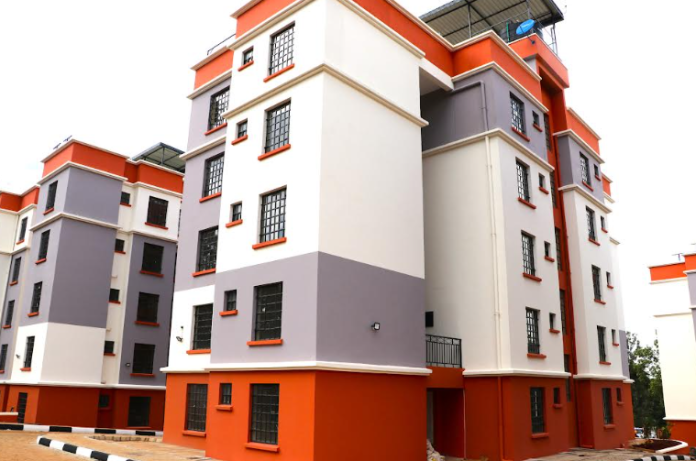
Vandals and gangs are to blame for the destruction of facilities at the Sh 315M upgraded Kibuye Market.

City Manager Mr. Abala Wanga said after successful upgrade of the market, gangs and vandals took over the market and this resulted into the wanton destruction of properties.

“We have experienced incidences of insecurity at the Kibuye market where even some of our revenue officers have been chased away by panga welding gangs.

The situation has undermined our effort to provide services at the facility.

Some of these gangs are to blame for vandalism of structures at the facility.

This is a delicate situation, but we are handling it to restore order at the biggest open-air facility in the region.

We ask for calm from traders,” he said.

Abala said the directive by the public health on the immediate closure of the facility was timely and will help the City management to fix the emerging issues at the facility.

Yesterday, the public health department noted with great concerns the existence of nuisances at Kibuye market, which threatens the health of the general public and can escalate the spread of cholera disease, which is currently an occurrence within the city and beyond.

The report revealed lack of clean and safe water supply which is as per the public health act cap 242 sec 118, improper solid waste management which is as per the public health act.

“Insanitary toilets ablution blocks as per the public health act, open cooking, and blockages of drainage systems line and access lanes.” it reported.

In a signed report on behalf of the Head of Public Health, Kisumu City Joshua Odongo ordered for immediate stoppage of all operations at Kibuye market until the concerns are addressed.

The City Manager was directed to provide adequate clean and safe water to Kibuye market, design and put up an appropriate solid waste management system for collection and disposal areas.

“Make sure all the ablution blocks and sanitary facilities are well maintained and clean, ensure that all the eateries’ structures are well designed and provided with necessary requirements and all food handlers are medically fit and structures and stalls on the drainage lines and access lanes are removed,” the report directed.

The city reacted by closing the market and wrote “We assure the public and stakeholders that the city of Kisumu is committed to resolving the identified public health concerns with urgency. 

Every effort will be made to ensure that Kibuye market resumes normal operations within the shortest time possible.

The city remains committed to ensuring a clean, safe, and healthy environment for trade.”

Abala said the report by the health department was timely and would help restore dignity of the market and enable the city to repair the damages by the vandals and gangs.

In 2020 when traders were relocated to Moi Stadium grounds to allow for the upgrade of the largest open-air market in the Lake region, that has been in existence for over 70 years, there were promises that the facility would be the best in the region.

During the relocation the City Board and Kisumu Governor Prof Peter Anyang Nyong’o promised a modern facility, which would be the best in East and Central Africa, now only two years, after traders returned to the facility, they are now faced with health concern. 

The market was expected to have modern features like paved roads, modern ablution facilities, a mini fire station, a mini health center and parking areas for customers and loading and offloading sites.

The market was expected to operate 24 hours to spur the lake region’s economy.

Nyong’o who spoke during the groundbreaking ceremony in 2020 said” We are here to not only confirm our promise but to deliver a statement of hope that Kibuye, once completed in a few months, will be one of the most beautiful markets in East and Central Africa”.

The City Board chairman Mr.  Elijah Adul said the facility would have four ablution blocks, a boundary wall, roads, walkways and customer front parking.

On a normal day, the facility handles 3,000 traders while on Sundays, it handles 10,000 and with the upgrade, it was anticipated that the number would double to 20,000.

With the upgrade, the revenue income was expected to go up as City was envisaged to have a data base of all traders and where they will be conducting their daily business compared to what was happening before.

Which Way Raila Odinga?

0

By Anderson Ojwang

Former Prime Minister Raila Odinga looks to be a man trapped in his own political mirage, wondering on which way to go in his next political move and doesn’t want to alter the existing arrangements.

Raila is breathing hot and cold at the same time, creating confusion and indecision not only among his followers but across the political spectrum.

Raila’s speeches and actions are at variance further leading to questions, what does Raila really wants or is it another charade and wild goose chase?

On Friday at funeral in Karachuonyo,Raila came to the defense of Siaya Governor James Orengo who has been critical of his political pact with President William Ruto terming, who termed it as “a disaster and abomination”.

While Raila was speaking in Karachuonyo, his Orange Democratic movement (ODM) Executive Director Oduor Ongwen was meeting Secretary General of United Democratic Alliance (UDA) Hassan Omar in Nairobi.

Omar wrote on UDA Facebook page “The Secretary General of the United Democratic Alliance (UDA), Sen. Hassan Omar Hassan, this morning held a consultative meeting with the Executive Director of the Orange Democratic Movement (ODM) Odour Ongw’en at the ODM Headquarters, Chungwa House, Nairobi.

The consultations are aimed at building synergies which further cement the foundation of the Broad-based Government (BBG) by identifying areas of convergence between the UDA and ODM and design government programs and interventions which align with the recommendations of the National Dialogue Committee (NADCO) report and the Memorandum of Understanding (MOU) between President William Ruto and former Prime Minister Raila Odinga. 

Also present; Sabastian Mwangangi, Special Advisor to UDA Secretary General and Jarred Omachi, ODM Acting Director Membership.”

At the recent the burial of Raila’s long serving and trusted aide George Oduor, Orengo did not fail to state his disapproval of the union in the presence of Ruto and Raila.

Orengo said he would not fall to praise and worship songs as had been exhibited by previous speakers from the region.

The Governor said he cannot sing song of praises for the government and that it was a right for the people of Siaya to receive development from the government.

“What I am trying to say is that let us build a society, that is built on the constitution and the rule of law.

We can say many things but for me, I cannot be praise singing.

Because we fought for a democratic constitution, where people should talk.

I was in Parliament when people used to tell President Daniel Arap Moi that, there is no where you will go and that you will be in power until the day you want to go.

So, this country will go to the dogs again, if the kind of language I am hearing here today continues.

In a different viral clip Orengo said I want to say those in a rush to join Ruto, that Ruto is a passing cloud.

Ruto is taking us into a sinking ship.

I am urging everybody that is joining Ruto is a disaster and abomination.

It cannot work.

Ruto must go with all his people.”

In Karachuonyo, Raila said the freedom of speech is enshrined in the constitution and that Orengo committed no sin when he spoke out on the political pact.

“In ODM we resolved to have an alliance but that doesn’t mean all of us have joined the government.

You know in USA, the Republican government, they used to have a Democratic Government, former president Joe Bidden had some ministers who were members of republican party, despite the fact that was a democratic administration.

Likewise, President Donald Trump has got some democrats in his cabinet today.

There is no coalition between democratic party and republican party in the USA.

We are running a presidential system of government; we don’t have opposition benches and government benches.

We have what we call parliament as an institution.

Parliament oversights the government.

The executive implements the policies, parliament passes laws.

There is no coalition between ODM and UDA.

But it is an arrangement which is based on MOU that was signed between us, and it was done in an open day light.

We have very clear points on that MOU, which are very explicit indeed.

I don’t see the reason why people are bickering, when Orengo talks, he is talking on the basis of MOU between ODM and UDA.

Orengo has not committed any crime, he has the democratic right to say what he was saying.

When prof Anyang Nyong’o speaks about devolution, he is talking the language of ODM.”

President Ruto was recently accompanied by Siaya Senator Oburu Oginga to China and it came hot in the heels after Ruto appointed the latter son, Jaoko Oburu as a special advisor on Economics and Sustainable Livelihood.

Dr Oburu is currently an ardent support of broad-based government and has maintained that they were rightfully in the broad-based government and have no reason to pull out.

“We joined the broad-based government to help you stabilize the government and we were not worried by those objecting to the new political formation.

We want to encourage the country to be peaceful, we are going to work together and those our friends who think otherwise should, should also continue to think otherwise and we will remain friends with them, but they should know as ODM we have decided to work in this broad-based government.

We have lent you people to work with you and what I want to appeal for, let our region get it share of development,” he said.

Energy Cabinet Secretary Opiyo Wandayi has also declared that the community was in government to stay and that they have given Raila the mandate to work with the president.

“I want to thank Raila for agreeing to work with you closely to unite this country.

Your Excellency, where you sit be rest assured that Baba has got our collective mandate as the people of this region to assist you unite this country.

And from where we sit your Excellency, there is no turning back, we have made a decision, that we are working with you and we are doing this to the end.

Your Excellency do not be threatened by anything or anybody.

And those shouting Ruto must go, I want to tell you this, he is going nowhere. 

In this region, we are not known to be double speakers, we say what we believe in, and we do what we say.

We have said in one accord, we are in this government as a people and we want to continue in that manner,” he said.

Alego MP Sam Atandi once an ally of Orengo but now a bitter critic asked Orengo to concentrate in managing Siaya county government where he claimed he has failed to deliver.

“We are in government.

We are participating in creating policies for this government. 

And we are supporting this government inside and outside parliament.

I want to tell my governor Orengo, last weekend, we were at a funeral in Siaya, when the president came to condole with us.

My governor made certain remarks that were really distasteful. 

I want to tell Orengo that Luos were not created to stay in the opposition.

I know he has been in opposition since he was born and there is nothing he understands other than opposition.

Let him concentrate in managing Siaya county,” he said.

Queries over the Shs 315 million upgraded Kisumu’s Kibuye market following its closure over health risk concerns

0

By Anderson Ojwang                      

Queries have emerged  over Sh 315M upgraded Kibuye market after public health  ordered for its immediate closure following health risk concerns it posed to the traders and residents of Kisumu City.

In 2020 when traders were relocated to Moi Stadium grounds to allow for the upgrade of the largest open air market in the Lake region, that has been in existence for over 70 years, there were promises that the facility would be the best in the region.

During the relocation the City Board and Kisumu Governor Prof Peter Anyang Nyong’o promised a modern facility, which would be the best in East and Central Africa, now only two years after traders returned to the facility, they are now faced with health concerns. 

Did the Board and the contractor meet the specifics in the upgrade and why are the health concerns emerging if Nyong’o’s promise was indeed actualized?

The market was expected to have modern features like paved roads, modern ablution facilities, a mini fire station, a mini health center and parking areas for customers and loading and offloading sites.

The market was expected to operate 24 hours to spur the lake region’s economy.

Nyong’o who spoke during the groundbreaking ceremony in 2020 said ” We are here to not only confirm our promise but to deliver a statement of hope that Kibuye, once completed in a few months, will be one of the most beautiful markets in East and Central Africa.”

The City Board chairman Mr.  Elijah Adul said the facility would have four ablution blocks, a boundary wall, roads, walkways and customer front parking.

Yesterday, the public health department noted with great concerns the existence of nuisances at Kibuye market, which threatens the health of the general public and can escalate the spread of cholera disease, which is currently an occurrence within the city and beyond.

The report revealed lack of clean and safe water supply which is as per the public health act cap 242 sec 118, improper solid waste management which is as per the public health act.

“Insanitary toilets ablution blocks as per the public health act, and blockages of drainage systems line and access lanes.” it reported.

In a signed report on behalf of the Head of Public Health, Kisumu City Joshua Odongo ordered for immediate stoppage of all operations at Kibuye market until the concerns are addressed.

The City Manager was directed to provide adequate clean and safe water to Kibuye market, design and put up an appropriate solid waste management system for collection and disposal areas.

“Make sure all the ablution blocks and sanitary facilities are well maintained and clean, ensure that all the eateries’ structures are well designed and provided necessary requirements and all food handlers are medically fit and structures and stalls on the drainage lines and access lanes are removed,” the report directed.

The city reacted by closing the market and wrote “we assure the public and stakeholders that the city of Kisumu is committed to resolving the identified public health concerns with urgency.  

Every effort will be made to ensure that Kibuye market normal operations within the shortest time possible. 

The city remains committed to ensuring a clean, safe, and healthy environment for trade.”

On a normal day, the facility handles 3,000 traders while on Sundays, it handles 10,000 and with the upgrade, it was anticipated that the number would double to 20,000.

With the upgrade, the revenue income was expected to go up as City was envisaged to have a database of all traders and where they will be conducting their daily business compared to what was happening before.

Natembeya: You won’t silence my voice through political threats, I am a Kenyan

0

By Anderson Ojwang

The Tawe Movement is gearing up for a battle royale and has declared that no amount of threat will silence his voice.

Trans Nzoia Governor George Natembeya, a self-declared leader of a political outfit, Tawe Movement, in a hard-hitting statement said that his mission will not be derailed by politics of fear.

“My voice will not be silenced by threats, nor will my mission be derailed by the politics of fear,” he wrote in his X handle.

Natembeya, a critic of President William Ruto’s administration and Luhya leaders including the Speaker Moses Wetang’ula and Prime Cabinet Secretary Musalia Mudavadi, is emerging as one of the top national and Luhya politicians.

Natembeya has often criticized Wetang’ula and Mudavadi for failing to articulate the Luhya community agenda in the government and also failing to unite the community to national leadership.

Natembeya has maintained that he is a Kenyan and dedicated to serving the country diligently.

He wrote “I have taken note of the reckless and deeply troubling remarks by a certain politician who not only questioned my nationality but even suggested I be expelled from Kenya. Such incendiary statements are false, inflammatory, and strike at the very heart of our shared identity as Kenyans.

My Roots and Service
Let me be unequivocal: I was born in Kenya, raised in Kenya, educated in Kenya, and have devoted my entire career to public service in this country—from my early days as a Regional Commissioner in high-pressure zones to my current role as Governor of Trans-Nzoia County.
My track record demonstrates a steadfast commitment to the welfare, security, and development of all Kenyans, irrespective of ethnicity or region. No individual—political opponent or otherwise—possesses the moral or legal authority to question my Kenyan identity or strip any citizen of their birthright,”

National Assembly Minority Leader Junet Mohamed, when he spoke at the parliament, attacked Natembeya for opposing issuance of identity cards without vetting.
Junet called for Natembeya’s deportation, claiming his remarks showed he was not a Kenyan.

“Mr. Speaker, I was shocked when I saw a governor of Trans Nzoia shouting at the top of his voice in Mt Elgon, saying that some Kenyans should not be given identity cards. Some of the people who have served in provincial administration and having a colonial mentality, he deserves not to lead anyone in Kenya. He is running a county bordering Uganda, why is he discriminating against Kenyans?” he said.

But Natembeya has maintained that his call arose from concern over national security saying Junet distorted the facts to suit his political interest.

“My recent call for the reinstatement of robust vetting procedures for national identity issuance in North Eastern Kenya arose solely from concerns over national security. Border regions have unique challenges, ranging from cross-border movement to the threat of illicit networks, that demand prudent safeguards.

To brand this duty-driven appeal as “discrimination” is a distortion of both fact and intent.

Rejection of Hate-Filled Rhetoric
Worse still was the invocation of genocidal tropes—the so-called “Rwanda way” and “DRC way”—in an attempt to justify punitive measures against me. Such references are abhorrent.
They conjure memories of mass violence and stand in direct opposition to Kenya’s hard-won peace and stability. I condemn this language in the strongest possible terms. Our political discourse must never stoop to threats or dehumanization.

A Call for Unity and Truth
As Governor, I remain unwavering in my pledge to put Kenya—and all her people—ahead of partisan politics. I will continue to; Speak boldly on matters of security and governance, guided by facts and the public interest.

Secondly, Lead justly, ensuring every community in Trans-Nzoia feels heard, protected, and empowered and lastly, Serve diligently, with transparency and respect for the rule of law.
I invite all Kenyans—across ethnic, regional, and political divides—to reject hate, embrace truth, and work together for the prosperity and security of our nation.

Kisumu City institutes measures to curb harassment of investors by the inspectorate

0

By Reporter

Kisumu City Board has apologized to developers over alleged harassment and extortion by officers from the City Planning and Inspectorate Department.

In a press statement signed by City Manager Mr. Abala Wanga, he apologized to the residents and stakeholders on behalf of Kisumu Governor Prof. Anyang’ Nyong’o over the alleged vice.

Wanga wrote, “On behalf of the County Governor of Kisumu, Prof. Anyang’ Nyong’o, and the entire County Government, I wish to sincerely apologize for the recent incidents involving staff of the City of Kisumu and other departments in the county, particularly from the Development Control and Compliance sections of the City Planning and Enforcement Directorate.

The City of Kisumu operates under strict legal and regulatory frameworks, and any official enforcement or inspection activities are conducted in full compliance with the existing laws and regulations.

It has come to our attention that certain employees under the Inspectorate Section have been harassing developers, investors, and business owners at construction sites, extorting money, confiscating tools of work, and even purporting to make arrests of workers at various construction sites.

We are also informed that the said staff have been operating without proper identification, including during weekends and public holidays, which is irregular.”

Abala said the City Board had taken drastic measures to curb the harassment by instituting various measures which include that all staff of the Inspectorate under the City of Kisumu shall have proper identification and proper uniform while undertaking such operations.

That all legitimate staff of the City of Kisumu from the Development Control and Compliance Section and the Inspectorate will operate within official working hours.

That any demands for payments, confiscation of items or working tools, or threats during enforcement by unverified persons should be reported immediately to the City Manager’s office or law enforcement agencies.

President Ruto’s Endorsement of “One China” The Policy That Shaped Modern Geopolitics is Bound to Rattle the West

0
President ruto

By Billy Mijungu

In the winding alleys of Beijing’s old hutongs, where red lanterns sway above tiled rooftops and elders play mahjong beneath mulberry trees, one truth remains sacred: there is only one China. To the average Chinese citizen, this idea is not just state policy it is a cultural conviction and a historical inheritance passed down through generations. Yet, at the high tables of global diplomacy, that same idea has ignited tensions, delicate negotiations, and at times, the threat of war.

The One China policy dates back to the Chinese Civil War of the mid-20th century. When Mao Zedong’s Communist forces triumphed in 1949, the defeated Kuomintang KMT fled to the island of Taiwan. There, under Chiang Kai-shek, they continued to rule as the “Republic of China,” insisting they remained the legitimate government of all of China even as the Communist Party established the People’s Republic of China PRC on the mainland.

For decades, both entities claimed to be the true China. The global tide shifted in 1971 when the United Nations recognized the PRC as the official representative of China, replacing Taiwan’s seat. In 1979, the United States formalized relations with Beijing, acknowledging that there was only one China and that Taiwan was a part of it. Thus began the diplomatic doctrine known as the One China policy, indivisible and absolute from Beijing’s perspective.

While many countries, including the US, formally acknowledge the One China policy, they stop short of endorsing Beijing’s claim over Taiwan. The US maintains a position of strategic ambiguity. It does not recognize Taiwan as an independent nation, yet it supplies arms, engages in trade, and maintains unofficial relations through the American Institute in Taiwan.

This duality recognizing but not endorsing, acknowledging but not validating has defined Western policy for decades. Opposition to the policy has often been muted, but in recent years it has grown more vocal, especially as China becomes more assertive under President Xi Jinping.
Both Republican and Democratic administrations in the US have strengthened unofficial ties with Taiwan. Naval patrols through the Taiwan Strait, billions in arms sales, and high-profile visits by lawmakers signal one thing clearly: Taiwan is not alone.

For many in the West, Taiwan represents a democratic outpost resisting authoritarianism. It boasts open elections, press freedom, and civil liberties in stark contrast to China’s centralized one-party rule. Supporting Taiwan has thus become synonymous with supporting democratic values.

Western nations, especially the US, Japan, and segments of the EU, have deepened economic ties with Taiwan, particularly in semiconductors. Taiwan’s TSMC Taiwan Semiconductor Manufacturing Company is a global leader in chip manufacturing. This economic interdependence is seen as both strategic and symbolic.

China considers any challenge to the One China principle a direct threat to its sovereignty. It has warned repeatedly that formal Taiwanese independence would cross a red line, potentially triggering military conflict. From large-scale military drills and cyber-attacks to diplomatic isolation campaigns, Beijing employs a full suite of tools to pressure Taiwan and deter foreign interference. Ironically, the more aggressive Beijing becomes, the more international sympathy Taiwan seems to garner.

Today, the world lives with a contradiction: there is One China, and yet Taiwan functions independently. The One China policy has long held global diplomacy in balance. But with China’s rise and escalating US-China tensions, that balance is under strain.

On April 23, 2025, President William Ruto officially endorsed the One China policy, a move likely to rattle Western capitals. Ruto has embraced a version of strategic ambiguity previously seen only in Western diplomacy. But this time, he may have taken it a step too far for Washington’s comfort.

The immediate fallout was swift. US Secretary of State Marco Rubio abruptly canceled a scheduled visit to Kenya, a clear signal of displeasure. It is a diplomatic snub with potential ramifications. Kenya is a critical partner for the US in East Africa militarily, economically, and geopolitically. Whether this rift deepens or dissipates will depend on subsequent actions from both Nairobi and Washington.

It remains to be seen if the endorsement is firm in spirit or ambiguous to the extent of just being a meaty pronouncement, as many nations have done. Ruto’s endorsement is not just a foreign policy shift, it is a declaration of Kenya’s independent global stance. But it also exposes the fragility of small and middle powers navigating the complex, often contradictory currents of great-power rivalry.

Whether this gambit pays off or isolates Kenya on the international stage remains to be seen. What is certain, however, is that President Ruto has placed Kenya squarely in the middle of one of the defining geopolitical fault lines of our time.
If you’d like this styled for publishing on a website, blog, or newspaper column, I can help format it for that too.

Hope for Cancer Patients as Homa Bay Signs an MOU with Aga Khan Hospital

0

Reprieve for Cancer Patients as Homa Bay Signs an MOU with Aga Khan Hospital
By Habil Onyango

The County Government of Homa Bay on Wednesday signed a Memorandum of Understanding (MoU) with the Aga Khan Hospital Kisumu for the East Africa Comprehensive Cancer Project (EA-CCP).

The project is set to significantly enhance and expand the quality, accessibility, and capacity of our cancer treatment services at the Homa Bay County Teaching and Referral Hospital.

It will focus on screening, vaccination, and treatment, including chemotherapy for breast and cervical cancer.

According to County Governor Gladys Wanga, the initiative will benefit not just Homa Bay but the entire region, marking a transformative milestone in our healthcare system.

“We extend our sincere appreciation to the Aga Khan Foundation, the French Development Agency (AFD), and the Gates Foundation for their crucial partnership in this vital project,” said Wanga.

Wanga revealed that at the moment, the County Department of Health is unable to provide chemotherapy services, but according to the program, they will be able to offer such services in the next three weeks.

“In the next three or so months, our Health Department will start offering chemo services for our people and others from other parts of the country,” she said.

“This is a very big step moving forward through the partnership with the Aga Khan Hospital, AFD, and the Gates Foundation,” said the Governor.

She, however, advised the locals to go for early screening of cancer for early detection, saying prevention is better than cure.

“As a County, we are implementing Universal Health Care where we are putting a lot of emphasis on Primary Health Care and Community Health, and we are happy with the program which will be supporting community engagement and sensitization and screening so that both cervical and breast cancer, which are common in the region, can be detected early to avoid unnecessary deaths,” said Wanga.

According to the Aga Khan Hospital Chief Executive Officer Jane Wanyama, the project is estimated to reach 1.8 million people.

She said that as partners, they will be participating in research programs which will give informed information to help in coming up with strategies that will improve the situation of cancer in Homa Bay and other parts of the country.

“We are excited that Her Excellency Governor Wanga, together with other County leadership, have assured us of their support in a journey towards tackling the cancer situation in this region,” said Ms. Wanyama.

“We have signed an MOU which shows our readiness to get started and be part of the County for the next four years, and we trust that at the end of the stipulated timelines, we will be able to look back and say indeed, we have been able to achieve what we really started by reaching out to over 1.8 million people in this region,” she said.

“We will work closely with the community, religious leaders, and the general public to raise awareness on cancer and the importance of early screening and early detection, which will lead to effective treatments for better outcomes,” she added.

Overview

Homa Bay faces challenges related to cancer, particularly Kaposi Sarcoma, an HIV-related cancer.

The county has a high HIV prevalence, which contributes to this burden.

While statistics on overall cancer incidence in Homa Bay are not readily available, a study indicated low breast cancer screening uptake among women, with 9.7 percent and 9.6 percent having undergone screening in an intervention and control group, respectively.

PRESIDENT RUTO’S GOVERNMENT AND KENYA’S PROSPECTS BEFORE THE NEXT ELECTIONS

0
Raila

By Remmy Butia

President William Ruto’s administration, which took office in September 2022, has faced significant challenges and opportunities that will shape Kenya’s trajectory leading up to the next elections.

My analysis tends to examine the performance of Ruto’s government across key areas including economic management, political stability, social cohesion, and governance reforms, while assessing whether there’s genuine hope for Kenya’s future.

Political Landscape and Coalition Stability, President Ruto’s path to re-election in 2027 appears increasingly precarious due to mounting political challenges.

The ruling Kenya Kwanza Alliance has experienced significant fractures, with key partners like Ford Kenya refusing to dissolve into Ruto’s United Democratic Alliance (UDA).

National Assembly Speaker Moses Wetang’ula’s Ford Kenya recently resolved to maintain its independence, rebrand as a youth-friendly party, and field candidates in upcoming by-elections – a direct challenge to UDA’s dominance.

The political landscape has been further complicated by:

The impeachment and subsequent fallout with former Deputy President Rigathi Gachagua, which has strained relations with the critical Mt. Kenya voting bloc –

The emergence of the Democratic National Alliance (DNA) party by former Musalia Mudavadi allies threatened UDA’s influence in Western Kenya.

Opposition efforts to unite behind a single candidate, with figures like Kalonzo Musyoka, Martha Karua, and Eugene Wamalwa vowing to front a joint challenger.

Political analyst Prof. Gitile Naituli notes that while incumbency provides structural advantages, Ruto faces “several significant stumbling blocks that could undermine his bid if not addressed deftly and strategically”.

The ‘Ruto Must Go’ movement and calls for a one-term presidency have gained traction, particularly among youth and opposition leaders.

Economic Management and Fiscal Challenges, The Ruto administration’s economic policies have been a source of promise and profound public discontent.

While macroeconomic indicators show some positive trends -with GDP growing at 5.6% in 2023 and inflation falling to 2.8% by November 2024 – the government’s fiscal approach has sparked widespread protests.

Key economic developments include:

Controversial Taxation Policies: The proposed Finance Bill 2024, which included numerous new taxes, triggered nationwide youth-led protests that resulted in at least 39 deaths and forced Ruto to withdraw the legislation.

This created a $2.7 billion budget hole that the government plans to address through spending cuts (177 billion shillings) and increased borrowing (169 billion shillings).

Austerity Measures: Ruto announced drastic cuts, including dissolving 47 state corporations, reducing government advisers by 50%, suspending non-essential travel, and eliminating budget lines for presidential spouses.

While framed as necessary reforms, these measures risk further slowing economic activity. Debt Concerns: Kenya’s debt stands at over 70% of GDP, with Ruto ordering a forensic audit. The budget deficit is projected to rise to 4.6% of GDP in 2024/25 from an earlier 3.3% estimate, raising concerns about debt sustainability.

Despite these challenges, Ruto has projected optimism about economic reforms bearing fruit in 2025, promising stronger performance, more youth jobs, and higher farmer incomes.

The Kenyan shilling has strengthened significantly from 165 to 129 against the dollar between February and December 2024, and foreign exchange reserves have increased to $9.5 billion (five months of import cover).

Governance and Public TrustPublic trust in the Ruto administration has been severely tested by several governance crises:

1. Police Brutality: The violent response to anti-tax protests, including alleged abductions of activists, has drawn international condemnation. One activist, Osama Otero, described being taken by plainclothes officers at 3 a.m., blindfolded, and questioned. Ruto later apologised for such incidents but maintains that the protests were “hijacked by criminals”.

2. Corruption Allegations: Critics accuse the government of systemic corruption, with former officials like Rigathi Gachagua and Justin Muturi claiming public funds left by the Kenyatta administration have been misappropriated. The perception of corruption undermines public willingness to accept tax increases

3. Cabinet Reshuffles: Ruto’s dismissal and subsequent partial reinstatement of his cabinet (with 6 of 11 proposed ministers from the old team) has been viewed as insufficient reform by many Kenyans who expected a complete overhaul

Political analyst Dismas Mokua argues that Ruto needs to “abandon strategic visibility and embrace strategic communications” to better highlight his administration’s achievements and rebuild trust

Social Unrest and Youth Discontent

The Gen Z-led protests of 2024 represent perhaps the most significant challenge to Ruto’s leadership.

What began as opposition to tax policies evolved into a broader movement demanding governance reforms and even Ruto’s resignation.

This youth uprising—unaffiliated with traditional opposition structures – has created a volatile political dynamic that could reshape Kenya’s political landscape before the next elections.

Key factors driving youth discontent include:

High unemployment rates and limited economic opportunities

Perception of government insensitivity to public suffering- Frustration with political elites and demand for accountability

Digital mobilisation capabilities that bypass traditional political structures

Ruto has attempted to engage with youth through platforms like his X (Twitter) Space forum, but scepticism remains high.

The protests have demonstrated the potential power of this demographic to influence national politics outside conventional party frameworks.

Reform Agenda and Development Promises.

Despite these challenges, the Ruto administration has advanced several policy initiatives that could deliver tangible benefits if effectively implemented:

1. Universal Healthcare: The Taifa Care program aims to reduce medical costs through an inclusive public healthcare system.

2. Agricultural Reforms: Subsidised fertiliser distribution and productivity enhancements seek to boost food security and farmer incomes.

3. Education Reforms: Changes in basic and higher education are expected to “bear fruit, providing new momentum” for the sector.

4. Infrastructure Development: Projects like the Talanta Sports City have shown progress, with Ruto expressing satisfaction at construction advances.

However, critics like Alexander Chagema argue that Ruto may be deliberately creating despondency now to later “present himself as the messiah we have all been waiting for” as elections approach.

This theory suggests current hardships could be part of a calculated strategy to lower expectations before dramatic pre-election improvements.

Prospects for Kenya Before the Next ElectionsKenya stands at a crossroads with both significant challenges and opportunities in the period leading up to the next elections (potentially as early as 2026 if opposition figures like Jimi Wanjigi succeed in pushing for early polls ).

The country’s prospects hinge on several key factors: Reasons for Hope:

Strong macroeconomic fundamentals, including GDP growth, inflation control, and shilling stability

Potential for agricultural and manufacturing sector expansion

Youth engagement in governance issues creates pressure for reform

Continued democratic resilience despite tensions

Significant Challenges:

Political fragmentation within Kenya Kwanza and growing opposition unity

High debt levels and constrained fiscal space

Deep public distrust exacerbated by protest violence and alleged rights abuses

Unmet expectations in critical areas like employment and services

The coming months will be crucial in determining whether Ruto can stabilise his administration, deliver visible improvements in living standards, and rebuild fractured political alliances.

As Prof. Naituli notes, Ruto still has opportunities to “rebuild his Mt Kenya support, choose to stabilise his Kenya Kwanza coalition… deliver economic wins, and shape the narrative to control the ground.”

Ultimately, Kenya’s hope before the next elections depends on the government’s ability to transition from crisis management to delivering inclusive growth, while opposition actors must demonstrate they can offer a credible alternative.

The resilience of Kenya’s institutions and civil society, combined with an engaged citizenry, provide grounds for cautious optimism – but the path forward remains fraught with both political and economic uncertainties.

President Ruto repays Oburu with son’s appointment as Special Advisor

0

By Reporter

President William Ruto has appointed a son of Siaya Senator Dr Oburu Oginga as one of his advisors.

Jaoko Oburu, a former county executive committee member in Siaya county government, was appointed as special advisor for economic empowerment and sustainable livelihood.

The appointment comes after a falling out between ODM leader Raila Odinga and Siaya Governor James Orengo, who was once a close ally but has become an ardent critic of the political pact between the Orange Democratic Movement (ODM) and the United Democratic Alliance (UDA).

Orengo has come under a barrage of criticism from ODM leadership led by Oburu, Energy Cabinet Secretary Opiyo Wandayi and Alego MP Sam Atandi, among others, for his opposition to the political pact between Ruto and Raila.

A section of the  ODM leadership and  Siaya Members of the County Assembly have been toying with a plot to impeach Orengo over his opposition to the political pact.

Jaoko wrote, captioned “My appointment as Special Advisor at the office of the president.

I take this opportunity to give special thanks to the president, William Ruto, for granting me the opportunity to serve Kenyans by appointing me to serve in the capacity of Special  Advisor, Economic Empowerment, and Sustainable Livelihoods.

My thanks goes also to the former prime minister, Raila Odinga, for showing his faith in me and for creating a conducive environment for Kenyans from all walks of life to work together  for our beloved  country.”

Currently, Oburu  leads the support broad based government and  President Ruto,  he recently told off members of Azimio Coalition over their opposition to ODM working with President Ruto.

Recently, during the burial of Raila’s aide, Oburu declared they were rightfully in the broad-based government and had no reason to pull out.

“We joined the broad-based government to help you stabilise the government, and we were not worried by those objecting to the new political formation.

We want to encourage the country to be peaceful. We are going to work together, and those of our friends who think otherwise should also continue to think otherwise, and we will remain friends with them, but they should know that as ODM, we have decided to work in this broad-based government.

We have lent you people to work with you, and what I want to appeal for, let our region gets its share of development,” he said.

Oburu also told the Mt Kenya residents at a funeral in Meru County that they were supporting President Ruto after they betrayed Raila in the last general election.

When he spoke, in front of Raila, Oburu talked about the betrayal by Mountain in the last presidential election and why he doesn’t regret being in the broad based government with President William Ruto.

Oburu said Raila made huge sacrifices to then President Uhuru Kenyatta in a hope that Mt Kenya would reciprocate  by supporting his presidential ambition but that went nought.

“ As things stand, we are in this government called  broad based  government. 

I am a member of a broad based government. 

Martha Karua has told me she is very far from broad based government. 

It is ok. 

Because we are friends, that doesn’t spoil  the friendship. 

Because we might be there and there, but tomorrow we are together.

So politics is like that, but I want to say that our country must remain united.

Raila is very big-hearted. 

You know, for five years, Raila supported Uhuru Kenyatta without asking Uhuru to give him ministers, to give him anything, because he wanted to bring the Mountain closer to us.

The government you supported, Raila, gave you unconditional support. 

And we were expecting that when Raila now stands for presidential candidate, the Mountain was going to come and give Raila a reciprocal treatment.

But as things stood out and as fate had it, that did not happen.

And, Uhuru Kenyatta warned you people and told you that you will cry.

Now, when you are crying, you want Raila to come and rescue you. How does he do it?  So we are a broad-based government, and we don’t regret it.

What we want to do is to have our country united and peaceful.

Let us continue. 

Elections will come and go. 

When those elections come, people will decide who to lead but for now we must be stable and we must stabilize the government of the day.