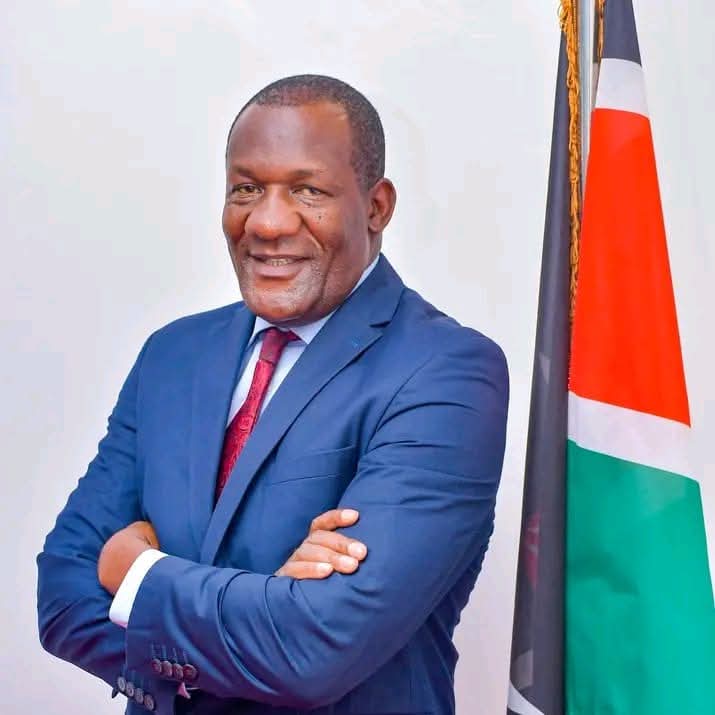
By Billy Mijungu
Raila Odinga recently stepped forward to defend those who had come under fire for criticizing President William Ruto, notably Prof. Anyang’ Nyong’o, James Orengo, and Edwin Sifuna. This intervention was not simply about shielding political allies; it was a veiled but pointed message to President Ruto.
Raila seemed to be signaling that the role of ODM in the broad-based arrangement is to help stabilize the government, not to act as an extension of Ruto’s re-election strategy. It is a delicate balance, one that has defined the uncertain path of the ongoing cooperation between ODM and UDA.
Looking ahead, the future of this MoU appears set for a tactical collaboration that could endure until around July 2027. Yet, the road to that date will not be a smooth one. Deep tensions have already started surfacing, threatening the very foundation of the alliance.
With Ruto’s previously strong foothold in the Mount Kenya region now appearing shaky, the president increasingly finds himself needing to align with the demands of Raila and his team to sustain the stability of his administration. However, this necessary cooperation has not sat well with many within UDA. The resistance has been fierce, sometimes so intense that it seems poised to tear the fragile broad-based fabric apart.
At the heart of the friction is Raila Odinga’s persistent and bold push to devolve critical national infrastructure agencies like the Kenya Rural Roads Authority (KeRRA) and the Kenya Urban Roads Authority (KURA) to county governments. Raila is not stopping there.
He has also called for the abolition of the National Government Constituencies Development Fund (NG-CDF), an institution many MPs jealously guard. His agenda is clear: to empower Governors and strengthen the devolution framework in ways that will fundamentally shift the balance of political and development power from Members of Parliament to County leaderships.
This aggressive push, understandably, has strained relationships within the coalition. Governors have embraced it enthusiastically, sensing an opportunity to wield greater authority over resources and infrastructure, while MPs view it as a direct threat to their traditional influence at the grassroots.
Yet, in my view, Raila is right. For too long, Members of the National Assembly have treated devolution as a side concern, something to be managed rather than fully supported. True devolution requires that counties be entrusted with real power and real resources. Without that, the entire promise of the 2010 Constitution remains hollow.
Against this backdrop, it will be interesting to watch President Ruto’s upcoming tour of Nyanza. His words and tone will reveal much about the future of the broad-based agenda. Will he affirm a genuine commitment to a shared governance platform, or will he retreat into a more defensive posture aimed at shoring up his electoral base? Right now, collective championing of the broad-based government agenda appears to be in tatters.
The trust and clarity that once gave it momentum are slipping away. It is increasingly clear that an urgent summit of leaders is needed to realign priorities, reaffirm commitments, and reshape the agenda if this partnership is to survive the next critical months.