Home Blog Page 151

At 29, Atieno is showcasing her mastery in writing by authoring four law books

0

By Correspondent

Flamboyant lawyer Atieno Ogolla had thought that lawyering was about long hours in court arguing about how this crime was committed or not committed.

It is after her sojourn into the practice of law that she harboured a great labour of love for writing.

Atieno’s pursuit of Alternative Dispute Resolution, also referred to as ADR, gave her excitement.

She believed that protracted cases in courts could be resolved by the differing parties settling matters out of court.

Alternative Dispute Resolution (ADR) is a mechanism of resolving disputes in any form other than through the court process.

Alternative justice processes include mediation, conciliation, negotiation, arbitration and traditional dispute resolution mechanisms.

She is about to launch four books in April, following extensive research on various aspects of law.

At 28, finding purpose in mentoring and writing fires her purpose of dispensing knowledge.

She is set to unveil four transformative books on 30 April that aim to reshape legal education, practice, and spiritual growth for aspiring and practicing lawyers.

Each of her books provides a unique perspective on legal success, professional development, and the role of faith in the legal profession.

In her first book titled “From Tradition to Modernity: The Role of ADR in African Justice Systems,” she deeply delves into the evolving landscape of Alternative Dispute Resolution (ADR) in Africa, exploring how traditional mechanisms of conflict resolution intersect with contemporary legal frameworks.

Atieno provides a thought-provoking analysis of ADR’s role in enhancing access to justice, particularly in a region where formal legal systems often face challenges of accessibility and efficiency.

The idea of ADR first excited her when she thought of how it easily helped solve cases that could, if left to the courts, drag on for years.

“My book on ADR implores the importance of using it as an alternative way of solving disputes in our societies.

If wholly embraced, ADR can be used, ensuring that there is no backlog of cases in our courts across the country,” says Atieno.

Atieno’s second book, “Beyond the Books: The Law Student’s Guide to Passing the Bar Exam”, is a must-read for any law student preparing for the bar exam. This book offers practical strategies beyond rote memorization.

Drawing from her experience as a legal educator and mentor, Atieno provides actionable study techniques, time management strategies, and exam-day readiness tips designed to help students excel and build confidence in their legal knowledge.

The third publication, “Lawyer in Progress: 365 Days to Success – Planner for Undergraduate and Bar Exam Students,” is more of an innovative planner for law students set to sit bar exams.

Failing in bar exams has recently grown into a national concern.

Last year, Attorney General Dorcas Oduor was moved by concerns raised by law students and stakeholders over mass failures in law exams offered by the Kenya School of Law (KSL) to form a body to investigate the failure.

Dorcas’s move followed a consultative meeting she had convened and was attended by the President of the Law Society of Kenya (LSK), Chairpersons of the KSL, Council for Legal Education (CLE), the Kenya Law Reform Commission (KLRC), as well as their Chief Executive Officers.

According to Atieno, this book is more than just an organisation – it is a structured guide designed to help law students and bar candidates set goals, track progress, and maintain focus throughout their legal journey.

With daily prompts, study schedules, and motivational insights, it serves as a personal accountability tool to enhance productivity and success.

In her final book titled “In His Court: A Year-Long Devotion for Future Lawyers,” Atieno is blending faith with the practice of law.

This devotional provides daily reflections, scripture-based encouragement, and insights on navigating the legal profession with integrity and purpose.

It is a spiritual companion for law students and young lawyers who seek to align their professional aspirations with their faith.

Speaking ahead of the launch, Atieno Ogolla shared, “These books are the culmination of my passion for law, education, and mentorship.

Each of them addresses a critical gap in legal education and practice, offering students and practitioners the tools they need to succeed academically, professionally, and spiritually.”

Atieno’s books can also introduce readers to the idea of and law background.

She introduces the reader to how the law relates to everyday life by discussing the structures of as well as the relationship between the people and the Constitution, Parliament, the central government and the county governments.

How are courts structured and how do they work? This is one area of the law in Kenya that is least understood.

Atieno outlines how courts are constituted, when they sit, what matters can be brought before a magistrate’s court, the high court, the court of appeal, all the way to the supreme court.

The launch of the books will entail an engaging lineup of discussions, book signings, and networking opportunities for law students, professionals, and legal educators.

Why the politicians must be called out on rhetoric and early campaigns to avoid plunging the country into chaos

0

By Remmy Butia

As Kenya inches closer to the 2027 general elections, the political landscape is already heating up with aggressive posturing, divisive rhetoric, and premature campaigning. President William Ruto is crisscrossing the country on what he calls “development tours,” while his former impeached deputy, Rigathi Gachagua – is rallying supporters under the banner of “Ruto Must Go.” Meanwhile, opposition figures like Kalonzo Musyoka, Eugene Wamalwa, Martha Karua, and Jeremiah Kioni are positioning themselves as the “people’s legitimate opposition.”

With tensions rising and political alliances shifting, the question looms: Will Kenya survive the toxic political climate, or will the nation be torn apart by the ambitions of its leaders?

Early Campaigns and the Erosion of Governance

Kenya’s election cycle has effectively begun – three years before the official campaign period. President Ruto’s recent tour of Mt. Kenya, ostensibly for development inspections, was widely interpreted as a strategic move to reclaim a region that once overwhelmingly supported him but has since grown disillusioned . While he pledged infrastructure projects and economic reforms, critics argue that these visits are thinly veiled campaign rallies meant to consolidate support ahead of 2027.

On the other side, Rigathi Gachagua – once Ruto’s closest ally – has taken a confrontational stance, labeling the current administration as “anti-Mt.Kenya” and vowing to unseat Ruto. His rhetoric has been incendiary, with some of his allies warning of a political “war” in the region .

Opposition leaders, too, are not sitting idle. Kalonzo Musyoka has openly declared his 2027 ambitions, while Raila Odinga’s allies debate whether he will run again or pass the baton. The Azimio coalition is already grappling with internal divisions, signaling a fierce battle ahead .

The Danger of Polarization

The early campaigns risk deepening ethnic and regional divisions. Gachagua’s “Mt. Kenya vs. Ruto” narrative and Ruto’s counter-mobilization could revive the toxic “us vs. them” politics that Kenya has struggled to move beyond. Already, political analysts note that the Mt. Kenya region – once a Ruto stronghold – is now a battleground, with voters split between loyalty to Gachagua and pragmatism toward Ruto’s development promises .

Moreover, the opposition’s framing of their movement as the “people’s legitimate resistance” suggests an escalation in political rhetoric that could spill over into protests or unrest, especially if the 2027 elections are contested.

The Youth Factor: A Wildcard in 2027

One critical demographic that could disrupt traditional political calculations is Kenya’s youth. By 2027, an estimated 10.5 million new voters under 35 will join the electorate, making them the largest voting bloc . Unlike older generations, these voters are less tied to ethnic loyalties and more influenced by social media, economic realities, and governance performance.

If politicians continue with their current combative style – focusing on personality clashes rather than policy – they risk alienating this demographic. As one analyst notes, “The traditional campaign method of visiting small towns and talking at citizens from the sunroof of a Toyota V8 will not appeal to them”. Instead, young Kenyans are looking for solutions to unemployment, corruption, and economic stagnation.

If the political class fails to adapt, Kenya could see a youth-led political revolution – either through mass voter turnout against establishment politicians or through the rise of a new, populist third force.

Where Does This Leave Kenya?

The early politicking raises serious concerns:

Governance Takes a Backseat:

With leaders more focused on 2027 than on delivering services, critical reforms in agriculture, healthcare, and infrastructure could stall. Ruto himself has acknowledged that his re-election depends on performance, yet his opponents argue that his administration has fallen short .

Ethnic Mobilization Risks:

If politicians continue framing elections as existential battles for their communities, Kenya could see a resurgence of the ethnic tensions that have marred past elections.

Economic Consequences:

Prolonged political instability could deter investment, worsen unemployment, and deepen public disillusionment with democracy.

A Fractured Opposition:

If Azimio fails to unite behind a single candidate, Ruto could benefit from a divided opposition – but this could also lead to post-election disputes and unrest.

Can Kenya Navigate the Storm?

Kenya stands at a crossroads. The early campaigns, harsh rhetoric, and shifting alliances could either lead to a more competitive democracy or plunge the country into another cycle of divisive politics.

For Kenya to emerge stronger, politicians must shift from toxic rhetoric to issue-based campaigns, prioritize governance over premature elections, and engage the youth meaningfully. Otherwise, the 2027 elections may not just be about who leads Kenya, but whether the country remains united at all.

As Wainaina wa Njeri, author of The Art of Winning Elections, warns: “Politics is fluid; what works today may not work tomorrow.” The question is whether Kenya’s leaders will adapt – or whether their ambitions will tear the nation apart.

Empowering Youth Through Tax Breaks: A Path to Economic Revival and Job Creation in Kenya

0

Dr.Edris N.Omondi(Advocate)

attorneyedris@ywcg.org

Kenya stands at a critical juncture in its economic journey. With a vibrant young population, the country holds immense potential for growth, yet faces the daunting challenge of youth unemployment, which hovers at concerning levels. The need for a comprehensive, bold solution to stimulate youth-led industries and create meaningful job opportunities has never been more urgent. One of the most effective measures to address this challenge lies in providing tax holidays for youth-driven businesses. This article explores the potential ripple employment effects of such tax holidays, presents an analysis of countries that have successfully implemented similar strategies, and proposes how Kenya can use this approach to foster economic growth and job creation in its 2025 National Budget.

The Power of Tax Holidays for Youth-Led Industries

Tax holidays are a powerful tool that can enable young entrepreneurs to reinvest their resources into growing their businesses rather than paying taxes. For youth-led businesses in Kenya, tax exemptions or reductions would provide critical financial breathing room to expand operations, hire new staff, and explore innovation without the heavy burden of taxation in their early years.

By offering tax breaks, the Kenyan government can create a favorable environment for the youth to establish, grow, and scale their businesses. Industries such as technology, agribusiness, renewable energy, and manufacturing stand to benefit significantly from these incentives, as they require initial capital investment and have the potential for scalability. Moreover, these industries are crucial for generating the employment Kenya so urgently needs.

Tax Break Moratorium Based on Youth Leadership

A key aspect of this proposal is that tax holidays and exemptions should apply specifically to companies and organizations with directors who are under the age of 35. This criterion ensures that the benefits of tax relief are directly targeted at empowering youth entrepreneurship, enabling them to create jobs and drive innovation.

By offering these tax breaks, the government would provide a crucial support system for young entrepreneurs, allowing them to reinvest in their businesses and expand their operations without the immediate burden of taxation. This policy would create a strong incentive for young professionals to form startups and social enterprises, fostering a new generation of Kenyan business leaders who can drive economic change and innovation.

Government Infrastructure Support for Youth Enterprises

In addition to tax breaks, it is essential that the Kenyan government provides infrastructure support to ensure the success of youth-led businesses. This could involve creating business hubs, enhancing digital infrastructure and spaces country wide, and offering access to affordable business premises, transportation networks, and communication platforms. By offering these resources, the government can further reduce the operational costs of young businesses, making it easier for them to scale and compete on a larger scale.

Furthermore, County Governments should be encouraged to support youth businesses by increasing their accessibility to tender opportunities. Youth-led enterprises often struggle to compete in the public procurement space due to the lack of resources or established networks. County Governments can play a crucial role in facilitating youth inclusion by increasing the percentage of tender bids allocated to companies whose young directors are the majority shareholders. This initiative will help youth-led businesses gain access to critical government contracts, fueling their growth while simultaneously contributing to local economies.

Ripple Employment Effects: Estimating Job Creation

The assumption that all youths need to be employed by either the government or private sector is is a wrong approach. The employment impact of introducing tax holidays for youth-led businesses is substantial and enormous. The ripple effect of tax breaks goes beyond the direct creation of jobs within youth-driven enterprises. It extends to numerous sectors through indirect, induced, and multiplier effects.

Direct Job Creation: Tax holidays allow youth entrepreneurs to channel savings into hiring talent. With an exemption from taxes, youth businesses in Kenya can create thousands of jobs in critical industries. If 1,000 youth startups, especially in technology, manufacturing, and services, are supported through tax holidays, and each startup hires 5-10 people on average, it could directly create 5,000 to 10,000 new jobs within a short time.

Indirect Job Creation: As youth businesses grow, they need external services such as logistics, legal counsel, accounting, marketing, and distribution. These support services will, in turn, create additional jobs. The ripple effect across these sectors could generate 4,000 to 8,000 additional jobs, bolstering the overall job market.

Induced Employment: Economic growth spurred by youth entrepreneurship will lead to increased consumer demand and higher disposable incomes, which will further fuel job creation in sectors like retail, hospitality, and entertainment. This can induce an additional 3,000 to 5,000 jobs driven by the demand created by the growing youth workforce.

Multiplier Effect: When youth businesses expand, they integrate into local and regional supply chains. These businesses require raw materials, transportation, and distribution, generating jobs in logistics, supply chain management, and infrastructure development.

The multiplier effect could result in 20,000 to 40,000 jobs across the country, particularly in regional and infrastructure development.

Global Best Practices:

Several countries have implemented tax incentives to promote youth entrepreneurship and have seen notable success in job creation and economic growth. Kenya can draw inspiration from these global examples:

South Korea: South Korea’s emphasis on technology startups has been supported by tax exemptions and incentives for young entrepreneurs. This has led to the development of global companies like Samsung and LG. The success of South Korea’s policies has resulted in millions of jobs in the tech sector and a thriving, innovation-driven economy.

Singapore: Singapore offers 100% tax exemption on the first S$100,000 of income for new startups for their first three years, fostering a conducive environment for young businesses. This approach has driven the growth of the country’s tech and financial sectors, attracting talent and creating a significant number of jobs.

Ireland: Ireland’s Enterprise Investment Scheme (EIS) and tax breaks for startups have led to a booming tech industry, with major companies like Google and Apple setting up their European headquarters. The Irish model has successfully created thousands of jobs, particularly in the tech and creative industries.

India: India’s Startup India Initiative offers three years of tax holidays for youth-led enterprises in their first seven years of operation. This has spurred growth in sectors like technology, manufacturing, and renewable energy, creating millions of jobs across the country.

United States: The U.S. has leveraged tax relief programs such as the Qualified Small Business Stock (QSBS) tax exclusion to support startups. This has enabled young companies to scale rapidly, particularly in the tech and green energy sectors, creating significant employment opportunities.

United Kingdom: The Seed Enterprise Investment Scheme (SEIS) in the UK provides tax breaks to investors in early-stage youth-led businesses. This has fostered a thriving startup culture, especially in the technology, creative, and green energy sectors, creating countless job opportunities.

Conclusion: A Path Forward for Kenya

Tax holidays for youth-led industries represent a strategic investment in the future of Kenya’s economy. By providing these incentives, the government would not only stimulate growth in the youth entrepreneurship sector but also create significant employment opportunities across multiple industries. The ripple effect of such tax breaks could create up to 63,000 jobs or more, addressing the pressing issue of youth unemployment while fostering a dynamic and competitive economy.

Drawing inspiration from nations like South Korea, Singapore, and India, Kenya can implement similar policies to support its burgeoning young population. The 2025 National Budget should prioritize these tax breaks as a catalyst for long-term growth and development. The additional provision of infrastructure support, alongside county governments increasing youth access to tenders, would further accelerate economic progress.

With bold policy action and a focus on empowering youth, Kenya can position itself as a leader in innovation and job creation in Africa. The time for action is now—by investing in youth, Kenya can unlock its true economic potential.

(Dr. Edris Omondi is a Preacher, Social Thinker, Mentor, Writer, Author and a Public Motivational Speaker)

Ruto Conquers the Mountain

0
Junior Secondary Schools

By Billy Mijungu

When President William Ruto kicked off his tour of the Mountain in Laikipia, many dismissed it as yet another political roadshow. Few could see the master plan unfolding. His choice of Laikipia, cosmopolitan, strategically located, and politically neutral, was deliberate. It was a signal to the nation and, more importantly, to the Kikuyu people, that the man from Sugoi still had the Mountain in his grasp.

Word quickly spread that this was not your usual tour. Attending a Ruto rally was more than political; it was economic. Tales flowed of how one’s household shopping for two weeks would be sorted just by showing up and listening. There was no need to struggle, no need to ask, just be present.

The brilliance of this campaign was not just Ruto’s, but also a borrowed page from his deputy Rigathi Gachagua’s own playbook. Women, often the unsung foot soldiers of our politics, were mobilized into thousands strong groups in every region visited. Loyalty was rewarded, not with empty promises, but with cold, hard cash. The message was clear: politics is no longer about ideology or vision; it is about who brings the money.

To eliminate dissent, the campaign moved to the streets. The boda boda riders, often the first to heckle, disrupt, or stir controversy, were bought out. Paid to remain silent, paid to attend, and paid to ferry supporters four at a time to every gathering. It was a meticulous operation, designed to show strength, unity, and unshakable support.

And once the stage was set, Ruto turned his gaze to Gachagua. Shielded from noise, backed by orchestrated loyalty, he confronted the mountain’s leadership with one message: cash is king. Development talk was secondary. The currency of this tour was money and the optics of power.

Kiambu proved a slight hiccup. Leaders were shouted down, exposing raw nerves. It was the lowest moment in the tour but a telling one. The people sent a message: If we don’t want your people, we don’t want you either, but we will let you speak. That alone tells us more about the shifting tides in the Mountain than any poll could.

Now, all eyes turn to the Mbeere North by election. It is more than just a seat. It is the barometer of where the Mountain’s heart truly lies. If Ruto’s strategy holds, then the age of ideas is over. We have entered the era where the vote goes to the highest bidder.

In this Mountain conquest, one truth stands above all: Cash is King.

Ahero Rice Scheme: A Sleeping Economic Domestic & Export Giant

0

Dr.Edris Omondi(Advocate)

attorneyedris@gmail.com

I was in MweaTabere some time back, attending a funeral in Kirinyaga County, a solemn but unique occasion that ended up sparking a reflection on the region’s agricultural potential. As we sat in the shade, chatting with locals, I couldn’t help but admire the vastness of their rice fields. The region’s production capacity was truly remarkable, yet it seemed that much of their potential remained untapped. Despite the wealth of natural resources and a robust irrigation system in place, there was something about the way the farmers worked—using outdated equipment and limited commercial practices—that made me question why regions like Ahero, with its much larger irrigation schemes and favorable improved water conditions, were not achieving their full potential in the same way.

Ahero, has one of the biggest smallholder rice farming programs in Africa. Situated in the South Western part of the Kano Plains within the River Nyando flood plain, the south west Kano rice irrigation schemes and its environ independently managed and the National Irrigation Board managed sector, spans 10,000 acres of cultivated land, with a further 15,000 acres under cultivation. Yet despite its impressive potential, the project is not meeting its full capacity. The rice fields in Ahero, like those in Mwea, suffer from underdevelopment and underutilization, largely due to poor infrastructure, inadequate irrigation systems, and lack of farmer support programs.

Ailing Regional Economy: Is Our Politics to Blame?

The challenge we face here is not just a technical one, but a systemic economic issue, stemming way back from independence. The Ahero rice schemes, while a regional agricultural giant, struggles under the weight of poor infrastructure and a lack of support for local farmers. A yield of 25 bags per acre is modest, bringing in an annual turnover of Ksh 750 million—far below what the project could achieve if its potential was fully realized. This situation speaks to a deeper issue in Kenya’s agricultural sector: despite the country’s significant resources, the local economy is being held back by outdated practices and a political framework that does not prioritize sustainable agricultural growth.

So, what seems to be ailing our regional economy? One of the major reasons is the political landscape that fails to push forward practical, business-oriented agricultural policies. Despite the potential of Ahero irrigation schemes like the South West Kano, politics often sidelines key infrastructural investments, leaving agricultural communities struggling. The fact that rice farmers still rely on middlemen, who buy rice at “throwaway” prices, is a clear indication of how much economic activity is lost due to mismanagement and political inaction.

Solutions: Making Ahero Rice Scheme Export-Tenable

To turn the Ahero Rice Scheme into an economic export giant, the first and most urgent task is to improve infrastructure. The farmers in Ahero are unable to fully harness their capacity due to problems like water shortages, siltation, and inadequate irrigation equipment. The county government, working with national agencies, should prioritize addressing these issues through investment in water management systems, machinery for land preparation, and basic irrigation infrastructure like excavators and tractors. With better infrastructure, the yield per acre could be drastically improved, offering farmers more opportunities for profit.

Beyond infrastructure, Kenya needs a concerted push towards making rice a key export commodity. The first step in this process would be implementing a policy that mandates at least 30% of home-grown rice to be displayed in supermarket shelves. This would not only create a market for local rice but also encourage farmers to up their game in terms of quality and production. By creating demand domestically, we could begin to build a reliable base for export.

Moreover, there should be a focus on value addition. Ahero’s rice scheme is still primarily a bulk producer, with no independent mills or branding for their produce. Setting up local rice mills and establishing a branding system would help add value to the rice, making it more competitive in the market. This would also provide an opportunity for job creation and stimulate local economies by encouraging small businesses focused on rice milling, packaging, and marketing.

Additionally, creating a cooperative farmer support program, structured in a proper governance model, would go a long way in addressing challenges like market exploitation and lack of storage facilities. Such a program could help farmers band together to collectively market their rice, thereby eliminating middlemen and ensuring that they earn fair prices. It could also facilitate the establishment of drying floors and storage facilities at scheme levels, ensuring that rice does not go to waste during harvest periods.

A Holistic Approach: Policy Support and Private-Public Partnerships

Finally, a more robust approach to capacity building is needed. The farmers of Ahero must shift from a subsistence-based view of agriculture to a commercial one. This requires ongoing training in farm management, accounting, record-keeping, and modern agricultural techniques. In this regard, collaboration with institutions like the National Irrigation Board (NIB), the government, and international development partners such as JICA, the EU, the World Bank, and GIZ could provide essential resources and expertise.

The county government must also play a critical role in reviewing its policy documents like the Kisumu County Food System Strategy 2023-2027; Kisumu County Agri-Nutrition Implementation Strategy (CANIS) with its complementing Agriculture legislation like- The Kisumu County Crop Agriculture Act 2019; Introducing laws that provide tax incentives for rice processors, promote cooperative societies, and encourage infrastructure development in agricultural zones will go a long way in ensuring that these schemes become economically viable. Ahero could become the “model” for Kenya’s rice industry if it is supported with the right legal framework and infrastructure.

Conclusion: The Promise of Ahero Rice

The Ahero Rice Scheme, with its vast acreage and the potential to support over 6,000 households, is a sleeping economic giant. If only we could address the systemic issues—from infrastructure and irrigation to farmer support programs and market access—the region would not only feed Kenya but could position itself as a leader in rice export across Africa. It’s time for the political will to match the potential of projects like Ahero. With the right policies, investment, and public-private partnerships, Ahero could rise as the economic export giant it’s always had the potential to be.

(Dr.Edris Omondi is a Preacher, Social Thinker, Mentor, Writer, Author and a Public Motivational Speaker)

Kenya Utalli college begins a  two week refresher courses to 1591 students

0

By Anderson Ojwang                              

The Kenya Utalli College (KUC) is repositing itself to meet the ever increasing demand  refresher courses and other trainings in the hospitality industry.

Council Chairman, Kenya Utalli College, Mr. David Wamatsi, said the overwhelming application for refresher courses exceeded the expectation and the institution has embarked on the expansion  program to meet the demand .

We are committed to meeting the training demands and we are rolling out elaborate strategy to ensure that Utalli College remains the top institution in Africa in  offering trainings in hospitality,” he said.

The principal and Chief Executive officer of the college Mr. Mark Rachuonyo revealed that  3000 applicants  applied for the two weeks refresher courses.  

We received a total record number of 3,349 applications for all the regions. Out of these, 1591 were selected to participate in the trainings scheduled to take place across the country. 

This a major milestone for this institution, as we pursue our mandate of undertaking training and capacity building for the Hospitality and Tourism sector,” he said .

Rachuonyo spoke during the awards of certificate after successful completion by 661 course participants of the two-week intense training program.

He recognized the Hospitality and Tourism Industry Stakeholders for working closely with Utalli College under the auspices of Tourism Industry/Kenya Utalli College Liaison committee to facilitate the training.

This close collaboration has facilitated the formulation of the program’s need-based course content, as well as the smooth organization and successful implementation of the training programs,” he said.

These refresher courses have provided you with an opportunity to enhance your qualifications, as well as, knowledge and professional skills. 

I urge you to instill the knowledge gained to those you left behind in your respective organizations, in an effort to enhance service delivery for the benefit of the entire organization and the industry at large.” He said.

He challenged them to continue with the search for new knowledge to be tandem with the new and emerging trends in the hospitality industry.

Wamatsi said the College values the great support accorded to it by the industry players and Tourism fund (TF) which facilitated funding towards the execution of the refresher courses/

He said refresher courses play a vital role in the development of the industry because the programs enhance efficiency and effectiveness in the participants’ service delivery.

Allow me to point out that our endeavor as a college is not just an effort aimed at providing professional skills to those practicing in the industry, but also a dedication to give back to the same industry that has supported us over the years. 

Rachuonyo said Kenya Utalli College offers many programs which effectively transfer knowledge and skills to those working or aspire to work within the hospitality and tourism industry. 

tt” he said.

The College will further conduct this year’s Management Development Program (MDP) courses in the month of June. These courses are normally based on current and real-life issues affecting the industry and are devised to ensure conformity to modern trends,” he said.

,

The Political Parties Dispute Tribunal Stops ODM Grassroots Elections in Kasipul Constituency

0

By Habil Onyango

The Political Parties Dispute Tribunal (PPDT) has revoked the planned ODM grassroots elections for East Kamagak Kasipul Sub-Branch and Kasipul Constituency Branch, which were scheduled to take place on April 7 and 9, respectively.

This follows a notice of motion filed by Philip Nashon Aroko with the tribunal in Nairobi on April 2, 2024, against ODM, over allegations of manipulation of delegates’ names.

The matter was presented before Tribunal Chairperson Desma Nungo, Hon. Theresa Chepkuony, and Hon. Abdikadir Abdiraham for further directions and/or orders regarding the notice of motion application dated April 2, 2024.

Following a preliminary inter partes hearing, and based on prayer number 2 of the notice of motion application, supported by affidavits sworn by Philip Aroko and submissions filed electronically, the tribunal issued orders stopping the grassroots election exercise.

The tribunal granted an interim conservatory order restraining the respondent, by itself, its servants, agents, or otherwise, from conducting the sub-branch and branch elections in Homa Bay on April 7 and 9, 2025, or on any other date, pending the inter partes hearing of the application.

Additionally, the tribunal directed the Rachuonyo South OCPD to ensure compliance with the orders issued.

The respondent has been ordered to file and serve their responses to the application and to the complainant within seven days from the date of the order’s issuance.

The tribunal also granted the complainant/applicant corresponding leave to respond within three days of being served.

The case is scheduled for mention before the tribunal on April 22, 2025, at 2:30 p.m. to check compliance and provide further directions on the disposal of the application, according to the tribunal’s orders.

Take notice that any disobedience or non-observance of the order of the court served herewith will result in penal code consequences to you or any other person(s) disobeying and not observing the same,” reads the order signed by the Chairperson.

There have been multiple complaints from various leaders regarding the names of delegates elected at polling station levels who were scheduled to participate in the ward-level grassroots elections.

Among those raising concerns are Philip Aroko—who is eyeing the constituency chairperson seat and the 2027 parliamentary seat—Ndhiwa MP Martin Owino, and Acting Constituency Chairman Hamilton Orata. They allege manipulation of the delegate list.

Orata particularly raised issues with the Kasipul, Ndhiwa, and Homa Bay Town constituencies, where he confirmed receiving several complaints from party members regarding the list.

Interestingly, the names of Orata and Owino—who is the current party patron in Ndhiwa—do not appear among the delegates expected to participate in the grassroots elections.

According to the ODM County Election Coordinating Committee Chairperson, the two leaders did not take part in the polling station elections, which is the primary reason they were not included on the delegate list.

Muturi responds to  President Ruto: “ You are Unfit to lead the Country”

0

By Anderson Ojwang                       

In one of the fiercest and firm open barbs on President William Ruto by former Attorney General Justin Muturi has opened the can of worms about the dealings and rot in the current regime.

Muturi went ahead to claim Ruto was not fit to be the president of the country, and it is unfortunate he is at the helm.

In another hard hitting bombshell during NTV Break fast Show Fixing the Nation, Muturi alleged of the rot and run away corruption in the Ruto government.

He went ahead to claim that President Ruto was running a terrified and timid cabinet that cannot stand up to be counted.

My mind is made about Ruto. I have heard enough of it. William Ruto is a person with two personalities.. The William Ruto that presents himself to the public is completely different character from the one that sits behind in the office and crafts stuff.

I think that kind of person is a dangerous character. I think  William Ruto is unfit for the position of President of Kenya.

I have come to that conclusion and I have nothing  and no bitterness but my personal assessment. When I watch Wiliam Ruto sometimes talking to members of cabinet saying I do not want to see corruption in my government. then I start  wondering, who is this talking? I think ,  I have so many examples. He is absolutely , very and irredeemably corrupt .

I don’t want to give you the obvious ones, the Adani’s because I have some background. He is the one who was clearly behind it and I know this because. When his advisor  Mr.  Adan Mohammed, invited me to attend the COP 28 in Dubai in 2023, he gave me a lot of information that ended up with the Adani deals. Specifically, the  Jomo Kenyatta International Airport. During that same time, a Russian oligarch who had offered to invest $1 billion in Kema. It came from Adan Mohammed, who claimed it was an NGO.

On the day, we were coming from India after COP28, we didn’t come back but went to India. I saw the guy next to Ruto,  he told me, you know that plane of the President is not good.  I have chartered a direct one. Immediately,  I landed in Dubai, Ruto was calling and told me that those Russians, they are in Dubai, they are waiting for me sign documents.

 I am on transit, I am not even leaving the Airport. He told me your people have worked on the documents. But I objected, No, I need to go and review it in the office. 

In the deal, they were purporting to give a grant of $ 1 billion  to grow  the alleged 15 billion tree program

For William Ruto, when he comes with any program, it is for money making. They  brought me MOU but I told them , this is wrong, we can only receive the $1 billion only be by away of grant.

It cannot come directly  to the ministry, it can only go through from National Treasury but they were trying to avoid that. 

I am being told to sign documents at the Airport and it is William Ruto who is calling me directly.

It is an unfortunate situation for the country that William Ruto is the President, sitting in the office.

The cabinet memo brought to me at Kakamega State Lodge by former Health Cabinet Secretary Susan Nakhumicha sign, I declined.

 I asked her what is this.? She told me CS Treasury had signed and it was only me who was remaining.

I told her it doesn’t matter and she ran to report me to the President, who was with his deputy Rigathi Gachagua.

They called me about the matter, but  I told them we cannot do cabinet memos that way.

 Even the Cabinet Secretary, Attorney General, cannot do it that way, but the office.

 There  are departments manadated to check through and consultation on the various issues in order to  come with sound legal advice.

I told them, I cannot sign but the president pleaded with me saying, you know we promised people universal health coverage.

 I sympathized, but I told him that this procedure was not right.  The law requires that the bill must be forwarded to me as Attorney General to review it with clear drafting instructions and what it intends to achieve.

I never took part in the drafting of the health bill, it never came to the office of the Attorney General.

President Ruto accused Muturi of incompetence in his duty as the Attorney General and was unable to deliver. He said Muturi also went on strike by not attending cabinet meetings

But in his response Muturi said he had declined the post of Attorney General but Ruto insisted despite him turning down his offer and sending speaker of the House Moses Wetangula to plead for him.

Fortunately, he referred to incompetence to the Attorney General. I believe the president’s attention is to divert me from issues of abduction and extrajudicial killing.

The record is there to speak. I made the state law independent. Brought an amendment that was passed by the parliament. On the day we launched 24th supplement last year, which was last launched in 1999. Ruto was commending me with praise. I will not keep defending myself.

I introduced a rule that  MOU with not be used as basis on entering into contract.  This had cost the government to lose billions of shillings and  to face several litigations.

Memorandum of Understanding (MOUs) must be brought to the Attorney General Office. It became a thorn in many of my colleagues  who did not want that.

Around April, when I was Attorney General, William Ruto knew, in January 2020, I sought the intervention of the religious sector to reconcile then President  Uhuru Kenyatta and Ruto. It was getting bad.

Even when Ruto and his deputy Rigathi Gachagua had problem somewhere in April  last year, I had tea with him, I told him, I see something happening between you and your deputy. It is affecting how we operate,” he said.

Politics is a matter of interest. Between Ruto and uhuru, I used to run to find out the problem and reconcile.

Ruto as DP came to see me and asked me to join him. He came to my party office, we discussed. Held discussion with uhuru, in had to weigh which side to support. I don’t think whether if it your son , you will not speak out ? speak and defend to the hilt. It touched me. It had to begin somewhere.

Ripples in ODM over grassroots elections in Homa Bay County

0
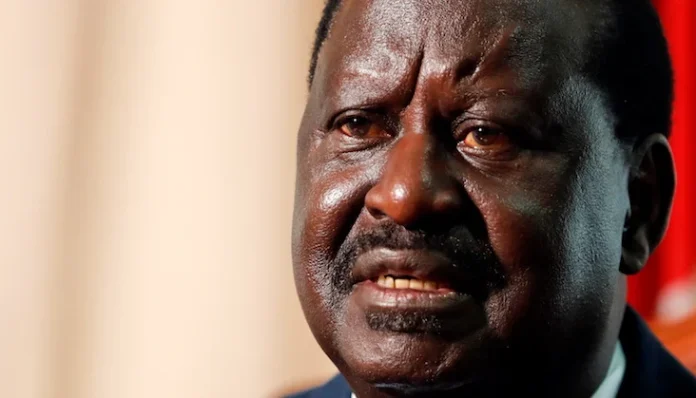
Raila Odinga

By Habil Onyango

Orange Democratic Movement is likely to face huddles in its ward and Constituency elections in Homa Bay.

This is after e section of leaders raised allegations that the names of the delegates who were elected on November 27,2024 has been manipulated.

The party has scheduled its elections on April 7 and 9 at the ward and Constituency levels respectively.
Led by the Ndhiwa MP Martine Owino and Kasipul hopeful Philip Aroko, they have vowed that the exercise will not take place until the correct list is availed.

In Ndhiwa, the names of the MP who is the current party Patron and the Acting party County Coordinating chairman, Hamilton Orata are missing from the list of those who will participate in the exercise.

Orata had alleged discomfort in the conduct of the ongoing party grassroots elections. Orata, Owino, Senator Moses Kajwang’ and Woman Representative are eyeing the County’s Chairperson positions.

Orata had particularly named Homa Bay Town, Ndhiwa and Kasipul as some of the Constituencies which he had received complaints about the manipulation of the delegates names.

They have accused one of the leaders from the Constituency who holds a major position in the County of interfering with the list in favour of her supporters.

Aroko however has accused the current MP for Kasipul Ong’ondo Were of taking the party as his own personal property accusing him of influencing the list through the party’s National Election Coordinating Committee.

Were has declared his interest in the party’s County Chairman seat position.

“Were has had his time, and by August 2027, he must step aside and no negotiations, no extensions,” he said.

Leadership is not a birthright, and ODM is not a family heirloom to be passed down like personal property. It belongs to the people, and when leadership fails to meet their expectations, change becomes inevitable,” he said

Aroko said that ODM must reflect the will of the electorate, not serve the selfish ambitions of a select few clinging to power.

The message is loud and clear: any attempt to manipulate the ODM Party delegates list in Kasipul is dead on arrival,” he said


We have everything mapped out, and no amount of scheming will alter the course of history,” he stated.

Aroko declared that he is the people’s choice and a steadfast, loyal ODM soldier who has stood with the party since 2013.

ODM belongs to the people and my quest is unstoppable,” said.

However, according to the County ODM Elections Coordinating Committee Chairperson Mary Opiyo, the electoral process in Homa Bay was conducted in a transparent, free and fair manner in a strict adherence to the guidelines and directives provided by the party’s National Elections’ Committee.

She said that until now, no formal complaints or disputes have been lodged with them or the party NEC regarding the conduct of polling Station elections in conformity with the laid down guidelines and directives.

Pursuant to the directives issued by the ODM NEC,the CEC successfully conducted the grassroots elections in all polling stations across the County on November 27,2024,” she said.

The Committee has not received any objections from the County party leader, elected officials, aspirants or members of the public concerning the integrity of the elections process,” she added.

It is therefore conspicuous and questionable that Orata, who was absent during the electoral process and made no effort to participate, has now chosen to raise concerns at this later stage,” noted the Chairperson.

Notably, he did not engage in any official information in any capacity to support the exercise nor was he present at any polling station to observe the process,” She added.

The Chairlady accused Orata of being absent during polling station proceedings and even failed to provide logistical or administrative support to the Committee despite request for support.

The further revealed that the acting chair did not even vote at his Rapedhi Primary School, Kanyadoto ward, Ndhiwa Sub County.

It is therefore regrettable that he has chosen to raise concerns about an election in which he neither participated in nor made any efforts to oversee and that is why his name is not among the delegates who were elected at the polling Station level,” she said.

According to CEC Secretary David Ogenga, those who feel aggrieved should follow the proper internal dispute resolution mechanism in case they have legitimate concerns regarding the electoral process.

He said that their sudden unprocedural request for harmonisation of the list of the elected officials at the polling stations amounts to a blatant subversion of the will of the people.

Such a move would contravene the fundamental Democratic principles enshrined in the Constitution of the party,” he said.

We remain committed to upholding the principles of democracy, transparency and Fairness in all electoral processes,” he added.

We reiterate our confidence in the integrity of grassroots elections and urge all the party members to adhere to the party’s internal mechanism in resolving any grievances, especially,” he added.

Report reveals Gen Zs as integral part of new socio-economic and political dispensation in the country

0

By Reporter

A recent survey report by Mwalekeo Insights has revealed the socio-economic and political impact the Gen Zs have in the creation of a new dispensation in the country.

In the report,52% of rural dweller agree in the power of Gen Zs to bring about positive socio-economic and political change, while 34% do not agree and 15% are uncertain.

Similarly, 68% of urban dwellers agree that Gen Zs are a powerful force for positive socio-economic and political change, while 18% oppose and 14% had mixed feelings.

Equally, 79% of male participants support Gen Zs as agents of positive socio-economic and political change, 16% oppose them while 5% remained neutral.

A notable 77% of respondents acknowledged that Gen Zs are politically aware and actively engaged in political discourse, especially on social media platforms while 13% disagreed and 10% were unsure. 

51% of respondents commended Gen Zs for their structured and bold activism, including protests and campaigns addressing governance ad social justice issues. However, 44% felt that their activism lacks structure and might affect its long-term impact. While 5% feel that it is neither structured nor unstructured.

74% of respondents acknowledged Gen Zs’ innovative approach to earning a living, particularly through online businesses, freelancing, and content creation. On the contrary, 21% of the respondents thought of Gen Zs as a lazy generation and are lacking entrepreneurial spirit. While 5% were unsure

48% of participants (older generations) agree that Gen Zs conform to traditional organizational norms at workplaces, with 13% believing that Gen Zs are trying to adapt and conform. However, 39% think Gen Zs are generally non-compliant in organizations.

84% of respondents viewed Gen Zs as progressive, particularly regarding gender equality, sexual rights, mental health awareness, and environmental sustainability.

81% of female participants support Gen Zs as agents of positive socio-economic and political change while 13% dismissed the notion and 6% shared mixed feelings. 

The report presented the findings of an opinion poll conducted by Mwelekeo Insights which explored the perceptions and attitudes of Kenyans aged 30 and above toward Gen Zs following the significant social, political, and economic events around and after June 2024. 

The poll sought to understand how older generations view Gen Zs’ influence on politics, work ethic, cultural values, and overall societal impact. 

The survey used a mixed-methods approach that combined surveys, focus group discussions (FGDs), and in-depth interviews (IDIs), the poll gathered insights from diverse demographic groups across Kenya. 

The findings revealed both generational tensions and opportunities for collaboration, highlighting the need for greater intergenerational understanding to foster social cohesion and inclusive development.

The poll explored how Kenyans aged 30 and above perceive Gen Zs in various spheres, examining generational gaps, shared values, and areas where mutual understanding exists and can be strengthened.

Urban respondents, more exposed to Gen Z-led digital activism and gig economy trends, may hold different views compared to rural respondents, who might prioritize traditional values and face limited interaction with Gen Z innovations. 

Findings revealed mixed perceptions of Gen Zs’ political engagement. While some respondents admired their activism and willingness to challenge the status quo, others expressed concerns about their perceived lack of experience and pragmatism. 

Many respondents acknowledged Gen Zs’ entrepreneurial spirit and adaptability in the gig economy. However, some viewed them as less committed to traditional career paths and more prone to job-hopping.

Older generations expressed both admiration and skepticisms toward Gen Zs’ progressive values, particularly regarding gender equality, mental health awareness, and social justice

The poll identified key generational gaps in values, attitudes, and expectations but also highlighted areas where collaboration and mutual learning could be fostered.