Home Blog Page 150

IS A NATIONAL DIALOGUE OUR IMPERATIVE PATH FORWARD?

0

By Remmy Butia

Kenya simmers. Beneath the surface of daily routines and breathtaking landscapes, a potent mix of frustration, anxiety, and disillusionment brews.

The Gen-Z led protests, while momentarily paused, were less a singular event and more a seismic eruption of deep-seated grievances: the crushing weight of the cost of living, a pervasive sense of economic exclusion, corrosive corruption, and a profound disillusionment with the political establishment.

The chasm between the governed and the governors feels wider than ever, and trust in institutions is frayed.

In this charged atmosphere, the question demands urgent attention: Is it time for Kenya to convene a genuine, inclusive National Dialogue?

The answer, increasingly, seems to be a resounding yes.

Not as a performative gesture, not as a political stalling tactic, but as a critical, structured, and all-encompassing conversation essential for national healing and charting a sustainable future.

Why Now? The Compelling Case for Dialogue

  1. A Nation Fractured: The recent protests starkly revealed deep societal fractures – generational, economic, and political. While the youth mobilized powerfully, their concerns resonate with millions across demographics struggling with unemployment, unaffordable basics, and a sense of hopelessness. Ignoring these fractures risks deeper instability.
  2. Beyond the Political Binary: Kenya’s political discourse is often trapped in a toxic “us vs. them” narrative, dominated by the traditional political class and their rivalries. A national dialogue must transcend this. It needs to center the voices often marginalized: the youth, women, informal workers, farmers, small business owners, civil society, religious leaders, academics, and professionals. It’s about Kenyans talking to Kenyans, facilitated, but not dictated, by structures independent of partisan politics.
  3. The Crisis of Legitimacy and Trust: Public trust in government, parliament, and even some traditional institutions is dangerously low. Persistent corruption scandals, perceived impunity, and policies seen as insensitive to public suffering have eroded confidence. Dialogue isn’t just about solutions; it’s a crucial step towards rebuilding shattered trust through authentic listening and shared ownership of the nation’s direction.
  4. Economic Distress as a Unifying (Yet Volatile) Factor: The high cost of living is the common enemy impacting nearly every household. Addressing this requires not just technical fixes, but a broad societal consensus on priorities, shared sacrifice, and how to achieve equitable growth. Dialogue can forge this consensus, moving beyond piecemeal reactions to systemic solutions.
  5. Preventing Escalation: The alternative to dialogue is grim: simmering resentment, potential escalation of protests, further economic disruption, and a deepening cycle of distrust and repression. Dialogue offers a peaceful, constructive channel to address grievances before they boil over.

What Would a Meaningful National Dialogue Look Like?

For this not to become another forgotten “talk shop,” it must be fundamentally different:

√ Truly Inclusive: Beyond politicians. Mandatory representation from youth, women, PWDs, marginalized communities, business (large and MSMEs), labor unions, farmers, faith groups, academia, and civil society. Geographic, ethnic, and socio-economic diversity is non-negotiable.

√ Independent Facilitation: Led by respected, impartial Kenyans (e.g., eminent persons, religious leaders, retired judges) with proven integrity, supported by a technically competent secretariat. Political parties cannot control the agenda or process.

√ Clear, Citizen-Driven Agenda: Focused squarely on the issues Kenyans are screaming about:
• Cost of Living & Economic Hardship: Austerity measures, taxation fairness, subsidies, job creation strategies, support for SMEs.
• Accountability & Corruption: Strengthening anti-corruption institutions, asset recovery, ethical leadership, closing loopholes.
• National Debt Management: Transparency, sustainability, and prioritization of spending.
• Electoral Justice & Political Reform: Addressing concerns from past elections, campaign financing, inclusivity, and reducing winner-takes-all toxicity.
• Police Reforms & Human Rights: Addressing brutality, building trust, ensuring lawful protest.
• National Cohesion: Tackling underlying drivers of division.

√ Structured & Transparent Process: Multi-track approach: high-level plenaries, thematic working groups (e.g., focused on economy, governance, social justice), and robust county/grassroots consultations. Live streaming, clear documentation, and regular public updates are vital.

√ Binding Outcomes (Where Possible): While some outcomes may require constitutional or legislative action, the dialogue must produce a concrete, time-bound implementation plan with clear responsibilities. A monitoring mechanism involving civil society is crucial. Commitments made must be honored.

Addressing the Skepticism:

Many Kenyans are weary. “We’ve talked before!” (Bomas, NADCO, BBI).

“It will be hijacked by politicians!”

“Nothing will change.”

This skepticism is valid.

Overcoming it requires:

√ Demonstrating Sincerity: Actions before dialogue – tangible goodwill gestures addressing immediate concerns (e.g., auditing expenditures, suspending controversial taxes pending review, acting on corruption cases).

√ Guaranteeing Independence: Robust safeguards against political capture.

√ Focusing on Action: Making implementation mechanisms central from the start.

√ Learning from the Past: Avoiding the pitfalls of previous initiatives – particularly perceived elite pacts and lack of inclusivity.

Seizing the Moment for Renewal

Kenya stands at a pivotal juncture.

The energy, courage, and clarity of purpose displayed by young Kenyans cannot be squandered or met solely with force or empty promises.

Their awakening is a demand for a fundamental reset, a renegotiation of the social contract.

A genuine national dialogue is not a sign of weakness, but of strength and maturity.

It is an acknowledgment that the current path is unsustainable and that the wisdom to forge a better future lies not just in State House or Parliament, but in the collective intelligence and lived experience of all Kenyans.

The time for piecemeal solutions and political maneuvering is over.

The time for a structured, inclusive, and action-oriented national conversation is now.

It is time to bring everyone on board, to listen deeply, to confront hard truths, and to co-create a Kenya that works for all its people.

The cost of silence and inaction is simply too high.

Let the dialogue begin – authentically, inclusively, and with unwavering commitment to a better tomorrow. Kenya’s stability and future prosperity demand nothing less.
THE KIPNYIGEI AGE SET & KALENJIN GEN Z: ECHOES OF DISRUPTION OR MISUNDERSTOOD EVOLUTION?

0

By Remmy Butia

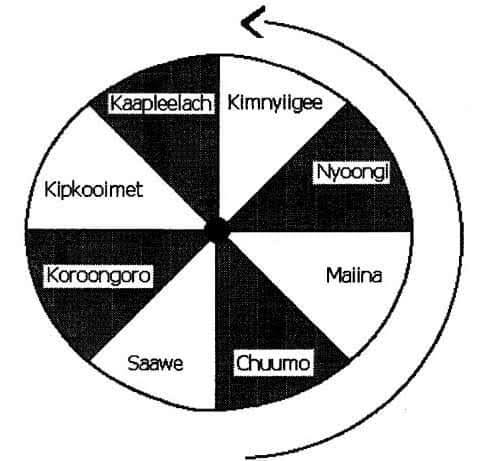
Within the rich tapestry of Kalenjin society, the cyclical rhythm of the age-set system (ipinda) has long dictated social structure, responsibilities, and collective identity.

Each age set, spanning roughly 15-20 years and recurring over a century, carries its own name, characteristics, and historical legacy.

Currently, the generation stepping into young adulthood within the Kalenjin community belongs to the Kipnyigei age set.

This generation coincides almost perfectly with the globally defined Gen Z (born roughly mid-1990s to early 2010s).

An exploration of the Kipnyigei, as understood through Kalenjin oral history and its application to today’s youth, reveals fascinating parallels and raises critical questions about generational change and perception.

The Kipnyigei Legacy: Independence and Disruption

Kalenjin oral tradition speaks of the Kipnyigei with distinct descriptors.

The name itself is often interpreted as “Kip-Nyit-Gei – INYITIEGI”, meaning “those who open themselves” or more colloquially, “people full of themselves”.

The defining characteristic passed down through lore is their pronounced independence and self-determination.

Elders recount that the Kipnyigei historically were known to:

  1. “Make decisions as they wish”: They are described as less bound by strict adherence to traditional counsel or hierarchical deference compared to previous sets. They possess a strong sense of individual agency.
  2. Challenge Established Norms: Their independent streak often manifested as a questioning or outright challenging of existing customs, leadership structures, and societal expectations deemed outdated or restrictive.
  3. Be Perceived as “Destructive”: This is the most potent part of the legacy. Oral histories frequently characterize the Kipnyigei cycle as a time of significant disruption, conflict, or social upheaval. This “destructiveness” is not necessarily literal violence (though conflict might feature), but rather the breaking down of old systems, traditions, and power dynamics. They are seen as dismantlers of the status quo.

This historical narrative paints the Kipnyigei as a necessary but turbulent force – the agents of change who clear the ground, often uncomfortably, for the new growth that the next age set (typically associated with rebuilding) will bring.

Gen Z Kalenjin: The Modern Embodiment?

Fast forward to the present. The current Kalenjin youth belonging to the Kipnyigei set are digital natives, globally connected, and navigating a world vastly different from their grandparents’. Strikingly, the traditional descriptors of Kipnyigei resonate powerfully with observed traits of Gen Z globally and within the Kalenjin context:

  1. Unprecedented Independence & Self-Assertion (“Full of Themselves”): Gen Z is renowned for valuing individuality, self-expression, and personal autonomy. They are confident in their opinions, unafraid to voice dissent, and prioritize authenticity. This aligns directly with the Kipnyigei trait of self-determination and making their own choices, sometimes perceived by elders as arrogance or being “full of themselves.”
  2. Challenging Traditions & Authority (“Make Decisions as They Wish”): Kalenjin Gen Z, like their global peers, actively question cultural norms, gender roles, political structures, and religious interpretations handed down to them. They leverage social media to organize, criticize, and demand accountability – often bypassing traditional channels of authority. This mirrors the historical Kipnyigei’s propensity to challenge established ways.
  3. Agents of Disruption (“Destructive Generation”): To the older generations deeply rooted in tradition, Gen Z’s actions can feel destructive:
    • Cultural Shifts: Reinterpretation or rejection of certain customs (e.g., rigid gender roles, specific initiation practices, deference protocols) is seen as eroding cultural fabric.
    • Political Engagement: Vocal criticism of community leaders or political figures traditionally accorded respect can be jarring.
    • Technology’s Impact: The pervasive influence of smartphones and social media disrupts traditional community interaction and knowledge transmission.

Is this truly “destruction”? Or is it evolution?

This is the critical question. What elders perceive as the reckless dismantling of vital traditions, Gen Z Kipnyigei likely see as necessary progress, discarding harmful practices, demanding equality, and adapting their culture to survive and thrive in the 21st century. Their tools are digital activism, education, and global perspectives, not necessarily spears, but the impact on the existing social order feels similarly disruptive to those invested in maintaining it.

Analysis: Beyond Stereotypes, Understanding the Cycle
Labeling the current Kalenjin Gen Z as simply the “destructive Kipnyigei” is reductive and risks overlooking the context:

  1. Historical Lens: Every revolutionary or transformative generation appears “destructive” to the establishment it challenges. The Kipnyigei of the past likely brought necessary changes that older sets resisted.
  2. Global Gen Z Phenomenon: The traits observed are not unique to Kalenjin Gen Z; they are global Gen Z characteristics amplified by technology and rapid social change. The ipinda cycle provides a specific cultural framework for understanding this universal generational shift within the Kalenjin context.
  3. Misinterpretation of “Destruction”: Much of the perceived destruction is actually deconstruction – critically examining traditions to retain core values while discarding elements seen as oppressive, irrelevant, or unjust. It’s a push for relevance and inclusivity.
  4. The Rebuilding Phase: Kalenjin age-set theory suggests that after the Kipnyigei (disruptors) comes an age set associated with building and consolidation. The true test will be how this Kalenjin Gen Z transitions from challenging norms to actively shaping and rebuilding their community with their values.

A Necessary Storm?

The Kalenjin community finds its Gen Z youth intrinsically linked to the Kipnyigei age set – a set historically marked by fierce independence, decisive action, and a legacy of disruption.

While oral history may label them “destructive,” viewing the current generation solely through this lens is inadequate. Kalenjin Gen Z, as the modern Kipnyigei, are undoubtedly challenging the status quo, making independent choices that unsettle tradition, and dismantling structures they perceive as obsolete or unjust.

Whether this is destructive chaos or the necessary turbulence preceding positive transformation remains an open question whose answer lies in the future.

Their journey reflects the ancient Kalenjin understanding that societal renewal often requires the unsettling force of a generation unafraid to “open themselves” (Kip-Nyit-Gei – INYITIGEI) to new ideas and assert their will upon the world.

They are not merely repeating history; they are living the complex, modern incarnation of an ancient cyclical role, tasked with navigating the fraught but essential path between preserving cultural heritage and forging a relevant future.

The wisdom of the ipinda system reminds us that this disruptive phase is not an end, but a critical, recurring stage in the perpetual evolution of a people.

Why CS Duale and PS Oluga are the perfect gel for Health Ministry transformation, a positive trajectory

0

By Anderson Ojwang

President William Ruto could have finally found the gel to the troubled Ministry of Health and Medical Services that has witnessed incessant and ceaseless demonstrations by health workers and diminishing healthcare service delivery to the public.

The recent appointment, Adan Duale to the Health Ministry and also the appointment of Dr Ouma Oluga as the Medical Services Permanent secretary perfectly fitted the jigsaw.

Duale has brought in the political goodwill to the ministry and his ability to tackle the hard issues that the previous cabinet secretaries feared to address with the President is helping make the ministry emerge as one of the performers.

Similarly in Dr Oluga, President Ruto has addressed the administrative challenges in the ministry and with the PS background as a unionist, he is rest assured that the former chairman of the union will effectively address the matters that he previously advocated for. 

Both the CS and PS are hands on and persons with strong personalities that gives the ministry a perfect match to roar back and restore the faith of Kenyans in the health services provision.

This is why Duale he had to engage with the President on his mandate in his new docket, with Ruto endorsing his decision to do whatever it takes to ensure SHA works.

“With the commitment of the President and my commitment, I want to assure Kenyans that universal healthcare is for all citizens.

For those with personal interests, they better come to their senses and decide whether they want to work for citizens or work for themselves,” he said.

And now the Ministry of Health has shut down 35 private hospitals across the country over alleged irregularities in the administration of Social Health Authority (SHA).

Duale said the affected facilities, located in Kisumu, Bungoma, Busia, Nairobi, Kilifi, Mandera, Wajir, and Kajiado counties, were found to have submitted double claims in a coordinated scheme to defraud the public health insurer.

At a recent function in Kisumu, Duale said the crackdown was part of a broader effort to rein in unscrupulous health providers exploiting SHA for personal gain.

He revealed that some hospitals had presented fake documents to secure SHA accreditation, while others billed outpatient services under inpatient claims to inflate reimbursements.

Additionally, discrepancies were discovered in declared bed capacities.

“How can a hospital with 14 beds claim to have 100? This is outright theft.

They think we are still in the NHIF era where such activities thrived,” said the CS.

Dr Oluga  recently said “The greatest barrier to health services is no longer their availability, but misinformation and people working at cross purposes.

This is hurting the ordinary Kenyans.

When we unify our efforts, and establish order in the health sector, it is for the benefit of all Kenyans.

We are keen to align health sector players as a means to establish one plan, one budget and one M & E strategy. Order means we all do things that complement each other.”

Equally, Duale during a recent maiden visit to Kenyatta National Hospital posted in his X space said “In consultative meeting with the Board and Senior Management, I emphasized the need for strong leadership, accountability and world-class service standards across all referral facilities.

Additionally, I urged development partners to support KNH in equipment upgrades, digital transformation, research and training.”

On SHA Oluga  wrote “These numbers are legit.

You can challenge them if you have alternative figures from Kenya National Bureau of statistics and I will gladly accept the lie.

On a daily basis we are on the ground with Kenyans ensuring that no one is left behind from accessing healthcare based on financial hardship.

The story has changed SHA is working.

That’s the job.

SHA IS WORKING 

1. 23 million registered members

2. 50,000 daily new registrations

3. 43B disbursed in 8 months 

4. 4.5 million Kenyans treated and fully paid for without any additional cost to them 

5. Emergency Fund established and operational at the cost of government as per the Constitution.

6. Primary Healthcare Fund operational and paying for services on all SHA contracted Level 2 to Level 4 public, private and faith-based hospitals without cost to patient.

7. SHA settling payments every 14 days 

8. And now you can LIPA SHA POLE.

9. Dial *147#”

Dr Oluga told all the pre-interns to take note that there will be no more delays in commencing internship.

And Duale recently officially commissioned the deployment of 6,484 healthcare interns across the country, marking the commencement of the 2025/2026 internship cohort. 

“The posting is a key milestone in the government’s commitment to timely deployment of interns and the broader agenda of strengthening Universal Health Coverage (UHC),” he said.

Duale emphasized the critical role of a skilled and ethically grounded health workforce in delivering quality care to all Kenyans.

He noted that the interns will be placed in accredited facilities for a structured 12-month clinical training program in line with global standards.

“These young professionals are not just numbers; they are future caregivers.

Every patient they encounter represents a life, a story, and a trust placed in their hands.

I expect them to serve with discipline, humility, and professionalism,” said the CS.

He said Kenya Kwanza government has deliberately placed health at the core of the Bottom-Up Economic Transformation Agenda, which demands a workforce that is not only technically competent, but also compassionate, accountable, and driven by integrity.

CS reaffirmed the Ministry’s commitment to transparent and timely internship deployment, strategic workforce planning, and professional development that meets international benchmarks.

Dr. Oluga said the digitizing health facilities was a key step towards improving health service delivery, enhancing accountability, and ensuring timely reimbursement for services rendered under SHA. 

The system will provide accurate, real-time patient data to support claims processing and performance tracking.

Duale has assured Development Partners in Health, Kenya (DPHK), of the government’s resolve to eliminate fragmentation in the health sector through full digitization. 

The CS emphasized that all health systems, existing and new must be certified and coordinated through the Digital Health Agency, as outlined in the Digital Health Act and its regulations.

He noted that digitization will enhance service delivery, enable telemedicine, track and trace health products to end users, and ensure only qualified professionals provide care. 

“We are building an integrated digital framework to align donor support with national goals and ensure long-term sustainability,” he said.

Tears as the Late Ojwang is laid to Rest; Leaders Call for Justice

0

By Habil Onyango
A somber mood enveloped Kakoth village in Kabondo Kasipul Constituency as the late Albert Ojwang was laid to rest on Friday.

Leaders who attended the burial ceremony committed to ensuring that those involved in this heinous act are brought to justice.

Among the attendees were Homa Bay Governor Gladys Wanga, Minority Whip and Suba North MP Millie Odhiambo, Embakasi MP Babu Owino, area MP Eve Obara, and Homa Bay Woman Representative Bensuda Osogo.

“With heavy hearts, we laid to rest Albert who was a young and industrious gentleman whose life was characterized by unwavering dedication to community service,” she said.

Governor Wanga reiterated her commitment to supporting the family in their pursuit of justice, stating that Albert’s legacy of service and kindness will not be forgotten.

She emphasized that the leaders stand united in demanding accountability and closure for this tragic loss.

“His untimely passing has left us with profound sorrow, unanswered questions, and a deep void in the hearts of all who knew him,” noted the Governor.

Wanga urged the police to operate within the law and the Constitution of Kenya.

She indicated that police officers arrested in connection with Albert’s death should face murder charges in court.

“As a leader from this region, I will personally follow up to ensure that justice is served regarding Albert’s death,” she said.

“We want to make it clear that anyone found culpable in his murder should face a punishment commensurate with the crime.” She added.

Millie Odhiambo shared the deep pain of losing a child in such tragic circumstances, expressing her sympathy for Ojwang’s mother, who had only one child.

“I know the pain a mother endures after losing her only child,” she said.

“It is heartbreaking that after God blesses you with a child, someone so lost and confused can end that life so violently.”

She asserted that despite the ODM party being part of the Broad-Based Government, they will continue to fight for justice from within.

Babu Owino expressed his sorrow over the loss, highlighting that after the parents’ long struggle to educate their only child, he was now being brought home in a coffin.

He urged the police to fulfill their duty of protecting lives and property, rather than taking them.

“We condemn this act and demand that any police officer involved in Albert’s murder be arrested, taken to court, and given life imprisonment,” he said.

Albert, 31, died in police custody a month ago after being arrested over a post on X that was allegedly critical of Deputy Inspector General Eliud Lagat.

His death sparked nationwide protests, with many youths tragically losing their lives as a result.

Police had claimed that he died due to self-inflicted injuries after hitting his head in police cells.

However, an autopsy and an investigation by the Independent Policing Oversight Authority (IPOA) ruled out any possibility of suicide.

On Thursday, when the body was brought home for burial, chaos erupted, leading to the torching of a Mawego police post by unknown individuals.

In response, Owino remarked, “Since the police alleged that Albert hit his head in the cells, it seems their police post burned itself down.”

Albert’s coffin was draped in a Kenyan flag and adorned with the colors of Manchester United, the football club he passionately supported.

Is the past back to haunt Gachagua or is he a master of double speak and political rhetorics?

0

By Anderson Ojwang

Nigerian Novelist and Poet, Chinua Achebe wrote in his book, Things Fall Apart “When the dry bones are mentioned the old feel uneasy.”

The Proverb aptly captures the situation the impeached Deputy President Rigathi Gachagua currently finds himself in.

Kisii Governor Simba Arati could have opened the pandora box over the Gachagua’s two years in the government where he overbore on the opposition leaders and regions that did not vote for President William Ruto.

Gachagua once an ardent supporter of Kenya Kwanza administration and the second most powerful person in the country, took least minute to humiliate, castigate and deride opposition leaders and regions that never supported them.

For the two years in the office, Gachagua tormented and humiliated those who criticized the Kenya Kwanza administration and was opposed to any form of demonstration in the country.

But after his impeachment, Gachagua has turned the ‘‘liberator” of Kenya from things and actions that he previously glorified and celebrated over.

Arati reminded Gachagua of his past as he plans to tour Kisii when he was the deputy President and how he undermined them.

“Gachagua is welcomed to Kisii, he is a leader just any other leader, yes, we know how he has caused some discord in this country which all of us have to look into.

But for today, I want to point that while he is coming to Kisii, he knows what he took us through in his two years in office.

We know the frustrations we got from Gachagua when he was the deputy to president Ruto.

Until his departure from office, he is one of the people who perpetrated especially in Kisii where himself, he pointed out in the functions we had at Mosocho, that until we had to behave, myself, he told me that until we behaved that was the only time we could get our security back, that was unbecoming.

But again, we say let security be provided to Gachagua given he was the former deputy president.

I do not want to antagonize other leaders from other part of the country, but we cannot bury our head in the sand because we know what we have gone through.

Even if one has turned to be an angel today, there is more, and we are going to shape the Kenya’s politics going forward.

As Kisii we are welcoming everyone to request for votes.  Gachagua is welcomed to sell his agenda of one term because that is it.

If he sells for Ruto one term, he can as well sell for Simba one term and we see how it goes with the people,” he said.

Gachagua in his past speeches on demonstrations said Mt Kenya people were known as wealth creators and not destructive.

“This region nobody will be allowed to come to destroy property.

We, from Mt Kenya, we have never known the stupidity of killing people and destroying properties.

It has never happened in this region.

The people of Mt Kenya are progressive, businesspersons and farmers, they do not know about wealth destruction but wealth creation and protection.

Let me say now, let see how it will unfold.

No responsible government will allow such hooliganism witnessed in Nairobi.

You said, demonstrations is your right.

Is destruction of properties a right, what right are you fighting for?

That is why we told uhuru Kenyatta in his face.

We cannot elect that person.

We know him that he is the lord of violence and impunity in the republic of Kenya.

I told Uhuru Kenyatta this man is the problem of this country.

I am going to call a meeting for the leaders of mt Kenya region on how to deal with these characters now,” he said then.

After his impeachment, Gachagua said that he had been mandated by Mt Kenya people to look for a political formation that will bring power to the people.

“I was looking at it with few strategists from the region, Raila numbers is more exciting.

Because Raila already has 6.8 million votes.

We only beat him with only 200,000 votes.

If we agree to support him, we could, I told you with his 6.8 and our 6 million votes, if you look at his voting pattern, he normally votes between 10.00 am-11.00 am.

If we agree to support him.

Before he votes, he will be the president.

That you can take to the bank,” he said in a recent interview.

Raila in his response dismissed Gachagua overtures and instead asked his supporters to  stop political activism and focus on the future to benefit from the unfolding political scenario.

“I want our people to remain quite so that we can get what we want going forward.

Those who are making noise in the opposition told us that they were in the government of shareholders.

They said they have shares; they told us that they have shareholding in the government.

Some have more shares while others have least.

Now that they have left the government after their fights.

They have come to us so for us to join them in order to make us president.

But they are forgetting that when they were in the government, they used to abuse us.

They did not know that we are a people who matter.

Now at this time, they are in a fix, they want us to join them. 

They now say that they we want to give you presidency,” he said.

Two years ago, Gachagua hailed President Ruto for keeping side of his bargain after the election and appointing Mt Kenya to various positions.

“I want to thank President William Ruto because he is a gentleman. 

Ruto and I did not sign any memorandum of understanding, I trusted him, and he trusted us. 

I told him we will not have any MOU with you, you are a good person and a Christian, we will give you all the votes from Mt Kenya,” he said. 

During the burial of his elder brother two years ago Gachagua said “On behalf of my family let me thank you with Mama Rachel, I really want to thank you.

You have been there for us. Anytime, we have been in tears in this family.

You always turn up with a handkerchief to wipe our tears.

We have no words to say thank you and the truth be said from our relationship, you have become one of our family. 

We celebrate and cherish you. We don’t take that relationship for granted.

Last time you came for my mother’s burial I told you, this family of Gachagua we are honest, and people of integrity and we value friendship.

I told you if other Kenyans will betray you, that betrayal will not come from this family.

We don’t know betrayal.

We are people who are true to friends and that is why with my family made a conscious decision to stand with you in very difficult circumstances.

I gave very clear instructions to family that I must serve you with loyalty and dedication.

I was told by my family to give back to your support for this family and for your friendship. 

I will do whatever you tell me to do.

The people of the country have high hope in your leadership.

I want to confirm before my family that I will not let you down and I will do whatever it takes, and I will be there for you to give you the necessary support.

The people of Mt Kenya, let me thank you, you have given our community respect in Kenya’s political landscape.

The people of the mountain are honest people and have integrity and appreciate good deed,” he said.

But after his impeachment, Gachagua has changed the tune and now claims Ruto has betrayed the mountain and has failed to deliver in his pledge to Kenyans.

“If you see MPs speak, just know Ruto has sent them.

I was with him.

He could write for me what to say.

He wrote for me what to say in various occasions and on the third occasion, I realized  this man it was not right.

You remember how I used to speak and talk and then suddenly I changed.

You know he sits there, he has a pen and a paper, writes to you what to say.

I realized that the president was setting me up with Kenyans.

I want to promise you William Ruto you will not kick the people of Mt Kenya out of the government,” he said.

“We are planning, within a short time, we will reclaim back our pride and dignity as a people.

It is true what you are saying the mountain is angry.

It is not just angry it is very angry.

Why the mountain is very angry, because of betrayal.

Nobody can fool the people of the mountain twice, you fooled them once, they feel very sorry about it.

They actually feel very low and down. 

I want to tell you, I heard some people complaining that I am forming a political alliance with Kalonzo Musyoka, why do you want to get involved in family affairs?

If someone has spoken to his cousin, is there any problem? You can also speak to your cousin.

You, Willam Ruto keep of family matters. Don’t get into our family affairs.

Let me ask, should cousins stay together or not?

Should the cousins walk together or not?”He asked.

A strategic proposal to Upgrade Ramogi Institute of Advanced Technology into a full-fledged University

0

By Alfred Gogi
The Ramogi Institute of Advanced Technology (RIAT) has long served as a premier technical training institution in Western Kenya, producing graduates in engineering, ICT, business, and other technical fields.

However, the evolving demands of Kenya’s economy, coupled with national policy goals to expand access to higher education and promote regional development, justify its transformation into a fully-fledged university and that is why the president while addressing the Kisumu County leadership that recently visited state house in Nairobi, agreed to upgrade this premier institution into a full university.

Rationale for Upgrading RIAT into fully fledged university follows the following ideals
National and Regional Development Goals

 Vision 2030 calls for an innovative, knowledge-based economy.

Western Kenya has strong potential in agriculture, the blue economy (Lake Victoria), and innovation, but lacks sufficient university capacity in these areas.

Expanding Access to Higher Education
 Kenya’s higher education enrollment rates remain lower than global averages.  RIAT can help close the gap for the Nyanza region.

Building Local Capacity
 A university can generate research, innovation, and skilled graduates tailored to local needs.

 Avoids brain drain by offering programs close to home.

Strategic Vision
Proposed Name: Ramogi University of Science and Technology (RUST)

Mission: To provide high-quality, innovative, and practical education, research, and community service that drives socioeconomic transformation.

Vision: To be a leading university in science, technology, innovation, and sustainable development in Africa.

Proposed Schools
Below are the eight schools proposed for the new university, their mandates, and flagship programs:

School of Engineering and Innovation
Mandate: Produce engineers and innovators to support industrialization.

 Programs: Civil Engineering, Mechanical, Electrical, Mechatronics, and Renewable Energy Engineering.

 Innovation Hub: To incubate student and faculty start-ups.

 Note: Civil Engineering is included here but also features in the School of Architecture and Built Environment for interdisciplinary training.

School of Architecture, Urban Planning and Built Environment
Mandate: Train professionals for sustainable built environments.

Programs: Architecture, Urban Planning, Quantity Surveying, Construction Management, Civil Engineering.

Focus: Emphasizes resilient infrastructure design to address local development challenges.

School of Agriculture, agriculture engineering and Food Security
Mandate: Advance sustainable agriculture and food systems.

Programs: Agronomy, Horticulture, Animal Science, Agribusiness, Food Science.

Special Focus: Climate Change and Resilient Agriculture to train experts who can help communities adapt farming systems to climate variability.

Extension Services: Partner with farmers for technology transfer.

School of Marine Aquaculture and Blue Economy

Mandate: Leverage Lake Victoria for sustainable development.

Programs: Aquaculture, Fisheries Management, Marine Ecology, Blue Economy Policy.

Research Center: Sustainable fishing, water quality monitoring, and lake conservation.
School of Business, Economics and Statistics

Mandate: Equip graduates with entrepreneurial and analytical skills.

Programs: Business Administration, Economics, statistics, Finance, Marketing, Entrepreneurship.

 Business Incubator: Support local SMEs and entrepreneurship training.
School of Leadership, Human Resource and Management

Mandate: Build capacity for effective governance and leadership.

Programs: Public Administration, Policy Studies, Strategic Management, Human Resources.

Focus: Develop leaders for public service, NGOs, and private sector organizations.

School of Health and Biological Sciences
Mandate: Train professionals for health services and biosciences research.

Programs: Public Health, Medical Laboratory Science, Nursing, Biotechnology, Environmental Health, Medicine, Herbal Medicine.

Research Focus: Combine modern medical training with the study of traditional herbal medicine to harness local knowledge and biodiversity.

School of ICT, Robotics and Computer Science
Mandate: Drive digital transformation and Artificial Intelligence

Programs: Computer Science, Software Engineering, Data Science, Cybersecurity and Industrial Robotics.

Tech Lab: Encourage innovation in ICT solutions, robotics, and AI applications for manufacturing and services.
Phased Implementation Plan to run concurrently Phase 1: Institutional Transition (2 years)
 Secure government approval and accreditation.

 Develop university charter and statutes.

 Establish university governance structures (Council, Senate, Management).

Phase 2: Curriculum Development and Staffing (2 years)
 Develop curricula for all schools in line with Commission for University Education (CUE) guidelines.

 Recruit qualified faculty and administrative staff.

Phase 3: Infrastructure Upgrade (5 years)
 Expand classrooms, laboratories, libraries, student hostels.

 Build specialized facilities (innovation hubs, aquaculture research centers, robotics labs, herbal medicine gardens).
Phase 4: Enrollment and Launch (2 years)
 Roll out initial degree programs.

 Enroll first cohorts in selected schools.

 Market the university regionally and nationally.

Governance and Administration
University Council

 Highest policy-making body.

 Includes government, industry, and community representatives.
University Senate
 Academic governance.

 Oversees quality, curriculum, academic policies.
Management Team
 Vice Chancellor (VC), Deputy VCs for Academic Affairs, Finance & Planning, Research & Innovation.

 Registrars, Deans, Directors of Institutes/Centers.
Infrastructure Requirements
To support the eight schools:

 Modern classrooms with ICT integration.

 Laboratories for engineering, health, agriculture.

 Specialized robotics labs in the ICT school.

 Herbal medicine research gardens in Health Sciences.

 Libraries with print and digital resources.

 Student accommodation and cafeterias.

 Sports and recreation facilities.

 Faculty offices and administrative blocks.

 Innovation and business incubation hubs.

 Aquaculture research stations.

 Health sciences simulation labs.

Curriculum Development and Accreditation
 Align programs with CUE standards and global best practices.

 Include hands-on training, industrial attachments, research projects.

 Embed entrepreneurial and innovation modules in all programs.

 Seek professional body accreditations (EBK, Nursing Council, Medical Board).

Human Resource Strategy
Academic Staffing
 Recruit PhD-qualified lecturers.

 Attract industry practitioners as adjunct faculty.

 Offer staff development scholarships.
Administrative Staffing
 Professional registrars, finance officers, ICT support.

 Student support services (counseling, career services).
Partnerships and Linkages
 Collaborate with local industries for internships, research.

 Partner with international universities for staff exchange and joint research.

 Engage county governments for development planning.

 Build ties with NGOs and development partners to fund infrastructure and research.
Research and Innovation Agenda
 Establish thematic research centers:
o Climate-Smart Agriculture and Climate Change Adaptation.
o Lake Victoria Blue Economy Research.
o Renewable Energy and Green Technologies.
o Health, Medicine, and Herbal Medicine Research.
o ICT Innovation, Data Analytics, and Industrial Robotics.

 Promote commercialization of research outputs.

 Encourage student start-ups through incubation centers.
Funding Strategies
 Government capitation and HELB support.

 Tuition fees (differentiated rates for self-sponsored students).

 County government contributions.

 Donor and development partner grants.

 Research grants and consultancy services.

 Income-generating units (short courses, commercial farms, hospitality services).

Stakeholder Engagement
 Host community consultations to ensure local buy-in.

 Engage students and staff in planning processes.

 Work with professional bodies to align programs with industry needs.

 Regularly communicate progress through public reports.

Risk Management
 Mitigate quality risks through accreditation processes.

 Address financial sustainability with clear cost-recovery plans.

 Build security plans to ensure student and staff safety.

 Develop robust ICT systems to support e-learning and administration.
Expected Outcomes and Impact

 Increased university enrollment in Western Kenya.

 Highly skilled graduates aligned with Kenya’s economic needs.

 Enhanced research outputs addressing local challenges.

 New jobs created through university operations and spin-off businesses.

 Strengthened regional competitiveness in agriculture, blue economy, health, and ICT.

Conclusion
Upgrading the Ramogi Institute of Advanced Technology into a full university with eight strategically selected schools is both feasible and transformative.

With special focus areas such as industrial robotics, climate change adaptation, civil engineering, and herbal medicine, the university will address pressing national and regional challenges.

The writer is a Part Time Lecturer (Project Planning and Management)- University of Eldoret
PhD student (Project Planning and Management) – University of Nairobi

Sh60 million Human–Wildlife Conflict Compensation Payment Renews Hope in Kilifi‎

0

By Team

‎Communities in Kilifi County today received over KSh 60 million in compensation for losses linked to human–wildlife conflict, marking a significant step in restoring trust and dignity among the affected families.

‎This was payment from 2014 to October 2020, clearing part payments for human deaths.

In the meantime, the government is committed to clearing all pending compensation claims.

‎Cabinet Secretary for Tourism and Wildlife Hon. Rebecca Miano, accompanied by KWS Board of Trustees Chairman Lt. Gen. (Rtd) Walter Raria Koipaton and KWS Director General Prof. Erustus Kanga, led the cheque issuance ceremony in Marafa. Also present were Kilifi Deputy Governor Hon. Florah Mbetsa, Woman Representative Hon. Gertrude Mbeyu, National Assembly Deputy Leader of Majority and Kilifi North MP Hon Owen Baya, other Kilifi County Members of Parliament, MCAs, and national government officers led by the Kilifi County Commissioner Josephat Biwott.

‎Hon. Miano stressed that compensation is a constitutional right under the Wildlife Conservation and Management Act, not a favour.

She stressed the government’s resolve to translate policy into tangible benefits for citizens, highlighting more than 1,300 human–wildlife conflict cases reported in Kilifi since 2021.

Nationwide, the current administration has already disbursed KSh 2.8 billion in compensation, with an additional KSh 1.36 billion under processing — a demonstration of sustained government goodwill to ease the burden on affected communities.

Beyond compensation, she outlined a six-pillar prevention strategy, including corridor fencing, modern early warning systems, and enhanced ranger presence, while reaffirming the government’s commitment to community upliftment through Corporate Social Investment projects such as building classrooms, distributing water tanks, and supporting local development.

‎Board Chairman Lt. Gen. (Rtd) Koipaton reinforced the Board’s pledge to guide KWS towards becoming a more community-oriented, solution-driven institution anchored in transparency, partnership, and innovation.

He assured the community that the Board is actively engaged in reviewing and supporting stronger measures to protect both people and wildlife, adding that inclusive, people-led conservation remains central to KWS’s mission.

‎Prof. Kanga acknowledged the hardship caused by recurring wildlife incursions in Ganze, Magarini, and Vitengeni, pledging KWS’s unwavering commitment to protect communities while conserving Kenya’s natural heritage.

‎He confirmed the deployment of a fully equipped Problem Animal Management Unit (PAMU) in Kilifi to improve rapid response and reduce fear among residents.

These interventions, anchored in the KWS Strategic Plan 2024–2028 and the Bottom-Up Economic Transformation Agenda, reflect a shared vision: a future where communities and wildlife not only coexist, but flourish together in safety, harmony, and mutual benefit.

Africa Takes Major Step Toward Financial Sovereignty with Launch of PAPSSCARD

0

By Kepher Otieno

Africa has taken a significant leap toward financial independence with the launch of PAPSSCARD, the continent’s first Pan-African card scheme.

Officially unveiled on June 27 during the 32nd Afreximbank Annual Meetings in Abuja, Nigeria, the PAPSSCARD initiative marks a crucial milestone in Africa’s pursuit of financial autonomy.

It aims to build resilient, homegrown payment infrastructure, ease cross-border travel, and enhance trade integration.

President William Ruto was represented at the event by Prime Cabinet Secretary Musalia Mudavadi.

He lauded the PAPSSCARD as a major milestone.

”Kenya is happy to be part of this new journey with PAPSSCARD,” said Mudavadi of the new systems developed through a joint venture between the African Export-Import Bank (Afreximbank), the Pan-African Payment and Settlement System (PAPSS), and Mercury Payment Services (MPS), PAPSSCARD facilitates fast, secure, and affordable retail payments across African borders.

Currently, most African card transactions are routed through international systems leading to higher fees and loss of control over sensitive financial data.

PAPSSCARD addresses this by ensuring that transactions are processed entirely within the continent, retaining value, data, and economic benefits in Africa.

Speaking at the launch, Professor Benedict Oramah, President and Chairman of Afreximbank, emphasized the card’s transformative potential:

“For too long, Africa’s reliance on external payment systems has impeded trade, increased costs, and compromised control over our financial data.

PAPSSCARD changes that.

It empowers us to move money swiftly, securely, and affordably across our borders.

It is a transformative step toward strengthening intra-African trade and preserving value within the continent.”

Mike Ogbalu III, CEO of PAPSS, described PAPSSCARD as more than just a payment solution.

“It’s a powerful symbol of progress and a bold step towards financial independence,” he said.

“The card showcases Africa’s capacity to develop practical, homegrown solutions aligned with the way the continent trades, lives, and grows.”

Muzaffer Khokhar, Executive Chairman of Mercury, highlighted the card’s broader implications for Africa’s financial ecosystem.

“This is a milestone for financial sovereignty.

We are proud to support a system built by Africa, for Africa.

It represents innovation, trust, and a major stride in shaping the continent’s financial future.

We believe PAPSSCARD will become Africa’s most trusted payments brand.”

John Bosco Sebabi, Acting CEO of PAPSSCARD, added that the new platform would deliver widespread benefits across the financial landscape—from corporations and banks to merchants and individuals.

“The PAPSSCARD will help reduce costs for public institutions, fuel innovation in the financial sector, and expand access to secure, modern payment tools across Africa,” he said.

To mark the launch, commemorative cards were unveiled at the event, developed in partnership with issuing banks including Bank of Kigali and I&M Bank Rwanda.

Technical partners such as Rswitch (Rwanda’s national switch), Smart Cash, and Unified Payments are supporting seamless rollout and usage, especially in markets like Nigeria.

African central banks and payment institutions are set to drive the card’s adoption across the continent.

The initiative aligns closely with Afreximbank’s broader strategy to deepen financial inclusion and accelerate intra-African trade under the African Continental Free Trade Area (AfCFTA) laying the foundation for a more integrated and self-reliant African economy.

Nigeria President Bola Tinubu, African billionaire and Philanthropist Tony Elumelu also graced the occasion among other African diplomats, media, business and political elites.

About PAPSS

The Pan-African Payment and Settlement System – PAPSS is a centralised Financial Market Infrastructure that enables the efficient flow of money securely across African borders, minimising risk and contributing to financial integration across the regions.

PAPSS works in collaboration with Africa’s central banks to provide a payment and settlement service to which commercial banks and licensed payment service providers across the region can connect as ‘Participants’.

Afreximbank and the African Union (“AU”) first announced PAPSS at the Twelfth Extraordinary Summit of the African Union held on July 7, 2019, in Niamey, Niger Republic, therefore adopting PAPSS as a key instrument for the implementation of the African Continental Free Trade Agreement (AfCFTA).

Further, in its thirteenth (13th) extraordinary session, held on December 5, 2020, the assembly of the African Union directed Afreximbank and the AfCFTA secretariat to finalise, among others, work on the Pan-African Payments and Settlements System (PAPSS).

The 35th Ordinary Session of the Assembly of the AU further directed the AfCFTA and Afreximbank to deploy the system to cover the entire continent.

PAPSS was officially launched in Accra, Ghana, on January 13, 2022, making it available for use by the public.

Report reveals rot at the Homa Bay County Finance Department, with integrity of payroll put to question

0

By Team

A report by Homa Bay County Public Service Board has revealed serious integrity and corruption issues at the Finance Department.

The Board report found out discrepancies in salaries, payment of both special and basic salaries to some employees, failure by chief’s officers to account for human resources in their departments, unexplained removal and reinstatement of staff in the payroll, irregular health risk payment and non-compliance with allowance guidelines.

The report revealed of unexplained removal and reinstatement of Staff in the Payroll, which could have led the lose money. 

In the analysis of the Integrated Personnel and Payroll Database (IPPD) payroll for the period between June 2024 and November 2024, and the payroll for the period between December 2024, when HRIS payroll system was adopted, and May 2025 revealed that 430 individuals were being removed and returned in the payroll in different months of the year. 

Further, sample files of these employees reviewed had no information or letters explaining the removal and return of their details in the payroll sys

The Management did not provide any plausible explanation for the inconsistent appearance of these individuals in the payroll system.

As a result, it could not be confirmed if they are legitimate employees of the Homa Bay County Government. Poor human resource management practices.

The report recommended :

“Management should explain the reason for the removal and inclusion of the concerned staff. 

Management should ensure that personal files of employees are always updated.”

Failure by Chief Officers to Account for the Human Resource in Their Department 

Examination of payment vouchers relating to payment of monthly salaries revealed that they were supported by schedules that were not reviewed and approved by the Chief Officers of the respective departments.

As a result, it was impossible to confirm if the Chief Officers were able to account for the human resources within their departments.

Failure by the Chief Offices to account for their staff raises concerns about authenticity of payroll records pointing out to the existence of unverified staffs.

Recommendation

The chief officers of the County Government should verify the schedule of employees in their department before payment of salaries.

Irregular change in job groups

Examination of the payroll data and verification of records maintained by the County established the following:

  1. While the management did not advertise for promotions or appointments between July 2024 and May 2025, payroll data showed multiple changes in job groups leading to skipping of job groups. There were 614 employees whose job groups changed. Out of this number, 50 employees had their job groups changed two times between July 2024 and May 2025, while the job groups for the other 563 changed once. 
  2. Employee with personal number 20230246395 was irregularly redesignated from Revenue Clerk II to Personal Assistant, with a change in job group from H to M without any justification.

Irregularities in job group progressions may result in unforeseen payroll expenditures, disrupting planned financial allocations.

Recommendation 

  1. Management should ensure appointments, promotions and re-designations are conducted in a fair and transparent manner.
  2. Management should also take corrective action against irregular and unauthorized changes in the job groups.

Noncompliance with Allowances Guidelines 

The SRC Circular SRC/TS/29(81), dated 10 August 2023 on Remuneration and Benefits for Public Officers in the County Government Executive for The Third Remuneration Review Cycle 2021-2022 – 2023-2025 (7), lists all the earnings county executive officers are entitled to. 

Analysis of payroll data and comparison of salary and allowance processed through the IPPD and HRIS payroll systems revealed the following anomalies:

Staff Paid Both Basic Salary and Special Salary 

Review of payroll for the period between July 2024 and May 2025 revealed that there were fifteen employees (15) employees who were paid both basic salary and special salary.

Total amount of Kshs. 3,126,025 was paid where Kshs.2,155,100 was paid in form of basic salary while is Kshs.970,925 was paid in form of special salary.

Section 65(1) of the County Governments Act, 2012 set out factors County Public Service Board should consider in selecting candidates for appointment.

Further Section 65(2) specifies merit as one of the overriding factors in determining whether appointment, promotion or re-designation are undertaken in a fair and transparent manner.

Section B25(1) of the Human Resource Policies and Procedure manual for the public Service, 2016 provides that promotions in the public service will be based on qualifications and other requirements for appointment as stipulated in the career progression.

Use of erroneous data in the payroll system may lead to erroneous transactions.

Recommendations

  1. Management of Homa Bay County Government should institute measures to ensure that the payroll data is accurate and up to date.
  2. Management of Homa Bay County Government should institute measures to ensure the that employees’ personal files are updated.

Staff Earning Both Rental Allowance and Special House Allowance

There were also forty (40) employees who were earning both rental house allowance and special house allowance.

The total amount earned between July 2024 and May 2025 is Kshs.3,054,000.

Staff Earning Allowance They Do Not Usually Earn

Analysis of payroll data between July 2024 and May 2025 revealed that employees whose job designation and department of deployment do not attract extraneous duty allowance and health risk allowance were irregularly paid a total of Kshs.2,080,200.

This included Kshs.2,068,200 relating to Extraneous Duty Allowance that was paid to thirty-seven (37) employees, and Kshs.12,000 relating to Health Risk Allowance that was paid to two (2) employees, as shown below:

Risk

Loss of funds due to overpayment and irregular payment of allowances

Recommendation

  1. The Management should adhere to the set SRC guidelines on Remuneration and Benefits for Public Officer in the county governments.
  2. Management of should establish control measures to ensure that every employee only earns allowances applicable to them.
  3. Management should verify and confirm the designations of the employees, and their respective departments and, where necessary, recovery the irregularly paid allowances.

Salary Over-Commitment

Section 19(3) of the Employment Act, 2007 states that without prejudice to any right of recovery of any debt due, and notwithstanding the provisions of any other written law, the total amount of all deductions which under the provisions of subsection (1), may be made by an employer from the wages of his employee at any one time shall not exceed two-thirds of such wages or such additional or other amount as may be prescribed by the Minister either generally or in relation to a specified employer or employee or class of employers or employees or any trade or industry.

Finding

Analysis of the payroll of permanent staff of Homa Bay County Executive for the period between July 2024 and February 2025 revealed that some employees as shown in the table below received less than a third of their basic salary:

Pay MonthNumber of employees
July789
August758
September702
October1,436
November1,395
December23
February559

Employees on Acting Capacity

Criteria

Section 34 of the Public Service Act, 2017 states that an acting appointment shall be made by the lawful appointing authority and subject to the prescribed regulation and procedures which apply to appointments. An officer may be appointed in an acting capacity for a period of at least thirty days but not exceeding a period of six months.

Section C14(1) of the Human Resource Policies and Procedure manual for the Public Service, 2016 provides that when an officer is eligible for appointment to a higher post and is called upon to act in that post pending advertisement of the post, he is eligible for payment of acting allowance at the rate of twenty percent (20%) of his substantive basic salary.

Acting allowance will not be payable to an officer for more than six (6) months.

Finding

Analysis of the payroll revealed that a total of nine (9) employees as shown below have been on acting capacity during the year under review and have since drawn excess money of Kshs.836,978 as acting allowances.

It was noted that these employees have been on acting capacity for more than 6 months as shown below. In the circumstances, there was violation of the provisions of the act and irregular payment of allowances:

Non-Compliance with Law on Ethnic Diversity in Staffing

Sections 7(2) of the National Cohesion and Integration Act, 2008 provides that no public establishment shall have more than one third of its staff from the same ethnic community.

Section 65(1)(e) of the County Governments Act, 2012 stipulates that in selecting candidates for appointment, the County Public Service Board shall consider the need to ensure that at least thirty percent of the vacant posts at entry level are filled by candidates who are not from the dominant ethnic community in the county.

Finding

Analysis of the payroll for May 2025 revealed that Homa Bay County Executive had total work force of 7,202 out of which, 5,519 or 76% were from the same community.

  1. Recommendation

Management must ensure compliance with the provision of the law.

Kisumu County Assembly approves nominees to the County Public Service Board

0

By Hope Barbra 

Kisumu County Assembly has approved the list of the nominees for the County Public Service Board.

Dr James Obondi Otieno becomes the chairman of the public service board for six year non-renewable.

The members of the board include Bill Otieno Omondi who is the Board’s Secretary, Dr Dinah Anyango Liech, Jennefer Atieno Adum, Ruth Atieno Koga, Dr Ambrose  Jagongo  and Joshua Oluoch Ochieng.

The Governor Prof Peter Anyang Nyong’o on June 13th/2025 forwarded the list of the nominees to the Assembly clerk.

In his memo Nyong’o wrote “The Selection panel conducted the recruitment process and having concluded the interviews submitted a report to the Governor to select suitable individuals to reconstitute the county public service board as required by law.

The governor has nominated the following person(s) to the chair, board secretary and members respectively.”

The committee of appointments chaired by the speaker Elisha Oraro  in its report wrote “We the undersigned members of the committee on appointments having considered the report on the vetting of the nominees for appointment to the Kisumu County Public Service Board made findings and recommendations there in, append our signatures to affirm that the contents of the report are true resolutions of the committee.”

Recently, the County government froze the employment and promotion of employees two months after it suspended the exercise late last year.

County secretary Heston Hongo in a circular to all the departments and county public service wrote “It has been directed that henceforth there shall be no new employment or promotion to permanent and pensionable term in the county government of Kisumu until advised otherwise,” in a memo dated 18th February 2025.

Last year, Hongo wrote to the Public Service Board suspending recruitment, contract extension, contract conversion to permanent and pensionable terms its Public Service Board.

The prospective new employees to the county government who had been interviewed and were successful are still waiting for a possible consideration.

To employees whose contracts had expired were rendered jobless by the action.

But in a reaction contained in a memo dated 11th November 2024 addressed to the County Secretary from the Kisumu County Public Service Board and was signed by then vice chairperson Dr Mary Jacinta A. Kapiyo read in part:

“The Board on receipt of the above, held a meeting on Monday 11th November 2024 to discuss its contents. 

As at the time of suspending recruitment, contract extension, contract conversion to permanent and pensionable terms, the Board had the following on going activities,” read the memo in parts.

The Board had conducted interviews after receiving requisition from different departments to recruit staff in various positions.

In the department office of the county attorney there were nine vacancies after availability of finance were confirmed, selection done but appointment letters were yet to be issued.

In the department of Trade, tourism, cooperatives, industry and marketing there eight positions with selection done and the board was waiting confirmation of availability of funds from the department.

In the department of Kisumu County Revenue Board there was one position vacant, and the selection had been done, and the board was waiting confirmation of availability of funds from the department.

In the department of energy, Transport, Roads and Public Works there were 109 vacant positions and selection had been done, with the availability of funds confirmed but the appointment letters were not yet issued.

In the department of Lands, Housing Physical Planning and Urban Development had 32 vacancies and availability of funds were confirmed with selection undertaken but the appointment letters were not yet issued.

In the department of Education, Technical Trainings, Innovation and Social Services had opportunities for assistant vocational and trainer (3) which has 10 vacancies while Early Childhood Development Education Teachers (ECDE) had 100 vacancies. 

The interview dates were scheduled to begin from 18th November 2024 to 2nd December 2023.

The Board observed that the process was initiated by the relevant departments and approved by the cabinet after confirmation of budget and consideration of several factors to justify the need subsequently, a formal request is made to the board.

“The Board received the reminder letter from the department of lands, housing, physical planning and urban development requesting the board to release names of successful candidates to enable the department operationalize  the municipalities.

This will ensure that the county government does not miss out on the conditional grant from Kenya urban support program (KUSP),”read the Memo in part.

The Board noted that it had in 2020 conducted interviews for ECDE teachers and selected candidates, but the appointment letters were never issued on account of lack of funds.

“Consequently, a repeat of the same will negatively impact on the board and the county government image to the public. Similarly, it will discourage applicants I future,” read the memo.

The Board said service delivery in education sector will be affected as exemplified with the number of schools without ECDE teachers in the county among other departments.

The County human resource management advisory committee had presented as request to convert 130 staff to permanent and pensionable terms on 8th October 2024 and after scrutiny of the individual physical staff files, the number was reduced to 43 and suitability interviews had been scheduled for Thursday 14th November 2024.