Home Blog Page 168

Gachagua to Ruto : You cannot fool the Mountain twice, We feel low and sorry!

0

By Anderson Ojwang                        

After President William Ruto’s supposed successful development tour of restive Mt Kenya and his declaration that he is the king of the mountain,  former Deputy President Rigathi Gachagua hit back, saying they will not be fooled twice.

Speaking during a talk show with KTN on Monday night, Gachagua said it was regrettable that Mt Kenya was fooled by President Ruto to go against former President Uhuru Kenyatta in the  2022 Presidential election.

Nobody can fool the people of the mountain twice, you fooled them once, and they feel very sorry about it. They actually feel very low and down. 

Wiiliam Ruto is a master in driving narrative…. he told us  former president Uhuru Kenyatta was a drunkard and has failed to run the government.

I am among the people he persuaded. He is very persuasive when he gets onto a narrative. He drove a narrative against Uhuru  Kenyatta and recruited all of us, including me. 

I was among the leaders who believed in what he told us. That  Uhuru Kenyatta is a drunkard, a useless leader, he has messed this country, cannot be trusted to organize a succession and we should despise and hate him.

We listened to William Ruto and he persuaded, five years down the line Uhuru Kenyatta is gone, William Ruto has come on stage. 

Nothing is working in the country, yet at that time, he had persuaded us that Uhuru Kenyatta had failed.

He persuaded us that our enemy as a region is Raila Odinga, who is a witch doctor. Since Uhuru Kenyatta has brought him and because he doesn’t mean well for us, we should hate Uhuru Kenyatta and trust William Ruto to carry our destiny. 

We believed him. He was confident that if he could successfully drive a narrative against Uhuru when he was the president.

He could equally drive a narrative against Gachagua and cobbled the Sh 10 billion demand.

The mountain people, you can con them once, you can’t con them twice,” he claimed

President Ruto said that his 20-year relationship with Mt Kenya has remained intact and that he was the king of the Mountain.

I have developed friendship with people of the mountain. The friendship we have developed over 20 years. Nobody will break my bond with the mountain. Nobody can break it,” Ruto said on his second day of tour in Maua.

But Gachagua hit back saying the Mountain has already made a political decision going forward and Ruto’s claims will not stand the test of time.

The president is happy he got good photographs, and he got a good crowd. He is welcome again in August, and if possible, let him come in December. We need money for Christmas.

The people of the mountain have made serious decisions and those decisions cannot be changed by anybody or anything.

I am not fighting with the President for the control of the mountain. I heard him say he is the king of the mountain.

Let him be the king of the mountain. If he is the king of the mountain, he does not have to go around. He should have just used his chopper to land at the Lenana peak and proclaimed himself as the king.

If he wants to be king of the mountain, let him proceed. The people of the mountain don’t follow leaders. 

It is the leaders who listen to the people and where they want to go and align. That is what I did.

The people of the mountain are not led. They tell the people where to go. If the president believes he has the ground in Mt Kenya, if he believes he is the kingpin of the mountain, so be it. We are not bothered. All we know is that we have agreed on where to go politically.

The people of the mountain we have agreed that we made a mistake in going into an election without our political party. They have said that it will not happen again. 

They have asked me to form a political party, a national one, which I have done, which will be announced in May 2025.

They have told me they will not agree to be divided and that our vote will go into one basket.

Again, they have told me that they are aware the president wanted to isolate us and they have told me to look for friends, and I am doing that.

That the visit was a political tour and not a development tour. There is nothing he did apart making all manner of promises

He came to the mountain after six months of disquiet and he needed to do some explanations.

These are people who had trusted and supported him without a memorandum of Understanding, supported his presidency without a political party and believed in him.

 He betrayed them and misused them. 

The president was welcomed in the Mountain after we had asked people to allow him to talk to them.

I heard him say he has 20 20-year history with the people of the mountain. If that is true, then he has not understood the people he has operated with for 20 years.

If he had taken his time to understand the people of the mountain, he would know, they hate betrayal, deception, lies and being misused. Probably, if he had genuine friends, they would tell him, if those four things occur, there is no remedy.

But the people of the mountain are very intelligent people. They don’t fight and they don’t force circumstances.

They are just nice guys. We agree we have a political problem with the president but we also need to acknowledge that he is president until 2027.  

We must relate to him in one way or another. We know how to converse, but we don’t do it in public meetings. We are very silent. There was agreement and understanding among the mountain people that our relationship with the president going forward is commercial and transactional.

People of the mountain are business people. We say that if anybody has some money to bring to us, we will take it. Because even if you own a shop, you don’t have to like all those who buy from you.

 What is important is the money and we asked our people to come out, you saw the buses, mobilization and there was too much money,” he said.

Nowrejee from the lense of political prisoner

0

By Israel Agina

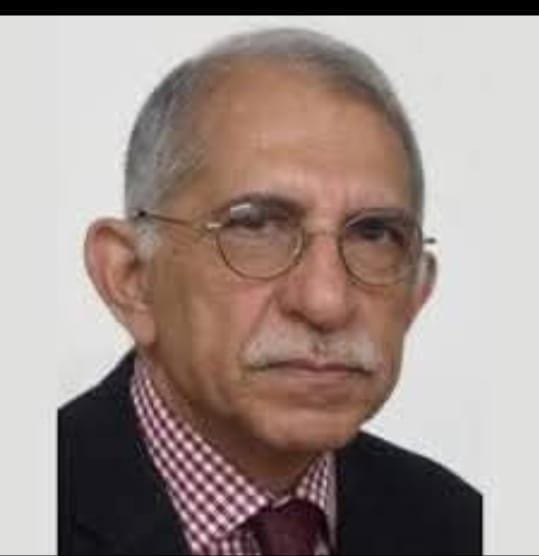
It is with profound sorrow that we reflect on the passing of Senior Counsel Pheroze Nowrojee a titan of the legal profession, an unwavering advocate for human dignity, and a beacon of hope in Kenya’s darkest hours. SC Nowrojee’s career was defined by moral clarity and unyielding courage.

During the oppressive era of single-party dictatorship under the Moi-Kanu regime, he stood resolute in defense of justice, even as others capitulated to tyranny. His fearless representation of political detainees including myself before the notorious Detainees Tribunals at Shimolatewa and Naivasha Maximum Security Prisons remains etched in history. Amid kangaroo courts and regime aligned judges determined to crush dissent, SC Nowrojee wielded the law not as a tool of power, but as a shield for the voiceless.

To us, the political prisoners languishing under unjust confinement, he was more than legal counsel. His principled stance, intellectual rigor, and refusal to legitimize authoritarianism rekindled our resolve. He reminded us that the arc of justice, though bent, could not be broken so long as there were those willing to fight for it. SC Nowrojee’s legacy transcends courtrooms and legal texts.

He embodied the sacred duty of the advocate: to speak truth to power, to humanize the marginalized, and to uphold the sanctity of liberty even at great personal cost. His life’s work fortified Kenya’s journey toward multiparty democracy and inspired generations of jurists to champion equity over expediency. As we bid farewell to this indomitable spirit, we do not mourn passively. We recommit to the ideals he lived by: courage in the face of oppression, integrity in the pursuit of justice, and solidarity with the oppressed.

Rest in Power, Senior Counsel Nowrojee. Your battles liberated many; your light will guide countless more. The writer is Israel Otieno Agina Political Detainee (1986 to 1989) Comrade in the Struggle for Justice and Progress.

Court temporarily suspends BMU elections in Homa Bay.

0

By Habil Onyango

A Kendu Bay court has issued a temporary injunction stopping the election for Homa Bay Beach Management Unit (BMU) in Homa Bay County.

This follows an application which was made by Maurice Odhiambo Aduwo,Ruth Achieng Ben as 1st, 2nd respondents respectively, 14 others and Oloo Gor who is an interested party.

They petitioned the County Government of Homa Bay and Executive Committee Member for Blue Economy,Fisheries,Mining and digital economy and six others.

According to the application dated April 4 2025 before Senior Principal Magistrate Hon. E.A Obina,the petitioners prayed for an order suspending the BMUs election which was scheduled to start from April 7th to April 16 2025 until a fresh, lawful process was conducted.

They requested for a declaration that the election notice, issued only five days before the elections and on public holiday  is null and void.

Through C.Obiero and Advocates, the petitioners further requested for an order compelling the respondents to reinstare the unlawfully de registered petitioners and allow them to participate in the elections.

Further, they appealed to the court for a declaration that the elections held without voter education and Public Participation violates the Constitution and BMUs Regulations Act 2024 and for the respondent to bear the cost of the petition
Illegal removal of the petitioners from the BMU register.

According to a sworn-in affidavit,several petitioners including Aduwo (1st),Achieng’ (2nd), George Otieno(15th) and Julius Odhiambo, Mwiria 17th petitioners respectively were unlawfully were deregistered without justifiable cause.

Further, Mwiria was removed as the treasurer of Sare BMU despite filing an appeal on June 24,2024,which remains unresolved.

Further,Robert Okoth Ouma who is the 7th petitioner from Gingo MBU was allegedly suspended but later reinstated by the County Director of Fisheries, yet his name remains absent from the register.

Awuor, the 2nd petitioner, who is a female candidate and the current Chairperson, was unfairly locked out of election process along with Dorah Ouma who is the 16th petitioner who sought the treasurer position.

They further alleged that the elections were scheduled for 7th April, however, notice for election campaigns was issued five days before the elections instead of the required seven days under section 32(1) of Fisheries Management and Development (BMU) regulations 2024.

They accused the responsible Officers of issuing a notice on a Public holiday, making it difficult for a candidate to prepare and participate effectively, saying there was no voter education or participation which was conducted, violating section 32(1) and (2) of the BMU regulations 2024.
In his ruling, the magistrate ordered that the application be and is hereby certified as urgent.

He ordered that pending the hearing and the determination of the application, there be and issued a temporary order staying the elections for all the BMUs as scheduled by the respondent, their proxies, agents or anybody acting on their behalf until the application is heard and determined and or until further orders or directions by the court.

Two youths seriously injured during ODM grassroots election

0

By Habil Onyango

Orange Democratic Movement (ODM) grassroots party election in Homa Bay County turned violent after two people sustained serious injuries.

In Ndhiwa Constituency, two youths sustained serious injuries following a violent confrontation between factions in the ODM ward grassroots elections.

Elaine Omondi (25) had his left wrist chopped off using a machete while David Oluoch sustained deep cuts on the neck and a fractured left arm after being attacked by hired goons at Buche Primary School, where the exercise was ongoing.

According to the Ndhiwa Police Commander, John Losia, the incident took place in the morning after youths believed not to be from Ndhiwa arrived in an unmarked vehicle and caused chaos.

The Officer said the alleged “hired goons” were, however, overpowered by the delegates and the locals before unleashing the attack on the two.

“Some youths who were hired from outside Ndhiwa constituency arrived at Buche Primary School with an intention to disrupt the event.”

They were, however, overpowered by the delegates and the locals who were present before attacking the two youths, causing them serious injuries,” he said.

The officer, however, said that the youths later escaped to an unknown destination, and no arrest was made.

“This is a political matter and I do not want to be engaged in, my mandate is to protect and keep peace,” he said.

He appealed to the party supporters to carry out the exercise peacefully, saying there is no need for violence.

The two were rushed to Ndhiwa Sub County Hospital for medication before being transferred to Homa Bay Teaching and Referral Hospital for further medical attention.

Officer in charge of Ndhiwa Sub County Hospital, Dr. Nikodemus Odundo, confirmed the two were brought to the hospital while profusely bleeding.

We were able to stabilize their situation before they were transferred to Homa Bay level four hospitals.

“One of the patient’s left wrist was chopped off, while the other had a deep cut on the neck and a broken left arm, however, we managed to control the bleeding before referring them to HTRH for further medication,” he said.

The party was conducting countrywide ward elections today (Monday) to elect delegates who will participate in the Constituency grassroots elections scheduled for 9 April 2024.

Meanwhile, Homa Bay Deputy Governor Joseph Oyugi Magwanga has called on party supporters to carry out a peacefully exercise, saying there was no need to cause violence as this will tarnish the party’s good name.

Magwanga said there is no need to shed someone’s blood in the name of grassroots elections, adding that the party needs everyone’s support ahead of the forthcoming elections.

Magwanga spoke at Nyandiwa Primary School polling, West Kamagak, Kasipul Constituency, where he went to participate in the exercise.

As a party, we do not want a situation where we lose lives or sustain injuries in our elections. I want to call upon our supporters to maintain peace during the exercise as we build a strong foundation towards the 2027 general elections,” he said.

The Pheroze Nowrojee Kenyans Need to Know — Go Thee Well, Comrade

0

Dr. Edris N.Omondi (advocate)edrisattorney@ywcg.org

The year was 2004.

I asked Titus, his long-term legal clerk, to arrange a meeting for me.

At the entrance, Titus informed me, “Mkubwa yuko,” which meant that the boss was in.

That was at his Ralph Bunche Road residence, which also doubled up as his practice office.

I presumed everyone referred to him as “Mkubwa,” thinking it was a local colloquialism.

But when I addressed him so, he laughed heartily and corrected me.

He said, “The attitude of ‘mkubwa’ is manipulative, wrong before God and unjust to the progress of humanity.

Someday, you will understand.

“He then asked, “What is your name?” I answered, “Edris Omondi, I am a lawyer with the Centre for Governance and Development.”

He continued, “Where did you acquire your law degree?” I replied, “From Karnatak University, India.”

He smiled and said, “That’s a good university.

I acquired mine from Bombay University.

We began discussing the legal discourse from Dr. Babasaheb Ambedkar, the father of the Indian Constitution, to Mahatma Gandhi and his ideals.

In this interaction, he reminded me not just to be a lawyer, but one as profound as a legal servant.

A legal servant, yes- much like Mahatma Gandhi, standing with the community I serve.

He concluded by emphasizing the importance of social justice — such was the impactful legal influence he left in my life; it was his ideals and belief more than his courtroom practice.

I Did Not Join Jaramogi, We Met in the Struggle!”

Among many interactions I had with him, this two-day meeting at a city hotel in 2006, will crown it all.

Pheroze tagged me along.

The meeting was unique in every way.

Among the well-known social reformers present and speakers was himself, the late Dr. Apollo Njonjo, Hon. James Orengo (now the current Governor of Siaya), Hon. Gitobu Imanyara, the late comrade Onyango Oloo (a Marxist ideologist), and many other social reformers of that time.

The focus of this retreat and discussions therein was how to chart a future amidst political tension.

Little did we know that the subject was to prophetic, with the 2007 post-election violence erupting the following year, and that the meeting would change the course of my political mindset.

I remember Honorable Orengo being our first speaker, drawing lessons from his past, recalling an invitation he received from one Mr. Osie Kunze to speak at a conference in Harare, Zimbabwe, on the subject “Dark of Ideology.”

The paper was widely publicized by the Zimbabwean press, having addressed the discourses of the time.

Pheroze, with his characteristic agility, astuteness, smile and humility, then took the center stage.

His presentation was powerful and thought-provoking.

He raised the issue of class disparity, asking why so many of us were attracted to politics!

The majority of us, as indeed captured in his presentation, are driven by greed, often at the expense of the needy.

He pointed out that wealth should not be the driving force for entering politics.

Pheroze highlighted that Kenya was ranked 56th globally for inequality, with one of the widest gaps in wealth distribution.

His interest as a social thinker was on how we Kenyans could live together, free from tribal animosity, and united for national development.

He insisted that our problems should be carefully analyzed and diagnosed, and policies should be based on thorough research, not trial and error.

He lamented that Kenya had lost the ideal of issue-based politics that existed between 1963 and 1980, which had been built on mutual trust.

Pheroze argued that this loss of political trust had been detrimental to the country, as it led to political upheavals, criminalization of public interest advocates, political assassinations, and victimization.

Yet, he firmly believed that the ideals of social justice and fairness would outlast these setbacks, and it was important to bring these ideas back into the mainstream of Kenyan politics.

The Call for Political EducationPheroze’s words left an indelible mark on my mind.

He argued that politics should be about polity and quality, not about horse trading, positions, or the media coverage surrounding individual politicians.

According to him, the real focus of politics should always be the welfare of the people, not the accumulation of power and wealth for the few.

He emphasized the need for political homework, public sensitization, and sound political education.

He believed that the center of political focus should always be the Kenyan people and their livelihoods, rather than the interests of political elites.

A man of all seasonAre we going to the funeral to bury comrade Mwaviso? I asked Pheroze, and indeed, that weekend he was available.

Hon Orengo offered to ferry us to Taita from Nairobi.

We had to bury Mwaviso, Hon. Mwandawiro Muganga’s brother, in Werhuga.

Accompanying us was the late Nganga Thiong’o Gupta.

This was a social thinker’s ride.

A ride to congratulate him on his latest accolade on human rights and contribution to social justice.

It felt like the Mahatma Gandhi train ride of 1890, which transformed his legal career into a social justice advocate.

This man was made of a different material.

Indeed, whether in a public platform, in his books like the Duka walla, or the comfort of his car or house, he preached social justice.

Go Thee WellComrade, you will be deeply missed by all of us in the fraternity of social thinkers.

You have inspired and mentored many of us.

Indeed this fraternity that included your long term friend; Hon James Orengo, Philomena Njenga, Ann Ruth Achieng, Maina Njue, Cidi Otieno, John Kipchirchir Birgen, Hon. Mwandawiro Mganga, Hon. Gitobu Imanyara, Cyprian Nyamu, Ochieng Kairalla, Chome Mwairo, Samuel Mose, Waithera Chege, Khamis Juma, Anjawalla Kharim, Joseph Bonzo, Tom Okore, Regina Oyaro, and many others who walked with you through the social reform journey.

Go thee well, dear comrade and friend.

Your work and ideals on human rights, social justice, and equality will live forever in the hearts of all who knew you.

A Victoria EciertaMay your legacy continue to inspire future generations of lawyers, social reformers, and all those who fight for justice and equality.

Your belief in a better Kenya will live on through the work we continue to do, in memory of your unwavering commitment to the ideals of a just society.

Pass our regards to Comrade Onyango Oloo- inform him reform agenda is still at the heart of our discussions- to Dr Apollo Njonjo let him know that bread has never been shared equally- to Thiong’o Nganga Gupta, tell him our university graduands are now referred to as ‘sanguenyas’ and to Roc Ajulu, inform him, the lagoon of our social thinkers is up for grabs for a price.

We will still stand on the platform of social justice and reforms.

None was like you. Your resolute work shall be absolute.

Comrade Pheroze Nowrojee, you have left an indelible mark on our lives.

Rest in peace.

(Dr. Edris Omondi is a Preacher, Social Thinker, Lawyer, Mentor, Writer, Author and a Public Motivational Speaker.

Murkomen to meet coastal security team and residents over growing insecurity

0

By Correspondent
Cabinet Secretary for the Interior and National Administration Kipchumba Murkomen is expected to lead consultative forums with security chiefs and residents of the six counties of the coastal region.

Murkomen, in a bid to tame the security scare in the region following the emergence of gangs that have been reported as attacking tourists and residents, is keen to find a lasting solution to the menace.

A communication seen by Western Insight revealed that the tours, christened “Jukwaa la Usalama County Tours”, will begin from Monday, 7th April to Saturday, 12th April 2025.

“He will assess the security situation in the Coast region.

He will also engage with leaders, regional and county security teams, National Government Administration Officers, and peace committees on strategies to enhance security, peace, and cohesion,” the communication read.

The CS who embarked on a similar tour of Baringo County a week ago is also seeking to evaluate the level of disaster preparedness in response to rising climate change-driven extreme weather conditions.

Murkomen also wants to gather feedback from the residents on their satisfaction with citizen services, and also interact with security personnel on the front lines combating land and maritime threats.

Among key government programmes he will oversee in his weeklong tour is conducting a spot check on the Mobile ID Registration rollout.

Murkomen’s visit comes just two days after tourism players have raised concerns on the deteriorating security situation in Mombasa and its environs, saying it was threatening positive prospects in the growth of the multi-million dollar industry.

The industry contributes 10 per cent to the national gross domestic product (GDP) according to recent reports from the Ministry of Tourism, thus indicating the importance of giving special security to tourists visiting the country.

The stakeholders, drawn from Kenya Coast Tourism Association (KCTA) and Kenya Association of Hotel Keepers and Caterers (KAHC), all under Kenya Tourism Federation, say insecurity in Mombasa is negatively affecting the foreign exchange earner.

KCTA chairman Victor Shitakha, responding to an incident where a tourist who had arrived aboard a cruise ship vessel was attacked and robbed of his mobile phone while on a site visit of Ivory Tusks in Mombasa on Monday, 31, 2025, said the incident painted a bad picture of the hospitality industry.

“To all our cruise ship visitors, we hope the magical experience will attract you back in the coming season. As we head to Easter we reassure our visitors that Mombasa and the wider Kenyan coast remain safe, welcoming and open for tourists,” he said.

“If there is no security, tourism will be affected, it’s true we have insecurity incidents in Mombasa, but we should see security solutions being reached. What we are asking is for them to be vigilant, because if a tourist is attacked, it’s a security problem.”

Addressing the media, KAHC executive director Sam Ikwaye demanded heightened security to avert damaging livelihoods and the country’s reputation as a safe and attractive tourist destination.

“We don’t want to welcome tourism advisories, if such incidents of insecurity happen, it threatens the sector very much, we know there are security measures put in place, but we ask for more efforts to be made, especially as we head to the Easter holiday,” he said.

The tourism sector, currently on an upward trajectory, is banking on the Easter Holiday celebrations to boost its earnings when both local and international tourists flock to the coastal region for the festivities.

“Regrettably, from January, we are witnessing a slight decrease of tourists at the coast, we believe it’s attributed to the bad economy, many tourist hotels are recording between 18-30 bookings, but we are hoping for a positive response, with continued marketing by Kenya tourism board,” Shitakha said.

But while responding to the insecurity concerns, Mombasa County Commissioner Mahmoud Noor promised to establish a new police booth at the famous Ivory Tusks site along Mombasa’s Moi Avenue, as a measure to protect tourists who flock there for photographing.

Confirming the incident of a cruise ship tourist attack and robbery at the site, the commissioner termed it as an isolated case and currently under police investigation.

“What happened is that one of the visitors from the last cruise ship was robbed of his phone.

This happens globally. I don’t know why the media is blowing it out of proportion, but that is a matter being investigated by police.”

According to him, the incident was perpetrated by street boys and not panga boys as reported in a section of the media, saying a number of them have been arrested and police are pursuing others who were involved.

“Police went and recorded statements with the victim, so that they can investigate.

Our DCI officers are investigating to ensure that the phone is recovered and returned to the owner,” he noted, adding that Kenya has received 6,500 passengers this season alone.

Flanked by acting Mombasa County police commandant Maxwell Agoro, Commissioner Noor said: “The next season will begin in September.

We will establish a police booth at the Ivory Tusks area, permanent with police officers, normally we have permanent officers, but that day there was a lapse, but now we will have visible police officers manning the place.”

At 29, Atieno is showcasing her mastery in writing by authoring four law books

0

By Correspondent

Flamboyant lawyer Atieno Ogolla had thought that lawyering was about long hours in court arguing about how this crime was committed or not committed.

It is after her sojourn into the practice of law that she harboured a great labour of love for writing.

Atieno’s pursuit of Alternative Dispute Resolution, also referred to as ADR, gave her excitement.

She believed that protracted cases in courts could be resolved by the differing parties settling matters out of court.

Alternative Dispute Resolution (ADR) is a mechanism of resolving disputes in any form other than through the court process.

Alternative justice processes include mediation, conciliation, negotiation, arbitration and traditional dispute resolution mechanisms.

She is about to launch four books in April, following extensive research on various aspects of law.

At 28, finding purpose in mentoring and writing fires her purpose of dispensing knowledge.

She is set to unveil four transformative books on 30 April that aim to reshape legal education, practice, and spiritual growth for aspiring and practicing lawyers.

Each of her books provides a unique perspective on legal success, professional development, and the role of faith in the legal profession.

In her first book titled “From Tradition to Modernity: The Role of ADR in African Justice Systems,” she deeply delves into the evolving landscape of Alternative Dispute Resolution (ADR) in Africa, exploring how traditional mechanisms of conflict resolution intersect with contemporary legal frameworks.

Atieno provides a thought-provoking analysis of ADR’s role in enhancing access to justice, particularly in a region where formal legal systems often face challenges of accessibility and efficiency.

The idea of ADR first excited her when she thought of how it easily helped solve cases that could, if left to the courts, drag on for years.

“My book on ADR implores the importance of using it as an alternative way of solving disputes in our societies.

If wholly embraced, ADR can be used, ensuring that there is no backlog of cases in our courts across the country,” says Atieno.

Atieno’s second book, “Beyond the Books: The Law Student’s Guide to Passing the Bar Exam”, is a must-read for any law student preparing for the bar exam. This book offers practical strategies beyond rote memorization.

Drawing from her experience as a legal educator and mentor, Atieno provides actionable study techniques, time management strategies, and exam-day readiness tips designed to help students excel and build confidence in their legal knowledge.

The third publication, “Lawyer in Progress: 365 Days to Success – Planner for Undergraduate and Bar Exam Students,” is more of an innovative planner for law students set to sit bar exams.

Failing in bar exams has recently grown into a national concern.

Last year, Attorney General Dorcas Oduor was moved by concerns raised by law students and stakeholders over mass failures in law exams offered by the Kenya School of Law (KSL) to form a body to investigate the failure.

Dorcas’s move followed a consultative meeting she had convened and was attended by the President of the Law Society of Kenya (LSK), Chairpersons of the KSL, Council for Legal Education (CLE), the Kenya Law Reform Commission (KLRC), as well as their Chief Executive Officers.

According to Atieno, this book is more than just an organisation – it is a structured guide designed to help law students and bar candidates set goals, track progress, and maintain focus throughout their legal journey.

With daily prompts, study schedules, and motivational insights, it serves as a personal accountability tool to enhance productivity and success.

In her final book titled “In His Court: A Year-Long Devotion for Future Lawyers,” Atieno is blending faith with the practice of law.

This devotional provides daily reflections, scripture-based encouragement, and insights on navigating the legal profession with integrity and purpose.

It is a spiritual companion for law students and young lawyers who seek to align their professional aspirations with their faith.

Speaking ahead of the launch, Atieno Ogolla shared, “These books are the culmination of my passion for law, education, and mentorship.

Each of them addresses a critical gap in legal education and practice, offering students and practitioners the tools they need to succeed academically, professionally, and spiritually.”

Atieno’s books can also introduce readers to the idea of and law background.

She introduces the reader to how the law relates to everyday life by discussing the structures of as well as the relationship between the people and the Constitution, Parliament, the central government and the county governments.

How are courts structured and how do they work? This is one area of the law in Kenya that is least understood.

Atieno outlines how courts are constituted, when they sit, what matters can be brought before a magistrate’s court, the high court, the court of appeal, all the way to the supreme court.

The launch of the books will entail an engaging lineup of discussions, book signings, and networking opportunities for law students, professionals, and legal educators.

Why the politicians must be called out on rhetoric and early campaigns to avoid plunging the country into chaos

0

By Remmy Butia

As Kenya inches closer to the 2027 general elections, the political landscape is already heating up with aggressive posturing, divisive rhetoric, and premature campaigning. President William Ruto is crisscrossing the country on what he calls “development tours,” while his former impeached deputy, Rigathi Gachagua – is rallying supporters under the banner of “Ruto Must Go.” Meanwhile, opposition figures like Kalonzo Musyoka, Eugene Wamalwa, Martha Karua, and Jeremiah Kioni are positioning themselves as the “people’s legitimate opposition.”

With tensions rising and political alliances shifting, the question looms: Will Kenya survive the toxic political climate, or will the nation be torn apart by the ambitions of its leaders?

Early Campaigns and the Erosion of Governance

Kenya’s election cycle has effectively begun – three years before the official campaign period. President Ruto’s recent tour of Mt. Kenya, ostensibly for development inspections, was widely interpreted as a strategic move to reclaim a region that once overwhelmingly supported him but has since grown disillusioned . While he pledged infrastructure projects and economic reforms, critics argue that these visits are thinly veiled campaign rallies meant to consolidate support ahead of 2027.

On the other side, Rigathi Gachagua – once Ruto’s closest ally – has taken a confrontational stance, labeling the current administration as “anti-Mt.Kenya” and vowing to unseat Ruto. His rhetoric has been incendiary, with some of his allies warning of a political “war” in the region .

Opposition leaders, too, are not sitting idle. Kalonzo Musyoka has openly declared his 2027 ambitions, while Raila Odinga’s allies debate whether he will run again or pass the baton. The Azimio coalition is already grappling with internal divisions, signaling a fierce battle ahead .

The Danger of Polarization

The early campaigns risk deepening ethnic and regional divisions. Gachagua’s “Mt. Kenya vs. Ruto” narrative and Ruto’s counter-mobilization could revive the toxic “us vs. them” politics that Kenya has struggled to move beyond. Already, political analysts note that the Mt. Kenya region – once a Ruto stronghold – is now a battleground, with voters split between loyalty to Gachagua and pragmatism toward Ruto’s development promises .

Moreover, the opposition’s framing of their movement as the “people’s legitimate resistance” suggests an escalation in political rhetoric that could spill over into protests or unrest, especially if the 2027 elections are contested.

The Youth Factor: A Wildcard in 2027

One critical demographic that could disrupt traditional political calculations is Kenya’s youth. By 2027, an estimated 10.5 million new voters under 35 will join the electorate, making them the largest voting bloc . Unlike older generations, these voters are less tied to ethnic loyalties and more influenced by social media, economic realities, and governance performance.

If politicians continue with their current combative style – focusing on personality clashes rather than policy – they risk alienating this demographic. As one analyst notes, “The traditional campaign method of visiting small towns and talking at citizens from the sunroof of a Toyota V8 will not appeal to them”. Instead, young Kenyans are looking for solutions to unemployment, corruption, and economic stagnation.

If the political class fails to adapt, Kenya could see a youth-led political revolution – either through mass voter turnout against establishment politicians or through the rise of a new, populist third force.

Where Does This Leave Kenya?

The early politicking raises serious concerns:

Governance Takes a Backseat:

With leaders more focused on 2027 than on delivering services, critical reforms in agriculture, healthcare, and infrastructure could stall. Ruto himself has acknowledged that his re-election depends on performance, yet his opponents argue that his administration has fallen short .

Ethnic Mobilization Risks:

If politicians continue framing elections as existential battles for their communities, Kenya could see a resurgence of the ethnic tensions that have marred past elections.

Economic Consequences:

Prolonged political instability could deter investment, worsen unemployment, and deepen public disillusionment with democracy.

A Fractured Opposition:

If Azimio fails to unite behind a single candidate, Ruto could benefit from a divided opposition – but this could also lead to post-election disputes and unrest.

Can Kenya Navigate the Storm?

Kenya stands at a crossroads. The early campaigns, harsh rhetoric, and shifting alliances could either lead to a more competitive democracy or plunge the country into another cycle of divisive politics.

For Kenya to emerge stronger, politicians must shift from toxic rhetoric to issue-based campaigns, prioritize governance over premature elections, and engage the youth meaningfully. Otherwise, the 2027 elections may not just be about who leads Kenya, but whether the country remains united at all.

As Wainaina wa Njeri, author of The Art of Winning Elections, warns: “Politics is fluid; what works today may not work tomorrow.” The question is whether Kenya’s leaders will adapt – or whether their ambitions will tear the nation apart.

Empowering Youth Through Tax Breaks: A Path to Economic Revival and Job Creation in Kenya

0

Dr.Edris N.Omondi(Advocate)

attorneyedris@ywcg.org

Kenya stands at a critical juncture in its economic journey. With a vibrant young population, the country holds immense potential for growth, yet faces the daunting challenge of youth unemployment, which hovers at concerning levels. The need for a comprehensive, bold solution to stimulate youth-led industries and create meaningful job opportunities has never been more urgent. One of the most effective measures to address this challenge lies in providing tax holidays for youth-driven businesses. This article explores the potential ripple employment effects of such tax holidays, presents an analysis of countries that have successfully implemented similar strategies, and proposes how Kenya can use this approach to foster economic growth and job creation in its 2025 National Budget.

The Power of Tax Holidays for Youth-Led Industries

Tax holidays are a powerful tool that can enable young entrepreneurs to reinvest their resources into growing their businesses rather than paying taxes. For youth-led businesses in Kenya, tax exemptions or reductions would provide critical financial breathing room to expand operations, hire new staff, and explore innovation without the heavy burden of taxation in their early years.

By offering tax breaks, the Kenyan government can create a favorable environment for the youth to establish, grow, and scale their businesses. Industries such as technology, agribusiness, renewable energy, and manufacturing stand to benefit significantly from these incentives, as they require initial capital investment and have the potential for scalability. Moreover, these industries are crucial for generating the employment Kenya so urgently needs.

Tax Break Moratorium Based on Youth Leadership

A key aspect of this proposal is that tax holidays and exemptions should apply specifically to companies and organizations with directors who are under the age of 35. This criterion ensures that the benefits of tax relief are directly targeted at empowering youth entrepreneurship, enabling them to create jobs and drive innovation.

By offering these tax breaks, the government would provide a crucial support system for young entrepreneurs, allowing them to reinvest in their businesses and expand their operations without the immediate burden of taxation. This policy would create a strong incentive for young professionals to form startups and social enterprises, fostering a new generation of Kenyan business leaders who can drive economic change and innovation.

Government Infrastructure Support for Youth Enterprises

In addition to tax breaks, it is essential that the Kenyan government provides infrastructure support to ensure the success of youth-led businesses. This could involve creating business hubs, enhancing digital infrastructure and spaces country wide, and offering access to affordable business premises, transportation networks, and communication platforms. By offering these resources, the government can further reduce the operational costs of young businesses, making it easier for them to scale and compete on a larger scale.

Furthermore, County Governments should be encouraged to support youth businesses by increasing their accessibility to tender opportunities. Youth-led enterprises often struggle to compete in the public procurement space due to the lack of resources or established networks. County Governments can play a crucial role in facilitating youth inclusion by increasing the percentage of tender bids allocated to companies whose young directors are the majority shareholders. This initiative will help youth-led businesses gain access to critical government contracts, fueling their growth while simultaneously contributing to local economies.

Ripple Employment Effects: Estimating Job Creation

The assumption that all youths need to be employed by either the government or private sector is is a wrong approach. The employment impact of introducing tax holidays for youth-led businesses is substantial and enormous. The ripple effect of tax breaks goes beyond the direct creation of jobs within youth-driven enterprises. It extends to numerous sectors through indirect, induced, and multiplier effects.

Direct Job Creation: Tax holidays allow youth entrepreneurs to channel savings into hiring talent. With an exemption from taxes, youth businesses in Kenya can create thousands of jobs in critical industries. If 1,000 youth startups, especially in technology, manufacturing, and services, are supported through tax holidays, and each startup hires 5-10 people on average, it could directly create 5,000 to 10,000 new jobs within a short time.

Indirect Job Creation: As youth businesses grow, they need external services such as logistics, legal counsel, accounting, marketing, and distribution. These support services will, in turn, create additional jobs. The ripple effect across these sectors could generate 4,000 to 8,000 additional jobs, bolstering the overall job market.

Induced Employment: Economic growth spurred by youth entrepreneurship will lead to increased consumer demand and higher disposable incomes, which will further fuel job creation in sectors like retail, hospitality, and entertainment. This can induce an additional 3,000 to 5,000 jobs driven by the demand created by the growing youth workforce.

Multiplier Effect: When youth businesses expand, they integrate into local and regional supply chains. These businesses require raw materials, transportation, and distribution, generating jobs in logistics, supply chain management, and infrastructure development.

The multiplier effect could result in 20,000 to 40,000 jobs across the country, particularly in regional and infrastructure development.

Global Best Practices:

Several countries have implemented tax incentives to promote youth entrepreneurship and have seen notable success in job creation and economic growth. Kenya can draw inspiration from these global examples:

South Korea: South Korea’s emphasis on technology startups has been supported by tax exemptions and incentives for young entrepreneurs. This has led to the development of global companies like Samsung and LG. The success of South Korea’s policies has resulted in millions of jobs in the tech sector and a thriving, innovation-driven economy.

Singapore: Singapore offers 100% tax exemption on the first S$100,000 of income for new startups for their first three years, fostering a conducive environment for young businesses. This approach has driven the growth of the country’s tech and financial sectors, attracting talent and creating a significant number of jobs.

Ireland: Ireland’s Enterprise Investment Scheme (EIS) and tax breaks for startups have led to a booming tech industry, with major companies like Google and Apple setting up their European headquarters. The Irish model has successfully created thousands of jobs, particularly in the tech and creative industries.

India: India’s Startup India Initiative offers three years of tax holidays for youth-led enterprises in their first seven years of operation. This has spurred growth in sectors like technology, manufacturing, and renewable energy, creating millions of jobs across the country.

United States: The U.S. has leveraged tax relief programs such as the Qualified Small Business Stock (QSBS) tax exclusion to support startups. This has enabled young companies to scale rapidly, particularly in the tech and green energy sectors, creating significant employment opportunities.

United Kingdom: The Seed Enterprise Investment Scheme (SEIS) in the UK provides tax breaks to investors in early-stage youth-led businesses. This has fostered a thriving startup culture, especially in the technology, creative, and green energy sectors, creating countless job opportunities.

Conclusion: A Path Forward for Kenya

Tax holidays for youth-led industries represent a strategic investment in the future of Kenya’s economy. By providing these incentives, the government would not only stimulate growth in the youth entrepreneurship sector but also create significant employment opportunities across multiple industries. The ripple effect of such tax breaks could create up to 63,000 jobs or more, addressing the pressing issue of youth unemployment while fostering a dynamic and competitive economy.

Drawing inspiration from nations like South Korea, Singapore, and India, Kenya can implement similar policies to support its burgeoning young population. The 2025 National Budget should prioritize these tax breaks as a catalyst for long-term growth and development. The additional provision of infrastructure support, alongside county governments increasing youth access to tenders, would further accelerate economic progress.

With bold policy action and a focus on empowering youth, Kenya can position itself as a leader in innovation and job creation in Africa. The time for action is now—by investing in youth, Kenya can unlock its true economic potential.

(Dr. Edris Omondi is a Preacher, Social Thinker, Mentor, Writer, Author and a Public Motivational Speaker)

Ruto Conquers the Mountain

0
Junior Secondary Schools

By Billy Mijungu

When President William Ruto kicked off his tour of the Mountain in Laikipia, many dismissed it as yet another political roadshow. Few could see the master plan unfolding. His choice of Laikipia, cosmopolitan, strategically located, and politically neutral, was deliberate. It was a signal to the nation and, more importantly, to the Kikuyu people, that the man from Sugoi still had the Mountain in his grasp.

Word quickly spread that this was not your usual tour. Attending a Ruto rally was more than political; it was economic. Tales flowed of how one’s household shopping for two weeks would be sorted just by showing up and listening. There was no need to struggle, no need to ask, just be present.

The brilliance of this campaign was not just Ruto’s, but also a borrowed page from his deputy Rigathi Gachagua’s own playbook. Women, often the unsung foot soldiers of our politics, were mobilized into thousands strong groups in every region visited. Loyalty was rewarded, not with empty promises, but with cold, hard cash. The message was clear: politics is no longer about ideology or vision; it is about who brings the money.

To eliminate dissent, the campaign moved to the streets. The boda boda riders, often the first to heckle, disrupt, or stir controversy, were bought out. Paid to remain silent, paid to attend, and paid to ferry supporters four at a time to every gathering. It was a meticulous operation, designed to show strength, unity, and unshakable support.

And once the stage was set, Ruto turned his gaze to Gachagua. Shielded from noise, backed by orchestrated loyalty, he confronted the mountain’s leadership with one message: cash is king. Development talk was secondary. The currency of this tour was money and the optics of power.

Kiambu proved a slight hiccup. Leaders were shouted down, exposing raw nerves. It was the lowest moment in the tour but a telling one. The people sent a message: If we don’t want your people, we don’t want you either, but we will let you speak. That alone tells us more about the shifting tides in the Mountain than any poll could.

Now, all eyes turn to the Mbeere North by election. It is more than just a seat. It is the barometer of where the Mountain’s heart truly lies. If Ruto’s strategy holds, then the age of ideas is over. We have entered the era where the vote goes to the highest bidder.

In this Mountain conquest, one truth stands above all: Cash is King.