Home Blog Page 169

Ahero Rice Scheme: A Sleeping Economic Domestic & Export Giant

0

Dr.Edris Omondi(Advocate)

attorneyedris@gmail.com

I was in MweaTabere some time back, attending a funeral in Kirinyaga County, a solemn but unique occasion that ended up sparking a reflection on the region’s agricultural potential. As we sat in the shade, chatting with locals, I couldn’t help but admire the vastness of their rice fields. The region’s production capacity was truly remarkable, yet it seemed that much of their potential remained untapped. Despite the wealth of natural resources and a robust irrigation system in place, there was something about the way the farmers worked—using outdated equipment and limited commercial practices—that made me question why regions like Ahero, with its much larger irrigation schemes and favorable improved water conditions, were not achieving their full potential in the same way.

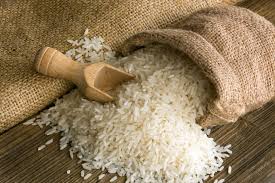
Ahero, has one of the biggest smallholder rice farming programs in Africa. Situated in the South Western part of the Kano Plains within the River Nyando flood plain, the south west Kano rice irrigation schemes and its environ independently managed and the National Irrigation Board managed sector, spans 10,000 acres of cultivated land, with a further 15,000 acres under cultivation. Yet despite its impressive potential, the project is not meeting its full capacity. The rice fields in Ahero, like those in Mwea, suffer from underdevelopment and underutilization, largely due to poor infrastructure, inadequate irrigation systems, and lack of farmer support programs.

Ailing Regional Economy: Is Our Politics to Blame?

The challenge we face here is not just a technical one, but a systemic economic issue, stemming way back from independence. The Ahero rice schemes, while a regional agricultural giant, struggles under the weight of poor infrastructure and a lack of support for local farmers. A yield of 25 bags per acre is modest, bringing in an annual turnover of Ksh 750 million—far below what the project could achieve if its potential was fully realized. This situation speaks to a deeper issue in Kenya’s agricultural sector: despite the country’s significant resources, the local economy is being held back by outdated practices and a political framework that does not prioritize sustainable agricultural growth.

So, what seems to be ailing our regional economy? One of the major reasons is the political landscape that fails to push forward practical, business-oriented agricultural policies. Despite the potential of Ahero irrigation schemes like the South West Kano, politics often sidelines key infrastructural investments, leaving agricultural communities struggling. The fact that rice farmers still rely on middlemen, who buy rice at “throwaway” prices, is a clear indication of how much economic activity is lost due to mismanagement and political inaction.

Solutions: Making Ahero Rice Scheme Export-Tenable

To turn the Ahero Rice Scheme into an economic export giant, the first and most urgent task is to improve infrastructure. The farmers in Ahero are unable to fully harness their capacity due to problems like water shortages, siltation, and inadequate irrigation equipment. The county government, working with national agencies, should prioritize addressing these issues through investment in water management systems, machinery for land preparation, and basic irrigation infrastructure like excavators and tractors. With better infrastructure, the yield per acre could be drastically improved, offering farmers more opportunities for profit.

Beyond infrastructure, Kenya needs a concerted push towards making rice a key export commodity. The first step in this process would be implementing a policy that mandates at least 30% of home-grown rice to be displayed in supermarket shelves. This would not only create a market for local rice but also encourage farmers to up their game in terms of quality and production. By creating demand domestically, we could begin to build a reliable base for export.

Moreover, there should be a focus on value addition. Ahero’s rice scheme is still primarily a bulk producer, with no independent mills or branding for their produce. Setting up local rice mills and establishing a branding system would help add value to the rice, making it more competitive in the market. This would also provide an opportunity for job creation and stimulate local economies by encouraging small businesses focused on rice milling, packaging, and marketing.

Additionally, creating a cooperative farmer support program, structured in a proper governance model, would go a long way in addressing challenges like market exploitation and lack of storage facilities. Such a program could help farmers band together to collectively market their rice, thereby eliminating middlemen and ensuring that they earn fair prices. It could also facilitate the establishment of drying floors and storage facilities at scheme levels, ensuring that rice does not go to waste during harvest periods.

A Holistic Approach: Policy Support and Private-Public Partnerships

Finally, a more robust approach to capacity building is needed. The farmers of Ahero must shift from a subsistence-based view of agriculture to a commercial one. This requires ongoing training in farm management, accounting, record-keeping, and modern agricultural techniques. In this regard, collaboration with institutions like the National Irrigation Board (NIB), the government, and international development partners such as JICA, the EU, the World Bank, and GIZ could provide essential resources and expertise.

The county government must also play a critical role in reviewing its policy documents like the Kisumu County Food System Strategy 2023-2027; Kisumu County Agri-Nutrition Implementation Strategy (CANIS) with its complementing Agriculture legislation like- The Kisumu County Crop Agriculture Act 2019; Introducing laws that provide tax incentives for rice processors, promote cooperative societies, and encourage infrastructure development in agricultural zones will go a long way in ensuring that these schemes become economically viable. Ahero could become the “model” for Kenya’s rice industry if it is supported with the right legal framework and infrastructure.

Conclusion: The Promise of Ahero Rice

The Ahero Rice Scheme, with its vast acreage and the potential to support over 6,000 households, is a sleeping economic giant. If only we could address the systemic issues—from infrastructure and irrigation to farmer support programs and market access—the region would not only feed Kenya but could position itself as a leader in rice export across Africa. It’s time for the political will to match the potential of projects like Ahero. With the right policies, investment, and public-private partnerships, Ahero could rise as the economic export giant it’s always had the potential to be.

(Dr.Edris Omondi is a Preacher, Social Thinker, Mentor, Writer, Author and a Public Motivational Speaker)

Kenya Utalli college begins a  two week refresher courses to 1591 students

0

By Anderson Ojwang                              

The Kenya Utalli College (KUC) is repositing itself to meet the ever increasing demand  refresher courses and other trainings in the hospitality industry.

Council Chairman, Kenya Utalli College, Mr. David Wamatsi, said the overwhelming application for refresher courses exceeded the expectation and the institution has embarked on the expansion  program to meet the demand .

We are committed to meeting the training demands and we are rolling out elaborate strategy to ensure that Utalli College remains the top institution in Africa in  offering trainings in hospitality,” he said.

The principal and Chief Executive officer of the college Mr. Mark Rachuonyo revealed that  3000 applicants  applied for the two weeks refresher courses.  

We received a total record number of 3,349 applications for all the regions. Out of these, 1591 were selected to participate in the trainings scheduled to take place across the country. 

This a major milestone for this institution, as we pursue our mandate of undertaking training and capacity building for the Hospitality and Tourism sector,” he said .

Rachuonyo spoke during the awards of certificate after successful completion by 661 course participants of the two-week intense training program.

He recognized the Hospitality and Tourism Industry Stakeholders for working closely with Utalli College under the auspices of Tourism Industry/Kenya Utalli College Liaison committee to facilitate the training.

This close collaboration has facilitated the formulation of the program’s need-based course content, as well as the smooth organization and successful implementation of the training programs,” he said.

These refresher courses have provided you with an opportunity to enhance your qualifications, as well as, knowledge and professional skills. 

I urge you to instill the knowledge gained to those you left behind in your respective organizations, in an effort to enhance service delivery for the benefit of the entire organization and the industry at large.” He said.

He challenged them to continue with the search for new knowledge to be tandem with the new and emerging trends in the hospitality industry.

Wamatsi said the College values the great support accorded to it by the industry players and Tourism fund (TF) which facilitated funding towards the execution of the refresher courses/

He said refresher courses play a vital role in the development of the industry because the programs enhance efficiency and effectiveness in the participants’ service delivery.

Allow me to point out that our endeavor as a college is not just an effort aimed at providing professional skills to those practicing in the industry, but also a dedication to give back to the same industry that has supported us over the years. 

Rachuonyo said Kenya Utalli College offers many programs which effectively transfer knowledge and skills to those working or aspire to work within the hospitality and tourism industry. 

tt” he said.

The College will further conduct this year’s Management Development Program (MDP) courses in the month of June. These courses are normally based on current and real-life issues affecting the industry and are devised to ensure conformity to modern trends,” he said.

,

The Political Parties Dispute Tribunal Stops ODM Grassroots Elections in Kasipul Constituency

0

By Habil Onyango

The Political Parties Dispute Tribunal (PPDT) has revoked the planned ODM grassroots elections for East Kamagak Kasipul Sub-Branch and Kasipul Constituency Branch, which were scheduled to take place on April 7 and 9, respectively.

This follows a notice of motion filed by Philip Nashon Aroko with the tribunal in Nairobi on April 2, 2024, against ODM, over allegations of manipulation of delegates’ names.

The matter was presented before Tribunal Chairperson Desma Nungo, Hon. Theresa Chepkuony, and Hon. Abdikadir Abdiraham for further directions and/or orders regarding the notice of motion application dated April 2, 2024.

Following a preliminary inter partes hearing, and based on prayer number 2 of the notice of motion application, supported by affidavits sworn by Philip Aroko and submissions filed electronically, the tribunal issued orders stopping the grassroots election exercise.

The tribunal granted an interim conservatory order restraining the respondent, by itself, its servants, agents, or otherwise, from conducting the sub-branch and branch elections in Homa Bay on April 7 and 9, 2025, or on any other date, pending the inter partes hearing of the application.

Additionally, the tribunal directed the Rachuonyo South OCPD to ensure compliance with the orders issued.

The respondent has been ordered to file and serve their responses to the application and to the complainant within seven days from the date of the order’s issuance.

The tribunal also granted the complainant/applicant corresponding leave to respond within three days of being served.

The case is scheduled for mention before the tribunal on April 22, 2025, at 2:30 p.m. to check compliance and provide further directions on the disposal of the application, according to the tribunal’s orders.

Take notice that any disobedience or non-observance of the order of the court served herewith will result in penal code consequences to you or any other person(s) disobeying and not observing the same,” reads the order signed by the Chairperson.

There have been multiple complaints from various leaders regarding the names of delegates elected at polling station levels who were scheduled to participate in the ward-level grassroots elections.

Among those raising concerns are Philip Aroko—who is eyeing the constituency chairperson seat and the 2027 parliamentary seat—Ndhiwa MP Martin Owino, and Acting Constituency Chairman Hamilton Orata. They allege manipulation of the delegate list.

Orata particularly raised issues with the Kasipul, Ndhiwa, and Homa Bay Town constituencies, where he confirmed receiving several complaints from party members regarding the list.

Interestingly, the names of Orata and Owino—who is the current party patron in Ndhiwa—do not appear among the delegates expected to participate in the grassroots elections.

According to the ODM County Election Coordinating Committee Chairperson, the two leaders did not take part in the polling station elections, which is the primary reason they were not included on the delegate list.

Muturi responds to  President Ruto: “ You are Unfit to lead the Country”

0

By Anderson Ojwang                       

In one of the fiercest and firm open barbs on President William Ruto by former Attorney General Justin Muturi has opened the can of worms about the dealings and rot in the current regime.

Muturi went ahead to claim Ruto was not fit to be the president of the country, and it is unfortunate he is at the helm.

In another hard hitting bombshell during NTV Break fast Show Fixing the Nation, Muturi alleged of the rot and run away corruption in the Ruto government.

He went ahead to claim that President Ruto was running a terrified and timid cabinet that cannot stand up to be counted.

My mind is made about Ruto. I have heard enough of it. William Ruto is a person with two personalities.. The William Ruto that presents himself to the public is completely different character from the one that sits behind in the office and crafts stuff.

I think that kind of person is a dangerous character. I think  William Ruto is unfit for the position of President of Kenya.

I have come to that conclusion and I have nothing  and no bitterness but my personal assessment. When I watch Wiliam Ruto sometimes talking to members of cabinet saying I do not want to see corruption in my government. then I start  wondering, who is this talking? I think ,  I have so many examples. He is absolutely , very and irredeemably corrupt .

I don’t want to give you the obvious ones, the Adani’s because I have some background. He is the one who was clearly behind it and I know this because. When his advisor  Mr.  Adan Mohammed, invited me to attend the COP 28 in Dubai in 2023, he gave me a lot of information that ended up with the Adani deals. Specifically, the  Jomo Kenyatta International Airport. During that same time, a Russian oligarch who had offered to invest $1 billion in Kema. It came from Adan Mohammed, who claimed it was an NGO.

On the day, we were coming from India after COP28, we didn’t come back but went to India. I saw the guy next to Ruto,  he told me, you know that plane of the President is not good.  I have chartered a direct one. Immediately,  I landed in Dubai, Ruto was calling and told me that those Russians, they are in Dubai, they are waiting for me sign documents.

 I am on transit, I am not even leaving the Airport. He told me your people have worked on the documents. But I objected, No, I need to go and review it in the office. 

In the deal, they were purporting to give a grant of $ 1 billion  to grow  the alleged 15 billion tree program

For William Ruto, when he comes with any program, it is for money making. They  brought me MOU but I told them , this is wrong, we can only receive the $1 billion only be by away of grant.

It cannot come directly  to the ministry, it can only go through from National Treasury but they were trying to avoid that. 

I am being told to sign documents at the Airport and it is William Ruto who is calling me directly.

It is an unfortunate situation for the country that William Ruto is the President, sitting in the office.

The cabinet memo brought to me at Kakamega State Lodge by former Health Cabinet Secretary Susan Nakhumicha sign, I declined.

 I asked her what is this.? She told me CS Treasury had signed and it was only me who was remaining.

I told her it doesn’t matter and she ran to report me to the President, who was with his deputy Rigathi Gachagua.

They called me about the matter, but  I told them we cannot do cabinet memos that way.

 Even the Cabinet Secretary, Attorney General, cannot do it that way, but the office.

 There  are departments manadated to check through and consultation on the various issues in order to  come with sound legal advice.

I told them, I cannot sign but the president pleaded with me saying, you know we promised people universal health coverage.

 I sympathized, but I told him that this procedure was not right.  The law requires that the bill must be forwarded to me as Attorney General to review it with clear drafting instructions and what it intends to achieve.

I never took part in the drafting of the health bill, it never came to the office of the Attorney General.

President Ruto accused Muturi of incompetence in his duty as the Attorney General and was unable to deliver. He said Muturi also went on strike by not attending cabinet meetings

But in his response Muturi said he had declined the post of Attorney General but Ruto insisted despite him turning down his offer and sending speaker of the House Moses Wetangula to plead for him.

Fortunately, he referred to incompetence to the Attorney General. I believe the president’s attention is to divert me from issues of abduction and extrajudicial killing.

The record is there to speak. I made the state law independent. Brought an amendment that was passed by the parliament. On the day we launched 24th supplement last year, which was last launched in 1999. Ruto was commending me with praise. I will not keep defending myself.

I introduced a rule that  MOU with not be used as basis on entering into contract.  This had cost the government to lose billions of shillings and  to face several litigations.

Memorandum of Understanding (MOUs) must be brought to the Attorney General Office. It became a thorn in many of my colleagues  who did not want that.

Around April, when I was Attorney General, William Ruto knew, in January 2020, I sought the intervention of the religious sector to reconcile then President  Uhuru Kenyatta and Ruto. It was getting bad.

Even when Ruto and his deputy Rigathi Gachagua had problem somewhere in April  last year, I had tea with him, I told him, I see something happening between you and your deputy. It is affecting how we operate,” he said.

Politics is a matter of interest. Between Ruto and uhuru, I used to run to find out the problem and reconcile.

Ruto as DP came to see me and asked me to join him. He came to my party office, we discussed. Held discussion with uhuru, in had to weigh which side to support. I don’t think whether if it your son , you will not speak out ? speak and defend to the hilt. It touched me. It had to begin somewhere.

Ripples in ODM over grassroots elections in Homa Bay County

0
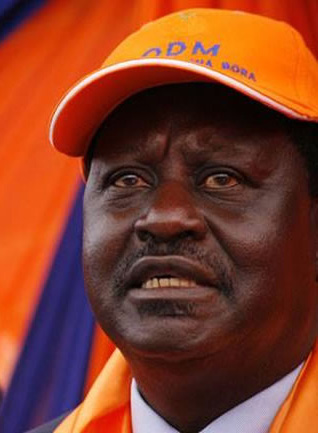
Raila Odinga

By Habil Onyango

Orange Democratic Movement is likely to face huddles in its ward and Constituency elections in Homa Bay.

This is after e section of leaders raised allegations that the names of the delegates who were elected on November 27,2024 has been manipulated.

The party has scheduled its elections on April 7 and 9 at the ward and Constituency levels respectively.
Led by the Ndhiwa MP Martine Owino and Kasipul hopeful Philip Aroko, they have vowed that the exercise will not take place until the correct list is availed.

In Ndhiwa, the names of the MP who is the current party Patron and the Acting party County Coordinating chairman, Hamilton Orata are missing from the list of those who will participate in the exercise.

Orata had alleged discomfort in the conduct of the ongoing party grassroots elections. Orata, Owino, Senator Moses Kajwang’ and Woman Representative are eyeing the County’s Chairperson positions.

Orata had particularly named Homa Bay Town, Ndhiwa and Kasipul as some of the Constituencies which he had received complaints about the manipulation of the delegates names.

They have accused one of the leaders from the Constituency who holds a major position in the County of interfering with the list in favour of her supporters.

Aroko however has accused the current MP for Kasipul Ong’ondo Were of taking the party as his own personal property accusing him of influencing the list through the party’s National Election Coordinating Committee.

Were has declared his interest in the party’s County Chairman seat position.

“Were has had his time, and by August 2027, he must step aside and no negotiations, no extensions,” he said.

Leadership is not a birthright, and ODM is not a family heirloom to be passed down like personal property. It belongs to the people, and when leadership fails to meet their expectations, change becomes inevitable,” he said

Aroko said that ODM must reflect the will of the electorate, not serve the selfish ambitions of a select few clinging to power.

The message is loud and clear: any attempt to manipulate the ODM Party delegates list in Kasipul is dead on arrival,” he said


We have everything mapped out, and no amount of scheming will alter the course of history,” he stated.

Aroko declared that he is the people’s choice and a steadfast, loyal ODM soldier who has stood with the party since 2013.

ODM belongs to the people and my quest is unstoppable,” said.

However, according to the County ODM Elections Coordinating Committee Chairperson Mary Opiyo, the electoral process in Homa Bay was conducted in a transparent, free and fair manner in a strict adherence to the guidelines and directives provided by the party’s National Elections’ Committee.

She said that until now, no formal complaints or disputes have been lodged with them or the party NEC regarding the conduct of polling Station elections in conformity with the laid down guidelines and directives.

Pursuant to the directives issued by the ODM NEC,the CEC successfully conducted the grassroots elections in all polling stations across the County on November 27,2024,” she said.

The Committee has not received any objections from the County party leader, elected officials, aspirants or members of the public concerning the integrity of the elections process,” she added.

It is therefore conspicuous and questionable that Orata, who was absent during the electoral process and made no effort to participate, has now chosen to raise concerns at this later stage,” noted the Chairperson.

Notably, he did not engage in any official information in any capacity to support the exercise nor was he present at any polling station to observe the process,” She added.

The Chairlady accused Orata of being absent during polling station proceedings and even failed to provide logistical or administrative support to the Committee despite request for support.

The further revealed that the acting chair did not even vote at his Rapedhi Primary School, Kanyadoto ward, Ndhiwa Sub County.

It is therefore regrettable that he has chosen to raise concerns about an election in which he neither participated in nor made any efforts to oversee and that is why his name is not among the delegates who were elected at the polling Station level,” she said.

According to CEC Secretary David Ogenga, those who feel aggrieved should follow the proper internal dispute resolution mechanism in case they have legitimate concerns regarding the electoral process.

He said that their sudden unprocedural request for harmonisation of the list of the elected officials at the polling stations amounts to a blatant subversion of the will of the people.

Such a move would contravene the fundamental Democratic principles enshrined in the Constitution of the party,” he said.

We remain committed to upholding the principles of democracy, transparency and Fairness in all electoral processes,” he added.

We reiterate our confidence in the integrity of grassroots elections and urge all the party members to adhere to the party’s internal mechanism in resolving any grievances, especially,” he added.

Report reveals Gen Zs as integral part of new socio-economic and political dispensation in the country

0

By Reporter

A recent survey report by Mwalekeo Insights has revealed the socio-economic and political impact the Gen Zs have in the creation of a new dispensation in the country.

In the report,52% of rural dweller agree in the power of Gen Zs to bring about positive socio-economic and political change, while 34% do not agree and 15% are uncertain.

Similarly, 68% of urban dwellers agree that Gen Zs are a powerful force for positive socio-economic and political change, while 18% oppose and 14% had mixed feelings.

Equally, 79% of male participants support Gen Zs as agents of positive socio-economic and political change, 16% oppose them while 5% remained neutral.

A notable 77% of respondents acknowledged that Gen Zs are politically aware and actively engaged in political discourse, especially on social media platforms while 13% disagreed and 10% were unsure. 

51% of respondents commended Gen Zs for their structured and bold activism, including protests and campaigns addressing governance ad social justice issues. However, 44% felt that their activism lacks structure and might affect its long-term impact. While 5% feel that it is neither structured nor unstructured.

74% of respondents acknowledged Gen Zs’ innovative approach to earning a living, particularly through online businesses, freelancing, and content creation. On the contrary, 21% of the respondents thought of Gen Zs as a lazy generation and are lacking entrepreneurial spirit. While 5% were unsure

48% of participants (older generations) agree that Gen Zs conform to traditional organizational norms at workplaces, with 13% believing that Gen Zs are trying to adapt and conform. However, 39% think Gen Zs are generally non-compliant in organizations.

84% of respondents viewed Gen Zs as progressive, particularly regarding gender equality, sexual rights, mental health awareness, and environmental sustainability.

81% of female participants support Gen Zs as agents of positive socio-economic and political change while 13% dismissed the notion and 6% shared mixed feelings. 

The report presented the findings of an opinion poll conducted by Mwelekeo Insights which explored the perceptions and attitudes of Kenyans aged 30 and above toward Gen Zs following the significant social, political, and economic events around and after June 2024. 

The poll sought to understand how older generations view Gen Zs’ influence on politics, work ethic, cultural values, and overall societal impact. 

The survey used a mixed-methods approach that combined surveys, focus group discussions (FGDs), and in-depth interviews (IDIs), the poll gathered insights from diverse demographic groups across Kenya. 

The findings revealed both generational tensions and opportunities for collaboration, highlighting the need for greater intergenerational understanding to foster social cohesion and inclusive development.

The poll explored how Kenyans aged 30 and above perceive Gen Zs in various spheres, examining generational gaps, shared values, and areas where mutual understanding exists and can be strengthened.

Urban respondents, more exposed to Gen Z-led digital activism and gig economy trends, may hold different views compared to rural respondents, who might prioritize traditional values and face limited interaction with Gen Z innovations. 

Findings revealed mixed perceptions of Gen Zs’ political engagement. While some respondents admired their activism and willingness to challenge the status quo, others expressed concerns about their perceived lack of experience and pragmatism. 

Many respondents acknowledged Gen Zs’ entrepreneurial spirit and adaptability in the gig economy. However, some viewed them as less committed to traditional career paths and more prone to job-hopping.

Older generations expressed both admiration and skepticisms toward Gen Zs’ progressive values, particularly regarding gender equality, mental health awareness, and social justice

The poll identified key generational gaps in values, attitudes, and expectations but also highlighted areas where collaboration and mutual learning could be fostered.

Utali College: The towering giant behind  Kenya’s illustrious multibillion shilling Tourism industry

0

By Anderson Ojwang

The growth and development of Kenya’s tourism industry is not complete without mentioning the contribution of the country’s iconic Kenya Utalli College (KUC).

Kenya Utali College has been pivotal in the production of competent human resource that have met the dynamic and changing trends in the service industry.

With Kenya’s tourism sector earnings are expected to jump to 650 billion shillings ($5 billion) this year from 452.2 billion shillings last year,  Kenya Utali College remains a pillar in the sector’s growth.

The 2024 earnings were up 20 percent compared with a year earlier, joining the league of tea exports and remittances as  Kenya’s major foreign exchange earners.

This has subsequently resulted in the immense growth with a 23 percent increase in domestic bed nights and a 43 percent increase in hotel bed occupancy.

Similarly, International tourism also increased by 60 percent, with a 1 million increase in the number of international visitors, enhancing tourism earnings to sh184.11 billion.

Tourism Principal Secretary, John Lekakeny Ololtuaa, said prior to the advent of COVID-19, the sector contributed nearly 10 per cent of the country’s Gross Domestic Product (GDP) but this dipped to its lowest levels. 

However, he said the industry has picked up again and that things are looking up as the sector is well on the track to recovery.

Globally, international tourists’ arrivals grew by 34 per cent in 2023 as compared to 2022, representing an 88 per cent recovery rate of pre-pandemic numbers, as Africa recovered 96 per cent to the pre–COVID pandemic levels

The growth has created jobs in the hospitality industry, with 73 percent more graduates from the Kenya Utalii College employed within the country and abroad.

KUC, the country’s premier hospitality and tourism training institution, founded in 1975, has been pivotal in the growth of the tourism industry not only in Kenya but East and Central Africa and Africa at large.

Kenya Utalii College is a globally recognized and transformative premier Tourism and Hospitality training center. The College is the premier UNWTO-accredited hospitality and tourism training institution and gateway to an international career.

The country’s towering giant,  Kenya Utali College, is credited for the transformation of the country’s illustrious multi-billion shillings tourism economy through the production of competent Human resources to meet both local and international market demands.

The college has trained over 60,000 graduates from around the world who serve in the local and international hospitality and tourism industry.

The college offers a wide range of courses accredited by the Tourism Education Quality (TEDQUAL) certification body and authorized by the International Air Travel Agency (IATA).

Kenya Utalii College was established through a partnership between the Governments of Kenya and Switzerland. Since its inception in 1975, the college has continuously evolved its curricula to meet the changing needs of the hospitality and tourism industry. The initial curricula were Swiss-based, offering four-year diploma programs and two-year certificate programs.

Mr. Isaack Mwaura, the government spokesperson, recently said Kenya Utali College has contributed to the production of competent human resource who have enhanced service in the hospitality industry.

Skills development within the hospitality sector has also increased as the number of visitors to national parks and game reserves increased to 6.258 million,” he said.

Mwaura said the development in the tourism sector has created jobs, with 73 percent more graduates from the Kenya Utalii College employed within the country and abroad..

He said the country has witnessed a notable surge from1.483 million international visitors in 2022 to 2.086 million in 2023, representing an impressive growth of 31.5 per cent. In the same year 2023, inbound tourism earnings grew up to Sh352.54 billion compared to Sh268.09 billion in 2022 indicating a growth of 31.5 per cent.

Data from Kenya Tourism Board (KTB) shows that Kenya’s tourism industry reported significant growth in the first six months of 2024, with revenue reaching Sh142. 5 billion with the country receiving 1,027,630 international visitors, marking a 21.3 per cent increase from the same period in 2023.

Kenya is a renowned tourism destination in the world, with its expansive sandy beaches at the coast and diverse wildlife which attracts millions of tourists to the country each year.

This makes tourism in Kenya the second-largest source of foreign exchange earner, only second to the agriculture sector, which earns Kenya about 70 per cent of her Gross Domestic Product (GDP).

With the new changes in management and leadership KUC will transform into a new outfit to match.

Chairman of the College Council Mr. David Wamatsi is steering a team that will oversee the transformation of the college into a real Center of Excellence to match the globally recognized Cornell University, EHL Leissane, Glion among others.

The new campuses in Kisumu, Kilgoris and Mombasa in Vipingo will attract students from all over the world.  

Equally, the institution has taken a bold step in Kenya Utalii College, Steps towards Modernizing its  curriculum to meet  dynamic and changing industry Trends

Kenya Utalii College, the country’s premier hospitality and tourism training institution, has recently undergone a comprehensive curriculum review to ensure that it aligns with the latest trends and demands in the hospitality and tourism industry. The review was prompted by the need to keep up with the evolving landscape of the industry, which has been heavily impacted by the COVID-19 pandemic.”

Former Alego MP Mr. Sammy Weya said there was need for proactive management and a commitment to excellence, ensuring that Utalii’s training module evolves to meet international standards and equips graduates with the skills demanded by the global hospitality industry.

International standards have risen, and that Kenya must rise to meet them if it wishes to thrive in the tourism sector,” he said.

Ruto is recreating a perception in Murima as he writes his story by deflating Wamunyoro

0

By Anderson Ojwang                              

President William Ruto has moved to recreate a new perception and write his story in Mt Kenya in a bid to whittle down gains made by his impeached deputy, Rigathi Gachagua.

Six months ago, after the impeachment of Gachagua, Ruto, once a darling and Njamba of the Mountain, found himself a pariah and a stranger in his once political stronghold.

From defeating the then President Uhuru Kenyatta in the 2022 presidential elections by securing a majority of presidential votes against the former’s preferred candidate, former Prime Minister Raila Odinga, Ruto became the political mouthpiece and leader of the region.

But the fallout with his deputy turned the political mood in Murima from calm to restive and hostile to Ruto and his allies, who faced backlash from the residents.

Gachagua became the man of the moment, and all roads were leading to his Wamunyoro home with a delegation one after another thronging the village.

Gachagua moved to fence off the Mountain and has his eyes on cobbling a winning opposition team to win the 2027 presidential elections. He has held series of high profile meetings with opposition leaders, Kalonzo Musyoka, Martha Karua, Eugene Wamalwa and  Jeremiah Kioni among others.

Local leaders including Governors, Senators, MPs and members have county assemblies from Mt Kenya have visited Wamunyoro village to consult with the new leader.

But the truth is fast dawning on the self-declared ‘Truthful Man’ after Ruto stormed the Mountain and brought the war to his doorstep.

On Sunday, Ruto released a bombshell on Gachagua that he demanded Sh 10 B from him to make the region accommodating, or he would make him a one-term president.

Then he turned to me saying I can make you one term president. I need Sh10 billion to go and talk to and with the people of Mt Kenya and to plan for you politics.

I told him this can’t work. If that is what will make me one term. Let it be. I refused,

Ruto told the press, in politics mobilizing is part of the politics and there was nothing wrong if his team mobilized people to turn out for his tour and indeed, they have turned out.

Ruto also claimed that Gachagua likes petty wars and wants to be worshipped by MPS  kneeling before him and this largely contributed to his impeachment.

Gachagua was at war with blogger Dennis Itumbi and he reported him to me. He claimed that Itumbi had written something.

We sat together and cased the matter, and even before the dust could settle, there was another case. This time, it was between him and my personal assistant, Faruk Kibet. PA is a small man to fight with.

 From Faruk, he accused Ndindi of calling a political meeting in Kiharu constituency and inviting several  MPs to the function. After Ndindi, it was Ichungwa and finally, he brought the fight to my doorstep.

Before that, I told him, you are Deputy President, why are you engaging in fights with a blogger, Dennis Itumbi, PA and others? What is the problem? .

These are small and petty things and lets work for the government as that is what we will be judged with,” he said.

Speaking at various venues, Ruto pacified the crowd by telling them that they formed the government and that he was not a madman to forget their contribution.

I want you people of Nyeri to listen to me carefully. You people of Nyeri voted for me. It is through your vote that we formed the government. I cannot forget about Nyeri. I want to tell you that the issue concerning Nyeri leave it to me

This government; it is your votes that elected it.  You think I am a madman to forget who helped me to form the government?

I want you to listen to me. I am not drunk, I don’t drink alcohol. I am not a confused person. I know what I am doing. You get me, right?

I will ensure the work you gave me, I will deliver on it. I will ensure road works in Nyeri are done, and if it is not, ask me.

Nyeri governor, Mutahi Kihiga, Gachagua’s main ally when he spoke, said the President was welcomed to the region to initiate development projects.

I want to tell the President that he should not be told not to come to Nyeri. We want him to come again and bring us development. We must be inside this government.

To the people, we thank you for coming to welcome the President.. We missed you,  Mr. President. We started fearing…. we were asking….., but now you have come with goodies. You have brought us development and we are happy.

I want to declare here in Narumoro, just as the president had said, we voted for this government. This is our government. Do we look as others eat and we sit on the offence? How many say, we continue to receive development?”.

Ruto, when he spoke in Mau, said he has developed a friendship with the people of Meru and Mt Kenya, and it cannot be broken by anyone.

I have developed a friendship with the people of Murima for the last 20 years. I cannot allow any person to break that friendship.

I cannot allow any person to come in between us. The work we have done together speaks volumes. Our friendship is unshaken and I will ensure your needs and those of other Kenyans are catered for,” he said.

Gachagua has maintained studious silence after Ruto embarked on his tour of the Mountain and his ever-busy X handle has not posted any update for the last two days.

Raila’s best inheritance from his father, Jaramogi, takes a last bow

0

By Anderson Ojwang                                          

When the casket of Jaramogi Oginga Odinga arrived at Kango village in Bondo for burial in 1994, one of his main security personnel stood by the hearse to oversee the removal of the body.

The guard remained dedicated to his master in death, just like he was in life. He gave his life to Jaramogi and later surrendered his selfless service to his son.

And this could have caught the eyes of his younger son, Raila Amolo Odinga, a budding and emerging ambitious politician.

The death of Jaramogi opened a power struggle in his Ford-K party that pitted his son Raila and the claimed ‘heir’ apparent and legal advisor James Orengo.

While Orengo inherited a majority of MPs from Nyanza in his quest to become the vice chairman to Wamalwa Kijana and a section of Jaramogi’s security, Raila remained with a gem.

In George Oduor, Raila got the best inheritance from his father in terms of his security and ideology.

Oduor, became the cornerstone to Raila’s safety and security and took bullets and teargas to ensure his boss was safe.

In Oduor, Raila’s safety was guaranteed, and he became the voice of reasoning, sobriety, love and truthfulness in ODM leader camp. 

Raila, in his press statement, recognized Oduor’s selfless role in his safety and security and termed him as an extraordinary person.

It is with profound sorrow and a heavy heart that I mourn the passing of my trusted bodyguard, confidant, and friend, George Oduor. For decades, George stood by my side with unflinching courage, unwavering loyalty, and an unmatched sense of duty. He was not just a protector of my life but a guardian of the principles we hold dear.

George’s selfless service transcended mere duty; it was a testament to his extraordinary character. In moments of peril and uncertainty, he remained steadfast, embodying the very essence of bravery and sacrifice. His dedication to safeguarding others, even at great personal risk, leaves a legacy of heroism that will forever inspire those who knew him.

To George’s family, friends, and loved ones: I share in your grief and pray that you find solace in the knowledge that his life was one of profound purpose and impact. George’s name will be etched in the annals of our shared history as a man who gave his all for a cause greater than himself.

May God grant him eternal peace and grant you strength during this difficult time. Rest In Peace, George. Your watch may have ended, but your courage and spirit will never be forgotten.

Former Jaramogi and Raila aide and currently chairman of the Luo Council of Elders, Mzee Odungi Randa, termed the death of Oduor as unfortunate and sad.

He said  Oduor joined Jaramogi security details with  the likes of MCA Lumumba Owade, Majjmbo, Orero Kaparo, Nyam, and they were dedicated to the core.

Oduor rose to become Raila’s main security man. He was such a humble person, trustworthy and loyal. He remained faithful to Raila and to the ideology,” he said.

The Impending Dysfunction of the Judicial System

0

Reviewed by Billy Mijungu

The Kenyan judiciary is increasingly under scrutiny as two high-profile cases reveal a pattern of questionable decisions and apparent complicity by the Supreme Court. The legal battles involving former Cabinet Secretary Raphael Tuju and Senior Counsel Ahmednasir Abdullahi expose a judiciary that appears to be entangled in political and financial interests rather than upholding the rule of law.

These cases also reignite the debate over judicial accountability and the need for constitutional reforms, particularly the proposal for a judicial ombudsman as recommended by the Building Bridges Initiative.

Tuju’s dispute with the East African Development Bank revolves around a 1.2 billion shilling loan meant for a real estate development on a 27-acre property in Karen, Nairobi. The bank initially approved 900 million for land acquisition and 300 million for development, with Tuju contributing an additional 100 million.

However, after disbursing the 900 million, the bank withheld the 300 million meant for development. Tuju argues that this amounted to a breach of contract since the success of the project hinged on receiving the full amount. Despite the partial disbursement, the bank still demanded full repayment, eventually leading to the auctioning of the Karen property in October 2024.

Tuju challenged the sale, asserting that it violated existing court orders barring EADB from disposing of the property while legal proceedings were ongoing. He filed a lawsuit against multiple parties, including the bank, the auctioneer Garam Investments, and the Attorney General, seeking to nullify the sale. The case took an unexpected turn when a bank official recanted previous statements, admitting that the bank had only partially fulfilled its financial obligations and that Tuju’s business alone could not have serviced the loan without the development funds. Tuju further alleged that EADB board members had previously taken loans and had them written off, raising concerns about selective financial dealings within the institution.

However, the most concerning development in Tuju’s case was the Supreme Court’s handling of his appeal. Five Supreme Court judges, including Chief Justice Martha Koome, recused themselves, effectively stalling his case indefinitely. With the youngest of the recused judges set to retire in 2036, Tuju has expressed frustration that his legal battle may never reach a conclusion. This raises serious questions about judicial impartiality and whether external influences are shaping decisions at the highest level.

A similar pattern of judicial maneuvering can be seen in Ahmednasir Abdullahi’s case. In January 2024, the Supreme Court took an extraordinary step by indefinitely barring the senior lawyer and his firm from appearing before it. The court justified its decision by citing Ahmednasir’s public criticisms of the judiciary, which it claimed undermined its credibility. This move was widely seen as an attempt to silence a vocal critic rather than a legitimate disciplinary action. Ahmednasir and his firm challenged the ban, arguing that it was arbitrary and unconstitutional.

Their petition pointed out that the decision was administrative rather than judicial and that no due process had been followed. The Law Society of Kenya also intervened, filing a petition against the Supreme Court’s ruling. In a significant setback for the court, the High Court refused to dismiss the petition, affirming that it had jurisdiction over constitutional matters even when they involved Supreme Court decisions.

However, just as the case was gaining traction, the Court of Appeal intervened, suspending the High Court proceedings. This move was prompted by an appeal from the Supreme Court, which argued that the High Court had overstepped its mandate.

The result was yet another case trapped in judicial limbo, with no resolution in sight.
Both Tuju’s and Ahmednasir’s cases underscore a troubling reality: the Supreme Court, which should be the final arbiter of justice, appears to be wielding its authority selectively, either by stalling cases or by silencing critics.

In Tuju’s case, the mass recusal of judges has effectively delayed justice for over a decade, while in Ahmednasir’s case, the court has weaponized administrative decisions to suppress dissent. These instances suggest a judiciary that is not only complicit in protecting certain interests but is also actively reshaping the legal landscape to its advantage.

The question then arises whether Kenya’s judicial system requires structural reforms to prevent such abuses. The Building Bridges Initiative proposed the establishment of a judicial ombudsman, appointed by the president, to oversee judicial accountability.

Supporters of the proposal argue that the current system lacks an effective mechanism to check judicial misconduct. They point to cases like Tuju’s and Ahmednasir’s as evidence that judges can act with impunity, making decisions that serve personal or political interests rather than justice. However, critics warn that a judicial ombudsman appointed by the executive could compromise judicial independence, allowing the government to exert undue influence over the judiciary.

The fate of these cases remains uncertain, but what is clear is that Kenya’s judicial system is at risk of dysfunction. If the highest court in the land can selectively enforce justice, delay cases indefinitely, and bar critics without due process, then the entire legal framework is compromised.

The judiciary’s role is to uphold the law, not to manipulate it for convenience.

As these legal battles continue, they serve as a stark reminder that without accountability, the very foundation of justice in Kenya stands on shaky ground.

Whether this accountability should come from internal judicial mechanisms or through external oversight like a judicial ombudsman remains a critical national debate.