Home Blog Page 177

Dignity App introduced in Homa Bay to fight triple threat

0

By reporter

The fight against the triple threat in Homa Bay received an impetus following the introduction of the Dignity App to curb the vices.

Centre for Women Empowerment & Technology (CWE-TECH) in collaboration with the Homa Bay government and more than 20 partners introduced the App where residents can forward their cases of human rights violation for help.

The new initiative which is considered one of the solutions to eradicating triple threat which includes Gender Based Violence (GBV), teen pregnancy and HIV infection in Homa Bay.

CWE-TECH co-founder Eunice Owino, Homa Bay Gender & Youth Affairs Chief Officer Dolphin Ochere and more than 20 organizations including Power for the People (PFP Dreams Global) project manager Caren Okombo said the platform will enable people to share their problems with confidence and without losing their dignity.

The gender defenders said they came up with such initiatives after studies on challenges affecting many women and girls in the county.

Centre for Women Empowerment in Technology conducted an assessment through focus group discussions on knowledge, attitude and perception of the community regarding the App.

Adolescents in confidentiality will get their issues addressed as they seek help by asking questions involving sexual and reproductive health.

GBV survivors can call a hotline number and lodge a complaint before being referred to the relevant agency.

Questions can also be asked on the platform and answers provided instantly.

Owino said the App strives to provide answers to questions being asked and solutions to problems people face in the society.

“Dignity App is a tool for information meant to address the triple threat issue that bedevils the community. The system operates on a 24-hour basis to help people anytime,” Owino said.

Speaking after completing their two-day conference program in Mbita town, Suba North constituency, Owino said they have introduced the App as they mark the 16 days of gender activism to mainstream the program.

Homa Bay is among the counties with a high prevalence of triple threat.

Dignity App requires an internet for clients with mobile phones and data to access it.

“We’re focused on bringing dignity to our people. Let people use the App well to enable them to get help,” she added.

The introduction of the App intends to help adolescents navigate through the puberty stage.

The platform will help them discuss and understand issues like reproductive health, sexuality, mental health, consent and any other vices affecting people.

Questions around sexual reproductive health, menstrual hygiene, puberty and empowerment are among others will be addressed.

“Clients can always seek help by inserting the question to get an appropriate response. Referrals are also provided,” Owino said.

Okombo argued that a lot of women and girls are suffering in silence as they lose dignity due to violation of their rights.

She said the platform will enable the women to air their plight and get help.

The organization works with communities to enable food security, education, water electricity and increased household income.

The fight against triple threat also includes making clean and safe water accessible to people and recruiting women into boda boda operations.

They undertake community engagement where they meet with young people.

“PFP Dreams Global is producing cost effective re-usable sanitary pads. We’re intensifying sensitization programs to empower teenage girls and young women to speak up for their rights,” Okombo said.

Homa Bay government has a Sexual Gender Based Violence (SGBV) policy it uses to enhance the fight against triple threat.

Ochere appealed to residents to get ready to engage as a community to succeed in the fight against the GBV. The county government together with other partners has established a gender desk where GBV cases are reported.

Succession battle for Kisumu gubernatorial seat now targets key Nyong’o allies in the government

0
Anyang' Nyong'o Governor of Kisumu County

By Anderson Ojwang
The succession battle for the Kisumu gubernatorial seat to succeed Governor Prof Peter Anyang Nyong’o is fast spilling over to the administration and could negate the governor’s service delivery and development agenda.

Currently, key governors’ allies in influential positions have come under stern criticism and attack by aspirants and their allies, who view them as a stumbling block in their political ambitions and pursuits.

With Nyong’o’s term coming to an end in 2027, his key allies who hold influential and key positions are currently facing a storm with an aim to hound them out of the office to create space for various
aspirants point persons.

Equally, political violence is escalating in the county with most high-profile funerals turned into thuggery hot spots where various aspirants flex their muscles.

For the last two months, Nyong’o’s administration has faced a cocktail of litigations that have left some key officers sentenced. Service at the county has come to a near standstill, and employees have been left in a situation of panic and fear of an unknown situation befalling them.

The Treasury Department and the Kisumu City have become the main target as it is viewed as the aorta of the county and source of the finance base for the campaigns, which would come in handy ahead of the 2027 elections.

That is why the treasury department under the leadership of George Okongo has faced a barrage of litigations and often faced the wrath of the residents and the politicians.

Okongo is viewed as a trusted and key lieutenant of Nyong’o and is seen as a very influential person in the administration. This has made him unpopular with some quarters who want to succeed Nyong’o. Kisumu City is another focal point where the battle is currently being played.

The current city manager, Mr. Abala Wanga is a marked man by the allies and key point men of the gubernatorial aspirants.

Abala’s strong personality, mobilization skills and fearlessness in effecting and implementing the government resolutions and programs are not sitting well with some quarters that want him out of the office before Nyong’o’s term comes to an end.

Other Nyong’o’s key allies in the government and various departments have also been earmarked and there are schemes to wound them out to allow space for other plays ahead of the 2027 general elections.

The aspirants want their key persons to control the two offices because of their importance in financial mobilization and significance in the determination of the next governor.

Okongo and Abala are viewed as impediments to the political agenda of aspirants who hope to secure funds from the county to run their campaigns as it happened in the past in counties in the Nyanza region.

Already, deputy governor Dr Mathews Owili, Nyakach MP Aduma Owuor, Kisumu Senator Prof Tom Ojienda, and Kisumu Central MP Dr Joshua Oron have all expressed interest in the seat. Owili, Aduma and Ojienda all hail from Nyakach while Oron is from Kano and currently, each clan is rallying behind their sons in the hope of getting the slice of the county cake.

The race is fast opening up to be a four-man battle with Kisumu Central, Kisumu East, and Seme constituencies viewed as the determinant of who becomes the third governor of Kisumu.

Former Chief of Staff at the County Mr. Patrick Ouya says the absence of the governor and his management through remote control is giving space to battles in the county.

“The absence of the Governor is exposing the county to fights because nature abhors vacuum. This is exposing his key persons in the administration as other play want them out of the system
because their time is up
,” he says.

Ouya a former Nyando parliamentary candidate says Kisumu county will not witness any meaningful development because the residents have been conditioned to election fever and currently,
politics is informing all the decisions in the county.

The Chairman of Kisumu Residents Association Mr Audi Ogada is in agreement with Ouya’s sentiments and has expressed concern
over rising political thuggery in the region.

“Currently, most politicians avoid high profile funerals because of political thuggeries. They have resorted to visit the bereaved families on the eve of burials to avoid confrontation. This is not
healthy for the region,”
he says.

Audi says the political fights are spilling into the county government and the employees are likely to be the victims of such battles as the country heads to the next general elections.

“Service delivery at the county is likely to undermined and negated by the political battles. Kisumu is going to witness negative clan politics and that is why the aspirants should fulfil their manifesto to the electorates instead of engaging in premature campaigns,” He says service delivery at the county is likely to be undermined and the governor will not be able to fulfil his manifesto for the
electorates.

Governor Wanga Calls for Increased HIV Funding for High-Burden Counties

0
Wanga

By Reporter

The Commission on Revenue Allocation (CRA) should allocate more funds to counties with a high HIV-AIDS burden, Homa Bay Governor Gladys Wanga has said.

Wanga emphasised that increased funding is critical to enhancing the fight against the scourge in affected counties.

She expressed concern over the decreasing funding for HIV-AIDS response efforts, which has made managing and combating the disease increasingly difficult.

Many donors who have historically funded HIV response initiatives are now reducing their expenditure.

Homa Bay is among the counties listed as having a high disease burden.

Wanga argued that the county is facing a cash crunch in its HIV management efforts, highlighting the need for proper financial strategies to address the crisis.

In an effort to avert a looming crisis in HIV management, Wanga proposed that HIV prevalence be included as a factor in allocating shared revenue from the National Treasury to county governments.
“There is a need for the CRA to consider allocating more funds to counties with HIV-AIDS burden. HIV prevalence should be considered in the distribution of shared revenue, especially for those counties with a high burden,” Wanga said.

Speaking at Raila Odinga Stadium, where she presided over World AIDS Day celebrations in Homa Bay, Wanga noted that reduced donor funding for HIV management should serve as a warning for government authorities to act proactively.

The event was attended by County Health Executive Roselyn Omollo and Public Health Chief Officer Evelyn Ododa.

Wanga urged the CRA to prioritise counties with high HIV prevalence, noting that health is a devolved function.
“Many county governments with the disease burden do not have the capacity to manage HIV effectively due to inadequate funds. We cannot achieve zero spread without adequate funding from the national government,” she said.

The Homa Bay government has also initiated mentorship programmes involving boys and men in the fight against HIV.

This initiative follows a report showing a rising trend in new HIV infections among men. The county is working closely with partners to curb the spread.
“We have been focusing on adolescent girls and women, but we’re now involving adolescent boys and men to augment the response against the scourge,” the governor said.

The Programmes Manager of The Addis Clinic, Edwin Wara, highlighted a new method aimed at improving ARV adherence among HIV-positive individuals.

The initiative uses SMS reminders to prompt patients to collect their medication.
“We have 56,000 HIV patients whom we remind to take their ARV drugs by sending them SMSs a day before their clinic day so that they go for their drugs. The objective is to enhance adherence to ARV usage,” Wara said.

According to the National Syndemic Diseases Control Council (NSDCC), Kisumu, Homa Bay, Migori, Siaya, Busia, and Kisii are among the counties with high HIV prevalence.

Mbadi: Embrace President Ruto for development-Mbadi urges Luo Community

0
Mbadi Ruto

By Correspondence

National Treasury Cabinet Secretary John Mbadi has urged the Luo-Nyanza residents to embrace President William Ruto’s government to enable them to realise development.

The Cabinet Secretary said the community has lagged in development since independence because they opposed past regimes.

Mbadi is among the former ODM bigwigs who joined President Ruto’s Kenya Kwanza administration after Raila began working closely with the government. Others include Hassan Joho (Mining), Wycliffe Oparanya (Cooperatives), and Opiyo Wandayi (Energy).

Most of the community supports the ODM party and its leader, Raila Odinga.

Leaders of the party, including Mbadi, have joined the Cabinet under a broad-based government. Mbadi urged the residents to support the Ruto-led Kenya Kwanza government to enable them to implement development projects with ease.
“I appeal to members of this community to embrace this Ruto’s government so that we get development. We should support the government fully,” Mbadi said.

Speaking at Kitawa village in Suba South constituency, where he presided over a fund drive in aid of the Kobunda Professionals’ Association (which pays school fees for vulnerable students), Mbadi told Kenyans to protect projects the government was undertaking in the region.

Accompanied by Gwassi North ward politician Philip Ongeri, the CS was also installed as spokesman of the Kobunda clan through Chairman Martin Ogayo, who urged him to continue working at the national level.

They agreed to continue supporting the broad-based government.
“It will be important to provide a conducive environment for the government to undertake development. Projects done should also be protected,” the CS said.

Mbadi said Ruto had shown goodwill by implementing various development projects that will transform the lives of the people in the Nyanza region. He mentioned the construction of major roads in the region, including the tarmacking of a 73 km stretch of the Mbita-Sindo-Magunga-Sori road, the Lake Victoria Ring Road, among other mega development projects.
“A peaceful environment will ensure development projects are done effectively,” Mbadi said.

Ongeri called on the residents to unite to chart their political future for development.
“Let us unite as the people of this clan and the Nyanza region to enable us to get the desired development projects,” Ongeri said.

Kenya ripe for KSH500 Billion Diaspora Bond says Mudavadi

0
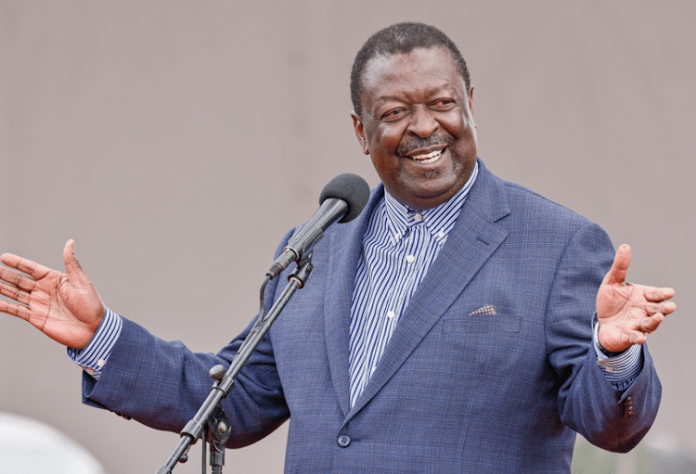
Musalia Mudavadi Prime Cabinet Secretary of

By OPCS Press Service

Prime Cabinet Secretary Musalia Mudavadi has said Kenya is now ready for a Diaspora bond to fund large infrastructural projects, such as constructing a new airport at Jomo Kenyatta International Airport (JKIA).

Mudavadi noted that the government could raise up to Sh500 billion from the Diaspora bond, which could fund a complete overhaul of the international airport at approximately Sh300 billion, with another Sh200 billion allocated to other significant infrastructural projects.

Speaking during Diaspora Day at KICC, Mudavadi said the Diaspora bond had been utilised successfully by other countries for their national projects and emphasised that it was time for Kenya to adopt the same approach for its cost-intensive initiatives.

“With Sh500 billion that we can raise from the Diaspora, we can either build a new airport at Sh260 billion to about Sh300 billion, or we can decide to expand a dual road to connect with Uganda or even extend the Standard Gauge Railways (SGR),” said Mudavadi.

The Prime Cabinet Secretary noted that the Indian Diaspora bond was oversubscribed by $5 billion a few years ago, and Israel had raised up to $50 billion over time to build its economy.

Mudavadi also disclosed that the government was working on the Diaspora bond with technical support from the World Bank’s Multilateral Investment Guarantee Agency (MIGA).

“This instrument will offer Kenyans abroad a secure investment while diversifying the source of financing for government projects. While providing a competitive return on investment, the bond will help Kenya to systematically move away from costly foreign loans to support its infrastructure and other capital development projects,” said Mudavadi.

Additionally, as Cabinet Secretary for Foreign and Diaspora Affairs, Mudavadi stated that the government’s focus on the Diaspora was informed by their growing contribution to Kenya’s socio-economic development, mainly through remittances, investment, and knowledge transfer.

“In the first 10 months of this year, remittances increased to a record $4 billion (over Sh520 billion), which is a remarkable increase of 17.8 percent compared to the $3.46 billion received during the same period in 2023,” said Mudavadi.

The Prime Cabinet Secretary highlighted that the growth in remittances cemented their position as Kenya’s largest foreign exchange earner, exceeding the combined earnings from coffee, tea, horticulture, and tourism. He projected that remittances could grow to Sh1 trillion by 2027.

Mudavadi also addressed the perception among Kenyan youth regarding President Ruto’s international travels, stating that the success of Diaspora remittances should clarify the importance of such engagements.

“Kenya does not live in isolation; we must always engage with the rest of the world. By 2027, we are even projecting a rise to Sh1 trillion in Diaspora remittances. This money has and will continue to help us stabilise the value of the shilling. The remittances, alongside government interventions, have already brought the dollar down from Sh169 to now Sh129,” said Mudavadi.

He acknowledged the sacrifices of Kenyans abroad who diligently send money home, directly impacting sectors such as education, healthcare, small business enterprises, housing, gender equality, rural development, and poverty alleviation.

“We can enhance this contribution, particularly if we reduce the cost of remitting money from an average of six percent to the Sustainable Development Goals target of three percent. I wish to assure you that the government will work with all stakeholders to align with the SDG’s universal value of ‘Leave No One Behind.’ Our primary goal is to achieve inclusivity and deepen access to affordable digital remittance and financial services,” he said.

Another key focus of government engagement with the Diaspora, Mudavadi said, is knowledge and skills transfer, enabling the country to benefit from initiatives that support the Bottom-Up Economic Transformation Agenda priorities and Kenya Vision 2030.

The Prime Cabinet Secretary further stated that President William Ruto’s administration was implementing the Global Labour Market Strategy to secure quality job placements for Kenyans abroad. This includes deliberate efforts to engage other countries through bilateral labour agreements and MOUs to expand opportunities, particularly for the youth.

“As we do this, we are committed to enhancing our capacity to offer timely and effective consular services, ensuring the rights of every Kenyan outside our borders are protected. I can confirm our readiness to do exactly this. The State Department for Diaspora Affairs has officers on call 24/7 to address Kenyan Diaspora issues and concerns,” said Mudavadi.

Dr Roseline Njogu, Principal Secretary for the State Department for Diaspora Affairs, stated that there are over four million Kenyans in the Diaspora and emphasised their commitment to increasing this number.

“Our interest is to ensure that we have more Kenyans across the world and that they are safe, going about their lives knowing that the government cares for every Kenyan life,” said Ms Njogu.

Why Kenya Must Merge All Education Funding Under One Docket

0

By Gabriel Riako

Education is the foundation of Kenya’s development, yet our approach to funding it remains disjointed. Constituency Development Funds (CDF), county bursaries, and national scholarships all operate independently, often overlapping, duplicating efforts, or worse, leaving deserving students without any support. It’s time for Kenya to streamline these resources under one centralized docket to ensure fairness, transparency, and efficiency.

Take a moment to think about how fragmented the current system is. A student in one constituency might receive funding from multiple sources, while another in a neighbouring county struggles to find even one bursary. This inequity isn’t due to a lack of resources but poor coordination. Centralizing educational funding would help Kenya create a more equitable system where resources are allocated based on actual needs, not geography or political connections.

The current structure is riddled with inefficiencies. Parents are forced to navigate a maze of application processes, each with its own rules and deadlines. This burden disproportionately affects families in rural or marginalized areas who already face barriers to accessing information. A single application process under a unified system would ease this strain, ensuring all students have an equal chance to benefit.

Corruption and mismanagement are also rampant in the fragmented system. How many times have we heard of bursaries going to the well-connected instead of the needy? A centralized body with standardized procedures for auditing and reporting would help close these loopholes. Transparency and accountability would be strengthened, restoring public confidence in how educational funds are managed.

Furthermore, merging education funding would allow the government to take a holistic approach to the sector. Education doesn’t exist in isolation; it requires investment in infrastructure, teacher training, and curriculum development. A unified funding system would align resources with national education priorities, ensuring every shilling contributes to the bigger picture.

Critics may argue that such a move is logistically complex and politically risky. Yes, it will require strong political will, legislation, and stakeholder engagement. But the benefits far outweigh the challenges. Imagine a Kenya where no student is left behind because of where they were born or who they know.

As the country works to implement the Competency-Based Curriculum (CBC), the need for cohesive planning and funding has never been more urgent. Fragmented funding systems cannot support the infrastructure, teacher training, and materials required for such a comprehensive reform.

The call to merge education funding isn’t just about money—it’s about fairness, opportunity, and the future of our children. It’s about ensuring every Kenyan child, regardless of background, has the chance to succeed.

The time to act is now. Kenya must bring all education funding under one docket, not only to simplify processes but to ensure we deliver on the promise of quality education for all. Let’s stop wasting resources on inefficiencies and instead invest in a brighter, more equitable future for our nation.

Gabriel Riako is a passionate advocate for education reform in Kenya.

Farmers in Migori County to Benefit from Solar-Powered Drip Irrigation Kits

0
Lake Region Development Programme (LRDP), Child Fund, and Solar Powered Water Drip Energy (Spowdi).

By  Erick Otieno

Farmers in Migori County have a reason to smile following a collaborative initiative by the Lake Region Development Programme (LRDP), Child Fund, and Solar Powered Water Drip Energy (Spowdi).

The organizations have introduced an innovative solar-powered irrigation kit designed to enhance food security among smallholder farmers.

The new technology, which relies solely on solar energy, was piloted last week in Nyamosense Komosoko Ward in Kuria West and North Kadem Ward in Nyatike Sub-County.

Speaking during the launch, Mr. Harish Reddy, a Spowdi associate from Sweden, assured farmers that the irrigation system is user-friendly and affordable. “This technology requires only sunlight to operate. Farmers only need a water source deeper than five meters where the motor will be submerged and powered using solar panels,” he explained.

Mr. Peter Shikuku, the Chief Executive Officer of LRDP, emphasized the transformative potential of the irrigation kit. “This system will not only ensure food security for smallholder farmers but also enable them to produce surplus for sale in the market,” he noted.

The kits, which are tailored for drip irrigation, are especially effective for high-value horticultural crops such as kales, cabbages, tomatoes, and watermelons. Pioneer farmers from the two wards have already received the kits for use on their farms.

Child Fund, a key partner in the project, is funding LRDP’s activities, which include economic empowerment, education, livelihood transformation, and adolescent health. LRDP operates in Migori, Kisii, Nyamira, Siaya, and Homa Bay, among other counties in the Lake Region Economic Bloc.

The solar-powered irrigation kits will retail at Ksh. 130,000, providing a sustainable and eco-friendly solution for irrigation.

This initiative is expected to boost agricultural productivity and improve the livelihoods of smallholder farmers in Migori County and beyond.

KCB opens first-ever bank branch in Kendu Bay town to spur development 

0
KCB opens first-ever bank branch in Kendu Bay town

By Hope Barbra

After six decades without a commercial bank, Kendu Bay will finally witness Kenya Commercial Bank’s move to open a branch in the area. 

After lobbying from the local politicians from Rachuonyo North and West sub-counties and the larger Homa Bay county, KCB has taken up the challenge to open the first branch in the area. 

Local investors have constructed premises in anticipation of a future commercial bank opening in the area, and the opening of the branch is sweet news to them. 

In an invitation to the area Mp Adipo Okuome by the KCB management, of their intention to open a KCB branch in Kendu Bay. 

KCB managing director  Mrs Annatacia Kimtai said Kendu Bay has potential and has continued to grow as a commercial hub in the region. 

“With the foreseen potential in mind, KCB Bank Kenya intends to open a new branch in this region, the KCB Kendu Bay Branch, the first-ever bank branch in this vibrant town,” she said. 

The branch will be officially opened on 9th December 2024 when it will begin to serve the residents 

Residents and business communities in the area welcomed the opening of the first-ever bank branch terming it as a milestone. 

They said the bank will stir new economic activities and will build confidence in investors to invest in the area. 

Kendu Bay and larger Karachuonyo have witnessed significant economic development in the recent past and the opening of a bank branch is an addictive to the growth. 

Kendu Bay-based women leader Rosemary Ashley Ochuka said the opening of the bank in Kendu Bay was long overdue and a wonderful Christmas gift to the residents 

“Finally, the local business persons, residents and investors have a bank within the reach. This will go a long way to open up the region. We will come KCB to Kendu Bay”  she said

Migori County Government Expands Executive Team for Enhanced Service Delivery

0
Governor Dr George Mbogo Ochilo Ayacko

By Erick Otieno

The Migori County Government, under the leadership of Governor Dr George Mbogo Ochilo Ayacko, has taken a bold step to strengthen its capacity for service delivery by appointing new executives to key government positions.

The announcement was made during a ceremony held at the Governor’s official residence in Migori, where the newly appointed leaders were officially sworn in.

In his address, Governor Ayacko emphasised his administration’s unwavering commitment to improving the lives of Migori residents through robust and innovative service delivery strategies.

“Our top priority is to ensure that every resident of Migori County benefits from effective governance and impactful development initiatives. The appointments we are making today reflect our dedication to building a government that works for the people,” said the Governor.

The new team includes:

  1. Mr Silas Owuor Onyango – County Executive Committee Member (CECM) for Water and Energy.
  2. Mr Samwel Keboreko Marwa (Nyabasi West) – Chief Officer for Cooperative Development and Marketing.
  3. Mr Keya Madafu Isaac (South Kanyamkago) – Chief Officer for Agricultural Development.
  4. Mr Gershon Okoth Njoga (South Kamagambo) – Chief Officer for Roads and Transport.
  5. Mr Nicholas Ngabiya Rioba (Tagare Ward) – Chief Officer for Monitoring and Evaluation.
  6. Mr Collins Oduogo Oyugi (Kwa Ward) – Chief Officer for Public Works and Infrastructure Development.

The appointments reflect a balanced representation across the county, ensuring inclusivity and a shared vision for growth. Each appointee is tasked with steering critical departments that will shape the future of the county.

Governor Ayacko was joined at the event by Deputy Governor Dr Mahiri Gimunta, County Public Service Board Chair Eng David Ochola, and several Members of the County Assembly (MCAs), who lauded the Governor’s choices as reflective of professionalism and dedication to public service.

The newly appointed officials pledged to deliver on their mandates, promising to bring transformative changes to their respective departments. “We are ready to roll up our sleeves and work tirelessly to ensure the vision of Governor Ayacko’s administration is realised,” said Mr Silas Owuor Onyango, the new CECM for Water and Energy.

This expansion of the county’s executive team marks a renewed focus on key development areas such as water, energy, infrastructure, agriculture, and monitoring and evaluation. The move is expected to enhance efficiency in governance and accelerate the county’s development agenda.

The people of Migori County now look forward to seeing tangible results from the newly empowered leadership as they work together to transform the county into a hub of prosperity and opportunity.

Mbadi: I had to avoid falling to ‘pre-independence leadership mistake’ by Jaramogi

0
Hon. John Mbadi Cabinet Secretary (CS) for The National Treasury and Economic Planning

By Anderson Ojwang

The ghost of a pre-independence decision by the late Jaramogi Oginga Odinga regarding the country’s leadership has resurfaced in discussions surrounding the formation of a broad-based government between President William Ruto and opposition leader Raila Odinga.

In their negotiations, President Ruto and Raila agreed to allocate the position of Cabinet Secretary for Treasury and Economic Planning to the Orange Democratic Movement (ODM), specifically to the Nyanza region.

The role was offered to the then ODM National Chairman, John Ngongo Mbadi, who was deemed the most suitable candidate. The two leaders informed him of their intention to appoint him as Cabinet Secretary, a position that holds significant national importance.

Speaking at a function in Nyando, Mbadi recounted, “First, I want to address the people of Nyando and the Luo community. When Raila and Ruto spoke to me, they said, ‘Mbadi, we want to appoint you to the Executive, and specifically to Finance.’

There are two reasons I accepted this appointment. First, I had a personal reflection. In the Luo community, there is a story often told: Jaramogi Oginga Odinga was reportedly offered the presidency by the colonialists as Kenya approached independence. However, he declined, insisting it be given to Kenyatta, believing his (Jaramogi’s) time would come later.

To this day, we are still waiting for that presidency, and it has yet to come. Even now, we hold great respect for Jaramogi for his contributions to the nation. However, we mourn the decision, acknowledging that it might have been a mistake. Had he taken the leadership at independence, Kenya’s history might have been different.

I did not want to be part of the group the Luo community would blame for refusing a leadership opportunity. Since 1963, the Luo community has never held the Ministry of Finance, the granary of the nation. If I, John Mbadi, am offered the position and I refuse, no way! I said I would not decline. I want to be the CS.”

However, Nairobi-based advocate Patrick Ouya disagreed with Mbadi’s perspective. He argued that Jaramogi was a principled politician who was not driven by the allure of power, which is why the Luo community remains respected to this day.

“Jaramogi did not seek power through shortcuts but rather through clear and well-defined structures. The current generation of politicians is transactional and self-centred,” Ouya remarked. He described Jaramogi as a man of virtue who sacrificed his ambitions for the greater good of the nation.

The late Mzee Jomo Kenyatta became Kenya’s founding father, with Jaramogi Oginga Odinga serving as the first Vice President. However, the two later fell out. Oginga resigned from government and founded the Kenya People’s Union (KPU), which marked the beginning of the Luo community’s journey in opposition and subsequent marginalisation.

Jaramogi played a pivotal role in the repeal of Section 2A of the Constitution and was a founding member of Ford. However, Ford split into two factions: Ford Kenya, led by Jaramogi, and Ford Asili, led by the late Kenneth Matiba, in 1992.

President Daniel Moi won the 1992 elections, with Matiba coming second, Mwai Kibaki third, and Jaramogi fourth. Notably, Jaramogi returned to Parliament for the first time since his resignation.

Raila Odinga succeeded Jaramogi and has since made five bids for the presidency—in 1997, 2007, 2013, 2017, and 2022—but has not secured the seat. Recently, Raila exited local politics to vie for the position of Chairperson of the African Union, with the support of the government. He handed over party leadership to Kisumu Governor Prof Peter Anyang’ Nyong’o.

Mbadi justified the community’s decision to join the government, saying, “Let me tell you, my people, being in government is not a bad thing. Recently, when I spoke with the President, he asked me, ‘Mbadi, what strategies can we use to create employment?’

The number of youths graduating from colleges is immense, and the government cannot employ them all. Instead, it must create an enabling environment for industries to emerge and generate job opportunities.

I told him we need to strategise on the development of industries, particularly special economic zones. The President agreed and directed that sufficient funds be allocated in the upcoming budget to continue the special economic zone project in Kisumu at Kibos.”

Mbadi emphasised the Luo community’s significant contributions to national development, urging fairness in the distribution of resources. However, he expressed disappointment at the community’s marginalisation during resource allocation, often being given the least.

“It is time to ensure fairness in the distribution of the national cake and to put an end to skewed resource allocation,” he concluded.