Home Blog Page 182

President Ruto wakes the sleepy Homa Bay county with multibillion Development Projects

0

By Anderson Ojwang

After decades of marginalization by successive governments, Homa Bay the county of endless potential is rising.

The sleeping economic dinosaur is waking up from the slumber that had caused the country to gain negative publicity from fish for sex to the ravages of HIV/Aids.

Homa Bay County became a soft punching bag for the media where developmental stories were given a wide berth or never existed to negative stories that depicted and created a wrong perception of the region.

The birthplace of Kenya’s freedom fighter and the first minister of Economic planning the late Tom Joseph Mboya, Homa Bay can be arguably said as the grain basket of Nyanza.

It sits next to the world’s second fresh lake, Lake Victoria and is blessed with various tourism destinations, that are yet to be exploited for economic gain.

Despite Homa Bay being the aorta of former Prime Minister Raila Odinga led Orange Democratic Movement (ODM) party, and voted  92 per cent for Raila in the last presidential election, President William Ruto opted to rewrite the story of the region.

President Ruto has found a home and comfort in Homa Bay where he has appointed two sons to the key positions in his government.

In the key positions are cabinet Secretary for Treasury Mr. John Mbadi and Internal Security and National admiration Permanent Secretary Dr Raymond Omollo.

Apart from the key appointments, President Ruto is waking up the county of potential with multi-billion development projects, the region has not witnessed for the last 62 years.

Dr Omollo said President Ruto’s developmental overtures to Homa Bay county are genuine with good intentions to open up the region for economic growth.

“President Ruto means well for Hoima Bay County. We have several projects that have been rolled out by the national government and they have so far reaching important in the region and nationally,” he said.

Dr Omollo named key projects to include the construction of Kendu-Bay Water Supply and Sanitation at accost of Sh 673,929,361.

Which will go a long way in addressing the endemic water problem in the two sun counties of North and West Rachuonyo.

The project status is 100 per cent complete and is only awaiting Commissioning by the President.

He said the national government was constructing the County Aggregation and industrial park for Sh 498, 338,151 and the works are at 30% and ongoing. 

“The National Government is constructing a modern fish Market at Homabay -Koginga Beach at a cost of Sh 345, 855,837 and is 80% Complete.  This will be a milestone for the fishing sector,” he said.

Similarly at  Tom Mboya University, the national government is constructing the Administration and Lecture Hall Block at a cost: of 1,230,818,806 and is 98 percent complete.

Dr Omollo said the tarmacking of the  Rusinga Loop Ring Road is 95 per cent and cost Sh 1, 285,157,005 and will open the region for economic activities.

“The construction of Mbita-Sindo-Kiabuya-Karungu-Agolo Muok Road. 74km is on course at a cost of Sh:2, 293,206.091.56 and is being implemented by KURA. Already, 11.4 km has been tarmacked,  which accounts for 20 per cent,” he said.

The road had stalled for several years and was constantly used as a campaign chip by politicians and subsequent regimes.

He said the tarmacking of the Mfangano Ring which is 53 km for Sh 299, 871,526.50 is complete awaiting launching. 

“The government is constructing an affordable Housing project of 110 units in number with 30 studio apartments, 1 Bedroom: 40 units, 2 bedrooms: 38 units, shops/studio 2 units.  The project is costing Sh. 227, 010,01 and is 90 percent complete,” he said.

Homa Bay town suffers from an acute shortage of housing and most of the houses are made of dilapidated mabati structures.

The rehabilitation of Homa-Bay Pier by Kenya Ports Authority is 80 per cent complete for Sh 600M while the constriction of construction of Homa-County Headquarters, at a cost of Sh:57, 000,000.00 is 60 per cent complete and is being implemented by the Ministry of Interior and National Administration.

Dr Omollo said the construction of the Deputy County Commissioner’s headquarters at Kabunde, Homabay Sub County for Sh 29M, which is being implemented by the Ministry of Interior and National Administration is 85 per cent complete and the works are ongoing.

” We are constructing Rangwe Sub County Headquarters at a cost of 41, 063,450.00  and is implemented by the Ministry of Interior and National Administration.  The status: is at 97 percent complete.

Ongoing we have the Oyugis water supply and sanitation at a cost of Sh 1, 370,000,000. Completed and currently being used by the community,” he said.

Dr Omollo said the government was constructing several markets namely  Rodi Kopany and Kendu bay at a cost of Sh 118, 398,480 and are 73 per cent complete.

Others are  Misambi Esp Market for Sh  60M, Lwanda, Sindo and Ndhiwa at a total cost of Sh 174, 438,830.

Also being constructed are Kobodo and Kijebi markets at a cost of Sh 97, 003,520 while Ratanga Market is costing  25M.

‘‘We have Upgraded of power supply to Referral Hospital from 315 kva to 630 Kva at a cost of Sh 7.8, million and Last mile connectivity in all 11 Sub counties at  88,000,000.00. They are 80% design stage and 70% complete. 

We envisage to have universal Health connectivity for all level 4 hospitals at Sh 105M and is 15% complete,” he said. 

Dr Omollo said the government was establishing of power station at Kiabuya at Sh144M and the project was on course.  And that 375 groups have benefitted from Uwezp funds amounting to Sh 11,445,000.00

He said from the Youth Development Enterprise funds 42 groups have received Sh 11,900,000 while 808 groups of Persons with disabilities {Pwds}  have received 8,080,000.  OPTC 31316 KES 313160,000.00
President Ruto out to secure Raila’s victory as Mau Mau war Veterans rally support

0

By Anderson Ojwang

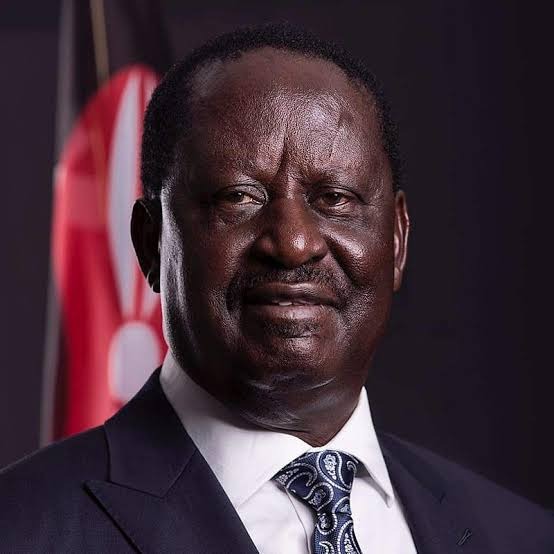
President William Ruto will for the second time be out to make history.

This time, Ruto is in Addis Ababa, Ethiopia to make a reality, to the candidature of Former Prime Minister Raila Odinga, for the seat of the chairperson, of the African Union Commission (AU) a reality.

Ruto is leaving nothing to chance and is exuding confidence in a possible Raila’s victory on Saturday.

Ruto a battle-hardened and a go-getter, in the electoral process, is fighting a contest of his lifetime.

After successfully securing the Prime Minister in 2007 for Raila after the disputed presidential election, Ruto has taken the battle to the continent, where he wants to make Raila, the AU chair.

After Raila declared his candidature for the seat, Ruto facilitated his logistics for the campaigns and led him to a series of meetings with various presidents and even hosted some presidents in Nairobi, State House, in a vote pursuit.

After arriving in Addis, Ruto wrote in his X handle former Twitter “Congratulations RAO. Raila Odinga. With your proven track record of transformative leadership and dedication to Africa’s progress, you are undoubtedly suited for the AUC chair. We wish you the best in the election ahead and look forward to your continued success.

Africans across the continent are rallying behind Raila Odinga’s proven track record, recognizing his leadership qualities and vision for Africa’s future. His widespread support positions him as the ideal candidate for AUC chair seat.

With a proven  track record of driving transformative  infrastructural projects and managing complex  ministries, Baba wa Africa Raila Odinga exemplifies the effective  leadership  needed for AUC chair.”

Ruto on his X handle has posted on Raila’s various leadership attributes and successes in a bid to win votes from his colleague presidents to support Kenya’s candidate.

Back at home, the Mau Mau Wat Veterans in a press statement voiced their support for Raila and appealed to presidents from the continent to vote for Raila.

In a statement signed by the Secretary-General, Dr Gitu  W. A Kahengeri said the Mau Mau War Veterans Association gave the reasons why Raila should be elected the chairman of AUC.

“We the Mau Mau  Veterans Association unreservedly  support  the  election of Rail Odinga to the  chairmanship  of the AU commission for the following reasons:

Raila knows what politically, economically, and socially ails the African continent, he can unite African people without discrimination and can initiate the building of sustainable economic infrastructure.

Raila can initiate the building of industries, and complex networks of roads connecting all countries in Africa. He is a great asset to Africa.

We appeal to all  African heads of government to elect  Raila for the prosperity of Africa,” they said.

Equally, former deputy president Rigathi Cachagua also wished Raila victory.

In his X handle, he wrote “ Kenya’s finest. Rt Hon. Raila Odinga is undoubtedly the best bet for the African Union  Commission chairmanship. Africa deserves the best. There is no doubt about Raila’s worldview and championship to African people.

As a continent, we need a Raila character to gel the Anglophone and  Francophone selves towards the continent of the future.

His win in Addis Ababa imprints his quest for pan African spirit he has lived and championed.

Raila  Odinga‘s win will be good and progressive for Africa. His victory will be a win for Kenya, our motherland”.

Raila concluded his campaign in Burundi before he headed to Addis and wrote in X handle “ I concluded my campaign activities in Bujumbura, Burundi, today. I thank President Evaiste Ndayishimiye for honouring me with a warm reception.

As  I head  to Addis Ababa, Ethiopia, for the final stretch, I solemnly  thank you all for your unwavering  support and prayers throughout the journey of my candidacy for the African Union Commission chairmanship.”

In 2007, Ruto and Prime Cabinet Secretary, Musalia Mudavadi joined hands and supported Raila’s presidential bid.

In the contested presidential election, Ruto and Mudavadi led the negotiations that resulted in the Grand Coalition government with Mwai Kibaki as the President and Raila as the Prime Minister.

Currently, Ruto has tasked Mudavadi with delivering Raila’s victory and the duo have undertaken a multi-prong campaign approach that may lead Raila to Victory.

The dice are cast and with the clock ticking, President Ruto will be hoping to have his way in the elections as Kenyans wait with bated breath.

Street Children Menace: A looming threat in Kisumu City

0

By Dr. Edris N. Omondi (Advocate)

attorneyedris@ywcg.org

Kisumu County is facing an escalating crisis that threatens its future — the growing population of street children.

The streets of Kisumu are home to hundreds of vulnerable children, many of whom are forced to abandon their homes due to abuse, poverty, and neglect.

Without access to education or adequate social services, these children are left with few options but to turn to a life of survival on the streets, which often leads to involvement in crime, substance abuse, and long-term social isolation.

According to recent research by Afridata, a local data research firm, the situation has worsened over the past decade, with street children becoming more visible in public spaces and especially within the existing parks like Oile, Taifa and locations near the Kisumu bus terminal, and other busy parts of the city.

A distressing trend has emerged: many of these children come from families suffering from alcoholism, domestic violence, or extreme poverty, making the home environment unbearable.

One such child, an 11-year-old boy from Ayueyo village in Kisumu who hangs outside the Quick Mart supermarket, next to Oile Park, shared his story while directing traffic in exchange for just 10 shillings a day.

“I come from a home where my father drinks too much and we are often hungry,” he explained.

“I ran away from home because the abuse was too much, but now I’m stuck here, just trying to survive.”

Root Causes and Growing Numbers:

Afridata’s research has found that the majority of street children in Kisumu come from Western Kenya, particularly Kakamega, Luanda, and Bungoma Counties.

These children often find themselves trapped in Kisumu’s urban areas, seeking refuge from abusive home environments or the severe economic challenges in their rural communities.

The further they are from their homes, the more independent they feel.

The rise in the number of street children in Kisumu reflects the broader crisis of child abuse, neglect, and poverty in the region.

The statistics are grim.

According to a Kenya National Bureau of Statistics (KNBS) report, over 20 % of children under the age of 15 in Kisumu are not in school, with many having dropped out due to family issues.

This situation is only worsening, as street children often have no access to education, further deepening the cycle of substance abuse, poverty and illiteracy.

The dangers of this growing crisis are profound. Without education or training, these children face limited opportunities in the future.

They are vulnerable to being recruited into criminal activities, especially drug trafficking and petty theft.

Furthermore, the growing use of drugs among street children, including glue sniffing, marijuana, and miraa, is contributing to their further isolation and health risks.

The Role of Local Communities and NGOs:

However, the crisis is not without hope.

Kisumu’s local community has long been known for its philanthropic spirit, with various religious, civic, and business groups coming together to support charitable causes.

The Hindu and the Ismaili community, particularly, have a strong tradition of philanthropy, and their contributions have been significant in funding health, education, and development projects throughout the region.

The Lions Club and Rotary Club of Kisumu are also key players in supporting community welfare initiatives.

These organizations, along with local businesses, can play a pivotal role in the fight against street children by funding shelters, educational programs, and family reunification efforts.

In addition, the Kisumu County Government must step in to provide financial and logistical support to local NGOs and CBOs that are cash-strapped but already doing critical work on the ground.

Many of these organizations, such as Bethzatha Children’s Program and Global Kingdom Builders Community-Based Organizations among many, are struggling to meet the growing demand for services.

They lack sufficient funding to provide food, education, shelter, and medical care to the increasing number of street children.

With more resources, these organizations could significantly improve the lives of street children by offering them a safe space to heal and develop.

The Need for More Safe Homes:

Kisumu urgently needs more safe homes to accommodate and support street children.

These shelters would not only provide food and shelter but also educational opportunities, vocational training, and counselling services.

The government, in collaboration with local NGOs, could work to create these homes, offering a safe space for children to recover from their traumatic experiences and reintegrate into society.

In addition, family tracing and reunification efforts must be strengthened.

Many of the children on the streets are simply trying to escape abusive or neglectful home environments.

Through coordinated efforts, the County Government, NGOs, and CBOs can work together to track down these children’s families, provide counselling, and support families in overcoming the challenges they face, such as domestic violence and addiction.

Organizations such as Afridata can offer their expertise to help in street children settlement logistics.

A Collective Responsibility:

Addressing the street children’s menace is not solely the responsibility of the government.

Local philanthropists, community-based organizations, and international partners must work together to create lasting solutions.

For instance, while the Hindu community can contribute significantly to providing financial resources for shelters and education, the Lions and Rotary clubs can help raise awareness and mobilize additional support.

The County Government, recognizing the importance of a collective approach, can serve as the coordinator of these efforts, ensuring that the resources from various stakeholders are directed toward the most effective solutions.

By allocating funds for street child rehabilitation and working closely with NGOs and CBOs, Kisumu can begin to tackle the problem at its roots.

Statistics on Street Children and the Risks of a Lost Generation:

Research by Afridata has found that despite efforts carried out in the past by a consortium of 11 organizations under the burner of Kisumu Street Children Rehabilitation Consortium in 2019, where 645 children were rescued and integrated back into their homes from the streets through traceability efforts, the stubborn nature of the menace still sores with  400 children counted sleeping on the street by the end of 2024, a number that continues to rise as more children flee their homes.

The county faces a serious risk of breeding a future generation without education, skills, or a support system, which will have severe consequences on its economy, social fabric, and security.

As more children fall through the cracks of society, the risk of escalating crime, addiction, and poverty increases.

The absence of education and vocational training will leave these children with few prospects, leading many to seek illicit ways of surviving.

NACADA reports that 20% of street children in Kisumu are involved in drug abuse, a statistic that underscores the need for urgent intervention.

Policy Recommendations and Solutions:

To address the growing street children menace, several key measures must be put in place:

1. Increased Investment in Safe Homes: The County Government must invest in building and funding more safe homes for street children. These homes should provide not only shelter but also education, vocational training, and counselling to help children reintegrate into society. To prevent the recurrence of infiltration of rescued and integrated children coming back in the city, the need to begin a County Government monitoring wing within the city of Kisumu in collaboration with street children organizations in the field is inevitable.

2. Strengthen Family Tracing and Reunification: Initiatives for family tracing and reunification should be expanded. NGOs, with support from the government, should collaborate on tracking down the families of street children and providing counselling and assistance to help families address the underlying issues that led to abandonment or abuse. This would require inter-county collaboration on the street children, a special program that could be picked up by county government first spouses.

3. Collaboration with Local Communities and Philanthropists: Local community groups such as the Hindu community, Lions, Rotary clubs, and other philanthropists should play a more significant role in funding and supporting the rehabilitation and education of street children. With their financial and social resources, these groups can contribute to long-term solutions.

4. Awareness Campaigns and Prevention Programs: The community should be educated on the dangers of neglect and abuse, and how they can support vulnerable families. Programs to prevent children from ending up on the streets should be implemented, including domestic violence awareness and parenting support programs.

5. Education and Vocational Training: Street children must be given access to education and skills development to ensure they are not left behind. NGOs, with government support, should focus on providing both formal education and vocational training for older street children to help them transition into productive roles in society.

6. Collaboration with Law Enforcement: Law enforcement agencies should work closely with social services to protect street children from exploitation by criminal gangs and drug dealers. Ensuring that these children are not victimized by crime is essential to their rehabilitation.

Conclusion:

The street children crisis in Kisumu is not just a social issue—it is a ticking time bomb that could have long-lasting consequences for the entire community.

However, by bringing together the efforts of the County Government, local philanthropists, NGOs, and community-based organizations, Kisumu has the potential to create solutions that can rescue these children from the streets and give them a brighter future.

It is time to act—before this crisis becomes a tragedy that can no longer be reversed.

G-Jali Microsite Launched as National Syndemic Diseases Control Council (NSDCC) Marks World Condom Day at Rongo University

0

By Erick Otieno

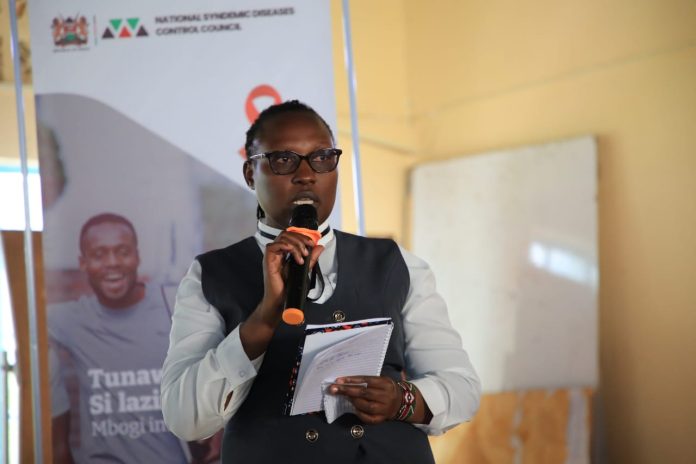
In celebration of World Condom Day, the National Syndemic Diseases Control Council (NSDCC) launched the G-Jali Microsite at Rongo University.

This innovative new digital platform aims to raise awareness about sexual health, condom use, and HIV prevention, specifically targeting students and young people across Kenya.

The event, held on the eve of World Condom Day, featured a vibrant program with educational workshops, live performances, and speeches from public health experts.

The launch of the G-Jali Microsite marked a significant step in leveraging digital tools to spread sexual health awareness and make critical information accessible to a wider audience.

Dr. Caroline Kinoti, Deputy Director of Health Promotion and Capacity Development at NSDCC, highlighted the role of the microsite in broadening outreach.

“The G-Jali Microsite is designed to engage young people through an easily accessible platform, where they can find important information on safe sex practices and reproductive health.

By combining peer-led activities and social media campaigns, we hope to empower students to make informed and responsible decisions about their sexual health,” Dr. Kinoti said.

The campaign also gained support from Ms Catherine Menganyi, the MIGORI COUNTY GBV Coordinator, who spoke about the significance of sexual health education in reducing gender-based violence (GBV) and addressing the triple threat of HIV, unintended pregnancies, and GBV.

“The G-Jali Microsite is a powerful tool for young people, helping them reduce the risk of GBV and promoting healthier sexual behaviours,” Ms Menganyi remarked.

Students, including Nelly Kithinji and Victor Apicha, expressed their enthusiasm for the platform.

“The G-Jali platform provides an interactive and modern approach to reproductive health. It’s exactly what we need to reduce the stigma around safe sex and create an open dialogue among students,” said Kithinji, a student leader.

Apicha added, “This platform empowers students to address health issues that directly impact us, providing a space for us to make informed decisions and take action.”

The launch also introduced Rongo University’s Peer Educator Program, which will train students to lead sexual health awareness initiatives on campus, ensuring that discussions around sexual health continue year-round.

Dr. Samuel Otieno, an expert in HIV prevention, stressed the importance of initiatives like the G-Jali Microsite in bridging gaps in sexual health education.

“Making sexual health information easily accessible, especially in university settings, ensures that students are equipped to protect themselves and make informed decisions,” Dr. Otieno said.

In the coming weeks, the G-Jali Microsite will continue to raise awareness through social media campaigns, community outreach efforts, and the ongoing distribution of condoms across campus.

Rongo University is collaborating with local health organizations to extend the campaign’s reach and provide students with the tools and knowledge they need to stay healthy.

The G-Jali Microsite represents a significant step forward in the efforts of the NSDCC to create a healthier, more informed generation of young people and push the boundaries of sexual health education across Kenya.

Murkomen: The Government won’t compromise on political thuggery for votes

0

By Anderson Ojwang      

In one of the strongest and a bold move, a precedent-setting,  the Cabinet Secretary, Internal Security and National Administration, Onesimus Kipchumba Murkomen, is ready to swallow the bullet to reign on the escalating political violence in the country.

Murkomen has stated that he is ready to risk losing the presidential votes to protect the youth from politicians’ misuse and abuse for their own selfish gain.

Murkomen in one of the strongest-worded speeches declared that the government will not be blackmailed and intimidated by politicians who are out to use youths to cause political mayhem against their competitors in public gatherings and funerals.

He said nobody was untouchable and that the future of the youths must be safeguarded from the political class who intoxicate them with drugs and alcohol to create violence in public gatherings.

Murkomen said the government cannot compromise on security over political votes to President William Ruto and the Kenya Kwana government.

“There are elected officials and leaders who are hiding behind political actions by mobilizing young people giving them alcohol and asking them to come heckle their competitors.

In meetings and dragging them to do so on their behalf, We are coming for you, when we say we are coming for you. We mean not. You saw what happened in Kakamega the other day. Where politicians come to the funeral of a person they don’t call anything. They do not even know. They have absolutely no relationship. Family that is mourning. Because of your competition, you are asking where is the biggest funeral  around, who has died somewhere.

You start organizing young people giving them drugs, give them drugs, you bring them to a funeral that you were not invited in the first place. Arriving there to cause mayhem and fights.

You saw how they were they were really fighting. It was so unfortunate. Before a family that was mourning there person.

You see they have recorded statements. The Governor of Kakamega will record a statement. You saw the former cabinet secretary recording a statement. Every body will be held into account.

We cannot continue to allow any person in this country because of their position to use young people to destroy their future.

If that is how to protect politics. Let the politics stay. We will not compromise any person and this kind of behaviour because you will bring votes to the President and the government. Stay with your votes but you will rot in jail. We must make sure you take responsibility that you must take,” he said,

Police in Kakamega have summoned Governor Fernandes Barasa, former CS Rashid Echesa and MP Peter Nabulindo after the chaos was witnessed at a burial in Matungo. 

Similarly, the family of the deceased retired chief  Gerald Odongo has subsequently been slapped with a bill of Sh 1.5 million for the damages following the violence that rocked the burial.

The three were expected to appear at the Kakamega Police headquarters on Tuesday for investigations on events that led to a politically instigated unrest.

Western Region Police Commander Kiprono Langat said the leaders were expected to present themselves for grilling at different times. 

Political factions clashed at the funeral, leading to the injury of more than 100 and destruction of property. 

The late Chief Odongo family appealed to the government to investigate the events that led to his hurried burial amidst what the family says was politically-induced chaos.

Recently, Permanent Secretary for Internal Security and National Administration Dr Raymond Omollo was enraged after a section of youths allied to some politicians in Ndhiwa Constituency were engaged in a running battle at a function he was expected to preside over.

Omollo warned that the government will not condone any person creating political violence in the country.

He cautioned against political intolerance and violence witnessed in some parts of Homa Bay County in the recent past saying the government will take action against the perpetrators.

When he recently spoke at Sasi primary school, Omollo warned against political intolerance, asking leaders to focus on service delivery.  

“We will not condone any leadership that entertains violence. We are a democracy, everybody has a right to speak and ask for support without any coercion or intimidation,” said the Interior PS.

He further argued that the ministry will not encourage violence and will take action against any leader who is found perpetrating political violence in the region.

He urged youths in Homa Bay not to allow politicians to use them to cause violence in gatherings.

Kisumu, Siaya, Homa Bay, Migori, and Kakamega counties have in the recent past witnessed escalating incidences of political violence in the country.

The Future of Politics With Raila Winning or Losing at the AUC Elections

0
Junior Secondary Schools

By Billy Mijungu

As Raila Odinga vies for the African Union Commission (AUC) chairmanship, Kenya’s political landscape hangs in the balance. His victory or loss will determine the future of the ODM party and the broader realignment of power. The stakes are high, and the consequences are profound.

With a broad-based government already in place, ODM’s internal dynamics are shifting rapidly. Many of its leaders, once staunch opposition figures, have aligned with the Kenya Kwanza administration. The likes of Gladys Wanga, whose influence within the party is undeniable, have strategically positioned themselves, leveraging their ties with Ruto’s government for personal and political gain. Her husband’s appointment as a parastatal chair is just one example of how ODM figures are benefiting from the arrangement.

This shift exposes a deep rift within ODM. Party Secretary General Edwin Sifuna and Siaya Governor James Orengo represent a faction reluctant to blindly endorse the government’s policies. They recognize the pitfalls of their 2022 strategy, where overt support for Uhuru Kenyatta ultimately cost them the presidency. Now, they are carefully navigating their opposition role, wary of repeating past mistakes.

Meanwhile, the broader political class is positioning itself for 2027. The impeachment of Deputy President Rigathi Gachagua has complicated matters, with ODM hesitant to take a definitive stance. Some see it as a tactical move to weaken Ruto’s support in Central Kenya, while others argue it signals deeper fragmentation within UDA—something ODM could exploit.

Cracks within the Azimio coalition are also becoming more pronounced. The United Democratic Movement (UDM) from Northern Kenya and Kalonzo Musyoka’s Wiper party are contemplating alternative alliances. UDM appears inclined toward Ruto, while Wiper sees an opportunity in Gachagua’s potential resurgence. These shifts further weaken the opposition coalition, jeopardizing ODM’s position.

Despite these changes, ODM remains Kenya’s strongest party. However, its identity and future direction are uncertain. Sifuna and other loyalists are working to ensure the party is not tainted by the failures of the Ruto administration. Their goal is clear—to keep ODM relevant and maintain momentum toward the presidency.

If Raila Odinga loses the AUC race, he will return to Kenya with renewed political vigour. His loyalists, many of whom have lost touch with the electorate’s shifting aspirations, will see his return as their saving grace, securing them a fresh lease on political life.

His presence would also solidify ODM’s grip on opposition politics. Even if not actively running for office, Raila’s political brand remains unmatched. His strategic appearances, framed as AUC development initiatives, would maintain his influence and keep his political base engaged.

The key challenge for ODM, however, will be its ability to reinvent itself. If Raila remains the undisputed leader, the party risks stagnation, unable to adapt to the evolving political landscape. The electorate is increasingly seeking change, and ODM must balance its reliance on Raila’s influence with a fresh, dynamic approach.

Regardless of Raila’s fate at the AUC, Kenya’s political future remains fluid. ODM’s internal struggles, shifting alliances, and strategic realignments will define the next chapter. Whether Raila secures a continental role or returns to domestic politics, his influence will continue shaping Kenya’s political narrative.

One thing remains clear, Kenyan politics is driven more by personalities than ideology. And for now, Raila Odinga remains a central figure, win or lose.

Tuju: The Indefatigable Warrior, relishes in God’s miracle, launches Land Protection Forum

0

By Anderson Ojwang

As a young, budding broadcasting journalist, his reverberating voice echoed in every corner of the country, homes, and various social gatherings during the KBC English Bulletin News. Mr Raphael Tuju did not indulge in the pleasure and pleasantries that come with journalism.

Despite the growing fame and celebrity status in the media industry, Tuju was never lured into plunging himself into the new world order of affluence, power, and might, as most journalists often do.

But he did the unthinkable—something most of his community members feared to engage in at that time. A journey that most of his fellow journalists gave a wide berth to, preferring instead to dine and wine with the high and mighty in the country’s political and economic elite circles at exclusive high-end joints.

Tuju decided to write his own story at the age of 27—a story that has given him happiness and pain in equal measure. Just like the song written by Fanny S. Cosby, Blessed Assurance, Tuju has drawn his strength in all the battles he has faced from this song. As in the chorus of Blessed Assurance, Tuju’s story is so telling:

“This is my story, this is my song,
Praising my Saviour all the day long.
Perfect submission, perfect delight,
Visions of rapture now burst on my sight;
Angels descending, bring from above
Echoes of mercy, whispers of love.
Perfect submission, all is at rest,
I in my Saviour am happy and blest;
Watching and waiting, looking above,
Filled with His goodness, lost in His love.”

At 27, Tuju defied the odds to become one of the few journalists to own a prime parcel of land in the upmarket, leafy Karen estate.

It has been an ‘attempted robbery’, but God’s grace has prevailed so far. I bought my first piece of land in Karen when I was still broadcasting in 1986.

I was 27 years old, and land was, at the time, selling for KSh100,000 per acre. I took a loan from National Bank, courtesy of the then manager, Mildred Owuor, and Abel Muriithi.

Whatever I have today is the sum total of 38 years of toil. I never got a government land allocation, nor did I grab any.

I survived a plane crash, an auto accident, and not to mention a political crash in Rarieda. Viewed from those lenses, the Dari case is really nothing,” he says.

Tuju was among the top government officials involved in a plane accident in Busia in 2002. He lived to tell his story and to protect his family from adversaries.

The crash killed Labour Minister Ahmad Khaliff and the two pilots, while Tuju, two other ministers, and several Members of Parliament were seriously injured.

The 24-seater Gulfstream aircraft crashed into a house after snagging a power line on takeoff from Busia in far western Kenya, according to government officials who witnessed the accident from the ground.

Tuju also cheated death when his vehicle was involved in a head-on collision in Kijabe while he was on his way to the burial of former President Daniel Moi at his Kabarak home.

From accidents to political battles, the former Foreign Affairs Minister has also been embroiled in a dispute with a bank over his prime property. Finally, he sees light at the end of the tunnel following a warrant of arrest issued by a Nairobi court for a senior bank manager (name withheld) for giving false information in the case.

In a statement, Tuju wrote:

This afternoon, a warrant of arrest has been issued for a senior official of (bank name withheld). The criminal charges against (name withheld) and the bank stem from lies that were peddled by the bank to the DCI against myself, my children, and our company, Dari Limited. Some of the lies were also entrenched in the bank’s affidavits to the Supreme Court of Kenya and other courts in Kenya and the UK.

Apart from entrenching the lies in the courts, the malicious reports were an attempt to criminalise an otherwise civil matter. It was also an attempt to intimidate me in the grand scheme to scandalise my name before stealing our properties.

Tuju said the bank’s official lawyer went to court on Tuesday evening in an attempt to stop the banker’s arrest.

According to Tuju, on 11, 12, and 31 July 2024, during an affidavit submission in open court, a bank manager from the said bank admitted under oath that their colleague had lied in both Kenyan and UK courts.

*”The bank’s country manager even recanted the affidavit that was sworn against us on behalf of the bank before the Supreme Court of Kenya (SCOK).

In the meantime, the SCOK had issued rulings in favour of the bank based on lies and statements that were later recanted by its officials. Despite our pleas that the bank official be cross-examined, the Supreme Court mysteriously declined to take this important piece of evidence.*

It should be of interest that the case filed by Nelson Havi seeking the removal of Supreme Court judges cites our Dari Limited case as one of the grounds for their removal,” Tuju noted.

The recusal by the bench of five judges has no precedent in Commonwealth law and is also currently the subject of litigation in other fora, he wrote.

From his experience, Tuju has now formed a platform to protect orphans and vulnerable people with land issues, helping them find solutions to their woes.

I am blessed that I have been able to put up a spirited fight both in Kenya and in the UK courts.

During this odyssey, I have been approached by many orphans, widows, and other helpless people who have lost family property or are on the verge of losing their property due to such malfeasance.*

Together with my family and a few friends, today I launch the formation of a Land Protection Forum (LPF). I am providing a WhatsApp number (0708293936) where any Kenyan facing the threat of losing their hard-earned family land or property through corruption should seek justice.

On this number, any Kenyan can contact the forum to share their ordeal, and where I can, I will do all I can to help, especially widows and orphans caught up in this crisis,”* he wrote.

Crooks should not be allowed to reign with such abandon. Through this forum, which will have its inaugural meeting in a few weeks, we will give a voice to many who are suffering silently.

The African Lion lands in Addis as Kenyans rally behind the Country’s candidate for AU Chair

0
Former Prime minister Raila Odinga

By Anderson Ojwang   

The African Lion landed in Addis Ababa, Ethiopia, for a date with his destiny—a date that is do-or-die for President William Ruto. A date that will radically impact Kenya’s socio-economic and political dispensation.

In reality, it is a date for Kenya with her destiny. Kenya is on the election ballot for the chairmanship of the African Union.

In Kenya, the country is presenting an icon, a mover, a bulldozer in her politics, and one of Africa’s finest leaders of today.

From his Kango Ka Jaramogi home to Kisumu to Nairobi, and in the confines of various homes, Kenyans prayed and wished the Lion good luck in his quest for the AU chair.

That is why Kenyans, led by President Ruto, the opposition, Parliament, and citizens from all walks of life, were in unison in their support for Raila Amolo Odinga, the former Prime Minister.

The indefatigable Lion has, in the last six months, crisscrossed and combed every part of the continent and the globe in his vote hunt. President Ruto, in his true leadership and worth, has tagged along with the Lion and also facilitated his campaign.

Odinga is facing Madagascar’s Richard Randriamandrato (65) and Djibouti’s Mohamoud Youssouf (60).

The successful candidate will succeed Chad’s Moussa Faki, who will exit after his two-term tenure, which began in 2017.

The electoral process commenced on Wednesday in Addis Ababa, where the Executive Council will elect and appoint Commissioners during their session on 12-13 February 2025.

While Kenyans gathered to pray for Raila, Prime Cabinet Secretary Musalia Mudavadi spearheaded Kenya’s last-minute efforts to secure Raila’s election as African Union Commission (AUC) Chairperson.

With a Kenyan delegation in Addis that includes more than 100 MPs as well as other leaders and government officials, Mudavadi engaged key leaders to rally support for Raila.

Back home, Raila exuded confidence about the victory, saying he was ready to take Africa to the next level.

My agenda includes closing Africa’s infrastructure gap, fostering regional integration, boosting economic transformation, and enhancing intra-African trade through the African Continental Free Trade Area (AfCFTA).

I seek to advance financial independence, agricultural transformation, climate action, peace and security, youth empowerment, and gender equality.

I was approached and asked to seek the AU seat. I asked the tough question of whether it was right to exit Kenya. I was told Kenya was part of Africa. I accepted the challenge, and I have traversed the continent and spoken to all the presidents.

If they elect me as chairman, I will work for Africa diligently, as I have done in the past in various posts I have held. But if they do not elect me, that is also fine with me because I have a home. A win or a loss is still a victory.

I will go for the AU elections on Saturday. If I win, well and good. If I don’t, so be it. I am confident that, with God’s will, we shall succeed. If we win, we have succeeded. If we lose, we have also succeeded.

Today is a prayer day ahead of the battle. With God’s intervention, we will win,” Raila said.

Mama Ida Odinga said the women had organised prayers for Raila to seek God’s intervention and guidance ahead of Saturday’s battle.

I have seen Raila visit every country in Southern, Western, Central, and Eastern Africa. I am confident and convinced that he has given his best, and our work here today is to support him with prayers ahead of Saturday’s election.

May God grant us the desires of our hearts. His victory will be for Kenya and Africa. It will not be for him and me as his wife but for the continent. We expect him to work for the continent and positively impact it,” she said.

At the National Assembly, Speaker Moses Wetang’ula led the House in extending best wishes to Raila and expressed their support for his candidature.

I want to join all of you in wishing our leader, Raila Amolo Odinga, success in the election for African Union Commission Chairperson.

Recently, the President said Raila’s candidature for the African Union Commission Chairperson continues to receive tremendous support owing to his proven track record as a Pan-Africanist.

He expressed confidence that Raila’s leadership would foster peace across the continent, effectively manage conflicts, and unlock the potential of the African Continental Free Trade Area Agreement.

We are very confident that the successful bid of Hon. Raila is going to see the fortunes of our continent change for the better going into the future,” he said.

Mudavadi intensify Raila campaigns in Addis

0

By OPCS Press Team

Prime Cabinet Secretary Musalia Mudavadi has urged African nations to vote for the Kenyan candidate, Raila Odinga, as the African Union Commission (AUC) chair to fast-track peace and stability on the continent.

Mudavadi said that Raila is a Pan-Africanist with vast knowledge of Africa and its political dynamics and would provide the necessary leadership at this critical moment.

The PCS was addressing the media on the sidelines of the AU 46th Session of the Executive Council of Foreign Ministers in Addis Ababa, Ethiopia, where he noted that Africa needed a resolute and strong-willed leader at a time when multiple conflicts were ongoing.

There are conflicts in some parts of Africa, including the Democratic Republic of Congo (DRC), South Sudan, and Sudan, as well as challenges elsewhere. What we need is a leader who is ready to confront these issues. Raila stands out and is ready for the task,” said Mudavadi.

He said that Raila is a seasoned politician with the experience to tackle the challenges facing the continent and is prepared to begin his assignment immediately after his election on Saturday.

Mudavadi warned the continent against any possible procrastination in selecting the AUC chair, emphasising the urgent need for intervention in peace and conflict resolution.

If we fail to elect the AUC chairperson on Saturday, at a time when some African countries are in turmoil, we will project an image of weakness, confusion, and indecision at a critical juncture. Africa needs a decisive voice,” said Mudavadi.

According to the election rules, there will be multiple rounds of voting before the AUC chair is selected. If the final candidate fails to secure a two-thirds majority, the Summit may be forced to postpone the vote until July this year.

Currently, there are three candidates for the AUC chair: Raila Odinga, Djibouti’s Mahamoud Ali Youssouf, and Richard Randriamandrato of Madagascar.

Mudavadi noted that the former Prime Minister is acutely aware of the challenges currently facing the continent and is ideally positioned to propose sustainable solutions for the betterment of African citizens.

Under his tenure, Raila’s agenda will focus on scaling up efforts to bridge the infrastructure development gap, promote integration and economic transformation, enhance intra-Africa trade through the African Continental Free Trade Area (AfCFTA), achieve financial independence, drive agricultural transformation, tackle climate change, strengthen peace and security, empower youth, and advance gender equity and equality across the continent,” he stated.

Mudavadi expressed confidence that Raila will emerge victorious in Saturday’s polls, noting that President William Ruto, Raila, and himself had done everything possible to secure the seat for Kenya.

In the remaining days, we will continue seeking votes wherever possible. We are not leaving anything to chance until the final vote is counted and victory is secured,” said Mudavadi.

The PCS dismissed claims that the government was ferrying people to Addis Ababa in anticipation of Raila’s victory, stating that patriotic Kenyans and Raila’s supporters were travelling privately to offer moral support to the former Prime Minister.

We have been informed that dozens, possibly hundreds, of people were scheduled to travel privately to Addis Ababa, including some using buses. This reflects patriotism. This will not just be Raila’s victory but a victory for Kenya as a whole,” said the PCS.

He also criticised a small number of Kenyans who were hoping for Raila’s failure, stating that they would be disappointed.

Raila’s Purpose for Africa is Served Before It Really Began

0
Junior Secondary Schools

By Billy Mijungu

Raila Odinga’s entry into the race for African Union Commission Chairperson has done more than just introduce a new contender; it has redefined the seat itself. Before his candidacy, the AUC chairmanship was a bureaucratic position, one that many Africans barely recognized. But with Raila’s name attached to it, the seat has gained unprecedented attention, turning it into the most anticipated political contest on the continent. President Yoweri Museveni even likened it to a preacher’s seat, a role that will require relentless lobbying, persuasion, and strategic manoeuvring across all 54 African nations.

Today, for the first time, the AUC seat is a topic of conversation in villages, boardrooms, and presidential palaces alike. And this shift is not just about one election. It is a sign of a deeper transformation in Africa’s governance. The dream of a unified African government, once dismissed as mere idealism, now feels like a tangible reality. Raila Odinga’s candidacy has become the vehicle pushing the continent toward greater integration, a moment that will shape the future of Pan-Africanism.

But this is not a farewell to Raila Odinga from Kenyan politics. If anything, his new role will tie him even more deeply to the affairs of his homeland. From Addis Ababa, he will not just be an observer of Kenyan politics. He will be an architect of Africa’s broader political, economic, and infrastructural future. His vision extends far beyond borders. Trans-African highways, rail networks, sea routes, a shared satellite system, common defence strategies, open airspace for African airlines, and unrestricted movement of goods and people. These are not just dreams. They are blueprints for a new Africa, one in which Kenya remains at the heart of continental progress.

In many ways, Raila Odinga will finally begin the presidency that eluded him in Kenya, only this time on a grander stage. When he visits Nairobi, he will not do so as a mere statesman but as a leader with presidential stature, a figure of continental significance. His influence will shift the balance of politics, reshaping both Kenya’s local dynamics and Africa’s global standing.

Africans, more than ever, need a leader who will champion their resources, ensuring that the wealth beneath their soil becomes a blessing rather than a curse. The world order is shifting, and Africa must stand firm, dictating its own terms. Raila Odinga’s leadership at the AUC could be the force that redirects Africa’s destiny toward prosperity, unity, and self-determination.

Good luck, Raila Odinga. May your mission for Africa bear fruit before it even truly begins.