
By Billy Mijungu
In a continent yearning for transformational leadership, the candidacy of H.E. Raila Amolo Odinga for the Chairperson or President of the African Union Commission presents a defining opportunity for Africa to claim its rightful place in global affairs. With his unmatched political pedigree, Raila Odinga embodies the leadership Africa has been waiting for—a true Pan-Africanist who, like Mandela before him, has the potential to unite, transform, and propel the continent into a new age of prosperity.
As a former Prime Minister of Kenya, Raila has demonstrated his deep commitment to democracy, peace, and infrastructure development. He has stood at the forefront of major political reforms, guiding Kenya through constitutional transformations and championing national unity amidst diversity. These qualities make him the perfect candidate to take Africa to new heights as the leader of the African Union Commission (AUC).
A Vision for Peace and Democracy
At the core of Raila’s vision is peace and democracy—values he has relentlessly pursued throughout his political career. As Chairperson of the AUC, Raila would be uniquely positioned to lead a new era of democratic governance across Africa, solidifying peace-building mechanisms and ensuring political stability. A bold proposal under his leadership would be the creation of a Center for African Political Parties, fostering ideological cohesion among parties across the continent. This center could promote a unified African political culture grounded in democratic principles and transparent governance, ultimately driving sustainable development.
By fostering ideological homogeneity, Raila’s African democracy model would focus on inclusive politics, enabling the continent to avoid the pitfalls of division and political stagnation. As a man who understands the value of dialogue, Raila could steer Africa toward a future where political parties rally around ideas that unite rather than divide.
Unifying Africa Through Language and Trade
Raila has long been a proponent of continental unity, and one of the boldest, yet most pragmatic, steps he proposes is the promotion of Swahili and Arabic as the two languages of Africa. East Africa should become the main supplier of Swahili teachers across the continent, while North and West Africa should focus on supplying Arabic teachers. This simple yet profound initiative would not only promote cultural integration but also enhance communication across the African Continental Free Trade Area (AfCFTA), creating a common linguistic framework for business and cooperation.
As Chairperson of the AUC, Raila would champion this linguistic unification, turning language into a tool of empowerment. By facilitating seamless communication between African nations, these two languages would boost intra-continental trade and cooperation, aligning Africa’s diverse regions under one unifying banner. It would be a monumental step toward breaking down barriers that have historically divided the continent, setting Africa on a path of unprecedented unity and growth.
Infrastructure and a Free African Sky
For Africa to reach its potential, infrastructure development must be at the heart of any transformation. Raila Odinga’s tenure as AU High Representative for Infrastructure has proven his commitment to this mission. Under his leadership, a free African airspace would revolutionize continental trade, opening up new corridors for business, tourism, and cultural exchange. This move alone could unleash untapped economic potential, boosting intra-African trade beyond what the common African has ever imagined.
Complementing the free airspace, Raila envisions a connected continent through modern roads, railways, and energy networks. He recognizes that Africa can no longer be left in the dark or remain inaccessible. His goal is to create an integrated infrastructure network that links Africa’s urban and rural areas, fostering greater economic interdependence and collaboration.
The 4th Industrial Revolution: Africa’s Leap Forward
Raila Odinga’s candidacy represents more than just leadership for today—it is a visionary plan for Africa’s future in the Fourth Industrial Revolution (4IR). Africa still lags behind in adopting technologies from the first, second, and third industrial revolutions. But with Raila at the helm, the continent can leapfrog into Industry 4.0, embracing automation, AI, big data, IoT, and advanced manufacturing to transform its industries and economies.
Raila would ensure that African nations are prepared to capitalize on these technological advancements by advocating for the development of smart infrastructure—flexible, innovative, and resilient. His tenure would focus on mainstreaming 4IR technologies into African infrastructure projects, from energy systems to transport networks, thus fostering the next phase of industrialization.
Through a continental sensitization campaign, Raila would educate African leaders and entrepreneurs on the opportunities within the 4IR, ensuring that Africa doesn’t miss out on the technological revolution that is reshaping the global economy. He would push for the adoption of smart city policies, creating digitally connected urban centers that drive innovation, efficiency, and sustainability.
Transforming Adversity Into Hope
Africa faces immense challenges, but under Raila Odinga’s leadership, these challenges would be seen as opportunities. His track record speaks for itself—transforming adversity into hope, division into unity, and stagnation into progress. His vision for an African Trade Commissioner would solidify Africa’s position in global trade negotiations, advocating for common external tariffs and ensuring that Africa benefits from fair, transparent, and advantageous trade deals.
Raila’s leadership would transform the African Union into a body that not only sets bold agendas but also delivers on them. His legacy in Kenya of guiding the country through constitutional reforms demonstrates his ability to build lasting institutions. As AUC Chairperson, he could do the same for Africa, laying the groundwork for a continent that is democratic, peaceful, united, and economically powerful.
A Mandela Moment for Africa
This is a Mandela moment for Africa, and Raila Odinga is the man to lead it. His candidacy is not just about an election—it’s about charting a new course for Africa. A course where democracy thrives, where infrastructure binds us together, where language unites us, and where technology powers our economies.
Raila Odinga’s leadership would give Africa the bold, visionary, and transformational leader it has always needed. The time for change is now, and Raila Odinga is the leader who can make it happen.
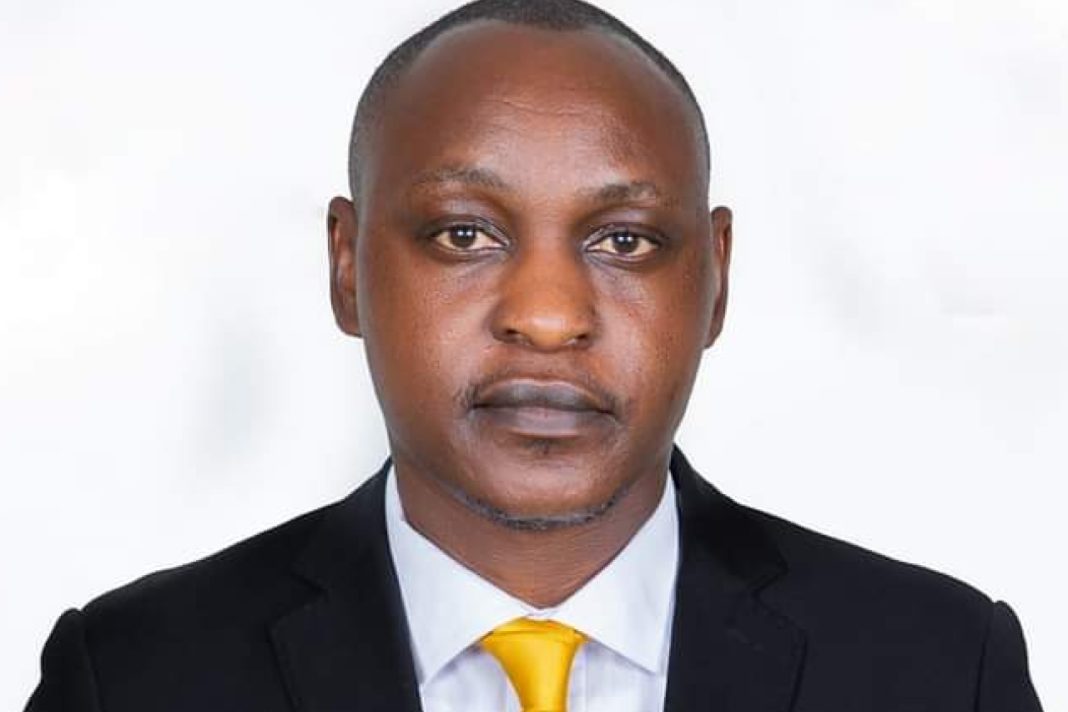
Opinion Piece by:
Billy Mijungu
2022, Senate Candidate, Migori County
mijungucampaign@gmail.com
#Forward
#TusongeMbele