
By Anderson Ojwang
Nyanza is not poor but has for decades failed to utilise the vast economic potential to jumpstart its economy.
Similarly, for decades of marginalisation by successive governments, Nyanza has remained a sleeping giant whose economic potential is yet to be reawakened.
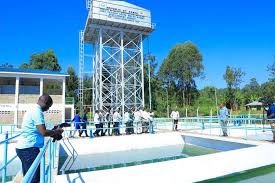
Nyanza has over 350,000 acres of irrigation infrastructure potential, yet only about 17,000 acres are currently utilised. This is not a land or climate problem; it is a coordination, policy, and execution challenge that the region must solve together.
Within this vast potential lies the opportunity to transform livelihoods through strategic, scalable value chains — rice, sunflower, soya beans, and cotton — crops that can anchor agro-industrial growth, create jobs, and generate sustainable wealth.
Financial expert, Mr Martin Ogindo, argued that Nyanza is witnessing a momentous moment and that it is the right time to reshape the region’s economy.
Ogindo, former Rangwe MP, said currently the Luo community is walking out from the shadow of the late Raila Odinga, providing the region with the opportunity for the community to strategically redefine itself and the economic agenda for prosperity.
“The community must now define its strategic interests that need to be addressed by both county governments, which include individual and collective interests, and those to be addressed by the national government.
Until we define and document those economic strategies, that is when we will have realised our economic infrastructure,” he said.
Clear framework
Ogindo said for the community to jumpstart its economy, there was a need to develop a clear framework for engagement, both within the community and with other stakeholders.
He said for decades the region has faced structural challenges that have undermined its economic progression and must be tackled for the region to develop and grow economically.
Nyanza must now move to secure its equitable share of national resources after being marginalised for over six decades.
“The Luo community accounts for 12 per cent of the country’s population. The community must demand its 12 per cent share of national resources in terms of employment, business opportunities, and budgetary allocation for development,” he said.
He said the community was yet to set up strategic economic interests but instead has been pursuing political agendas that have often undermined economic growth.
Opposition politics
For the last six decades, the community’s brand of politics has been opposition, and this has denied it the opportunity to participate in the politics of running and managing the country.
“We have been removed from the table of the national government where economic and development policies are discussed. This is where discussions on national resources take place, and our absence is to blame for the marginalisation,” he said.
Population enabler to economic growth
The Luo community has failed to understand the economic strength in its population, both in Nyanza and the diaspora, which could account for over seven million people.
The huge population is an economic enabler capable of providing a market for everything ranging from labour to capital.
“We have not exploited the huge community population to redesign and strategically align our economy.
Nyanza is strategically located within the counties along the Lake Victoria basin and East Africa, which provide a huge market for intra- and cross-border trade,” Ogindo said.
The blue economy, agriculture
Ogindo said the failure to explore and exploit the blue economy potential in Lake Victoria to be a true pillar of the region’s economy has undermined growth and development in the region.
Similarly, former Alego MP Sammy Weya said that in addition, Nyanza and the wider Lake Victoria basin have strong potential for cocoa and palm oil, particularly where rainfall patterns, soils, and aggregation models allow.
These long-term, high-value crops can support agro-processing, exports, and intergenerational wealth creation.
Coffee farming
Weya said the region also has the ecological capacity to produce premium Arabica coffee, especially SL28 and Ruiru 11 varieties, which command high prices globally. With proper aggregation, processing, and market access, coffee can once again become a pillar of rural prosperity.
“As we expand irrigation and agriculture, we must also commit to protecting our rivers that flow into Lake Victoria. Protecting riverbanks, stopping encroachment, and reafforesting our river catchments is not an environmental slogan; it is an economic necessity.
Without our rivers, we lose irrigation, fisheries, and future production.
We cannot transform agriculture without financial sovereignty. That is why the establishment of a community-owned bank and a community-owned insurance company, spearheaded jointly by our four counties, is critical,” he argued.
Governance
The 2010 Constitution provided Nyanza with an opportunity to showcase its potential in governance and administration of regional resources, but greed and corruption have undermined the objective.
Ogindo said the leadership has excelled in plundering resources meant for service delivery and development.
“The monolithic political system in the region encouraged corruption instead of development. It incubated and bred corruption and is to blame for low economic growth,” he said.