A Lifetime of Remarkable Achievements and Selfless Service.
Adapted from the Odede family by Dr. Joyce Nyairo whose first version of the article appeared in the Sunday Nation of October 20, 2024.
In the song Unbwogable by Gidi Gidi and Maji Maji we are told we must remember the elders, those who
lifted us (“Ya Jodongo nyaku ipar … Jomo otingi nyaki par”).
The fact that the name Fanuel Walter Odedeis missing when the roll-call in that song salutes four generations of fighters and truth-tellers (Oginga Odinga, Tom Mboya, Robert Ouko, Raila Amolo, Gor Mahia, Okatch Biggy, Orengo Jimmy, (Princess) July of the famous “Dunia Mbaya” song, Anyang Nyong’o, Joe Donde, (Shem) Ochuodho) does not erase our patriarch’s contribution to our freedom struggles.
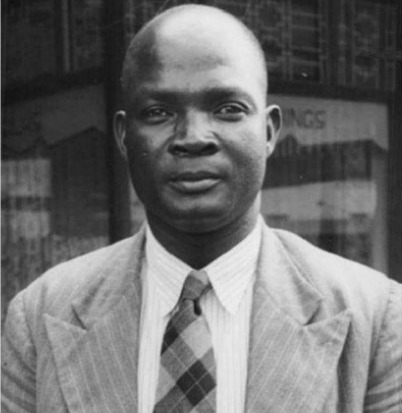
But it does dramatize how quickly a society forgets. As a family, we have never forgotten our patriarch, who was popularly known as Rachilo.
His stamp on our clan is indelible. But since most of us were very young when he departed, we have had to put in a lot of effort to find and to understand the full story of our patriarch’s work as a Veterinary Surgeon, an academic, a community organizer, a freedom fighter and a legislator.
Our commitment to filling the gaps in our larger family’s knowledge of our patriarch is also a contribution
to our country’s annals of liberation narratives in ways that bring honour to forgotten freedom fighters.
It also raises the name of our home, Uyoma location, which is also the birthplace of another freedom
fighter from that independence era, Richard Ramogi Achieng’ Oneko.
Both men were detained by the colonial government. Oneko found his rightful place in the legend
called Kapenguria Six.
Our patriarch however was relegated, unremembered as an articulate nominated member of the Legislative Council (LegCo), uncelebrated as President of the Kenya African Union (KAU) in the heat of Mau Mau, unsung as a detainee who was confined for eight years.
Reflecting on the untold story of Mau Mau and nationhood fifty years after the clampdown that began
with Operation Jock Scott in October 1952, Professor Bethwell Allan Ogot observes that some heroes are
inconvenient. By dint of their associations, and perhaps their achievements, they don’t fit in well with the stories we tell ourselves about who suffered the most, who lost the most, who gave the most, for our freedom.
Detention
Our patriarch was arrested under “emergency regulations” on the night of March 8, 1953, in Kaloleni Nairobi. According to Professor Ogot, earlier in the day, Rachilo had attended a KAU celebration at Desai Memorial Hall.
In October 1952 when the KAU president, Jomo Kenyatta, was arrested, it was Rachilo who stepped up to take on the presidency of that fierce liberation party. Together with Pio Gama Pinto, Joseph Murumbi and Wycliffe Works Wasya Awori, Rachilo raised funds for the defence of Jomo, Oneko, Fred Kubai, Kung’u Karumba, Bildad Kaggia and Paul Ngei at the now famous Kapenguria trial.
Rachilo often accompanied the lawyers that KAU retained to fight the case on their long journey to Kapenguria.
On one of those drives, their car got into an accident. Realizing that the lawyer, Dennis Pritt — a Queen’s Counsel, might be held over the accident, Rachilo offered himself as the person who was driving at the time of the accident.
He was willing to face the charges to ensure his KAU compatriots in the dock would not be denied legal representation. At Desai Hall on that fateful day in March 1953, KAU members gathered to rejoice over the powerful submissions made at the trial by Dennis Pritt.
It is said that what irked the colonialists most against Rachilo was his act of honouring Pritt by installing him as a Luo elder. Rachilo presented Pritt with the traditional three-legged stool, a fly whisk, and robed him in the ceremonial Colobus monkey skin.
The following morning the colonial government issued a statement. Rachilo had been suspended from LegCo and placed in detention because ‘he had been in touch with Mau Mau Movement …had been attempting to spread into Nyanza Province the violent methods adopted by Mau Mau … has threatened a number of loyal Africans with the same fate as has been suffered by some law-abiding Kikuyu.’
In a letter written six weeks after Rachilo’s arrest, Nairobi Councillor Ambrose Ofafa explained that Governor Evelyn Baring had told him Odede would stand trial as soon as witnesses agreed to testify.
Rachilo’s detention invoked widespread outrage. On March 10, 1953, Mr. Fenner Brockway, a vocal Labour
Party MP and founding member of the Congress of Peoples Against Imperialism and the Movement for
Colonial Freedom called for Rachilo’s release in the British Parliament.
In South Africa, two magazines, Drum and Contact, restated in October 1958 that “Odede should have been brought to public trialsome five years ago.”
Like Pinto who was arrested in April 1954 during Operation Anvil, Rachilo was never tried in court. Colonial officers raided his Uyoma home in search of evidence of his Mau Mau activities.
Seemingly, they found nothing. No-one ever stepped forward to bear witness against Rachilo, not even the alleged snitch Chief Gideon Magak of Kasipul. Rachilo was held for eight years.
First in the Kwale and Maralal detention camps, later in restriction in Samburu where his skills as a Veterinary Surgeon were exploited on settler ranches.
He also inspected the herds of the local pastoralists since range management and livestock control were key to colonial occupation and containing Mau Mau.
….TO BE CONTINUED IN THE NEXT SERIES….