By Anderson Ojwang
Traffickers have now developed a new wave of appetite targeting the trafficking and smuggling of reptile and garden ants, respectively, out of the country to the international market.
Kenya Wildlife Services (KWS) has sounded an alarm over the emerging illegal trade in reptiles and garden ants that will have negative effects on the country’s biodiversity.
Currently, the garden ants commonly referred to as Messor cephalotes are a highly sought-after ant species.
The garden ants are highly prized by collectors for their unique seed-harvesting behaviour, pest control abilities, and complex colony-building skills.
KWS Senior Corporate Communication Manager Mr. Paul Udoto said the traits have made the garden ants a hot commodity in the global formicarium (ant farm) trade, fueling their illegal removal from the wild—and exposing a troubling new trend: biopiracy of Kenya’s native species.
“Unlike ordinary ants, garden ants collect and store seeds, playing a crucial role in soil health and plant regeneration.
Their large size (up to 1.5 cm) and intricate tunnelling make them a top pick for exotic collectors, with illegal online sales reaching $1,000 per colony,” he said.
Ecological Damage: Removing these ants disrupts seed dispersal, harming plant growth.
Risk of Extinction: Local populations are shrinking in hotspots like Spain’s arid regions.
Mr. Udoto said some greenhouses use the garden ants to naturally manage pests, reducing the need for chemicals, and this has in turn made them become the silent victims of biopiracy and illegal wildlife trade
“The case goes beyond wildlife trafficking—it’s biopiracy: the unauthorised plundering of Kenya’s biodiversity for profit, with no benefits returning to the country,” he said.
He said Kenyans and researchers were being robbed of potential scientific and economic gains, from eco-tourism to bio-inspired agriculture.
He said the smuggling of the ants posed a serious ecological threat as the removal disrupts seed dispersal and soil ecosystems, with long-term damage to Kenya’s dryland habitats.
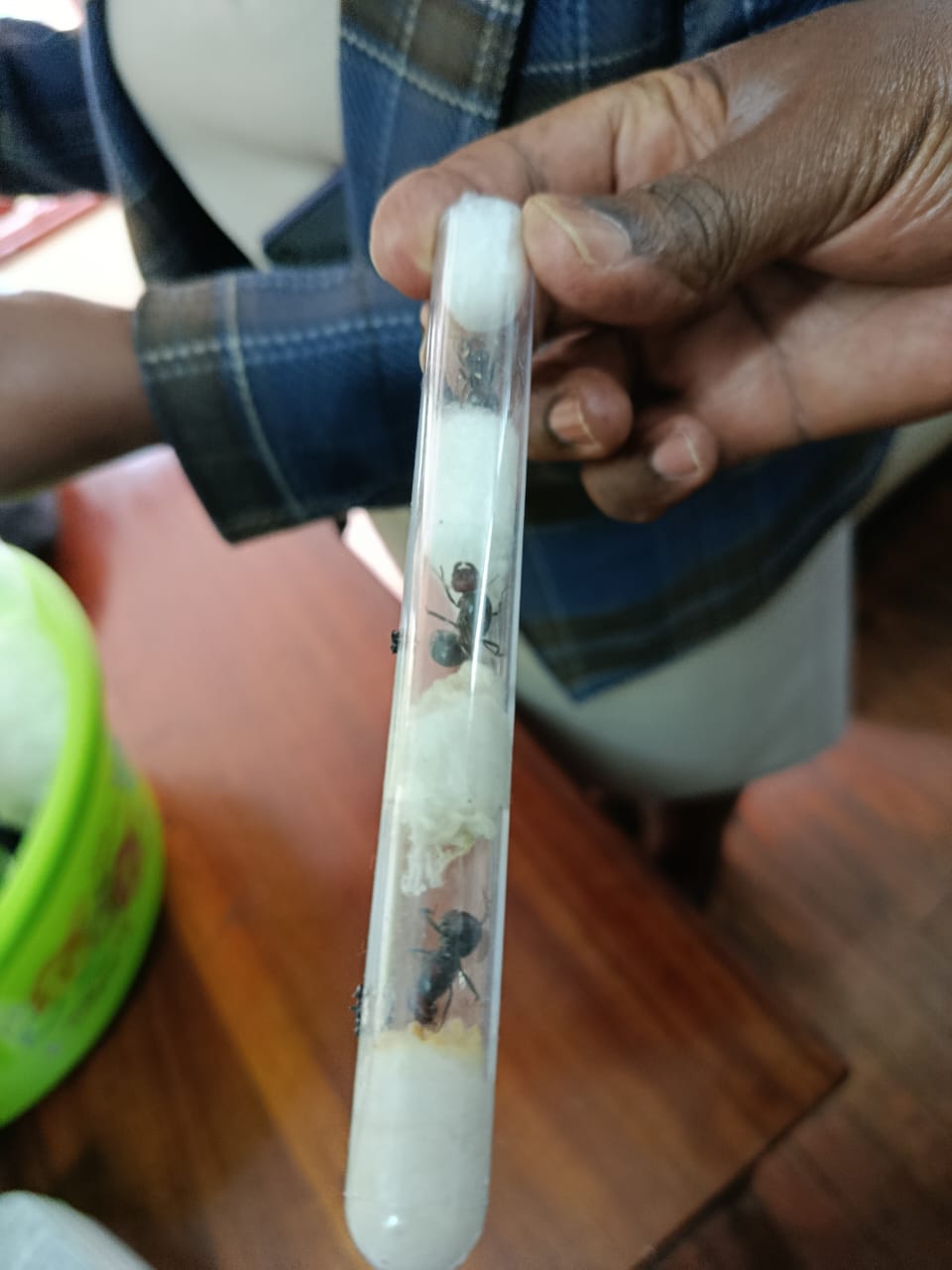
Udoto said the smugglers have developed a new technique where they pack ants in tiny, unmarked containers shipped abroad.
“ The smuggled garden ants are sold online on Black Markets. They are sold via social media and exotic pet forums, often labelled as “captive-bred” to evade suspicion,” he said.
Udoto said weak enforcement in most of the borders as the checks focus mainly on larger wildlife, letting ants slip through.
“Kenya Wildlife Service is now training officers to detect insect smuggling. We have issued Customs alerts for high-risk species like Messor cephalotes.
Our Scientists have demanded stricter Nagoya Protocol enforcement to combat biopiracy,” he said.
He said KWS was training Wildlife Inspectors to detect ant smuggling at airports, while the Scientists were pushing for Messor cephalotes to be listed as protected in more countries.
Similarly, activists track illegal online sales and report sellers.
He said the garden ants were not just fascinating creatures but were victims of a growing illegal trade. Without action, we could lose them before we truly understand their role in nature.
“This isn’t just about insects—it’s about justice for Kenya’s natural heritage. If biopiracy goes unchecked, we risk losing species before understanding their full value. The question is: Will the world act before it’s too late?” he asked.
Recently, three suspects were arraigned in the JKIA court charged with illegal possession and alleged smuggling of garden amts.
Two Belgian nationals, a Vietnamese and a Kenyan, recently appeared before Senior Principal Magistrate Njeri Thuku at the JKIA Law Courts in Nairobi, charged with illegal possession and trafficking of live wildlife—approximately 5,000 queen garden ants concealed in 2,244 tubes, with an estimated street value of Sh 1 million.