By Clifford Derrick
When lions fall silent, the savannah holds its breath. The grass stiffens, the air thickens, and the smaller creatures—who once trembled at the roar—begin to wail in confused relief. Yet beneath that silence lies a harder truth: the lion is gone, but the wilderness has lost its order.
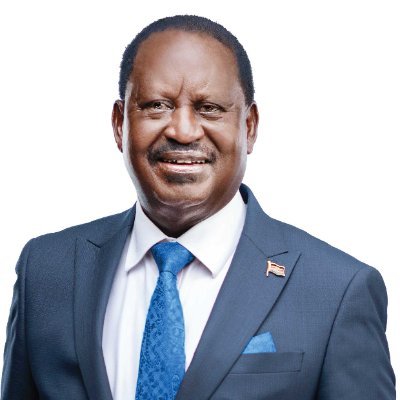
The passing of Raila Amolo Odinga has cast that silence across Kenya, across Africa, and into the uneasy conscience of history. For more than half a century, he lived as both the student and the sculptor of freedom—testing its tensile strength, bearing its burdens, and discovering, as Frantz Fanon warned, that each generation must discover its mission, fulfil it or betray it. Raila Odinga discovered his; others betrayed it.
The Anatomy of a Lion
He was born into history’s storm, cradled by the defiance of his father and the colonial twilight of a nation unready for the responsibilities of freedom. The young Raila learned that liberation is not an event but a temperament—a discipline of courage. In Jaramogi’s home, Uhuru was never a slogan; it was a metaphysical command.
If Jaramogi dreamed the outline of freedom, Raila was fated to live its contradictions. He studied machines in East Germany, only to return to a Kenya still shackled by mental chains. He entered politics not to wield power but to correct it—to remind his country that freedom’s measure is not declaration but design.
As Ngũgĩ wa Thiong’o taught us, the bullet aims to kill the body and the school to kill the mind. Raila spent his life reversing both. His ordeals at the Nyayo House torture chambers and imprisonment at Kamiti Maximum Prison did not break him; they burnished him. He emerged from each captivity as a philosopher of hope, carrying the unbroken tone of a man who refused to hate even those who crucified him.
The Contradiction of Power
To understand Raila is to wrestle with contradiction—the way moral clarity invites political tragedy. He lived in a country that celebrated his courage but feared his conviction. He was called a destabiliser for questioning tainted elections, only for the same institutions to praise him, in death, as guardian of our democracy. There is something profoundly Kenyan, profoundly African, in this rhythm of rejection and remembrance. We have made a ritual of crucifying our prophets before consulting their ghosts.
Hannah Arendt called it “the loneliness of the pariah who insists on thinking.” Raila lived that loneliness. His thinking offended the comfort of mediocrity; his courage embarrassed the cowardice of convenience. Yet through it all he carried himself with the quiet of one who knew that leadership is stewardship—not domination—a presence accountable to the future as much as to the present.
The Freedom that Refused to Die
There are men who chase history, and there are men who bend it back toward its original moral direction. Raila belonged to the latter. Like Nelson Mandela, he understood that endurance without bitterness is the final stage of freedom. And like Nkrumah, he knew that Africa must unite or perish—that the map of Kenya is one corner of a greater moral geography.
He spoke of roads, rails, ports, skies, grids and data—technocratic words that, in his hands, became sacred metaphors. To Raila, infrastructure was theology: the physical proof that African nations can connect what colonialism divided. To bridge a river was to repair a wound; to lay a railway was to realign destinies; to open skies and ports was to dismantle the geography of servitude. He was a philosopher-engineer of freedom, for whom power was not a possession but a conduit.
Gratitude & Fidelity
We must give thanks to those who believed in him when it was unfashionable and costly to do so—those who walked with him through NDP, into KANU, across LDP and NARC, who endured with him in CORD and NASA, who hoped again in Azimio la Umoja, and who, at the end, understood the discipline beneath his decision to leave his people inside the state through a broad-based arrangement: not capitulation, but calculation for stability and inclusion. Your fidelity was not in vain. History heard you.
A Word to His People—and to the Opportunists
And now, to my Luo kin and to all communities who have long borne the costs of dissent and the price of principle: do not let the voices that denied Baba in life seduce you in his death. Beware the hands that resisted him yesterday but now stretch for your grief today. Beware the sudden converts to his gospel who would cash in on the funeral to mortgage the future.
He stood for equity and for a republic where development is not a tribal trophy but a citizen’s right. Hold that line. Do not let your pain be harvested by the very forces that locked the gates against him. “Wan joka nyanam, to wan gi juok Baba.” We are his people, and we are also his spirits. Those who already joined the former oppressor’s chorus should step aside and let the government serve the very citizens Baba fought for—Nyanza’s fisherfolk and traders, the hustling youth of Kibera, the farmers of Western, the pastoralists of the North, the Coast and every Kenyan too long ignored by power’s habits.
A Word to Government
To the government of the day: govern in good faith. As Jaramogi’s courage multiplied through generations, so has Raila’s juogi—his animating spirit—lodged now in countless hearts. He left a plan, as his daughter Winnie intimated; a moral architecture for stability with justice, reconciliation with memory, growth with dignity. Honour it. If you deviate—if you return to the old arithmetic of exclusion—know that you will not face one man’s dissent but a chorus of principled resistance, grounded in the very spirit that outlived torture, exile, and stolen hours.
Africa’s Unfinished Union
Beyond Kenya, he leaves Africa a blueprint—not a daydream. He named the arteries of our freedom: continental highways and standard-gauge rails to move goods and dignity; open skies to lower costs and raise opportunity; energy grids to power industry and learning; an African digital commons to protect our knowledge; a currency architecture to end the dependency that cheapens our labour; and a moral economy where profit bows to people. He warned against the new colonisers in tailored suits—those who barter our minerals and futures with a handshake and a press release.
He exposed the local elites who collude, the soft empire of attention that distracts our youth, the algorithmic lullabies that turn revolt into content and courage into costume.
To Africa’s young: your smartphones are instruments; your conscience, the battlefield. Do not mistake noise for power. Freedom is not a hashtag but a daily discipline of building—patiently, stubbornly, together.
The Pain that Tells the Truth
Behind the laughter and the easy handshake lived a private sorrow—the sorrow of a man who gave everything for a people who often returned everything but misunderstanding. He bore it without bitterness. Arthur Schopenhauer said truth moves from ridicule to opposition to self-evidence; Raila lived all three. The ridicule was public, the opposition institutional, the self-evidence—alas—posthumous. And still he taught us grace: that a nation is repaired not by vendetta but by vision.
The Lion and His Pride
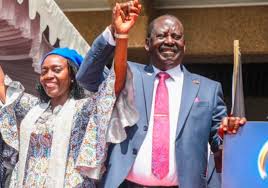
To his family: Mama Ida—Min Piny’s resilience, Rosemary Odinga’s grace, Raila O. Junior’s steadiness, Winnie Odinga’s fire, not forgetting Maurice Ogeta’s unwavering loyalty—these are not merely filial virtues; they are ongoing chapters in his text on freedom. He has gone where our ancestors convene councils under the great fig tree; but he did not go empty-handed. He carried our unfinished work with him to report, and to intercede.
Raila Odinga did right by the world. He stood for justice when silence was easier, for unity when division paid better, for principle when compromise promised comfort. Such men do not vanish; they leave imprints on the conscience of a people. He now rests among those who shaped history with their courage and their love for humanity—the beautiful company of the righteous dead who continue to light our path.
The Roar Beyond the Grave
Let us not merely mourn him. Let us metabolise his life into motion. Let us make his contradictions our compass and his faith our framework. For if Africa still waits to be free, it is because too many mistook a lion’s silence for peace. Raila Amolo Odinga is gone. But the architecture of his dream remains. And somewhere between Bondo and the infinite, the lion still walks.
Personal Farewell
“Baba, greet for me my late mother, Judy Mbewa, Nyar Seme Kakelo—one of your ardent believers. She is waiting with both hands. Carry our revolutionary greetings to George Oduor, Jaramogi, Nkrumah, Mandela, Biko, Chris Hani, Malcolm X, Patrice Lumumba, Sankara, Martin Luther King Jr., Wangari Maathai, and Winnie Mandela. Tell them we are still on the long road, that we have not laid down our tools, and that your juogi walks among us.”
“Baba yawa!”
“Rest well, Baba. Ywe gi kwe my hero!”
“Jowi! Jowi! Jowi!”