By Kepher Otieno In Abuja, Nigeria
Africa’s richest man, Aliko Dangote, has issued a bold call to action for the continent’s leaders to embrace a new economic philosophy anchored in the principle of ‘Africa First’.
Drawing inspiration from U.S. President Donald Trump’s ‘America First’ doctrine, Dangote urged African nations to prioritise continental interests above external influences and align development strategies around African needs, resources, and aspirations.
“If America can boldly proclaim ‘America First,’ then Africa must do the same. The time has come to begin the conversation around ‘Africa First’—a commitment to leveraging our vast resources and economic potential for the benefit of Africans,” Dangote said.
Africa’s wealth in natural resources continues to enrich the world while leaving its own people in poverty, a paradox that billionaire industrialist Dangote said must come to an end.
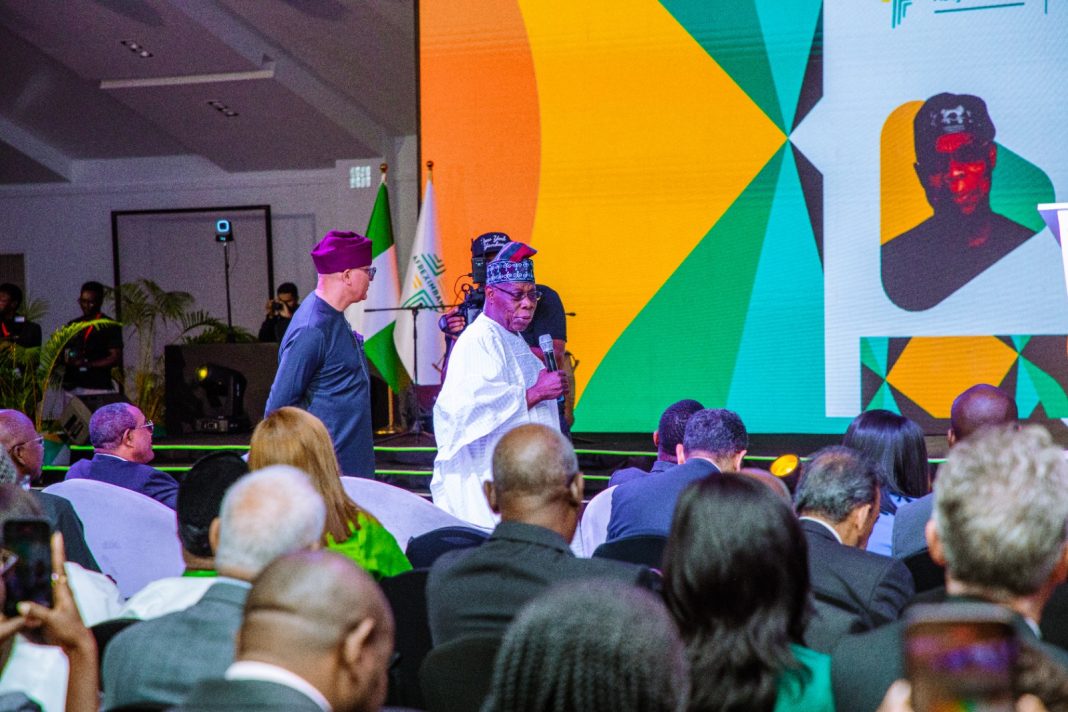
Speaking passionately at the 32nd Afreximbank Annual General Meeting in Abuja, Dangote lamented that despite the continent’s vast deposits of minerals, energy sources, and agricultural wealth, Africa remains trapped in a cycle of underdevelopment and external exploitation.
“We have the resources:gold, oil, gas, cobalt, diamonds but they are being exploited by others to grow their economies while our people remain poor,” he said. “This model is unsustainable. It must change.”
Dangote emphasised the urgent need for a fundamental economic shift that prioritises value addition within Africa, discourages raw material exports, and ensures that the wealth generated from African soil benefits Africans first.
In addition to external exploitation, Dangote drew attention to internal structural weaknesses, particularly the high cost of energy, which continues to hamper industrial production across the continent.
“One of the biggest barriers to manufacturing in Africa is the cost of energy. Without affordable and reliable power, we cannot compete globally or build sustainable industries,” Dangote warned.
He also criticised the policy inconsistencies and lack of continuity that plague African governance. According to Dangote, each change in political leadership often brings a reversal or overhaul of previous development plans, resulting in lost time, stalled projects, and diminished investor confidence.
“Every time a new leader comes in, they want to tear everything down and start afresh. That mindset is hurting Africa. We need long-term planning, policy stability, and institutional continuity,” Dangote stressed.
Dangote’s remarks were a rallying cry for African leaders to embrace consistency, foresight, and homegrown solutions, not only in policy but also in execution. He urged governments to create enabling environments for industrial growth, reduce energy costs, and safeguard long-term economic strategies from political cycles.
“Africa’s transformation will not come from outside. It has to be built from within—with stable policies, accountable leadership, and a deep commitment to the continent’s prosperity,” he declared.
Dangote re-emphasised that Africa possesses everything it needs to thrive—from gold, cobalt, and oil to vast agricultural wealth and a booming youth population.
Yet, he lamented, the continent continues to play a subordinate role in the global economy, with Western countries benefiting disproportionately from African resources.
“We have all the valuable resources here in Africa gold, cobalt, diamonds, cocoa, coffee—yet foreign corporations come here, exploit these resources, and repatriate the profits. This must change. Africa cannot continue to enrich others while its people remain poor,” he stated.
Dangote called on African leaders to take a firm stand and rewrite the narrative of economic dependence. He urged governments to craft policies that promote intra-African trade, value addition, and job creation, ensuring that wealth is retained and multiplied within the continent.
“Let’s start saying it clearly: Africa First. Not as an empty slogan, but as a strategic shift. All else is second,” he said. “This is how we create wealth. This is how we generate employment. Africa can only be made great by Africans.”
He challenged the continent’s elite to invest in African industries and infrastructure rather than seeking validation and partnerships abroad, stressing that Africa’s destiny must no longer be dictated by Western financial models or foreign interests.
“We must stop conditioning our economies based on Western expectations. We don’t need to ask permission to be great. It’s time to take ownership and act boldly,” Dangote asserted.
His remarks were met with strong support from business leaders, scholars, and policymakers at the conference, many of whom echoed his call for a unified African agenda that prioritises the continent’s development over foreign dependency.
Dangote challenged African leaders to rethink their economic engagement with each other and open up their borders for free-flow trade and investments.
Prime CS and Foreign Affairs CS Musalia Mudavadi represented Kenya and President William Ruto during the signing of the first Pan African Payment Systems (PAPSS), as an alternative to the US dollar for cash transactions during intra-African trade.
Renowned U.S. economist and sustainable development advocate, Prof. Jeffrey Sachs, urged African nations to adopt bold, coordinated economic reforms that would position the continent for long-term prosperity and financial autonomy.
Sachs emphasised the urgent need for Africa to strengthen its economic architecture and reduce vulnerability to external shocks.
At the heart of Sachs’ proposal is the call for the creation of a single African currency—
a move he described as essential for facilitating seamless trade, enhancing monetary stability, and deepening continental integration under the African Continental Free Trade Area (AfCFTA).
“Africa must move toward a unified monetary system. A single currency will eliminate barriers to intra African trade, reduce dependency on foreign exchange, and empower the continent to operate as a cohesive economic bloc,” Sachs stated.
In addition to a common currency, Sachs recommended the establishment of a pan-African lender of last resort, similar in function to the U.S. Federal Reserve or the European Central Bank.
Such an institution, he argued, would provide emergency financial support to member states during periods of crisis and help safeguard the continent against global economic disruptions.
“Africa needs its own financial safety net an institution that can stabilise markets, support liquidity, and give countries breathing space during economic downturns,” he said.
Sachs also urged African governments to negotiate long-term loan repayment frameworks, especially with emerging lenders like China.
He noted that China’s status as a recently industrialised economy offers a relatable development model and a strategic partnership opportunity for African states seeking infrastructure investment and technological transfer.
“China is not just a lender it is an example of rapid industrialisation and modernisation. Africa should continue to strengthen its ties with China, but on terms that are favourable, transparent, and geared toward long-term development,” he said.
Sachs pushed for a radical rethinking of Africa’s economic policy agenda, calling on leaders to focus on innovation, regional integration, institutional reform, and diversified global partnerships.
“Africa stands at a crossroads. With the right tools monetary unity, smart borrowing, strategic alliances, and strong institutions the continent can break the cycle of dependence and take control of its economic future,” Sachs affirmed.
His remarks added to the chorus of voices at the Afreximbank summit advocating for a paradigm shift in Africa’s economic thinking—one that prioritises self-reliance, regional solidarity, and transformative leadership.
Prof. Sachs asked the African Development Bank and Afreximbank to think of how best they can come up with long concessionary loans to help build African economies.