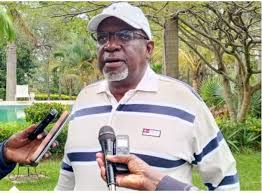

By Hon Sammy Weya
The original 1982 Yala Integrated Development Plan (YIDP) envisioned Yala Swamp as a carefully managed, community-oriented agricultural and ecological development zone. The current and historical development trajectory under Dominion Farms and later Lake Agro appears, in several respects, to diverge from the original recommendations of the consultants.
1. Original Vision of the YIDP
The YIDP proposed an integrated development approach built around:
- smallholder settlement,
- irrigation-supported farming,
- food security,
- fisheries,
- livestock,
- forestry,
- erosion control,
- and environmental conservation.
The consultants emphasised:
- mixed farming systems,
- gradual reclamation,
- institutional support,
- and balancing ecological sustainability with economic production.
The swamp was viewed not merely as “unused land,” but as:
- a hydrological system,
- a livelihood source,
- and an environmentally sensitive wetland ecosystem.
2. Smallholder Settlement vs Large Estate Agriculture
What the YIDP Recommended
The consultants proposed:
- approximately 4,000 smallholder farm families on irrigated land,
- with average holdings of around 2 hectares per household.
The objective was:
- rural employment,
- household food production,
- and broad-based economic participation.
The report did not envision the swamp becoming a predominantly large-scale privately controlled estate.
What Happened Under Dominion/Lake Agro
The Dominion Farms project and later Lake Agro arrangements evolved toward:
- centralised large-scale commercial agriculture,
- long leasehold arrangements,
- industrial rice and later sugar-oriented production systems,
- and highly consolidated land control.
Critics argue this reduced:
- community access,
- grazing,
- fishing,
- and traditional livelihood systems.
This appears fundamentally different from the original YIDP’s community settlement framework.
3. Food Security vs Commercial Monoculture
YIDP Recommendations
The report repeatedly stressed that:
- local food security was fragile,
- subsistence production was barely adequate,
- and priority should be given to improving food crop systems.
The consultants specifically promoted:
- Rice
- Fish
- Agroforestry
- Beehives
- Arabica Coffee
- Palm Oil
- Cotton
- Poultry
- Sorghum,
- Cassava,
- Sweet potatoes,
- Beans,
- Vegetables,
- and diversified production systems.
Sugarcane was discussed only as:
- one optional commercial alternative,
- dependent on viability conditions,
- and not as the dominant land use.
Current Situation
Recent developments around the licensing of sugar milling and sugarcane expansion have raised concerns among environmentalists and community groups that:
- the swamp may increasingly shift toward monoculture cane production,
- potentially undermining food production,
- biodiversity,
- fisheries,
- and wetland functions.
This contrasts with the diversified agricultural model proposed in the YIDP.
4. Environmental Protection vs Wetland Conversion
YIDP Position
The consultants treated Yala Swamp as an ecologically sensitive area requiring:
- drainage planning,
- catchment management,
- forestry,
- soil conservation,
- and hydrological control.
The report emphasised:
- erosion control,
- river catchment protection,
- and controlled reclamation only where technically justified.
It also recognised that:
- some parts of the swamp were unsuitable for intensive agriculture,
- while others should remain under forestry or controlled use.
Concerns Raised by Later Developments
Environmental groups, researchers, and civil society organisations have raised concerns over:
- wetland degradation,
- destruction of papyrus ecosystems,
- disruption of fisheries,
- loss of biodiversity,
- hydrological alteration,
- and increased pollution risks.
The Yala Swamp is internationally recognised as an ecologically important wetland connected to:
- Lake Victoria,
- migratory bird habitats,
- fish breeding systems,
- and regional climate regulation.
Critics argue that intensive industrial agriculture without adequate environmental safeguards contradicts the ecological caution embedded in the YIDP.
5. Governance and Public Participation
YIDP Governance Philosophy
The original plan emphasised:
- institutional coordination,
- farmer participation,
- extension services,
- public investment,
- and organised support systems.
The report assumed development would occur through:
- structured planning,
- phased implementation,
- and government-supported community participation.
Contemporary Governance Questions
Public criticism surrounding Dominion and later Lake Agro has often focused on:
- lack of adequate public participation,
- opacity of lease agreements,
- weak community consultation,
- and concentration of decision-making.
These concerns are especially significant under Kenya’s 2010 Constitution, which strengthened:
- public participation requirements,
- environmental rights,
- and community land protections.
Critics argue that major long-term land allocations involving wetlands should require:
- transparent environmental assessments,
- broad stakeholder consultation,
- and county-level participation.
6. Fisheries and Community Livelihoods
YIDP Recommendations
The plan identified fisheries as a major economic pillar and proposed:
- modernisation of fishing systems,
- fish pond development,
- processing facilities,
- and improved market systems.
Fishing communities were considered integral to the swamp economy.
Reported Effects of Large-Scale Reclamation
Some local groups and researchers have alleged:
- reduced fish breeding areas,
- blocked access routes,
- declining fisheries,
- and disruption of traditional livelihood systems.
These concerns suggest tension between industrial land conversion and the original integrated livelihoods approach envisioned in the YIDP.
7. Key Contradiction
Perhaps the most important contrast is this:
| YIDP Vision | Later Large-Scale Model |
|---|---|
| Integrated rural development | Commercial estate agriculture |
| Smallholder settlement | Concentrated leasehold control |
| Mixed farming systems | Increasing monoculture tendencies |
| Food security emphasis | Export/commercial emphasis |
| Ecological caution | Extensive wetland conversion concerns |
| Participatory institutional support | Governance transparency disputes |
8. Strategic Interpretation
The YIDP did support:
- partial reclamation,
- irrigation,
- commercial agriculture,
- and infrastructure investment.
However, it did so within a framework emphasising:
- community settlement,
- environmental management,
- food security,
- and diversified livelihoods.
This is important because contemporary debate often frames the issue as “development versus conservation.”
But the YIDP itself proposed a third path: “integrated, environmentally managed, community-centred development.”
Possible Framing for Your Article
A strong evidence-based framing could be:
“The original Yala Integrated Development Plan did not envision Yala Swamp as a purely industrial agricultural estate. Instead, it proposed a carefully managed, smallholder-centred and ecologically balanced development framework. Subsequent large-scale leasehold arrangements departed significantly from the integrated vision proposed by the original consultants.”
The writer is a former Alego MP.