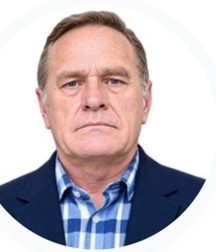

Founder & Chairman, New World Alliances
By Dr. Edris N. Omondi, Esq. | Head of Legal – Africa, New World Alliances Foundation
image
“A founder’s work is ultimately tested by what happens after the founder is gone.”
There are moments when the passing of an individual is not merely a personal loss, but the closing of one chapter in the history of an institution and the opening of another. The passing of Sir Larry Marvin Swart, Founder and Chairman of New World Alliances, is such a moment.
Sir Larry’s significance lies not only in the title he carried, but in the institution and vision he chose to build. New World Alliances was conceived as a people-centred international platform bringing together diplomacy, humanitarian service, education, culture, environmental stewardship, trade, innovation and community-led development. Its present foundation describes its purpose in terms of unity, self-determination, peaceful cooperation and practical support for communities.
His journey was rooted in conviction. The public record associated with New World Alliances identifies him as its Founder and Chairman, while NWA’s own published discussions describe his motivation and the history of the organisation. His professional profile also records a background connected with military and security service. Those experiences appear to have informed his later interest in sovereignty, governance, security, accountability and the protection of human dignity.
In remembering him, it is useful to think of the founder’s role in the same broad tradition as Melvin Jones, the founder of Lions Clubs. Melvin Jones began with a simple proposition: that people with ability and influence could put those gifts to work for their communities. Sir Larry’s institutional journey was different in character and more explicitly governance-oriented, but there is a comparable founding instinct: to turn an idea into an organised movement capable of reaching beyond one community and connecting people across borders.
That comparison is particularly meaningful when considering the scale of the African vision now associated with New World Alliances Foundation. According to the Foundation’s Africa network, representation has extended to 36 of Africa’s 54 nations, with Ghana serving as the registered African headquarters. This is not merely a geographical statistic. It represents an attempt to build an African-facing network through which local knowledge, leadership, humanitarian action, governance ideas and international relationships can meet.
Africa needs such bridges because the continent is no longer simply a subject of global policy; it is increasingly a shaper of the global future. Africa’s population, resources, markets, innovation and strategic position mean that its voice must be present in conversations about global governance, security, development, trade, technology, climate, humanitarian action and human rights. Ghana’s Presidency has similarly emphasised Africa’s need for stronger institutions, accountable governance, human rights and partnerships that move beyond dependence towards trade, investment and shared opportunity.
The vision behind NWAF should therefore not be understood as a rejection of the major institutions of the international system. Rather, its stated purpose is to complement existing structures by creating additional channels for practical cooperation, community voice, diplomacy and humanitarian action, particularly where people experience a gap between global commitments and realities on the ground. In that sense, the Foundation can aspire to become a bridge between international norms and local implementation, between diplomacy and community action, and between governance principles and practical humanitarian programmes.
For Sir Larry, the vision was never simply an organisational diagram. It was an idea about what institutions could become when they were built around people. His legacy is therefore found not only in the name of New World Alliances, but in the relationships he established, the people he brought into the work, the conversations he initiated and the institutional platform he left for others to develop.
As Head of Legal – Africa of the New World Alliances Foundation, I believe the most meaningful tribute we can offer him is not to preserve his name as a monument, but to preserve the seriousness of the responsibility he placed before us. A founder’s work is ultimately tested by what happens after the founder is gone. Institutions must mature. Governance must become stronger. Professional standards must deepen. Humanitarian programmes must reach the people for whom they exist. And the pursuit of justice and dignity must remain anchored in law, evidence, accountability and service.
Sir Larry Marvin Swart was, above all, a founder. He saw a possibility before there was an institution capable of expressing it. He took an idea and gave it structure. He gathered people around a vision that reached beyond national borders. He believed that the dignity of the individual mattered and that global cooperation should ultimately serve humanity.
The task now belongs to those who remain. Africa must claim its rightful place in the global conversation, not merely as a recipient of decisions made elsewhere, but as a partner, contributor and co-architect of the future.
The work of NWAF, in partnership with governments, civil society, communities, humanitarian actors, professional institutions and other global bodies, can help fill practical gaps without seeking to replace legitimate international institutions.
That is the responsibility Sir Larry leaves behind: not simply to remember the founder, but to continue building the bridge he began.
Farewell, Sir Larry Marvin Swart. Your chapter has closed, but the vision you helped set in motion now belongs to all who are prepared to serve it with integrity, humanity and courage. May you rest in eternal peace.
NEW WORLD ALLIANCES FOUNDATION
www.newworldalliances.foundation
Editorial source note: Institutional facts concerning NWA/NWAF and Sir Larry’s founding role are drawn from publicly available New World Alliances materials. The comparison with Melvin Jones is a comparison of founding/service vision, not organisational equivalence.