
By Reporter
The National Assembly Committee on Defence, Intelligence and Foreign Relations has called on Kenya Shipyards Limited (KSL) to work towards financial independence within the next two financial years, citing the institution’s growing capacity and potential to transform Kenya’s maritime manufacturing industry.
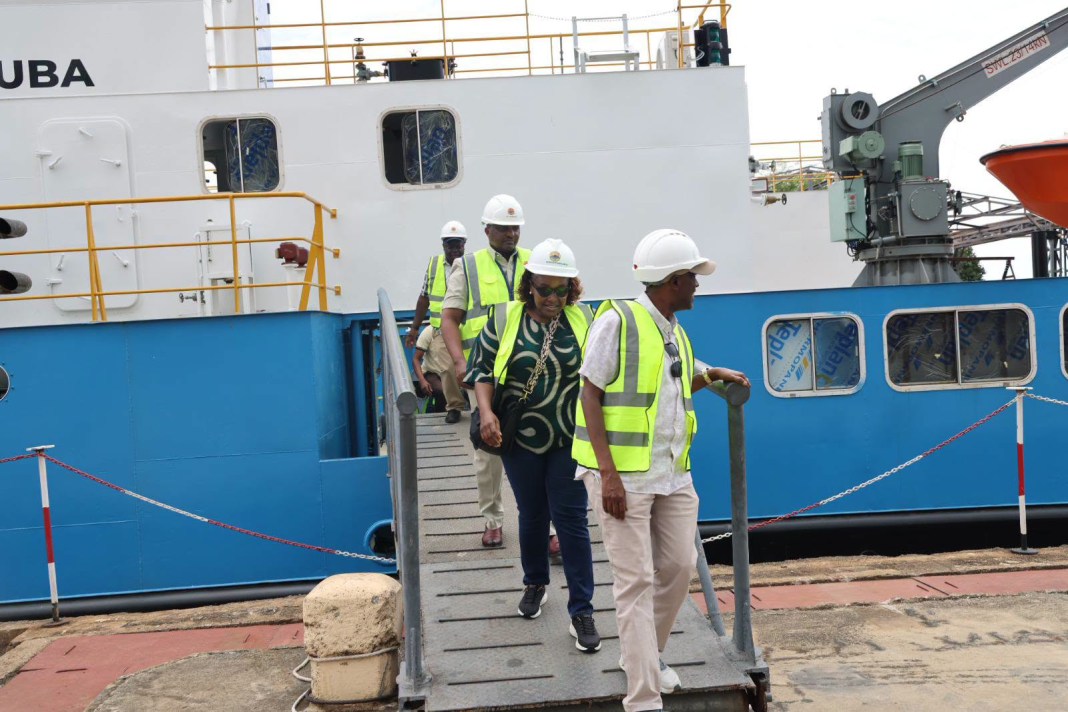
The Committee made the call during an inspection visit to the Kenya Shipyards Limited facility in Kisumu, led by its Vice-Chairperson, Hon. Abdullaih Bashir (Mandera North), where Members assessed the progress made by the state corporation in developing local shipbuilding capabilities and maritime infrastructure across the country’s waterways.
Established in 2020, KSL has made significant strides in strengthening Kenya’s capacity to manufacture, maintain and repair vessels locally. Among its notable achievements is the construction of MV Uhuru 2, a modern 100-metre vessel used to transport petroleum products across Lake Victoria ports, as well as the rehabilitation of MV Uhuru 1, a vessel originally built in the 1960s.
The institution has also undertaken the development of fishing ports, water ambulances and specialised fishing vessels at various locations, including Homa Bay, Muhuru Bay, Sio Port and Usenge.
According to the KSL Head of Production, Brig. Peter Muthungu, these interventions have contributed to improved livelihoods among lakeside communities by strengthening fishing and water transport activities.
The Committee was further informed that recent investments in modern production equipment have significantly enhanced the shipyard’s operational efficiency and reduced its dependence on external manufacturers.
Brig. Muthungu cited the acquisition of fibre-laser cutting machines, robotic welding systems and High-Density Polyethylene (HDPE) boat construction technology as key developments that have strengthened the institution’s local manufacturing capacity.
The improvements are also expected to enhance productivity and operational margins.
“Direct engagement with equipment suppliers has cut costs from 718 million to 366 million shillings,” he said.
Despite the progress, Members raised concerns over the institution’s continued reliance on government funding, particularly given that it is managing active projects valued at KSh 6.22 billion.
In response, Brig. Muthungu explained that the funding challenges were largely attributable to the milestone-based payment arrangements governing its projects, which create timing gaps between expenditure and revenue collection. He added that KSL was still investing in foundational infrastructure, placing additional pressure on its cash flow.
The Committee, however, expressed confidence in the institution’s ability to become financially self-sustaining, noting that improved customer payment arrangements and prudent financial management could accelerate the transition.
“We have seen what it can do. It has potential. After two years, you should completely wean yourself from the Exchequer,” observed Hon. Bashir.
On expansion prospects, KSL identified significant commercial opportunities at the Port of Mombasa, where vessels navigating the Indian Ocean have limited access to adequate ship repair facilities within the region.
To tap into this market, the shipyard is proposing the construction of a graving dock capable of servicing vessels measuring between 185 and 285 metres in length. The proposed facility could attract up to 32 ship repair contracts annually, significantly expanding the institution’s current capacity, which allows it to accommodate only five vessels at a time.
Beyond the coastal region, KSL is also expanding its presence across the country, with port development underway at Lake Turkana.
The institution is planning to introduce passenger ferries on the lake and is conducting surveys of other water bodies while engaging relevant water authorities to identify further opportunities for maritime infrastructure development.
Members also proposed the introduction of bonding arrangements requiring officers who undergo specialised training at the institution’s expense to serve for a specified period to help safeguard public investment in skills development while mitigating the loss of trained personnel.