
By Paul Njenga
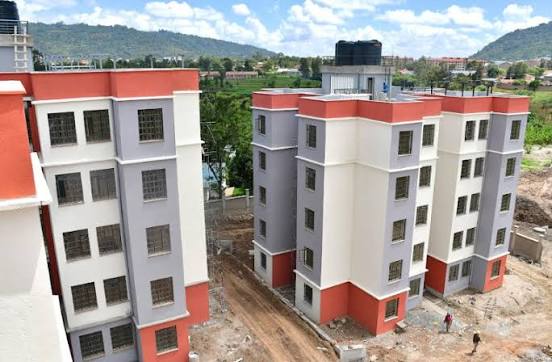
Let us stop insulting the intelligence of Kenyans with the tired argument that Kenya is a construction site, as though roads, bridges, buildings and concrete structures are sufficient evidence of economic progress. A country is not developed because it is permanently under construction. Neither does pouring concrete automatically translate into prosperity.
Kenyans are not asking for photographs of ongoing projects. They are asking for jobs, affordable food, accessible healthcare, decent housing, higher incomes, lower living costs and an economy that gives them hope and economic security.
What is the point of celebrating highways when households are struggling to make ends meet? What is the value of impressive infrastructure when young people cannot find meaningful employment, businesses are struggling to survive and ordinary citizens are losing their purchasing power? What does it mean to boast about economic growth when its benefits are not translating into better living standards?
We must stop confusing government expenditure with development, construction activity with economic transformation, and GDP growth with improved human welfare.
Nobody disputes that infrastructure is necessary. Roads, bridges, electricity, water systems, hospitals and other public facilities are essential ingredients of economic transformation. But infrastructure is a means to an end, not an end in itself.
Economic growth is a means; economic development is the ultimate goal. Improved living standards are the true measure of success.
This distinction is fundamental, yet it appears to be missing from much of our national economic conversation.
Economic growth measures the expansion of the production of goods and services, commonly reflected in Gross Domestic Product (GDP). Economic development goes much further. It concerns the transformation of that growth into improved living standards, productive employment, higher incomes, reduced poverty, better public services, economic opportunities and human dignity.
A country can record positive GDP growth while a significant proportion of its population experiences economic hardship. It can construct highways while businesses struggle to access affordable financing. It can build impressive infrastructure while unemployment and underemployment remain unresolved.
The ultimate question is therefore not how much construction is taking place, but how much better off Kenyans are becoming.
Are households enjoying greater disposable incomes? Can ordinary families afford food, education, healthcare and decent housing? Are young people finding meaningful and sustainable employment? Are small businesses expanding? Is the cost of doing business declining? Are farmers receiving better returns for their produce? Are workers experiencing improved purchasing power?
These are the indicators that should define our national development debate.
Construction must translate into economic value
Infrastructure is important because of what it enables, not simply because of what it looks like.
A road should reduce transportation costs, connect producers to markets, stimulate trade and expand economic opportunities. Electricity investments should lower production costs and support industrialisation. Water infrastructure should improve agricultural productivity and household welfare. Housing investments should improve access to decent accommodation without imposing unsustainable financial burdens on households.
Every public investment should therefore be evaluated against its economic and social returns.
We should be asking whether projects are increasing productivity, stimulating private investment, creating sustainable employment and expanding the country’s productive capacity.
A construction project can create temporary employment and stimulate economic activity during implementation. But genuine development requires more enduring benefits: productive enterprises, sustainable jobs, higher incomes, stronger markets and improved living standards.
Otherwise, we risk celebrating expenditure rather than development.
The public finance question we cannot avoid
There is another dimension to this debate that deserves serious attention: how are we financing this construction?
Public resources are limited and must be allocated according to national priorities and expected returns. Borrowing to finance infrastructure is not inherently wrong. Indeed, productive borrowing can accelerate economic transformation. However, the justification for borrowing must be the economic value and future benefits generated by the investment.
We cannot indefinitely borrow to finance projects while ignoring debt-servicing obligations, the cost of borrowing, fiscal sustainability and the burden transferred to future generations.
Public finance management should not be judged merely by the size of national budgets, the number of projects announced or the percentage of expenditure absorbed. It should be judged by the outcomes achieved from the resources committed.
The fundamental question is whether every shilling collected from taxpayers or borrowed in their name is contributing to improved living standards and sustainable economic development.
A government that spends billions on infrastructure but fails to create an enabling environment for productive businesses, affordable credit, employment and investment has not fully addressed its development responsibility.
Government should enable the economy, not crowd it out
Kenya needs a strong and competitive private sector. Government should concentrate on creating an enabling environment through sound policies, efficient public services, infrastructure, predictable regulation, affordable financing and strong institutions.
The private sector should be encouraged to produce, manufacture, invest, innovate and create employment.
Government should not unnecessarily crowd out private investment through excessive domestic borrowing, unpredictable taxation, inefficient public enterprises or direct involvement in commercial activities that private investors can undertake more efficiently.
The dignity of a payslip, the survival of small businesses and the purchasing power of households are equally important measures of economic performance.
A development model that concentrates on physical infrastructure while overlooking the economic circumstances of households is incomplete.
Development requires strong institutions and accountability
Economic development is not simply about money, projects and infrastructure. It requires strong institutions, constitutionalism, the rule of law, transparency and accountability.
Investors need predictable policies. Businesses need fair competition. Citizens need confidence that public resources are being managed responsibly. Public institutions must operate within the Constitution and the law.
Development cannot be sustained where institutions are weak, public resources are mismanaged or accountability is sacrificed for political expediency.
The Constitution provides a framework for accountable governance and the prudent, responsible use of public resources. These are not obstacles to development; they are essential conditions for achieving it.
Let us change the national development conversation
Kenya must move beyond the politics of construction-site photographs, project announcements and impressive GDP statistics.
We need a national conversation centred on productivity, competitiveness, industrialisation, employment, household incomes, poverty reduction and the quality of public services.
We should measure progress by the number of sustainable jobs created, the reduction in the cost of living, the growth of household disposable incomes, the competitiveness of Kenyan businesses, the productivity of agriculture, the expansion of manufacturing and the quality of healthcare and education.
The ultimate macroeconomic obligation of government is to improve the living standards of citizens. Every budget, tax policy, borrowing decision and public investment should be tested against this obligation.
Kenya needs roads, bridges, electricity, housing and other infrastructure. But infrastructure must serve a larger economic purpose. It must facilitate production, reduce the cost of doing business, unlock private investment and improve the welfare of citizens.
We should not mistake the means for the end.
The objective is not simply to build a country. It is to develop a country in which its citizens can live better, earn better, work better and realise their full economic potential.
So, to those who keep telling us that Kenya is a construction site, give us a break!
We do not just want to see a country under construction. We want to experience a country under development.
That is the difference between building projects and building a prosperous nation.
Paul Njenga is a researcher and Finance and Development Expert.