
By Anderson Ojwang
The demand for scarce employment opportunities is placing undue pressure on the County Public Service Boards and putting them at loggerheads with the Executive.
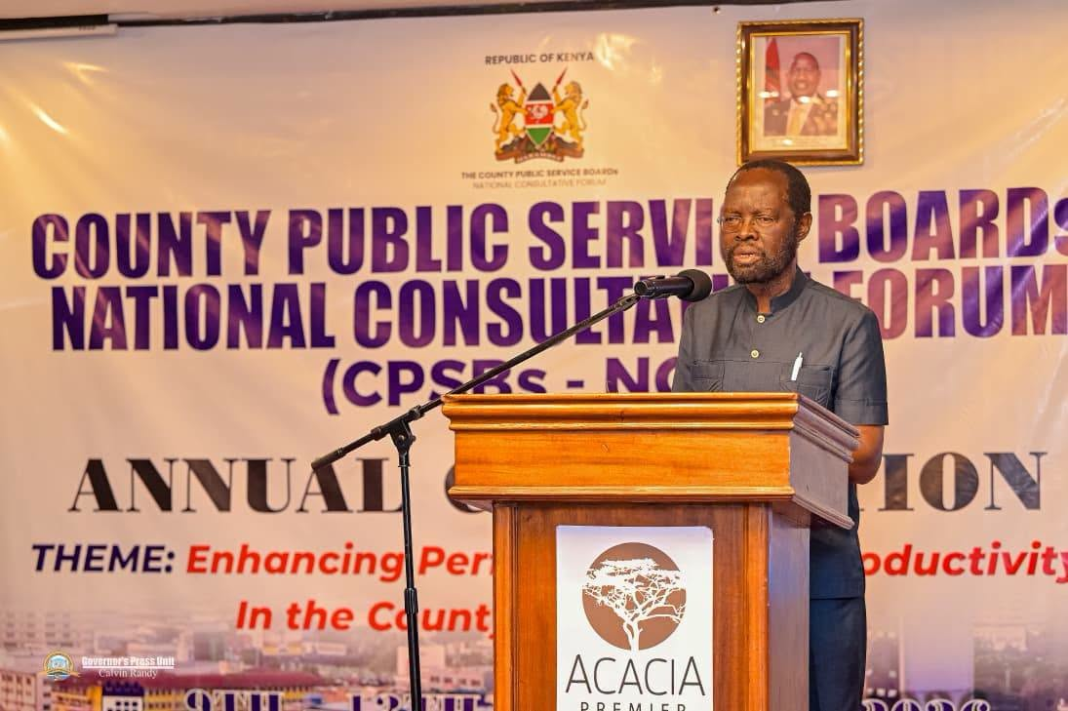
Chairman of the Kisumu County Public Service Board, Prof. Jamesf Obondi Otieno, said the pressure to employ or not employ had put many of the County Public Service Boards at loggerheads with their County Executive Committees.
He said the Executive was also under pressure to create employment opportunities for young people and improve performance.
“The County Public Service Boards are gatekeepers for the County Governments; we, the County Public Service Boards, are always in the spotlight.
Every time the Controller of Budget and Auditor-General flag County Governments for breaching the wage bill thresholds,” he said.
Prof. Obondi said the boards were faced with a unique and monumental challenge, as trimming the wage bill to the required levels had been hard-hitting.
“The defunct local authorities, which sprung up across every part of the country in the late 1990s, left behind thousands of staff who were all on permanent and pensionable terms, which accounts for the bulk of employees in the counties,” he said.
Wage Bill
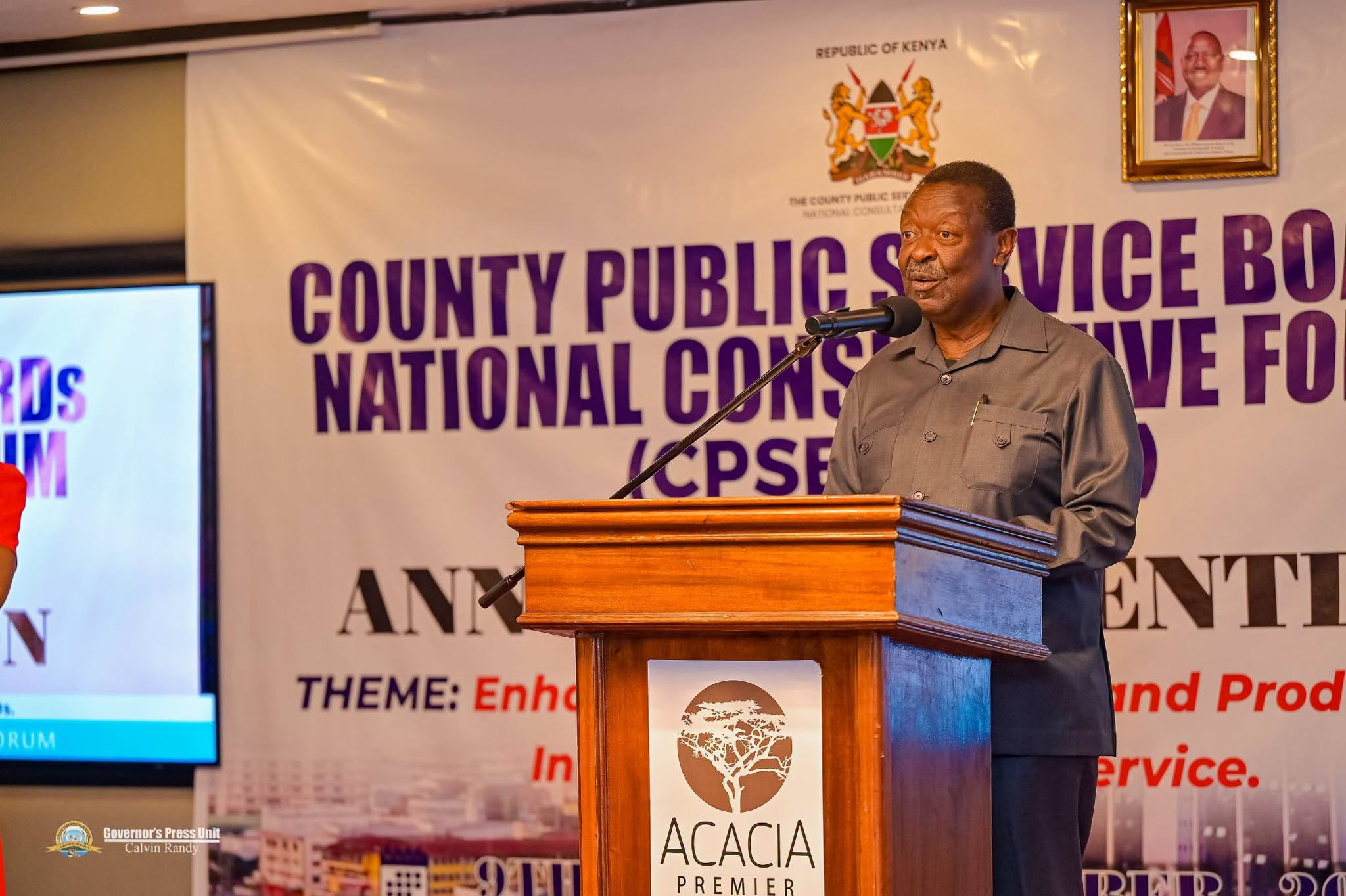
Prime Cabinet Secretary Musalia Mudavadi urged county boards to undertake staff audits, strengthen human resource databases and introduce evidence-based workforce planning. Staffing levels, he said, must reflect actual service requirements and available resources.
He argued that counties should move beyond simplistic attempts to reduce employee numbers and instead establish whether public spending on personnel translates into measurable improvements in service delivery.
“Wage-bill management is not simply about reducing numbers; it is about ensuring that every shilling spent on personnel contributes to service delivery,” Mudavadi said.
He challenged County Public Service Boards to resist political interference in public appointments, warning that patronage, nepotism and weak accountability threaten the credibility of devolution.
Mudavadi said county governments must abandon politically driven recruitment and embrace merit-based appointments as pressure mounts on devolved administrations to improve service delivery while managing rising personnel costs.
Speaking on Monday, 9th November 2026, at the opening of the County Public Service Boards National Convention in Kisumu City, Mudavadi said their independence was critical to protecting public resources and restoring public confidence in government.
“Recruitment must be based on merit, not patronage; promotion on ability, not favouritism; and discipline on due process, not political considerations,” he said.
Allocation
The Prime Cabinet Secretary said Sh4.4 trillion had been disbursed to the 47 counties, with about 230,000 people employed by the counties.
“If you compute 230,000 households by five employed in the counties, then you can see how many household incomes per capita you have lifted,” argued the Foreign Affairs CS.
He called for better workforce management that balances fiscal discipline with the livelihoods dependent on public-sector employment.

“Independence safeguards the public interest,” he said, urging boards to discharge their responsibilities fairly, professionally and transparently.
He told the counties to be careful that, when hiring staff, they placed meritocracy at the top of their list and matched the right skills with the jobs to ensure high productivity and performance.
Nyong’o said he was glad that devolution was working and fast-tracking development at the grassroots; however, more money still needed to be disbursed to the counties to enable them to do even better than they were doing now.
“Devolution has to work for all Kenyans. Continuous consultation, collaboration and meaningful engagement among stakeholders are essential in ensuring that the promise of devolution translates into tangible benefits for the people,” he wrote.
He said the Constitution of Kenya established the framework for devolution, but County Public Service Boards had a critical responsibility to make it work through effective, fair, transparent and merit-based human resource management.
“This calls for County Public Service Boards to strengthen their institutional independence, uphold meritocracy in recruitment and promotion, embrace sustainable human resource planning, invest in continuous skills development, accelerate digital transformation, and foster a culture of integrity, professionalism and accountability.
Ultimately, the true measure of devolution is not in the structures we establish, but in the lives we transform and the opportunities we create for our people.
I wish all County Public Service Board members success as they undertake this important and demanding responsibility of strengthening public service delivery and advancing the aspirations of devolution,” he said.