
By Billy Mijungu
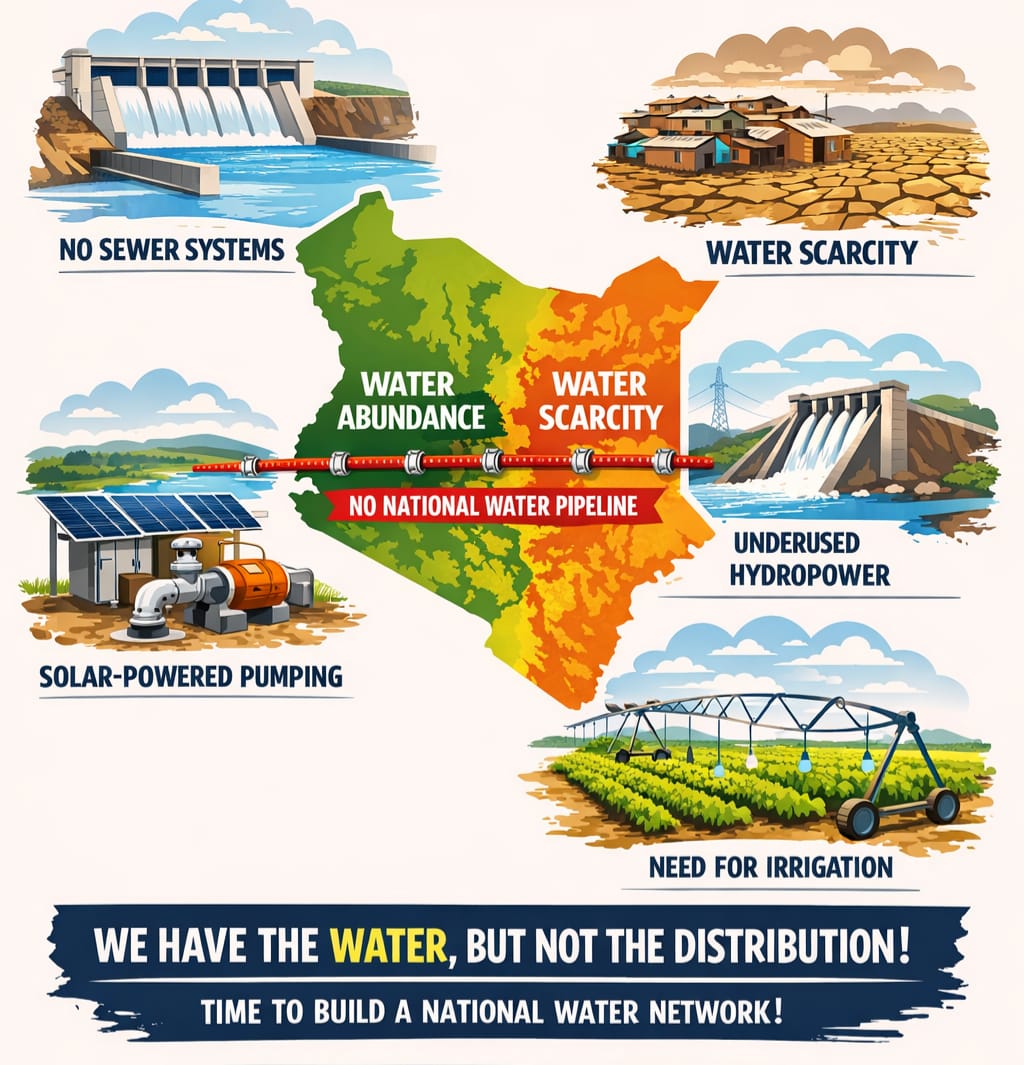
Kenya does not lack water sources but a distribution strategy. The water sector has one of the largest concentrations of parastatals and semi autonomous agencies. Almost every county operates a water company. Yet across much of the country, these entities function without a comprehensive sewage system to complement water supply. In many towns and urban centres, sewage infrastructure simply does not exist. Even more concerning, there is no clear national framework guiding how these systems should grow alongside water provision.
At the national level, the sector continues to focus on constructing dams. Dams are important, but too often they remain exactly that: dams. Water is stored but not effectively distributed to the households, farms and industries that need it most. This does little to unlock the economic and social potential of water.
The irony is that the water sector sits closest to rivers and major water resources, yet meaningful collaboration with the energy sector to expand hydroelectric power generation is limited. Water should power industry, lower energy costs and drive economic growth.
Distribution, in fact, should be the simplest part of the solution. Eastern and Northern Kenya continue to face severe water scarcity while other regions possess relatively abundant water resources. A national water pipeline network could move water from areas of surplus to areas of need. Kenya already possesses the engineering experience to do this. If the country can pump oil from Mombasa to Kisumu through a national pipeline system, it can certainly pump water across the country.
Such a system could be powered partly by Kenya’s vast solar energy potential, particularly in the arid and semi arid regions where sunshine is abundant. Solar powered pumping stations could transform water delivery while reducing operational costs.
Water infrastructure is more than a development project. It is one of the most direct ways government can improve the everyday lives of citizens. Reliable access to water strengthens public health, supports agriculture, attracts investment and builds trust between the state and its people.
In a country where nearly two thirds of the land is arid or semi arid, irrigation must also sit at the centre of national planning. Expanding irrigation through better water distribution would unlock agricultural productivity and reduce dependence on rain fed farming.
Kenya has the water sources. What remains missing is the courage to build a national distribution system that delivers this resource to every region of the country.
Water is life. It is time to move it.
Follow on Facebook, X, Instagram, TikTok and LinkedIn @BillyMijungu