Home Blog Page 114

Government rolls out measures to tackle insecurity in Kisumu.

0
By Hope Barbra

National and County governments have come up with a draft of measures to tame rising incidences of insecurity in Kisumu City and its environs.

The move includes enhanced patrol of crime-prone areas, ban of boda-boda operators from some estates, and closure of some business outlets. 

The move came in the wake of the alleged emergence of criminal gangs is causing insecurity in Kisumu City and the county with the residents appealing for urgent intervention.

In a press statement signed by the residents, they claim criminal gangs have been imposing curfews in most estates and villages in the county.

They named such estates to include Arina, Migosi, Obunga, Nubian, Manyatta, Mamboleo, Ogango, Chiga, Mowlem, Tom Mboya, Nyamasaria, Lolwe, Kenya Re, Mbeme, Kadiju, Riat hills, Bondeni, Kogony, Otonglo, Dago, Hollo, Kisian, Dunga, among others.

“Kisumu bus park is worse with casualties being reported every day. We cannot live in fear, yet we have a security apparatus in the county. We demand action,’ read the statement.

They claimed that some police officers were aiding the criminals to terrorize the residents.

But in a response, the county security committee and the County Government said a crackdown on the criminal gangs has been rolled out.

Kisumu County Commissioner Mr. Benson Lepamongo said the crackdown on criminal gangs will continue until all the suspects are arrested and security is restored to normalcy.

“We mapped the worst affected estates, and we have deployed our officers. We are working with all the stakeholders to arrest the situation,” he said.

Kisumu City Acting Manager Mr. Abala Wanga said the county government has ordered the temporary closure of all Airbnb’s in Kisumu following the wave of insecurity.

He said the business outlets will have to be registered afresh, and other security measures put in place before they can be allowed to operate.

Abala also said boda-boda operators in the upmarket Milimani estate have been banned following increased incidents of mugging in the area.

Historical moment may pair Kamba and Mt Kenya again in 2027 presidential election.

0
By Anderson Ojwang

Kenyans could be walking back in time to the history of how the Kamba collaborated with the Kikuyu to resist the British colonial directive to destock their livestock in Machakos Reserve.

And then in pursuing the presidency, the Kamba could be retracing that collaboration as they look unto the Mountain.

Interestingly, in the recent past, a new political dispensation is emerging in the Kamba land that may have serious implications in the 2027 presidential contest in the country.

Equally, Kenya could soon be watching the making of Kamba vote bloc to catapult their son, Mr. Kalonzo Musyoka, today seen as the main challenger to President William Ruto.

Recently, Dr. Victor Munyaka, President Ruto’s ally declined State appointment as chairperson of the Kenya Animal Genetic Resource Centre, over what he termed as the current political climate that threatens the realization of the government’s economic transformation agenda.

“Thank you again for considering me for this position. I wish you and your administration success in leading our country.” said the United Democratic Alliance (UDA) candidate for the seat that he lost.

Similarly, Makueni Senator Dan Maanzo filed a censure motion against President William Ruto for what he terms questionable conduct while in office.

This came hot in the heals after Kibwezi West MP Mutuse tabled an impeachment motion against Deputy President Rigathi Gachagua in the National Assembly. The move ignited a heated debate in the Kamba nation.

Maanzo, a confidant of Wiper Leader Musyoka argued that Ruto has breached the Constitution in a myriad of occurrences, including failing to protect Kenyans from police brutality pursuant to articles 131 and 25 of the Constitution on the fundamental rights and freedoms of Kenyans and promoting and enhancing the unity of the nation.

The move by Mutuse stirred emotional and political hit in the Kamba land with various divides having a differing opinion on the matter.

Wiper leader, Kalonzo in his recent tours of Mt Kemya claimed that he had the blessing of immediate former President Uhuru Kenyatta, who he claimed is supporting his political overtures in the mountain.

Kalonzo has received a warm reception in his attempts to climb the mountain with a section of leaders calling for political unity between the Kamba and Mt Kenya.

Synopsis of Kamba rebellion and collaboration with the Kikuyu community

In the early 1900s, the economy of the Kamba was founded on livestock, which was the currency of exchange. A family’s herd size determined its wealth. 

The emerging problem of overgrazing in the 1920s by the Kamba community in Machakos reserve became a concern for the British government,

In 1929, the Agricultural Department reported that the Kamba people were grazing approximately 245,000 cows on the reserve, though the land could only support about 53,400. 

Mr. Colin Maher, the government’s chief soil conservation officer, described the poverty of the Kamba on the Machakos reserve and attributed it to overgrazing. 

Between 1929 and 1934, the Agricultural Commission and Carter Land Commission recommended destocking the land (decreasing the number of cattle an individual could hold).

 The colonial government submitted proposals to the Machakos Local Native Council to curb the effects of overgrazing. 

The Kamba people accepted the colonial government’s subsequent policies of trenching, hillside terracing, and planting of Napier grass and sisal trees with resentment. 

In 1938, the colonial government influenced the Liebegs firm to open a meat-canning factory in the vicinity of the Machakos reserve. 

 Since Liebegs built the factory to process 70,000 cattle per year and had a break-even point of 40,000 cattle, the decision by the colonial government to invite the firm implied that contrary to what tradition suggested, the Kamba people would be willing to sell their cattle in enormous quantities. 

The governor ordered that Liebegs be provided with cattle, suggestive of his intention to commence destocking on the Machakos reserve. 

 The Kamba people perceived this as a direct imposition on their way of life, and they mobilized against the colonial government to resist it.

In March 1938, the Kamba sent a telegram to the Colonial Office expressing their opposition to mandatory destocking. 

In May, however, Kenya Governor Robert Brooke-Popham launched the coercive destocking process in the Machakos reserve. 

The government noticed increased alliance between the Ukamba Members Association and the Kikuyu Central Association, as well as loyalty toward the Kamba among government police and army ranks. 

Inspired by the Kikuyu Central Association, they formed the Ukamba Members Association. 

 Some members explained their decision to join the Ukamba Members Association with their indignation at the unjust seizure of wealth. 

Leaders of the Ukamba Members Association requested a meeting with the governor after the cattle raid in Iveti, but the governor refused. They then organized a march of 2,000 people. 

The Kamba people walked to Nairobi where they remained for six weeks until the governor agreed to meet with them in Machakos. 

The Kamba maintained a respectful tone, even during sit-ins in Nairobi. Their action was covered by newspapers in Britain: The Times, Telegraph, and the Yorkshire Post, and through correspondence columns in the Manchester Guardian.

In Machakos, on 25 August 1938, the Governor announced the end of compulsory sales of stock and this was a victory for the community. 

Machakos political analyst Mukamba Kivindyo says the current community including the MPs and members of the County Assembly are rallying behind Kalonzo to form a united vote bloc for his second attempt for presidency.

“Kalonzo will gain track with time. The political scenes unfolding in the country will be a blessing in disguise to him. He could be on the right side of history,’ he says.

Kivindyo says the Kamba community has always looked at the Kikuyu community for collaboration and it is reemerging once again ahead of the 2027 elections.

Nairobi Lawyer Patrick Ouya says Kalonzo is likely to be the candidate for Mt Kenya and could invoke the historical ties of colonialization to jumpstart his bid.

“We are in an interesting political moment. We will witness realignment and shifting alliances ahead of the next elections. The happenings are just the tip of the iceberg of what will happen in the future,” he says.

Speaker and Clerk of County Assembly of Homa Bay to appear before EACC over academic certificates

0
By Hope Barbra

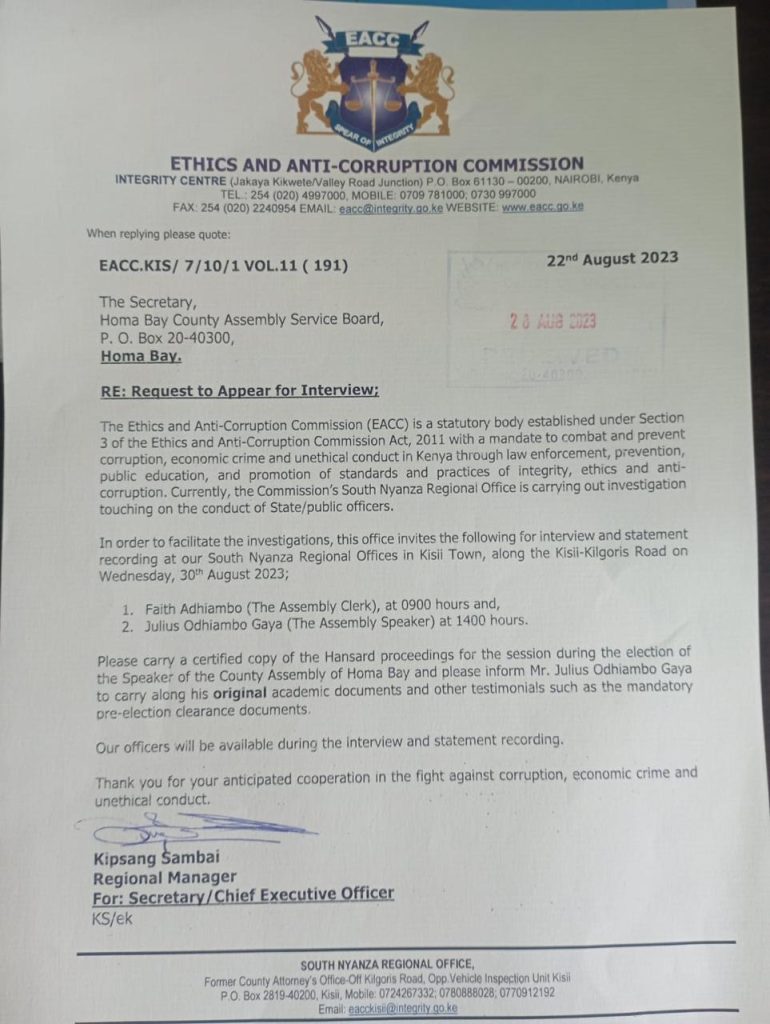
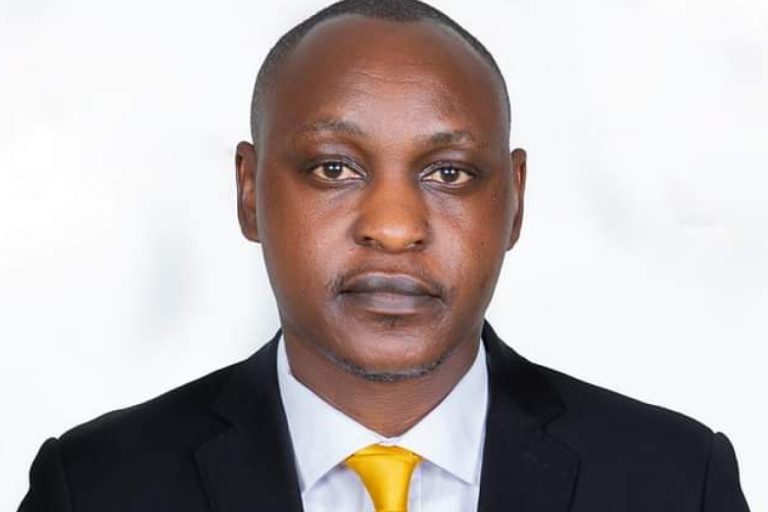
The Ethics and Anti-Corruption Commission  (EACC) has summoned the Speaker and the Clerk of the County Assembly of Homa Bay for an interview and production of various documents to the commission.

In a summon dated 2nd October 2024, addressed to the Clerk and captioned “ request to appear for interview/provide documents” asked the two to appear before the  Commission’s  South Nyanza, Regional officer tomorrow on 8th October 2024.

The summon read in part “To facilitate the investigations,  the office invites the following for interview. They include Julius Odhiambo Gaya and Anne Ager,”.

In a signed summon by the EACC regional boss Mr. Kipsang Sambai directed the acting clerk to provide various documents for the interview.

The documents required by EACC include an original application letter for the post of speaker by Julius  Odhiambo Gaya and a copy of the advertisement for the post of speaker for the county assembly of  Homa Bay for September  2022.

Other documents include the personnel file of MS Anne Ager, the acting  Clerk of the County Assembly of Homa Bay, and also the appointment letter of MS Anne Ager to the acting clerk of the County Assembly of Homa Bay.

Finally,  the minutes of the county assembly of Homa Bay Service Board appointed MS Anne Ager as the acting Clerk.

“The interview and statement recording will be conducted on Tuesday 8th October 2024, from  9.00 am to 11.00 am. The venue of the interviews will be at our regional offices in Kisii located along the kissi-Kilgoris road,” read the summon.

Kipsang said the Commission officers will be available to guide the two during the interview and statement recording process.

But when we contacted the speaker for comment, he did not answer to our telephone call.

This is the second time, Gaya has been summoned by the Commission, where he was required to provide his original academic documents and other testimonials as mandatory for pre-election clearance.

In a summon that was written to the then clerk  Ms. Faith Apuko asked her to provide a certified copy of the Hansard proceedings for the session during the elections of the speaker.

The untapped potential, the Western Tourism circuit, is a trigger to the region’s economy

0
By Anderson Ojwang

Recently, Kisumu city marked a milestone by hosting the nation’s  World International Tourism Week, a hallmark in the reawakening of the sleepy Western Tourist Circuit.

It marked the beginning of a journey to open and tap the potential of the Western tourist circuit, which is capable of triggering a new dispensation in the region and the national economy.

The Western Kenya circuit is arguably one of the least visited tour circuits in Kenya and yet has so much to offer to tourists.

The circuit boasts various destinations including Flora and Fauna in Kakamega Forest, Saiwa Swamp National Park, Mt Elgon National Park, Ruma, Crying Stones of Ilesi, Ndere National Park, Kisumu Museum,  Homa Hills, Thim Lich ohinga and Lake Victoria among others. 

The Western circuit is made up of ten counties namely: Kisumu, Bungoma, Busia, Homa Bay, Kakamega, Migori, Nyamira, Siaya, Trans Nzoia, and Vihiga

The circuit for the past four decades has operated in the shadows of Coastal, Nairobi, Mt Kenya, Southern, and Eastern Circuits, which have continued to record huge volumes of international and domestic tourists visiting the various destinations.

In 2023 earnings from international arrivals amounted to Sh 352,5 billion, which represented an increase of around 32 percent in comparison to the previous year.

In the same year, Kenya recorded1,9 million international visitor arrivals with USA  accounting for 265,000, Uganda and Tanzania with over 201,000 and 1568,000 respectively.

In 2020, the number of international visitors to Kenya declined sharply, and consequently, the sector’s revenue fell to Sh 89 billion.

In 2020, tourism engaged roughly 6.4 percent of the total employment in Kenya and the scale of the contribution of tourism to the Kenya economy was found to be substantial, generating over 5 percent of GDP.

Kenya has nine tourism circuits that span different regions namely: the Nairobi Circuit, Central Kenya Circuit, Coastal Circuit, Northern Circuit, Western Circuit, Southern Circuit, North Rift Circuit, South Rift Circuit, and Eastern Circuit. 

The Coastal Circuit accounts for the majority of the country’s revenue as it is the preferred destination by both international and local.

But the central Kenya circuit is the ultimate destination for adventurous travelers after a considerable challenge, especially with the steep slopes of Mount Kenya. 

Most visited destinations in the central Kenya circuit include Mount Kenya National Park, Mount Longonot National Park, and Aberdare National Park.

Similarly, the  Southern circuit also boasts various destinations including Amboseli National Park, Chyulu Hills National Park, Tsavo East National Park, and Tsavo West National Park.

The recent World Tourism Day was aimed at focusing on developing the country’s western tourism circuit – a collection of attractions, parks, reserves, and cultural sites. 

State Department for Tourism Principal Secretary John Ololtuaa said all tourist sites in the region have been mapped out, laying the foundations for development, packaging, and aggressive marketing.

He said the Ministry of Wildlife and Tourism, in collaboration with the Kenya Tourism Board, will focus on Lake Victoria, water sports, islands, historical sites, cultural diversity, and wildlife to boost tourist numbers.

“Our agenda is to develop the necessary auxiliary infrastructure to ensure that sites are accessible and attractive to local and international tourists,” he said.

 Kenya Tourism Board CEO June Chepkemei emphasized that KTB will market the circuits to showcase Kenya’s diverse attractions that will play a pivotal role in ensuring tourism opportunities reach every County, driving inclusive growth and satisfying Kenya’s status as a must-visit destination.

“Plans to co-market the Western Kenya tourism circuit alongside other renowned destinations such as the Maasai through infrastructure development will enhance accessibility in efforts to spread visitor numbers and spending, “she said.

The Permanent Secretary said the government was committed to attracting public-private partnerships to promote the development of infrastructure including roads, airstrips, and hotel facilities in the Western Circuit.

Ololtuaa said the campaign was aimed at redirecting traffic to the area and connecting it with other tourism hubs in the country.

“We are looking for ways of connecting the western tourism circuit with Maasai Mara so that tourists coming to see the wildebeest migration can extend their stay to sample Lake Victoria and water sports and visit our islands and other attractions across the region,’ he said.

The PS said one of the proposals was to build a tar road linking the towns of Awendo to Kilgoris for visitors to easily move from Maasai Mara to the Homa Bay and Kisumu counties.

“We are collaborating with county governments in this circuit to document all sites and market them home and away,” he said.

The PS said the documentation will help the Ministry to make adjustments to the sites by developing infrastructure.

Kisumu County Tourism Chief Officer Mr. Timothy Kajwang said the circuit is fast evolving and positioning itself as a destination in the country.

He said several hotels have been constructed in major towns in the region and this will go a long way in redefining the circuit as one of the busy tourist destinations.

‘Kisumu has poised itself in terms of offering tourism facilities which has in return doubled its revenue and the government was working on a program to open up various tourist sites in the region,” he said.

Lake Victoria Tourism Association Chief Executive Officer Mr. Charles Gatoro appealed for enhanced private-sector involvement in the development of local tourism with the government creating an enabling environment.

“The private sector can help bridge the gap through the development of hotels and accommodation facilities in some of these areas to attract visitors and generate revenue for government.”

Kisumu’s Deputy Gover Dr. Mathews Owili challenged both local and international tourists to support efforts aimed at enabling tourism benefits to permeate the Western circuit and also recognizing its unique natural and cultural endowment.

He said the region’s lake ecosystem was a resource that could be marketed as an alternative to the Coastal regions beach destinations.

 “Ndere Island and other surrounding Islands on the lake provide a unique opportunity to tap into the tourism potential in the Western Region,” he said.

Narok Governor Patrick Ole Ntutu, also the Chair of the Governor’s Tourism & Wildlife Committee urged for increased government allocation to tourism.

Social Health Insurance: The Case Against Funding Private Healthcare with Public Resources

0
By Billy Mijungu

The use of Social Health Insurance Fund (SHIF) to finance private healthcare has become a contentious issue, raising questions about the proper allocation of public resources. While private healthcare can complement public systems by offering specialized services, the continued and significant funding of private health facilities with public money poses fundamental contradictions. Other essential sectors, like education, agriculture, housing, and infrastructure, do not receive public funds in the same manner. This brings us to a critical discussion: why should social health insurance exclusively fund public health ventures rather than extending those resources to private healthcare?

  1. A Broader Perspective: Public vs. Private Sectors
    Public Resources in Other Sectors
    In many areas of public service, the government ensures equitable access by investing exclusively in public institutions:

Education: Public money primarily goes toward funding public schools, ensuring that all children have access to basic education. Private schools, even though they cater to a section of society, do not typically receive direct public funding. They rely on tuition and private contributions, not government subsidies.
Agriculture: Public resources support state-run agricultural programs or cooperatives designed to uplift the broader community. Private farms or agribusinesses usually rely on their own resources or private financing.
Housing: Government funding is used for public housing projects to provide affordable housing to lower-income populations. Private developers, while essential to the real estate sector, operate without direct public funding.
Infrastructure: Governments build public roads, railways, and public transport systems to serve society at large. Private roads, tolls, and transportation services are typically funded by private investors.
Private Healthcare: The Outlier
Yet, despite the precedent set in these other sectors, private healthcare providers are often the beneficiaries of public resources through Social Health Insurance. This creates a stark contrast: while other private entities must survive through self-financing or private investment, private healthcare facilities are consistently supported by public funds meant to serve public interest.

  1. Why Public Funding for Private Healthcare Is Problematic
    A. Misallocation of Public Resources
    Social Health Insurance is meant to ensure that all citizens have access to healthcare, but when those funds are directed toward private hospitals and clinics, they are often diverted away from public facilities that serve the vast majority of the population. This misallocation:

Favors wealthier individuals who can afford private care, leaving vulnerable populations reliant on underfunded public hospitals.
Exacerbates inequalities by providing financial backing to private providers, which can charge higher fees, undermining the principle of universal, equitable access to healthcare.
If public schools or public infrastructure were neglected in favor of funding private counterparts, there would be a public outcry—and rightly so. The same scrutiny must be applied to healthcare. If social health insurance can serve private healthcare, why not private schools or private roads? The inconsistency in these policies highlights the unjustifiable favoritism toward private healthcare.

B. Profit vs. Public Service
Public healthcare facilities are designed to serve public interest, while private healthcare operates on a for-profit basis. Using public money to support private healthcare ventures introduces a conflict of interest. Private providers, though offering essential services, often prioritize profit margins over broad public health outcomes, leading to:

Higher costs of care, which in turn inflate the expenses covered by social health insurance, straining the system.
Selective treatment of patients, where private providers may opt for more lucrative cases while avoiding complex or expensive treatments that would impact their profitability.
In contrast, public healthcare facilities operate on a non-profit basis, ensuring that every citizen has access to healthcare regardless of their financial situation. Public funds should remain focused on enhancing public service, not enriching private enterprises.

  1. A Focus on Public Ventures: Ensuring Sustainable Development
    A. Universal Access and Equity
    When public resources are directed solely toward public healthcare, they ensure that all citizens, especially the poor and marginalized, have equal access to quality health services. Public schools, for example, are open to all, providing an inclusive education system. Similarly, public healthcare should be strengthened by social health insurance to serve all citizens equally, ensuring that no one is left behind in accessing critical healthcare.

Private healthcare, like private schools, is an option for those who can afford it, but public resources should focus on universal, non-discriminatory access. By exclusively funding public ventures, governments can ensure that public healthcare systems are well-resourced, well-staffed, and capable of serving everyone.

B. Public Accountability and Sustainability
Public institutions are accountable to the public through government oversight, audits, and regulations. Private healthcare facilities, however, operate with less public transparency, meaning that public funds allocated to them may not always be used efficiently or in the best interest of citizens. By restricting social health insurance to public ventures, we ensure that the allocation of funds is transparent, justifiable, and traceable, bolstering public trust in the system.

In sectors like education, housing, and infrastructure, public funding is tightly controlled and directed toward public institutions that are transparent in their use of resources. The same should hold true in healthcare.

  1. Preventing the Commercialization of Essential Services
    Healthcare is a public good, not a commodity to be traded for profit. When public resources are used to fund private healthcare facilities, it commodifies healthcare, shifting focus from care to profit. This privatization trend threatens to turn essential services into products accessible only to those who can pay, leaving public institutions underfunded and overstretched.

If public resources were similarly allocated to private schools or private housing, it would lead to an over-commercialization of essential services, further widening inequalities. Public funds should be directed toward public goods, ensuring that basic needs are met for every citizen without creating barriers to access based on financial means.

  1. Encouraging Private Investment Without Public Dependency
    There is a clear role for private healthcare in complementing public systems, particularly in offering specialized services. However, like private schools or private infrastructure projects, they should be funded through private investment rather than relying on public resources. Public-private partnerships can exist without undermining the public health system, ensuring that private providers add value without drawing essential funds away from public services.

Conclusion: Public Resources for Public Good
The essence of social health insurance is to create a system where healthcare is accessible to all, without barriers of cost or inequality. By exclusively funding public health ventures, we can ensure that public resources are used effectively to serve the common good. Just as we do not fund private schools, private roads, or private housing with public money, we must ensure that private healthcare remains self-sustaining while public healthcare receives the investment it needs to thrive.

This approach promotes equity, transparency, and sustainability, ensuring that public funds are used where they will have the greatest positive impact on society.

MP Fatuma Mohamed launches factory for Reusable Pads and Uniforms for Vulnerable Students in Migori

By Erick Otieno

Migori County Woman Representative, Fatuma Mohamed, through her Fatuma Fullnetwork Foundation, in collaboration with the Turkish government agency TIKA (Turkish Cooperation and Coordination Agency), has launched a factory dedicated to producing reusable sanitary pads and school uniforms for vulnerable pupils and students in Migori County.

Speaking at the event, Fatuma expressed her gratitude to the Turkish government for their unwavering support since her election as the Migori County MP.

 She highlighted the various projects TIKA has helped implement in the county, including the sinking of water boreholes in several regions.

“The reusable sanitary pads produced by this factory, when used properly, can last for up to six years,” Hon. Fatuma noted. 

She explained that she initiated the project due to the challenges faced by students, stating that since her election, the Kenyan government has only distributed pads twice. 

She also added that the factory has already employed sixty people directly, providing a significant boost to the local economy.

Ms. Aspen, TIKA’s Country Director for Kenya, also addressed the media, emphasizing that the agency was partnering with other counties, including Makueni and Eldoret, to roll out similar projects aimed at improving access to basic needs.

TIKA is a Turkish government agency tasked with implementing development cooperation projects across various countries, including Kenya. The agency focuses on sectors such as education, health, agriculture, infrastructure, and social development.

Other dignitaries who graced the event included Dr. Ida Odinga, Migori First Lady Dr. Agnes Ayacko, and the CEO of the National Government Affirmative Action Fund (NGAAF), among other key stakeholders.

Jinx: Jaramogi’s Oginga’s resignation precedent that shapes the country’s political terrain

0
By Anderson Ojwang  

Fifty-eight years ago, Kenya’s first Vice President, the late Jaramogi Oginga Odinga set a precedent by digging a political pit that has turned out as graveyard for successive politicians who have walked in his path.

The decision by Oginga has continued to shape the country’s political landscape and left high-profile politicians in the obituary.

Currently, the country is witnessing a falling out in President William Ruto’s government where his deputy Rigathi Gachagua is facing an impeachment in the national assembly, a replica of 1966.

On April 14, 1966, Oginga shocked and shook the nation by bowing to the pressure from his opponents and made history as the first vice president in a post-colonial era to resign.

“It is fairly clear that there is pressure and desire that I should leave the government, the authority concerned however, showed reluctance to say openly to the public.

If I thought there was the slightest chance to put things right from within the government, then the desire to remove me from the office would not worry me, as indeed, it has not done for the last year, however, Wananchi my honest opinion is that the present government has reached a point of no return. It can only do for the people the little that the underground master allows it to do.

I, therefore, find it impossible to be part of it and my decision, from now on I should be free and join wananchi that their voice be heard,’ Oginga said at his resignation.

And by that, Oginga opened the country’s pandora box to resignation and political grave that has destroyed and consumed the careers of politicians in the country.

After his resignation, Oginga formed Kenya’s People Union (KPU) as his political vehicle.

The friction between Oginga and President Jomo Kenyatta continued, and in 1969 the former vice president was arrested after a public spat at a chaotic opening of Russia Hospital currently New Nyanza Teaching and Referral Hospital in Kisumu.

At the chaotic function, at least eleven people were killed, and dozens were injured in riots. 

 After the incident, KPU was banned making Kenya a de facto party state under KANU. 

Oginga was detained along with other KPU members for eighteen months until the Government decided to free him on 27 March 1971. 

Subsequently, Oginga was consigned to political limbo until after Kenyatta’s death in August 1978. 

However, President Daniel Arap Moi tried to reintegrate Oginga into national politics by appointing him as the chairperson of the Cotton Lint and Seed Marketing Board.

He did not last long in the post, after he allegedly accused Jomo as a land grabber and that was why they had differed. 

Oginga attempted to register a political party in 1982, but The Constitution of Kenya (Amendment) Act, 1982 (which made Kenya a de jure single-party state), foiled his plans.

After the failed 1982 coup, Oginga was placed again under house arrest in Kisumu.

In 1990, he tried in vain with others to register an opposition party, the National Democratic Party but in 1991 he co-founded and became the interim chairperson of Forum for Restoration of Democracy (FORD).

 The formation of FORD triggered a chain of events that were to change Kenya’s political landscape, culminating in 2002 ending KANU’s 40 years in power – eight years after Odinga’s death.

FORD split before the 1992 election with Oginga vying for the presidency on Ford Kenya ticket and finished fourth with a share of 17.5% votes. 

However, he regained the Bondo parliamentary seat after he was forced out of parliamentary politics for over two decades. 

Nairobi advocate Patrick Ouya says Oginga’s political precedent of resignation altered the country’s politics and will continue to dictate the pattern of the game.

He says former cabinet ministers who have resigned from the government have become and remained political deadwoods.

“Any politician who has resigned from the government has been confined to oblivion. They have never made it back to the system and have died miserably and frustrated. The living ones are pale shadows of their former self,” he says.

He cites minister Kenneth Matiba who resigned, contested for presidency lost, and died miserably.

Similarly, the first country’s minister for Information and Broadcasting, the late Achieng Oneko, resigned to join Oginga in KPU and was only politically resuscitated by the 1992 general elections and served a single term as Rarieda MP.

Political analyst Dr. Obondi Otieno says Kenya’s Iron Lady Martha Karua’s political career came crashing down after she resigned as the minister for Water in the coalition government.

“The fiery and iron in Karua is long gone. She is a pale shadow and that is why they performed poorly in Mt Kenya in the last presidential election where she was the running mate to Azimio La Umoja candidate Raila Odinga, “he says.

He says resignation takes the gas from the political feet of the politicians and makes them seen as cowards and ones who cannot sustain a fight to a logical conclusion.

Ouya said, that when the late Masinde Muliro resigned from the Ministry of Public for voting against the government in the parliament over the JM Kariuki probe, he died in the opposition.

Former vice president Josephat Karanja was forced to resign after a censure motion to discuss his conduct was tabled in the house.

But today, Rigathi is sitting tight for a duel with his boss and the assembly and may rewrite Oginga’s story and change the narrative of political resignations in the country.

The First African Republic: Raila Odinga and Africa’s Political Future

0
By Billy Mijungu

In February 2025, Africa will witness a moment reminiscent of the historic day in 1990 when Nelson Mandela walked free from prison, signaling the dawn of a new era. This time, however, the scene will not be set in South Africa but within the African Union. Raila Odinga, a towering figure of political resilience, is poised to assume a role at the helm of the African Union, marking a transformative period for the continent. Like Mandela before him, Raila’s influence carries the weight of hope, resilience, and the promise of a brighter future.

As Africa stands on the cusp of a new chapter, Raila Odinga’s entry into the African Union should be seen as a call to action. His leadership, steeped in decades of championing democracy and governance, uniquely positions him to steer the continent toward unity and progress. In a political landscape that often prioritizes individual national interests, Odinga embodies the Pan-African ideal—a leader whose mission extends beyond borders.

For too long, African politics has been disjointed, often characterized by regional rivalries and slow-moving bureaucracy. The African Union, though vital, has struggled with inefficiency, especially when it comes to translating policy into action. Odinga, with his tenacious approach to governance, is the right person to break this inertia. Policy, after all, is the apex of politics, and it is only through its effective implementation that Africa can truly unlock its potential.

A reformed African Union under Raila Odinga could catalyze the politics of integration—prompting member states to donate more power to the AU, particularly in areas such as trade and economic management. Africa’s fragmented markets and conflicting policies have stunted the continent’s growth for decades. But with a leader of Odinga’s caliber, the continent could see a new era where the AU acts as a unifying force, guiding member states toward collective economic prosperity.

Raila’s legacy in Kenya offers a glimpse of what he could achieve on the continental stage. In Kenya, he set firm foundations for constitutional reform, economic transformation, and political inclusivity. If he could accomplish that in one country, imagine what he could achieve across an entire continent.

Key to this transformation is Raila’s vision of an African Union that moves beyond symbolic chairmanship to one with executive power. By transitioning from a model of temporary chairs to a presidency and a more structured African cabinet of commissioners, the AU can become a more functional and effective body. While the notion of a unified African government remains distant, the image of a strong and influential AU presidency will inspire Africans to believe in a future of political and economic integration.

Furthermore, the idea of a progressive African Centre for Multiparty Democracy is crucial. It can serve as a platform to strengthen democratic institutions across the continent. Additionally, unifying languages like Swahili and Arabic can help bridge cultural divides and foster a deeper sense of African identity.

The future of Africa rests on the selflessness of its current leaders and the visionary steps they take. Raila Odinga’s leadership offers the hope that Africa can realize its potential by embracing unity, policy-driven governance, and integration. The possibilities are endless, and the world knows it. Under Odinga, the African Union can finally become the force for change it was always meant to be.

Written by Billy Mijungu,
2022 Senate Candidate for Migori County #Forward #TusongeMbele

Mwaura: Government to waive Sh 2 billion debt by Coffee farmers

By Habil Onyango

Good news to coffee farmers as the government plans to waive Sh 2 billion debts in this financial year.

Government Spokesperson  Dr Isaack Mwaura said coffee farmers in the 26 counties will benefit from the grant.

He said the action follows the formation of the Coffee Cherry Advance Revolving Fund which was mandated to provide an affordable, sustainable, and accessible cherry advance to smallholder coffee farmers, (those with less than 20 acres of land under coffee).

Mwaura said the new Kenya Planters Cooperative Union (N-KPCU), KPCU was mandated to manage and administer the fund as per the Public Finance Management Act (Coffee Cherry Advance Revolving Fund) Regulations 2020.

He said it was further enhanced by President William Ruto’s administration and was currently being disbursed at the rate of 40 percent of the prevailing average sales price at the coffee exchange at factory level and Kshs. 20 per kilogram of cherry delivered or 40 percent of the payment rate to members by a cooperative society for the immediate past crop year.

 “The Coffee Cherry Advance Revolving Fund does not accrue any interest, farmers are only charged a one-off 3 percent administrative fee,” said Mwaura.

“A smallholder coffee estate or smallholder coffee grower is eligible to benefit from the fund if one is a Kenyan citizen, member of a registered coffee cooperative society or affiliated to the N-KPCU and needs to just have an identity card, or passport and a membership card,” he added

Mwaura said the N-KPCU, has in the last two years disbursed credit totaling Ksh.4.95 billion to 365,872 coffee farmers spread across the 26 coffee-growing counties through the Coffee Cherry Advance Revolving Fund according to records.

He said in the Central Region, the four coffee-growing counties of Kiambu, Kirinyaga, Murang’a, and Nyeri received a total of Kshs.2.309 billion benefitting 182, 827 farmers.

“There was also an increased coffee milling activity nationally, at the N-KPCU mills, with 8,470 metric tons of coffee milled in the Financial Year 2023/2024 against 878 tons in Financial Year 2022/2023,” said Mwaura.

 He said that the revamped N-KCC is currently serving 60,000 dairy farmers through 300 dairy cooperatives, majorly from the Central Region.

He added that the New KCC has a processing capacity of 875,000 where a total of 2,221 metric tons of milk powder was produced using this installed capacity during the FY 2023/2024.

He said, “The government has allocated more funds in the current Financial Year 2024/25 for milk powder processing and completion of the last phase of the N-KCC modernization project,”

Government allocates Shs.1.135 billion for affordable housing in Mt Kenya

By Habil Onyango

With the ever-increasing employment crisis in the country, the government is working on strategies to open up employment opportunities in the informal sectors.

Lack of formal employment has precipitated frustrations and disappointment in the youths despite acquiring skills and various academic qualifications.

But in Central Kenya, the government is engaging the youths to explore and exploit employment opportunities arising from the ongoing national Affordable Housing Units (AHU) projects which are being undertaken in the five Counties within the region.

Government Spokesman Dr. Isaac Mwaura said the Government has allocated Shs.1.135 billion for the Jua Kali and MSMEs for the Central region to boost their income.

“The, ongoing AHU in the Central region has already created job opportunities where an average of 2,130 daily workers are on site, with an additional 5,000 skilled and low-skilled workers engaged directly and indirectly off-site across the housing economic value chain in the region,” he said

He said the beneficiaries are involved in the production of steel doors, steel windows, wooden doors, joinery, and balustrades, as well as landscaping on-site in the 14 projects.

He said that the State Department for Housing and Urban Development and the National Housing Corporation (NHC) were in the process of constructing 1,000,000 AHU throughout the Country in five year

He said the Central region has 7,628 AHUs under construction which has created employment opportunities for both skilled and unskilled labour

Mwaura spoke in Kirinyaga Central, NG-CDF Hall during his weekly briefings, he said “In Ruiru, we found a group which calls themselves Ruiru bypass fabricators who have benefited from a Sh 107 Million contract,” he said.

Mwaura said under the project, the Government has already certified 213 artisans due to having prior experience, and also at the same time, they are keen on those who might have not gotten an opportunity to go to school to register at the Open University of Kenya, where 3289 are enrolled so that they can get certified.

Mwaura appealed to the youths to embrace good work ethics to ensure continued engagement by the employers.

“The 14 AHP projects include; two in Kirinyaga county (Kirinyaga AHP with 100 units and the Gichugu AHP, 110 units), two in Nyeri county (Nyeri Blue Valley AHP with 381 units and Ruring’u AHP in Nyeri Town, 478 units),” said Mwaura.

“Three in Nyandarua (Kinangop North AHP with 220 units, Ol Kalou AHP by the National Housing Corporation with 100 units, and the Ol Kalou AHP by the State Department for Housing with 420 units),

He said the Government was undertaking another project in Murang’a county at Makenji where 220 units were being constructed.

In Kiambu six projects are ongoing which are in, Ruiru AHP (1050 units), Thika AHP-Kings Orchid (975 units), Thika Depot AHP (436 units), Thika Bustani AHP (996 units), Kikuyu Kabete AHP (1,404 units) and the Limuru AHP with 738 units.