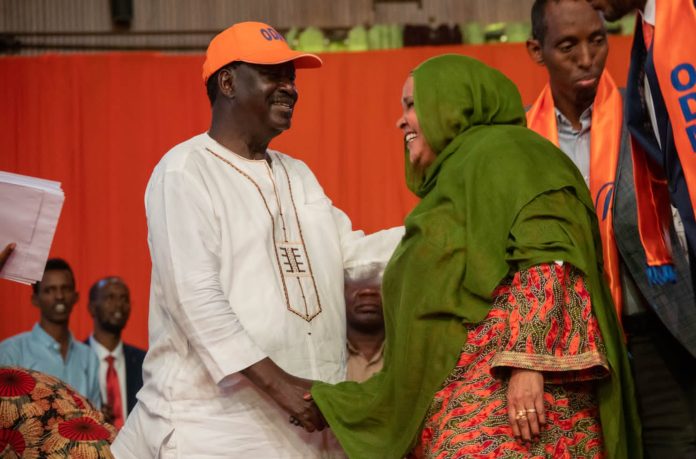
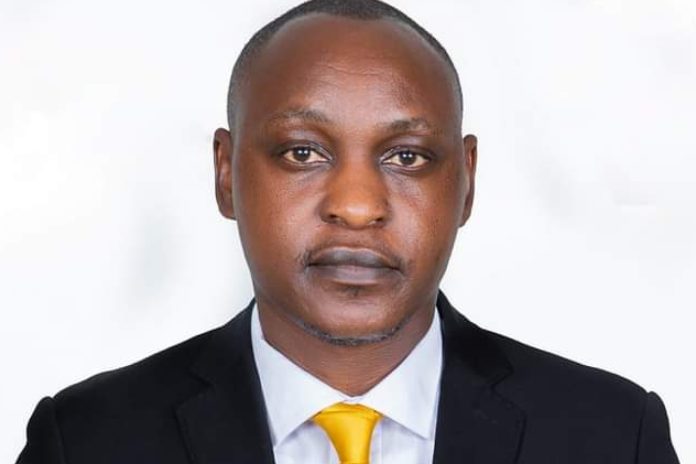
“I mourn the passing of a man whose story shaped the soul of our nation, Prime Minister Hon. Raila Amolo Odinga. His life was one of resilience, sacrifice, and unwavering belief in a better Kenya for all. Raila’s journey has always inspired me. My first encounter with Baba left an indelible mark on my life and leadership. He believed in justice for all and lived by that belief — protecting, safeguarding, and advancing the rights of minorities and the marginalised, especially in women’s leadership.
My earliest interaction with Baba was back in 2002–2003, during the Constitution-making process that led to the 2010 Constitution of Kenya. I was a member of the Technical Working Committee on Lands, Natural Resources, and Environment, representing women’s organisations. One afternoon, Baba joined our committee as we discussed land and property rights for women. He firmly supported our call to eliminate cultural barriers that denied women the right to inherit land and property.
That moment showed me the depth of his belief that true leadership is not about titles, but about service, courage, and love for our people. He stood for justice even when it was costly, and for unity even when it seemed impossible. On a personal level, Baba believed in me — in my voice, my capacity to serve, and my commitment to our people. He supported my journey as Women Representative for Wajir County and later as a Member of the East African Legislative Assembly. His faith in me opened doors not just for my path, but for many others who saw themselves in my story. Raila was more than a leader to me; he was familiar with my spouse, my children, my story, and my heart for Kenya. His mentorship, warmth, and kindness will forever stay with me.
His vision for a united and equitable Kenya will live on, and I will continue to be part of that journey — carrying forward the values Baba stood for. Farewell, my father, my leader, my friend. Your legacy will forever guide us.”
The writer is a former Women Representative for Wajir County and a former Member of the East African Legislative Assembly (EALA).
I do not know how to mourn you, Baba. Perhaps Barack Obama feels the same. For the man he once stood beside, His timelines remain silent, Maybe he has not yet heard that you are gone.
The world weeps in whispers tonight. The wind carries your name softly. Your story is too vast for paper, Your journey too sacred for ink. What remains is the ache of your absence.
You built bridges where walls once stood, You carried Kenya through storms and seasons, You dreamed of justice when hope was dim, You stood for truth even when it wounded, And you gave your life to the idea of a fairer land.
Baba, your courage wrote new pages of freedom, Your steps planted seeds of unity and pride. From Kibera to Kisumu, from Mombasa to Marsabit, Your voice became the anthem of resilience, Your vision the mirror of a better Kenya.
To Mama Ida, we send the warmth of our hearts, For the love that steadied your home and his mission. To your children, may your father’s light guide your paths. To all who believed in you, let not your tears drown your hope. For Baba lives, not in body, but in the breath of this nation.
Baba, you will live beyond your living. In our tongues, our tears, our tomorrows. Your name will rise with the morning sun, And settle in the evening prayers of the humble. Forever written on the soul of Kenya.
Follow Facebook, X, Instagram, TikTok, and LinkedIn @BillyMijungu
Journalists from the Nyanza region have paid glowing tribute to the former Prime Minister Raila Odinga, describing him as the community’s true North.
They also termed Raila as the father and protector of media freedom in Kenya.
The journalists said Raila deeply understood the media working environment and was never personal with journalists despite instances of negative reports, but instead treated them as his children.
In a statement to newsrooms, the journalists, under their umbrella body Jofuambo, described Raila as a towering figure whose legacy transcended politics and defined the struggle for democracy, justice, and media freedom in Kenya.
Jofuambo is a Luo word for journalists.
The group has more than 500 members scattered across different media outlets in the country and beyond.
National Chairman Festus Amimo said the passing on of Raila will be heavily felt by the community, the country, and the continent at large.
In a heartfelt statement, Amimo paid glowing tribute to the late ODM leader, recalling his unmatched courage, sacrifice, and unwavering commitment to defending human rights and the free press.
“We have lost not just a statesman but a father figure who inspired generations to speak truth to power,” Amimo said.
“Raila stood firm for press freedom even when it was inconvenient. His belief in an informed citizenry and an independent media remains a guiding light to our profession.”
The scribes, who hail from Raila’s Nyanza backyard, said his passing left a deep emotional void and leadership vacuum that will be impossible to fill.
They recalled his frequent engagement with journalists, his openness to media scrutiny, and his advice to young reporters to uphold integrity and objectivity.
“As members of the media fraternity, we pay special tribute to his unmatched commitment to defending press freedom. He encouraged us to be bold, to question authority, and to defend the public interest without fear,” Amimo added.
The journalists expressed solidarity with Raila’s family and supporters across the country, saying his ideals of democracy, equity, and freedom must continue to guide the nation.
Veteran scribe Anderson Ojwang’ said Raila’s contribution to the growth of journalism in the country was second to none.
“Baba, you shaped the destiny for some of us. You made us a brand. In our growth in journalism, you impacted,” Ojwang’ said.
“You protected the freedom of the press. We shall miss your wisdom and breaking stories.”
According to Polite Ogolla, Raila exited the stage not as a politician but as an era.
“Raila was not just a name. He was a movement — walking proof that conviction can outlive power,” Ogolla stated.
Recalling his encounter with the late former Prime Minister, James Riaga said Raila had a special way with people, something that informed his huge crowds during campaigns.
“I had the privilege of covering Raila during my early days in the media, including during the 2005 referendum and the 2007 elections. He had a thing with the campaign crowds and many a time, even journalists got carried away in his elements,” Riaga told this publication.
“It will take years to have another Raila in Kenya. Maybe not.”
For Nick Okello Fololo, Baba was a towering monument of democracy and social justice.
“I mourn the Lion. A Lion can never die; he has returned to the mountaintops, with the footsteps reverberating loudly in our private and public views,” he said.
“Covering Raila Odinga as a journalist was an honour in the newsroom. It is through covering his events from 2016, while I worked as a correspondent in Homa Bay, that I discovered his shrewdness in politics and leadership,” added journalist Barack Oduor.
Raila, 80, passed away on Wednesday in India, sparking an outpouring of grief across the nation and beyond.
Residents from his Nyanza backyard will on Saturday have an opportunity to pay their last respects to their leader at Mamboleo ASK Grounds in Kisumu East Constituency.
The remains of the former Prime Minister will be interred next to his mother’s grave in Kang’o Kajaramogi, in line with his wish.
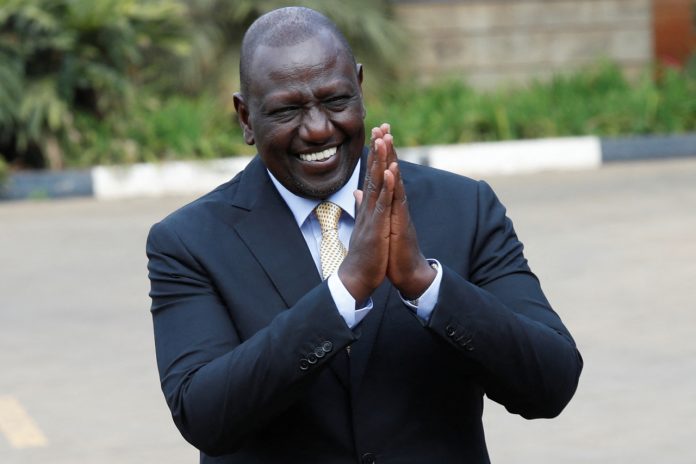
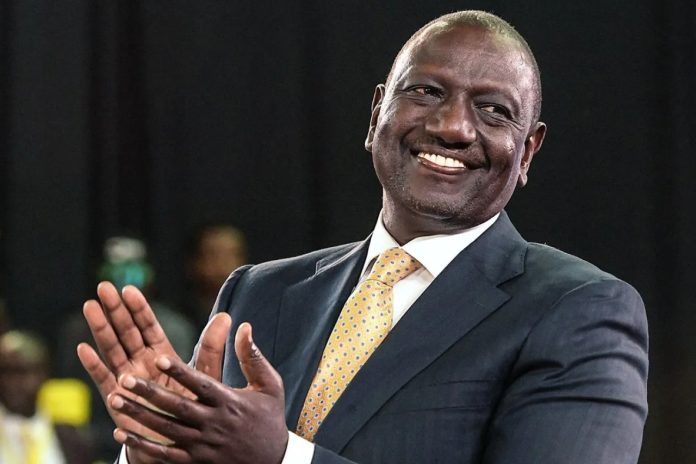
President William Ruto has described former Prime Minister Raila Odinga as exceptional. Ruto said there was and can only be one Raila Amolo Odinga.
“Every once in our generation there comes a leader whose impact transcends their moment, whose courage inspires change, and whose vision shapes destinies. My brother Raila Amolo Odinga was one such leader across space and time. There are few exceptional persons who, when summoned by the call of history, rise to meet the challenges and opportunities of their time with indomitable vigour. With absolute conviction and unwavering valour, the Right Honourable Raila Amolo Odinga, Wuod Mary, Wuod Nyar Alego Agwanbo, Tinga, Jakom, Enigma, Wuod Piny, Baba — the man in whose honour we gather here today — belonged to that rare breed of human beings. Raila, as we bid you farewell with deepest gratitude as a nation and as a people, we grieve your loss and celebrate 80 years of your presence. We salute you for the great statesman and patriot you were,” he said.
Ruto said Raila’s demise was an immense loss to the country and that Kenyans stood with the Odinga family.
“We thank you for sharing Raila so generously with Kenyans as a family and as a nation. Amolo may no longer walk with us, but his spirit lives within every Kenyan and African. Such was the depth of his influence and impact that even in his absence, he endures and lives. We gather here today not just to mourn but to celebrate his purpose, ideals and visions. He walked among us as a man but also as a movement — a movement for change, justice, inclusivity, and a greater and better Kenya,” he said.
Ruto said he had a long political journey with Raila and that he stood by Raila in the 2007 election as one of the Pentagon members during his presidential bid.
“At Raila’s defining moment and the country’s history, I neither knew that one day we could find ourselves on opposite sides nor could I have imagined that years later he would stand by me — this time to steady the nation and help to anchor my leadership, culminating in the birth of a broad-based government. Baba, I owe you. I am truly and internally grateful that our paths crossed and we shared this journey together. We have been both collaborators and competitors, friends and rivals. But always we have been patriotic Kenyans united by dreams greater than ourselves — a united Kenya,” he said.
Ruto said he had reflected on Raila’s legacy and that he befits the title Enigma.
“History will judge Raila fairly and kindly because whenever the nation needed him to rise above self, he always did so unreservedly. Whenever Kenyans needed reason, he became the voice of reason and courage. Whenever the country needed a hand of reconciliation, he offered it without hesitation. Perhaps one of the greatest lessons he taught us was this — in the noble task of statecraft and nation-building, there is room for all of us: competitors and collaborators, rivals and allies bound together by one purpose — the greater good of our Republic. Those who worked closely with Raila know that he was irrevocably stubborn in his vision for a prosperous, just and united Kenya. In Tinga, Kenya found a reformer and a reconciler. He proved that progress demands patience. Raila gave more to this country than most will ever give. He endured years of imprisonment, exile and political struggle not for the privilege of power but for the principle of service. He turned pain and suffering into purpose. He shared in their pain and rejoiced in their victory,” he said.
Ruto wondered where another Raila would emerge and be born to carry the country further. He likened the death of Raila to the collapse of Ngou (Baobab Tree) that served many, leaving the public desperate for another one of its kind.
“Raila has finished his race and served his people and humanity. The nation he sacrificed for shall cherish his memory, and the people he fought for shall carry his dreams forward. A towering patriot, a relentless reformer, and a selfless servant of the people departs among us. When a mighty bongu tree falls among us, we are left in awe. Raila was a man of great courage, made sacrifices, and had a big heart to forgive even when he was wronged.”
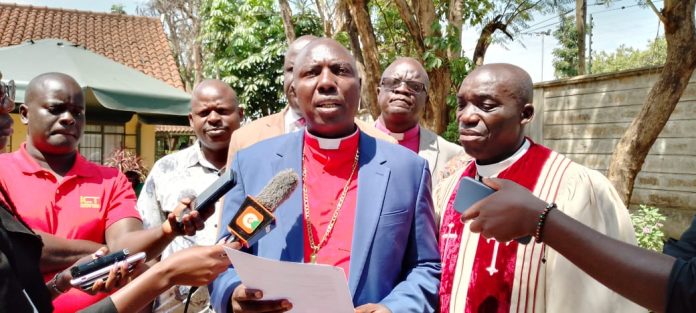
As the country continues to come to terms with the passing of former Prime Minister Raila Amolo Odinga, religious leaders across the Nyanza region have sent a heartfelt message of condolence to the Odinga family and to the nation at large.
Under the umbrella of the Evangelical Alliance of Kenya (EAK), the clergy have called for calm, unity, and dignity as Kenyans prepare to pay their last respects to the fallen statesman.
Speaking in Kisumu, the church leaders urged residents to honour Raila’s memory through peace and discipline, noting that the late leader stood firmly for justice, dialogue, and the sanctity of life.
“Raila Odinga was a man of peace. To truly mourn him is to emulate that peace,” said Charles K’Okombo.
They further appealed to the youth to resist provocation and to avoid acts of destruction or lawlessness disguised as mourning. The clergy warned that such behaviour only tarnishes the legacy of the man they describe as a national icon of democracy and unity.
At the same time, the church called on law enforcement agencies to exercise restraint during the mourning period, especially around the Kenyatta International Stadium in Kisumu and other venues expected to host massive crowds during the body viewing and memorial events in Kisumu.
“It is not a time for confrontation,” he said. “Let the police maintain order with compassion. Mourners need direction, not aggression.”
The clergy also urged traffic authorities to ensure smooth movement of both people and vehicles as thousands are expected to converge in most streets of the city and later across the Nyanza region for final tributes.
As the body of Raila Odinga makes its way for public viewing, the church’s message is clear — let this moment unite, not divide. Let it be a time of reflection, peace, and gratitude for a life that profoundly shaped the nation’s democratic journey.
In the spirit of his lifelong pursuit for equity and freedom, Kenyans are being called upon to mourn with dignity, love, and respect — the very ideals Raila Odinga stood for until his final day.
For Senator Oburu Oginga, October 15th is usually a day to reckon and celebrate. It is a day that he usually celebrates his birthday.
He has religiously celebrated his birthday with his family, including Raila, whose presence has always been significant to him.
But this year, Oburu knew Raila would not attend the birthday party because he was in India undergoing treatment.
Oburu had earlier told a gathering in Siaya County that Raila had gone for a medical check-up in India and would soon return to the country.
“Raila was feeling unwell but I can tell you he is improving. It was not a serious matter and we expect him to return home soon,” he said.
But it never occurred to Oburu that that would be the last time and day he would see and speak to his younger brother.
But as fate would have it, on his birthday, gloom descended upon the Odinga family. It was never to be a birthday celebration but a death day sorrow.
Oburu, who was born on October 15th, 1943, had prepared to celebrate his 82nd birthday but was woken up by the sad news of the demise of Raila, his political leader.
“I had prepared to celebrate my birthday but I found myself mourning my brother. It was a sad and dark day for me,” he said.
Oburu said he had a heavy heart to say farewell to his brother, whom he described as his protector and defender.
“Raila was more than a brother to me, he was my friend, business partner, agemate and adviser. He was everything to me. We grew up together as twins. When we grew together in Bondo Sakwa, we were three boys. Our mother was a disciplinarian. Raila knew how to cook but I didn’t. Raila was best in class while I was average. Raila was always in position one in class. Raila was a sportsman and played football, but I was better than him in high jump. My brother loved to hear news. One day he was late for school, and when he was asked what made him late, he replied that he was still listening to the news, and he was only in Standard Three. He did not entertain mediocrity and would correct it with a left jab to teach one a lesson. He protected me and the late Agola. He was brave and fought off those who attacked us,” he said.
Oburu said he was honoured by the ODM party to have been made the party leader to replace Raila.
“I want to thank my party, ODM, for making me the acting party leader. I will take the mantle with vigour, and I assure you, I will not disappoint. Even though Raila’s shoes are big, I want to try my best,” he said.
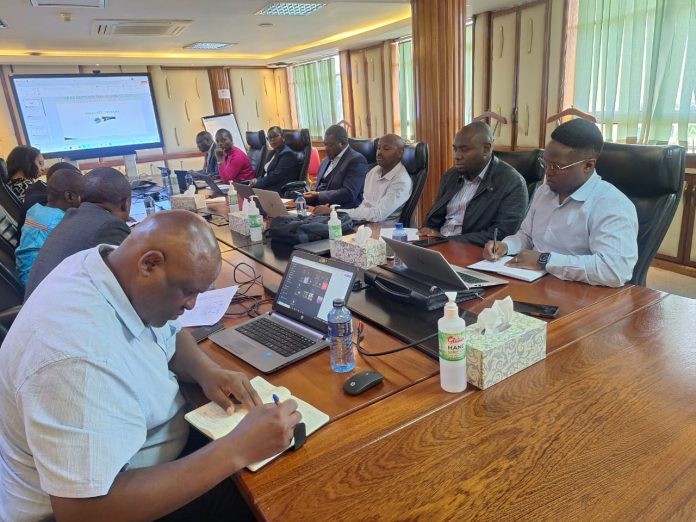
In a move that underscores East Africa region’s growing drive towards shared infrastructure and digital transformation, Kenya Electricity Transmission Company (KETRACO) hosted a high-level delegation from the Burundi Backbone System (BBS) for a benchmarking and knowledge exchange session.
The visit aimed at strengthening regional collaboration in energy and broadband connectivity, reflecting the spirit of integration envisioned under the Eastern Africa Power Pool (EAPP) and African Union’s Agenda 2063.
The engagement was coordinated under the leadership of Dr Lawrence Kimando, General Manager – Strategy, Research and Compliance, whose team spearheaded the benchmarking session focusing on KETRACO’s successful fibre-leasing model — an initiative that demonstrates how power utilities can diversify revenue while advancing digital inclusion.
KETRACO was also represented in the meeting by Business Development Manager Sarah Mugo, Manager Systems and Technology Arnold Ndukuyu, Manager Quality Assurance and Risk Management Grace Ndegwa, Senior Business Development Officer Anthony Wamalwa, and technical personnel from the Supervisory Control and Data Acquisition (SCADA) division — Eng. Kennedy Njoroge and Robert Kiogora. Bandwidth & Cloud Services was represented by John Orutwa (Head of Engineering) and Mary Kahura (Legal Department).
Through Optical Ground Wire (OPGW) technology, KETRACO integrates fibre optic cables into its high-voltage transmission infrastructure, providing secure communication channels and leveraging excess capacity for broadband connectivity.
Since obtaining a Network Facility Provider Tier 2 (NFPT2) licence from the Communications Authority of Kenya in 2014, KETRACO has leased fibre capacity to leading operators such as Safaricom Limited, Liquid Intelligent Technologies, Bandwidth and Cloud Services, Jamii Telecommunication Limited, Airtel Networks Kenya Limited, SEACOM Kenya Limited and Kenya Education Network, turning its transmission infrastructure into a strategic asset for Kenya’s digital economy.
KETRACO is also a key partner in the Digital Superhighway project which aims to expand fibre optic connections across Kenya, linking schools, hospitals, markets, and other public facilities to enable digital access.
The Burundi Backbone System, a state-owned wholesale broadband provider, sought to learn from KETRACO’s experience in blending energy and ICT infrastructure to enhance efficiency and sustainability. The visit also opened discussions on potential collaboration between KETRACO and REGIDESO, Burundi’s national electricity and water utility, to support future cross-border energy projects.
“Regional integration in energy and connectivity is central to our mandate,” said Dr Kimando, adding that “By sharing our model and experiences, we contribute to building stronger, more interconnected economies across East and Central Africa.”
Kimando said that KETRACO’s fibre infrastructure is designed to serve both the power and communication sectors efficiently.
“Our colocation points, whether at substations or along transmission towers, are strategically determined based on access, availability of power, and customer needs. This integrated approach not only optimises our existing assets but also strengthens regional digital connectivity and power trade. Partnerships like the one with the Burundi Backbone System demonstrate how shared infrastructure can drive Africa’s integration and collective growth,” said Dr Kimando.
The engagement highlights KETRACO’s growing role as a regional leader in infrastructure innovation, power trade, and energy diplomacy. By leveraging its technical capacity and strategic partnerships, the company continues to position Kenya as a hub for regional connectivity and sustainable growth.
KETRACO is in the process of introducing consultancy services. The company will be offering its specialised knowledge and capabilities in energy infrastructure projects and enterprise support within Kenya and across Africa and beyond.
KETRACO will provide consultancy services in areas such as Transmission System Planning, Feasibility Studies, Engineering Design and Supervision, Preparation of Environmental and Social Impact Assessment (ESIA) Plans and Resettlement Action Plans (RAPs), Enterprise Support in areas such as Human Capital Management, Finance, Contract Management, Technical Audit & Assurance, ICT, Quality Management, Risk Management, and Strategic Planning for electricity transmission infrastructure, as well as advisory support for Public-Private Partnerships.
President William Ruto seems to be modelling his 2027 presidential campaign on the Orange Democratic Movement (ODM) 2007 pentagon model to win the second term.
Ruto seems to be borrowing heavily from the ODM 2007 campaign model and its proposed government structures, where it had the slot of prime ministers and the deputies.
Through this model, Ruto hopes and is keen to anchor his re-election on the ODM strongholds of 2007 that nearly delivered power in the controversial presidential election.
In 2007, ODM had the summit which was referred to as the pentagon, which was the apex of the party leadership.
The pentagon had representatives from Nyanza which was represented by Raila Odinga, who was also the presidential candidate. Musalia Mudavadi represented Western Kenya and was the running mate, Joe Nyagah represented Mt Kenya, Najib Balala for the Coast and William Ruto for Rift Valley.
That is why Ruto is more committed to bringing back the pentagon structure and to onboard new teams. To accommodate the pentagon, Ruto will be forced to create two deputies prime cabinet secretary slots.
Already prime cabinet secretary Musalia Mudavadi represents Western Kenya while Raila is a partner in the broad-based government and will also form part of the pentagon.
Deputy President Prof Abraham Kithure Kindiki will represent Mt Kenya in the structure while he will give one of the deputies prime cabinet secretary positions to the Coast region and the other one to Kanu national chairman Gedion Moi to represent the Rift Valley.
In the Coast region, President Ruto has two cabinet secretaries Hasson Joho and Salim Mvurya to choose from.
In the 2007 general elections, the then President Mwai Kibaki carved Mt Kenya while ODM-K presidential candidate Kalonzo Musyoka locked the Lower Eastern.
Nairobi became the battleground. ODM won the majority of the parliamentary seats — 96 against the Party of National Unity.
President Ruto announced affirmative actions for regions that were marginalised and happened to have been ODM strongholds and moved to inject development projects in the region.
For Nyanza to be at par with other regions that have benefited from government support, he declared affirmative action for the region in development and economic growth.
“While in Homa Bay, leaders here have asked that we focus on the development of the nation and we focus on the development of this county. Let me commit that we have provided in this year’s budget enhanced resources for the development of this county. I am aware that this county and this region require affirmative action. Because for a very long time this region has not benefited from the resources and development of our country as other regions have.”
Currently, the impeached deputy president Rigathi Gachagua has been on overdrive to lock Ruto from Mt Kenya while Kalonzo enjoys the support of the lower Mt Kenya.
But the move by Ruto to bring Moi into his political fold did not go well with the united opposition, with Gachagua viewing it as a strategy to weaken the opposition.
“He knows that for him to remain in power, he has to divide the voters of Mt Kenya, but we are not fools; we have decided to put our votes in one basket. Let us not accept being divided by him and his people. You asked me to unite the mountain and then focus on bringing our cousin together. I did it and we now have Kalonzo here, who is our cousin. Now that I have completed unity of my people and by the way, the President tried to divide Mt Kenya East and West and I stopped him. I will never allow him and it will never happen. I have completed 98 per cent uniting my people to speak the same language and to have a single political party that is strong, now we are reaching out to other Kenyans,” he said.
Gachagua has warned that his DCP party will dominate Mt Kenya region politics in the 2027 general election, and that anyone who will not have joined DCP in the run-up to the polls will have committed political suicide.
For Ruto, the ODM model could be a guarantee to a second term.
In a historic and symbolic moment, Raila Amolo Odinga delivered his last passionate and powerful message to Kenyans and the world.
When the Kenya Airways flight, KQ RAO 001 touched the ground, our motherland, Winnie Mandela Odinga, carried the most powerful, message to Kenyans, the world, mourners, ODM family, relatives, children, and his loving wife Mama Ida Odinga.
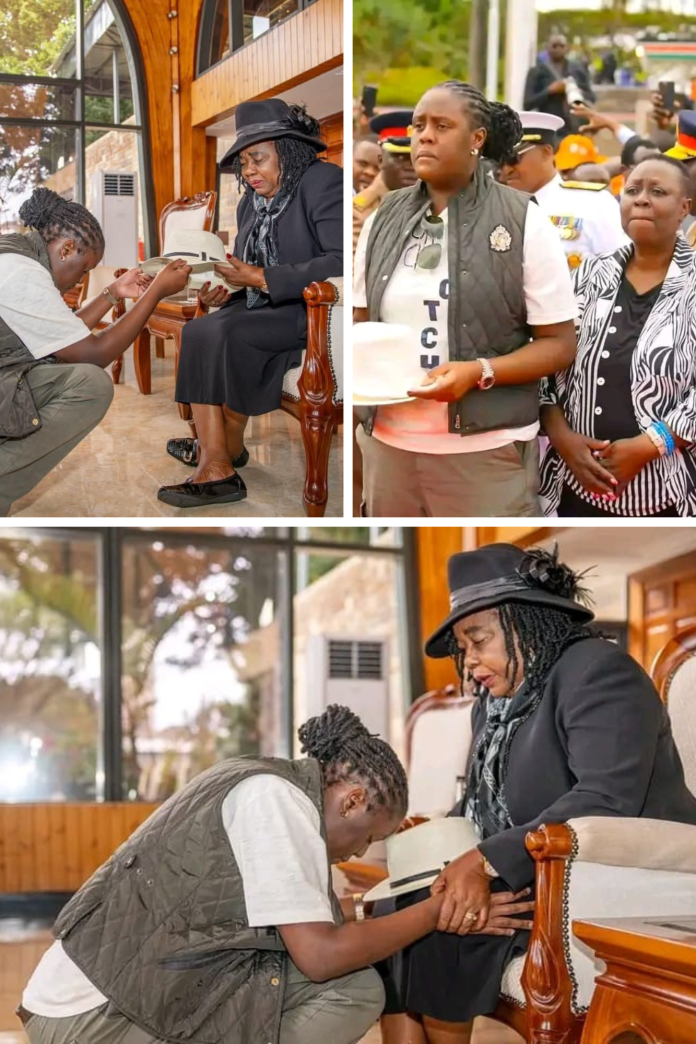
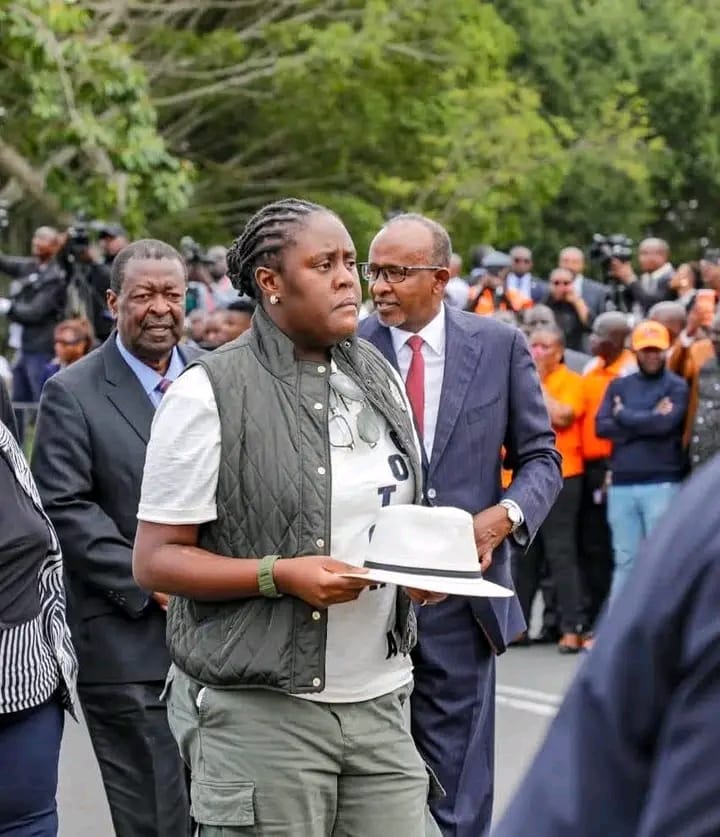
In Winnies hand, she held Raila’s revered white Panana Hat, the last surviving Raila legacy. The message was short, crisp and clear, “PEACE I LEAVE UNTO YOU.”
On the other side, lay the casket with a message “I have fought the good fight, I have finished race, I have kept the faith. Now there is in store for me, the crown of righteousness, which the Lord, the righteous Judge, will award to me on that day – and not only to me, but also to all who have longed for his appearing 2 Tomothy 4:7-8.”
As mourners jammed the airport and Mombasa Road to Kasarani International Stadium, Winnie calmly carried the powerful Panama Hat to her mother’s house, Karen and respectfully and obediently handed over the message.
At the Airport after disembarking from the plane, standing at the heart of the facility, Winnie named after freedom fighter Winnie Mandela, wife to the late South Africa President, the late Nelson Mandela, rose to the occasion. Her Father’s wish.
In her heart and hands, she carried the heaviest and most powerful message to the world, the last wish of his father, unknown to the world. Raila Iga gala. Raila the mystic.
The message of Peace, that Raila loved and cherished and was so passionate about. A PEACEFUL AND UNITED KENYA.
The message of peace that made him to sacrifice for Kenya severally and never wanted Kenya to break despite presidential election results.
And the message was symbolically delivered at the historic Jomo Kenyatta International Airport, named after the founding father, the late Mzee Jomo Kenyatta.
Indeed, Raila chose to unite Kenya at the heart of the facility which bore the name of Kenya’s founding father of the nation, Mzee Kenyatta, a facility that unites Kenya with the rest of the world.
A temporary calm descended at the facility when Winnie in a calm demeanor symbolically delivered Raila’s last wish message. Carrying the white Panama hat, surrounded by the shocked and grieving prime cabinet secretary Musalia Mudavadi, leader of the delegation, Health cabinet Secretary Aden Duale, Kisumu Women Representative Ruth Adhiambo Odinga, the younger sister and a host of dignitaries and mourners.
As Raila’s convoy snaked its way to Kasarani International Airport with a sea of humanity in tow, Winnie led a small delegation to their family home, in Karen.
Winnie, the political heartbeat of Raila, the dare devil and his political confidant, at his sitting room delivered the Panama hat carrying the message Mama Ida, kneeling before her and calmy gave her the hat of legacy as President William Ruto stood alert, watched and witnessed the delivery.
This was not just a simple ceremony, but Raila’s way of sending coded powerful messages.
Interestingly, at the Indian Airport, the Panama Hat lay on top of the casket sending the message to the world, “Now I LEAVE, PEACE I LEAVE UNTO YOU.”
In one of his greatest speeches on peace and forgiveness during his Azimio La Umoja unveiling as the Presidential candidate Raila said “I bear the scars of liberation with pride and embrace the blood; sweat and tears they caused me.
By the way, the tears from the torture chambers are still running as it you can tell from the handkerchief that never leaves my hand.
For years, I was not allowed to speak with other inmates, infact for six straight years, I did not sleep on a bed. For months and ends, I was either held in communicado or solitary continent or handcuffed and on transit to the next prison or detention camp.
A relative died including my beloved mother and my own brother and in never got the chance to say goodbye. I would not wish this to torment upon anyone even my own worst enemy.
Together, we my comrades who endured torture and survive those darks days of torture, we will never let Kenya degenerate.”
At the burial of Matriarch Mama Phoebe Asiyo in Karachuonyo Raila said he couldn’t afford to witness Kenya degenerate into a failed state during the Genzs protest and had to come out and save the country.
The last powerful speech on peace and unity, Raila delivered in Karachuonyo, the home of heroes and heroine. Dalagi Ojijo wuon Oteko,.
“We are here as Kenyans today, we know where we are coming from. We were in a very serious situation sometimes last year. Everybody knows where we were.
There was a possibility of Kenya degenerating into a failed state like Somalia, Sudan. People who do not understand history, talk very easily. Ask and tell them, what happened in Libya, Egypt after the Arabs springs, why do we have a military regime today in Egypt after the Arabs springs?
People do not understand that is why they are making simple mistake, and it is easy for them to write articles in newspapers. I read them and I just laugh.
They tried to trivialize was a very serious situation, so what we have today, was something that we were forced into because of the circumstances that were existing at that time.
I want somebody to tell me their own solution and how this could have been solved? We sacrificed so that there could be peace in this country and that is the reason we are here today.
I do not regret what we did. We did it in the best interest of our country and Kenya must move forward.”
We at The Western Insight, sent our condolence to the family and Kenyans. Long live the Enigma.
To Raila:
“You must be iron like a lion in Zion.
Yeah, I am on the rock. and then I check a stock I had to run like a fugitive. To save the life I live, I’M Gona be iron like a lion in Zion,” your favorite Reggae beat.
The respected and renown Ohangla legend Tonny Nyadundo aptly captured the mystic Raila Amolo Odinga in his song, Raila Igala gala.
The 2006 composition ahead of the 2007 general election, Nyadundo tried to wade into the mystery of Raila which was unknown to his father, the late Jaramogi Oginga, his wife Ida, relatives and to Kenyans at large. Iga gala.
In the rendition goes“ Wuod Nyar Alego igala gala, Raila igala gala. Tinga wuod nyalego igala galaAgwambo wuod Nyalego iyore yore ikonyo Kenya igala gala, Wuod Oginga Igala gala Piny Winj tee (Son daughter of Alego you are mystic, you have helped Kenya and the world listens to you).
Nyadundo said the rendition was mystic to him as he could onlysing igala gala(mystic) and only talked about the unknown Raila’s character.
He said both in life and death, Raila has remained mystic to Kenyans. They have never understood him and will never understand him even after he exited.
“Raila died in India without telling Kenyans his mind despite bringing peace to the country. Making several sacrifices one after another.
You cannot predict Raila and that is why in the song, the message is simple, you will never understand Raila, He is mystic to all of us,” he said.
President William Ruto described Raila as “a once-in-a-generation leader, a man whose ideals transcended politics and whose legacy will shape Kenya’s destiny for generations to come.”
Ruto said “Raila’s name will forever be etched in the story of our republic as a tale of struggle, sacrifice, courage, the rule of law, and an unwavering pursuit of justice. For decades, he dedicated his life to the fight for equity and freedom, enduring detention and persecution so that our nation could know and enjoy democracy.
He was a towering figure in our democratic landscape — a patriot of uncommon courage, a Pan-Africanist, and a unifier who sought peace and national unity above power and self-interest. In his passing, Kenya has lost a servant of the people who gave his all to the promise of a better nation.”
Indeed, Kenyans have been left baffled, divided by certain actions and reactions by Raila, which have confounded his admirers and opponents alike.
In his death, just like when he was alive, he has remained a mystic. The Baba while you were away phenomenon when he returned to Kenya after USA visit following the disputed 2017 election and the repatriation of his body from India were defining and mystic moments.
in his return from USA, Raila and his supporters braved the hails of teargas, bullets and running from the Jomo Kenyatta International Airport to the famous Uhuru Park. And when, his supporters thought he would lead the march to State House, Raila decided to call of the march not to break Kenya, his beloved country.
And from the Airport to Kasarani International stadium, where the public were expected to view the body, the last teargas salute was offered to Raila as mourner scampered for safety.
Similarly, today, just like his return from USA, when his body arrived from India aboard Kenya Airways, Kenyans of all walks were at the airport to receive him,
They defied the security system to enter the VIP and the aeroplane that carried the body.
In town, the Parliament that was supposed to be for viewing center was swimming with a sea of humanity forcing the committee to change to the venue to Kasarani International stadium, which was even filled before the body arrived.
The journey from the airport to Kasarani took almost five hours with mourners in tow.
The mystic Raila chose India for his last breath. The land of his best friend Narendra Modi and beside him were his trusted lieutenants his sister Ruth Adhiambo Odinga and daughter Winnie Odinga.
Modi wrote in his X handle “Deeply saddened by the passing of my dear friend and former Prime minister Mr. Raila Odinga. He was a towering statesman, and a cherished friend of India I had the privilege.”
Political analyst Amayo Ochieng said Raila lived to his true legacy teargas in life so was it in death marked his exit.
“Raila did the unthinkable. The people who wronged him most, he forgave, worked and gave them a lifeline.
He never allowed people to understand and predict his next move and through that he remained mysterious.
Raila knew he had been betrayed severally but forgave and never held any grudge and this are some of the things that baffled many,” he said.
We use cookies to ensure that we give you the best experience on our website. If you continue to use this site we will assume that you are happy with it.