Home Blog Page 121

UDA aspirant for Malava constituency collapses and dies at home

0

BY PHILLIP ORWA

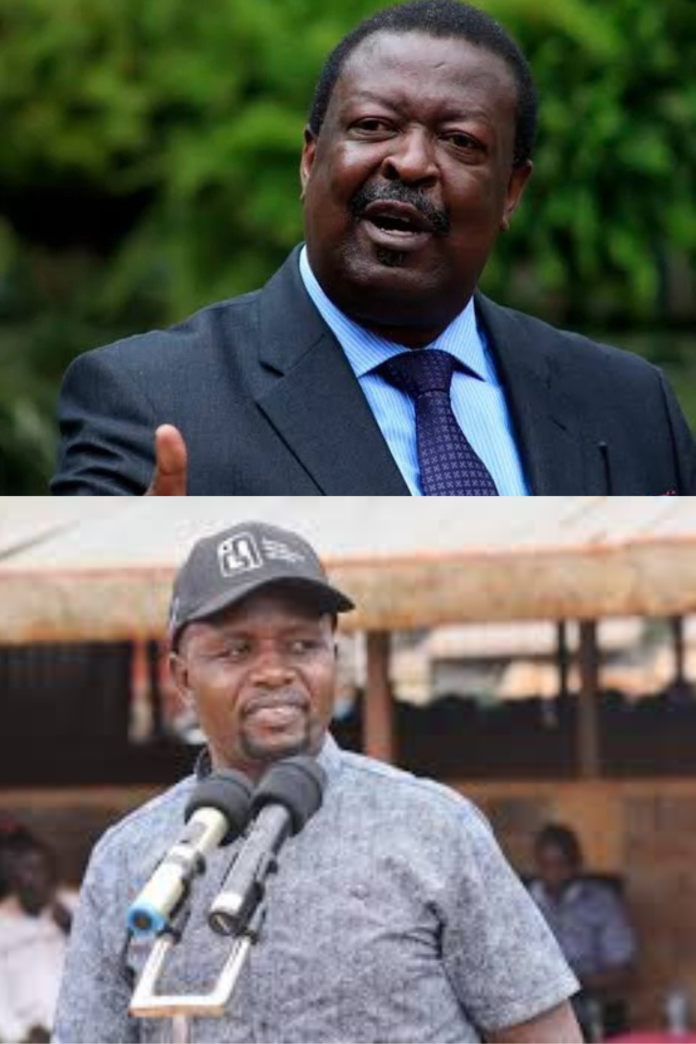
The United Democratic Alliance (UDA) party candidate for Malava Constituency, Enock Musambai Andanje, has died after collapsing at his home.

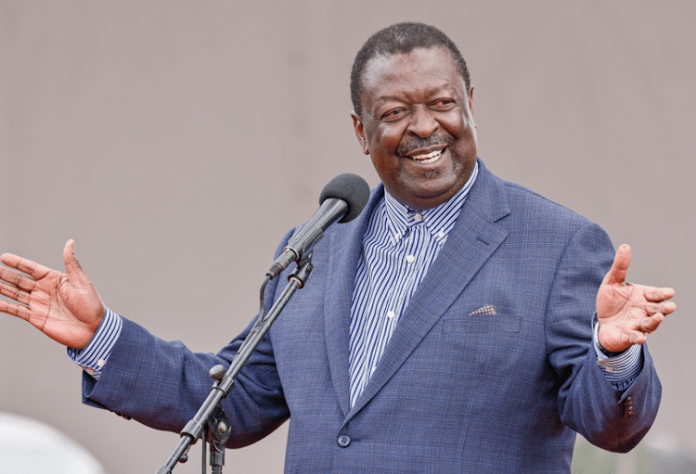
The UDA candidate died as he was preparing to attend the widows’ empowerment forum attended by Prime Cabinet Secretary Musalia Mudavadi.

Dr Andanje is the immediate former principal of Bungoma High School, who took early retirement to contest for the Malava by-elections.

Prime Cabinet Secretary Musalia Mudavadi confirmed the tragic news on Friday, August 15. Andanje was preparing to attend an empowerment event he was presiding over when he passed away.

According to the PCS, who is also the Foreign and Diplomatic Affairs Cabinet Secretary, the UDA candidate collapsed and died before making it to the function.

“While we have been here, I have received a message that one of us, Enock Musambai Andanje, while preparing to come here, has passed away,” he said.

The Malava seat fell vacant following the death of Malulu Injendi, who had served as the area MP since 2013. When he transitioned to politics, he died at Aga Khan while receiving treatment.

IEBC announced Thursday, November 27th, as the official by-election day, and many parties have fielded aspirants to square it out for the positions left either by natural causes or court cases.

The Opposition is Not a Comfort Zone You Must Work Twice as Hard as the Incumbent

0

By Billy Mijungu

In politics, the opposition is not a place to relax. It is a battlefield where survival depends on being twice as aggressive, twice as disruptive, and twice as organized as the President you are trying to unseat.

When Moi finally left power in 2002, Mwai Kibaki’s team led by Raila Odinga outworked and outenergized Uhuru Kenyatta’s KANU camp. They were hungrier, and it showed.

Uhuru learned that lesson well. In 2013, he ran a more disruptive and determined campaign than Raila Odinga, the sitting Prime Minister at the time, whose effort felt sluggish in comparison.

In 2007, Raila Odinga, riding the wave of momentum after opposing the Wako Draft, unleashed the Pentagon, a campaign machine that gave Mwai Kibaki one of the toughest political battles in Kenya’s history.

Fast forward to 2022. William Ruto had been campaigning, in one form or another, for 19 years. He built alliances in Parliament, the Executive, and across the country, often without Uhuru Kenyatta’s help. He mastered the art of playing opposition while still Deputy President, dominating both sides of the political divide. Today, Raila Odinga has borrowed that strategy, participating in the Broad Based Government while still holding firm to opposition positions.

For Kalonzo Musyoka and Fred Matiang’i, the message is clear: unseating Ruto will take relentless effort and strategic disruption, far beyond what we have seen so far. They have one advantage, he leads an increasingly unpopular regime, especially among disaffected youth. But Ruto is working to win them over, sending them a clear message: “As bad as I am, I am still your most dependable option.”

Here is the reality, popularity does not equal victory. Voter turnout is the make or break factor. The government knows this, which is why the Gen Z narrative of “Do not vote, will not vote, cannot vote, no IDs” is politically convenient for them. An apathetic youth vote is the incumbent’s silent ally.

Right now, the opposition’s hardest worker is not even a candidate, while the men who should be leading the charge are either perpetually in transit or focused on local politics. The lack of coordination is glaring.

And here is the paradox, the incumbent does not need to be disruptive to stay in power, he only needs to keep his coalition intact. Yet William Ruto is not only holding it together, he is also disruptive, persuasive, cunning, and deeply entrenched. Removing him will require the opposition to fight on every front, every day, with double the energy.

If they cannot outwork him, they will not outlast him.

Government declare redundancies at the four leased sugar factories

0

By Sandra Blessings

Employees at the four leased sugar factories now face termination of employment after the government moved to declare redundancies.

In a memo from Permanent Secretary, Ministry of Agriculture and Livestock Development, Dr Kipronoh Rono, dated 12th August 2025, captioned “Re-Issuance of Termination Notices to Employees Under Redundancy”,

“In light of the ongoing restructuring of public sugar companies under the leasing framework, and in accordance with the provisions of Section 40 of the Employment Act 2007 and the respective Collective Bargaining Agreements, you are hereby directed to issue formal redundancy notices to all affected employees in your organisation.

The notices should:
Be in writing, stating clearly the reasons for the termination, outline the employees’ entitlements under the redundancy provisions of the Employment Act, 2007 and the applicable CBA.
Be copied to the County Labour Officer in compliance with statutory requirements and employees should also be informed that all the dues and lawful entitlements will be fully paid in line with the provisions of the law and the CBAs.”
he wrote.

The memo was written to Managing Directors: Nzoia Sugar Company, South Nyanza Sugar Company, and Chemelil Sugar Company, and Joint Receiver Manager, Muhoroni Sugar Company.

Recently, the Cabinet Secretary for Agriculture and Livestock Development, Mutahi Kagwe, said that following broad-based consultation, four private millers have been awarded a 30-year lease for the operation of Nzoia, Chemelil, Sony and Muhoroni Sugar Companies.

“The procurement of the four firms followed broad-based engagement with stakeholders across the sugar sector dating back to the year 2015 when Parliament approved the process,” he said.

In a press statement, the CS said leasing of Nzoia Sugar Company was awarded to West Kenya Sugar Company, while that of Chemelil Sugar Company was awarded to Kibos Sugar & Allied Industries Limited.

He said leasing of Sony Sugar Company was awarded to Busia Sugar Industry Ltd, and that leasing of Muhoroni Sugar Company was awarded to West Valley Sugar Company.

“The four firms were competitively procured by the government through the Ministry of Agriculture and Livestock Development, the Kenya Sugar Board, and other government key players,” he said.

He observed that the decision to lease out the four factories was arrived at after lengthy consultations with key stakeholders across the sugar sector including farmers, sugar factory workers, unions, Members of Parliament, Governors, and approvals by the Cabinet.

“Last year, the government wrote off over Sh117 billion to bail out the local sugar industry and injected an additional Sh2.5 billion to clear arrears owed to farmers and workers,” he said.

The Ministry further wishes to reassure all stakeholders that no public land will be sold or acquired under the leasing agreements, Kagwe pointed out.

“All assets belonging to the four sugar companies including land will remain the property of the national government. The assets will be leased out to the lessees annually based on the prevailing market rate with proceeds being collected by the Kenya Sugar Board for reinvestment into communities around the four factories and for utilisation in cane development,” he said.

The investors were expected to invest Sh12.29 billion towards the revival of the sugar factories.

Under the lease agreement, the following investments will be made:

  1. West Kenya Sugar Company, which won the lease for Nzoia Sugar Company, will invest Ksh. 5,764,331,333 into the factory.
  2. Kibos Sugar & Allied Industries Ltd, which won the lease for Chemelil Sugar Company, will invest Ksh. 4,500,000,000 into the factory.
  3. West Valley Sugar Company Ltd, which won the lease for Muhoroni Sugar Company, will invest Ksh. 1,023,000,000 into the factory.
  4. Busia Sugar Industry Ltd, which won the lease for Sony Sugar Company, will invest Ksh. 1,000,000,000 into the factory.

The funds will be invested directly into the four mills to ensure that they are operational and can meet their inbuilt threshing and sugar production capacity.

The rehabilitation of the four sugar companies will enable the lessees to operate at optimal capacity, thereby safeguarding employment opportunities and enabling farmers to deliver more cane and increase their earnings.

In addition to the Ksh 12.29 billion, the four lessees will pay a total of Ksh 521,971,400 in goodwill for the leasing of land belonging to the four mills.

The payment is calculated based on the annual cost of leasing land per hectare. The costs are broken down as follows:

  1. West Kenya Sugar Company will pay a goodwill of Ksh 208,305,000 for the 4,629 Ha owned by Nzoia Sugar Company, calculated at a rate of Ksh 45,000 per Ha.
  2. Kibos Sugar & Allied Industries Ltd will pay a goodwill of Ksh 111,190,000 for the 2,779.75 Ha owned by Chemelil Sugar Company, calculated at a rate of Ksh 40,000 per Ha.
  3. Busia Sugar Industry Ltd will pay a goodwill of Ksh 122,396,400 for the 3,059.91 Ha owned by Sony Sugar Company, calculated at a rate of Ksh 40,000 per Ha.
  4. West Valley Sugar Company Ltd will pay a goodwill of Ksh 80,080,000 for the 2,002 Ha owned by Muhoroni Sugar Company, calculated at a rate of Ksh 40,000 per Ha.

Beyond the over Ksh 522 million to be paid in goodwill, the four lessees will pay an annual lease for the land owned by the four factories at the beginning of each year.

The funds will be invested in cane development and will cater for the welfare of communities living around the factories.

The prodigal son returns stirring rebellion in the Kingdom, Nyanza smiles as Central rebels

0

By Anderson Ojwang

The Kenya’s political landscape especially between the founding father of the nation, the late Jomo Kenyatta and his deputy the late Jaramogi Oginga Odinga can be equated to the biblical prodigal son after independence.

In the biblical, Prodigal Son, specifically found in Luke 15:11-32, tells the story of a son who demanded his inheritance early, leaves home, squanders his wealth, and eventually returns home seeking forgiveness and a job as a servant.
His father, however, welcomes him back with open arms, celebrating his return with a feast. The story highlights themes of forgiveness, repentance, and God’s unconditional love.

The Older Son’s Anger:
The older son, who has remained faithful, is angry and upset that his brother is celebrated, especially since he never received such a celebration.

The Father’s Explanation:
The father explains that it is right to celebrate because the younger son was lost and is now found. He also reminds the older son that everything he has is also his.
Looking at the fall out between Kenyatta and Odinga that finally confined the Luo community into the opposition and became the face of activism, demonstration and rebellion.
For over the last six decades, Nyanza became an opposition zone and various attempts to be re-integrated into the government and to become part of the system failed miserably.
But with the formation of the broad based government, in the history of the community, they hold two positions that have been elusive from independence.

That is the cabinet secretary of treasury and economic planning presently held by john Mbadi and the Attorney General held by Dorcas Oduor. These are the heart of the government and the appointments brought disquiet from the mountain and actual rebellion
President William Ruto then deputy, Rigathi Gachugua and a section of leaders from the region felt betrayed by the inclusion and appointment of ODM experts into the cabinet and various government positions.
For Gachagua, the government was controlled through share holdings and those who did not vote for the Kenya Kwanza government were expected to wait for the droplets.’

After his impeachment Gachagua took his battle to Mt Kenya where he has been engaging the locals to support his political agenda and has formed a political party DCP, which he says is the party for the mountain .

He then said “ We are planning, within a short time, we will reclaim back our pride and dignity as a people.
It is true what you are saying the mountain is angry. It is not just angry it is very angry. Why the mountain is very angry, because it is betrayal.

We will plan as a community and within a short time we will reclaim back our pride and dignity as a people.”

But Raila after the formation of broad based government has declared his support for the union beyond 2027 general elections.
By returning Nyanza to the government and just like the prodigal son, the region is currently witnessing massive development projects.
President Ruto recently declared affirmative action for development for the region in order to be at par with other regions that have benefited from the government for the last six decades.
Ruto on Friday at the burial of Mama Phoebe Asiyo in Karachuonyo acknowledged that Nyanza for decades have been marginalized in terms of development and economic growth.

President Ruto announced that for Nyanza to be at par with other regions that have benefitted from the government support, he declared an affirmative action for the region on development and economic growth.

“While in Homa Bay today, leaders here have asked that we focus on the development of the nation and we focus on the development of this county.

Let me commit that we have provided in this year’s budget enhanced resources for the development of thus county. I am aware that this county and this region requires affirmative action.
Because for a very long time this region has not benefited from the resources and development of our country as other regions have.

KRA partners with tech developers on new service easing technology

0

By Correspondent

The Kenya Revenue Authority is keen on partnering with tech developers in building digital systems that help in easing access to public services in the country.

The tax collecting body on Wednesday underscored its commitment to partnerships with the tech developer community for co-creation of simplified service solutions, as part of its larger digital transformation agenda.
KRA is the first public sector institution that has built a platform that enables businesses and other private sector players to seamlessly integrate with its ecosystem.

The GavaConnect Enterprise API platform has exposed 16 APIs and registered over 1,000 developers, reflecting a strong industry interest in tax-tech innovation.

Speaking at the masterclass, KRA’s Deputy Commissioner for Programme Delivery & Client Engagement, Ms Annastacia Githuba, said that GavaConnect is a major milestone in the public sector, marking a decisive leap forward in Kenya’s tax digitisation agenda – one that places developers, innovators and private sector partners at the heart of building solutions that make tax compliance simpler, faster and more accessible for all.

“Today marks a great opportunity for us at KRA to open up to the wider tech community. As a representative of government, KRA is setting the pace by making government services accessible in ways that allow developers to integrate them into innovative solutions. This is not just about tax collection, it’s about creating opportunities for developers to build, innovate, and even monetise around our products, helping us improve services from the ground up,” she said.

The platform offers a growing library of APIs, such as the PIN and Tax Compliance Certificate checkers, NIL Return filing, and an e-Slip checker, all designed to improve taxpayer experience, support compliance and enhance efficiency.

The Masterclass brought developers together for a hands-on and collaborative forum. This included an EAPI vision briefing, API demonstrations, and a feedback session where attendees gave input on their experience and suggested features for future APIs. The session was framed to support all interested developers, whether onboarding for the first time or building advanced solutions that support our taxpayers.

Looking ahead, KRA plans to extend GavaConnect’s reach to key initiatives like the electronic Tax Invoice Management System (eTIMS) and enhanced VAT compliance tools to streamline VAT and other tax compliance processes for customers. Integrating such services via APIs will further simplify compliance and reporting for businesses; tying back to KRA’s goal to simplify compliance and embrace new technologies.

The API Masterclass series is a concrete step in that direction, cementing KRA’s partnership with Kenya’s tech community to co-design the future of tax administration.

NCBA Golf Series Heads to Nyanza Club as PGK Equator Tour Tees Off at Mt. Kipipiri

0

By PHILLIP ORWA

The par-70 Nyanza Golf Club course will play host to over 100 golfers as top golfers swing by the shores of Lake Victoria to battle it out for NCBA Golf Series.

NCBA Nyanza Club series will present the over 100 golfers with an opportunity to qualify for the series’ Grand Finale in November. The event is expected to draw a strong field of local golfers from across the region, all seeking to secure their place among the country’s top amateur performers.

The Kisumu event comes as NCBA continues its support for golf at all levels, with the bank also featuring prominently in the ongoing third leg of the Professional Golfers of Kenya (PGK) Equator Tour at Mt. Kipipiri Golf & Resort in Nyandarua County.

The Mt. Kipipiri tournament, which teed off on Thursday, August 14, has brought together 43 elite corporate-sponsored professionals competing over four days for critical tour ranking points.

The PGK Equator Tour began with its debut at Ruiru Sports Club before moving to Limuru Country Club for the second leg, where Greg Snow claimed victory with a total score of 276 (–12).

NCBA-sponsored player Edwin Mudanyi finished sixth on 282 (–6) at Limuru, adding to a string of strong regional performances. The bank is a committed sponsor of the Equator Tour, supporting players including Mudanyi, Erick Ooko, Abraham Galgallo and Njuguna Ngugi.

The sponsorship covers tournament entries, training resources, and performance development opportunities, enabling the players to compete consistently at the highest level.

Speaking ahead of the Kisumu and Mt. Kipipiri events, NCBA Group Managing Director John Gachora said the bank’s involvement in both amateur and professional golf reflects its long-term investment in Kenyan sporting talent.

“Our commitment to golf goes beyond sponsorship. It’s about building platforms for players to grow and compete at every stage, from club level to elite professional tours. Through the NCBA Golf Series and our support for the Equator Tour, we are giving golfers the opportunities, exposure and tools they need to reach their full potential,” he said.

For Former President Uhuru, Kisumu it was while for President Ruto, Homa Bay it is, Home away from Home

0

By Anderson Ojwang

In the hospitality industry, a common phrase ‘home away from’ refers to a place other than one’s actual residence, where one feels comfortable, relaxed, and at ease, similar to how they feel in their home.

Kisumu city before, the political handshake between President Uhuru Kenyatta with Orange Democratic Movement leader, Raila Odinga, was a no-go zone to the president.

Kisumu was riotous on slightest provocation to Uhuru’s administration, and the president gave it a wide berth. But after the 2018 handshake, Kisumu became Uhuru’s second home after Ichaweri.

Similarly, despite previous overtures from President William Ruto to Homa Bay after his election, the reception was lukewarm, but after the formation of a broad-based government, Homa Bay has received the president with an open hand.

Uhuru was so relaxed in Kisumu that he visited the lake city privately and on official functions on several occasions.

Apart from the development gravy train to Kisumu, President Uhuru presided over the 58th Madaraka celebrations in Kisumu.

President Uhuru Kenyatta commissioned several big-dollar projects in Kisumu during his tenure in office.
The projects, which were valued at over Sh25 billion, included the renewed Nakuru-Kisumu Metre Gauge Railway, refurbished Kisumu Port, Jomo Kenyatta Stadium, Uhuru Business Park, Jaramogi Oginga Odinga Sports Complex, 400kV Olkaria-Lessos-Kisumu transmission line, and the Kibos Inland Container Depot.

Uhuru also commissioned Kisumu’s first marine school at the Railway Training Institute, among other major projects.

Nakuru-Kisumu Metre Gauge Railway
Rehabilitation of the 216km railway that connects to the refurbished Kisumu Port was undertaken by the Kenya Defence Forces in partnership with KRC at a cost of Sh3.8 billion.
It was expected to facilitate transportation of cargo and passengers to Uganda, Rwanda, Burundi, and the Democratic Republic of Congo on commercial ships via Lake Victoria.

Refurbished Kisumu Port
Uhuru commissioned the refurbished Kisumu Port, which was upgraded at a cost of Sh3 billion in a bid to help Kisumu regain its status as a regional business hub.
Among rehabilitation works at the port included the construction of the quayside, concreting of the port yard, rehabilitation of the dry dock, and installation of cargo handling equipment.
The roads and the link roads to the port were also rehabilitated, with jetties and piers also being put in place. There was also an overhaul of dilapidated boat deployers (ramps for lowering boats onto the lake) to boost efficiency.

400kV Transmission Line
The construction of a 308km 400/220/132kV transmission line from Olkaria in Naivasha to Kisumu was a big deal for Western Kenya. The Sh16 billion line was to evacuate electricity from Olkaria through Lessos, to Kisumu – supplying stable power to Kisumu Port.
The transmission line was built in three lots, the first of which involved the construction of the 229km 400kV double circuit line from the Olkaria II substation to the Lessos substation.
The second lot involved the construction of a 79km 220kV double circuit transmission line from the Lessos substation to the Kibos substation and 132kV from Kibos to Mamboleo in Kisumu.
The final lot involved the construction of a new 220/132kV substation at Kibos and extension of the present 400/220kV Lessos and 220kV Olkaria II substations.

Uhuru Business Park Complex
He commissioned the Sh700 million Uhuru Business Park on Nyerere Road.
President Uhuru also upgraded the 20,000-capacity Jomo Kenyatta International Stadium at Mamboleo ASK Show Ground, at a cost of Sh350 million.

President Ruto
For President Ruto, Homa Bay has been his preferred destination, where he is homely and has gained acceptance. It is Homa Bay, the bedroom of Raila, where Ruto has fished most of his allies, led by Internal Security and Administration Permanent Secretary Dr Raymond Omollo, ODM National Chairperson, Governor Gladys Wanga, Cabinet Secretary for Treasury and Economic Planning John Mbadi, and Homa Bay MP Opondo Kaluma. His UDA and ODM party co-exist symbiotically.

Ruto has visited Homa Bay County more than he has visited any other part of the country and has woken the once sleepy town from dilapidated and eyesore structures to ultra-modern facilities.
Currently, Ruto is more at ease in Homa Bay than Eldoret, where he freely mingles with the residents and takes time to fry fish and engages with the public.

During this year’s Madaraka celebration presided over by President Ruto, he turned the story of Homa Bay town from a sleepy and underdeveloped to a vibrant and fast-emerging developing town in the country. The celebration came with a basket full of goodies.

Omollo said Homa Bay town, which previously had modest infrastructure, was elevated into a national hub capable of hosting one of the country’s national public holidays.

“Homa Bay town has witnessed comprehensive infrastructural upgrade and plans to prepare the town for its historic role are on schedule,” he said then.

Omollo said the transformation resulted in a fully modernised Raila Odinga Stadium, upgraded road networks in the town, rehabilitation of Kabunde Airstrip, improved public facilities and a rejuvenated waterfront.

“At the Raila Odinga Stadium, the government expanded the stadium capacity and upgraded its facilities, ensuring it meets the national ceremonial standards for the event.
The seating was increased to accommodate 20,000 spectators, while the construction of terraces, roofing of pavilions and installation of security features will ensure safety and comfort of all guests,”
he said.

He said the stadium will have a media zone, emergency exits, floodlights and modern parade grounds, making it suitable for sports tournaments, regional events and national state functions.

Omollo said the government upgraded the roads, with more than 35 kilometres of roads under construction or rehabilitation within the town and its outskirts.

“The roads included 1.2km ceremonial road from the pier to the stadium, 2km road connecting Arojo to the stadium, 10.8km urban roads being improved, and rural link roads including Wahamba-Imbo 11km, and Ruga-Lala 12km are being murramed and upgraded to improve public access,” he said.

Omollo said at the Kabunde Airstrip, which will serve as the landing for the dignitaries, various works were ongoing including building of a modern terminal with check-in counters, waiting lounges, secure exits and VIP holding areas.

Omollo said the County Commissioner’s residence was upgraded to host the state garden party, which includes landscaping, internal renovation, new sanitation systems and raising of the perimeter wall.

Omollo said for the first time in history, Homa Bay has a mini state lodge; the temporary presidential residence will house the Head of State and serve as the Presidential Luncheon for the event.

State Lodge, a new centre of power
President Ruto has witnessed the construction of the State Lodge in Homa Bay town, which has become a new centre of power. This has positioned the region to host the Head of State at any time.

Affordable Housing
Homa Bay was the first county to benefit from this initiative, which has been progressively rolled out to other institutions nationwide.

The construction of the first student accommodation under the government’s Affordable Housing Programme commenced in Homa Bay County after President William Ruto laid the foundation stone for the Tom Mboya University Student Village.

The 2,064-bed facility was expected to address the deplorable living conditions faced by students, while meeting the growing demand for safe, affordable, and quality accommodation for university learners.

Homa Bay Pier and administrative block
Among the completed projects is the Sh600 million rehabilitation of Homa Bay Pier. Additionally, the second phase of the administration and lecture hall block at Tom Mboya University, which cost Sh1.2 billion, is nearing completion.

Government increases funding to counties by Sh 30billon

0
Raila

The government has increased the equitable share of revenue to counties with nearly KSh30 billion compared to the last financial year.

President William Ruto said the unprecedented increase from last year’s KSh387.4 billion to KSh415 billion will go a long way in strengthening devolution.

The President said the County Allocation of Revenue Act, 2025, which he assented to earlier on Wednesday, distributes the equitable share among the 47 counties in strict adherence to the revenue-sharing formula set out in Article 217 of the Constitution.

He pointed out that this is the first allocation to apply the Fourth Determination of the Basis for Division of Revenue, which was approved by Parliament this year.

“This is not just more money; it is a stronger foundation for counties to deliver, develop, and transform lives,” he said.

Speaking during the 9th Devolution Conference held in Homa Bay County, President Ruto reaffirmed his administration’s commitment to supporting the devolved units.

He said despite operating within a tight fiscal space, the government has honoured its commitment to timely disbursements, clearing all balances owed to counties for the just-ended financial year.

“This ensures that counties have the fiscal capacity, institutional infrastructure, and human resources necessary to deliver on their expanded mandates effectively,” he said.

The President pointed out that in just 12 years since the inception of devolution, the government has transferred a total of KSh4 trillion to counties.

“Every corner of Kenya now has a functional county government closer to the people than ever before,” he said.

The President said the National Government has transferred the 14 outstanding devolved functions to counties, aligning them with the requisite funding.

“This milestone has eliminated decades-old ambiguities that hampered service delivery and fuelled inter-governmental disputes,” he said.

He explained that full transfer of devolved functions will empower county governments to design and implement programmes that respond directly to local needs.

The President announced that the National Government has gazetted immovable assets, including land and buildings, for transfer to and ownership of the counties.

President Ruto said he had assented to the County Public Finance Laws (Amendment) Bill, 2023, which amends the Public Finance Management Act to provide for the establishment of a County Assembly Fund in each county.

He said the new law consolidates the place of county assemblies while clearly defining the respective responsibilities of both National and county governments.

“It is not just a legal act, it is a statement of intent that counties must have the means, the mandate, and the clarity to serve our people effectively,” he said.

He pointed out that the government is working with counties to build one bankable, high-impact value chain in every county.

“This is about turning local potential into jobs, incomes, and exports,” the President explained.

However, the President noted that corruption remains the greatest threat to the full realisation of the gains of devolution.

He urged all stakeholders involved in the fight against the vice to intensify their efforts, stressing that the war against corruption demands collective resolve and sustained action.

He explained that the National Government is adopting technology to curb corruption, citing the digitisation of services through the e-Citizen platform.

This has reduced wastage, closed revenue leakages, and boosted collections while making transactions more transparent and accountable, he explained.

“Our greatest challenge is not the inadequacy of resources, but how we utilise what we have,” he said.

The President also called out the Legislature for demanding money from members of the Executive who appear before the Houses for accountability.

“It should not be possible for a committee of Parliament to demand to be paid to write reports or look the other way,” he said.

The President also asked the judiciary not to be a haven for the corrupt, citing practices such as anticipatory bail which, he said, “is a Kenyan invention” and takes the country backwards.

On his part, Council of Governors Chair and Wajir Governor Ahmed Abdullahi commended the National Government for disbursing county funds on time.

“For the three years that you have been in charge, at least the last shilling was released to the County Revenue Funds account by midnight on 30th June. We don’t take that for granted. It was not always the case,” he said.

The Council of Governors asked county chiefs to ensure resources are distributed equitably within the counties.

He noted that since the advent of devolution there has been improved service delivery at the grassroots, citing healthcare services.

Homa Bay Governor Gladys Wanga and Senate Speaker Amason Kingi, among others, also spoke.

Sudan walks from ashes as Kenya’s genz rattles Atlas Lion in CHAN

0

The war torn Sudan, finally shed tears of joy and not the usual the free flowing tears of sorrows

From the ashes and dungeons of death, a lease of hope of a better tomorrow, a peaceful and progressive country was birthed .

The nation was united, the common and rampant sound of gun clicks and roars died for over 90 minutes

The warring factions were finally reunited and united by a common cause .

The noble cause, football that unites and indeed , Sudan was united to cheer the national team.

And that unity of purpose was never let to die out. The strong army of footballers reminded the country of the importance of peace and togetherness .

They spoke clearly from the field to their leaders and actioned peace call by writing history .

It was the history that will remain in the anal and will be told to the successive generations .

The team left behind the pain, anguish and suffering back at home to hoist high the national flag across the continent and globally .

They spoke through football about peace in the country and need for intervention by Africa and UN to end the civil war.

In their speech,they not only humiliated the Africa’s football power house ,Nigeria but taught them few football basics.

The 4-0 drabbing of the tired super Eagles was a statement , that only name no longer matters in football but creativity and commitment .

Humiliated and humbled, the Super Eagle team looked drown in their own cola and couldn’t showcase their mastery, juggling and skills of the legends of eons like JJ Okocha, Finidi George , Kanu among others .

The art seems to have decipitated with the legends and the talent bank looks empty and broke .

Like Nigerian writer Chinuw Achebe wrote in his book things fall apart ” when a child has washed his hands he can eat with the
Elders ” indeed Sudan national team have indeed washed their hands and now sits among the Africa’s football elite table

Achebe in the same book Things Fall Apart talked of Okonkwo fear, the fear of his father being seen as lazy that eventually drove him to his own death, by committing suicide. Nigeria may be facing Okonkwo’s moment

For Sudan , the statement was a call to action by Africa and UN to restore order and peace in that country

Meanwhile in Kenya , the Genz frenzy is not about to die. The Genz Harambee Stars have moved from the streets demos to actual footballing .

The fancied and highly rated Atlas Lion found itself in a different jungle .The Nairobi park where Genz rule .

The land of fearless and warriors who chased away the British colonialist

The home of Dedan Kimathi, Ojijo Wuon Oteko , Obama Barrack , Tom Mboya, Masinde Muliro , Jomo Kenyatta, Oginga Odinga, Achieng Oneko, Daniel Moi, Raila Odinga , Uhuru Kenyattq, William Ruto , Wangari Maathai among others

The Genz after terrorising president Ruto and forced a broad based government , took their battle to Morocco

The feared and terrifying Atlas Lion became just a common Githurai cat used by thugs to terrorize the cowards at night into submission .

The action oriented Genz Harambee Stars made the Moroccans to eat the humble pie .

A ten man Harambee Stars contained the Lion for over 50 minutes to claim the sweet victory .

The statement was a statement that the Kenyans youths mean what they say and stand for .

The CHAN tournament may just turn out to be full of surprises .

Ruto has ungloved with financial might and is creating young millionaires .

From the tournament the lives of the players shall never be the same

They already have entered the group of Kenya a millionaire club where several dreams about but can only reach through viusasa.

Go Harambee and make history

Who is the 2027 Pendulum?

0

By Billy Mijungu

William Ruto is on a charm offensive like no other. He is going deep into political strongholds that once rejected him, shaking hands, smiling for the cameras and making promises. In Homa Bay they say Otedo Rech Asego which means he is frying fish in Asego.

Yet for all his effort, the numbers tell a stubborn story. Even with the open support of Raila Odinga, the President remains in a position that suggests the race is still very open.

If the Broad Based coalition holds firm, then the big question becomes who will be the strong column that could push Ruto over the edge. Kalonzo Musyoka is the most likely figure for this role.

The deal would be simple and tempting, serve as Deputy President for five years and secure a fighting chance for the presidency in 2032. This arrangement would give Kalonzo a historic opportunity to anchor his final run for State House.

However, this possibility depends on one important factor. If Fred Matiangi and Kalonzo fail to agree on the order of their 2027 ticket, then Kalonzo becomes the most effective pendulum in the race.

But politics has a way of ignoring logic when emotions and loyalties are involved. Raila Odinga remains the most lethal pendulum in Kenya today. If Raila were to swing to the opposition in 2027, the consequences for Ruto would be devastating.

It would not just be a matter of losing the election. The reality is that Ruto might not even emerge second. Raila’s endorsement, when deployed at the right moment, has the ability to tilt entire provinces and regions in ways no other politician can match.

Meanwhile, a group of younger political actors is quietly testing the waters. Edwin Sifuna, Babu Owino, Ndindi Nyoro, Anthony Kibagendi and Gathoni Wamuchomba and Natembeya have been in deep discussions.

They are not yet ready to mount a full scale presidential campaign, but they are certainly aware of their growing influence. These are individuals with ambition, political capital and national name recognition. Yet they also know that Kenya’s politics is expensive and unforgiving.

If they were to attempt a serious presidential run in 2027, they would need a pendulum who could deliver money, networks and national reach. The only person in that category today is former President Uhuru Kenyatta.

Uhuru still commands influence in several critical regions, and unlike most political heavyweights, he has the resources to finance a well oiled campaign machine. For any youthful alliance dreaming of power, he would be the bridge between raw ambition and realistic victory.

As things stand, the state of the 2027 race is a puzzle with several moving pieces. Ruto is trying to consolidate the gains of incumbency, Raila remains the master kingmaker, Kalonzo holds the potential to tip the balance, and the younger generation is quietly positioning itself for the future.

In between these forces lies the pendulum, the figure whose decision will decide who sits in State House after the next election.
In Kenyan politics, the pendulum is never just a supporter. It is a force that swings with the weight of numbers, history and timing. In 2027, that swing will determine not only the winner, but also the shape of politics for the next decade.