Home Blog Page 120

Vehicle Registration Number Plates Should Reflect Their Year of Manufacture

0

By Billy Mijungu

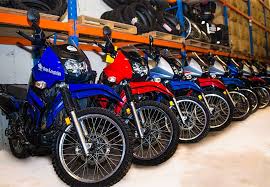
The National Transport and Safety Authority Act needs urgent amendment to align vehicle registration with the actual year of manufacture. The current system that assigns registration purely based on the year a car enters the country or when it is first registered locally is outdated, unfair, and detrimental to both buyers and sellers. If a car was manufactured in 1992, its registration should indicate that, not mislead owners and the market by placing it under a later date.

This is not just a matter of administrative tidiness. The impact is real, immediate, and costly. Importers and manufacturers are among the worst hit by the irregularities created by the existing system. Asset values drop unnaturally because vehicles that should retain their worth are registered in ways that erode confidence and transparency. When market participants cannot trust the correlation between a registration number and the actual age of a vehicle, the market suffers.

The public too pays a heavy price. A buyer who invests in what is technically a newer vehicle can find that its resale value plunges because the registration suggests otherwise. For many car owners, this is not only a financial issue but also a psychological one. Imagine purchasing a car last year only to be told that, on paper, it looks older than another vehicle manufactured before yours but registered later. This creates confusion and frustration and distorts the perception of ownership.

Globally, many countries have already moved to align vehicle registration with the year of manufacture, not just the date of import or first use. In the United Kingdom, for example, number plates have long reflected the age identifier of the vehicle, making it easy for buyers and sellers to establish the approximate age of a car at first glance. In the United States, title documents and registration records clearly reflect the year of manufacture, ensuring that buyers know exactly what they are purchasing. Kenya should not lag behind when a transparent and fair model already exists in well-established automotive markets.

This reform would also have broader economic benefits. For one, it would protect the value of assets for millions of Kenyan households and businesses that rely on vehicles not just for convenience but also as financial security. Banks and lending institutions that use vehicles as collateral would have greater confidence in asset valuation. Importers would be able to market vehicles more accurately, reducing disputes with clients and improving trust in the automotive sector.

Additionally, aligning registration with year of manufacture would deter dishonest practices. Unscrupulous dealers sometimes exploit the current loophole by selling vehicles as if they were newer than they actually are. A transparent system would eliminate this ambiguity and protect unsuspecting buyers from being misled.

Critics may argue that introducing such a system would require restructuring of NTSA databases and reissuing some documentation, which could be costly. However, the long-term benefits far outweigh the transition costs. A phased approach could be adopted where all new registrations reflect the year of manufacture while older vehicles are progressively updated in the system.

The government has consistently emphasized its commitment to protecting consumers, strengthening markets, and ensuring accountability in public administration. Reforming vehicle registration to reflect the year of manufacture fits squarely within these priorities. It would enhance trust, safeguard asset values, and create a fairer playing field for all participants in the motor vehicle sector.

It is time for Parliament to move with speed and amend the National Transport and Safety Authority Act. Kenya deserves a vehicle registration system that reflects reality, protects citizens, and aligns with global best practice.

Kenya to host World Cup qualifiers between Gambia and Burundi

0

BY PHILLIP ORWA

Kenya is reaping from the investment in her stadia, Kasarani International and Nyayo National Stadium by being preferred destination to host CAF matches.

Currently, the two stadia are hosting the ongoing CHAN tournament in the country and have been equipped with modern equipment and infrastructure.

With the World Cup qualifiers on card, Kenya will host the World Cup qualifying match between Gambia and Burundi after Independence Stadium failed to meet CAF/FIFA clearance.

GAMFOOT has confirmed that The Gambia will host next month’s World Cup qualifier against Burundi in Nairobi, Kenya.

A communique from GAMFOOT indicated that no stadium in Gambia has been cleared for international matches.

Kenya’s Nyayo and Kasarani stadiums received FIFA and CAF’s nod to host international matches and have been currently playing host to ongoing CHAN tournament.

The facilities were cleared to host the ongoing CHAN and African Cup of Nations (AFCON) that will be held in 2027 in the two stadia, alongside Talanta Hela Stadium that will be completed at the end of this year.

Construction works at the 60,000-capacity, Talanta Hela Stadium is now over 75% with X Curtain Wall beams being erected.

Gambia is coached by former Gor Mahia FC coach Jonathan McKinstry, the coach whose used the two facilities, will be relying on home fans (Gor Mahia) to topple Burundi in the qualifiers.

After a decade of unfulfilled promise by President Uhuru Kenyatta’s administration to construct and rehabilitate the country’s stadia, President William Ruto has walked the talk.
President Ruto has reignited the sweet memories of the Kenya facilities after they were condemned and declared unfit to host international games.
This forced Kenya’s national team Harambee Stars to play international games outside the country.
The 60,000-capacity Kasarani Stadium, also known as Moi International Sports Centre, has undergone a tremendous uplift after the William Ruto administration sank in Sh6.7 billion.
Soipan Tuya, the Cabinet Secretary in charge of Defence, the Ministry that oversaw the renovations, in recent updates indicated that works at Kasarani have cost Sh6.7 billion; Sh3.1 billion in the first phase and Sh3.6 billion for the second phase.

Kenya has been missing opportunities to stage important FIFA events. For instance, in 2021, CAF banned Kenya’s Nyayo and Kasarani Stadium from hosting the FIFA 2022 World Cup for failing to meet FIFA standards.

“Reference to the inspection visit conducted by Caf, we regret to inform you that the stadium did not meet the set minimum Caf stadium requirements and consequently will not be approved for the qualifying matches of the FIFA World Cup Qatar 2022 matchday five and six,” read a letter from CAF.

In 2017, at the height of post-election violence, Kenya again failed to host the CAF matches due to poor state of our stadiums and the political temperatures in the country, and the country’s failure to construct five stadia.
CAF inspectors had found that the five stadia that had been earmarked to host the competition were only 20 per cent ready, meaning it could have been impractical for the venues to be handed over on the December 1 2017 to the organisers.
The five stadia included Kasarani, Nyayo Stadium, Kinoru Stadium in Meru, Kipchoge Keino in Eldoret, and Machakos Kenyatta Stadium.

Then CAF President Ahmad said while in Accra, Ghana “Kenyan Officials weren’t truthful,” when he read the decision in the presence of the then Football Kenya Federation Chairman Nick Mwendwa, the Sports Permanent Secretary Kirimi Kaberia and then Events Director Herbert Mwachiro.

President Ruto came on board with a promise of ensuring infrastructure was improved, and this is why he placed his energy in not only refurbishing Kasarani, but also building an all-new Talanta Sports Complex.
For this reason, Kasarani Stadium was closed down for renovations since August 2023. The renovations were part of preparations for the 2024 African Nations Championship (CHAN) and the 2027 Africa Cup of Nations (AFCON), which Kenya will co-host.

The stadium was expected to be ready for testing matches in June, as part of the final preparations before the tournaments, and the good news is that it was tested, approved and handed over to CAF in readiness for CHAN which begins on Sunday 3rd with Kenya hosting DRC Congo in the first match.

Upgrades initiated when the stadium was closed for renovation include installation of a canopy, floodlights enhanced to 3,000 Lux, and the installation of Video Assistant Referee (VAR) cameras, and a Perimeter Advertising Board (PAB) all round the pitch, upgraded facilities like new media tribunes, enhanced broadcasting capabilities.
Kasarani now boasts media tribunes with desks, power supply, and high-speed internet, along with a press conference room equipped for broadcast.
The stadium has dedicated platforms for camera positions, TV and radio commentary positions, an OB van area, and a video operating room for VAR officials, all with enhanced connectivity and amenities.
Kasarani Annex and Kasarani Annex B, now used as training grounds, have also been renovated with improved changing rooms and playing surfaces.

The renovations also included tiling, painting, and clearing of debris, with the overall goal of bringing the stadium up to world-class standards.

The capacity of the stadium is 60,000. Some of the improvements that have been done are installing regular seats that have a backrest but are not foldable, VIP seats that are foldable, VVIP that have cushioned auditorium, foldable seats but with cup holders and enough space in between to allow for undisturbed movement.
All five player changing rooms have more than 25 seats and lockers, a tactical board, more than five showers and washrooms, as well as charging points among others.
The facility has been acting as Harambee Stars’ training base for the tournament, which will take place from Saturday, 2 to Saturday, 30 August.

The initial tartan track that was destroyed during construction, an artificial turf has been installed to cover the running track for purposes of CHAN with a new tartan expected after the tournament.

Baba is Wrong, Governors Must Appear Before the Senate and NG CDF Has to Go

0

By Billy Mijungu

Baba has been right on many things, but his recent softening on protecting devolution was unusual and unexpected.

When he called for more functions to be assigned to Governors, including devolving basic education, many thought it was a bold idea. But the question remains: have Governors done so well with the powers they already hold that they deserve additional responsibilities? The truth is that they have not. Counties are still struggling with basic health care, stalled projects, mismanagement of funds, and constant fights with the Senate over accountability. Asking for more functions at this stage is like rewarding failure.

What was even more worrying was Baba’s call for the Senate to stop summoning Governors. That was underwhelming, almost disappointing. The Senate is the only institution that truly keeps Governors awake at night. It is the only arena where they must answer difficult questions about budgets, stalled projects, and misuse of funds. They must be summoned often, because summons are not for ordinary workers who report to their bosses every day. Summons are for suspects, for thieves, and for leaders whose decisions must be scrutinised in the interest of the public.

Baba is often shielded from criticism. He is treated as if he is always right, and when in doubt, many retreat to the first rule which says that he is right. But not on this one. Calling for more functions while lowering the guard on accountability is a contradiction. It is dangerous.

A responsible National Assembly should go even further. It should summon the head of the Executive, the President himself, to appear in Parliament for questioning. This is not a waste of time. It is a safeguard against the creation of forty eight little kings, each behaving as if he owns a kingdom. In established democracies across Europe, heads of government appear before Parliament regularly. They answer questions, clarify policies, and are even sanctioned when necessary. Why should our leaders, from President to Governor, act like monarchs above scrutiny? The slightest suspicion that they may behave like kings must be met with resistance.

It must also become easier to recall Members of Parliament and other elected leaders. Even the President should be made to account directly before Parliament. Any design that simplifies the removal of elected leaders is necessary to keep them humble and focused on service. It deters theft, corruption, and arrogance. Any attempt to make it harder to recall or impeach leaders is not about stability, it is about preparing to steal.

Those who are pushing this agenda claim it is about protecting democracy. But how many impeachments have ever caused a crisis in Kenya? None. More than ninety eight percent of leaders remain in office comfortably. Making it harder to remove them is not about leadership security. It is about shielding impunity.

That is why it is disturbing to hear calls to weaken accountability coming from Nyanza, a region that has always stood as the vanguard of good governance. It is sad to see Members of Parliament from that region join in the push to lower the guard instead of raising it higher.

Parliament can quarrel all it wants, but Senators must now deal a fatal blow to the National Government Constituencies Development Fund. NG CDF has outlived its purpose. It is unconstitutional, it undermines devolution, and it allows Members of Parliament to act as implementers of projects they are supposed to oversee. Those funds must be relocated to Counties, where development truly belongs. Any attempt to amend the Constitution to entrench NG CDF must be rejected.

Baba must be told the truth, even when it is uncomfortable. Leaders must be challenged even when the political culture says they are always right. On this one, he is not.

Ruto to visit USA in September

0

BY PHILLIP ORWA

President William Ruto has asked the Ministry of Youth Affairs, Creative and Sports, to speed up the works at Talanta Stadium so that it can be used to host “Grammy Awards.”

The President announced that he will visit the United States next month to meet with organisers of the Grammy Awards, aiming to establish world-class music studios in Kenya.

Speaking during the 97th Kenya Music Festival State Concert in Sagana, the President indicated that he will be travelling to New York for the United Nations General Assembly (UNGA), whereby he will visit the Grammy Awards Studios to discuss with them the need to establish a studio in Kenya.

“The Grammy team has already expressed interest in anchoring their presence within our new Talanta Hela Stadium in Nairobi.

To this end, I am directing the Ministry of Youth and Creative Economy to expedite all outstanding steps to deliver a truly state-of-the-art creative experience for our artists, producers, and innovators right here at home.” said Ruto.

The President added “Next month in the United States, I will meet with the Recording Academy, organisers of the Grammy Awards, to fast-track plans for establishing world-class studios here in Kenya and to set in motion the journey towards eventually hosting an African edition of the Grammy Awards in Nairobi.”

Ruto equally said that he is set to meet global technology companies to expand collaboration for the benefit of Kenyan creatives.

“During my visit to New York for the United Nations General Assembly (UNGA), I will meet leaders of major global technology companies to expand collaboration for the benefit of our creators. This includes integrating M-PESA into Facebook’s payment system to make our payouts faster, easier, and more accessible.” he said.

The Head of State said that before his regime, creatives were not able to earn through Facebook, TikTok and X, but after he met with the platforms’ leaders, Kenyans are now able to earn through the channels.

Ruto said “Creatives are also monetising their content on Facebook, X (formerly Twitter) and YouTube, which has now increased payout to Kenyan producers. I have directed all ministries, departments, and agencies to prioritise advertising on digital platforms to grow our digital economy, create jobs, and increase income for our creatives. The more we advertise online, the higher our content is weighted, and the more our creatives will earn.

Before I was elected, Kenyans were not able to gain money from content and through the channels, but now they are able, after I met with the leadership, and discussed with them, the need for Kenya to be selected for monetising.”

We Must Beat Zambia to Play at Home and Harness the Advantage

0

By Billy Mijungu

Kenya’s football dream is alive, and the boys have already done the country proud by booking a place in the quarterfinals of the CHAN tournament. But if there is one truth in football, it is that the journey is never complete until you finish the job. That job, in our case, is clear: we must beat Zambia to secure the top spot and guarantee that our quarterfinal will be played at Kasarani.

There has been some confusion around how Kenya has already qualified for the quarters, and CAF, in typical fashion, has not made things any clearer in their official communication. A simple explanation would have helped fans understand why Kenya is through, but here is what the rules say.

When two teams finish level on points, the first deciding criterion is not goal difference, as many people assume. Instead, it is the head to head record. Only if the head to head does not break the tie will goal difference across all matches be considered, and if still tied, then total goals scored comes into play.

That is why Kenya is safe. Having defeated both Congo and Morocco in the group, our head to head advantage secures qualification. Goal difference is not the first tie breaker in this tournament. On paper, it means Kenya can walk into the Zambia game with less pressure. But in reality, that is far from the truth.

Football is not just about qualifying, it is about positioning yourself for the best possible path. If Kenya defeats Zambia, we finish top of the group and will play Mauritius at Kasarani. That is more than just a fixture, it is an opportunity to harness home advantage. Anyone who has been to Kasarani on a good day knows the atmosphere: the drums, the chants, the flags waving, and the roar of the fans. It lifts the team, rattles the opponent, and turns a tough match into an unforgettable experience.

Now imagine the alternative. If Kenya loses or even draws and ends up second in the group, the team will have to play in Tanzania. That strips us of the one advantage that no coach can train for, home support. In knockout football, where margins are thin and nerves run high, playing at home can be the difference between triumph and disaster.

Beyond logistics and crowd support, there is also the psychological factor. The players themselves know what it means to carry the pride of a home nation. To run out onto the pitch and hear the Kenyan anthem ring across Kasarani before tens of thousands of supporters, it gives you an extra gear. You chase balls harder, defend tighter, and attack with greater belief.

Beating Zambia, therefore, is not just about topping the group, it is about keeping the dream alive under the best conditions possible. Zambia will not be an easy opponent, they are physical, disciplined, and have a tradition of producing stubborn results. But Kenya has shown resilience and hunger in this tournament. The boys have already beaten Congo and Morocco, proving they are not in this competition to make up the numbers.

If there was ever a time to make a statement, it is now. Winning against Zambia not only secures our quarterfinal at Kasarani but also sends a message to the continent that Kenya is not just passing through this tournament, we are here to compete, to fight, and to dream.

The fans are ready, the team is ready, and the path is clear. The mission is simple: beat Zambia, play at home, and harness the advantage. From there, anything is possible.

Kenya’s award winning melodic rapper, Jomonotics releases debut EP

0

Kenya’s award winning melodic rapper, Jomonotics releases debut EP

By correspondent

The wait is over. Award-winning melodic rapper Jomonotics has just released his debut EP, Soul Ties – and it’s the kind of project that doesn’t just play in your ears, it lingers in your heart and mind, ready to soundtrack your deepest connections and most tumultuous moments.

Dropped on August 15, 2025, the EP is now streaming on all major platforms, carrying listeners through the highs, lows, and in-betweens of modern love.

A Journey Through Love, Loyalty & Longing

Known for his bold fusion of rap and melody, fashion-forward image, and the unmistakable tag “OOH YEAH!”, Jomonotics has built a loyal fan base drawn to his emotional honesty and sonic originality.

Following the success of his 2024 album NitaOMOKA Milele, Soul Ties marks a new chapter — a deep dive into the beauty and chaos of connection.

Soul Ties is about connection in its purest and rawest form,” Jomonotics says. “It’s passion, it’s heartbreak, it’s that lingering presence of someone even when they’re gone. I wanted each track to be an experience you feel in your heart, not just your ears.

A Track List That Speaks to the Heart

From the unwavering devotion in Sijali Nani Ananitaka to the heat and urgency of Usiku Mchana, Soul Ties offers a versatile yet cohesive sonic ride.

It explores love in all its shades – from nostalgia-laced longing (Favorite Ex / I Want You Back) to the quiet reflections on how we leave pieces of ourselves in others (Pieces of Myself).

The bonus track, The Only One, blends Dholuo, English, and Swahili into a soulful tribute to the kind of love that brings peace and purpose.

More Than Just Music

Jomonotics is more than an artist – he’s a media practitioner producing a Kiswahili-language show on KUTV, a digital strategist shaping brand narratives, a Creative Director in fashion, and a philanthropist through his foundation The Other Siblings, supporting children in rehabilitation centers and underserved communities.

His ability to merge art, purpose, and business has made him one of Kenya’s most dynamic creatives.

Why You Can’t Skip Soul Ties

This isn’t just another love project. Soul Ties is a mirror – sometimes showing you the tenderness you crave, sometimes confronting you with truths you’d rather avoid. It’s passion, loyalty, heartbreak, desire, and reflection, all compressed into six tracks that feel too real to ignore.

The kind of real that makes you replay a song three times before moving on.
The kind of real that makes you text we need to talk at 1 a.m.
The kind of real that makes you remember, and sometimes miss , the people you thought you’d forgotten.

Whether you’re falling in love, healing from it, or just vibing through the chaos, Soul Ties is the perfect soundtrack for the ride.

Battle of the Patrons as Owalo plots revenge over Omollo, the making of a derby

0

By Anderson Ojwang

From the usual and age-old Mashemeji derby between Gor Mahia and AFC Leopards that has shaped Kenya’s football for eons, a new rivalry and derby is emerging ahead of the new season. The derby of the patrons.

This time, President William Ruto’s blue-eyed boys Deputy Chief of Staff Eliud Owalo and Permanent Secretary for Internal Security and Administration Dr Raymond Omollo have a date with destiny.

Owalo is the deputy patron of the mighty Gor Mahia while Omollo is the patron of the new kids on the block, Kenya Police, the league winners.

Omollo had a sweet laugh over his colleague when Kenya Police Football Team lifted the league and dislodged Gor Mahia from the coveted seat and the dominance.

For Omollo, it was a dream come true, while for Owalo, it was a nightmare and disappointment to witness Police lift the league.

Stung by the loss, Owalo and Gor Mahia officials led by the chairman Ambrose Rachier returned to the boardroom and perfected a radical change in the team.

Gor Mahia FC terminated the contracts of its entire technical bench, including the head coach, Zedekiah “Zico” Otieno, following a trophyless season. This decision, announced on 2 July 2025, was part of a broader restructuring aimed at strengthening the club’s technical and operational departments. The club has also let go of security personnel and plans to advertise for vacant positions, including the head coach, in the coming weeks.

“This decision follows a comprehensive internal review and is part of the Club’s broader restructuring process aimed at strengthening its technical and operational capacity,” said Club Chairman Ambrose Rachier in the statement.

The club also indicated that they were looking to reclaim their dominance in the Kenya Premier League and make a stronger impact in continental competitions.

The previous season was marked by instability in the coaching department, with multiple changes and friction among the technical staff. The club is reportedly taking a strategic approach to ensure a smooth transition and a strong start to the new season.

Owalo has not been sleeping, he has been on the move while Omollo is busy coordinating the CHAN tournament and criss-crossing the country to oversee security and safety measures. On the footballing sector, the former CS is terrorising and tormenting opponents.

After leading Police Football Club to their first-ever Premier League silverware and forcing the mighty Gor Mahia to conduct a radical surgery in the technical bench and team management, Omollo is not about to relent.

While the Executive and President William Ruto delegated the coordination of the CHAN event to Omollo, who has lived up to the challenge, Owalo has been a constant feature at Harambee Stars camp signing exciting players for the mighty Gor Mahia.

Owalo recently witnessed signing of Kenya One goalkeeper Byrne Omondi from Bandari to the den. Also signed to the mighty K’Ogalo were Michael Kibwage, a skilled defender who previously played for Tusker FC.

Gor Mahia welcomed Lewis Bandi, a right-back transferring from AFC Leopards, who is also part of the Harambee Stars CHAN team.

Bandi is known for his quickness and ability to support the defence, bringing a fresh dynamic to Gor Mahia’s style of play.

It is also said in some quarters that Gor Mahia have signed defensive midfielder Fidel Origa from Bandari FC, left-back Siraj Mohammed from Bandari FC, striker Veron Ombima from Darajani Gogo, and striker Felix Oluoch from Posta Rangers Football Club.

Owalo is now ready to revenge on Omollo and recently witnessed the appointment of a new technical bench. Gor welcomed Charles Akonnor, a former Ghana national team coach and captain, as their new head coach.

“I strongly believe that Coach Akonnor has the technical ability and leadership skills required to steer Gor Mahia back to winning ways. Akonnor’s appointment comes at a crucial time as Gor Mahia aims to reclaim its dominance in both local and continental football,” he said.

Despite Omollo, the patron of Police FC, having written history by dislodging Gor Mahia and Tusker from dominating the Kenya Premier League and transforming the team as the new kids on the block, he is not sitting pretty safe.

He must go back to the drawing board to strategise to avoid Owalo’s scalpel that is baying for his blood.

Omollo wrote in his Facebook page after the victory: “As Patron of the FKF Premier League Champions, Kenya Police FC, I had the distinct honour of leading the team to a special breakfast meeting with H.E. President Willliam Ruto at State House, Nairobi.

The celebratory occasion brought together distinguished leaders to recognise and applaud the club’s historic triumph, securing their first-ever Premier League title.

Kenya Police FC’s achievement is not just a milestone for the club but a significant moment for Kenyan football, inspiring young athletes across the nation to dream big and strive for excellence.

Cabinet Secretaries Kipchumba Murkomen (Interior), Salim Mvurya (Youth Affairs and Sports), Hassan Joho (Mining & Blue Economy), and Principal Secretary Elijah Mwangi (Sports) were in attendance.

The PS, who is a statistician, is scaling heights with his performance and that is why he has not let down the President and the country in coordinating and ensuring safety during the games.

It will be interesting to watch how the President Ruto’s blue-eyed boys face the new season and if Omollo will score a double against K’Ogalo.

Maraga is Cutting Through the Public Excitement of Fred Matiang’i

0

By Billy Mijungu

The State Project Question

If indeed Maraga was a state project, then the strategy is working at equilibrium level. His quiet but steady rise has the hallmarks of deliberate engineering. In politics, nothing just happens. It is always designed, funded, or calculated. In this case, the equation seems to be balancing. It is a matter of when, not if, before it reaches optimum levels, the point at which both candidates fade into the background, consumed by a new force.

Kenya’s politics has never been short of state-sponsored projects. From Moi’s “project Uhuru” in 2002, to Kibaki’s balancing acts in 2007, to the controversial “handshake project” in 2018, the signs are often there. The difference is always in how the supposed project is received. Maraga, though quiet and not naturally political, has managed to cut through public conversations in a way that unsettles Fred Matiang’i, who until recently was the most exciting name outside William Ruto’s orbit.

Matiang’i’s Reluctance

The reluctance and lack of aggressiveness in Matiang’i’s team, or even the candidate himself, is now fueling narratives that are shaping the race. His political goodwill is intact, particularly in Mount Kenya, where many still see him as a firm, no-nonsense reformist who stood up to cartels in government. But goodwill is not a strategy.

In Mount Kenya, Matiang’i seems trapped by Gachagua, or at best intimidated by him. He has avoided staging visible shows of force in the mountain, yet this is a place where he could be as popular as Uhuru Kenyatta or even Ruto of 2022. Politics rewards courage, not caution. In politics, the ground fears nothing. It only fears being ignored. By appearing hesitant, Matiang’i risks surrendering a fertile base to rivals who are more daring.

A Missed Momentum

Matiang’i’s Kisii homecoming and his attendance at the football match in Kisii Stadium was a lightning rod whose burning embers should never have died out. It was raw energy waiting to be shaped into a movement. After Kisii, Migori would have been the natural stop, a platform to tease out numbers and open Luo Nyanza with solid rallies. That tour would have given him a presence beyond his Kisii base. But that moment fizzled out, for reasons no one has explained.

In politics, missed momentum is hard to recover. Once people sense hesitation, they quickly shift attention. The story becomes not about your vision, but about your silence. And silence in Kenyan politics is often read as weakness.

Silence of the Vocalists

The most vocal leaders who entrenched Matiang’i in the minds of Kenyans have gone quiet. Senator Onyonka, Jeremiah Kioni, and others who once carried his message are missing in action. Their silence may not necessarily be about the candidate but about the character of the candidacy.

Politicians love hot Chap Chap designs, the kind of fast-moving campaigns that generate constant energy and headlines. If they don’t find them, they create them. Matiang’i’s camp has failed to offer that adrenaline. Without visible rallies, fiery speeches, or dramatic takeovers, his candidacy looks more like an idea than a movement. And ideas without motion rarely survive in Kenya’s noisy political marketplace.

UPA’s Big Test

This is where the United Progressive Alliance (UPA) must prove its worth. For Matiang’i, UPA cannot remain a dormant shell waiting for the next election cycle. It must be tested, stretched, and baptized in the battlefield of real contests. The 24 byelections across the country present the perfect opportunity.

If UPA can field candidates, win at least 10 seats, and establish a presence in diverse regions, it will immediately change the conversation. It will no longer be “Matiang’i the former CS” but “Matiang’i the party leader.” Politics in Kenya is tribal, but it is also institutional. Without a functioning party, even the most charismatic politician becomes a wandering star.

The squabbling in Nyamira should not distract him. Parties always fight hardest where they are most popular. ODM has seen it in Kisumu, Jubilee saw it in Kiambu, and UDA is living through it in Rift Valley. That is the price of relevance. Matiang’i should welcome it as proof that UPA has a heartbeat.

The Incumbent’s Advantage

Meanwhile, William Ruto, the incumbent, is not preparing to be reelected because he is popular. He is preparing to be reelected because he appears cut above the rest, strolling like a boss simply because there is no real challenger. Politics is perception, and right now, Ruto looks untouchable.

The Kenyan electorate often behaves like passengers being herded into matatus. Whoever has the loudest makanga with the best persuasion skills wins the crowd. Ruto has perfected this art. His ability to mobilize turnout, even when people grumble about the economy, is unmatched. He understands that politics is not about convincing everyone, but about ensuring your own people show up.

That is his biggest strength. He has herdsmen who can get people to the polling station. He has built a culture where loyalty is rewarded, rebellion punished, and turnout guaranteed. Unless his opponents master turnout politics, they are fighting shadows.

Only Gachagua Knows the Opponent

All said and done, Ruto’s competitors seem not to understand their opponent. They treat him as a politician to debate with, not as an operator to outmaneuver. Only Gachagua seems to grasp the true measure of Ruto’s game. He works ten times harder, constantly projecting himself as indispensable, even when unpopular.

The lesson is simple. To unsettle Ruto, you must work ten times harder than him. You must flood the field with rallies, dominate headlines with bold messaging, and refuse to be silenced. Fear will never be sown in Ruto’s camp by speeches or tweets, but by relentless presence. That is what will finally send him to the drawing board.

Conclusion

Maraga may be cutting into Matiang’i’s space, but the real story is not about Maraga. It is about how Matiang’i is handling his moment. Goodwill is not enough. Silence is not strategy. And hesitation is not leadership. If Matiang’i wants to rise, he must seize every opportunity, test UPA in the byelections, and show courage where it matters most.

Otherwise, as things stand, the incumbent will walk into reelection not because he has solved Kenya’s problems, but because he has mastered the art of herding the electorate into his matatu while his rivals argue at the bus stop.

Mudavadi raises concerns over status of waste management in counties: 12 years into devolution: calls for action.

0

BY OPCS PRESS SERVICE

HOMA BAY – Prime Cabinet Secretary Musalia Mudavadi has raised concerns over the status of garbage collection in counties, terming it a persistent crisis that requires urgent intervention.

Mudavadi said investigations have pointed to shadowy cartels and corruption networks that siphon public funds through inflated contracts, ghost workers and illegal dumping.

In some areas, criminal gangs are said to have turned public roads into unauthorised dump sites, converting waste into a lucrative illicit enterprise while exposing communities to toxins and insecurity.

In some instances, Mudavadi regretted that private collectors charge exorbitant fees but deliver sub-par services, often with kickbacks to officials.

“This is not mere inefficiency; it is a betrayal of public trust, where the fruits of devolution are diverted from the people to private pockets,” he said, in his remarks during the Devolution Conference 2025 in Homa Bay County.

Twelve years into devolution, Mudavadi noted that heaps of uncollected waste blight urban and rural landscapes, posing severe threats to public health, the environment and our national dignity.

“The Auditor General’s findings echo this, revealing billions spent on waste management, yet numerous streets remain filthy, raising the burning question: Who is profiting from this garbage while our counties drown in filth?” Mudavadi questioned.

“Let us look at this area carefully, garbage is big business, you all know it and your experts have told you about it, the question is who is benefiting from this big business. Are we all losing, that also a pose to our leadership, as we review our twelve years of devolution.” said Mudavadi.

He added: “Garbage collection remains a persistent crisis across the vast majority of our counties, a stark reminder that devolution’s promise of improved service delivery is yet to be fully realised in this critical area.”

The PCS said that amid this crisis, opportunities abound to turn trash into treasure, creating jobs for our vibrant youth and fostering sustainable development.

He said investors have proposed innovative solutions, such as converting organic waste into fertiliser or generating electricity via waste-to-energy plants, adding that he has made such proposals to certain counties.

Mudavadi, however, regretted that bureaucracy often prevails, red tape, delayed approvals and misplaced priorities stall these ventures, leaving garbage unmanaged and youth unemployed.

“Imagine the transformation: youth-led cooperatives sorting recyclables, powering homes with refuse-derived fuel and fertilising farms with nutrient-rich compost, closing the socio-economic divide one innovative project at a time,” he noted.

The PCS said the looming danger of hazardous waste management, which exacerbates the crisis and threatens our health and ecosystems, cannot be ignored.

Even worse, medical, electronic, and industrial wastes are often dumped indiscriminately and pose risks of toxic contamination.

To this end, he said counties must invest in dedicated treatment plants, enforce e-waste recycling and train communities on safe handling.

He was concerned that failure to act invites disasters, soil pollution, respiratory diseases, and biodiversity loss, which disproportionately burden the marginalised.

He stated that the challenges demand bold, innovative responses, even as he made proposals to introduce performance parameters in the revenue-sharing framework, within the Equalisation Fund, to reward counties that achieve clean, functional garbage systems.

“Why not expand the Fund’s parameters to environmental stewardship? Counties demonstrating high waste collection rates, recycling targets, and reduced pollution, verified through independent audits, could receive bonus allocations of their equitable share, to fund further green initiatives?” he proposed.

On the other hand, Mudavadi said persistent underperformers could face disincentives, such as withheld funds redirected to national clean-up efforts or mandatory technical assistance.

“This carrot-and-stick approach, inspired by successful models in other countries where performance-based grants have revolutionised waste management, would spur competition for excellence,” he noted.

“Perhaps the one county that really steps out and is able to demonstrate that they are managing this particular challenge well should maybe be considered in the recognition process and through proper legislation benefit from an elevated allocation during the revenue sharing mechanism.” the Prime CS further proposed.

He proposed that recognition awards, like a “Green County of the Year,” could celebrate leaders who prioritise sustainability, inspiring others.

By rewarding innovation and sanctioning neglect, he said the country will align devolution with equity and justice, ensuring cleaner counties, healthier citizens, and empowered youth.

Tusker Sponsors Christie Sevens as the National Sevens Circuit Comes to Nairobi

0

BY PHILLIP ORWA

The third leg of the 2025 National Sevens Circuit heads to the RFUEA Grounds in Nairobi this weekend for the Christie Sevens, with Kenya Breweries Limited’s flagship brand Tusker confirming a Sh3 million sponsorship boost for the tournament.

Tusker will serve as the official alcoholic beverage and entertainment partner for the tournament, continuing its role from the Driftwood Sevens in Mombasa and Prinsloo Sevens in Nakuru. Half of the sponsorship will go towards tournament logistics for the hosts Kenya Harlequin, with the remainder directed to enhancing fan experiences and powering the official afterparty.

Kenya Harlequins Chairman Victor Sudi welcomed Tusker’s continued support, saying it would help deliver a high-quality tournament for players and fans.

“We are grateful to Tusker for coming on board as a partner for this year’s Christie Sevens. Preparations are in the final stages, and we are ready to host teams and fans from across the country.

Support like this allows us to focus on delivering great rugby on the pitch and a vibrant fan atmosphere off it. Nairobi rugby fans can expect two days of exciting matches, strong competition and an unforgettable experience at the RFUEA Grounds,” he said.

Earlier in the week, Kenya Rugby Union released the pool fixtures for the tournament, which will be played over the weekend on August 16 and 17.

In Division One, Strathmore Leos headline Pool A alongside hosts Kenya Harlequin, Zetech Oaks and MSC Rugby. Pool B features Catholic Monks, Nakuru RFC, Impala RFC and MMUST. Menengai Oilers lead Pool C, joined by defending champions Kabras Sugar, Daystar Falcons and Uganda’s Ruga Ruga Select. Pool D has KCB Rugby facing Mwamba RFC, Nondescripts and KU Blak Blad.

Division Two will feature 20 teams divided into five pools. Pool A has Kisumu RFC, Kisii Polytechnic, JKUAT Cougars and Masaku Rugby. Pool B has Homeboyz RFC, Kabarak University, TUM Marines and Stormers RFC. Pool C features AP Warriors, Stallions Rugby, Sigalagala Polytechnic and Cooperative University. Pool D includes Embu RFC, Kiambu Rugby, Northern Suburbs and Eagles Rugby, while Pool E has South Coast Pirates, Ngong Warriors, NYS Spades and Rongai Morans.

The women’s competition will be split into two tiers. Tier One’s Pool A will feature Mwamba RFC, Kenya Harlequin, Northern Suburbs and Impala RFC. Tier Two’s Pool B includes NYS Ladies, Ruck It Rugby, Meru Ladies and Rongo University. All teams will play three pool matches before progressing to the semi-finals and finals.

Speaking during the announcement, Tusker Senior Shopper Manager, Sarah Kiritu, said the partnership builds on the success of the first two legs.

“This year’s National Sevens Circuit has already given us unforgettable moments, from the energy of Driftwood in Mombasa to the passion of Prinsloo in Nakuru. Now, all roads lead to Nairobi for the Christie Sevens, an event with deep roots in our rugby culture. We’re proud to continue our support as both a sporting partner and an entertainment partner, ensuring fans enjoy not just the rugby, but the full matchday experience,” she said.

Fans attending the Christie Sevens can expect two days of competitive rugby and entertainment at the Tusker Village, which will feature live music, activations and the official afterparty. The National Sevens Circuit will continue after Christie with the Embu Sevens, Kabeberi Sevens and Dala Sevens as teams battle for the overall title.