Home Blog Page 142

Let Governors and MCAs Run: End the Elections Act’s Discrimination

0

By Billy Mijungu

The Elections Act 2011 as applied today bars sitting Governors and Members of County Assembly MCAs from vying for any other elective seat unless they resign six months before a general election.

This legal mischief is not only discriminatory, it is unconstitutional and undemocratic.

While elected Members of Parliament MPs and Senators are allowed to seek other seats such as Governor or President without resigning, Governors and MCAs are punished for aspiring to higher office.

Both categories are elected. Both draw salaries from the public purse. Yet only one group is treated like a threat to free and fair elections. This is blatant legal hypocrisy.

It gets worse. The Elections Act classifies Governors and MCAs as public officers and forces them out of office for merely exercising a constitutional right. Appointed state officers including Principal Secretaries, Commissioners, and Directors are subjected to the same harsh rule. This approach kills ambition. It builds a political class at the expense of public talent.

Let us be clear. It is fair and reasonable that all public or state officers should be allowed to contest elective office without unnecessary resignation. We cannot build an inclusive competitive democracy if we treat political ambition like a crime.

The only public officers who should face restrictions such as mandatory leave are those who have Authority to Incur Expenditure AIE holders.

These are the individuals who control state budgets and procurement processes and they pose a real risk of undue influence over the electoral process. But even then, approved leave not forced resignation should suffice to level the playing field.
We must also confront the political reality.

Parliament will never fix this. Why would MPs amend a law that conveniently exempts them but punishes their political competition? Expecting Parliament to reform this provision is like expecting turkeys to vote for Christmas.

That is why the courts must step in.
The Judiciary must strike down this unconstitutional discrimination. Every Kenyan appointed or elected should have the right to run for public office without fear of losing their job. Either all must resign or none should. That is the only fair rule.

The current law violates Article 38 of the Constitution which guarantees the right of every citizen to participate in the political life of the country. That includes the right to contest elections freely and fairly without arbitrary legal obstacles.

If we truly want to attract the best minds, the most experienced civil servants, and the boldest reformers into political leadership, then we must stop punishing them for aspiring. We must stop creating artificial ceilings for Governors and MCAs while MPs enjoy unlimited political mobility.

It is time to end this selective injustice. It is time to allow Governors, MCAs, and all public servants to run for office without resigning, unless they control public funds. Then let them step aside briefly and return after the contest.

The Constitution demands fairness. The law must catch up.

Trump’s Review of Kenya’s Non-NATO Ally Status Raises Global Stakes And Accesses Human Rights Record over the past 2 years

0
Billy Mijungu

By Billy Mijungu

In a bold move that underscores Washington’s growing unease with Kenya’s geopolitical entanglements, U.S. Senator Jim Risch has submitted an amendment seeking a full review of Kenya’s recently acquired Major Non-NATO Ally (MNNA) status. Granted on June 24, 2024, the designation was seen as a crowning moment in Kenya’s diplomatic relations with the United States, signaling elevated trust and a deeper strategic partnership. But politics in Washington, and across global capitals, is never linear.

Now, just months later, the U.S. Congress wants answers. The proposed review is not a symbolic act. It is a stern signal to Kenya, and to the wider world, that the U.S. is watching closely where Nairobi places its loyalties and how it manages its security, financial, and geopolitical engagements.

The amendment directs the Secretary of State, working in close coordination with the Defense Department, the Treasury, and the Intelligence Community, to undertake a comprehensive review of Kenya’s role in regional stability, its counterterrorism commitments, and, most critically, its evolving relationships with rival global powers namely China, Russia, and Iran.

This move could not have come at a more sensitive time. Kenya is actively positioning itself as a key player in Sub-Saharan Africa. It has deployed troops to Haiti as part of a United Nations peacekeeping mission and continues to serve as a counterterrorism partner in the fight against al-Shabaab. But behind the scenes, U.S. officials appear increasingly concerned that Kenya’s open-door approach to foreign partners may be compromising its Western alliances.

The amendment demands specifics. It calls for a breakdown of Kenya’s military and economic engagements with Beijing, Moscow, and Tehran. It seeks an exposé of the financial and political connections that key Kenyan political figures may have with these powers.

It even goes as far as investigating whether Kenya is being used as a safe haven for sanctioned entities and terror-linked networks operating from neighboring South Sudan, Somalia, Sudan, and Uganda.

That this review is happening under the backdrop of a possible Trump administration return makes it more than a bureaucratic formality. It is a warning. Under Trump, American foreign policy may swing sharply towards a transactional lens. Alliances will be scrutinized based on reciprocity, loyalty, and alignment with U.S. strategic interests. Kenya may find itself forced to choose.

The clause also probes into the use of U.S. military assistance and intelligence sharing. Has Kenya used this support responsibly? Or has it fueled state-sponsored violence, torture, or renditions against civilians? The implications here are huge. If the U.S. determines that Kenya has misused its access to American resources or flirted too closely with adversaries, funding and cooperation could be cut or scaled back dramatically.

This review may also influence future aid decisions, security partnerships, and trade agreements. It puts Kenya’s foreign policy under a microscope and forces a national conversation on the direction of its global partnerships.

Kenya must take note. The designation as a Major Non-NATO Ally was not merely ceremonial. It came with the expectation of alignment with Western democratic values and interests. A swing towards economic expediency that includes embracing rival powers like China or turning a blind eye to sanctioned actors will not go unnoticed.

This review is both an opportunity and a challenge. Kenya can reaffirm its commitments to peace, transparency, and mutual strategic interests. But it must also brace for uncomfortable questions, increased scrutiny, and potential realignments in its foreign policy.

The world is watching. And in Washington, the tables may be turning.

Rotary Club of Milimani Ignites Digital Library Vision with Major Donation to Wang’adonji Comprehensive School

0

By Reporter

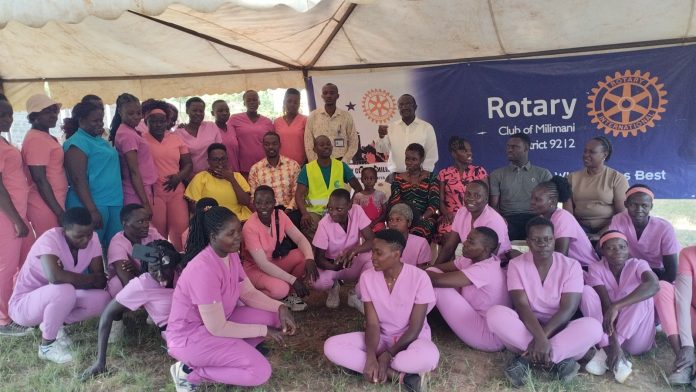
In a significant step towards advancing education, the Rotary Club of Milimani, Nairobi, recently made a substantial donation to Wang’adonji Comprehensive School in Kendu Bay, Karachuonyo Sub-County.

The initiative, which is part of a long-term vision to establish a fully equipped digital library, saw the club hand over 500 books and a cheque worth KES 173,000.

The books, valued at approximately KES 400,000, were generously donated by Oxford University Press (OUP) through an annual partnership with the Rotary Club of Karen. The financial contribution of KES 173,000 was raised during the installation ceremony of the current club president, Otieno Paul Peter, and his board on 3 May 2025, at Nairobi Club. The event was graced by prominent figures Dr Martin Oduor-Otieno of The Leadership Group and Past District Governor Richard Omwela of Dentons Hamilton Harrison & Mathews.

The donated funds are earmarked to kick-start the renovation of a building designated for the digital library. The renovation is an ambitious project estimated to cost approximately KES 1 million and will include installing secure steel doors and windows, new roofing and ceiling, tiled floors, and all the necessary electrical and internet cabling to support the future installation of at least 25 computers and a Wi-Fi router.

The handover ceremony was a vibrant event, attended by all the school’s pupils, staff, members of the school board, and representatives from the local community. The enthusiasm was palpable as stakeholders celebrated this critical step towards a fully equipped learning environment.

The Rotary Club of Milimani extends its sincere gratitude to Oxford University Press and the Rotary Club of Karen for their invaluable support. A special thank you was also expressed to club members for their contributions and to chief guests Dr Martin Oduor-Otieno and Richard Omwela, whose presence helped make the fundraising a success. This project marks a new chapter for Wang’adonji Comprehensive School, setting it on a path to digital literacy and enhanced educational opportunities.

Rotary Club of Milimani Launches Groundbreaking Tele-health Project to Revolutionise Rural Healthcare

0

By Reporter

The Rotary Club of Milimani, Nairobi, in a historic partnership with the Rotary e-Club of Silicon Valley, California, and the Global Tele-health Network (GTN), has officially launched a revolutionary tele-health project aimed at transforming healthcare access for underserved communities.

The high-end software system, which went live on Friday, 1 August 2025, promises to bridge the critical gap in specialist medical services, bringing expert care to remote corners of Kenya and beyond.

The initiative, a culmination of a five-year journey, was funded by a substantial Rotary Foundation global grant of $98,000. It is anchored at the Matibabu Foundation in Ukwala, Siaya County, which serves as a central hub. From this base, the project connects remote clinics to a global network of medical specialists, ensuring that patients in areas with limited access to doctors can receive expert consultations.

For its pilot phase, the project has connected two health centres in Narok County, within the Maasai Mara National Park: Talek and Sekenani health centres. Patients visiting these remote clinics can now be attended to by a local clinician who, through a robust tele-health platform, can facilitate video or text-based consultations with specialists across Kenya and worldwide. The system, which operates 24/7, allows doctors to volunteer their time and access patient information, including test results, for informed diagnoses and treatment plans.

The successful launch was a moment of immense relief and celebration for the Rotary Club of Milimani. The project, which faced a prolonged and at times anxious development period, was a testament to the club’s resilience. Led by the current president, Otieno Paul Peter, the initiative was championed by Rotarian Dan Ogola, founder of the Matibabu Foundation, whose extensive network was instrumental in bringing the project to fruition.

Dr Jack Higgins, President of GTN and a member of the Rotary e-Club of Silicon Valley, was present to witness the launch, underscoring the international collaboration behind the project. Dr Belinda, the Ukwala Sub-County Medical Superintendent, hailed the initiative as a significant stride towards achieving the government’s and the World Health Organization’s (WHO) goals of universal health coverage. Other notable attendees included officials from the Ministry of Health and the county government, all of whom expressed high hopes for the project’s impact.

Moving forward, the focus will be on monitoring the project’s success by tracking patient numbers, registering more clinicians and specialists, and reporting its progress to the Rotary Foundation. The ultimate goal is to expand the programme to include more health centres nationwide. The community, leaders, and stakeholders have unanimously praised the project as a “game-changer” that will save lives, reduce medical costs, and prevent disease a core tenet of the Rotary agenda.

Repositioning technical and vocational training for the future

0

By Alfred Miluge Gogi

The success of any technical and vocational education and training (TVET) institution is directly linked to its capacity to attract, retain, and successfully graduate students in programs that are both market-relevant and aligned with national development goals.

The government has placed more emphasis on technical training and this explains the upsurge of the vicational and technical training institutes in the country in the recent past.

The preference of students to study in the technical institutions is as a realization of the impact the trainings have in the economy and job market

That is why Ngeria Technical Training Institution (Ngeria TTI), as a young and growing TVET centre, must strategically position itself to respond to Kenya’s Vision 2030, the Bottom-Up Economic Transformation Agenda (BETA), and the Kenya TVET Act, 2013, which emphasize skill development for industrialization and self-employment.

This strategy paper presents a comprehensive roadmap for improving student enrolment by introducing market-driven programs, supported by clear policies that ensure stakeholder buy-in from the Ministry of Education (State Department of TVET), local communities, and industry partners.

STRATEGIC OBJECTIVES

To achieve sustainable growth in student enrolment, Ngeria TTI ought to pursue the following objectives:

Introduce market-driven programs that align with current and projected labour market demands.

Strengthen institutional visibility through branding, marketing, and community outreach.

Enhance stakeholder engagement and support, tv including government, industry, and the local community.

Establish enabling policies to guide curriculum development, student recruitment, and partnerships.

Foster a culture of innovation and entrepreneurship that appeals to youth seeking practical skills for self-employment.

SITUATIONAL ANALYSIS

3.1 Internal Environment

Challenges:

Limited enrolment in existing programmes

Inadequate awareness of the institution’s potential among prospective students

Limited linkages with local industries

Competition from established TVET institutions

Limited infrastructure

Limited workshop equipment

Strengths:

Strategic location near Eldoret

A dedicated Board of Governors (BoG) and management

Government support

Availability of land for expansion

3.2 External Environment

Kenya’s labour market demands competency-based skills in:

Renewable energy

Digital technologies

Agribusiness

Automotive engineering

Construction

Tailoring and clothing

Beauty and cosmetology

MARKET-DRIVEN PROGRAMME DEVELOPMENT STRATEGY

4.1 Labour Market Needs Assessment

Conduct tracer studies and market surveys

Collaborate with KNBS and NITA

Engage industry associations

4.2 Introduction of Innovative Programmes

Proposed programmes:

Renewable Energy and Solar Technology

Digital Skills, Cybersecurity, Software Development

Smart Agriculture and Agro-Processing

Automotive Mechatronics and EV Maintenance

Construction Technology and Green Building

Hospitality and Culinary Arts

Beauty and Cosmetology

Tailoring and Clothing

4.3 Flexible Delivery and Short Courses

Evening/weekend classes

Short professional courses

Modular certification

4.4 Marketing and Branding

Digital marketing

Career talks

Open days and exhibitions

POLICY FRAMEWORK FOR SUSTAINABLE ENROLMENT

5.1 Programme Development Policy

Market validation

Compliance with CBET and KNQF

Annual curriculum review

5.2 Student Recruitment and Admission Policy

Gender balance and inclusivity

Partnerships for bursaries

Grassroots awareness

5.3 Industry Partnership Policy

Industry Advisory Boards

Mandatory attachments

Curriculum co-design

5.4 Community Engagement and Buy-In Policy

Skills fairs and free workshops

BoG inclusion of local leaders

CSR initiatives

5.5 Monitoring and Evaluation Policy

Enrolment and employability tracking

MIS implementation

Programme refinement

STAKEHOLDER ENGAGEMENT STRATEGY

6.1 Ministry of Education and State Department for TVET

Ensure regulatory compliance

Seek capitation and support

Align with national priorities

6.2 Local Community and Parents

Awareness forums

Community liaison officers

Targeted skills training

6.3 Industry and Development Partners

MoUs for training and employment

Funding support

Industry forums

IMPLEMENTATION PLAN

Phase 1 (0–12 months):

Labour market survey

Align current programmes

Launch marketing/outreach

Phase 2 (1–3 years):

Introduce 3–5 new programmes

Establish advisory boards

Increase enrolment by 50%

Phase 3 (3–5 years):

Regional skills hub

Centre of Excellence

Self-sustaining growth

MONITORING AND EVALUATION FRAMEWORK

Key Performance Indicators (KPIs):

20% annual enrolment growth

Approval of new programmes

70% graduate employment rate

Industry partnerships

Community participation

Reporting:

Quarterly reviews

Annual strategic reports

Mid-term review (Year 3)

CONCLUSION

Ngeria TTI is well-positioned to become a beacon of technical skills development in Uasin Gishu County and beyond. Market-driven programmes, supportive policies, and active stakeholder engagement will drive enrolment and national development. With the right strategies, Ngeria TTI can become a trusted regional Centre of Excellence.

The writer is PhD Student in Project Planning and Management, MSc Project Planning and Management.

The views expressed here are personal

Gor Mahia seeks success from west Africa

0

By Phillip Orwa

After a tumultuous season, that left the mighty K’Ogalo coming second in the Premier League, a new order was created.

The management returned to the drawing board by first disbanding the entire technical bench, the medical staff, and releasing the Chief Executive Officer.

It was a clean sweep to give the mighty Gor Mahia a rebirth.

And now the club has begun rebuilding the team to stake its claim not only locally, but regionally and on the continent.

That is why, a month after Gor Mahia FC disbanded its technical bench and the medical team, the club has announced the appointment of a new Coach, Assistant, Goalkeeper Trainer and Video Analyst from West Africa — Ghana.

K’Ogalo disbanded its entire technical bench, including the coaching staff and supporting personnel, on July 2nd following a trophy-less season that saw the team fail to secure a trophy for the first time since 2016.

Acting Head Coach Zedekiah Otieno “Ziko”, Assistant Michael Nam, Goalkeeper Trainer Boniface Oluoch and team doctors were shown the door after K’Ogalo failed to secure a trophy after nine years of commanding the Kenya Premier League.

They have won the Kenyan Premier League a record 21 times, and have also won the FKF President’s Cup a record 11 times. It is the first and only team from Kenya to win an African continental title to date, having won the African Cup Winners’ Cup in 1987 after previously reaching the final in 1979.

After a search for a technical bench for about a month since they sacked the bench, the side has now officially announced the appointment of Charles Akonnor as their new Head Coach on a two-year contract.
The 51-year-old Ghanaian tactician takes over from Zedekiah Otieno, who took the helm as a Caretaker Head Coach after Siniša Mihajlović left over poor performance.

Akonnor, a former Ghana Black Stars captain and head coach, earned 51 international caps and scored 13 goals during his playing career.

The former Black Stars Captain had a five-year appearance in the Bundesliga, whereby he played for VfL Wolfsburg between 1998 and 2003.

As a Coach, he managed some of Ghana’s top clubs that include Ashanti Kotoko, Ashanti Gold, Ghana National Team, Hearts of Oak, bringing a rich wealth of experience to the Kenyan side.

Akonnor said while taking over, “I have set my goals for the club and I will be working with all stakeholders to have the success needed.

We need to set up a solid team that can achieve the best and we will work together towards a common goal to achieve what we want as a club.”

The Ghanaian will be assisted by fellow countryman Kobi-Mensah Bismark, who previously worked with Bechem United, Accra Shooting Stars Academy, Great Olympics, and Karela United. He has also been handed a two-year deal.

Another Ghanaian, Owu Ben, a former Ghana U-17 and U-20 international goalkeeper, takes over as Goalkeeping Coach, alongside Joshua Kofi Boafo, a Video Analyst tasked with performance review, tactical breakdowns, and providing data-driven insights to enhance team strategy.

Brian Odongo has been appointed the Team Doctor, Brian Odongo, a certified sports medicine specialist with extensive experience working with elite athletes across multiple disciplines both locally and internationally.

650 youths from Nandi county graduates from a training partnership between KCB Foundation with the county government

0

By Remmy Butta

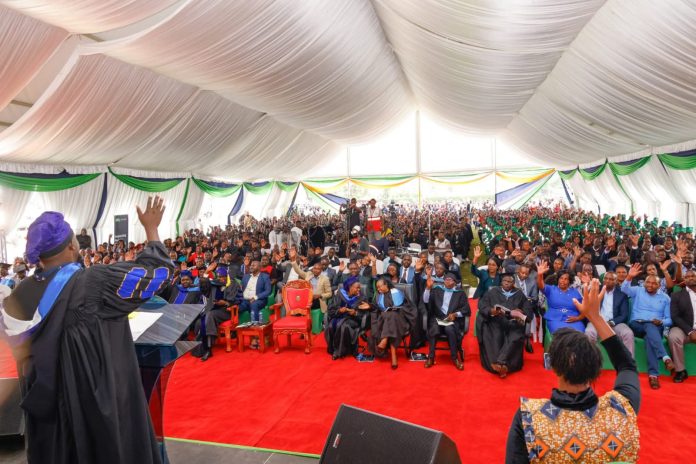
In a landmark event symbolizing hope and progress, Governor Stephen Sang recently presided over the graduation of 650 young Nandi residents empowered with life-changing skills, poised to transform their livelihoods and significantly boost the county’s economy.

The celebratory ceremony marked the successful culmination of training for two pivotal cohorts: 350 Graduates: use Trained under the KCB Foundation’s flagship “Tujiajiri Program” within Nandi County’s Vocational Training Centres and, 300 Graduates: Recruits passing out from the newly invigorated Nandi County Youth Service.

Governor Sang, addressing the graduates, dignitaries, and proud families, declared, “These young men and women standing before us today represent the vibrant promise of Nandi. They are now skilled, empowered, and ready to drive tangible transformation right from the grassroots level. This is not just about individual success; it’s about building a more resilient and prosperous county for all.”

The graduation served as a powerful testament to the strength and vision of the partnership between the County Government of Nandi and the KCB Foundation. Through the Tujiajiri Program, graduates gained practical, hands-on expertise in critical economic sectors vital for development, including masonry, carpentry, hairdressing, electrical installation, mechanical work, and various other technical trades.

“These are far more than just certificates,” emphasized Governor Sang. “They represent pathways to self-reliance, the seeds of entrepreneurship, and the foundation for greater economic resilience for our youth and their communities. Skills are the currency of the future, and today, 650 of our young people are richer for it.”

The Governor extended profound gratitude to the KCB Foundation, represented at the event by Joblin Omari, Head of Programs. “To the KCB Foundation, we express our deepest appreciation for your unwavering support, invaluable partnership, and crucial investment in the boundless potential of Nandi’s youth. Together, we are laying the essential groundwork for a self-sustaining and prosperous generation.”

Reaffirming his administration’s unwavering commitment to youth empowerment, Governor Sang outlined concrete future steps:

Scaling Partnerships: Expanding collaborations with institutions like KCB Foundation to increase training opportunities.

Institutionalizing Youth Service: Solidifying the Nandi County Youth Service as a permanent pillar for community-driven development.

Prioritizing Youth in Planning: Ensuring youth innovation and enterprise are central to county planning and budgeting processes.

In a significant move signaling continued momentum, Governor Sang, alongside Mr. Omari, members of the County Executive, and the County Assembly, officially launched the second cohort of the Tujiajiri Program immediately after the graduation. This launch underscores the shared commitment to significantly scale up skills development initiatives across Nandi County.

The atmosphere was charged with optimism as the graduates, clad in their ceremonial attire, received their certificates. Governor Sang concluded with a resounding message: “Congratulations to all 650 graduates! Go forth with confidence, apply your skills, create opportunities, become employers, and be the change agents Nandi needs. Your success is our county’s success. The future is bright, and it starts with you.”

MPs Must Know the Constitution Fights Back

0
Billy Mijungu

By Billy Mijungu

The clock is ticking on the National Government Constituency Development Fund. It is not just a matter of legality anymore. It is a matter of principle. And this time, the Constitution is not just watching, it is fighting back.

A bold petition now before the High Court may finally be the door that shuts this controversial fund for good. The argument is as clear as daylight. You cannot sneak past the architecture of the Constitution and expect it not to respond.

The 2010 Constitution envisioned a clean, structured, and devolved government, not scattered personal projects and political fiefdoms masquerading as development funds.

The proposed Constitution of Kenya Amendment Bill 2025 is the latest Trojan horse. It seeks to anchor not one but three funds into the Constitution itself: the National Government Constituencies Fund, a Senate Oversight Fund, and the National Government Affirmative Action Fund. On paper, it may sound progressive. In practice, it is the slow poisoning of our governance structure.

Turning constituencies into a third governance unit under the national executive is a direct attack on the two tier structure, national and county. Anchoring budgets for these funds within the Constitution undermines both revenue sharing and the spirit of parliamentary oversight. In essence, it gives MPs and Senators a budget line but not the responsibility or transparency that comes with it.

The Constitution did not stumble into place. It was designed. It was fought for. And it has safeguards. Article 255 demands that any amendment affecting the sovereignty of the people, the structure of devolution, national values, or the functions of Parliament must go through a referendum. The drafters of this Bill appear to have either overlooked that fact or deliberately ignored it.

The petitioners have asked the court to intervene now, before the damage is done. They want the High Court to declare that creating these funds falls under Article 255 and therefore must face the people in a referendum. It is a vital legal checkpoint, one that may well preserve the soul of the Constitution.

In truth, this case is not just about funds. It is about the future. It is about protecting the dream of devolution from being eaten alive by the claws of centralized patronage. In our lifetime, we may just witness the final burial of the National Government Constituency Development Fund. Not because Parliament woke up but because the Constitution fought back.

A Nation’s Unforgettable Night

0

By Clifford Derrick

Episode 1: The Grand Deception: Unveiling the 2007 Betrayal and the Hypocrisy of Martha Karua

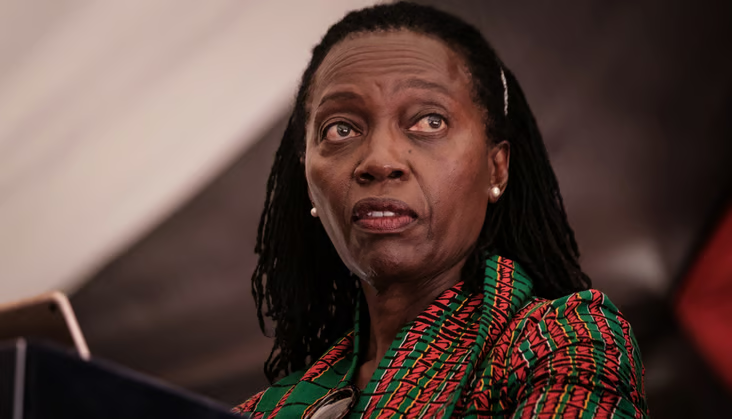
The chilling memory of December 30, 2007, remains etched in Kenya’s collective consciousness—a night when the nation witnessed a clandestine swearing-in, a crime scene masquerading as a constitutional rite. The air was thick with the dust of stolen democracy, and the echoes of a fractured nation reverberated through every corner. At the heart of this unfolding tragedy, Martha Karua stood unwavering. As the then Minister for Justice and Constitutional Affairs, your voice was loud and clear, defending the “under the darkness coronation” of Mwai Kibaki as constitutional. Calls for dialogue, for a moment of national reckoning, were summarily dismissed as “dangerous insubordination.” The message was unequivocal: obedience, not reconciliation, was the order of the day.

Fast forward to 2025, and the political landscape presents a stark, almost absurd, contrast. Today, you position yourself as a moral compass, the guardian of democratic ideals, and vociferously condemn Raila Odinga for engaging in dialogue with the very government you deem illegitimate. You scold him, label his actions a “betrayal. “

Perhaps it is you who needs Plato’s counsel—“You don’t change the system by becoming its enemy. You change it by refusing to let it define what’s real for you.”
Unlike you, Raila has internalised this Socratic wisdom. He has returned again and again to the battlefield of politics, guided by a moral compass you never seemed to acquire. You weaponise indignation now not in defence of truth, but as theatre to obscure your history.

You align yourself with a fresh wave of youthful outrage. What changed, Wakili? It wasn’t the constitution, nor the fundamental needs of the Kenyan people. It was, rather, the theatre of power—the shifting roles on a stage where convenience is dressed as principle. Your script, Martha, appears to be one of deep, convenient amnesia.

The Architect of Betrayal: Karua’s Role in 2007 Post-Election Violence

Your role, Martha, was not merely that of an observer. As the then Minister for Justice and Constitutional Affairs, and a prominent figure in Kibaki’s re-election team, you actively helped legitimise the theft of that election. Your unwavering defence of the results and your public dismissal of any evidence to the contrary did more than just sanitise a fraudulent victory; it helped to normalise the violence that tragically followed. International concerns were scoffed at, and overwhelming evidence of electoral manipulation was rubbished. The consequence of this stance was devastating: over 1,400 lives were lost, and more than 650,000 Kenyans were displaced in the ensuing post-election chaos.

A critical moment came when the US Secretary of State Condoleezza Rice reportedly told Kibaki directly that he had lost the election. Your own memoir, if accounts are true, reveals not a shred of indignation at the massacre of your compatriots, but rather a focus on Rice’s “tone.” This chilling detail lays bare a disturbing disconnect: your concern was for the perceived slight to power, not for the unfolding human catastrophe.
This aligns chillingly with Frantz Fanon’s warnings about the post-colonial bourgeoisie. Fanon cautioned that such an elite often mimics their former colonisers, seeking to “inherit, not transform,” the systems of oppression. They weaponise liberation rhetoric while meticulously preserving the old structures of control. In this context, Martha, you became precisely that – a figure who, by defending an indefensible act, helped perpetuate a cycle of injustice and violence that has plagued Kenya for generations. You were instrumental in laying the groundwork for a system where truth is negotiable and power is paramount, even at the cost of human lives.

The Convenience of Amnesia: Karua’s Shifting Stance on Dialogue

Dialogue, Martha, is not a concept alien to Kenya’s democratic journey. In fact, it has been the very midwife of our most significant constitutional and political breakthroughs. It was dialogue that produced the minimum reforms of 1997, creating space for multi-party democracy. It was dialogue that birthed the visionary Bomas Draft constitution, which laid the foundation for the transformative 2010 Constitution. And it was dialogue, specifically the Kofi Annan-brokered talks in 2008, that pulled Kenya back from the brink of civil war, a conflict ignited by the very electoral theft you so vigorously defended.

Yet, you fiercely opposed that Annan-brokered dialogue. The irony, then, is palpable: the democratic gains you now frequently cite to justify your disdain for talking to President Ruto were delivered by the very method you condemn. You only showed up to defend your power, never the people. This stands in stark contrast to Raila Odinga’s consistent willingness to enter hostile rooms for the sake of the Republic, repeatedly choosing peace and national cohesion over personal ambition.
Today, you scorn any notion of dialogue with a government you deem “illegitimate,” chastising Raila for daring to engage with William Ruto, labelling it a “betrayal.” But your current position rings hollow, for you, Martha, were once the very face of Kenya’s greatest democratic betrayal. This is not about principle; this is about a tribal desire to never relinquish the monopoly on state power, a convenience dressed in the garb of consistency.

A question for reflection:

Given that Kenya’s current fight for accountability centers on curbing the executive’s unchecked power—a power that fuels impunity and could be addressed through dialogue leading to a parliamentary system—what does it reveal about the principles of leaders like Martha Karua, who vehemently opposed dialogue to resolve past electoral injustices, yet now condemn calls for dialogue that aim to strip the presidency of the very powers they hope to wield?

Coming Up in Episode 2: The Echoes of Impunity

In the next episode, we delve into the shadowy history of state-sanctioned violence, political assassinations, and the pervasive culture of impunity that has haunted Kenya. We’ll examine the chilling 1969 secret oath, the infamous Artur Brothers scandal, and the tragic events of 2017, questioning the strategic silences of those in power.

(Clifford Derrick is an investigative journalist, strategic communicator, and documentary filmmaker whose work examines truth, power, history, and justice. He writes at the intersection of politics, culture, decolonisation, and human rights.)

Gachagua’s Presidential Hype is a Tactical Game of Survival and Disruption

0

By Billy Mijungu

The political arena in Kenya is never short of strategy and surprise. The recent subtle pronouncements by former Deputy President Rigathi Gachagua hinting at a presidential run are not merely wishful ambition. They form a well calculated move aimed at realigning his political relevance, safeguarding his freedom after being booted out of office, and influencing the 2027 election matrix in favor of his.i interest.

It is public knowledge that Gachagua is entangled in legal and ethical complications that may bar him from contesting any public office. His announcement therefore cannot be taken at face value. It is a move to force the conversation about his eligibility back to the national stage. The moment he is perceived as a presidential contender, any decision barring him from running morphs into a national issue. It is no longer just about corruption allegations or integrity questions. It becomes political suppression. This gives Gachagua the leverage he needs to negotiate his way back into public service, or at the very least, out of legal trouble.

President William Ruto may have little political need for Gachagua at the national level anymore, but he remains critical to Ruto’s 2027 strategy, just not in the way people think. By allowing Gachagua to position himself as a presidential aspirant and even run, Ruto stands to benefit in a more indirect and destructive way, by dividing the Mount Kenya vote.

Ruto knows that his main threat in the next general election lies not in Gachagua but in a united opposition bolstered by Mount Kenya support. If the opposition remains intact, especially with the emergence of credible alternative candidates from the central region, then Ruto’s chances of reelection diminish significantly. However, if Gachagua runs and pulls even a fraction of the region’s votes, it scatters the numbers just enough to tip the balance in favor of Ruto Especially when backed by Odinga.

Gachagua may not necessarily win the presidency. He likely knows this. But by running, he positions himself as the voice of a disenfranchised Mount Kenya, a figure with unfinished business, a man sacrificed by the system. He turns into a regional martyr of sorts, increasing his political capital and relevance even in defeat.

This strategy works only if Gachagua still commands loyalty in the region, and therein lies the bait. Mount Kenya leaders eying national stature know that Gachagua is a vessel with diminishing fuel, but they also know he holds state secrets, political alliances, and perhaps more importantly, control of financial and administrative networks.

Every political hyena, whether in government or opposition, is watching closely for when he drops off the race, they benefit and he knows as much.

So if the opposition is smart, it must not just focus on who they will front as a candidate. It must prepare to counter any state sanctioned sabotage disguised as ambition. The moment they begin to treat Gachagua’s candidacy as legitimate without dissecting the intent behind it, they play into the game of statecraft.

The real concern is not whether Gachagua will run or not. The concern is how his name on the ballot serves a larger scheme, to fracture the opposition, neutralize Mount Kenya’s voting power, and render the 2027 contest a three way split that favors the incumbent.

Politics is a game of interest. In this game, Gachagua is not just seeking the presidency. He is seeking immunity, relevance, and redemption. The presidency is merely the cover story. The real play is survival, and he is playing it like a man who understands that in politics, you do not need to win to win. You only need to cause enough confusion to be invited back to the table.

The opposition has been warned. The hyenas are circling. And the man with the meat knows exactly what he is doing.