Home Blog Page 166

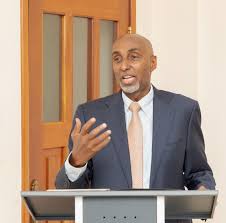
MP decries increasing spate of political violence in Kasipul

0

By Habil in HB Onyango.

Numerous incidences of political thuggery and violence in Kasipul constituency is creating concern among the political leaders and the residents.

Allegations of sponsored violence and thuggery have emerged with different political divide pointing accusing fingers at one another

Area MP Mr. Ong’Ondo Were has issued a stun warning to a number of politicians and Government and County officials whom he claims of ferrying the “goons” to cause violence in the constituency.

The MP claimed a number of political goons believed to have been terrorizing the region were ferried from other regions.

The MP claimed his political opponents were to blame for high incidences of political thuggery in the area.
Speaking during a press conference, Were said he will not allow such acts to continue

“We have been living in a cohesive constituency for the past five years and we have been able to implement a number of development projects.

But in the last six months there has emerged insecurity in the area,” he said.

Were said the violence has targeted public gatherings especially during funerals.

Were claimed for the last six months he had fallen victim to political thuggery caused by his opponents.

“At first I was attacked at Kalando area during a funeral service, secondly my vehicle was deflated by goons,” he claimed.

“We have reported the matter to the DPP and soon action will be taken against the aiders of such acts,” he said.

Why President Ruto is No longer at Ease Facing Mount Kenya

0
Raila

By Anderson Ojwang     

The recent political dynamic and realignments in Mt Kenya, have radically changed the region from a receptive and accommodative to a hostile and Volatile one.

The once revered ‘son; and leader of the region before the 2022 presidential election, is today a ‘pariah’  and the most disliked person in the Murima.

The heroic songs and attributes that were once identified with him are long gone and replaced by scorn, lamentations and dislike.

It could be summed up as moving from grace to grass and from a hero to a villain. That is the current situation, President William Ruto faces in  Mt Kemya, his vote basket in the 2022 election.

President Ruto downed Mt Kenya’s greatest son former President Uhuru Kenyatta in his backyard, defeating his presidential candidate and leader of Azimio la Umoja Raila Odinga.

In the run-up 2022 election, President Ruto with his team led by his deputy Rigathi Gachagua, Prof Abraham Kindki, Ndindi Nyoro and Kimani Ichungwah combed and delivered the Murima votes against Uhuru and his team.

For instance, in Kirinyaga county, the home turf of Raila’s running mate Martha Karu, Ruto got  84 per cent of the votes accounting for 220,752 votes while Raila got a paltry 14 per cent accounting for 37,978 of the votes

In Kiambu county, the home ground of President Uhuru, Ruto managed 72.9 per cent of the votes amounting  to 606,105 votes while Raila only managed 25 per cent accounting for 210,495

Again in Nyeri county, Raith’s village, Ruto received 82.79 percent of the votes amounting to 272,577 of the votes while Raila got 15.3 percent accounting for 52,043 votes.

Finally, in Muranga Ruto got 81 percent of the votes accounting for 343,421 while Raila got a paltry 17 percent accounting for 73,539 votes.

After the impeachment of deputy president, Rigathi, the former Mathira MP resorted to fencing off the Murima from the son of Sugoi by talking in codes and speaking his mother tongue in churches, funerals and social media platforms.

We are planning, within a short time to reclaim our pride and dignity as a people.

It is true what you are saying the mountain is angry. It is not just angry it is very angry. Why the mountain is very angry, because of betrayal?

We will plan as a community and within a short time we will reclaim back our pride and dignity as a people,’ he said.

I am not quitting politics, my political ambition is unstoppable and I ask my people who feel as if they have been left without a leader to be patient. I will soon show  them the political route to follow;

Let my supporters prepare for the next elections with the events of 2024 in mind. Religious leaders, residents and professionals have been calling on me saying the region has been left without a spokesperson. They want me to declare my political stand. I want to tell them I am holding discussions with opinion leaders and I will give them a clear direction at the right time.

I will show you the way forward. I want our people not to fear at all. God is faithful and can’t be defeated,” he said.

Rigathi was replaced by Prof Kindiki as the deputy President who has embarked on reclaiming the dwindling fortunes in the Murima.

The recent Jubilee party national delegates conference in Nairobi, was the final nail, in President Ruto’s facing of Mt Kenya.

During the NDC, the party in the presence of its leader former President Uhuru, took a common position to support former Internal Security Cabinet Secretary, Dr Fred Matiangi as its flag bearer in the 2027 presidential contest.

Jubilee Secretary General Jeremiah Kioni said the party had settled on Matiangi for the presidency.

Matiangi is the flag bearer, He worked with President Uhuru for 10 years. As a jubilee party, we have our candidate in Matiangi. So we must now register in anticipation of the bigger battle.

We support him because he did good work in education, ICT and security dockets. When Uhuru was in his second term, his deputy started campaigning and deserted his work.

It is Matiangi who took over, he understands the vision and he has the energy to ignite our coalition. That is why we want Wamunyoro to come in.

Uhuru declared that Azimio La Umoja’s quest for the country’s leadership was still valid and urged party members to register in numbers.

Kenyans decided and made a decision in 2022 but we still want to see our agenda come to fruition.

Let today, be a renewal. Let’s go back to the villages and revive our jubilee party. We, who are in Nairobi, will help you in any form you need. Do not fear to say the truth. We are not cowards. 

Those who are doing what they are doing think God is asleep.  God does not sleep, one day. They will see for themselves.

Those who have no joy with jubilee stand, kindly do us the honour of leaving the party and allow us to follow our road to the destination.

You have said our party is dead. What interest do you have in a dead body? If it is dead, why are you interested in it? if you see them try to grab the party, just know, that it is not dead. We are very much alive and they will see.

 I want to say, my thoughts, told me that I wanted to be out of politics so that I could engage in other businesses. I  thought, that the next National Delegates conference for the party, would have to be a day.

 I thought I would tell you people, my great people, I have done what was expected of me.

 And that it is now time to elect new party leadership. This was my thought. 

However, some people, decided that their work would resort to threats, intimidation and forcibly use power to grab our party.

Today, I am telling you, try someone else and not Uhuru son of Kenyatta. This is because, when you gave us the leadership including the party, you had a manifesto, and we have tried to implement the manifesto.

We did our part and handed over power peacefully. We did it in broad daylight. Even, when they abused me in the public glare, I sat and watched quietly, because that was their right.

But the party is not for Uhuru, it has its owners. , they asked me to safeguard it and until they tell me,  they have got a new leader, I will remain at the helm.

Kenya is a democratic country, jubilee formed alliance with other parties, and the dream has not died out. And if it dies, it will only be affected by you people,” he said.

With the exit of former Prime Minister Raila Odinga from the local political scene, Raila who was the black political sheep of Murima, Ruto now takes over as the ‘devil’ to Mt Kenya.

He is currently, the new political punching bag in Murima and just like Raila was to the Mountain, Ruto has fitted into his shoes and on the overdrive backlash.

Despite Ruto’s appointment of Uhuru allies in Mutahi Kagwe, William Kabogo, Lee Njiru into the cabinet among others, the into the cabinet among others, the murima is more slippery than never before.

With the possible teaming up of Wamunyori and Ichaweri, the son of Sugoi is not at ease. As Chinua Achebe writes in his book No Longer at Ease, and Former President, the late Mzee Jomo Kenyatta, President wrote  Facing Mount Kenya, President Ruto will have to thematically analyze the two books in his pursuit of his second term.

Ayacko inducts new employees, calls for professionalism

0

By Erick Otieno

The administration of Migori Governor Ochillo Ayacko has inducted 225 new employees following the conclusion of an employment-related legal battle that had dragged on since the last general elections.

From Monday to Friday, Migori County inducted the new staff, the majority of whom are in the health and administration sectors, which were most affected as the County Public Service Board was entangled in a court case for the past two years.

We are now able to address the deficits we had in human resource management, which will enhance service delivery to wananchi, especially by ensuring that health centres have adequate staff for smooth operations,” said County Public Service Board Chair, David Ocholla.

Ocholla added that the county would also benefit from the resumption of Early Childhood Development Education (ECDE) centre operations, which had previously been halted.

He noted that the mass recruitment, which began late last year, was a crucial step in addressing major staff shortages and would make it easier to fulfil the county’s devolution mandate.

As civil servants, we have a duty to serve Migori residents, and we are committed to ensuring that devolution works for the people,” he said.

The board’s Secretary, Andrew Ocholla, said that following the resolution of the court case, they had been able to manage staff more effectively and reallocate resources where necessary.

We plan to advertise for more job opportunities soon to ensure that we have adequate staff through a rigorous recruitment process,” Andrew said.

Sylvance Araja, the Migori Executive Secretary for the Kenya County Government Workers Union, described the recent induction as a major milestone.

As staff, we are pleased that the prolonged court process is finally over, as it had taken a political turn that affected our morale and work ethic,” Araja said.

He urged the board to act swiftly to ensure that staff promotions and welfare matters are addressed.

As a union, we can now foster synergy among all staff members because election transitions always create tension,” Araja added.

The three spoke during the induction ceremony on Wednesday morning.

Speaking at the event, Migori County Assembly Speaker George Duro Kobado reminded the new staff that civil service is a calling and urged them to maintain professionalism in service delivery while adhering to the law.

On 14 May 2024, the Court of Appeal in Kisumu dismissed Civil Appeal Case No. E174 of 2023, which had been filed by Jared Opiyo, the immediate former board chairman, along with five other members.

They had sued the Migori County Assembly as the first respondent.

Other respondents included The County Public Service Boards National Consultative Forum, former Speaker Charles Owino, former Assembly Clerk Vincensia Kionge, Solomon Oluoch (Director of Human Resources, Migori County), and Governor Ochillo Ayacko, listed as the second, third, fourth, fifth, and sixth respondents, respectively.

Opiyo’s board had a six-year non-renewable term, which was set to end in February 2026. However, a public petition for their removal from office was lodged at the Migori County Assembly on 9 January 2023, leading to their impeachment.

Return Match: Uhuru Readying for Ruto as He Moves to Strengthen Jubilee Party

0

By Anderson Ojwang

Kenyans could soon witness a return match between former President Uhuru Kenyatta and his successor, President William Ruto, in the 2027 presidential election.

Smarting from the loss in the 2022 presidential contest, where Uhuru’s candidate and leader of the Azimio la Umoja Coalition, Raila Odinga, suffered a shock defeat at the hands of Ruto, Uhuru is back to the drawing board.

Now, through his Jubilee Party, Uhuru has returned to the political ring with a new candidate—his protégé, former Interior Cabinet Secretary Dr Fred Okengo Matiang’i—as the party’s flag bearer for the 2027 contest.

After two years of maintaining a low political profile and insisting that Raila Odinga was his leader, a tough-talking Uhuru is back. This time, he is organising and reorganising his Jubilee Party to face off against his former ally turned political foe.

Despite Ruto extending an olive branch to Uhuru after he visited him at his Ichaweri home in Gatundu North, and despite the subsequent appointment of Uhuru’s allies into the government, Uhuru is not budging as he sets his sights on the presidency.

Following the visit, President Ruto spoke of a possible handshake with his former boss, but given the emerging political dynamics, such a reconciliation could be stillborn.

Speaking during a Jubilee delegates’ conference, Uhuru said he had initially considered retiring from politics to focus on his private life, but the prevailing political climate had forced him to change his mind.

I wanted to step away from politics and engage in other business. I had thought that the next National Delegates Conference for the party would be my last.

I planned to tell you, my great people, that I had done what was expected of me and that it was time to elect a new party leadership.

However, some individuals decided to resort to threats, intimidation, and the misuse of power to take over our party by force.

Today, I am telling them—try someone else, but not Uhuru, son of Kenyatta. When you entrusted us with leadership, including the party, we had a manifesto, and we did our best to implement it.

We played our part and handed over power peacefully. We did so in broad daylight. Even when they insulted me in public, I remained silent because it was their right.

But despite my silence, all I received were insults, humiliation, the theft of livestock, and the burning of farms. They thought this would intimidate me. I tell them—carry on!

But this party does not belong to Uhuru alone; it has its rightful owners. They asked me to safeguard it, and until they choose a new leader, I will remain at the helm.

Kenya is a democratic country. Jubilee formed alliances with other parties, and the dream is not dead. If it is to die, only you—the people—can decide that.

Some of those who received appointments under Jubilee are now trying to dictate how the party should be run. Let them leave. We will find people to do the work. Leave us in peace and return the positions we gave you.

Look at our symbol—the dove. We love peace, but we are not cowards.

Kenyans made their decision in 2022, but we still want to see our agenda fulfilled.

Let today mark a renewal. Let us return to the villages and revive our Jubilee Party. Those of us in Nairobi will support you in whatever way necessary. Do not fear speaking the truth. We are not cowards.

Those who think God is asleep—let me tell you, God does not sleep. One day, they will see for themselves.

Those who no longer align with Jubilee’s vision should do us the honour of leaving the party and allow us to pursue our path.

You claim our party is dead—so why are you interested in a dead body? If it is truly dead, why are you still trying to take it over? The truth is, Jubilee is very much alive, and you will see it.

Jubilee Secretary-General Jeremiah Kioni confirmed that the party had settled on Matiang’i as its presidential candidate.

Matiang’i is our flag bearer. He worked with President Uhuru for ten years. We in the Jubilee Party have chosen him as our candidate for 2027, and now we must register in preparation for the bigger battle.

We support him because he performed well in the education, ICT, and security ministries. When Uhuru was in his second term, his deputy abandoned his responsibilities to campaign. It was Matiang’i who took over. He understands the vision, and he has the energy to reignite our coalition. That is why we want Wamunyoro to come in,” Kioni said.

In the ongoing battle for control of the party, the Court of Appeal last year rejected a request by a group of Jubilee Party officials seeking to challenge the leadership of retired President Uhuru Kenyatta.

In a ruling delivered on 19 November 2024, Justices Jamila Mohammed, Mumbi Ngugi, and F. Ochieng refused to grant interim stay orders sought by Cherangany MP Joshua Kuttuny, East African Legislative Assembly (EALA) MP Kanini Kega, and the party’s Disciplinary Committee.

The faction had sought the orders to overturn a ruling by the Nairobi High Court in September, which upheld Kenyatta’s leadership of the party.

In the circumstances of this application, we decline to grant interim orders of stay pending the delivery of the ruling on 7 March 2025,” the judges said.

The High Court, under Justice Mulwa, had annulled decisions made by the Kega-led group, citing procedural errors.

Justice Mulwa ruled that a notice issued in February 2023 by the faction was improperly executed, meaning any resolutions passed thereafter—including the suspension of senior officials such as Jeremiah Kioni, David Murathe, and Kagwe Gichohi—were invalid.

The majority decision by the Political Parties Dispute Tribunal is an erroneous finding issued by the commissioners and must be set aside. I find the decision of the PPDT illegal and annul it,” Justice Mulwa ruled.

“Having determined that every process undertaken in furtherance of an unprocedural meeting was invalid, any decision resulting from that meeting is therefore declared null and void,” Mulwa added.

A book on ‘Juakalisation of the Education System in Kenya’ to be launched in Nairobi on Saturday

0


By Anderson Ojwang

A book on Kenya’s education system, titled Juakalisation of the Education System in Kenya, will be launched this Saturday at the United Kenya Club.

The book, written by Dr Samwel Agonda Ocholla, an academician, provides both an astounding panoramic perspective and an incisive analysis of Kenya’s education sector.

Ocholla offers a critical history of the education sector, systematically explaining the state of Kenya’s education system and suggesting a roadmap for restorative innovation that would propel the sector into the 21st century.

Juakalisation is a relentless indictment of Kenya’s education system. It serves as a macrocosmic mirror of the issues afflicting Third World education systems, particularly in Africa.

The book provides a framework for analysing the status of education in Kenya, from primary to secondary and university level.

It explores inadequate infrastructural facilities, which pose a serious threat to the quality of education. For instance, only about 35 per cent of students who qualify for admission to public universities manage to secure a place.

Ocholla notes that this scenario begins in kindergarten and continues through primary and secondary school.

The book traces the juakalisation of the education system back to the colonial period when education commissions were set up to initiate reforms in African education. However, these reforms were implemented in a way that entrenched a mentality of subservience, inferiority, and dependence, rather than fostering intellectual freedom.

In 1957, the Beecher Report, which shaped the course of education in colonial Kenya, prioritised quantity over quality. Nearly 45 years later, the National Rainbow Coalition government under President Mwai Kibaki was still advocating for quantity rather than quality.

The author writes that during the Kenyatta and Moi eras, harambee schools were built to accommodate the ever-increasing number of students in primary and secondary schools. However, concerns were raised about the quality of harambee schools, as well as private schools.

Juakalisation was institutionalised at the university level during the 2002/2003 academic year when parallel degree programmes (Module II) were introduced. Admission to these programmes was based on the ability to pay, which compromised the quality of university education and created inequality.

Political interference has resulted in the emergence of numerous education systems, including the harambee school system, the quota system, free or semi-free education, milk-supported education programmes, the 8-4-4 system, model schools, the National Youth Service, and higher education.

By placing excessive pressure on students to succeed in examinations, the curriculum has encouraged rote learning and given rise to various cartels within the education sector.

These cartels include the production of incorrect textbooks, so-called “special” textbooks, and revision textbooks, contributing to the decline of the education system.

The author notes that towards the end of the last decade of the 20th century, affluent families in Kenya began manipulating the education system by paying for examination papers in advance or hiring ghost candidates to sit exams on behalf of their children.

The education system has been so extensively tampered with that it has reached toxic levels, where some students graduate without ever attending a single class, or obtain certificates through proxies.

The commercialisation of education, with its aspect of juakalisation, ultimately boils down to the concept of giving parents what they want, even if it is not in the best interests of learners.

At the start of the 21st century, corruption in the education system had reached unacceptable levels, with many individuals involved in the sector being implicated in one scandal after another.

Ocholla has had an illustrious career as an international civil servant across multiple African countries. He retired as Director of the United Nations’ African Institute for Economic Development and Planning and previously served as Director of the United Nations Economic Commission for Africa. He was also one of the founding members of the Preferential Trade Area—now the Common Market for Eastern and Southern Africa (COMESA).

Mr President, Citizenship Vetting Is a Must for National Security and Integrity

0
Billy Mijungu


By Billy Mijungu

As Kenya awaits the signing and implementation of the Presidential Executive Order on citizenship vetting, we must reflect on the pros and cons. The debate surrounding this issue is riddled with political correctness, yet the numbers tell a story that cannot be ignored.

Between 1999 and 2009, the Somali ethnic population in Kenya surged from 962,143 to 2.3 million—a staggering annual growth rate of 9.11%, an anomaly by any demographic standard. This outlier was largely due to the laxity of the government after President Moi left office. Curiously, between 2009 and 2019, the growth rate dropped to 2.35%, another statistical outlier. How does such a dramatic shift occur in just one decade?

For context, Somalia itself—a country with similar demographic patterns—has maintained a consistent 2.9% growth rate over the years. If our growth rate fluctuates so erratically while Somalia’s remains stable, one must ask: Who is fooling whom?

This is not just about numbers. It is about national security. The years between 1999 and 2013 marked the deadliest period of Al-Shabaab attacks in Kenya’s history. Interestingly, as population growth slowed, terrorist attacks decreased. Is this purely coincidental, or is there a link between unchecked migration and security threats? Data also shows that between 1999 and 2011, Kenya experienced the highest influx of migrants from Somalia.

The notion that vetting is discriminatory is simply false. Countries worldwide enforce strict vetting processes for citizenship. Kenya must do the same. It is not just about who becomes a citizen—it is about ensuring that only those with a legitimate claim to citizenship are granted such a privilege. Mr President, you must not bow to pressure to suspend this process. If anything, the vetting framework should be more robust. We need risk assessment protocols that go beyond basic identity verification. Right now, there are individuals in Kenya who cannot even speak basic Swahili, yet they hold national identity cards. How did they get them?

There is also a false narrative that vetting is currently ongoing. A simple spot check reveals otherwise. I was recently in Migori to authorise my son’s ID registration through fingerprint verification. While he was vetted, I witnessed foreigners of all ages walking in and out of registration centres without being vetted. If Kenyans must go through this process, why are others exempt?

This issue does not end with the current administration. Any serious future President must conduct a comprehensive audit of all registrations after 1999. If Kenya is to safeguard its sovereignty, its government must clean up the national database and ensure every citizenship claim is legitimate. And if Somalia’s citizens are so eager to be Kenyans, perhaps it is time to consider a bold solution—annex Somalia as Kenya’s 48th county and solve this problem once and for all.

These numbers explain the statistical wars over census figures. While many are pushing for legitimacy, many are doing politics. Censuses are conducted after estimations and mapping; if there is an outlier, the KNBS has a duty to engineer corrections. This explains why they had to go back to 2009. Mr PRESIDENT, we have a problem here. We must take our time and figure it out, or else we will have a systemic problem in years to come of unimaginable proportions. Parliament has a role in this, and that is where there should be a final say on vetting or no vetting, on annexation or no annexation.

Is Governor Orengo Becoming a Lone Ranger in Siaya Politics?

0


By Anderson Ojwang

A new political realignment could be in the offing in Siaya County after the Cabinet Secretary for Energy, Opiyo Wandayi, recently hosted all the elected leaders from Siaya.

However, conspicuously absent was Siaya Governor Mr James Orengo, who is an ardent critic of the broad-based government and is also opposed to any possible alliance between the Orange Democratic Movement (ODM) and President William Ruto’s UDA party.

The delegation to Wandayi’s office was led by Siaya Senator Dr Oburu Odinga, who enjoys a love-hate relationship with Orengo following their 2013 battle over the senatorial seat.

Wandayi, on his X handle (formerly Twitter), wrote: “Happy to host MPs from Siaya County who called on me to discuss last-mile electrification and strategies to expand electricity connectivity in their constituencies.”

Alego MP Sam Atandi also posted on his X handle: “Siaya leaders meeting Energy and Petroleum Cabinet Secretary Opiyo Wandayi over the rural electrification programme in the county.

The MPs included Orengo’s main ally in the county, Otiende Amollo (Rarieda), and his former allies-turned-foes, Sam Atandi (Alego) and Elisha Odhiambo (Gem). Others were David Ochieng (Ugenya), Dr Christine Ombaka (Women’s Representative), and Gedion Ochanda (Bondo).

Sources revealed to the writer that Orengo was invited to the meeting but declined to attend.

The supremacy battle between Orengo and Oburu in 2012 nearly split the party at both county and national levels, with MPs taking sides.

Then Alego-Usonga MP Edwin Yinda chaired talks that led to a political pact, which saw Dr Oburu switch from the senatorial to the gubernatorial race.

The two giants were giving us problems, and we don’t want them to do that because every time they do, they create a lot of problems both nationally and in the county,” Yinda said at the time.

The decision by the two leaders to vie for the same seat posed a significant challenge to Prime Minister Raila Odinga, who is Oburu’s brother and views Orengo as his political confidant.

Both leaders accepted the compromise, stating that they had to agree on an arrangement that would guarantee peace for the people of Siaya.

Orengo said the news would be a welcome relief to the close associates of the two chief competitors, who had been engaged in a war of words.

We have managed to get rid of the one thing that was the cause of hostility between Oburu and me,” he said.

The supremacy battle split the MPs, with the then-Government Chief Whip, the late Jakoyo Midiwo (Gem), Yinda, and Martin Ogindo (Rangwe) publicly declaring their support for Orengo, while only Rarieda MP Nicholas Gumbo supported Oburu.

In the recent past, Oburu has voiced his support for Wandayi as a probable heir apparent to the throne. He was said to be one of Wandayi’s main supporters when he declared his intention to contest the Siaya gubernatorial seat in 2022.

However, the party later settled on Orengo to fly the party flag in the last general election, in which he defeated Gumbo at the ballot.

Recently, Atandi broke ranks with Orengo over allegations of betrayal and declared that he would not support him.

Atandi claimed Orengo betrayed his deputy, William Oduol, and him, stating that they were reconsidering their political future without Orengo in 2027.

In 2022, William and I embarked on a political journey. The person we supported and voted for as governor has betrayed us.

We will sit down with William and agree on our 2027 political journey to ensure we are not betrayed again. We will not enter a political agreement that is full of betrayal,” he said.

Atandi said Orengo first betrayed Oduol and then him, adding that they had learned their lesson the hard way.

Orengo first chased William away from his government, and after that, he also threw me away. We have been betrayed in this political journey. We will chart our own future for 2027,” he said.

Odhiambo, once a close ally but now a foe, accused Orengo in 2024 of having good English but achieving zero development.

Just loitering around at funerals does not help. The people of Siaya need development. I am partnering with the government for development. The only place where the government is building affordable houses in Siaya County is in Gem,” he said.

But Orengo has maintained that it is wrong for ODM to compromise its ideals for cheap gains that could be dangerous in the long run.

On my part, I want my conscience to be clear. I want to say no to abduction. Again, I want to say there is too much sycophancy in the party at the moment.

I, James Orengo, the stone, Nyawawa, fear nothing. I want to say the Luo community must not lose the identity they are known for. We have an identity that defines us.

If we make compromises, they should be justified before God. We cannot suspend the Constitution. We may be happy now, but in the future, we may regret it.

I pray that ODM can withstand any storm. If compromises must be made, they should be based on principle and not mere praise and worship. We must stand firm and live by the constitution,” he said.

Recently, a section of Members of the County Assembly (MCAs) from Siaya threw their support behind Wandayi.

The MCAs, led by the Leader of the Majority in the Siaya Assembly, Mr Edwin Martin Otieno, criticised a section of leaders from Nyanza who are opposed to President Ruto.

Ruto supported Raila in becoming Prime Minister. Currently, he has appointed some of our leaders into the government. It is unfortunate that some leaders want to bring village politics to undermine the development we are witnessing. We must call them out,” he said.

Wandayi is currently seen as one of the main supporters of President Ruto’s regime and has been instrumental in promoting its agenda and policies to the public.

I urge my people to support the government and President Ruto. Let us not always be at the forefront of criticism but also give credit where it is due. Let us work for the government,” he has said on various occasions.

Photo courtesy

Investors and Exhibitors Converge in Kisumu for an All-Inclusive Nyanza International Investment Conference

0
Raila

By Anderson Ojwang

For the first time, Nyanza is hosting an all-inclusive International Investment Conference in Kisumu that brings together all players across political divides.

The investment initiative, which was originally driven by a section of Nyanza professionals and leaders in President William Ruto’s government, had initially been met with resistance from governors and political leaders in the region, who claimed they were not engaged in the process.

Amid rising political tensions and developments in the country, the organisers postponed the event indefinitely in June last year. However, with the formation of the broad-based government that brought together President Ruto and ODM leader Raila Odinga, the initiative received a new lease of life.

As it is currently constituted, all the governors—Gladys Wanga (Homa Bay), Prof Peter Anyang’ Nyong’o (Kisumu), James Orengo (Siaya), Simba Arati (Kisii), Ochillo Ayacko (Migori), and Amos Nyaribo (Nyamira)—are all engaged, along with the MPs from the region.

This time, the conference is fully inclusive and will bring together leaders and professionals from all sectors in Nyanza. The event will take place in Kisumu from February 6th to 8th at the Ciala Resort.

The conference, dubbed Nyanza Rising: Towards Economic Transformation for Socio-Economic Growth and Development, is expected to herald a new economic chapter for the region. It will showcase the unique investment opportunities within the region, spanning sectors such as agriculture, tourism, mining, renewable energy, and technology, among others.

The conference also aims to facilitate meaningful dialogue and partnership between government, the private sector, and both local and international investors. It will explore innovative solutions to address challenges and unlock the full economic potential of the Nyanza region.

President Ruto will be the chief guest and speaker during the conference, while former Prime Minister Raila Odinga will be a special guest.

On the first day, which will be moderated by Governor Gladys Wanga, the focus will be on investing in the Blue Economy, with the Permanent Secretary of the State Department for Blue Economy and Fisheries, Betsy Muthoni Njagi, providing an overview of the Blue Economy in perspective.

Similarly, Dr Paul K. Ronoh, Principal Secretary of the State Department for Agriculture, will give a keynote presentation on agricultural transformation and increased investment strategies under the bottom-up economic transformation agenda.

Other presentations will cover topics such as sustainable fish farming, lessons from Victory Farms, and the revitalisation of the sugar industry.

Mr Alfred Ombudo Kombudo, Principal Secretary of the State Department for Trade, will give a keynote presentation on creating a more conducive investment climate, while Dr Raymond Omollo, Principal Secretary of the Interior and National Administration, will address strengthening intergovernmental relationships.

Cabinet Secretary John Mbadi will present a keynote on public-private partnerships and alternative financing mechanisms, while Dr Erick Rutto, Chairman of the Kenya National Chamber of Commerce and Industry, will discuss fostering a favourable commercial, trade, and investment environment for enterprise growth.

Cabinet Secretary for Education, Mr Julius Migos Ogamba, will give a keynote presentation on opportunities for investment in education and skills transfer, while the Cabinet Secretary for Lands, Public Works, Housing, and Urban Development will examine addressing barriers to investment, with lessons drawn from the affordable housing programme.

Expected to grace the conference are Marc Dillard, Charge d’Affaires and Deputy Chief of Mission at the US Embassy; High Commissioner Neil Wigan, British High Commission to Kenya; Ambassador Henrietta Geiger, Head of Delegation of the European Union; and several Cabinet Secretaries.

Will Matiangi overcome Nyachae’s, Mudavadi’s, and Kanu’s dilemma to ride to State House?

0


By Anderson Ojwang

Despite the buzz and excitement that have marked the entry of former Internal Security Cabinet Secretary Dr Fred Okemo Matiangi into the presidential race, the former Education Minister has a plethora of odds and obstacles in his path to the presidency.

In 2002, during the presidential contest and the fallout in the then ruling party Kanu, then Cabinet Minister Simeon Nyachae formed a party named Ford-P to contest for the presidency.

Nyachae was so convinced that he was the most suitable candidate for the seat owing to his wealth of experience, financial war chest, age, and the networks he had developed while working in various government organs.

Nyachae entered into a political pact with the immediate former Kanu Secretary General Raila Odinga with a view to supporting his presidential bid.

However, Raila later came up with the famous “Kibaki Tosha” slogan, which drove Mwai Kibaki to the presidency, while Kanu’s presidential candidate, Uhuru Kenyatta, and the party suffered the loss. Uhuru later rebranded to become the country’s fourth president, but Kanu has remained a pale shadow of its former self and has been relegated to the periphery.

Nyachae took control of the Gusii votes and won most of the parliamentary seats through Ford-P, and the community, for the first time, occupied the opposition bench.

After the loss, Nyachae’s political interest faded, and the party also lost grip on Gusii land, no longer having elected leaders both at the county and at the National Assembly.

Kisii Senator Richard Onyonka believes that Matiangi can galvanise the Gusii community, where he has already made a name for himself.

In the country, he is known as a hard worker who is keen on delivering results in any project that he has embarked on, and as a community, we are proud to sell him to the rest of the country,” he said.

Onyonka said that the reason they were advocating for the community to have its own party is to ensure that more than a million votes and almost 20 MPs are valued whenever those in power are making crucial decisions.

The clamour for the Gusii community to have its own political party is at a fever pitch, as we have the numbers that count, and it is unfortunate that communities with fewer numbers than ours are benefitting more from the government than we are,” said Onyonka.

Former Nyakach MP Ochieng Daima wondered how having a Gusii-driven party would appeal to other regions and how Matiangi plans to wriggle out of Nyachae’s missteps in his presidential bid.

The first misstep is to represent Matiangi as a tribal king, and that is how Nyachae was relegated to an Abagusii leader and eventually confined to oblivion,” he said.

It will be interesting to witness how Matiangi will wriggle through his mentor Nyachae’s political dilemma to the White House on the hill.

Matiangi also faces the dilemma of the immediate former president Uhuru Kenyatta’s political party, Jubilee, which recently settled on him as their presidential candidate.
The party’s Secretary General, Jeremiah Kioni, when he recently spoke during a morning breakfast talk show and a recent press conference, disclosed that the former Interior Cabinet Secretary was well-suited to clinch the top seat and oust President Ruto in the next polls.

We are looking for a person who can unify the country, someone who more people can rally around. We are looking for someone who can look William eyeball to eyeball and tell him off,” Kioni stated. Kioni revealed that the Jubilee Party settled on a presidential candidate from outside Mount Kenya, where it enjoys much support, having bagged 28 seats in the 2022 general elections, the majority of which came from the region.

We are picking somebody from outside the mountain, someone from a small community, and picking a name that’s known. The reason we have the 2010 Constitution is that it allows us to pick a candidate from any corner of the country. We, as the Jubilee Party, have our own candidate, Fred Matiangi. He will face off with the others to ensure Ruto goes home. We want a president from a small community. Let us step aside and let someone else in. Let us unite and vote as one,” he said.

But political analyst Dr Otieno Obondi said that in Kenya’s history, Kanu, the party of independence, set a precedent after it lost the 2002 elections, and in subsequent elections, it has dimmed and been relegated to the periphery.

Narc won the election, but in 2007, President Kibaki used a different outfit. Uhuru won the 2013 elections using TNA and in 2017 used the Jubilee coalition to win. In the last general elections, Jubilee lost most of its seats to UDA, which is also currently facing a rough tide,” he said.

Otieno said Matiangi will be inheriting Jubilee’s baggage and liabilities, which are likely to puncture his bid and national appeal, as there is no freshness that the party is bringing on board.

In 2013, during President Kibaki’s succession politics, a section of leaders in President Kibaki’s inner political circle had settled on Deputy Prime Minister Musalia Mudavadi as the heir apparent to the throne.
Mudavadi was taken into a charade in 2012 and even signed an agreement with Uhuru and William Ruto that he would be the presidential candidate.

Mudavadi, as reported in The Standard newspaper at the time, said a one-page agreement was signed in dramatic moments on the night of December 4, 2012, and would have seen him fly the team’s presidential bid.

I had declared my intention, and I was preparing to formally launch my campaigns when these two gentlemen drove into my compound and declared their support for me,” Mudavadi disclosed.
Uhuru would later disown the deal, claiming he was forced to sign the agreement with Mudavadi after being blackmailed by “dark forces.

He (the devil) came to me and told me that if we are elected, the West will not give Kenya money; that our tea can’t be sold abroad and that Kenyans are not ready for another Kikuyu president, as this will cause more bloodshed. Given that I love peace, I decided to quit and support Musalia,” Uhuru told delegates at the Multimedia University on December 18, 2012.

Analysts and Kenyans will be closely watching how Matiangi will wriggle himself out of this dilemma to the presidency.

Homa Bay’s top leadership meets CS Kipchirchir to chat way forward on roads matters

0

By Habil Onyango.


Homa Bay’s top leadership led by Governor Gladys Wanga met on Friday with the Roads and Transport Cabinet Secretary Davis Chirchir to advocate for the construction of new roads in the County.

The meeting also focused on advocating for the opening  and upgrading of the County’s road networks to boost the local economy

In a statement, Governor Wanga noted that some of the key projects include expediting the completion of the Sori-Magunga-Sindo-Mbita Road and the construction of the Gor Mahia Ring Road in Ndhiwa.

She further revealed that their meeting also focused on developing the Adiedo-Namba Karabok Road, Ojijo Oteko Road, Homa Bay town roads, Kadongo- Gendia and Oboke- Rangwe – Ndiru roads.

We held a productive meeting with Hon. Davis Chirchir, EGH, the Cabinet Secretary for Roads and Transport,” said the Governor in a statement.

Our discussions centred on actively advocating for the opening, construction, and upgrading of the county’s road network to boost our local economy,” she added.

These initiatives are vital for improving the movement of people and goods in and out of Homa Bay County,” said the Governor.

There are already ongoing constructions in the County and some have been tender and works are expected to begin soon.

Already Sh299m Mfangano ring road and rusinga ring road (1.2b) projects are ongoing after being commissioned by President William Ruto in the past.

Other elected leaders who attended the meeting include  Senators Moses Kajwang, Beatrice Ogola nominated, Members of Parliaments Ongondo Were (Kasipul), Dr Eve Obara (Kabondo Kasipul), Adipo Okuome (Karachuonyo) and Dr Lilian Gogo (Rangwe).

Others included Martin Peters Owino (Ndhiwa), Hon. Opondo Kaluma (Homa Bay) and Woman Rep Dr. Joyce Osogo Bensuda formed the county delegation.

Apart from Road networks, President Ruto had also commissioned a number of projects in Homa Bay during his past visits.

They include the Affordable Housing project (Sh.227m), the modern fish market (Sh.346m), construction of Homa Bay Pier (Sh.600m), Lecturer hall at Tom Mboya University (Sh.1.2b) and Oyugis water project (Sh.906.3m).

Other projects which are being funded by Ruto’s government include Riwa Aggregation Centre (Sh.1.2b), Homa Bay Town water (Sh.450m) and electricity connections for over 17,000 households at a cost of Sh1.5 billion.
Ends