After five decades of economic marginalization of Nyanza by subsequent regimes that resulted in the collapse of the region’s economy and dilapidated infrastructure, a new lease of life has been birthed.
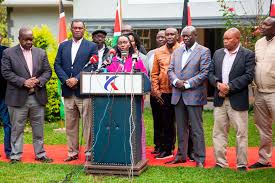
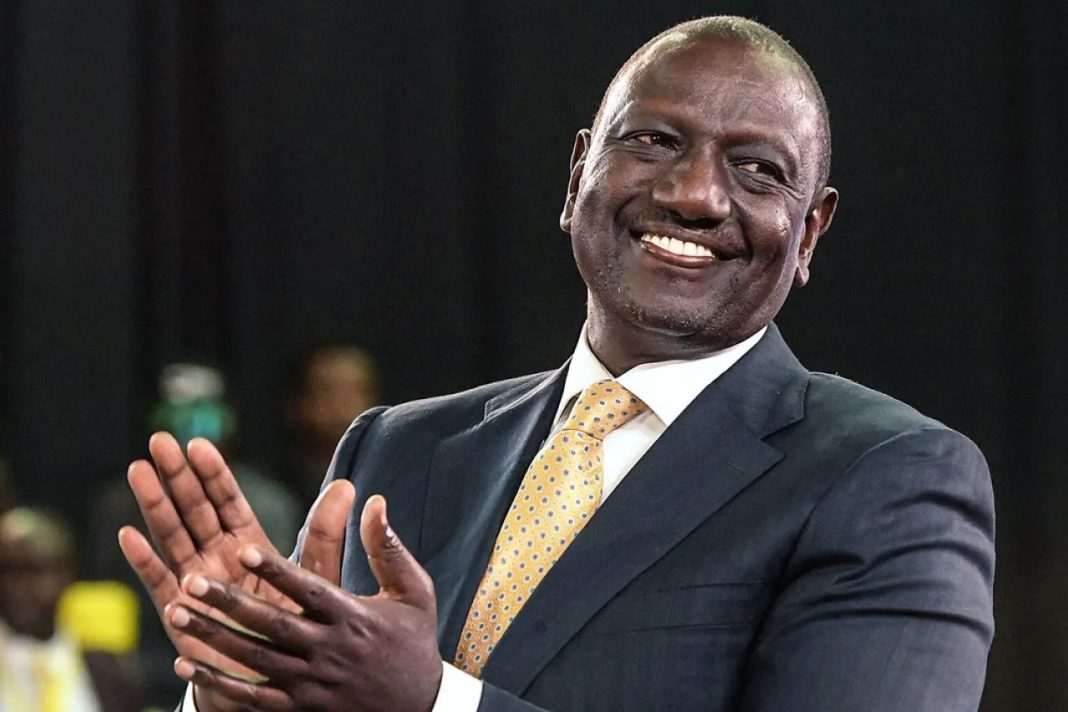
President William Ruto, on Friday at the burial of Mama Phoebe Asiyo in Karachuonyo, acknowledged that Nyanza for decades has been marginalised in terms of development and economic growth.
President Ruto announced that, for Nyanza to be at par with other regions that have benefited from government support, he declared affirmative action for the region in development and economic growth.
“While in Homa Bay today, leaders here have asked that we focus on the development of the nation and we focus on the development of this county.
Let me commit that we have provided in this year’s budget enhanced resources for the development of this county. I am aware that this county and this region requires affirmative action.
Because for a very long time this region has not benefited from the resources and development of our country as other regions have.
It is the reason why we have enhanced the budget— for example, for roads, from about Sh 500 million last year to Sh 3.2 billion this year, and another Sh 2 billion will be allocated in the short term so that we can bring back all the contractors for all the roads that had stalled in Homa Bay County.
I want to commit to you that all the contractors are back, and those who are not back will be back.
We now have the resources to complete the roads that we made our commitment about in this region. Not only those that are ongoing but we have also committed to build five new roads in Homa Bay County as part of the process of affirmative action.
As part of making sure that we build the necessary infrastructure to underpin and form a foundation for the development of this county and our country, Kenya.
The contractor is already on site for the road from Namba to Karabok and Adiedo, and also the ring road from Kanyadhiang‑Pala to Kadel—the contractor is also on site and work has resumed.
Road construction projects in the Nyanza region were delayed, and I know several families in this county and region have not been connected to electricity. We have provided Sh 2 billion for electricity connectivity to 20,000 households. This is being rolled out from August to December in Homa Bay as part of bringing every part of the country together so that we can move together as a nation.” he said.
After the fallout between the late President Mzee Jomo Kenyatta and his deputy, the late Jaramogi Oginga Odinga, the Luo community walked into a political desert; the community remained a pariah to subsequent regimes.
Despite several attempts to reintegrate into government, the community has often been viewed with suspicion, scepticism and frequently vanquished and tagged as opposition.
From independence heroes and heroines, the community became a socio‑economic and political villain, and became marginalised.
After the fallout, the community suffered a cocktail of socio‑economic and political tribulations and misfortunes.
Such misfortunes include the deaths and assassinations of leading figures—namely Tom Joseph Mboya, Argwings Kodhek, Odhiambo Mbai, Dr Robert Ouko, among others.
The economic tribulations included the collapse of the cotton industry, which subsequently saw the death of Kisumu Cotton Mills (KICOMI), the struggle of the sugar industry, and the negative business environment towards the community.
Jaramogi, before his death, tried to bring the community back into government by offering an olive branch to the then late President Daniel Moi.
Back in 1993, Jaramogi had decided to end hostilities between himself and Moi in order to foster national cohesion and development. His first gesture of goodwill was to attend the Madaraka Day celebrations presided over by Moi, having boycotted all other previous national festivals.
Jaramogi extended his olive branch even further by inviting Moi to his home in Bondo, where he was given a warm welcome, despite some of Jaramogi’s followers claiming that he had sold them out.
Jaramogi believed that the role of the opposition was not simply to engage in endless confrontation with the government but rather to work with the State to implement sound policies when the time was right.
In Jaramogi’s footsteps, his son Raila Amolo Odinga engaged Moi and dissolved his party, the National Development Party (NDP), to become Kanu Secretary General.
“Moi and I reconciled after the political differences of the 1980s and early 90s, and we were able to work together to bring more reforms to the country,” he said.
“Our cooperation gave way to a merger with his party Kanu, which put the country firmly on the path to a new constitution by enabling the formation of the Constitution of Kenya Review Commission (CKRC),” Raila said, recalling his NDP’s merger with Kanu.
But Raila would later lead a walkout from Kanu after President Moi chose Uhuru Kenyatta as his preferred successor. The rebel faction, identified as the Rainbow Alliance, later joined NAK of Mwai Kibaki, Kijana Wamalwa and Charity Ngilu to form Narc, the opposition coalition that ended the independent party’s reign.
During Kibaki’s presidency, Raila said he declared “Kibaki Tosha” at a critical time when the country was yearning for regime change, but the negotiations among the opposition leaders were taking too long.
“I decided to take the debate to Wananchi and asked them, ‘Si Kibaki Tosha?’ and they started singing ‘Yote Yawezekana bila Moi.’”
But Raila did not last long in Kibaki’s government as he walked out once again, taking the community back to the opposition after the Memorandum of Understanding was not honoured. He blamed some opportunists around Kibaki for ensuring the MoU was not implemented. Again, the community returned to the cold.
In the 2013 presidential election, Raila lost to President Uhuru Kenyatta, and the community remained in the shadows of government, having supported Raila’s candidature mainly.
Similarly, Raila lost to Uhuru again in the contentious election that was nullified by the Supreme Court but boycotted the repeat election.
But as fate would have it, Raila entered into a political handshake with President Uhuru—in the arrangement, the Luo were never appointed to the cabinet, but pockets of development projects were initiated in Nyanza.
With President Uhuru in his final term, it was anticipated that the handshake would finally handover the presidency to Raila and the Luo community; once again, Raila lost to Ruto.
After the 2022 election loss, Raila once again entered into a broad‑based political alliance with Ruto, which has seen the community secure plum cabinet slots in the government.