By Sandra Blessings
Kenya’s top political parties, UDA and ODM, could be struggling with a growing loss of loyalty in their political backyards due to a loss of trust, according to a recent poll.
The national survey by TIFA was conducted between 23rd August and 3rd September 2025, with 2,023 randomly selected Kenyan adults aged 18 and above across all 47 counties interviewed.
In the poll, both ODM and UDA have lost a significant portion of their bases, indicating a major erosion of loyalty towards the parties, while the undecided/none category rose from 15 per cent to 43 per cent, making it the largest single group.
This development suggests growing voter disillusionment, dissatisfaction and reluctance to commit to existing political parties.
“For UDA, the loyalty rating in August, which was at 38 per cent, dropped to 16 per cent, while for the same period for ODM it was at 32 per cent and now stands at 13 per cent. For Jubilee Party in August it stood at 5 per cent and dropped to 3 per cent, while for Wiper it has stagnated at 4 per cent.
DCP, which was polled for the first time, had loyalty at 9 per cent, while Ford-K and DAP-Kenya both stagnated at 1 per cent, and the undecided moved from 15 per cent to 43 per cent.”
Although UDA remains the most popular party, the level of support expressed stands at 16 per cent, compared to the support expressed for no political party, which stands at 31 per cent.
Four out of ten Kenyans express support for no party at all — the highest such figure ever obtained from this question since political polling returned to Kenya in the late 1990s.
The poll also found that a combination of UDA, ODM and Ford-K only marshalled 30 per cent of Kenyan support.
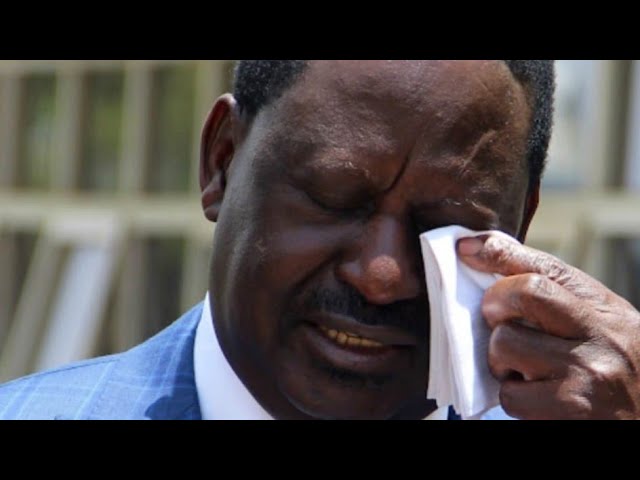
The poll also revealed that Kenyans were divided on former Prime Minister Raila Odinga’s political future, with a majority expecting him to align with President William Ruto in the 2027 election, while nearly half still see him anchoring the opposition either directly or indirectly.
46 per cent expect Raila to support Ruto’s re-election, while 28 per cent are opposed to it. A third of Kenyans expect that he will rejoin the opposition, and about a quarter of broad-based government supporters expect that he will turn his back on the current government by rejoining the opposition by 2027.
The poll also showed that Raila’s political brand was at a crossroads, long defined as the face of opposition, with his future role being uncertain and lacking clarity.
The poll further revealed that ethnic community leaders will play a major role in the voting patterns among the Luo and Kamba, while such influence will be moderate among the Kikuyu and Kalenjin.
But community leaders’ influence will remain weakest in more fragmented communities such as the Luhya, Coastal, Somali and Mt Kenya East.
In 2027, the poll revealed, strong ethnic anchors may be found among the Luo, Kamba, Kikuyu and Kalenjin, while others, like the Luhya, may struggle to consolidate support under a single figure.
The IEBC, the poll found, faces a legitimacy test and high levels of distrust, which could fuel scepticism about the fairness, transparency and credibility of the 2027 elections.
The broad-based government support across the country was highest in Northern Kenya at 61 per cent, Rift Valley at 45 per cent and Nyanza at 34 per cent. It was lowest in Mt Kenya and Lower Eastern at 11 and 17 per cent respectively.
Kenyans’ expectations are evenly divided on the prospect of a united opposition in the 2027 elections.