By OPCS Press, in Geneva, Switzerland
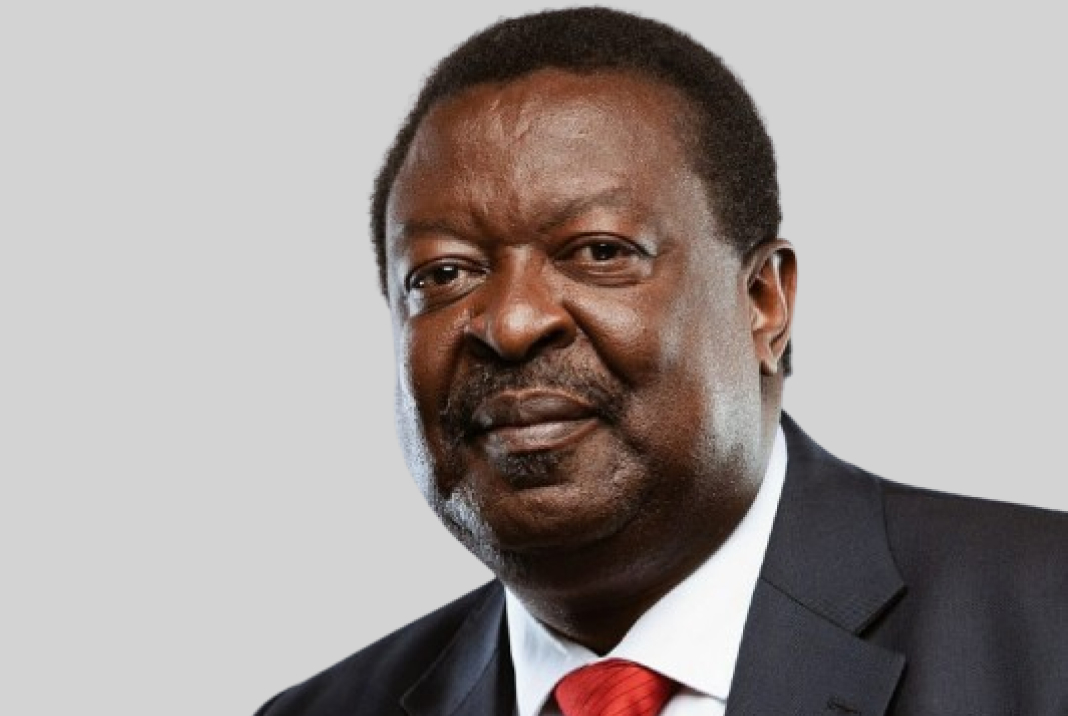
Prime Cabinet Secretary Musalia Mudavadi has said that the time was ripe for the world to confront the enduring legacies of colonialism, address the contemporary manifestations, and build a more just world.
Mudavadi, also Foreign and Diaspora Affairs Cabinet Secretary said that Kenya reaffirmed its commitment to advocating for marginalized groups, particularly in the face of rising xenophobia, Afrophobia, and racial discrimination.
Speaking during the Opening of the 58th Session of the Human Rights Council at the UNheadquarters in Geneva, Switzerland, Mudavadi said as the current Chair Rapporteur of the Intergovernmental Working Group on the Durban Declaration, Kenya was dedicated to combating racism and related intolerance, welcoming the Second International Decade for People of African Descent and its focus on reparatory justice and development.
“It is important to mention that the 2025 AU Theme of the year ‘Justice for Africans and The People of the African Descent Through Reparations’; a clear demonstration of Africa’s commitment to justice, accountability and the recognition of historical injustices,” said Mudavadi.
PCS said that Kenya recognized the evolving landscape of human rights challenges in the digital age and is committed to addressing them proactively and was reviewing the 2014 National Policy and Action Plan on Human Rights to integrate emerging issues, particularly those related to technology and bridging the digital divide.
“We further recognise the challenges that emerging technologies present, such as disinformation campaigns fueled by generative AI, weaponization of technology, and its dual-use nature, which must be mitigated,” said Mudavadi.
However, as the “Silicon Savannah” of Africa, the PCS said that Kenya was also alive to the transformative potential of technologies such as Artificial Intelligence in advancing development; thus, was developing a National AI Strategy 2025-2030 which focuses on strengthening data sovereignty and inclusive development.
He urged the Human Rights Council to play a crucial role in promoting equitable access to emerging technologies, critical infrastructure, and skills necessary for full participation in the information society.
“During our tenure, Kenya aims to advocate for the recognition of access to technology as an essential component of the right to information, as enshrined in Article 19 of the Universal Declaration of Human Rights and Article 19 of the International Covenant on Civil and Political Rights. We welcome all efforts towards ensuring that technology is accessible, affordable, and beneficial for all,” said Mudavadi.
On global peace, Mudavadi said that cases of increased incidence of wars and conflict persist leading to grave violations of human rights as reflected in the rising cases of crimes against humanity, war crimes, and even genocide. The implication is that the Council’s crucial role in addressing abuses, preventing conflict, and its emphasis on the need for peace, has become more important.
He said that the world was today witnessing violent conflicts characterized by indiscriminate attacks on civilian populations, including schools and hospitals, the use of Sexual and gender-based violence as a weapon of war, a rise in violent extremism, decimation of economic livelihoods, and forced displacements.
Mudavadi said that the United Nations High Commissioner for Refugees in its “Global Appeal 2025”, projects that over 139 million people globally will be forcibly displaced or become stateless by the end of 2025 due to conflicts.
“Most of these are vulnerable people from Developing Countries. Recent reports by UNICEF indicate that as of 2025, nearly 47 million children are displaced due to conflict, with the numbers expected to continue increasing,” said Mudavadi.
Grimmer statistics Mudavadi noted was the Save the Children International report indicating that one in eleven children are being denied their basic rights to live, learn, be protected, and prosper due to violent conflict, adverse climate change, and global economic instability. Today in Africa, over 2.8 million Children are out of school; a grave risk to almost an entire generation.
He observed that the wars in Sudan, the Democratic Republic of Congo, Libya, Gaza, Lebanon, Ukraine, Haiti, and Myanmar are some of the notable examples of crises, including Africa’s forgotten conflicts, that have contributed to humanitarian catastrophe worldwide.
In DRC, for instance, the PCS noted that the cases of sexual violence have reached unprecedented levels, with reports that sexual violence including rape of children as low as 12 years increased five-fold in one week from January 27 to February 2 of 2025.
He said that Kenya continues its active engagement in peace initiatives both regionally and internationally, including in DRC, Sudan, Somalia, and Haiti among others because we recognize that sustainable peace is linked to the protection and promotion of human rights noting that there was a compelling need to fully incorporate human rights considerations in peace missions and general conflict resolution mechanisms.
“We believe the Council’s work is more vital than ever, serving as a critical platform for addressing human rights abuses, which are often both a cause and consequence of conflict,” said Mudavadi.
With greater equity in the Global Financial Architecture, Mudavadi said that the African continent was able and determined to build capacity to prevent, manage, and resolve conflicts in the region calling for “Local Solutions to Local Problems.”
“Kenya will promote discussions on the “human rights economy” within the prism of the need for structural changes in the global financial system. We aim to highlight how these reforms are essential for creating an environment where all nations can effectively uphold their human rights obligations and commitments,” said Mudavdi.
He affirmed Kenya’s strong adherence to human rights evident by its membership in most of the key international human rights instruments, and said Kenya was an active member of Regional Human Rights mechanisms including the East Africa Community Court of Justice and African Charter on Human and Peoples’ Rights.
He said that Kenya was cognizant of the fact that corruption is a threat to human rights, noting that graft often facilitates and aggravates human rights violations, particularly against vulnerable groups, by hindering their access to rights and services such as legal representation and a fair trial, property rights, education, health, and social protection.
“We continue to strengthen institutions, legislation, regulations, and policies to fight corruption including the Ethics and Anti-Corruption Commission (EACC).
On the environment, PCS said that Kenya commends the Council’s crucial work in recognizing the inextricable link between climate change and human rights and averred that Kenya acknowledged the urgent need to address environmental crises as a recognition of the direct connection between environmental degradation and human rights abuses.
Kenya will continue to champion this cause during our tenure on the Council and will remain steadfast in our commitment to achieving 100 percent renewable power by 2030, contributing to global efforts to combat climate change and foster sustainable development.“