By Anderson Ojwang
The red flags raised by booming population growth and failure by successive presidents to put in place economic plan to address the bulge is what has triggered the current Genz bomb.
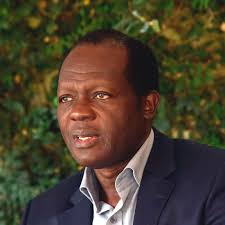
Former Cabinet Minister Mr. Raphael Tuju said lack of economic planning by the successive regimes was to blame for the current unemployment among youths witnessed in the country.
He said warning by the economist and other players on the need to put strictures to avoid the bomb were ignored and is now a challenge the country has to wrestle with and find a solution.
Tuju said in a reference to an interview he conducted in1986 with the then Minister for Economic Development, the late Dr Robert Ouko said the Genz phenomena had been boiling for the last 40 years.
He said Dr Ouko had warned that Kenya would run into problem if the emerging population bulge against economic growth was not addressed.
He said in the 1980s and 1990s Kenya had the highest population increase in the whole world at 4.2 percent but the subsequent leaderships were not addressing how to tackle the economic growth to tackle increasing population.
Currently secondary schools churn out nearly 1m students every year and in the last five years , the figure is in the region of 5 million while the government can only employ between 50,00-100,000 annually.
The mismatch between job opportunities and the high number of students graduating is what has created unemployment bomb in the country.
“For example, in Kisii , Kiambu and Vihiga the population growth stood at 6 percent then, which was unprecedented in the world’s history in terms of demographics. That was attributed to births and not migration.
Ouko told me that we are going to be in a very hot soup with the youth population bulge in subsequent decades but we never addressed the problems and that is why we are the situation today.
Those countries that were able to address the problem have been able to get out of them.
In 1973, when president Kenyatta was launching KICC, the 28 storey KICC building was the tallest in Africa and in the whole of China, there tallest building was 26 storeys tall.
They were marveling at that time just how young African country had actually surpassed them in some of the important indices. China GDP per capita was below Kenya until 1978.
We got it wrong at some. Kenya, Singapore and Korea were at the same economic level of development at independence. Kenya got it wrong when anybody who had a mind was shot dead. They shot dead Tom Mboya, who was the then Economic Planning, a very visionary leader.
Dr Ouko was killed and the only lucky guy who survived during that generation of thinkers was Mwai Kibaki,” he said.
Tuju credited President Kibaki for trying to address the mismatch and gave credit that for first time in 2007, Kenya reached its economic growth rate of over 7 percent, which was essential minimum they needed to address the Genze problem currently witnessed in the country.
“But this was soon scuttled and crushed after Kenya’s resorted to ethnic mobilization and the economic growth took a downward spiral after 2007 general elections.
The biggest problem in Kenya is the ethnic mobilization in our politics. We look everything in terms of our tribe and not the country. This explains why I could survive to be re-elected as MP for Rarieda because I supported President Kibaki.
In the 2022 general elections, we had issued and ideology based campaign, but currently we are back to ethnic mobilization which is still taking place through the political class. What is the source of power of influential political class ?. The tribe. Lack of ideological politics is what is killing our growth.
We are back to ethnic mobilization. It’s very difficult to get the tribe out of the people,” he said
He said it was possible for the country to change demographic bombs into dividends through economic growth and planning.
“As a country, we must have hope and point out where we have problems. I am convinced Kenya has the potential to become one of the economic households if we get it right,” he said.
Kenya’s economic growth since independence in 1963 can be divided into periods, with a highly successful “Kenyan miracle” of rapid growth (6.6% average annual GDP growth) in the first decade (1963-1973), fueled by agriculture and import-substitution industrialization. Growth then decelerated in the 1970s, declined significantly in the 1980s and 1990s, and saw significant fluctuations with a recession in the early 2000s before a revival in the mid-2000s
- 1963-1973: Rapid “Kenyan Miracle”
- Growth Rate: An average annual GDP growth rate of about 6.6%.
- · Drivers: Favorable weather, rising agricultural incomes, investment in import-substituting industries, and the creation of the East African Community.
- · Policy: The government promoted public investment and encouraged both private (often foreign) and smallholder agricultural production.
- 1974-1979: Slowdown in Growth
- Factors: This period experienced a deceleration in growth, partly due to oil price shocks and other factors.
- 1980s-1990s: Significant Decline
- Growth Rate: GDP growth declined substantially, averaging 4.2% in the 1980s and further dropping to 2.2% annually in the 1990s.
- Early 2000s: Recession and Revival
- Recession: The economy experienced a significant setback, including a negative GDP growth rate in the 2000/2001 fiscal year.
- Revival: The economy began to recover, with growth accelerating to over 6% by the 2006/2007 fiscal year.
Kenya is currently off and on being rocked by protests by Gen-Zs that represent a significant challenge to President Ruto’s presidency and the resilience of Kenya’s democratic institutions.
Last year, Kenya was rocked by protest over a contentious tax bill have turned deadly, which forced the government to shelve the bill.
Young Kenyans are eager to participate in ensuring Kenya’s economic growth. The youth have taken the lead in educating, sharing information, and live streaming the protests and their demands.