By Anderson Ojwang
Kisumu City is the cleanest city in Kenya, second in East Africa, and is rapidly developing as a result of various development projects supported by the World Bank and the County Government of Kisumu.
The administration led by Professor Peter Anyang’ Nyong’o has benefitted from multibillion-shilling projects that have had a positive impact on the general infrastructural development of the lake city.
The multibillion-shilling projects, through the World Bank’s Kenya Urban Support Programme (KUSP1), have radically changed the city’s infrastructure and positioned it as one of the fastest-growing in the region.
City Manager, Mr Abala Wanga, said KUSP1 has improved the infrastructure and image of the city, making it one of the best-planned, cleanest, and most orderly cities in the country.
He said that through KUSP1, the World Bank has built a modern fire station, which is fully equipped and capable of responding to any emergency in the region.
Wanga added that the Bank is also modernising and reorganising Kibuye Market, with 50 per cent of the work already completed and still ongoing.
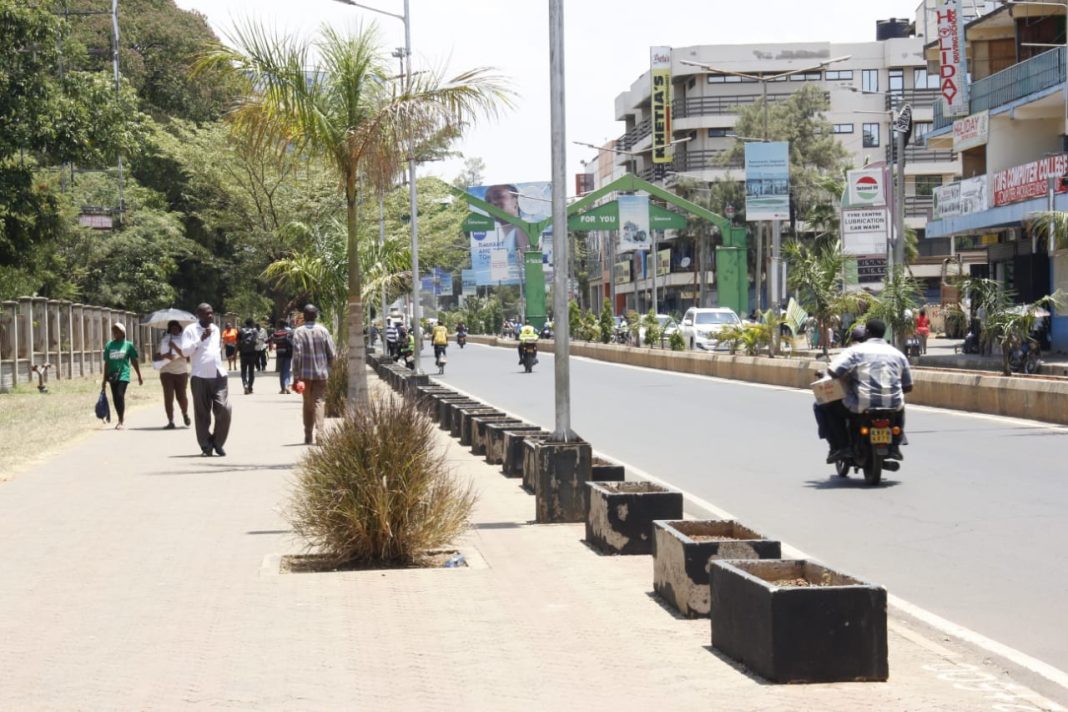
He said that through KUSP1, the Bank has made significant investments in non-motorised transport infrastructure in the Central Business District (CBD) and other areas, greatly improving mobility.
“The construction of non-motorised lanes has helped reduce the high incidence of accidents and ensured free movement within and beyond the city. This has changed the face of Kisumu, making it one of the cleanest and most orderly cities,” he said.
Abala noted that Kisumu’s three main parks—Oile Park, Sports Ground, and Victoria Park—have all undergone significant infrastructural improvements and have become focal meeting points for residents.
He said KUSP1 has also contributed to the infrastructural improvement of Kisumu’s Rotary Centre, which now hosts over 2,000 students undertaking semi-skilled training.
“We have Kaloleni Social Hall and Nyamasaria Bus Park, both under construction using World Bank funding. These projects are milestones in the city’s growth and development, both now and in the future,” he said.
Under KUSP2, Abala said that a new proposal has been drafted and submitted to the Kisumu City Board. Once approved, it will be forwarded to the Cabinet for final approval. The new phase will focus on legacy projects for the city.
“We propose to introduce non-motorised transport corridors from State House to Dunga Beach, ending at Hippo Point.
We will convert Dunga into a Marina Park with a jetty capable of accommodating 100 boats, which will improve the waterfront.
This development will also spur economic activities in the area and create employment opportunities across various sectors,” he said.
Wanga added that the non-motorised transport network will also extend to Nyerere Road, Ngumbi Street, Patel Flats, Lumumba Estate, Anderson Estate, Makasembo Estate, Kachok, and Kisumu Polytechnic.
He said these non-motorised transport corridors will be enhanced with street lighting and CCTV cameras to improve security within the city.
Wanga also stated that, under the programme, the city will construct terraces and walkways.
He added that in the Mamba area, they plan to reorganise the space and turn it into a focal entertainment hub for the city, equipped with various recreational facilities.
“We will undertake beautification projects across Kisumu, improving its image and making it one of the most attractive cities in the region and in Africa,” he said.
Wanga further mentioned that the plan includes the construction of a convention centre near the lake and the reorganisation of the CBD.
“We have our Industrial Park in Kibos and Nyamasaria, where we intend to relocate manufacturers and traders to create a one-stop industrial hub.
This will help decongest the CBD while providing a dedicated space for investors to set up businesses,” he said.
Wanga also revealed that, through the Department of Health, they plan to construct a public health laboratory to respond effectively to disease outbreaks in the county.