
By Billy Mijungu
As Kenya looks ahead to the 2027–2037 development decade, the next presidential manifesto must boldly anchor itself on one transformative priority: a modern, green, fast, and inclusive national rail and urban transport system that reaches every county.
If Kenya is serious about making the leap into first-world status, then our investment mindset must fundamentally change. Development can no longer be dominated by roads that are accident-prone, fuel-intensive, and increasingly chaotic. While roads must be properly maintained, they cannot remain the backbone of national mobility. Urban housing remains important, but transport efficiency is the true bloodstream of economic productivity, and rail systems are the arteries of modern nations that plan long-term and execute with discipline.
Transport modernisation must be elevated from a sectoral concern to a national economic strategy. A comprehensive rail network linking all counties would reorganise how Kenya produces, trades, and grows. Rail connectivity would lower the cost of moving goods, reduce travel time for citizens, and integrate rural and urban economies into a single coherent national market. Counties would no longer operate in isolation but as coordinated nodes of production, distribution, and consumption.
Urban transport reform has now become an urgent necessity. Nairobi, in particular, requires underground transport systems, trams, and rapid rail corridors. Daily congestion has become a national burden, wasting hours, increasing stress, and steadily eroding productivity. A modern capital city cannot thrive when movement itself becomes a daily struggle. Efficient public transport is not a luxury; it is a requirement for competitiveness, dignity, and social order.
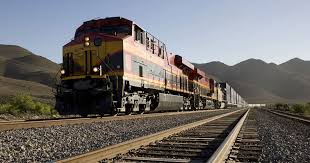
A rail-based transport system would also improve safety and sustainability. By shifting traffic from roads to rail, Kenya can significantly reduce perennial accidents, cut carbon emissions, and improve environmental outcomes. Rail enables better planning, improved land use, and predictable movement patterns that support industrial growth, logistics hubs, and new economic corridors across the country.
Rails are instruments of national planning and future readiness. They are easier to scale over long distances, more efficient for moving people and cargo at scale, and faster to deploy once prioritised. Countries that have successfully transformed their economies invested early and consistently in rail as the foundation of growth.
Kenya must become a nation defined by speed, precision, and foresight. The next development frontier is national, urban, and regional rail. The future belongs to countries that move fast, think long-term, and build systems that endure. Kenya must choose rail.