
By James Okoth
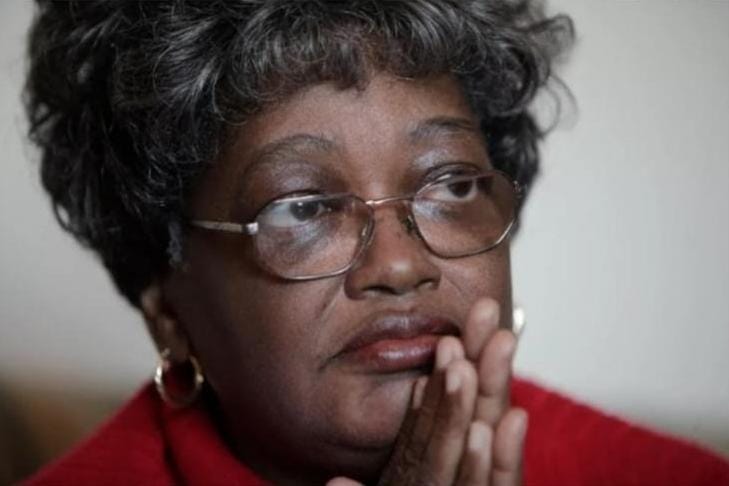
Claudette Colvin, the courageous teenager whose quiet act of defiance against bus segregation in Montgomery, Alabama, became a catalyst for the American civil rights movement, has died at the age of 86.
Long before Rosa Parks became the face of the Montgomery Bus Boycott, it was Colvin, then just 15 years old, who refused to surrender her seat to a white passenger on March 2, 1955. Her arrest, nine months before Parks’ famous stand, planted an early seed of rebellion that would later grow into a nationwide demand for racial justice.
Born on September 5, 1939, in Montgomery, Colvin was raised in a working-class Black neighborhood where racial segregation was an everyday reality. As a high school student, she had learned about constitutional rights and equality in school, lessons that stirred her spirit when the moment of confrontation came.
“I couldn’t move,” she once said in an interview. “History had me glued to the seat.”
Though her act was groundbreaking, civil rights leaders at the time chose not to make her the public face of the movement. Colvin’s youth, her darker complexion and her pregnancy following the incident made her, in their eyes, a controversial figure in a deeply conservative South. Yet, behind the scenes, she continued to play a vital role.
Colvin became one of four plaintiffs in the landmark 1956 case Browder v. Gayle, which ultimately led the U.S. Supreme Court to declare bus segregation unconstitutional. Her testimony helped dismantle one of the pillars of Jim Crow laws in the South.
For decades, Colvin’s contribution went largely unrecognized, overshadowed by more celebrated figures. It wasn’t until the later years of her life that historians and activists began to fully acknowledge her place in history. In 2021, the state of Alabama officially expunged her juvenile record, closing a painful chapter that had lingered for more than six decades.
“I feel like my record should have been cleared a long time ago,” she said then, with her characteristic grace and humility. “But I’m glad justice finally caught up.”
Her passing marks the end of a living link to the earliest, rawest moments of the civil rights struggle, a time when bravery was often met with violence and silence; and when change depended on the will of the young and the unyielding.
Claudette Colvin will be remembered as the girl who sat down so that generations could rise. Her courage, once overlooked, now stands as one of the purest symbols of defiance in American history.
“I knew then that history had tapped me on the shoulder,” she once said. “And I had to answer.”