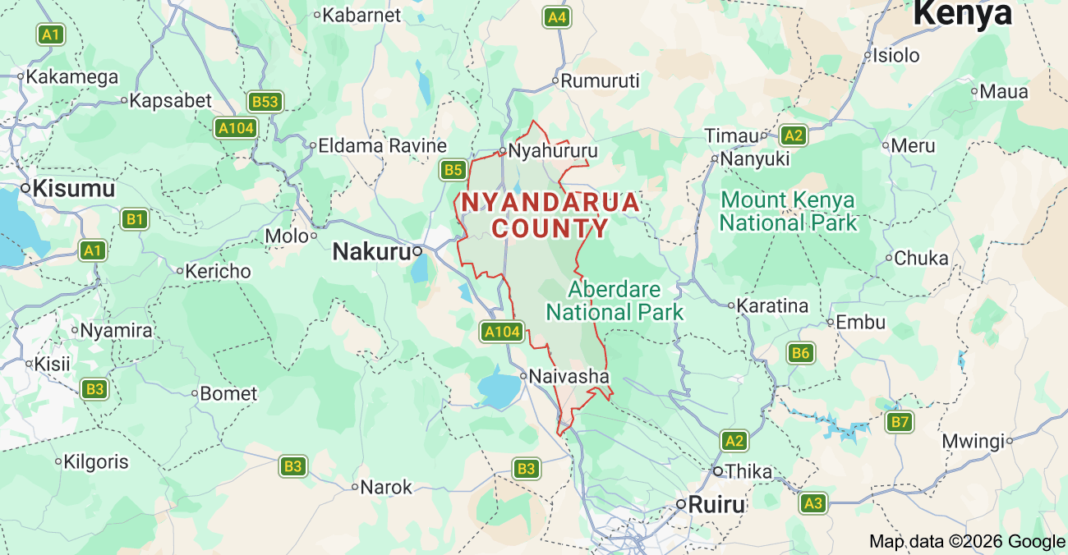

A story of resilience, excellence and independent thinking
By Paul Njenga
Researcher and Finance & Development Expert
In Kenya’s political landscape, certain regions are often viewed through predictable lenses. Voting patterns are explained by ethnicity, political dynasties, or the influence of national leaders. Yet there are places that defy such simplistic explanations. Nyandarua County is one of them.
To understand Nyandarua is to appreciate a county whose political identity has been shaped not merely by ethnicity, but by history, struggle, education, and a unique social composition. It is a county that has consistently produced citizens who think independently, demand accountability, and refuse to be taken for granted politically.
Unlike many counties in Central Kenya, Nyandarua emerged as a settlement frontier that attracted migrants from the three principal Kikuyu regions of Murang’a, Nyeri, and Kiambu. These communities brought with them different experiences and traditions. The political activism associated with Murang’a, the discipline and organizational culture of Nyeri, and the entrepreneurial pragmatism of Kiambu converged on the expansive plains of Nyandarua.
The result was the emergence of a distinctive political culture—one that values debate over conformity and performance over political slogans. In many ways, Nyandarua became a miniature reflection of the broader Kikuyu nation, blending multiple perspectives into a single social fabric.
However, diversity alone does not explain the county’s character.
For decades, Nyandarua carried a deep sense of marginalization. Despite being one of Kenya’s most productive agricultural regions, many residents felt that the county remained on the periphery of national development priorities. Roads were poor, industrial investment was limited, and public infrastructure often lagged behind that of neighbouring counties.
But hardship often produces unexpected strengths.
Faced with these realities, communities developed powerful coping mechanisms. Cooperative societies flourished. Harambee initiatives became a way of life. Churches, schools, and local networks filled development gaps. Families learned to rely on hard work and collective effort rather than waiting for government intervention.
This experience created a citizenry that became naturally skeptical of promises and unusually attentive to results. To this day, Nyandarua voters tend to evaluate leaders through a simple but powerful lens: What have you delivered?
The county’s commitment to education further reinforced this culture.
Throughout the 1980s and 1990s, Nyandarua established itself as one of Kenya’s leading performers in national examinations. Academic excellence became woven into the county’s identity. Parents made extraordinary sacrifices to educate their children. Teachers enjoyed immense respect. Communities measured progress through educational achievement.
For many families, education was not merely a pathway to success—it was an escape route from economic hardship and historical neglect.
Many residents still recall that this period of educational dominance coincided with the implementation and expansion of district-based admission quotas to national schools. While the policy was officially intended to promote regional equity, there was a widespread perception within Nyandarua that some of the county’s brightest students were denied opportunities in prestigious national schools despite achieving outstanding examination results.
Whether justified or not, the perception left an enduring mark. It reinforced a belief that excellence alone was not enough; one had to work harder, persevere longer, and remain resilient in the face of structural disadvantages.
The result was a generation of citizens who developed an enduring respect for merit, discipline, and achievement.
These values inevitably shaped the county’s politics.
Nyandarua’s economy is anchored in agriculture. Dairy farming, potato production, horticulture, and agribusiness dominate everyday life. Consequently, political debates tend to focus on practical issues: roads, markets, water, electricity, storage facilities, and access to affordable credit.
Political theatrics rarely resonate for long. Development does.
This explains why the county has repeatedly demonstrated a willingness to challenge prevailing political currents. Perhaps the most defining example came during the historic Kipipiri parliamentary by-election of 1995. At a time when Kenya’s multiparty democracy was still in its infancy and immense political pressure was being exerted across the country, the voters of Kipipiri made a choice that surprised many observers. They overwhelmingly backed the opposition candidate, sending a clear message that political decisions in Nyandarua would be made by its people—not dictated by external forces.
That election was not simply a contest for a parliamentary seat. It was a declaration of political independence.
Three decades later, the lesson remains relevant.
Nyandarua continues to stand apart because its politics are rooted in experience rather than emotion. It is a county shaped by settlers who brought diverse traditions, by communities that learned resilience through perceived neglect, by families that embraced education as a vehicle for transformation, and by farmers who understand the value of hard work and tangible results.
In an era when political analysis often reduces Kenyan elections to ethnic arithmetic, Nyandarua offers a more nuanced lesson. It reminds us that political behaviour is also shaped by shared experiences, economic realities, historical memory, and civic culture.
That is why Nyandarua remains one of Kenya’s most fascinating political theatres. It is a county where voters think before they follow, question before they endorse, and evaluate before they decide.
In short, Nyandarua is not merely a county that votes.
It is a county that thinks.
The series continues tomorrow