By Habil Onyango
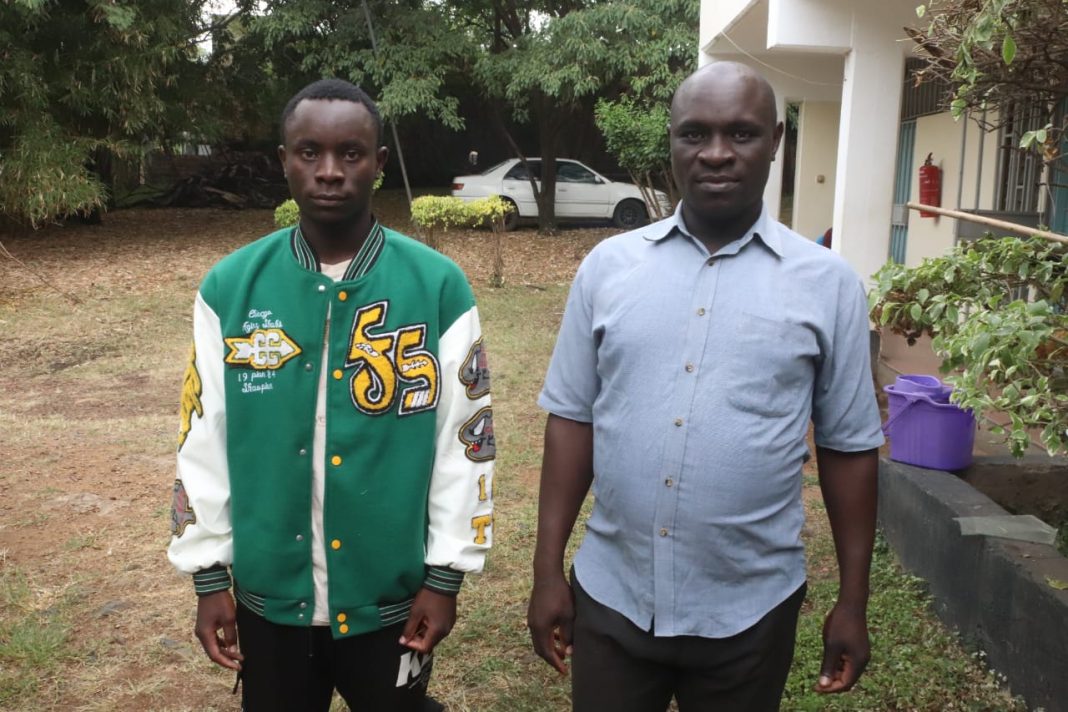
Anderikus Oluoch,53, a fisherman from Ragwe Beach, Suba South Sub County, Homa Bay County has been in the business since he was 16.
Oluoch, who has been operating in Lake Victoria waters, was introduced to catch fishing by his polygamous father, a full-time fisherman.
The firstborn in a family of 12, Oluoch ventured into the business while still in Primary School because he used to accompany his father on his fishing escapades most of the time.
This led to Oluoch’s poor performance in primary-level final examinations. He could not attend secondary school and decided to fully follow his father’s roots by becoming a full-time fisherman.
“I used to accompany my father in his night fishing escapades especially at night which most of the time made me miss going to School which led to my deplorable performance in Kenya Post Primary Education Examinations and I could not join Secondary level,” he said.
However, according to Oluch, the tides turned when he was 26 when his father died leaving him with the burden of feeding the two families.
The family fully relied on catch fishing for their daily income and other basic needs.
“When my father who was a polygamous died, I was left with the burden of fetching for our families since I was the only child who had become a master in the game,” he said.
“My father left a young family and I had to go out of my way to ensure that no gap was left vacant, I had to provide for their daily meals and pay for some school fees,” he said.
Oluoch said that by that time, there were plenty of fish in the Lake, which even lured some of his siblings to drop out of school and venture into fishing since, at the end of the day, they could earn some cash.
“Some of my brothers decided to drop out of school and join me in fishing since my father left us with three fishing boats and a number of fishing nets, they never realised the benefits of education,” he said.
However, according to Oluoch, as time went by, the population of fish in Lake Victoria especially the Nile perch and tilapia started diminishing.
He said that this led to insecurity in the lake whereby authorities from one of the neighbouring countries started taking away their catches and even fishing gears and even forcing them to eat raw fish.
Following his frustrations, Oluoch decided to abandon fishing and ventured into small-scale farming on a one-acre piece of land that he inherited from his father.
“We never embraced the culture of saving during the prime time of our fishing activities since we were sure that at the end of the day, we would have something in our pocket, most of the fishermen spent most of their earned cash on drinking and other activities at the expense of saving,” said Oluoch.
However, many fishermen at Ngeri beach such as Oluoch who had lost hope in the fishing industry have a ray of hope as the County Government of Homa Bay introduces cage fishing to the local fishermen.
The Sh.30 million initiative under the Aquaculture Business Development Program is set to create direct impact on the economic status of 180 households within Ngeri Bay.
According to Homa Bay Governor Gladys Wanga, her administration has provided 12 cages with each costing Sh1.2M with a capacity of stocking 35,000 fingerings.
Wanga said that the plans are in progress to add another 10 fish cages to the Community.
She said that her administrative chose on the project following the ongoing challenges of climate change and other issues such as dwindling fish population and the insecurity in the lake to assist the fishermen.
“We have realised that the fish population in our lake is gradually diminishing and we thought it wise to assist our fishermen with fish cages to help them continue with their businesses as usual,” said Wanga.
“As a County Government we want our fishermen in various parts of Lake Victoria to graduate from just being “fishermen” to fish farmers, we do not want the fish farming sector to be exclusively left for the private sectors but our people must also venture into it,” said Wanga.
According to Wanga, the cages will be operated by the Community rationally so that every household along the Bay can benefit.
The cages are expected to benefit fishing communities in Nyagwethe, Ngeri, Litare and Kisegi beaches which are all under Ngeri Bay.
According to the Governor, the project was initially designed to support fish pond farmers, however she felt it wise to be implemented in the lake she Homa Bay own a larger chunk of Lake Victoria to benefit the larger number of those fishing in the lake.
The Governor assured the locals that they will partner with Victory Farms one of the largest privately owned fish farming companies in the Country which is based in Roo within Suba South to offer to help the farmers in managing the cages due to the vast experience they have in the sector.
“We are looking forward to partnering with private sectors such as Victory Farms Company to help the fish farmers so that they can carry out their activities in ways that can conserve the environment within the lake,” she said.
Wanga said that apart from providing farmers with cages, the farmers will also receive fingerings and fish feeds to ensure that the program becomes a success.
However, the county CEO assured the locals that the same initiative would be expanded to other fishing regions across the County.
“We have plans to replicate the same initiative in our islands such as Mfangano remba, parts of Rangwe and Karachuonyo Constituency and any other fishing areas across our County,” she said.
According to the Kenya Maritime and Fisheries Research Institute, there are currently approximately 6000 installed on the Kenyan side of Lake Victoria, and each cage can produce one ton of fish per year.
Farmed fish products in the Country would need to reach 150000 Metric tonnes in 2030 in order to generate enough fish to maintain its low per capita fish consumption for the growing population.
However, according to the Kenya National Bureau of Statistics Report 2020, fish production in the Country reduced from 163,824 Metric tonnes in the year 2015 to 146,543 Metric tonnes in the year 2019.
John Agili, the County Executive Committee Member in charge of fisheries and the blue economy, the program will boost fish output, act as a source of food security, and poverty reduction and create job opportunities to the people of Homa Bay.
He said that the growing population along Lake Victoria has increased pressure on the lake’s capture fisheries resulting in a decline in the resource.
“As a result of the reduction in fish population in Lake Victoria, many fishermen and investors have turned to cage fish farming for alternative livelihoods and trade and as a County, we can not be left behind,” he said.
“Fisheries and Aquaculture are important change agents because they lower livelihood risks while also contributing to income generation and poverty reduction,” said the CECM.
Agili revealed that currently the Aquaculture industry is evolving from a traditional to a modern system but the sector has been unable to realize its full potential.
He said this has been caused by inadequate readily available and affordable quality fingerings, infrastructure such as fish propagation hatcheries, fish feed industries, and fish marketing systems, especially for local producers. Reprieve to Fish farmers.
Lake Basin Development Authority (LBDA) has taken a bold step to revolutionize fish farming in the Lake Victoria region by building a modern hatchery plant in Kisumu.
The Managing Director, Mr. Wycliff Ochiaga, said the modern hatchery plant at Kibos ITTC produces 12 million fingerlings annually, which will boost fish farming in the lake region.
“The completion of the modern hatchery plant at Kibos ITTC, with a production capacity of 12 million fingerlings annually effective March 2025, will revolutionize fish farming in our region,” he said.
Ochiaga said LBDA’s strategic partnerships with educational institutions have further enhanced innovation and knowledge dissemination in aquaculture.
Fingerling farming is a key part of fish cage farming in Lake Victoria, where fish farmers demand more fingerlings to stock their cages:
“The year 2024 has been a testament to our collective resilience, innovation, and unwavering commitment to the transformative agenda of the Lake Basin Development Authority (LBDA),” he said.
Ends….