Home Blog

Winnie Odinga’s Dilemma

By Anderson Ojwang

Winnie Odinga may have gone through her late father, Raila Amolo Odinga’s, political mentorship and guidance over time.

Raila may have prepared to hand over the baton to his daughter at an appropriate time, but as fate would have it, he never had the luxury of witnessing such a transition.

The former Prime Minister could have mentored and exposed Winnie to his various local and global political networks, which will become handy in her political pursuit.

But currently, Winnie is caught in a fierce political battle over the soul of her father’s political party, the Orange Democratic Movement (ODM).

In the two divides are her uncle, now the party leader Dr Oburu Oginga-led faction of national chairperson Gladys Wanga, Director of Elections Junet Mohammed, deputy party leaders Simba Arati and Abdulsamad Nassir, against the ODM secretary Edwin Sifuna’s faction of Siaya Governor James Orengo, Embakasi East MP Babu Owino among others.

Winnie’s dilemma began immediately after the death of her father when she called for the appointment of a new team to manage the broad-based arrangement between ODM and President William Ruto.

The Broad-based dilemma

This was a direct affront on her uncle, Dr Oburu, which divided the Kawuor clan and the party right in the middle.

During the last November ODM celebrations in Mombasa, Winnie called for a National Delegates Conference (NDC) to choose a new team to manage the broad-based arrangement with President William Ruto.

“There is something I wanted to tell you. When it came to the matter of broad-based government, the people of ODM entrusted one person with the management of that relationship. That person was Baba Raila Amolo Odinga. That relationship is complicated and therefore we are looking and we are wondering, those who are taking upon themselves to manage it now, are they capable of managing that relationship? I don’t think that is the question for me to answer. That is the question for the people of ODM to answer. That is why, party leader, why I am requesting, we need to go back to the people and have an NDC to see who the people want to pick to manage that same relationship,” she said.

But Oburu responded by challenging those opposed to him to a political duel at the National Delegates Conference.

“Those who are saying that Oburu is not validly elected, I challenge them, if they say it is NDC, let us go with them to the NDC and I will call it very soon,” he said.

And Oburu was on Friday confirmed as the party leader of the ODM while his opponents held a parallel people’s national delegates conference.

Deputy party leader Dilemma

Winnie Odinga had strategically placed herself to be appointed as one of the deputy party leaders of the ODM.

Recently ODM Nairobi branch delegates endorsed Winnie for the position of deputy party leader, citing the need to fill a leadership gap in the capital.

The endorsement, backed by representatives from all 17 constituencies in the county, comes amid calls for equitable regional representation within the party’s top leadership.

Makadara MP George Aladwa said consultations over the past two months culminated in the decision to front Winnie.

“We have had several meetings in the last two months to look for a representative. Every region has representation in the party. Former Prime Minister Raila Odinga left us with no representative in the Nairobi region,” Aladwa said.

Winnie said the Nairobi branch must have a seat at the SNDC on March 27th because of their contribution and that ODM was her home.

“ODM is our home. ODM is the party my father built. Why should I leave and go where? I will remain in ODM. In this journey it has not been easy. We still have a place to go and the party position should be considered for those people who have put their lives in the struggle. It is in Nairobi where we demonstrate and not the villages. There are no demos in the villages. You cannot deny Nairobi its right. Nairobi must have a seat. On the day, on March 27th, Nairobi will have our day and say,” she said.

But on Friday, sensing that the wish would not be granted, Winnie walked into the meeting late, broke protocol and when given a chance to speak said there was need for a new ODM.

She called for reconciliation among the dissenting voices in the party and said no member should be expelled.

But Sifuna declared that he could not be secretary general for Oburu, terming his team as mediocre.

She is now conflicted on whether to remain and fight for her father’s party from within or join the Linda Mwananchi group.

Babu recently told Winnie to join their team and be part of a revolution in the country.

Linda Mwananchi

Winnie stood with Sifuna when he was sacked by the party and wrote that it was not well. She attended the press conference by Sifuna and the team but did not speak.

Already, the team is gaining momentum and drawing organic crowds. It is just a matter of time before they unveil their political vehicle as ODM enters into a pre-election coalition with President Ruto.

As the politics gain momentum, Winnie will be forced to make the difficult decision on whether to stick with her uncle or join the youthful team.

The National Transport and Safety Authority (NTSA) has withdrawn the Go Live Instant Fines Management System

By PHILLIP ORWA

NTSA, in a circular posted on its website, noted that they withdrew the instant fines management system after realisation that they needed to sensitize the public of the traffic act as defined in section 117 of the Traffic act before going live.

The statement said, “The Authority will communicate the standard procedures aligned to the provisions of the existing laws on handling of instant fines and minor traffic offences to avoid any misinformation and provide clarity on the same.

Ntsa remains committed to ensuring safety onmour roads and reducing fatalities, consistent, predictable, fair, and certain administration of penalties on traffic infractions remains a core component of reducing the burden of deaths on our roads.” Said the statement from the Director General’s office.

This comes hardly a month after the high court stopped the implementation of the Instant Fines System

Elijah Mbaire and Agnes Mumbua Crowned Champions at Fourth Betika Lukenya 10 Million Trees Marathon

By PHILLIP ORWA
Elijah Mbaire and Agnes Mumbua Ndolo emerged the overall winners during the fourth edition of the Betika Lukenya 10 million Trees Marathon held on Saturday, March 28, at Kambu Town.

Mbaire produced a dramatic sprint finish to win the Men’s race after clocking 2:16:44, edging out Charles Munyua Njoki by just one second in one of the closest finishes in the event’s history. While Njoki timed 2:16:45 to take second place, with Dennis Koech securing the third in 2:17:00.

Mbaire expressed gratitude for the victory and revealed that the decisive moment came late in the race. “I’m very thankful for this win. The race was very competitive, and after the 35km mark we were still four athletes together. At that point I decided to go all out and push the pace because I knew the finish would be very tight.”

Mumbua on the other hand won the women’s title in 2:42:56 as Fridah Chepkite Todepa finished second after clocking 2:48:33, while Naomi Wambui Muriuki completed the podium slot in 2:49:29.

Mbaire and Mumbua took home Sh500,000 each while Munyua and Chepkite received Sh200,000 each. Wambui and Koech were awarded Sh100,000 each for finishing third. Prize money will be awarded up to the 10th position in each race category.

The half Marathon Men category was won by Zakariah Kirika Gacugu, who clocked 01:02:06 ahead of Leonard Kiprotich who timed 01:02:21 while Peter Kiprop Rutoh (01:02:38) finished third.

The women’s race was won by Betty Chepkiror who cut the tape in 01:12:02 as Phena Siyoi (01:12:03) and Ruth Mwihaki (01:12:25 finished second and third, in that order.

Betika Group CEO Mutua Mutava said: “We strongly believe in the power of sports to transform lives and create opportunities. Our continued support for events such as the Lukenya Marathon reflects our commitment to nurturing local talent while also bringing communities together around positive initiatives.

Beyond the race itself, we want to ensure that the communities hosting us also benefit. The medical camp is part of our commitment to community impact, providing essential health services and support to residents around Lukenya. We also aim to align ourselves with sustainability efforts that are being put across, and this event gives us the chance to do so as we saw with the planting more than 2000 trees.”

More than 200 athletes had registered for the event that featured a 42KM, 21KM, 10KM, and cycling races pitting an 84-km pro race, a 42km race for those under 23 years, and a thrilling black mamba Race.

Beyond the racing action, the marathon continued to emphasize its environmental mission, seeing a total of 2,200 trees planted during this year’s event, contributing to the broader 10 Million Trees initiative aimed at restoring forest cover and promoting sustainability in the Lukenya ecosystem.

Financial Strain Threatens MM Shah Primary’s National Festival Dream

By James Okoth

MM Shah Primary School is staring at a possible setback ahead of the upcoming national music and drama festival unless urgent financial support is secured from the government, well wishers, and the general public.

The school, which recently posted an impressive performance at the regional music and drama festival, earned qualification to represent its region at the national level. The event is scheduled to take place in Nyeri County from April 6 to 18.

Despite the achievement, school officials indicate that financial constraints now threaten to derail the pupils’ participation. The total budget required stands at KSh 641,000, covering transport logistics at KSh 150,000, production improvements at KSh 150,000, and accommodation, meals, and refreshments at KSh 341,000.

With a total of 97 pupils and 10 teachers set to travel, the burden has proven too heavy for the institution to shoulder alone.

The learners’ qualification for the nationals followed a strong showing at the regional stage, where they excelled across multiple categories in music and drama, earning recognition for both creativity and discipline. Their progression to the national platform is seen as a major milestone not just for the school, but for the wider community.

However, without timely intervention, the opportunity to showcase their talent on a national stage risks slipping away.

A school official underscored the urgency of the situation, stating, “These learners have worked extremely hard to reach the national stage, and it would be heartbreaking to see them miss out due to financial constraints. We are appealing to well wishers and leaders to step in and support this noble cause.”

School stakeholders have now made a broader appeal for support, noting that participation in the national festival would not only nurture the pupils’ talents but also elevate the school’s profile and inspire other learners.

They expressed hope that with collective effort, the young performers will make the journey to Nyeri and proudly represent their region on the national stage.

President Ruto musical chair in ODM power game

By Anderson Ojwang

President William Ruto is having a field day in the Orange Democratic Movement (ODM) in the current power game after the exit of the late Raila Amolo Odinga.

President Ruto in October during Raila’s burial said he will ensure that the party doesn’t slip into the hands of those opposed to the broad-based government.

The chess game in the ODM power matrix has left some as pawns in the game while others are fast becoming kings and monsters to President Ruto.

The script began immediately after the formation of the broad-based government arrangement, and it took a different trajectory with the death of Raila.

Raila was the stumbling block and blew hot and cold over the future coalition, even directing his members against propagating a two-term agenda.

Raila went ahead to ask his team, “Who told you ODM will not field a presidential candidate in the 2027 general elections?”

According to South MP Caroli Omondi, who was at the meeting, the late Raila only allowed Cabinet Secretary for Treasury John Mbadi and his Energy counterpart Opiyo Wandayi to champion Ruto’s two-term campaigns, while the MPs were restrained save for Alego MP Sam Atandi who had asked for exemptions.

“Raila told us not to say two-term. And if any MP wants to contradict that, let them try and we will tell them where they were told.”

The plot building

Raila’s death marked the beginning of the power game. While the Secretary General Edwin Sifuna was on board a flight to India to collect the body of Raila, back at home, a team was meeting to install Siaya Senator Oburu Oginga as the acting party leader, bypassing immediate former acting party leader Prof Anyang’ Nyong’o.

Omondi gave an insight into what could be happening in the party and the emergence of a mysterious hand pulling shots in the party.

“There was a very quick transition even before Baba’s body arrived. When Mzee Oburu announced that he had accepted to be the party leader, he said he did not even know that there was a process to make him party leader. What that implies is that that call came from somewhere else. And that worries me a lot. This is because it therefore seems that ODM is getting directions and controls from somewhere else,” he said.

The plot thickens at ODM at 20 celebrations

Hardly 40 days of mourning Raila, ODM was in Mombasa to celebrate the 20 years, even after the protest by Raila’s family for postponement.

From Mombasa, ODM Linda Ground was birthed and embarked on a countrywide tour with a view to test ground ahead of pre-election coalition pact with UDA.

That marked the last public function of Secretary General Edwin Sifuna and the unsuccessful attempt by Oburu to sack him.

The Linda Ground plot

The once cash-strapped ODM finally gained flamboyance and held its meetings in five-star and high-end hotels.

Sifuna revealed that the funds and resources being used in the ongoing Linda Ground engagement did not come from the party.

He said the party was owed over Sh12 billion by the government for the political party funds, which has negated its operations.

“The money and the resources you see being spent on the ODM rallies called Linda Ground, the monies do not come from ODM headquarters. For me, I can only account for the monies because I am a signatory to the bank accounts, Timothy Bosire is a signatory to the bank accounts. The last money we expended as ODM officially was for the celebration in Mombasa and it was a fraction of what you saw there,” he said.

Kisumu Women Representative Ruth Odinga wondered about the source of money flowing into the party.

“As a signatory to the ODM account, if he questions where all the money for choppers, big tents and ODM branded t-shirts and caps in the ‘Linda Ground’ conventions are coming from, why should anyone abuse him? Those with the answers, why can’t you provide them? Are governors funding the campaigns? Are MPs doing it from CDF kitty? Did we get a philanthropist that a Party SG is not aware of who is funding the clearly expensive public fora? And what is in it for the philanthropist?” she questioned.

Ida Odinga appointment and exit from the scene

The appointment of Raila’s widow, Mama Ida Odinga, was strategic and leaves a vacuum in the ongoing political re-organization.

After showing support for Sifuna and urging for dialogue, her continued stay in the political space would thaw any move in the power game.

Her appointment strategically leaves her out of the political space and her hands are tied by the appointment.

She takes over from ODM Secretary General Ababu Namwamba, who has moved to Uganda.

The Return of Ababu

At the ODM’s SDC, Ababu Namwamba reappears. Strategic reappearance. A key ally of President Ruto, a possible candidate for the Secretary General post.

In Ababu, President Ruto hopes he can finally have total control of the party should Ababu be made the Secretary General.

Winnie Odinga plot

She is the hard nut to crack. The only surviving soul of her political journey. Her journey to become one of the deputy party leaders has been frustrated.

Reason: her presence in all the ODM organs would stagnate the power game and she is capable of masterminding a coup.

The Nairobi branch has insisted that Winnie Odinga must be made one of the party’s deputy leaders against opposition from some quarters. This could be the fault line leading to a chaotic situation during the meeting.

Winnie said the Nairobi branch must have a seat at the NDC on March 27th because of their contribution and that ODM was her home.

“ODM is our home. ODM is the party my father built. Why should I leave and go where? I will remain in ODM. In this journey it has not been easy. We still have a place to go and the party position should be considered for those people who have put their lives in the struggle. It is in Nairobi where we demonstrate and not the villages. There are no demos in the villages. You cannot deny Nairobi its right. Nairobi must have a seat. On the day, on March 27th, Nairobi will have our day and say,” she said.

The Monster in the waiting

President Ruto has successfully succeeded in achieving his mission in controlling the ODM but has also created a political monster.

The Linda Mwananchi faction of the party has the soul of Raila and enjoys organic support. It is a tsunami in the making and will not rely on the party to champion its agenda.

If anything, the train has left the station and it is just a matter of time before ODM is relegated to the periphery as Ruto fights the monster.

CS Chirchir presents JKIA Masterplan, Optimization Project to Transport Committee, outlines roadmap for long-term expansion and modernization

By Habil Onyango

Cabinet Secretary for the Ministry of Roads and Transport, Davis Chirchir, presented a copy of the Jomo Kenyatta International Airport (JKIA) Masterplan and Optimization Project to the Departmental Committee of Transport and Infrastructure.

The master plan and optimization project outlined a comprehensive roadmap for the airport’s long-term expansion and modernization to advance Kenya’s aviation development agenda.

The Departmental Committee on Transport and Infrastructure, chaired by Ndia Member of Parliament Hon. George Kariuki, held high-level consultative discussions with the Cabinet Secretary.
The meeting, which also brought together the Principal Secretary for the State Department for Aviation and Aerospace Development, Teresia Mbaika, focused on sector growth, emerging challenges, and strategic opportunities aimed at strengthening and transforming civil aviation in the country.

Central to the deliberations was the proposed masterplan for Jomo Kenyatta International Airport (JKIA), a flagship project expected to redefine the country’s aviation landscape.

Chirchir said the project was designed to enhance capacity, improve operational efficiency, and significantly elevate passenger experience.

“Hon. Members, the groundbreaking for the project is expected in June 2026. Phase I is projected to take approximately 15 months, while Phase II will be implemented over a three-year period,” he said.

The expansion program will be executed in three phases:
Phase 1 (2026–2027): Immediate upgrades and renovations to the airfield and existing terminals to address capacity constraints and meet demand through 2029.
Phase 2 (2026–2040): Long-term expansion of airside infrastructure and terminal facilities to accommodate projected passenger growth through 2045.
Phase 3: Long-term land safeguarding, additional airside expansion, and integration of landside infrastructure to ensure scalability beyond the current planning horizon.

The masterplan also identifies two strategic land parcels for the development of an Airport City at JKIA. Site 2A, spanning 220 hectares on the western end, will host an integrated Special Economic Zone (SEZ), while Site 2B, covering 482 hectares on the southeastern side, is earmarked for a mixed-use aerotropolis featuring commercial and logistics hubs.

Lawmakers made inquiries into funding options for the project, its cost projections, and period of repayment.

Hon. Samuel Arama asked if public participation has been conducted to ensure all stakeholders are aligned to the project.

“CS Chirchir, there is need to ensure that all the stakeholders in this project are aligned to the project. Has the Ministry considered public participation and stakeholder engagement on the project?” Hon. Arama sought to clarify.

On his part, Hon. Ibrahim Saney asked about the environmental assessment of such a massive project close to the National Park and mitigation measures put in place, while Hon. John Kiragu advocated for local private sector players to benefit from the project.

CS Chirchir informed lawmakers that the project will be primarily funded through the Air Passenger Service Charge, supplemented by financing from commercial banks and the National Infrastructure Fund.
He added that it has been a continuous engagement with all sector players and that public participation has been done at various stages.

The CS also added that they are looking into both local and international banks for funding and once the groundbreaking is done, the local private sector will be engaged.

In terms of economic impact, the JKIA Master Plan is expected to generate between 9,520 and 13,080 jobs annually during the first phase of construction between 2026 and 2029. A further 1,460 to 2,000 jobs are projected during the second phase between 2038 and 2040.

Once operational, the expanded airport is expected to support between 7,000 and 10,580 permanent jobs across direct, indirect, and induced employment categories. Additional projections suggest actual employment figures could exceed these estimates.

Beyond the projected USD 2.916 billion investment, operational employment is forecast to contribute between USD 60 million and USD 120 million annually to the economy, representing approximately 0.05 to 0.11 percent of Kenya’s GDP.

Committee Chairperson Hon. Kariuki reiterated Parliament’s commitment to supporting initiatives that enhance infrastructure development and position Kenya as a regional aviation hub.

The Committee is expected to continue engaging stakeholders as the project moves toward implementation.

Nyong’o absence at the ODM’s SDC sends mixed signals

By Anderson Ojwang

The absence of Kisumu Governor Prof Anyang’ Nyong’o, the founder secretary general and former acting party leader, at the ODM special delegates conference (SDC) was so telling and sent mixed signals.

If anything, the absence of Nyong’o left the party leader Dr Oburu Oginga a lonely person after Siaya Governor James Orengo led the Linda Mwananchi faction opposed to pre-election coalition arrangement with President William Ruto’s United Democratic Alliance (UDA).

Nyong’o’s presence would have validated the SDC, the new office, and his absence has left more questions than answers within the ranks and file in the party and nationally.

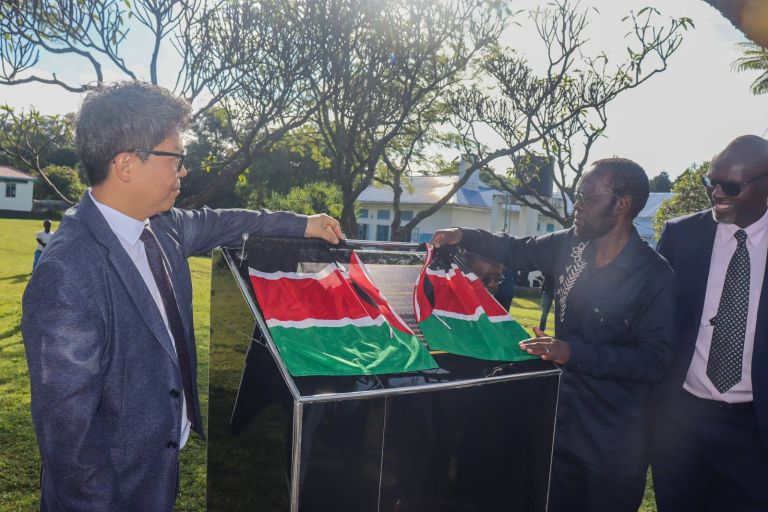
Instead Nyong’o presided over the unveiling of the Chun Jeong–Eun–Nyong’o Cancer Centre at Victoria Annex Hospital, Milimani.

He wrote on his social media handles: “The journey of 1000 miles starts with one step, and we took that bold step today with the desire to transform healthcare in Kisumu by unveiling the Chun Jeong–Eun–Nyong’o Cancer Centre at Victoria Annex Hospital, Milimani.

I had the honor of presiding over this historic occasion alongside Mr. Peter Chun, Chairman and President of the World Smart Cities Forum, and Mama Kisumu, Dorothy Nyong’o – Managing Trustee of the African Cancer Foundation, in the company of other distinguished guests.

For far too long, cancer has placed a heavy burden on our families and communities. Today, we begin to rewrite that story. This Centre is more than a facility. It is a bold symbol of hope, reaffirming our commitment to confront cancer with courage, innovation, and compassion for all.

Through our partnership with Mr. Peter Chun, the National Government and other partners, we are turning vision into reality by establishing two centres: a public facility at JOOTRH to ensure universal access and this advanced centre to position Kisumu as a regional hub for specialized cancer care.

Also present were County Secretary Hesbon Hongo, CECMs Dr. Greg Ganda (Public Health), George Okong’o (Finance), Judith Oluoch (Environment), City Manager Abala Wanga, County Attorney Otieno Aluoka and other distinguished leaders.”

It is Nyong’o who headhunted the embattled Secretary General Edwin Sifuna after then SG Ababu Namwamba resigned.
Sifuna, with other members of his faction, was at Ufungamano House holding the People’s National Delegates Conference, putting the Governor in a fix.

Sifuna declared that he could not be a secretary general to Dr Oburu and instead asked him to look for his own secretary general.

“Oburu, look for your SG. I cannot be Oburu’s SG. I want to say this before God and the nation. I will not be the SG of mediocrity after serving Raila Amolo Odinga. You characters do not deserve me,” he said.

Nyong’o in his previous speeches explained how Sifuna rose to become the party secretary general.

He spotted Sifuna’s talents through his newspaper contributions and decided to tap his knowledge and potential for the ODM party.

Nyong’o decided to invite Sifuna for a lunch meeting to evaluate his competence and whether he fitted the bill.

Nyong’o was convinced and humbled in his first interaction, and that marked the beginning of a new secretary general for the party.

“Before I say much, I want to deal with a few matters arising from what has been spoken here. Are we together?

First, is the issue of Edwin Sifuna. I think none of you knows how Edwin Sifuna came into ODM.

Edwin used to write for the Standard Newspaper, very good articles. And after serving for 12 years as secretary general of ODM, I asked the party leader to allow me to concentrate on developing the research wing of the party and give the technocracy to another secretary general.

We tried a few people; it never worked. So one day, I said to myself, that young man, who writes so well in the Standard. Let me call him and have lunch with him at United Kenya Club. I met Sifuna and I was very impressed. So I went and talked to the party leader and he agreed to have him on board,” he said in a previous speech.

He said Sifuna never failed him and he has performed exemplary well as the spokesperson of the party.

“We read the interview Sifuna had at Kenya Times, where he made it very clear, being the secretary general and the spokesperson of the party, he clarified every issue and since then, we have not seen any writing about Sifuna in the newspaper at all,” he said.

Nyong’o defended Sifuna from his critics, saying he was professional in his work, and wondered about the contributions of his critics, then.

“Sasa wewe ni nani. Sasa wewe unaanza leo kupinga Sifuna wewe ni nani? (Who are you who have started to criticize Sifuna? Who are you?) We in the party sought Sifuna from his professional work to bring him into the party.

He has been doing an excellent job since then. Let us support him, we in the party and the people, let us support him.

The guy is built for the future. You know what I mean. Ukiangalia mbele, utaona Sifuna. If you don’t know what I am saying, go home and think,” he said then.

In a twist of events, the ODM invited Ababu to the convention, with Oburu saying the party will not expel any member but will sack those officials disrupting the party’s unity.

Sifuna “steals” Raila, ODM’s soul as Oburu remains with the head in parallel NDCs

By Anderson Ojwang

Two historic venues, Jamhuri Park and Ufangamano House, heralded a new post-Raila Amolo Odinga political dispensation in his Orange Democratic Movement (ODM) party.

The two factions in the ODM, Linda Ground of Dr Oburu Oginga and Linda Wananchi of Secretary General Edwin Sifuna, made good their plans and held parallel NDCs, with various branches showing affiliation to the two camps.

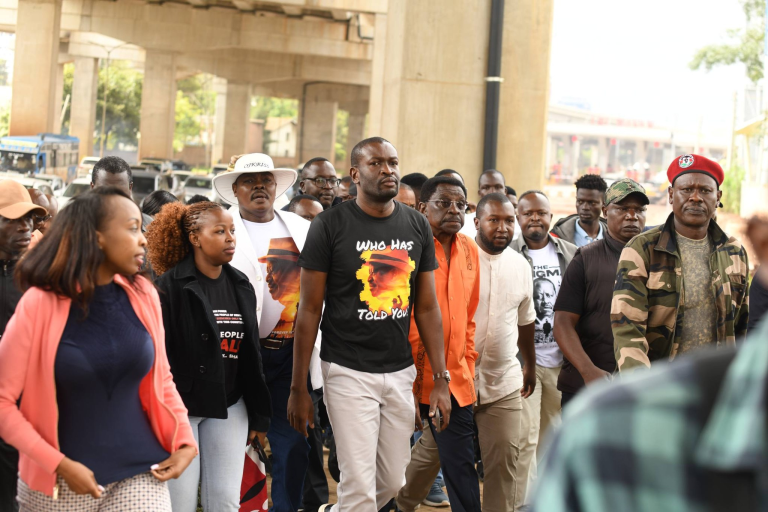
At Ufangamano House, the high presence of police and armoured anti-riot vehicles—a trademark that became part and parcel of Raila’s and ODM’s political journey—returned. The police built camp outside the venue.

The die-hard Raila supporters did not fail the Sifuna-led team, as they forced their way into the venue, with Sifuna declaring that they should not fear the police and tear gas.

“We are in the footsteps of our leader Raila Odinga. What can we fear? That is why they sent the police to intimidate us. But we cannot be cowed and we are not cowards,” he said.

Siaya Governor James Orengo, who was accompanied by his Siaya County ODM branch chair, capped it by saying the soul of Raila was at Ufangamano House and dismissed the Jamhuri meeting as illegal and unconstitutional.

“The soul of Raila Amolo Odinga is here. We are the children of Raila Odinga. We are reformists and fighters. We are winners. Those are opportunists,” Orengo said.

Sifuna also declared that he cannot work with the party leader Dr Oburu, National Chairperson Gladys Wanga and Director of Elections Junet Mohammed.

At Jamhuri Park, the NDC confirmed Oburu, Kisii Governor Simba Arati and his Mombasa counterpart Abdulsamad Nassir as deputy party leaders, while Homa Bay Governor Gladys Wanga was ratified as the National Chairperson.

Vihiga Senator Godfrey Osotsi was kicked out as deputy party leader, while Sifuna’s post was left intact. Osotsi had earlier written that he would not attend but would instead be at the Linda Mwananchi meeting at Ufangamano.

He wrote, “We, the people, shall gather for the people’s NDC at Ufangamano House. Any other NDC gathering is illegitimate.”

The much-lobbied bid for Winnie Odinga to become deputy party leader failed to materialise, and she appealed to the party leadership not to expel anyone from the party.

Oburu told Winnie that the party would not expel anyone, but officials causing disunity would have to be sacked from their positions.

“I have heard what my daughter Winnie has said. We will not expel anyone, but those holding positions in the party who are causing disunity will have to be sacked. You cannot come out to criticise the resolution of the majority and want to lean on your tribe to support your agenda. The minority will have their say, but the majority their way. That is democracy,” he said.

Oburu said he would not wish to witness the party follow the path it took at its formation, following the battle over leadership between ODM-K under Raila and Kalonzo Musyoka.

Oburu said the party will form a technical team to negotiate with President William Ruto’s United Democratic Alliance (UDA) over pre-election coalition arrangements.

“My brother left us in a broad-based government. I have been mandated to embark on negotiations. I will form a technical team to negotiate with UDA,” he said.

But Embakasi East MP Babu Owino said their objective was to ensure President Ruto was defeated in the 2027 general elections and that they would not enter or recognise any pre-election coalition engagement.

“We know President Ruto sponsored the Oburu NDC and they have fallen into his trap. We know what Raila wanted, and we cannot betray his soul and legacy in death,” he said.

Junet said ODM will not negotiate with UDA in areas considered its strongholds, adding that zoning was the first condition.

“We will not allow UDA to field candidates in zones where ODM has governors, MPs, MCAs and other elected leaders. That is non-negotiable,” he said.

Saboti MP Caleb Amisi said Oburu had presided over the death of his younger brother Raila’s legacy.

He wrote on social media, “Oburu’s team, you are messing up Raila’s legacy. Take a rest, alone, and think about when you visited your brother in prison.”

Linda Mwananchi, after “stealing” Raila’s soul, now moves to Mombasa this weekend, while Linda Ground embarks on boardroom negotiations with President Ruto.

For Oburu, history may have caught up with him in just five months—presiding over the first sacking in Raila’s party and witnessing the disintegration of his brother’s political outfit.

Just like the battle between Raila, a former Vice President, and the late Wamalwa Kijana over control of Ford-K, Oburu has stoked a similar flame, pitting him against Sifuna.

It may only be a matter of time before Oburu carries the “head” to Kango ka Jaramogi, while Sifuna flies with the “soul” to the land of prophet Elijah Masinde, just as Wamalwa once did.

Kenya Showcases Continental Strength as All-Africa Junior Team Championship Concludes

By PHILLIP ORWA

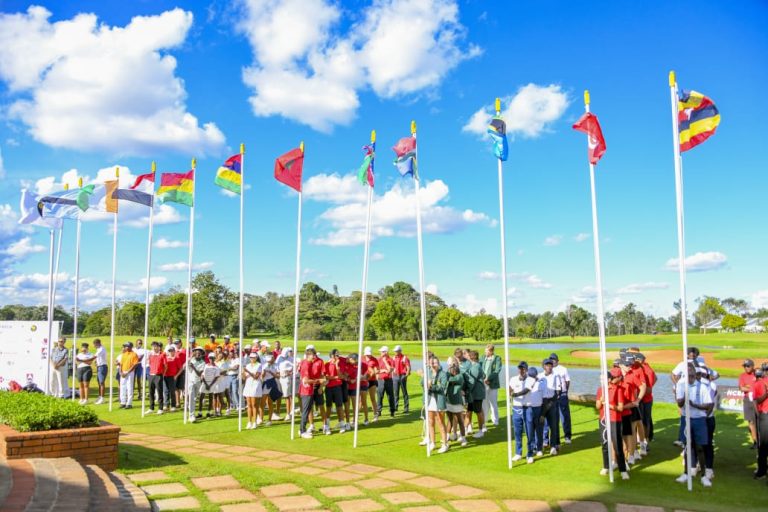
Kenya once again demonstrated its growing stature as a hub for golf development following the successful conclusion of the All-Africa Junior Team Championship yesterday at the Windsor Golf Hotel & Country Club.

The three-day championship brought together the continent’s top junior golfers, delivering high-quality competition, strong team performances, and a clear indication of the rising standards of the game across Africa.

The event also highlighted the importance of sustained partnerships in growing the game, with NCBA continuing to play a key role in supporting junior golf development through its partnership with the Junior Golf Foundation.

Chris Kinuthia, Chairman of the Kenya Golf Union, praised both the organisation and the broader impact of hosting the event.

“It’s been a very wonderful experience. We have hosted the whole of Africa here in Kenya, and this being the biggest junior golf event on the continent, it means the world is watching. The feedback from participating countries has been very positive, and that reflects well on us as a nation. This tournament shows that Kenya is not only a golfing powerhouse, but a sports powerhouse.” said Kinuthia.

He also recognised the role of partners in supporting the growth of the sport and the performance of junior golfers.

“When you have the attention of the world here, there are many benefits that come with it. Our partners have played a big role, and especially NCBA, who have walked this journey with the juniors from the beginning. When you look at the level of performance in a tournament like this, it reflects that kind of support. We appreciate how they are supporting golf, not just at the junior level, but across the game.” he added.

The event further underscored the steady rise of junior golf in Kenya, driven by structured programmes and increased access to competition.

According to Vincent Mukiri, the championship marked a major milestone for the sport. **“The tournament has been electric, very exciting for us as administrators, for the juniors, and even for the parents. This is one of the top junior events we have hosted in the country, and it opens up many opportunities for us, both in junior and even senior golf. There are so many learnings, so many connections that have been made, and these will go a long way in extending the reach of junior golf in Kenya.

When we came into this tournament, we had both individual and team goals. We were aiming for gold, but we are very happy with the number two finish. As we continue building junior golf, we rely heavily on partnerships. Sponsors and collaborators allow us to go to places we would not reach and engage more young players.”**

Mukiri further highlighted the impact of long-term support in expanding the game. “Our top sponsor is NCBA, and they have supported us for several years. Through that support, we are able to run between 40 to 50 tournaments annually and carry out grassroots training programmes. When we started, we had about 3,000 juniors, and now we are at around 5,000 to 6,000. That growth is a direct result of consistent support, which allows us to operate at a much bigger level than we would on our own.”

For the players, the championship provided both exposure and a platform to test themselves against the best on the continent. Kenya’s Mwathi Gicheru, one of the top local performers, emphasised the importance of such opportunities.

“It’s a great privilege to compete at this level. I’m really happy with how we performed as a team; that was the most important thing for us. Tournaments like this and the support we get, especially with NCBA sponsoring many of our junior events, really help our growth. The more experience we get, the better we become.”

South Africa’s Andries Van Der Vyver, who emerged among the standout performers, reflected on his victory and the level of competition.

“It was a great day for me. I didn’t start that well, but I managed to finish strong. To play against some of the best players in Africa is a big privilege, and to come out as champion is an honour. This is part of the journey for me, and I hope to keep improving and achieving bigger goals in the game.”

The successful hosting of the championship not only reinforced Kenya’s capability to stage world-class junior tournaments, but also highlighted the strength of its development ecosystem, where consistent investment, structured competition, and strong partnerships continue to shape the future of the sport.

NAIROBI CITY THUNDER TARGET STRONGER BAL CAMPAIGN

BY PHILLIP ORWA

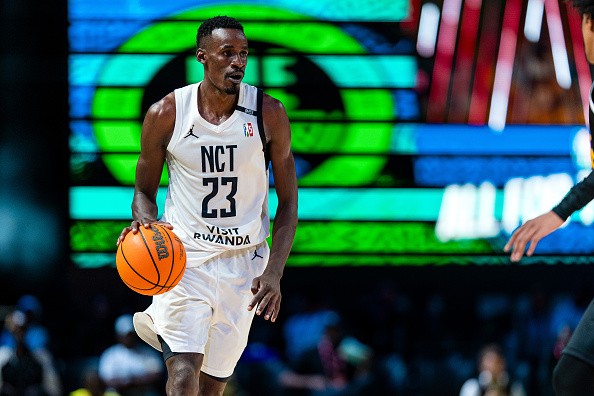
Nairobi City Thunder will be returning to the Basketball Africa League for their second consecutive season with high hopes, focusing on building on last year’s lessons and competing at a higher level.

Head Coach Bradlet Ibs and Captain Tylor Ongwae, speaking during the team’s media day ahead of BAL Season 6 in Pretoria, South Africa, set the tone with clarity, cohesion, and competitive intent.

For a team that made its BAL debut just a year ago, the return is not about participation. It is about progression.

Coach Ibs says the team’s approach this year is rooted in understanding what it takes to succeed in BAL competition.

“Last year, being our first year, we learned a lot about what it means to play in the BAL. We’re excited to represent ourselves and truly show Thunder basketball.”

That growth has been anchored in simplifying their approach. Despite their dominance in the local league, Thunder are placing emphasis on execution and preparation.

“In a tournament like this, being prepared is a lot about the basics, being great at the simple things that win basketball games, and learning to win in different ways has benefited us, and we hope those lessons translate to the competition here.” Ibs said.

A key shift from last season is a stronger emphasis on chemistry and continuity, particularly after early challenges in their debut BAL campaign.

“Our team strength is our cohesiveness that is built on our foundation of local core players… and we want to highlight their strengths and chemistry together.

Watching more BAL games, you realise how much chemistry really matters, especially in the ability of players to play fast and aggressive.” he added.

Captain Tylor Ongwae says that cohesion is reinforced through constant communication within the group.

“It’s about engaging with each other. If I see something going wrong, I speak up. If they see something, they talk to me. It’s open communication and just enjoying playing together.”

For Ongwae, the objective remains straightforward.

“At the end of the day, we want to win. Winning solves a lot of problems.”

Nairobi City Thunder open their BAL Season 6 campaign on Saturday, 28th March in an East African derby against Dar City, with tip-off set for 4:00 PM EAT.