Do you have a plan and plot for this October, and what and where do you want to have a fun-filled moment in the month of October?
Don’t look far. Kisumu will give you value for your money and a moment to cherish.
Yes, to sports lovers, Africa will converge in Kisumu from the 21st to the 25th of October 2026. The Confederation of African Cycling Championship rolls into Kisumu County, and what a grand arrival it shall be!
Kisumu Governor Prof Anyang’ Nyong’o has prepared a plate for you and invited all to be part of the history as Africa cycles in Kisumu.
“My dear people of Kisumu, and indeed all lovers of sport across our great continent, more than 30 African nations will send over 300 elite competitors to ‘cycle it out’ across 15 thrilling race categories, with the action transmitted LIVE across Kenya and to the entire world,” he wrote.
Let me tell you what this truly means for us:
Nyong’o said the event will be a cocktail of opportunities for Kenyans and, more specifically, Kisumu residents.
“Our hotels, restaurants, and hospitality sectors will bloom! Jobs and networking opportunities for our young people, from event management to transport, catering, security, and beyond,” he said.
Nyong’o said they project over 1.8 million social media impressions and close to 90,000 engagements. Kisumu’s name shining on the global stage like never before!
“This is not just a race. This is an economic injection into our county’s veins. This is tourism reborn. This is Kisumu to the World!
And YOU, mwananchi, are not left out! A social fun ride will be open to all. Dust off that bicycle, bring your family, your friends, your neighbours. Let us ride together as one county, one people, one destiny,” he said.
Nyong’o thanked the Kenya Cycling Federation for choosing Kisumu.
“My heartfelt gratitude goes to the Kenya Cycling Federation for choosing Kisumu and trusting Dala to host Africa. Asanteni sana!
The world is coming. Let us welcome them the Kisumu way with warmth, pride and unstoppable energy,” he wrote.
The long wait to operationalise a Sh200M hospital in Kisumu’s Seme Sub-County will finally come to an end.
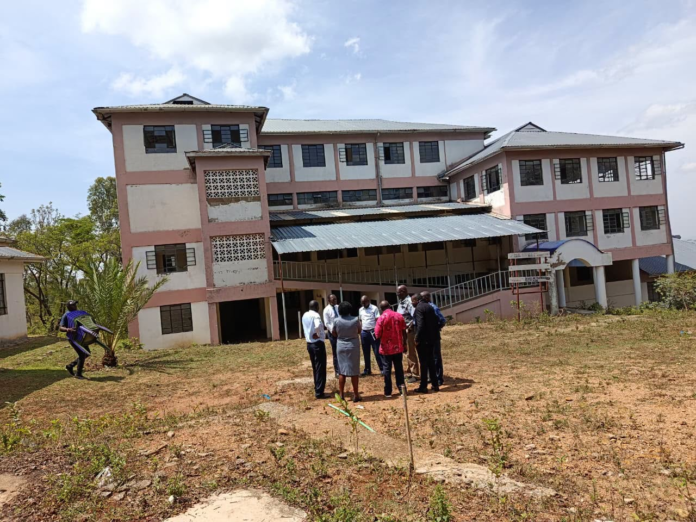
The long-dormant 200-bed Sheikh Zayed Hospital in Holo, Seme Sub-County, will finally be operationalised following a strategic joint partnership, with Jaramogi Oginga Odinga Teaching and Referral Hospital (JOOTRH) being a key player.
The coalition—comprising JOOTRH, the National Government, Kisumu County Government, the Office of the Seme MP, and the Da’Wah Development Group—has agreed to fast-track the project.
They target to open the outpatient department (OPD) by December.
The hospital, constructed in 2013 for nearly Sh200 million through donor funding from the UAE-based Dar Al Ber Society and commissioned in 2017, has remained largely unused due to administrative and operational hurdles.
The breakthrough comes after Seme MP Dr James Nyikal, who chairs the National Assembly Departmental Committee on Health, brought key stakeholders together to resolve the deadlock. During a recent site assessment, developers led by Mr Abdulqadir Omar showcased consultation rooms, a pharmacy, an X-ray unit, wards, a laundry, a mortuary, and water infrastructure.
“In Islam, we say every delay has a blessing in it,” Mr Omar said, expressing optimism over the renewed commitment.
Kisumu County Health Chief Officer Dr Ojwang’ Lusi called for urgent execution to enhance healthcare access across Seme and surrounding regions. JOOTRH Ag CEO Dr Joshua Okise emphasised that opening the facility aligns with the institution’s strategy to expand community-centred healthcare, outreach, and mental wellness programmes.
To guarantee swift execution, a joint implementation committee co-chaired by Dr Lusi and Dr Okise has been established.
Renovation and equipment costs will be jointly funded by the National Government and partners. The committee’s immediate priority is delivering a functional OPD on the ground floor of the three-storey complex by December, before progressively opening the remaining sections.
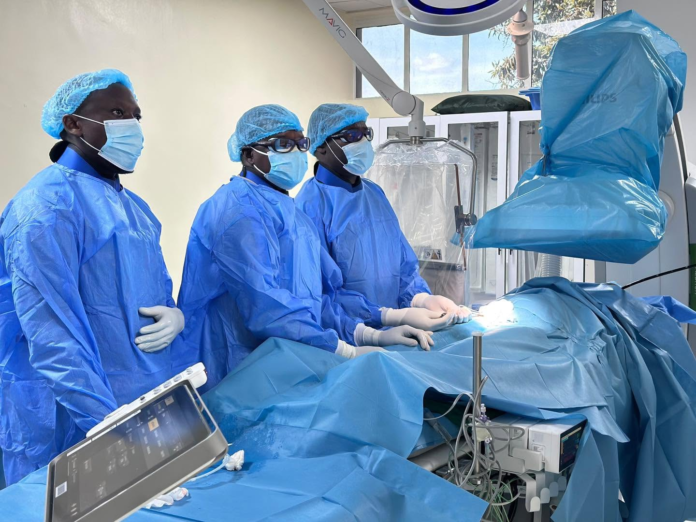
Good news after the Cardiology team at Moi Teaching and Referral Hospital (MTRH) successfully performed an emergency Percutaneous Mitral Balloon Valvotomy (PMBV), guided by Transesophageal Echocardiography (TEE), on a critically ill expectant mother.
The patient was referred to MTRH with complications arising from underlying mitral valve disease during pregnancy. Following a comprehensive assessment, a multidisciplinary cardiac team determined that urgent intervention was necessary to safeguard the health of both the mother and her unborn baby.
The procedure was led by Dr Constantine Akwanalo and Dr David Lagat, with support from Reuben Yano. Anaesthesia care was provided by Dr Edwin Gudu and Dr Mitchell Okutoyi, supported by the Cath Lab nursing team comprising Jacqueline Kirui, Purity Chebet, Kelvin Masiga and Olive Mugodo.
Technical support was provided by Andrew Chelulei, Biomedical Engineer, and Reuben Mutai, Radiographer.
The intervention was image-guided using both Transesophageal Echocardiography (TEE) and the Cath Lab image intensifier system. These technologies provided detailed, real-time imaging of the heart and mitral valve, enabling the team to accurately guide and monitor the procedure throughout the intervention.
The procedure was successfully completed, and both the mother and baby are safe.
This successful intervention marks the third emergency case of this nature to be successfully managed through the MTRH Cath Lab, highlighting the growing capacity and importance of advanced cardiac intervention services in the region and is fully covered by the Social Health Authority (SHA).
Head of Cardiology Dr Ayub Barasa said: “The successful procedure reflects the importance of multidisciplinary collaboration, specialised expertise and advanced cardiac technology in managing complex emergencies.”
MTRH Chief Executive Officer Dr Philip Kirwa affirmed that MTRH continues to strengthen its capacity to provide specialised, time-critical cardiac care, serving patients from across the country and beyond.
MTRH congratulates the entire multidisciplinary team for their professionalism, coordination and commitment to providing continued high-quality specialised care.
The 2027 presidential election may have three main presidential candidates at the ballot, Democracy for Citizens Party (DCP) leader Rigathi Gachagua has predicted.
In Gachagua’s prophecy, the incumbent President William Ruto will lead the charge of the broad-based alliance that brings together the Orange Democratic Movement (ODM), against the united and joint opposition single presidential candidate and another dissenting opposition presidential candidate.
Already, a section of the Democracy for Citizens Party (DCP) are pointing fingers at a politician from Mt Kenya as the possible running mate to the dissenting opposition presidential candidate.
Prediction
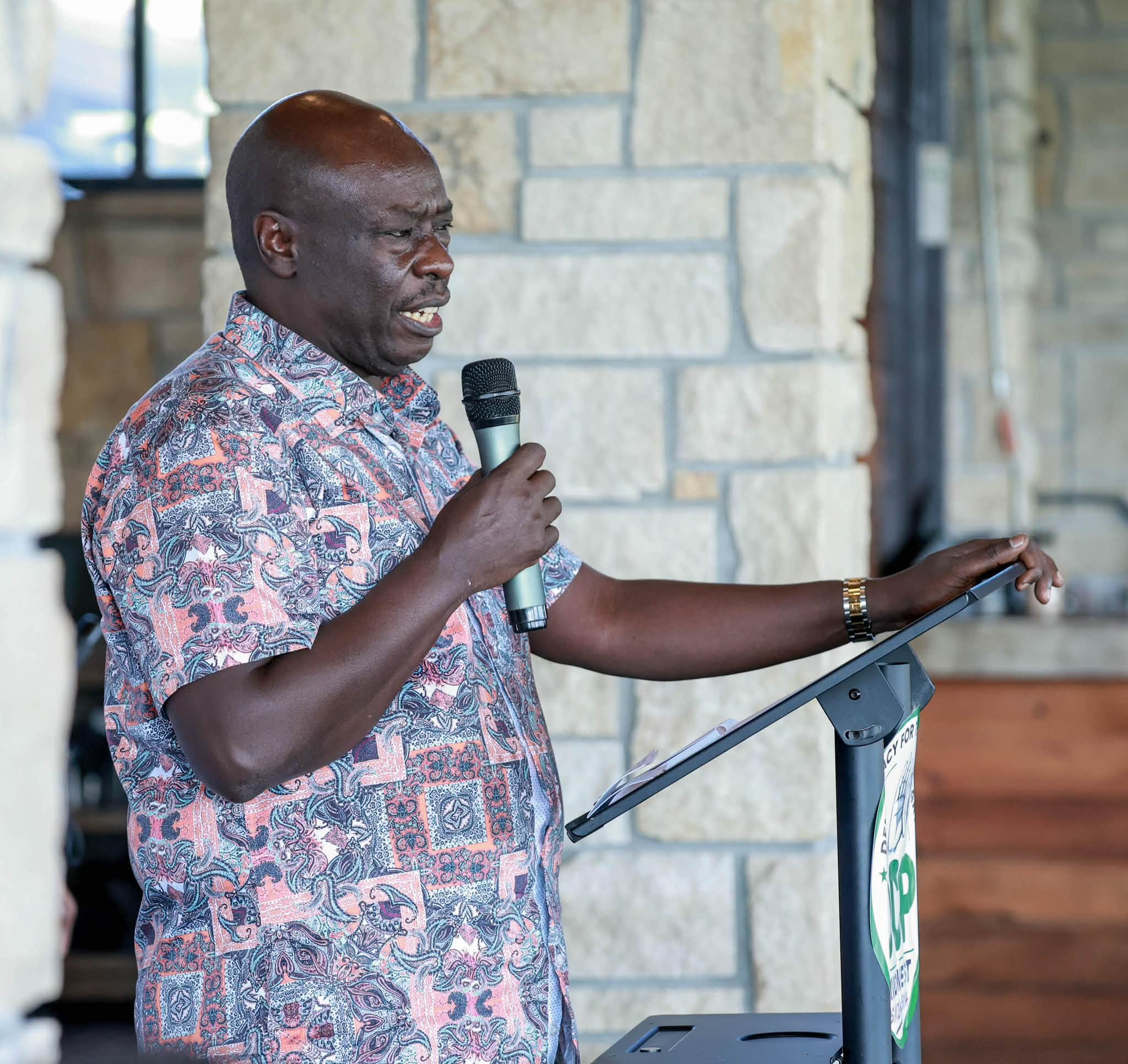
DCP party leader Rigathi Gachagua, speaking in the USA, was candid and openly said the opposition will have a single presidential candidate who will ride to victory with 75 per cent of the vote.
“I want to prophesise today, not because I am a prophet but based on experience, foresight and understanding Kenya’s political scene, history would repeat itself.
One single presidential candidate will be announced, one person will go away. That one person will go away on his own and the single presidential candidate will be elected by over 75 per cent of the Kenyans’ votes,” he said.
Gachagua said from experience one of the current presidential aspirants in the opposition will bolt out to run for the presidency in 2027.
“The other one is not a prophecy but it is a fact. Riggy will be part of the winning team. Because Riggy will not be part of the fellow that will walk away,” he said.
Gachagua said he will not be the one to walk away but will be committed to supporting the chosen single presidential candidate.
“He will stick by the arrangement that has been agreed by the people of Kenya,” he said.
Not Our Candidate, Then Highway
Gachagua warned the opposition presidential aspirants to rein in their supporters over statements that could undermine opposition unity.
“I want to tell those who want to be president to tell their supporters to stop some statements I am hearing in Kenya, that if so and so is not the presidential candidate, then we let us vote for Ruto.
Those kind of talk is retrogressive. You have never heard those who support Riggy issue such nonsensical statements,” he warned.
Gachagua asked his colleagues to give clear instructions to their support base and avoid causing unnecessary tension and division.
“I am asking my colleagues in the united opposition to give clear direction to their supporters to also pronounce themselves that they will support whoever is agreed on.
And that rider, if it is not our candidate then Ruto, I don’t think you are genuine that we should get a single presidential candidate,” he said.
Gachagua said he was genuine and committed to supporting a formula to deliver a single presidential candidate.
“For me, I am that genuine. We will look at the formula to arrive at the candidate. I want the people of Kenya to trust me that I have an idea of how this is supposed to be done.
We will do the right thing for the country. It is my patriotic duty to come up and support the most effective formula to defeat Ruto,” he said.
2002 Historical Repeat
Gachagua said the 2002 history of a united opposition and single presidential candidate was in the offing.
“For purpose of history here in Dallas, Texas. Kasongo people are calling my people telling them we will not unite and agree. They will fall out,” he said.
Gachagua, who was personal assistant to the then KANU presidential candidate in 2002, Mr Uhuru Kenyatta, told him of a possible opposition unity and that they would lose the elections.
“In 2002, I was supporting Uhuru Kenyatta and I was the personal assistant and he was Moi’s project.
I looked at the situation and I sat him down one morning in his house. I said, boss, I have listened to the people of Kenya; this thing is not doable,” he said.
Gachagua said he told Uhuru that Kenyans would not allow Moi to succeed himself and that was why the project fell apart.
“People have decided that President Daniel Moi will not succeed and he will not succeed himself and there will be change. Boss, these guys will come up with one candidate,” he said.
Quit or Stay
Gachagua said he advised Uhuru to stay on course in order to build networks for the future.
“He asked me what do we do and do we withdraw from the race? I told him no, let’s continue but let us not spend too much, but we prepare the ground for the future. For winning, it is not possible,” he said.
Gachagua said Moi supporters then were chest-thumping just like the current Ruto supporters and they will be shocked by the outcome.
“So some of Moi supporters said Raila could not support Mwai Kibaki, Wamalwa Kijana could not support Raila. Just now Kasongo people are talking in the same way Moi people were talking,” he said.
The Declaration
Gachagua, the famous Kibaki Tosha, drove the late Mwai Kibaki to victory, while Uhuru and Moi were humbled at the ballot by Kenyans.
“One day at Uhuru Park, there was a meeting and it was declared Kibaki Tosha,” he said.
The Walk Out
After the proclamation of Kibaki Tosha, former Cabinet Minister and leader of FORD-P, the late Simeon Nyachae, walked out from the united opposition and performed dismally.
“There was one candidate. Nyachae went away and he went alone and one candidate was named,” he said.
Nyachae performed dismally and later quit politics, leaving his political flock wandering in the desert.
Adoption of emerging technologies in radiography would go a long way in enhancing imaging and service delivery in the health sector.
Professionals and healthcare institutions have been challenged to intentionally embrace emerging technologies to transform imaging services and improve patient care.
Speaking during the closing ceremony of the 11th Biennial Radiographers Scientific Conference 2026 at the Grand Royal Swiss Hotel in Kisumu, Jaramogi Oginga Odinga Teaching and Referral Hospital (JOOTRH) Chief Executive Officer Dr Joshua Okise said technology must go beyond acquiring equipment and translate into changes in how healthcare professionals think and deliver services.
The three-day conference, organised by the Society of Radiographers Kenya, was held under the theme “Transforming Radiography and Imaging: Reimagining and Redefining the Practice for Excellence.”
Dr Okise said JOOTRH has embraced digitisation, with digital imaging systems, electronic medical records, laboratory and radiology integration, and telemedicine supporting clinical decision-making and continuity of care.
He added that the planned installation of Picture Archiving and Communication System (PACS) at JOOTRH is expected to improve turnaround times by enabling timely digital access to medical images, reducing delays in image retrieval and supporting faster clinical decision-making.
PACS is a digital system used to store, retrieve and share medical images such as X-rays, CT scans and MRI scans.
The CEO called for continuous investment in adaptable, dependable and accountable practitioners as radiography undergoes rapid technological change and workforce demands increase.
He emphasised the importance of specialist training, continuous professional development, artificial intelligence (AI) competencies, radiation safety and quality management.
The conference brought together delegates from Uganda, Nigeria and Ghana, and also provided an opportunity for professional networking and knowledge exchange.
Society of Radiographers Kenya President Jevas Kenyanya supported the call for greater adoption of emerging technologies, artificial intelligence, research, education and multidisciplinary collaboration in the sector.
The discussions came against the backdrop of significant investment in JOOTRH’s radiology and imaging capacity in recent years.
The hospital has expanded its diagnostic technology, including digital X-ray, MRI, mammography, ultrasound and advanced CT imaging, with the installation of a 128-slice CT scanner.
These investments have expanded access to specialised diagnostic services within the region, supporting faster and more accurate diagnosis while reducing the need for patients to seek imaging services elsewhere.
From a frying pan into the fire, that is the political baptism that Nairobi Senator Edwin Sifuna is going through currently.
Surrounded by imposters, government agents and genuine supporters all forming a cocktail, Sifuna finds himself in a political quagmire that he has wriggled himself out of to present his presidential credentials to Kenya.
The honeymoon and the hype are over, and it is now time to deliberately reckon and respond to the masses calling for him to be the sixth President of Kenya.
From mere political rhetoric and sloganeering, Sifuna must now stand up to be counted as a formidable presidential aspirant to challenge President William Ruto and make reality the one-term mantra of the opposition.
Walking from the shackles and shadows of his mentor, the late Raila Amolo Odinga, Sifuna must now be his own man and draw his own clout and political identity.
The ODM advantage of Secretary-General is long gone, and the comfort of the party structures is no longer there to shield and anchor his ambition, and now he must find an independent vehicle to ride on.
The ODM Fire
Sifuna failed to read the signs on the wall over his continued stay in ODM and remained glued to the party, hoping to take it over, which became a cropper.
The belief flopped dismally and left Sifuna wounded as a politician who was not strategic on his next course of action.
While his allies in the Linda Mwananchi group rushed to form and register political parties through their proxies, Sifuna remained in hope of a political miracle happening and taking over ODM. A sad dream.
In ODM, he was roasted and lost out in the party, but co-founded Linda Mwananchi with Embakasi East MP Babu Owino, Siaya Governor James Orengo and Vihiga Senator Godfrey Osotsi, among others.
The group has gained huge support and propelled Sifuna to be one of the significant presidential aspirants in the country, but while his colleagues are busy popularising their parties, he is still in the bush hunting for one.
Ukombozi
Sifuna is currently on fire over a political vehicle for his presidential bid and lost the name Ukombozi to Wiper leader Kalonzo Musyoka, who rebranded the Azimio la Umoja coalition to Ukombozi Alliance.
The growing dispute over the “Ukombozi” political identity has taken a fresh turn after Wiper Patriotic Front spokesperson Ndegwa Njiru challenged Nairobi Senator Edwin Sifuna’s allies to prove that they had reserved the name with the Registrar of Political Parties.
Taking to his official X account on the night of Tuesday, September 22, 2026, Njiru dismissed claims that Sifuna’s camp had secured the name, insisting that no reservation had been made by the Senator.
“Mr Sifuna has never reserved the name UKOMBOZI with the Registrar of Political Parties. I challenge anyone with evidence to the contrary to produce it,” Njiru said.
Kalonzo’s announcement on September 21, 2026, that the Azimio la Umoja One Kenya Coalition had rebranded as The Ukombozi Alliance (TUA).
Kalonzo said the coalition had unanimously agreed to adopt the new name as part of a broader restructuring of its political activities.
UDP
Trans Nzoia Governor George Natembeya recently announced that Sifuna would use UDP to run for President.
But that announcement looked premature and punctured after the Deputy Party Leader dismissed it as backdoor deals.
This has left Sifuna exposed as a political amateur who will keep on failing in the wrong hands of political friends.
Natembeya has said Sifuna will use the United Democratic Party (UDP) to vie for the presidency as opposition leaders work towards fielding a single presidential candidate.
“When the Luhya Community unite to form their party, they call it tribalism. Let us ignore all that noise. We shall form a strong regional party even if it is a community party; we unite because strong communities make a strong nation.”
Natembeya identified UDP as the party Sifuna would use in the presidential contest. He said Sifuna could contest under UDP or the coalition being formed by opposition parties.
But in a press statement, the Vice-Chairman, Mohammed Abikar, termed the move by Sifuna to use the party as his presidential vehicle as rumours circulating that Governor George Natembeya and Senator Edwin Sifuna are taking over the United Democratic Party leadership.
“Let me be clear: no such arrangement exists. The information disseminated through news outlets is riddled with fraudulent intent and brazen falsehood, dressed up in sensationalism. All this noise is nothing short of flair for dramatics,” he wrote.
He said the party’s current officials were duly elected at the last National Delegates Conference held at Multimedia University in 2022.
“Only a National Delegates Conference of bona fide party delegates convened through the National Executive Council has the authority to fill the party leader position left vacant by the passing of our substantive leader, Hon. Cyrus Jirongo,” he said.
He said any transition to a new party leader must be deliberate, well-planned, and anchored on one conditional principle: the party constitution—not backroom deals.
“Any deliberate attempt by anyone to seize the party leadership through manipulation is an exercise in futility. UDP needs new leadership—but it must come through the party’s rules and constitution, not shortcuts,” he wrote.
He said nobody would join UDP through the backdoor. Anyone who wants to join us must come through the front door.
“The party constitution is clear on the roadmap for filling the party leader slot and other positions once vacant by resignation or death. Any shortcut will end in political bloodshed and a serious legal battle.
We have instructed our lawyers to be vigilant on this matter and to take necessary legal action, if and when the party constitution and the rights of members are infringed. We will stop them and institute legal action against anyone with intent to interfere with the official party records,” he said.
Walk Strong
Despite the hurdles, Sifuna’s fortunes continue to grow, and he remains a formidable presidential candidate.
Residents of Nyanza have been warned to be aware of a possible rise in Amitraz poisoning during the planting season.
The warning came as farmers across the region enter a busy season.
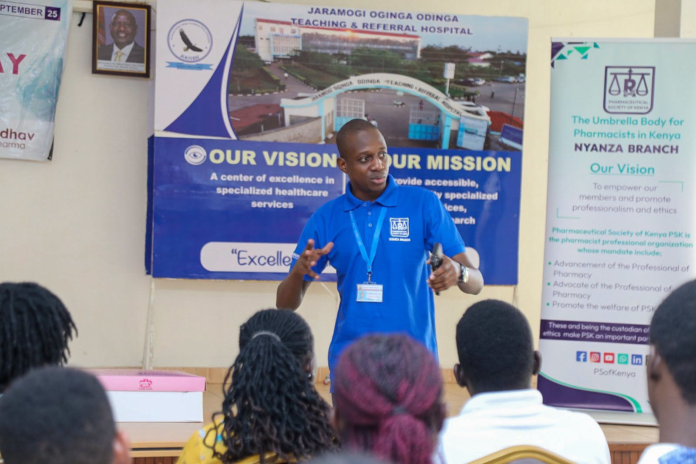
Pharmacists at Jaramogi Oginga Odinga Teaching and Referral Hospital (JOOTRH) have urged the public to take greater care when handling chemicals used in agriculture and livestock.
The warning came during a Continuing Medical Education (CME) held at JOOTRH celebrations to mark World Pharmacists Day 2026, which brought together pharmacists, healthcare workers and partners to reflect on the profession’s role in protecting patients and communities.
The 2026 World Pharmacists Day theme, “Empowering pharmacists for healthier futures,” highlights the importance of equipping pharmacists with the skills and support needed to improve health outcomes.
A key presentation during the CME focused on Amitraz poisoning, an emerging concern particularly relevant during the farming season. Amitraz is commonly used by livestock farmers to control ticks, but accidental or intentional ingestion can result in poisoning.
The concern was brought closer to home by a recent case at JOOTRH involving a pregnant woman who had ingested Triatix, an Amitraz-based product used in livestock tick control.
The case highlighted the important role pharmacists play when a patient arrives after exposure to a potentially toxic substance.
By helping identify the substance involved, pharmacists can support clinicians in determining appropriate management while also ensuring medicines are administered safely.
“Pharmacists play a key role in patient safety. It is not just about dispensing medicines; it is about making sure the patient receives the right medicine, at the right dose and at the right time,” the presentation noted.
The CME also highlighted the need for JOOTRH to establish a poison centre within the hospital. Such a centre would provide readily available information and guidance on different poisons and toxicological emergencies, helping healthcare workers respond more quickly when every minute matters.
The message was simple: chemicals meant to protect livestock, if handled or stored carelessly, can become dangerous. Keeping such products safely away from children, food and people who may accidentally ingest them can help prevent avoidable emergencies.
The pharmacist’s role extends beyond the pharmacy counter—from safeguarding medicines to helping communities navigate some of the hidden dangers around them.
Kenya can progressively build a fully funded public education system from Early Childhood Development Education (ECDE) to university by redesigning how education is financed and how resources are distributed across the sector.
Kenya has more than 30,000 private schools across pre-primary, junior and senior levels, alongside more than 40,000 public institutions across various categories. The private education sector therefore represents a significant economic ecosystem and a substantial flow of household expenditure.
One option is to introduce a 50% Education Levy on the gross revenue generated by private education institutions, with the proceeds ring-fenced exclusively for financing public education. This should be complemented by consolidating existing education bursaries, grants and fragmented support programmes into a single, transparent national education financing framework.
The objective would not be to punish private schools. Private institutions would continue to operate and provide choice, but a defined share of the economic activity within the education sector would help finance universal access to quality public education.
For every amount spent on private education, the system should increasingly ensure that an equivalent investment is made in the public education system through the Education Levy and other dedicated education revenues.
The additional resources would finance classrooms, laboratories, libraries, sanitation, digital infrastructure, learning materials, teacher development, student welfare and other essential facilities. At university level, predictable public financing could reduce the burden on students and households while strengthening research, innovation and skills development.
However, funding alone is not enough. Kenya must standardise public education. Every public institution should work towards clearly defined national standards covering infrastructure, curriculum delivery, teacher establishment, learning materials, technology, sanitation, safety and student welfare.
The consolidation of bursaries and grants would also make funding more equitable. Resources should follow learners and institutions based on transparent criteria, including enrolment, need and regional disparities.
Over time, this model would allow the public sector to carry the majority of Kenyan learners while guaranteeing a consistent minimum standard of education regardless of where a child is born.
A properly designed education financing framework could therefore transform education from a household expense into a nationally guaranteed public investment—from early childhood to university.
The stars could be aligning for the Nairobi senator, Edwin Sifuna, but he could also be walking directly and right into the political shoes of cage and hostage of his mentor and former prime minister, the late Raila Odinga.
Sifuna finds himself inheriting and subsequently wearing the obnoxious, discomforting and ugly Raila’s shoes of political hostage that undermined his successive presidential bids.
The brand Raila controlled the country’s politics and was mostly exploited by his close allies for their own selfish gains, while the former prime minister was left to carry his own cross after losing at the presidential ballot.
Sifuna is currently building his own political brand, which is gaining traction and could be following Raila’s political hostage path to the abyss.
Currently, Sifuna is the new kid on the block and the scramble for identity with him has peaked, with the political class edging out one another.
Sifuna consequently finds himself in Raila’s shoes of political cage, siege and “hostage” from allies who only want to ride on his influence to win the 2026 General Election and think and care least of his political ambition and future.
For most of the allies, it is the wave that they want to ride on to win their respective seats and do not have the least care over Sifuna’s presidential ambition and success. The end shall justify the means, as it was for Raila.
Just like Raila, it was the brand that mattered, and this explains why most of his Governor allies got more votes than him and disappeared after winning, only to reappear when the elections were around the corner.
The Battle in Luhya Land
Currently, Sifuna has emerged as the undisputed leader of the Luhya community, and he could be holding the key to the majority of the elective posts in the 2027 General Election.
This explains why the political class has been on the offensive to shield and fence off the senator from other political competitors from the region.
Those in the hunt for Sifuna’s support include Kakamega Senator Bonny Khalwale, DCP Deputy Party Leader Cleo Malala, Trans Nzoia Governor George Natembeya, Saboti MP Caleb Amisi, MPs Majimbo Kalasinga and Jack Wamboka, among others.
Amisi wanted Sifuna to join and run as the party’s presidential candidate in the 2027 General Election, but that did not materialise.
People’s Renaissance Movement leader Caleb Amisi has urged opposition parties to back Nairobi Senator Edwin Sifuna as their joint presidential candidate in the next election.
He said Sifuna should be the opposition’s flagbearer if it intends to mount a united challenge against President William Ruto.
Amisi spoke in Vihiga on Wednesday while meeting aspirants seeking to contest various positions on the PRM ticket.
The Vehicle and Mole Concept
Saboti Member of Parliament Caleb Amisi has levelled a sharp public accusation against Natembeya, alleging that the Governor was a covert operative working on behalf of President Ruto’s administration to destroy the Linda Mwananchi movement from within.
The Saboti MP has long maintained that he was the original architect of the Linda Mwananchi initiative, which emerged as a third-force political movement distinct from both the ruling Kenya Kwanza administration and the traditional opposition.
The movement identified Nairobi Senator Sifuna as its public face and has been fronting him as its preferred presidential candidate for the 2027 General Election.
Amisi has repeatedly insisted that figures such as Natembeya and Bumula MP Jack Wamboka arrived late and have since moved to dilute the movement’s founding agenda.
His latest statement goes a step further, asserting that Natembeya’s presence within Linda Mwananchi was deliberately intended to scatter the coalition for Ruto’s benefit.
Natembeya denied the claims, rejected the allegations, reaffirming his backing for Sifuna’s presidential bid. The Governor had earlier declared Sifuna the opposition’s preferred joint candidate for 2027.
Natembeya-Babu Owino War in Trans Nzoia
The arrival of Natembeya has created tension in the outfit, and his attempt to snatch the microphone from Embakasi East MP Babu Owino during the Trans Nzoia Linda Mwananchi rally were indicative of the falling out.
Natembeya finally broke his silence on his microphone clash with Babu Owino during a Linda Mwananchi rally in Kitale, saying he was following the programme and protocol he understood had been agreed for the event.
Speaking on a local radio station on Thursday, September 24, 2026, Natembeya said the disagreement started after he was asked to serve as master of ceremonies during the Kitale meeting, a role he initially declined.
Natembeya said the confrontation happened after he had invited the three leaders and handed the microphone to Wamboka.
According to his account, Babu Owino then moved to take the microphone, prompting Natembeya to tell him to follow the agreed order.
“Nikamwambia, ‘Bana we relax, fuata namba, maana mimi nilikuwa najua kama ni protocol,” Natembeya said.
He said his understanding was that the rally had a defined speaking order and that leaders were expected to follow it.
“Huwezi kuja Nairobi kuja ku dictate Kitale,” he said.
Sifuna Dilemma
For Sifuna, to fit into Raila’s dubious shoes is the nightmare he must confront or wait to witness his star crumble. For Raila, he was an indelible brand and could easily rebrand. For Sifuna, he is miles away from Raila’s blind, and any misstep would be the end of the road.
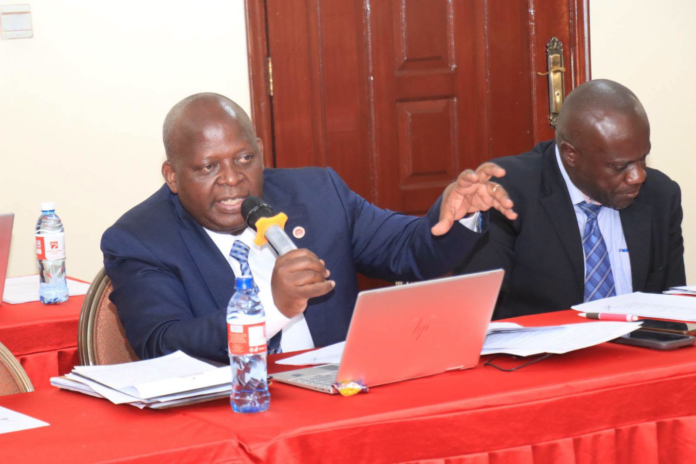
Members of Parliament have questioned plans to establish a regulatory board under the proposed National Forensic Science Bill, 2026, warning that the new structure could create unnecessary bureaucracy and increase the financial burden on the taxpayer.
The Departmental Committee on Administration and Internal Security also raised concerns over who should recruit forensic scientists, how private laboratories will be regulated and whether the proposed National Forensic Science Laboratory will have adequate resources to discharge its mandate.
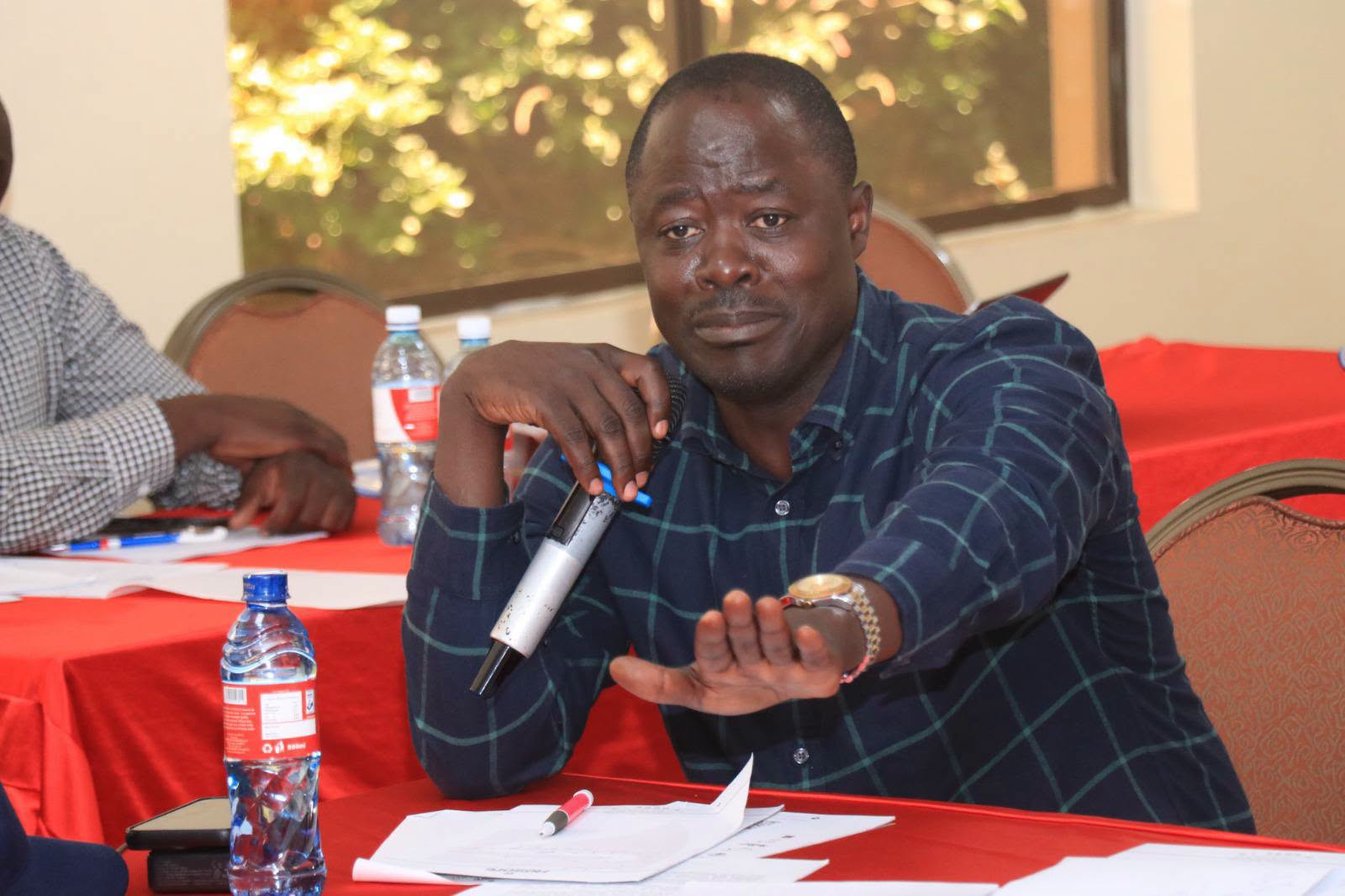
The issues emerged during consultations between the committee and the State Department for Internal Security and National Administration at Lake Naivasha Resort in Nakuru County on Thursday.
Homa Bay Town MP Hon. Peter Kaluma questioned why the Government Chemist could not be structured as an independent office, similar to constitutional and statutory offices such as the Auditor-General and the Director of Public Prosecutions.
“You have independent offices, and then you just structure the body downwards based on the mandate the office is given,” Hon. Kaluma said.
He questioned the rationale for establishing a board, arguing that Parliament was already grappling with the cost of maintaining numerous State boards and authorities.
“I don’t see the need for that board,” he said, asking officials to explain why the Government Chemist could not operate as a singular office with a clearly defined mandate and accountability structure.
The MP also challenged the proposal to place recruitment of forensic personnel under the Public Service Commission, saying specialised institutions were better placed to determine the expertise they required.
“Do we know the level of expertise, and therefore the type of person with what qualification and experience to employ?” Hon. Kaluma asked.
He cited previous disputes involving the Public Service Commission and the Office of the Attorney-General over the recruitment of specialised personnel, arguing that institutions with highly technical mandates should have greater control over their staffing.
Deputy Chief State Counsel in the State Department for Internal Security and National Administration Kepha Onyiso acknowledged the concern.
“Ideally, I prefer the organisation to do that recruitment because there are a lot of parameters that the PSC might not be aware of,” Mr Onyiso said.
He explained that the question of recruitment powers had been the subject of litigation involving the PSC and the Attorney-General’s Office, with the matter having progressed through the courts.
Mr Onyiso said the State Department would continue discussions with the committee on the proposed governance structure.
The committee chairman, Narok West MP Gabriel Tongoyo, focused on the financial implications of creating the proposed National Forensic Science Regulatory Board alongside the National Forensic Science Laboratory.
Hon. Tongoyo asked officials to disclose the amount currently collected by the Government Chemist through fees and whether the revenue could support the proposed regulatory structure.
“You are going to have board members and staff. They will need funding,” Hon. Tongoyo said.
He wanted officials to explain how much was currently collected annually, the projected revenue under the new system and whether such collections could reduce the burden on the Exchequer.
Government Chemist William Kailo Munyoki said the department currently collects about Sh16 million annually against a budget of approximately Sh490 million.
He said the Government Chemist could collect significantly more if all services were charged, but cautioned that the issue required careful consideration because many of its services are linked to criminal investigations.
“If we charge everybody who comes to the lab, we can get even Sh400 million,” Mr Munyoki said, adding that such charges would still need to be considered alongside the Government’s obligation to provide essential forensic services.
He said the Government Chemist also had a development allocation of about Sh40 million this financial year for a project whose total cost was estimated at Sh129 million.
Mr Munyoki explained that the proposed Bill was designed to separate the regulatory function from the laboratory function.
Under the proposal, the National Forensic Science Regulatory Board would register, license and regulate forensic science providers, including private laboratories, while the National Forensic Science Laboratory would undertake forensic analysis under the leadership of the Government Chemist.
“The board is not managing Government Chemist. That board is only to provide advice and also regulate, register and licence forensic science providers,” he said.
Mr Munyoki said the Government Chemist would be a member of the regulatory board while retaining responsibility for the day-to-day management of the National Forensic Science Laboratory.
He said the distinction was necessary because the current Government Chemist Department and the Office of the Government Chemist often create confusion over whether the term refers to the institution or its head.
Under the proposed arrangement, existing Government Chemist staff would transition to the new National Forensic Science Laboratory while retaining their employment under the Public Service Commission.
Mr Munyoki said this would limit the financial implications of the proposed legislation, with the major new expenditure expected to arise from establishing the regulatory board and the office of a registrar.
Teso North MP Edward Oku Kaunya also asked officials to examine the financial and budgetary implications of the proposed legislation before it is finalised.
“If you have not looked at that aspect, whether there is financial or budgetary implication or not, you need to,” Hon. Kaunya said.
The committee also questioned how the proposed regulatory system would interact with private forensic practitioners.
Kaluma asked whether the Government Chemist would have an oversight role over other forensic science providers while allowing private laboratories to continue operating.
Mr Munyoki said the proposed regulatory board would regulate both public and private forensic laboratories by setting standards, registering practitioners and licensing facilities.
The board would have powers to suspend or revoke licences where providers failed to meet the required standards, he said.
Another contentious issue was payment for forensic services linked to criminal investigations.
Daniel Boit, a Government Chemist official, warned that charging for every forensic examination could undermine access to justice, particularly for poor complainants.
He cited cases involving suspected narcotics and sexual offences where forensic examination is necessary before prosecution.
“If we were to put the burden on the station to pay, there are chances that this cost might be directly or indirectly taken to the complainant,” Mr Boit said.
He said members of the public had, during public participation on the Bill, called for the Government to finance forensic services rather than pass the cost to citizens.
“The best practice, from our experience, would be increased budgetary allocation to our services, so that this service can be offered to the citizens of this country,” he said.
Mr Kaluma, however, said the Bill could distinguish between public criminal investigations and services where private forensic providers could operate.
He suggested that legislation could give greater evidentiary weight to certain Government Chemist reports while allowing private forensic laboratories to provide services in appropriate circumstances.
The committee also sought information on international models that informed the proposed Kenyan legislation.
Mr Munyoki said officials had studied forensic systems in South Africa, Rwanda, Uganda, Tanzania, the United Kingdom and the Netherlands.
He said Tanzania had transformed its Government Chemist into an authority with a fully-fledged board and a broader mandate, including control over certain chemical imports.
Rwanda, he said, had established a Forensic Science Institute bringing together different players in the sector, while Uganda operates a Government Laboratory alongside forensic facilities operated by the police.
Mr Munyoki also cited Mauritius and Malaysia as countries with more developed forensic science systems.
Asked by Tongoyo which country Parliament should consider for benchmarking, Mr Munyoki pointed to Tanzania while also noting lessons from the United Kingdom.
Mr Munyoki said the Bill would also expand Kenya’s forensic capacity by introducing anti-doping analysis, an area he said had been lacking despite Kenya’s international prominence in athletics.
He said the reforms were partly intended to address backlogs and improve the quality and speed of forensic analysis.
Mr Kaluma also asked whether the State Department had sufficiently consulted the Attorney-General’s Office and the Kenya Law Reform Commission before bringing the Bill to Parliament.
Mr Munyoki said the drafting process had involved officers from the Kenya Law Reform Commission and the Attorney-General’s Office through a technical committee formed during the police reforms process.
He said different government agencies had tabled their respective draft Bills for discussion and harmonisation.
Mr Onyiso said the State Department had already undertaken public participation and would work with the committee to move the Bill forward.
“We have done public participation, and with this consultation with the committee, we want it to come to you as soon as possible,” he said.
We use cookies to ensure that we give you the best experience on our website. If you continue to use this site we will assume that you are happy with it.