Home Blog Page 111

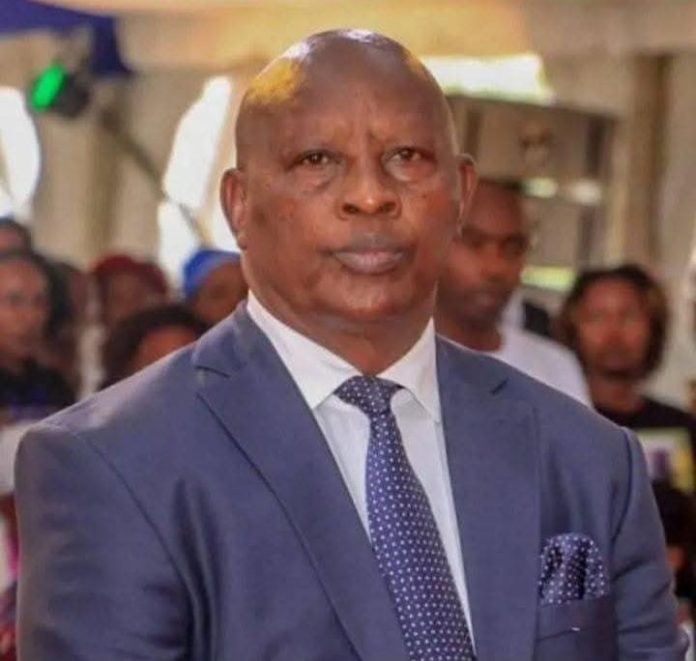
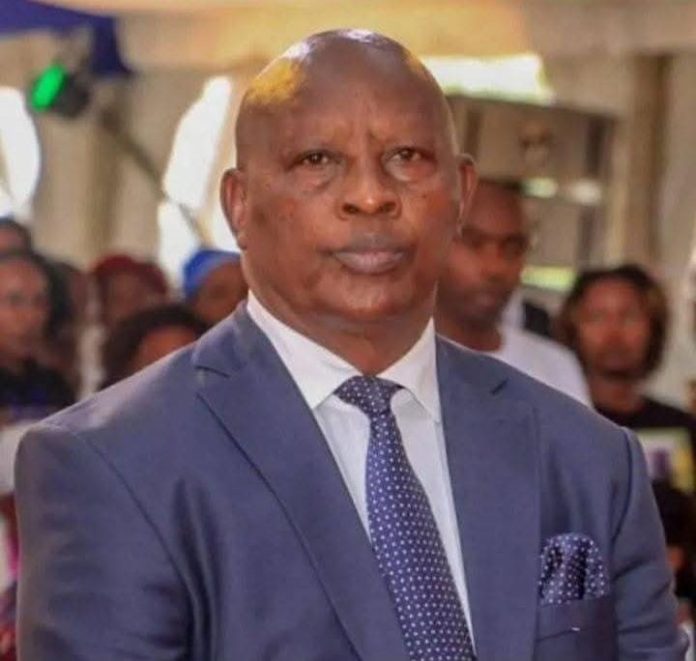
Governor Kangata raises the bar as Nyanza counties stagnate in ODM politics

0

By Anderson Ojwang

A common proverb “Action speaks louder than words” aptly captures the true situation in Muranga country when contrasted with Siaya, Kisumu, Homa Bay and Migori counties all together.

Muranga Governor Irungu Kangata is raising the bar in the country with development projects that have placed the county above its peers, especially in Nyanza.

Kangata is hardly on news on matters of politics save for only on developments and launching of projects that speak loudest while the converse is true to his Nyanza counterparts.

But his counterpart in Nyanza has for decades concentrated and heavily invested in Orange Democratic Movement (ODM) and broad-based government than fulfilling their manifesto.

The governors have been in the media propagating ODM and broad-based issues and hardly address the media on development programs and investment opportunities for the region.

Interestingly, Kisumu Governor Prof Peter Anyang Nyongo, Siaya and Migori counterparts James Orengo, and Ochilo Ayacko, were once cabinet ministers and have relatively huge networks and experience compared to Kangata.

It is only Homa Bay governor Gladys Wanga fairly younger but has globe trotted in the recent past and even attended UN Council that exposed her to huge networks of investors.

For Kangata, he got it right by bringing on board, the diaspora, professionals, business community and elders to form a council which has provided him with the necessary ammunition to transform the county.

Recently Kangata announced Nebraska State and Murang’a County will start joint programs on agriculture and export of labor.

The Secretary of State for Nebraska Robert Evnen, who recently visited the county, was impressed by the progress the county has made in Agriculture Subsidy program called Inua Mkulima and employment of youths under the Murang’a Youth Service.  

Mr. Evnen said the State has signed a cooperation deal with Kenya on labor mobility. 

“We have also explored how the two regions can also use maize to make animal feed in an Industrial scale as both and Murang’a and Nebraska are farming regions,” he said. 

Kangata said both Muranga and Nebraska share farming as an economic activity and there was a lot to learn from each other.

Nebraska is an agricultural powerhouse, renowned for its large-scale maize, soy, and beef production, as well as its advanced farming technologies.

These sectors directly align with Maranga’s strengths in agriculture—particularly in tea, coffee, avocado, and dairy farming. With his new status.

Chairman of the Council Dr. Peter Munga said it was possible to build strategic partnerships that allow for technology transfer, market linkages, and investment flows into Maranga’s agribusiness sector.

Muranga county has made great strides in agriculture and livestock farming and recently bought a yoghurt packaging machine  for farmers union to be placed at Maragwa milk factory branded  county fresh.

In the health sector, the county has made huge impressions with  introduced telemedicine and infrastructural developments.

Similarly, Smart City projects are ongoing in various wards across the County to facilitate the growth of urban areas and improve drainage & other facilities to ensure towns remain clean.

Murang’a County Government has launched the Inua Masomo Program, a transformative initiative designed to enhance access to education and promote academic excellence among students in Day Secondary Schools.

Kanga’ta said the initiative will benefit 8,000 students studying in the 256-day schools in the county.

Under the program, the county will fully cover Term 1 school fees for the top 10 students in Forms 2, 3, and 4 across all Day Secondary Schools within the county. Additionally, the program will sustain its support each term, ensuring that these top-performing students remain in school and are motivated to excel academically.

Back in Nyanza, most of the counties have held investment conferences with Siaya scheduling one for October this year.

The hallmark of these investments has climaxed with local artist performance and the departure of guest with no tangible investments on the ground.

The highly media hyped international investment conference have failed to yield to the billing and have indeed become a folklore story told the vulnerable residents.

The governors are active on politics particular on ODM and broad-based government and spend millions mobilizing the residents to attend such functions.

Orengo who was once opposed to the broad-based government made about turn and said they follow the direction given by Raila and that is why he had ensured the president received a warm welcome in Siaya.

“Your excellency the president, last night and this morning, Honorable Raila Odinga rang and asked me to make sure that people of Siaya receive you well.

I am glad that those instructions have been carried out. When baba says right, we go right. When baba says left, we go left. how many of you are in agreement that when baba says right, we go right?

Your excellency the president I want to allay fears of those who think you don’t Siaya in your heart. Last week, when we spoke and you said you will be coming to Siaya that October 16th October will be in Siaya for the Siaya International Trade and Investment Conference and will be presided by the president,” he said.

Currently, the governors instead of implementing their development budget have their eyes strained on the national government projects.

The national government through President William Ruto’s affirmative action, the region is witnessing a multi-billion projects being implemented.

In Homa Bay county, a tug of war over national government projects pits locals UDA leadership with Wanga, the latter claims ownership for having lobbied the projects while the former dismisses her claims.

The governors and residents have become frequent visitors to statehouse and are yet to explore and exploit the abundant opportunities locally and internationally to spur development in the region.

If anything, the skies have witnessed more development from Nyanza leaders as they are often on choppers traversing the region for birthday parties, weddings and attending funerals.

Currently, they are stuck on Kasipul and Ugunja by-elections where they flex their muscles and sell hope for hopeless while Muranga soars high in development.

Boda Boda Law: The Roads are Ours When You See Us Stop!

0

By Billy Mijungu

Boda Boda riders have laid down their own law. In their unwritten code, “We have a right to ride as we please. In case of an accident, whether caused by us or not, the driver will be assumed guilty and vehicles burnt.” That chilling reality is no longer an exaggeration but a fact of daily life on Kenyan roads.

For years, the boda boda sector has been celebrated as one of the most innovative and accessible means of transport, creating employment for millions of young people. In rural and urban settings alike, boda bodas have become the lifeline of the economy, moving goods, people, and even emergencies at lightning speed. Yet, beneath this convenience lies a lawless underbelly that threatens to overturn our social order.

Day after day, we witness chaos. Riders weaving through traffic with reckless abandon, ignoring traffic lights, overlapping at will, carrying excess passengers, and violating every known safety rule. When accidents occur, the response is not a calm appeal to law enforcement but mob justice. Vehicles are surrounded, drivers dragged out, cars stoned or burnt. The assumption is always that the boda boda rider is innocent, and the motorist guilty. Facts, evidence, and justice are cast aside.

What is even more disturbing is the state’s apparent helplessness. Our internal security apparatus looks defeated, powerless, and even tamed. Police officers who should enforce traffic discipline are often outnumbered or intimidated. At times, they are complicit, collecting daily bribes from riders instead of enforcing the law. This has created a culture where boda boda groups feel untouchable.

The comparative numbers paint the full picture. Kenya has well over one point five million registered boda bodas on the road, with thousands more unregistered. They form a voting bloc larger than most political parties can boast. With such raw numbers, they hold sway, and politicians know it. Every election cycle, we see leaders troop to boda boda stages to curry favor, promising heaven and earth, but never accountability. It is this appeasement politics that has emboldened the sector into a monster we now struggle to contain.

As we inch closer to another election year, this trend is bound to worsen. Leaders, desperate for votes, will bend backwards to please riders instead of confronting the menace. The result will be even more impunity, more road chaos, more accidents, and more innocent Kenyans forced to bear the brunt of unchecked lawlessness. One day, this raw power will consume us all.

It is time for honesty. The government must tell Kenyans how it intends to address this growing threat. Regulation cannot remain on paper. Riders must be registered, trained, licensed, and insured. Traffic rules must apply to everyone equally, and enforcement must be firm. The narrative that boda bodas are untouchable must end.

Kenyans deserve safe roads. Roads must serve everyone equally, not become battlefields where might makes right. We cannot continue to allow mob justice to replace the rule of law. If the state cannot tame the boda boda menace now, the cost in lives, property, and national stability will be far higher in the future.

The roads are not theirs. The roads are ours, all of us.

Faith Odhiambo, Raila Odinga, and the Persistence of Elite Gatekeeping

0

By Clifford Derrick – The Inside Story

Kenya’s politics has always been haunted by ghosts. Some are the literal ghosts of young men and women slain by the state during protests. Others are the ghosts of historical betrayals, secret oaths, and elite manipulations that stretch back to independence. The current controversy surrounding the appointment of Faith Odhiambo, the President of the Law Society of Kenya (LSK), to a panel on compensating victims of protest violence cannot be understood outside this longer arc.

The Historical Roots of Exclusion

In 1963, as the British prepared to exit, Jaramogi Raila Odinga was three times offered the position of Prime Minister. He refused. His condition was that Jomo Kenyatta, still in detention, must be released first. Jaramogi was not willing to be a colonial stooge.

The British were displeased, and soon allied with Kenyatta, Tom Mboya, and others to marginalize him. When Jaramogi resigned as Vice President in 1966, the systematic exclusion of the Luo community began in earnest.

By 1969, after the assassination of Tom Mboya, Kenyatta convened a secret oath-taking ceremony at Gatundu. The vow was simple and chilling: that no Luo, especially an Odinga, should ever rule Kenya. This oath—though rarely spoken of in public—set the tone for decades of elite manipulation. It explains why Raila Odinga has been alternately celebrated as a “statesman” when serving Kikuyu interests and vilified as “uncircumcised” and “dangerous” whenever he threatens their monopoly of power.

Faith Odhiambo and the New Battlefront

Enter Faith Odhiambo, A Luo, a lawyer, and the elected President of the LAW SOCIETY OF KENYA (LSK). Her acceptance of a vice-chair role on a presidential panel to compensate victims of police brutality has triggered outrage. Critics cry “betrayal,” claim the panel is unconstitutional, and demand her resignation. Yet the same critics are curiously silent about Irũngũ Houghton of Amnesty International, also appointed to the panel. Why the selective outrage?

The answer lies in continuity. In the minds of a segment of the Kikuyu elite—those shaped by the 1969 oath and decades of entitlement—Luos must not be allowed near the machinery of the state. They can die on the streets for democracy, but they cannot sit at the table to decide how victims are compensated. They can fuel protests that topple regimes, because they ‘unbwogable’ or unshakable, to quote Joe Gidi, but they must never oversee justice. Faith’s very presence unsettles this order because it disrupts the gatekeeping.

René Girard and the Politics of Envy

The French philosopher René Girard wrote of mimetic desire: the idea that human beings desire not objects for their own sake but because others desire them. Political power in Kenya has become precisely that. The Kikuyu elite’s fear of the Luo is not because the Luo have failed but because they recognise their intellectual energy, courage, and organisational potential. To keep them at bay, they must monopolise power while projecting negative stereotypes—poverty, HIV, uncircumcision—onto the Luo body politic.

Thomas Hobbes warned that sovereignty rests on a monopoly of violence. For decades, the monopoly of Kenya’s security apparatus has rested with those same elites. It explains why Raila’s supporters have borne the brunt of police brutality, from Baby Pendo in Kisumu to the bodies dumped in River Yala. And it explains why critics of Faith Odhiambo would rather delegitimize her appointment than confront the real violence at the heart of Kenya’s governance.

Raila, Mandela, and the Logic of Assimilation

Raila Odinga has been called a betrayer for working with Moi, Kibaki, Uhuru, and now Ruto. But history demands a subtler reading. In politics, sub-groups must often adopt strategies of aggressive assimilation—entering the dominant coalition not out of weakness but as a survival strategy. Nelson Mandela did the same in South Africa. He shook hands with the very architects of apartheid, not because he admired them, but because he sought to dismantle the system from within.

Raila’s doctrine of the unclenched fist has been consistent. He has endured prison, exile, bullets, and betrayal, yet he has chosen dialogue to avoid bloodshed. His decision to cooperate with William Samoei Ruto after the Gen-Z protests was not greed. It was an ethical calculation: to save lives while pushing for reforms, including compensation for victims of state violence. Faith Odhiambo’s appointment flows directly from this agreement.

The Gatekeepers of Civil Society

Much of the loudest criticism of Faith comes not from victims but from civil society elites who thrive on perpetual crisis. Donors funnel money through them, and unresolved cases are their lifeblood. If the state begins compensating victims directly, these NGOs lose both relevance and revenue. It is telling that the loudest lawyers attacking Faith—Munyeri, Wathuta, Wanjiku—hail from the same Kikuyu networks that dominate NGO and legal funding.

Their argument that the panel is “illegal” would be more convincing if they showed equal outrage at unconstitutional positions like CAS appointments or at the executive’s perennial defiance of court orders. Selectivity reveals motive.

Beyond Shadows: A Call to Discernment

Socrates once described prisoners in a cave mistaking shadows for reality. Many young Kenyans, including some Luos, are falling into the same trap—attacking Raila and Faith because they cannot discern the larger shadows of elite manipulation behind the outrage. They risk turning their backs on those trying, however imperfectly, to bring victims’ voices into the room.

This is not to sanctify Raila or Faith. They are human. They will make mistakes. But history demands that we ask: who has consistently borne the cost of state repression? Who has fought for reforms at personal expense? Who has compromised not for wealth but for inclusion and stability?

The answer is clear. And it is not Fred Matiang’i, nor the Kikuyu elite now trying to recycle him as a “neutral technocrat.” It is Raila Odinga, and now, Faith Odhiambo.

Kenya stands at a crossroads. We can either allow the ghosts of 1969 to keep haunting us, dictating who may serve and who must forever remain at the margins, or we can embrace a politics of inclusion. Faith Odhiambo’s appointment is not betrayal. It is a crack in the wall of gatekeeping. And like Mandela’s handshake, or Raila’s unclenched fist, it may yet prove to be an act of wisdom disguised as compromise.

Clifford Derrick is an investigative journalist, strategic communicator, and documentary filmmaker whose work examines truth, power, history, and justice. He writes at the intersection of politics, culture, decolonisation, and human right.

Will Kalonzo, the country’s last vice president, follow the precedence to become the 6th president?

0

By Anderson Ojwang

History could be beckoning in the 2027 presidential election with the country’s last vice president Kalonzo Musyoka facing off with the Kenya’s first deputy president and the current president William Ruto.

In the Kenya’s political history, most of the vice Presidents rose and succeeded to becoming president save for only the country’s first vice president the late Jaramogi Oginga Odinga.

Odinga after the fall out with founding president the late Mzee Jomo Kenyatta, was left to occupy the cold opposition seat and was never re-integrated into the government.

Kenyatta instead appointed Daniel Moi to succeed Odinga who eventually became the president and ruled the country for 24 years.

Moi’s first Vice President was Mwai Kibaki, who served in that role from 1978 until 1988. Kibaki became the first opposition leader to become the president after he defeated Kanu’s Uhuru Kenyatta in the 2002 general elections.

During the 2007, controversial Presidential election, Kalonzo entered into a political alliance and was subsequently appointed the Vice President and became the country’s last VP in the old constitution.

In the 2010 constitution, President Uhuru Kenyatta had Ruto as his deputy who eventually edged out his preferred candidate, former prime minister Raila Odinga at the presidential ballot.

Kalonzo who shares most of qualities like Kibaki, is currently the opposition leader after Raila opted to join the broad-based alliance and is viewed as the probable united opposition presidential candidate.

Currently, delegations have started streaming to Kalonzo’s Yatta home village, a significance of a possibility that he could be the united opposition presidential flag bearer.

In 2007, Kalonzo was able to pass in the middle of warring Kibaki and Raila to become the vice president and this time around 2027 present him with a moment face off with Ruto and set a precedent.

The recent opinion poll by Centre for Africa Progress (CAP) rates Kalonzo as the most preferred opposition candidate for the 2027 presidential elections.

In a report released on July 23, 2025, Kalonzo had 36 percent, followed by former Cabinet Secretary Fred Matiang’i (23%), former Deputy President Rigathi Gachagua (16%), Trans Nzoia Governor George Natembeya (14%), Martha Karua (7%), and others 4%.

Wiper Party leader Kalonzo Musyoka is the most preferred opposition candidate for the 2027 presidential elections, according to the Centre for Africa Progress (CAP) latest opinion poll.

In a report released on July 23, 2025, Kalonzo had 36 percent, followed by former Cabinet Secretary Fred Matiang’i (23%), former Deputy President Rigathi Gachagua (16%), Trans Nzoia Governor George Natembeya (14%), Martha Karua (7%), and others 4%.

This was after CAP conducted the survey across all 47 counties between 10th July – 13th July 2025. The sample comprised 5,000 registered voters.

The study adopted random, multi-stage stratified using PPS (proportionate to population size) selected from all the 47 counties.

Data was collected using telephone interviews and analyzed using SPSS and MS Excel with a margin error of 1.5 percent and a 95% confidence level.

The United Opposition alliance could possibly lock out President Ruto from Mt Kenya and Ukambani, Kisii where former internal security cabinet secretary Fred Matiangi enjoys massive support.

President Ruto will have in his basket the Rift Valley, Nyanza and Northeastern while Western, Nairobi, Coast regions would be the battle ground.

In the United opposition, Kalonzo will have in his camp the battle-hardened former deputy president Rigathi Gachagua, Trans Nzoia governor George Natembeya of Tawe Movement, Eugene Wamalwa, Matiangi , Martha Karua among other opposition leaders.

Raila who has been the fulcrum of the opposition is likely not to be at the ballot and could possibly support Ruto’s re-election after he recently declared that their union will go beyond 2027.

He challenged the opposition that the people will decide at the ballot and that each team will table their agenda to the electorates.

Kalonzo is enjoying the support of youthful leaders including Embakasi East MP Babu Owino among others that is likely to draw the youth votes to him.

Babu Owino has since joined hands with fellow young politicians under the banner Kenya Moja, led by Edwin Sifuna.

Babu said “To you, your excellency Kalonzo Musyoka, go ye and conquer the nation and during an interview on K24 on Wednesday, September 3, 2025, the two-term MP said he sees no problem working with Kalonzo.

Why is it that all over sudden Kalonzo has become a bad person? Kalonzo supported us for three terms. Martha Karua was our deputy, is it wrong to support them?  They were with us; they were part of us. The function of opposition is check and balances and ensuring the government delivers, that is the role of the opposition,” he said.

During the recent LSK conference in Coast, Kalonzo wrote “Had a productive chat with Nairobi Senator Edwin Sifuna in Kwale this afternoon. Exchanged numbers – I have a feeling this connection could lead to some exciting things.”

Machakos Governor Wavinya Ndeti said they were looking at Kalonzo to be the next president of Kenya.

“Kalonzo we are looking at you to be the next president of Kenya. We should not be people who use Kalonzo for their own gain. Our focus is one, Kalonzo’s presidency. You are not tainted and proven leader.” She spoke.

Will Kalonzo be a second time luckier to land presidency and follow the footsteps of the former vice presidents?

After eGP, the Next is Cost of Procurement and Cost of Settlement

0

By Billy Mijungu

The introduction of Electronic Government Procurement, popularly known as eGP, is one of the most significant reforms in the management of public resources. For years, the tendering process has been clouded by unscrupulous practices that drained public finances, discouraged genuine suppliers, and entrenched corruption. The arrival of eGP is set to change that reality.

Just as the Integrated Financial Management Information System once faced resistance, eGP is already encountering opposition. But this is expected. Every major reform that threatens entrenched interests is bound to face rejection. The truth, however, is that eGP is inevitable. If Kenya is serious about austerity measures and the prudent use of scarce resources, then there is no better time than now to fully implement the system.

The greatest advantage of eGP is transparency. It automates processes that were once shrouded in secrecy, making it easier to track procurement activities across ministries, departments, and agencies. No longer will tenders be issued in dark corners or awards made based on favoritism. Instead, every stage of procurement can be monitored and verified.

Still, as we implement eGP, we must also look ahead to the next frontier in public finance reform. That frontier is the cost of procurement and the cost of settlement. Procurement is not just about eliminating corruption; it is also about efficiency and value for money. The system must be designed to categorize what can be procured directly without exhaustive processes. Some items, like basic office supplies that can be purchased even at a kiosk, should not consume the same bureaucratic effort as major infrastructure contracts.

Equally important, there must be clarity on what should be procured at government to government level and on the thresholds that justify such arrangements. This will ensure that economies of scale are harnessed where possible and that strategic national interests are safeguarded.

Settlement of payments is another critical issue. Many suppliers have been driven to bankruptcy because of delayed payments for goods and services already delivered. This not only discourages investment but also inflates costs since suppliers build in risks and delays when quoting for tenders. By linking procurement directly with timely settlement mechanisms, eGP can help government reduce unnecessary costs, build trust with suppliers, and encourage competitive pricing.

Examples from other countries show what is possible. South Korea, which is often cited as a pioneer of electronic procurement, launched its KONEPS system two decades ago. Today it handles millions of transactions annually and has cut administrative costs significantly. Suppliers no longer wait endlessly for payments, and government enjoys real time tracking of every tender. Rwanda has also embraced an e procurement platform that is widely recognized for its openness. By placing all government tenders online, the country has improved participation by small and medium sized enterprises and strengthened its reputation for accountability. Kenya can borrow lessons from these experiences by ensuring eGP is not just a tool for digitization but a driver of cost reduction and fairness.

Transparency must not stop at internal processes. The system should provide a public interface, a website where citizens can track procurement activities. This should include graphical displays that make it easy to see what is being purchased, at what cost, and by which government unit. Such openness will foster accountability, discourage misuse of funds, and strengthen public confidence. When the public can see clearly how resources are being used, the pressure for accountability grows naturally.

The journey will not be easy. Resistance from within government institutions is real because many stand to lose from the new order. But just as IFMIS eventually became part of the financial system despite its early opposition, eGP too will prevail. Government must soldier on with determination and ensure that every unit is fully on boarded. Half measures will only perpetuate loopholes.

In the end, eGP is not just a technological shift; it is a cultural change. It is about creating a government that is efficient, open, and fair. Once corruption in procurement is curtailed, attention must move to reducing the actual costs of procurement and ensuring timely settlement. That is how the government will save money, encourage genuine suppliers, and strengthen public trust in how resources are managed.

The true test of eGP will not be in its adoption alone but in how it reshapes the culture of procurement and settlement. If fully embraced, it will stand as one of the strongest pillars in building a transparent and accountable government for the future.

Former Isiolo CEC of health speaks about his ordeal

0

By Reporter

Former Isiolo County officer for Health, Abdirahman Mohamed, the man at the center of woes facing Governor Abdi Guyo has for the first time narrated the ordeal he allegedly went through under the hands of the county chief.

Mohamed who says he lost his licensed firearm, some amounts of money and suffered injuries inflicted on him by Guyo and his team, says there is overwhelming evidence implicating the governor to his abduction and torture on June 13, 2025.

Speaking to journalists two days after the Director of Public Prosecutions (DPP) Renson Ingonga ordered for the arrest and subsequent prosecution of Guyo over the abduction and torture, Mohamed narrated how the county chief had traced their entourage all the way from Nakuru to Machakos on the fateful day.

Ingonga while directing the Directorate of Criminal Investigations (DCI) to arrest Guyo, said CCTV evidence placed Guyo at the scene in Outbark Hotel in Maanzoni, Machakos County, where he allegedly instructed his men to abduct Abdirahman at the height of his impeachment in June.

In his statement released on Friday, Ingonga said that Guyo’s team, acting on his instructions, allegedly disarmed and assaulted Mohamed before forcing him into a vehicle. He was later blindfolded, beaten and abandoned in the Ruai Sewage area.

During the incident, Mohamed lost a licensed Glock pistol with 15 rounds, an iPhone 16, KSh70,000 in cash and other personal items.

“CCTV footage from the hotel placed the governor and the other suspects at the scene,” said the ODPP.

Other suspects facing charges of of kidnapping with intent to cause grievous harm and robbery with violence alongside Guyo include Abdullahi Jaldesa Banticah, Dade Boru, Abdirashid Ali Diba, Abdinur Dima Jillo, Ahmed Duale, Josephat Mwangi Komu and Yusuf Maina.

But Guyo has since denied the assertions by the DPP even as he sought a court injunction restraining barring anybody from arresting, harassing, charging, or otherwise interfering with the case pending the hearing and determination of his application on matters to do with the alleged offence of robbery with violence contrary to Section 296(2) of the Penal Code and the offence of kidnapping contrary to Section 259 of the Penal Code.

The governor has denied being at the scene of the crime and dared the DPP to produce the purported CCTv footage placing him at the center of the incident as he insisted that upon leaving Nakuru, he headed straight to his residence.

Guyo claims the incident is part of political schemes hatched by his enemies in a bid to kick him out of office.

But yesterday, Mohamed insisted that the governor had trailed their entourage comprising the County Assembly Speaker Mohamed Roba, County Assembly Clerk Salad Boru Gulacha and 16 MCAs from Nakuru where they had gone to strategise on Guyo’s impeachment.

Upon reaching Outbark Hotel in Maanzoni at around 2am, Mohamed says he was approached by four individuals known to him, among them the County Secretary, who informed him that the governor wanted to see him.

“Not aware of his intention, I followed the County Secretary to the corner of the hotel where the governor was sitting. But no sooner had I reached before him than he instructed his people to immediately disarm me. They also beat me up before handcuffing me,” Mohamed narrated.

The former county health officer who says he was one of Guyo’s chief campaigners in 2022 before falling out with him, claims he was immediately bundled into a station wagon car that raced towards Mombasa Road.

As he was being bundled into the car, his colleagues, led by Roba, called the Inspector General of Police Douglas Kanja and Deputy Inspector General of Police Eliud Lagat who immediately instructed local officers to launch investigations.

Mohamed says he was driven to an area near Ruai where he was beaten up before being dumped in the sewage.

“The whole ordeal lasted between 2am and 5am before I was rescued by some Maasai guard whom I then asked to call my family members. I was taken to a private hospital facility in Ruai where I was admitted for a full week,” he says.

He says the injuries left him with metal plates inserted in his body that to date impacts negatively on his lifestyle.

“All that I am interested in is seeing justice being meted on Guyo and his people. His claims that I abducted myself are baseless and utter nonsense. I was a victim of crime, and the law must take its course,” says Mohamed.

Asked why Guyo targeted him, Mohamed says he is yet to comprehend why his former boss, and political ally could turn against him with such brutality.

“They kidnapped and beat me in the full glare of several people outside the hotel who have collaborated with the DCI through their statements. We even have images and documents from the Expressway showing his vehicle going through the road on the fateful night,” Mohamed says.

Dalmas Otieno: The Kenya’s pioneer banker who braved the political hostility to make a mark

0

By Sandra Blessing

In Kenya’s history, the late Dalmas Otieno Anyango will be remembered for his business innovation, independent thinking, and bravery.

Dalmas, one of the country’s independent thinkers, investors, and former Cabinet Minister, died today at the age of 80.

Dalmas is credited as one of the pioneer investors in the banking sector after he founded Thabiti Finance and Thabiti Insurance Company in the 1980s.

He first formed the Thabiti Insurance Company in 1978 and later founded Thabiti Finance in 1983 with headquarters in Nairobi, and branches in Kisumu, Nairobi, Eldoret, and Kisumu.

Dalmas, who studied economics, was a shrewd investor and had a deep knowledge of the money market. Thabiti Finance became active in 1983. In 1988, he joined politics and left the management of the bank under the management of a white expatriate.

In the early 1990s, the government came up with a policy that government money could only be deposited and saved in government-run banks.

Following that policy, the government withdrew Sh 600M from Thabiti Finance, which crippled the operations of the institution.

According to Dalmas, that move was more of a witch-hunt and driven by fear that those who were in government feared that their colleagues in the government who had banks were likely to be more powerful than them.

Dalmas founded the bank with then Rift Valley PC, Hezekiah Oyugi, and he was the majority shareholder and the Managing Director of the bank.

‘Thabiti couldn’t operate. We had loaned money to our clients and they had not repaid. So the bank collapsed and we had no alternative,’ he said in a previous interview.

Dalmas was a close friend and confidant of Oyugi, who advised him to contest for the Rongo Parliamentary seat in 1988. He was elected and subsequently appointed to the Cabinet.

‘Oyugi and I were good friends and I would visit him every weekend in Nakuru. I would accompany him to State House Nakuru and various functions by the President Daniel Moi. Moi knew me and we became good friends.
Oyugi told me, he couldn’t resign from PC to contest for a parliamentary seat because that position was more powerful. So he asked me to contest and I won. After that, he ensured I was appointed to the cabinet.
When he became PS Internal Security, he could not forgo the seat to become an MP. That is how I landed in the Parliament and Cabinet,’
he said in a previous interview.

Dalmas was elected unopposed and appointed Minister for Industry and became the youngest Cabinet Minister at the age of 42, before Musalia Mudavadi was appointed to the Cabinet at the age of 29 after the death of his father.

He served six years as Minister of Transport and Communication and was elected Chair of Africa’s Ministers of Communication.

Dalmas lost the 1992 first multiparty election but was nominated and appointed to the Cabinet. In 2007, he joined Raila Odinga’s party ODM and was elected Rongo MP and appointed to the Cabinet. In 2014, he lost the seat after he unsuccessfully tried to create his own political outfit named Kalausi to rival ODM dominance in Nyanza and as a quest to emancipate the freedom of the people of Southern Nyanza.

In 2017, he unsuccessfully vied for the Rongo seat as an independent candidate but lost to the current MP Paul Abuor.

‘My challenge in politics came as a result in Luoland that you had to be a Raila person to be elected. My capacity and standard—I didn’t have these skills to be somebody’s person.
The problem was learning to be somebody’s person while I was brought up in a sphere of a visionary target to be able to bring up people together.
Following another person, the way I was required to do, became difficult. So there was a campaign that I should not be elected because I was going to advocate independence. I failed to be an Odingaist.
I didn’t know how to say yes sir, all my life I was a top student up to graduate level. I was brought up as a person to chart the way, to look at the way forward. Not to develop followers to me. I didn’t have the skills of a follower.
Between me and Raila, we had no conflict but people created the conflict,’
he previously said in an interview.

Dalmas was one of the team of negotiators who represented Raila in 2007, during the Kofi Annan-led peace negotiation that birthed the coalition government between President Mwai Kibaki and Prime Minister Raila.

A Watchful Eye for the Victims of State Violence

0
Junior Secondary Schools

By Billy Mijungu

When the smoke cleared after the elections of 2017, many Kenyans were left with scars that will never fade. Families buried their children, widows stared into an uncertain future, and young men carried wounds that would never heal. Yet, as political leaders shook hands, traded insults, or embraced in new alliances, the victims of violence were forgotten.

It is against this backdrop that Faith Mony Odhiambo, the President of the Law Society of Kenya, now stands. She carries with her not just the title of the second woman to ever lead the society, but also the heavy burden of being a custodian of justice in a nation where the State has too often turned its weapons against its own people.

Faith’s decision to sit on the compensation panel for victims of police, government, and political violence has stirred mixed emotions. Critics shout betrayal. They say she is walking too close to power. On social media, hashtags question her loyalty. But beyond the noise, a deeper truth emerges: Faith is serving Kenyans, not William Ruto and not Raila Odinga. She is choosing the path of uncomfortable service because justice, when delayed or denied, is never neutral, it is an open wound.

Her story is one of constant vigilance. At odd hours of the night, her phone buzzes with calls from desperate families reporting abductions and harassment. At dawn, she is mobilizing advocates to document abuses. When word spread that youths in Isiolo were being picked up after heckling the President, it was Faith who urged Kenyans to record, share, and demand accountability. In the eyes of ordinary people, she is not a distant leader but a sister, a colleague, a guardian.

And yet, the backlash is real. Some insist that by working with government structures, she has surrendered independence. But her response has been firm: “My loyalty is to the people of Kenya.” She has promised to resign if the process is frustrated or turned into a political spectacle. That promise, repeated in her own words, has kept faith alive in the hearts of many who still wait for justice.

On Twitter, young Kenyans praise her for standing tall when others bend. On Facebook, victims’ families share stories of hope that maybe, this time, someone in power is listening. On Socials, Kenyans remark that her decision to remain firm reflects an integrity rarely seen in leadership. These digital echoes are not mere chatter, they are testimonies of a society hungry for justice.

The task ahead is enormous. The panel she helps to lead has only 120 days to listen to countless stories, to verify losses, to measure pain in numbers that can never truly capture it. But the presence of Faith Odhiambo offers assurance that the exercise will not be another government ritual. She is a lawyer, an advocate, and above all, a Kenyan mother and sister who knows that behind every case file is a human life.

This is why she must stay. For the child whose father never came home. For the widow who still waits for recognition. For the young man whose limp tells the story of a protest gone wrong. Faith Odhiambo must keep a watchful eye, not for the government, not for the opposition, but for the ordinary Kenyan who has no other defender.

In a country where politics shifts like sand, she reminds us that justice must remain firm, impartial, and human. And that is the Kenya we all deserve.

Aspirants apathy rocks ODM for the Kasipul by-election after leading candidates seek alternative vehicles

0

By Hope Barbra

For the first time in history, the excitement and scramble for Orange Democratic Movement (ODM) ticket in Nyanza has thawed, with leading aspirants for the Kasipul parliamentary by-election seeking alternative vehicles.

ODM Secretary-General Edwin Sifuna had warned three months ago of the aspirants’ apathy over the party certificate, and sources within say only two aspirants have expressed interest in the party ticket by paying the nomination fees.

Sifuna had, during a live TV interview with Citizen TV, revealed that the excitement over the ODM ticket was waning and that aspirants were opting for other parties as part of the concern the party has to contend with.

Interestingly, only two aspirants have so far sought the party ticket. They include Mr Boyd Were, the son of the slain area MP Charles Ongondo Were, who is enjoying the support of ODM national chairperson, also Homa Bay Governor Gladys Wanga, and a section of MPs from the region.

Wanga has directed county government employees from the area to campaign for Boyd and even prevailed upon her CEC Dr Joash Aloo to forgo his ambition and instead support her candidate.

The other is Kepha Ogada, who enjoys the support of Siaya Senator Dr Oburu Odinga and his sister Dr Wenwa Akinyi Oginga.

The decision by Wanga to declare support for Boyd has divided the party right in the middle and forced most of the aspirants to seek alternative vehicles for the by-election.

Equally, Kasipul professional group led by Eng Tom Awino Okoko wrote to the ODM party leader Raila Odinga to express their concern over interference in the nomination by the party’s officials.

The professionals had threatened to stop any form of “opposition of a candidate on them” and want to be allowed to independently elect a candidate of their choice.

Ogada said it was sad that only three aspirants had sought the ODM ticket and registered to participate in the party’s nomination scheduled for this.

“The interference in the ODM nomination by the national chairperson is eroding the party’s national outlook and may undermine its performance in the by-election. Let the people be given a free hand to elect a candidate of their choice,” he said.

Previously, over 14 aspirants had declared interest in fighting over the ODM ticket, but the excitement has faded out and left ODM as a shell.

ODM is reputed for nomination anomalies, with the party leadership known to interfere with the exercise or, on occasion, award direct tickets to their preferred candidates.

The seat has attracted Ogada, Victor Mbaka, Sam Otiende, Boyd, Philip Aroko, Okindo Majiwa, Okeyo Ouko, Robert Ajwang Mabior, Omondi Swaleh, Collins Okeyo, and George Otieno, among others.

Wanga and her deputy, and a former area MP Oyugi Magwanga, have differed over the nomination, with Magwanga demanding that the electorate be allowed to elect a candidate of their choice.

And now the battle is shaping up to a war ground between Wanga and Magwanga, who are likely to face off in the 2027 general election.

The by-election is so crucial and strategic for both Wanga and Magwanga ahead of the 2027 general elections, where they may face each other at the ballot box for the county seat.

For Wanga, Ongondo’s demise left a vacuum and void that she must fill with her preferred candidate to checkmate Magwanga.

Ongondo was the checkmate to Magwanga, and the two were bitter rivals and rarely shared a podium. Ongondo was used by Wanga to checkmate, tame her deputy, and control his political influence in the constituency.

For Magwanga, he wants to have a say in the constituency that he once represented for two terms before he decided to have a stab at the gubernatorial seat in the 2017 and 2022 elections.

Kasipul remains his fulcrum if he intends to pursue his ambition and wants a new MP allied to him to take over from Ongondo.

This explains the recent meeting of some aspirants from the area who converged in Nairobi to champion a united front in the party nominations.

The differing political stand between Wanga and Magwanga was observed after the former visited the latter at his home with a view to seeking his support for Boyd Were.

Wanga and her team tried to prevail upon Magwanga to support Ongondo’s son, Boyd, but the latter was reluctant and did not commit to the proposal.

On the table, sources told Western Insight, was that Wanga asked Magwanga to support Boyd, and in return, she would support his candidature for Orange Democratic Movement (ODM) Homa Bay County chairman seat.

Magwanga confirmed the visit, saying they discussed various issues and neither denied nor confirmed whether he was approached to support the son of his political nemesis and would, in return, get the county ODM chair seat.

“The Governor visited me last night and we discussed several issues. You are free to speculate whatever we discussed. I have been having several visitors to my home and everyone is welcome,” he said.

A Random Digital Support Units Posting System Will Eliminate Corruption in Posting Orders for Government

0

By Billy Mijungu

Have you ever heard of an accountant who works in a government ministry for decades without ever being transferred? This is not an accident. It is the outcome of a system that has long been manipulated through bribery, canvassing, and influence. Some officers remain in one position for an entire career while others are constantly shuffled and inconvenienced. The lack of fairness in postings and transfers has eroded trust in the public service and created an environment where corruption thrives.

This problem runs deeper than one profession. It cuts across the entire spectrum of government human resource management. The way postings and transfers are handled has created pockets of privilege where those with connections or money enjoy stability, while others are at the mercy of arbitrary reshuffles. Officers who are willing to bribe are assured of comfort, while those who refuse suffer endless uncertainty. The net effect is a system that undermines efficiency and breeds resentment among public servants.

The time has come to address this challenge with a bold solution. That solution is the creation of a Random Digital Support Units Posting System. The idea is simple but powerful. Instead of leaving transfers and postings in the hands of individuals who can be influenced, the process would be automated and digitized. Officers would be posted through a random system that follows preset criteria. These criteria would include qualifications, years of service, regional balance, and institutional needs. Once these factors are entered into the system, the allocation of officers would be done automatically.

This approach has clear advantages. First, it removes predictability. When no one can anticipate how and where postings will be done, the opportunities for manipulation disappear. Second, it restores fairness. Every officer, whether junior or senior, connected or unconnected, would be subject to the same transparent framework. Third, it boosts morale. Officers would know that their transfers or retentions are not based on favoritism but on a neutral and credible system.

There are many lessons to be borrowed from other institutions. In the military, for instance, postings are guided by structured systems that rotate officers regularly to prevent entrenchment and to maintain discipline. The judiciary has also embraced structured transfers to ensure fairness and reduce the likelihood of corruption in courts. If such critical institutions can thrive on clear transfer policies, then the public service at large can adopt a digital system that applies the same principles at scale.

Randomness might sound chaotic, but in reality it brings clarity. When the rules are known and the system is automated, there is no room for second guessing or backdoor deals. Officers cannot bribe a computer, nor can they lobby an algorithm. Instead they focus on their work, knowing that their career path is managed in an impartial manner. Over time this strengthens the culture of accountability and professionalism within government institutions.

The need for this reform grows even more urgent as the public service expands. With an ever growing workforce, the current manual system of handling postings is unsustainable. It is vulnerable to corruption, it wastes time, and it undermines efficiency. A digitized and randomized system would save money, reduce human interference, and most importantly, rebuild public trust in government.

We are in an era where the strength of a nation is measured by the strength of its systems. Kenya must move away from personalized decision making that is prone to abuse. We cannot continue to rely on patronage and favoritism if we want a productive public service. What we need are strong institutions that are respected because they are transparent and incorruptible.

A Random Digital Posting System is more than a technical reform. It is a signal of intent, a commitment to fairness, and a demonstration that the government is willing to embrace change. By removing the human hand from the transfer process, we remove the temptation of corruption. By creating equal chances for all officers, we encourage merit and discourage manipulation.

If we are serious about reform, then this is the moment to act. Randomness guided by clear criteria will deliver clarity, credibility, and fairness. Patronage has already failed us. It is time for systems to lead the way.