Home Blog Page 110

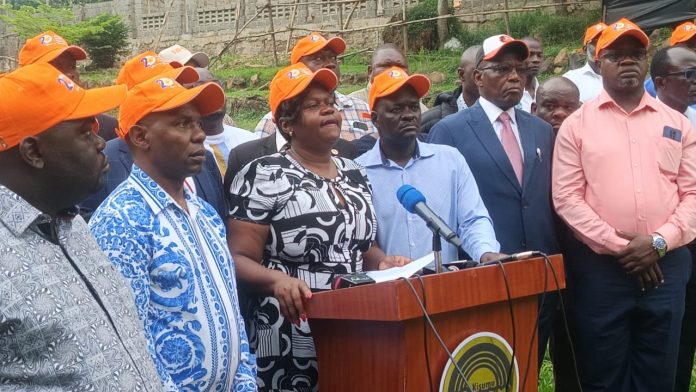
How Matiang’i Has Disrupted Kisii Politics

0

By Billy Mijungu

Kisii County in early 2025 was firmly under the control of the United Progressive Alliance, the party Fred Matiang’i bankrolled during the 2022 general elections. If there was any regional outfit that grew faster than expected, it was UPA. The party’s organization, funding, and messaging were tightly managed within the region, giving it an authentic local flavor and a sense of ownership among the Abagusii people.

Recently, UPA underwent a rebrand that saw it unveil a new party logo, the Soap, and adopt the tagline Safisha Kenya. The message resonated deeply. It was simple, symbolic, and relatable, capturing both the literal and moral idea of cleansing Kenya’s politics. The rebrand gave UPA a fresh face and a national appeal beyond Kisii and Nyamira. But just when the momentum was beginning to solidify, Fred Matiang’i made a move that disrupted everything.

By crossing over to Jubilee and positioning himself as a serious presidential contender, Matiang’i breathed new life into a party that had almost disappeared from the Kisii political map. Jubilee, once dominant under Uhuru Kenyatta, had lost its relevance in the region after 2022. Matiang’i’s entry instantly revived its fortunes. His national stature, reputation for discipline, and strong administrative record have given Jubilee a competitive edge once again in Kisii and Nyamira.

What followed is political confusion and fragmentation that few anticipated. The region now finds itself with four formidable political forces. UDA, led by President William Ruto, maintains a loyal following anchored on national government presence and resources. UPA remains the symbolic home team, representing local pride and a sense of ownership, even though it is struggling to redefine its path without Matiang’i’s firm hand. Jubilee, rejuvenated by Matiang’i’s presidential ambitions, has reclaimed attention and respect. And ODM, still the largest party in Kisii, continues to draw on its long-standing emotional connection with Raila Odinga’s loyal base.

For the first time in years, the Kisii political field is unpredictable. Every party has a fair shot at local dominance. There is no clear political kingpin, no single unifying voice. What Matiang’i has achieved, whether intentionally or not, is the dismantling of political certainty.

In trying to play national politics, he has destabilized regional order. His move to Jubilee may strengthen him nationally, but it weakens the cohesion he once built at home. Kisii has become a marketplace of parties, ideas, and ambitions. Anyone can win with anything, but it also means anyone can lose with everything.

For Matiang’i, this is a lesson on why political bases matter. Even the smallest regional parties, like Wetangula’s Ford Kenya with barely 300000 votes, survive because they protect their roots before branching out. Kisii now waits to see whether Matiang’i’s gamble will pay off or whether he will end up washing away his own political foundation.
How Wanga and Allies Failed to Read the Family Mood

0

By James Okoth

As the nation mourned Raila Odinga, emotions were raw, loyalties were fluid, and symbolism mattered more than statements. In that moment, the Odinga family projected reconciliation. They called for restraint, peace, and unity even as tempers flared.

But among ODM loyalists, particularly those perceived to be Raila’s political heirs, the tone was the exact opposite.

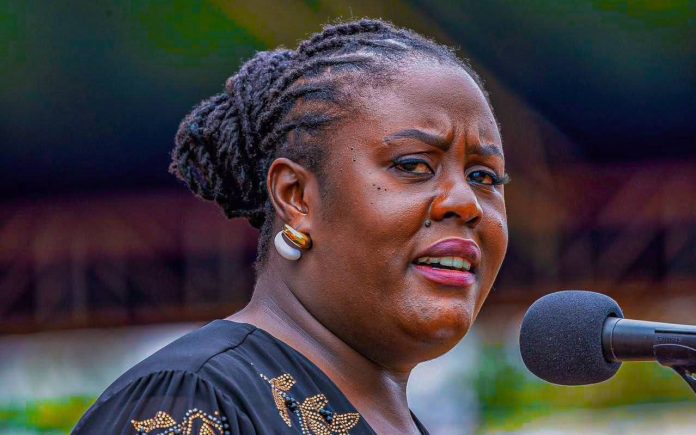
Homa Bay Governor Gladys Wanga, alongside several vocal ODM legislators, came out swinging, issuing warnings, drawing political lines and even barring leaders like Rigathi Gachagua and his allies from setting foot in Bondo.

It was a move that played well to the gallery of party hardliners but jarred deeply against the family’s posture.

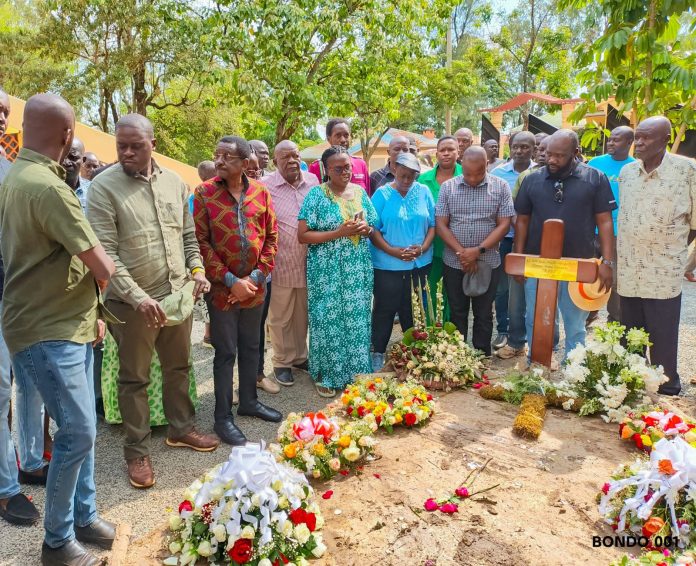
The Odinga household had just invited everyone, including perceived rivals, to Raila’s burial site. They wanted the final farewell to be a symbol of the statesman’s legacy, a bridge-builder to the very end.

Wanga and her allies missed that cue. Their combative tone drowned out the humility and grace that Raila’s family embodied in grief. What was meant to be a national moment of unity risked sliding into a political turf war.

Insiders close to the Odinga family have since hinted that the family’s silence was deliberate, a quiet rebuke to those who sought to politicize the mourning period.

In contrast, when Oburu Odinga and Ruth Odinga spoke while hosting a string of guest from the political divide, they offered warmth, not walls. They acknowledged differences, but emphasized Raila’s wish for peace — a gesture that resonated across the political divide.

In the end, the family’s message was clear: While politics built Raila’s career, grace will define his legacy and those who missed that message, however loyal, misread the room and the moment.

Ruth Odinga, Raila Odinga’s sister and Kisumu woman member of Parliament would later expose the misplaced emotions of Wanga and allies, telling a twisted story of the Odinga’s they almost forced on Kenyans.

“The Jaramogi family aside, the luo and Kikuyu nations have a long and winding history. Growing up, hatred between the Kikuyu and Luo communities was alien.” She said. “We must rise above divisive ethnic undertones to forge a more united nation.” She emphasized.

Silent battle in the Palace, could Raila’s spirit be with Winnie?

0

By Anderson Ojwang

On Thursday was a historic and defining moment for the Raila Amolo Odinga family.
It marked the fourth day after his burial and the end of the mourning period, but also the day of the family heir apparent.
But the day opened the lid to a can of what the future could probably hold for the home of history.

Unique and significant events emerged that were the tip of the iceberg of what may unfold in the family in the near future.
While Siaya Senator Dr Oburu Odinga, who is also the chairman of the Jaramogi Oginga Odinga family, presided over the installation ceremony, his son Jaoko Oburu, heir apparent to his throne, was away addressing Bunge La Wanainchi in Kisumu and Nairobi respectively.

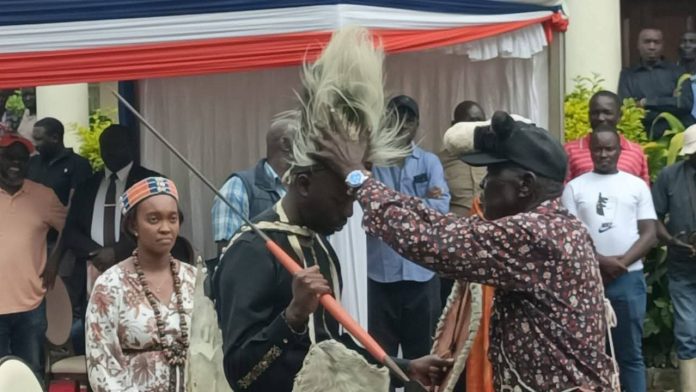
At the ceremony, a unique incident occurred after Junior had been given the spear and the shield, robed, and had the traditional cap worn on his head, and then asked to appease the spirit.
Just as he stood up and started appeasing the spirits, the traditional cap fell down and, at the same time, the fly whisk also fell from the hand of the elder who was installing Junior.
This was a remarkable moment during the ceremony and has a deep meaning in the traditional African context.

Jaoko, who read Raila’s eulogy during the national prayers at Nyayo National Stadium, but the onus was later given to nominated councillor Anyango, younger sister to Raila, during the burial in Bondo.
According to Luo culture and practices, Jaoko and other junior siblings, cousins, and relatives were all expected to converge to witness the important ceremony.

“I received a call from one member of the group, one Jonah, and they invited me to come and mourn with them.
They wanted to condole with me. I have also come to condole with them too.
I feel the pain. Raila was loved across the board. I was among those who went to India to repatriate the body of Raila.
My father has also sent his greetings. Kindly receive them. Nobody believed Raila would die.
When I left Bondo, I first met my brothers from Kisumu. We sat and discussed with them.

I told my father, let me go talk to our brothers; we mourn with them. I left Bondo and said I had to be here so that we can sit together.
We should sit here and talk about Baba. I will also engage the university fraternity and have a conversation.
Jaramogi loved me. I was one of the few grandchildren he loved most. He used to walk with me around.

You know, I can join a crowd and you will not know it is Jaoko. We are simple people.
I remember what Raila told me before he died. I am wondering if he knew he was going to die.
He told me, ‘Jaoko, I have given you employment in the government. Don’t sleep there; create networks across the board.
My office is open to all. Empowerment targets the youth. That is my work, and I work to ensure youths are empowered. This is my card; you can reach me,’”
he said.

Jaoko was appointed the County Executive Committee Member for Roads during the last Governor Cornel Rasanga regime.

Winnie Odinga has been the pillar in Raila’s political journey and a close confidant. Raila introduced her to both his political associates and friends.
At her father’s burial, she baffled everyone when she called Ajiki to come and eulogise the deceased with a dirge before she could speak. This was Raila’s trend in all his functions in Nyanza.

In all meetings with Luo MPs, Winnie would accompany Raila and even told them that in his absence, she would want to represent him.
Winnie said, “I saw my father die in my arms. I was with him in India all the time. He died a strong man, a fighter. He did not die as some people want to insinuate.”

“It is true Raila had hinted to us that he wanted Winnie to represent him at duol (kraal). He wanted us to talk about Winnie with the electorate, but the majority were reluctant,” said one of the MPs who did not want to be named.

Winnie, who is a member of the East African Legislative Assembly (EALA), told mourners that in Bondo, there still lives a lion.
“I have heard people talk badly about Bondo. I want to say here, we have a lion here. I am the lion. Do not be worried. For President Ruto, I am ready to come back home,” she said.

Winnie has been the cornerstone of Raila’s political journey after the death of his son, Fidel Odinga, and she has been significant in his presidential campaigns.
With the dust now settling, the battle for Raila’s throne will be fought from within and without as several politicians have expressed interest.

Employment and Labor Court declines to grant conservatory order as term of  CEO of  Consolidated Bank of Kenya expires

0

By Reporter

The immediate former Chief Executive Officer of  Consolidated Bank  of Kenya suffered a blow after the Employment and Labor relations Court, in Nairobi declined a conservatory orders two days before expiry of his contract.

The petitioner, Samwel Muthemba Muturi had moved to court challenge the decision of Treasury Cabinet Secretary John Mbadi refusal to renew his contract after the board of directors had approved the renewal.

Justice Nduma Nderi in his ruling observed that the applicant did not seek for order for stay to remain in his office as the CEO upon the expiry of his contract, which was only t wo days away to elapse.

This he noted would create a power vacuum in the bank and without taking into consideration of period the petition was likely to take.

The Judge instead noted that the petitioner only sought the conservatory order to stop the filling of the CEO position pending the hearing and determination of the petition.

Seeking a temporary conservatory order stopping the advertisement, recruitment or appointment of an acting CEO. Does not conserve anything but injunct a future recruitment process.

The petitioner  is due to elapsed on 11th October 2025. Had sought for a new renewal of his term.

In his application,  the petitioner had sought renewal  of his contract  on 13 January  2025 which was six months  before  the lapse of his first 3 year  term of contract.

The petitioner argued the board of directors  on 21st March wrote to Mbadi  and recommended  for the extension  of the contract  due to his performance.

The petitioner said following correspondences from Mbadi to the board, the chairman  wrote Muturi  on 12th and 18th September  informing him  of the expiry of his contract.

In his prayers, that a declaration  that the petitioner is eligible for renewal  of his  term for a further 3 years as the CEO of the bank

That  an order of Mandamus to compel  the Board  to renew and the CS  to confirm  the  reappointment  of the petitioner  as the CEO

 That  in the alternative, the petitioner be compensated for damages  equivalent to salary  for three years  totaling to Sh 78,348,800.

That the cost  of the petition  and interest  therein  and any other further  relief  that this honorable  court shall deem fit to grant.

Junior Odinga, The Heir to a House of History

0

By James Okoth

In the quiet homestead of Kang’o Ka Jaramogi, history turned its next page. Beneath the soft Bondo sun, family elders gathered in solemn reflection as they performed a rite steeped in Luo tradition, installing Raila Odinga Junior as the new head of the Odinga family.

It was not a political coronation, but a deeply symbolic act of continuity. The mantle that once rested upon Jaramogi Oginga Odinga, and later upon Raila Amolo Odinga, now rests upon Junior, the bearer of a name that has for generations been intertwined with Kenya’s conscience.

The Odinga name has never belonged to one man alone. It is a narrative stretching from the dawn of independence to the dawn of multiparty democracy, from detention cells to state banquets, from protest chants to presidential handshakes. It is a name that has carried both the burden and the blessing of history. In the stillness of Bondo, that legacy was renewed, not through slogans or applause, but through the timeless rhythm of tradition.

When Jaramogi defied the colonial order and later the founding government, he did so in the name of principle. When Raila rose to challenge injustice and fight for democracy, he too acted in the spirit of his father — to resist, to reform, to redeem. Together, the two men defined what it meant to live a life of service and sacrifice. Yet, as Raila’s long political chapter closed with his passing, the Odinga family found itself at a crossroads. The lineage that had influenced Kenya’s destiny for six decades needed a new custodian, one who could preserve its unity, purpose, and dignity.

Fidel Odinga, the first-born son and once presumed heir to the family mantle, departed far too soon. His death left a silence that time never fully healed. Now, a decade later, Raila Junior steps into a role that blends tradition with responsibility. His installation as family head is both an acknowledgment of lineage and a renewal of duty. It signals that the Odinga name, even in grief, remains anchored in order.

The ceremony carried layers of meaning beyond the homestead. To the Luo community, it reaffirmed the importance of continuity — that a great house must never stand without a leader. To Kenya, it was a quiet assurance that the ideals the Odingas have stood for, including justice, fairness and courage, will endure even as politics changes form.

Junior’s role is not to fill his father’s shoes, but to safeguard the ground on which those shoes once stood.

Those close to the family describe him as calm, reflective, and pragmatic. He speaks little but listens deeply. His interests lean toward entrepreneurship, governance, and social transformation rather than the traditional theatre of politics. Yet in his tone and temperament, many see glimpses of both Jaramogi’s intellect and Raila’s resilience. He may never replicate their paths, but he embodies their principles — a quiet defiance, a steady moral compass and a belief in the collective good.

Unlike his father, Junior is not stepping onto the rally stage or into the political storm. His first responsibility lies at home, holding together a large and influential family, ensuring unity and maintaining the honor associated with the Odinga name. But the symbolism of his new role stretches far beyond family walls. In a nation where political families often fracture after the fall of their patriarchs, Junior’s emergence is a sign of stability. It suggests that while the political era of Raila may have ended, the Odinga story continues not through political offices, but through stewardship, reflection and tradition.

The installation also marks a generational shift in how legacy is understood. Kenya’s political landscape is changing rapidly and so are the expectations of leadership. Where once leadership meant fiery rallies and defiant speeches, today it leans toward dialogue, empathy and innovation. Junior represents this transition. He carries the Odinga torch not as a weapon, but as a lamp.

For a family long defined by resistance, this moment feels like an exhale after decades of battle. Raila Odinga’s life was a long road of unfinished dreams — devolution still imperfect, justice still elusive, equality still deferred. Junior inherits not the triumphs, but the unfinished work, reframed through a generational lens.

His task is to preserve the essence of what his father and grandfather stood for, while allowing the family and perhaps the nation, to heal from the exhaustion of constant political combat.

As dusk fell over Bondo that evening, there was a sense of peace in the air — a feeling that the storm had passed, and that the Odinga story had entered its gentlest chapter yet. The revolution that began with Jaramogi and roared through Raila may now find its calm in Junior, a leader not of rallies but of remembrance, not of ambition but of balance.

For Kenya, his installation is both a farewell and a beginning…a reminder that even the fiercest political fires eventually give way to light and in that light, Raila Odinga Junior now stands, the heir to a house of history, the custodian of a name that still whispers to the soul of a nation.

Moment for Nyanza to form Economic Council headed by Tuju, exorcise the spirit of Kingpin

0

By Anderson Ojwang

The late Raila Odinga rewrote the story of the Luo community from a marginalised one to the current development projects boom before his demise.
That is why, today, in Kango Ka Jaramogi, when Ker Odungi Riaga will lead the community during Tero Buru (exorcising of spirits of death), the Luo community will equally exorcise the spirit of hard politics and kingship.

Political opportunists have emerged with the demise of Raila, positioning themselves as possible community political kingpins with no single development track to their names.
But unknown to them, in Raila’s last wish at the burial of Mama Phoebe Asiyo in Karachuonyo, the late former Prime Minister urged the community to avoid political excitement but instead concentrate on development.

“Let us avoid politics for now, as it is time for development for our people. We must stop politics and wait for its time,” he said then.

Raila rewrote the story of his father, Jaramogi Oginga Odinga, whose brand of politics left the Luo community marginalised while several projects collapsed. The Nyanza economy was in constant resuscitation at the intensive care unit.
Kisumu Textile Mills (KICOMI), the cotton industry and the sugar factories — Muhoroni, Miwani, Chemelil and Sony — either collapsed or were limping to the grave.

Raila, on several occasions before his death, tried to convince former Rarieda MP Raphael Tuju to take over the leadership of the ODM party and spearhead the development of Nyanza.
Raila was concerned about the future of the community’s development and his party, ODM.

When Tuju finally agreed and was expected to assume the senior post in ODM, cartels ganged up and scuttled the move. This left Raila frustrated and a bitter man.
But Raila had decided to make radical changes in the party during its 20th anniversary, which could have ushered in new faces.

Raila had grown to trust Tuju for his honesty and truthfulness and was sceptical about some leaders who were using him for their selfish gain.
Tuju is respected for his development projects when he was the Rarieda MP, and he is also an accomplished businessman — one of the community’s lights.

As the community moves to a new dispensation, a council of leaders to spearhead economic empowerment headed by Tuju should be put in place instead of a battle for a clueless kingpin.
The Economic Empowerment Council should have eminent sons and daughters of the community and consist of businessmen Sammy Wakiaga, Eliud Owalo and Seme MP Dr James Nyikal, among others.

Raphael Tuju

Tuju is a bulldozer, a mover but non-controversial, with innocent looks that are often misconstrued as a weakness — but in actual sense, that is where his strength lies.
He is a man with nine lives, a story within a story. He is invincible in the political limelight where politicians love to be recognised and to identify with the public, but his amiable presence tells of his importance to the masters.
He talks less and only when it is important and necessary, but he has remained the propeller of events — the mover and pusher, the master schemer par excellence, a fighter with no fear, a champion least recognised but adored and appreciated by those within his ranks. The tall and ever-smiling man with a deep voice that once vibrated in most Kenyan homes.

In 2002, Tuju was elected as a Member of Parliament (MP) for Rarieda Constituency. He served until 2007 and managed to promote the education sector in the region by building new classrooms.
He also implemented major water projects for the Rarieda people and introduced an innovative mobile hospital to reduce infant mortality resulting from malaria and HIV/AIDS.
Tuju witnessed the construction of tarmac roads and the distribution of electricity to several institutions and homes in the area, leaving an indelible mark.

He is particularly remembered for his bravery when he sensibly warned European governments during the 29th Asillah Cultural Festival held in Morocco in 2007 against establishing policies that deprive African development through trade partnerships.
Tuju was awarded the second-highest civilian title in Kenya, E.G.H. (Elder of the Golden Heart), by President Mwai Kibaki for his many years of service to the people of Kenya in the areas of health, human development and public service.

Mr Samuel Owino Wakiaga

Wakiaga is a respected businessman with a wealth of knowledge on empowerment programmes. He is non-controversial and respected across the board.
Wakiaga transformed the lake transport and hotel industry in Mbita Island. He is recognised for supporting the education of orphans and other development projects in Nyanza.

Mr Eliud Owalo

He is the patron of Gor Mahia Football Team, which he has supported single-handedly from his pocket. He organised the Nyanza International Investment and Trade Conference.
Owalo is currently the Deputy Chief of Staff in charge of Delivery and Government Efficiency in the Executive Office of the President.
Owalo’s vast knowledge in project management would come in handy in developing the community’s new strategic plan.

Dr James Nyikal

He is the Seme MP and chairman of Luo MPs. Nyikal is rated as one of the top performers and would add impetus to the team.

For Nyanza to grow, the politics of kingship should be buried at Kango.

Raila’s unending visits, in life and death, Kango the new pilgrimage

0

By James Okoth

It has been days since the red soils of Bondo swallowed the body of Raila Amolo Odinga, yet the road to Kang’o ka Jaramogi has not gone quiet. The convoys still come, the footsteps still fall, and the songs still rise softly from pilgrims of every shade and persuasion.

Some come in silence, some in ceremony.
Some come to mourn. Others come to understand. But all leave with one truth heavy on their hearts; that even in death, Raila Odinga continues to receive visitors.

When Raila was alive, his politics revolved around the art of visiting and being visited. He was, at once, both guest and host to the nation’s conscience.

From Kibera’s muddy paths to State House’s polished floors, Raila’s political life was a journey of presence, of showing up, shaking hands and facing adversaries eye to eye.
He believed in the physicality of politics: that leadership must be seen, not merely heard.

The Kahiga-Gachagua Dilemma: How a Misstep Could Unravel a Mountain Alliance

0

By James Okoth

Nyeri Governor Mutahi Kahiga’s political future now hangs in the balance after he reportedly retreated from public view ahead of an emergency Council of Governors (CoG) meeting convened to deliberate on his misconduct. His sudden “early retirement” from the political limelight — coming just hours after a torrent of criticism from across the country — marks a defining moment not only for him but also for former Deputy President Rigathi Gachagua, whose political orbit Kahiga has long revolved in.

Kahiga’s remarks on the passing of former Prime Minister Raila Odinga — seen by many as a callous invocation of religion to justify death — have detonated more than a moral outrage. They have exposed the raw nerves, the unspoken fears, and the crumbling loyalties within the Mount Kenya political bloc.

Once considered among Gachagua’s most trusted regional surrogates, Kahiga has now become a political liability — the kind of ally no one wants to be seen defending. His silence, and now his retreat, suggest a man aware that his words may have permanently scorched his path forward.

At the same time, Gachagua finds himself at a precarious crossroads. His political brand — built on the rhetoric of “Mt. Kenya unity” and regional assertiveness — is being tested by association. For months, he has tried to reposition himself as the moral compass of the region, standing against internal fragmentation and perceived betrayal from President Ruto’s inner circle. Yet Kahiga’s scandal now threatens to taint that image.

ODM’s reaction has been swift and unforgiving. Party chairperson Gladys Wanga has already called for Kahiga’s expulsion from the Council of Governors’ leadership, while Kisumu Speaker reminded him that the very freedoms he misused were fruits of Raila Odinga’s constitutional struggle. But beyond the outrage lies a deeper intrigue: the silence of ODM Secretary General Edwin Sifuna.

Sifuna — usually the party’s loudest and most disciplined voice during political storms — was conspicuously absent at the Kisumu presser. No apology, no statement, no virtual appearance. Insiders whisper of a quiet recalibration within ODM’s secretariat, where the political calculus over how to deal with Kahiga’s camp may extend beyond public condemnation. Some suggest that Sifuna’s absence signals a deeper strategic maneuver, possibly one that factors in the shifting alliances ahead of 2027 — where even former foes might find utility in dialogue.

What don’t we know? Perhaps that Kahiga’s words, however ill-advised, are a symptom of a larger battle — a battle for control over the Mt. Kenya narrative after Raila’s death. Gachagua’s camp sees an opening: a region disillusioned, a vacuum of moral authority, and a chance to frame the next national conversation around “betrayal and neglect.” But with Kahiga now disgraced, that plan may already be collapsing.

In the coming weeks, one test will define their political fate: whether Gachagua dares to defend him — or quietly distances himself to protect his own ambitions.

Either way, the storm unleashed by Kahiga’s tongue has done more than offend a mourning nation. It has peeled back the fragile veneer of unity in Mt. Kenya politics, revealing the deep fractures between loyalty and survival — between faith and politics — and between those who still stand for Raila Odinga’s ideals and those who now tremble under the weight of his legacy.

Is Winnie Odinga the Next Queenpin? Can She Become the Voice That Unites Kenya’s Generation of Defiance?

0

By James Okoth

The mourning is over.
The flags have been lowered, folded, and put away. Now, a new question rises from the silence: What happens when legacy meets rebellion?

Because somewhere between Kenya’s dusty campaign trails and the neon-lit glow of TikTok lives, one name keeps surfacing — Winnie Odinga.

Kenya’s political map is changing, not through coalitions but through connection. Nearly 75% of Kenyans are under 35 — that’s more than 35 million young citizens, restless and aware. They are digital first, distrustful second, and decisive third.

They don’t chant slogans — they trend hashtags. They don’t queue for rallies — they build movements and when they marched in the #OccupyParliament protests, they did what generations before only dreamed of: they made fear change sides.

This is the generation that doesn’t ask for inclusion — it demands relevance.

Enter Winnie Odinga.

At 34, she stands at the collision point of two powerful currents:
her father’s monumental legacy, and her generation’s demand for disruption.

To the establishment, she’s “Raila’s daughter.” To the youth, she’s the potential amplifier of a generation that refuses to whisper anymore.

She tweets like a peer, not a politician. She speaks of accountability, gender balance, and mental health — topics that old politics finds too soft or too inconvenient and she’s not afraid to rattle cages that her father built.

If the Gen Z movement has shown anything, it’s that energy can overpower experience. They shook Parliament without a party.
They mobilized nationwide without funding. They mourned and mocked in the same breath — and that duality is exactly how they survive.

Winnie understands that language — not as strategy, but as instinct.

She doesn’t need to own the streets; she needs to own the conversation.
And she might be the only figure young enough to relate, but bold enough to challenge the power structure that’s losing touch by the day.

For decades, politics in Kenya has been about kingpins — Raila in Nyanza, Uhuru in Central, Ruto in Rift Valley. But what happens when the era of kingpins ends, and a queenpin emerges — not from lineage, but from digital legitimacy?

If Winnie Odinga can bridge that gap — between mourning and momentum, between old order and online uprising — she won’t just lead the youth; she’ll unite their noise into a national voice.

History’s waiting for its next disruptor and this time, it might come with eyeliner, Wi-Fi, and a cause that can’t be muted.

Could Winnie Odinga be the one to turn Kenya’s Gen Z defiance into direction?

History doesn’t wait for permission. Sometimes, it just needs a name bold enough to break the silence.

Could that name be Winnie Odinga?

KAHIGA TOES THE LINE, BECOMES THE FIRST SCALPEL OF ODINGA

0

By James Okoth

Nyeri Governor Mutahi Kahiga’s abrupt resignation from his influential post at the Council of Governors has sent tremors through Kenya’s political establishment — a vivid reminder that Raila Odinga’s shadow, even in death, still looms large over the nation’s political psyche.

Kahiga’s downfall — swift, surgical, and instructive — has become the first political incision of what analysts are now calling “Raila’s scalpel”: the continuing force of a legacy that disciplines even the living.

Barely a week after the death of the opposition leader, Kahiga found himself isolated, condemned, and politically stripped following remarks perceived as callous toward Odinga’s passing. What began as careless rhetoric has ended in a career-threatening reckoning, forcing the Nyeri Governor to retreat into silence and relinquish his national duties.

But beyond the outrage lies a deeper truth — that Raila Odinga’s influence did not end with his funeral. It merely changed form.

Across Kenya’s political corridors, from Nairobi to Nyeri, leaders are recalibrating their tone, wary of awakening the wrath of Odinga’s loyal base. His moral authority, once a living force, has now assumed an almost spiritual dimension — a force that punishes, forgives, and defines political survival even from the grave.

Kahiga’s resignation is not just a disciplinary action; it is a message. It signals that Raila’s reach — once constrained by political contest — has transcended into something more potent: a moral and emotional dominion that still dictates the rhythm of Kenya’s politics.

ODM chairperson Gladys Wanga’s vow to strip Kahiga of his Council of Governors role was not an act of vengeance but a declaration that Raila’s legacy remains sacrosanct. “You do not mock the struggle that birthed your very position,” she said. Her statement, firm and unyielding, captured the sentiment of a country unwilling to forgive sacrilege against the man who defined its democratic journey.

Inside Mt. Kenya, Kahiga’s fall has exposed the fragility of former Deputy President Rigathi Gachagua’s political network. For years, Kahiga was one of his dependable allies — a voice of the mountain and a loyalist to Gachagua’s consolidation bid. Now, his isolation underscores a chilling reality: that even within the mountain stronghold, no leader can afford to disregard the moral authority Raila Odinga commands nationally.

Elisha Oraro, Speaker of Kisumu County Assembly, spoke to The Western Insight saying, “This is not about Raila the politician. This is Raila the institution — a conscience that continues to audit power. Every statement, every alliance, every posture must now contend with the Raila factor, alive or dead.”

The storm around Kahiga is also a cautionary tale for Kenya’s emerging leaders — that populism without respect for history is self-destructive. In a moment of careless speech, Kahiga managed to offend not just ODM loyalists but a national constituency still in mourning, one that has long associated Raila Odinga with sacrifice, struggle, and the nation’s unfinished journey to justice.

As Kahiga retreats from the spotlight, the political air remains tense. Governors are now treading carefully. Party leaders are revising their talking points. Even allies of the ruling coalition are softening their rhetoric — all acknowledging, perhaps unwillingly, that Raila’s influence remains the unseen hand guiding Kenya’s moral compass.

In life, Raila Odinga commanded crowds.
In death, he commands conscience.

And for Mutahi Kahiga — the first to feel the sting of the scalpel — the lesson is eternal: Raila may be gone, but his power to define right and wrong in Kenya’s political theatre endures.