Home Blog Page 134

Changing the image of the Kenya Utalli College as Africa’s best hospitality and tourism institution

0

By Sandra Blessing

The Africa’s leading hospitality and tourism institution, the Kenya Utalli has rolled out various programs aimed ensuring the country’s readiness to a 5 million tourist mark

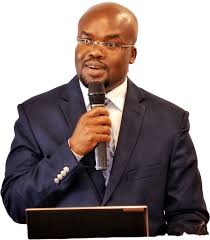
The Chief Executive Officer, Mr. Mark Ogendi said the institution has developed strategies not only to make remain center of excellence in tourism and hospitality but to make it also financially viable and stable.
He said the institution has embarked on the creation of organic farming, to produce vegetables, poultry, milk to make it self-sufficient and reduce the cost.

“In the Social Corporate responsibility, we have a program, Mathare Future ready project where Mathare and Ruaraka constituencies will benefit from training slots to the residence in hospitality,” he said.

Ogendi said the institution was seeking to enhance language pruriency in German , French, Spanish , Japanese, Chinese and Italians for the students.

“ We are enhancing customer service to government institution. And to the airports to improve on handling of tourists and customers,” he said.

The CEO said the institution has become In readiness for the five million tourism target from 2025-2027

He said the recently concluded KAHC and KATA conventions highlighted areas that the institution needed to act on as the leading Premier institution in hospitality and training:

: Partnership and collaborative approach to developing areas that will help reach the 5M tourists in Kenya and use of available resources to train the students

The need for capacity building for the industry through refresher courses and management development programs (MDPs)

Clear unity and once voice from all the training institutions to meet and agree on the minimum standards

Training needs assessment from the industry perspective.

Use of technology and digital learning to enhance upgrading of skills for the working class who may not get time to attend physical classes,” he said.

The CEO said the College has emerged as a center for capacity building for the industry.

“Through well designed industry based programs, the College organizes targeted courses aimed at addressing skills gaps in the industry. Currently, the global labor market is a huge skills gap, the college industry based courses are handy in alleviating the manpower shortage. The courses target both junior and managerial staff,” he said

He said by the virtue of the curriculum having been designed along the Swiss model considered the best hospitality curriculum in the world, Kenya Utalli College offers internationally recognized hospitality education.

He said Swiss hospitality and tourism training is anchored on Technical and Vocational model training model which emphasizes technical skills fused with soft skills.

He explained that the students are exposed to a curriculum that prioritizes practical approach to training with the latter constituting sixty five percent and theory thirty five percent.

Given the practically oriented, hands-on graduates, the alumni of Utalli are very popular among local and international employers. Our graduates are spread across the globe where they work in high end hotels and premier airlines and cruise ships.

“Accordingly, the graduates meet the international standards. Employers find them plug and play due to their ability to function in diverse work environments.

When Jersey Island experienced acute labor shortage, the College graduates came in handy to fill the gap. Islands recruiter and labor solutions agency the GR8 was tasked to recruit the graduates of the College to go and work on the Channel Island.

What was described as seasonal labor arrangement has metamorphosed into permanent status for Kenyan professionals, a testament of the quality Utalli graduates” he said

An Organization calls for protection of Youths from police brutality

0

By Habil Onyango

There has been a noticeable increase in incidents of police brutality, arbitrary arrests during demonstrations, discrimination against marginalised groups—including persons with disabilities and individuals belonging to gender minorities—and systemic barriers to accessing justice.

This situation persists despite the establishment of a robust legal framework aimed at the protection of rights under the 2010 Constitution, as enforcement remains inconsistent.

Dr. David Rabuor, the Director of Community Action for Health and Development (CAHED), has called upon the judiciary to enhance accessibility, particularly for grassroots communities.

“It is imperative for state actors to fully implement the National Action Plan on Human Rights, ensure independent oversight of security forces, and expand civic education to empower rights holders across all counties in Kenya,” he stated.

Dr. Rabuor highlighted the alarming trend of youth fatalities occurring at the hands of law enforcement, emphasising that very few of these cases have resulted in justice through the judicial system.

During a Youth Conference focusing on Democracy, Human Rights, and Governance (DRG), he further noted the widening disconnect between elected officials and their constituents, particularly among the youth, which poses a significant threat to representative governance in Kenya.

He elaborated that this disconnect is particularly evident within the devolved governance system, where concerns regarding the functionality, inclusivity, and responsiveness of institutions remain, despite considerable progress in establishing democratic frameworks.

Dr. Rabuor identified several critical gaps, including low civic literacy among youth, superficial engagement in policymaking processes, and the limited incorporation of youth-led initiatives into county development frameworks.

“As CAHED and other stakeholders, we call upon national and county governments to institutionalise mechanisms for youth engagement, strengthen public participation, and adhere to democratic principles without intimidation or repression,” Dr. Rabuor asserted.

He also pointed out that the governance landscape in the country is challenged by significant issues related to public accountability, corruption, and limited transparency in public service delivery.

During the conference, it was observed that youth frequently remain marginalised in county decision-making processes, despite representing the majority demographic.

Participants advocated for enhanced inter-agency collaboration, increased budget transparency, and expanded investment in governance capacity building specifically targeted at youth.

Furthermore, participants urged the Auditor General and the Ethics and Anti-Corruption Commission to improve their visibility and responsiveness to public grievances, particularly in under-resourced counties such as Homa Bay.

Senior Chief Bob Lang’o, representing the County Commissioner, urged youth to address their differences responsibly, even in interactions with law enforcement, and to refrain from resorting to violence.

He also encouraged security personnel to exercise patience when engaging with young individuals to prevent injuries and to guide them appropriately.

“Without peace and security, we cannot achieve economic progress. I urge our youth to refrain from engaging in activities that could be detrimental to our country,” he stated.

This conference was convened in the context of ongoing demonstrations by youth across the country regarding alleged abductions and fatalities of their peers at the hands of police.

The event gathered representatives from the County Commissioner’s Office, the Judiciary, Gender Affairs, and the Department of Youth Affairs from Homa Bay.

CAHED operates at grassroots, national, and global levels, focusing on Democracy, Human Rights, and Governance, striving to ensure that opportunities are made available to youth through awareness and enlightenment.

Luo community politics beyond 2027, the emergence of three tiers of leadership

0

Anderson Ojwang

Bethuel Oduo

As the Luo community look at their political horizon, a discussion around the community’s fate beyond 2027 becomes inevitable to some observers.

Borrowing a historical remark made Peter Anyumba Chairman Gor Mahia FC in 1973, he said: “As long as Luo Women continue giving birth to boys, Gor Mahia shall never die. The club had been involved in what some contestants thought was not a free and fair election process. It caused a serious division when some dissatisfied officials and star players left to revive Luo Union FC (later renamed Reunion FC). Anyumba sent emissaries back to ‘Pacho dala’ with instructions to go and recruit talented boys to come and rescue the club. This happened and fresh legs arrived in Nairobi by OTC bus the following day. 52 years later, Gor Mahia FC is today not only a community but juggernaut football club that draws players and fans from across the country.

Anyumba’s assertion can be used to describe the situation the Luo community finds itself today. With 2027 in mind and Raila Odinga is slowly giving away the baton, the debate rages around who the possible successors are.

The post 2027 era presents the Luo community with a unique and a new political precedent that will usher a new socio-economic and political dispensation.

From being a politically active community, the Luo are entering into a new interesting era of socio-economic and political moment that is aimed at transforming the region as the new tiger.

Currently at the apex of the Luo leadership is the former Prime Minister Raila Odinga, who inherited the throne from his father, the late doyen of opposition  politics Jaramogi Oginga Odinga.

But currently, the community is developing other two tiers of leadership as it repositions itself for the future.

The first tier is the hands of Raila while the second tier which is driven by the economics and viewed as the community propeller into the future is held by former Cabinet Minister Raphael Tuju and former Nairobi Governor Dr Evans Odhiambo Kidero.

The duo are viewed to hold the community key in championing  the  new economic dispensation going by their innovative business and leadership acumen.

Tuju and Kidero  are the community heart beat to the new economic dispensation and are risk takers and shrewd in investments and business management .

The third tier holds the future leaders who will ultimately lead the community to presidency in the future. They are a group of young and enterprising politicians, who through the mentorship of Raila, Tuju and Kidero, are likely to carry the community expectations into the future.

The third tier is made up of Treasury Cabinet Secretary John Mbadi, PS Dr Ray Omollo, Homa Bay Governor Gladys Wanga, MP Babu Owino, Energy Cabinet Secretary Opiyo Wandayi, MP Sam Atandi, Otiende Amollo, Health Permanent Secretary  Dr  Ouma Oluga, Dr Pamela Odhiambo, and LSK President Faith Odhiambo.

In the tier, present the community with a choice of a possible presidential candidate and possible community leaders both at the county and national levels.

In the second tier remains critical to the community in its phase of the new dispensation and that it is why for Tuju and Kidero with the support of Raila, the community destination rests on their hands.

Tuju and Kidero are smooth and shrewd operators and are capable of anchoring the community to the next economic dispensation of food security, independence, manufacturing and thriving business enterprises.

Tuju and Kidero’s experiences in business and management will propel the community into a new era and could translate into an economic moment for the Luo.

With the possible absence of a Luo presidential candidate in the 2027 general elections, the duo focus should now shift to economic emancipation  and liberation.

In their wisdom, Tuju and Kidero should mentor the third tier to produce a future presidential candidate to fulfil the community dream.

Dr Raymond Omollo: The Internal Security Permanent Secretary has curved himself a niche as a good administrator and has been effective in his service to President William Ruto.

His Empowerment Initiative has received positive ratings from the community and this has been a game changer. He is quite but very calculative and strategic.

Faith Odhiambo: Within a short time, she has shown her mettle and courage in front of adversity putting the society where it was during the fight for second liberation. Kenyans can’t remember the last time they saw an LSK leader visiting a police station to seek justice for victims until she arrived. The last time it happened was during the Paul Muite era as the Young Turks confronted Moi’s brutality. Other presidents have blown hot and cold whenever courage is required. Faith should be declared ‘Woman of the Year 2025’ in advance.

Governor Gladys Wanga is a good getter, good mobiliser and a risk taker. She has made history as the first female governor from Western Kenya and currently the Orange Democratic Movement (ODM) National chairperson. Wanga has developed serious political networks in and out of the country that would in future support her political agenda

Babu Owino : The Kisumu Boys alumni is a no walker over in the Kenya’s politics. He is one of the first rising opinion shapers in the country . His election as member of parliament in Nairobi, has given him the national image. He is a good mobiliser and crowd puller.

Otiende Amolo: His record as a sober and astute leader explains itself. If there is a somebody who will inherit the moniker ‘Walking Constitution’ from James Orengo, it is SC Paul Otiende Amolo. His calm demeanor and sober approach to issues even under intense pressure is admirable. This is a politician who is rarely carried away by empty rhetoric, picks his words carefully and doesn’t use village epithets to describe his adversaries. When Otiende speaks he sticks to the facts at hand and rarely follows his opponents to the pigsty a tact that ironically excites political audiences. His inability to confront is sometimes mistaken for weakness in a business that most often than not calls for bare knuckle fights.

John Mbadi: Very good at returning fire with fire as seen during his political campaign rallies. ‘Nyang’ as he is popularly known is a gifted Dholuo speaker, a skill he exploits very well to appeal to his supporters. A master of witty verbal revenge, Mbadi is the kind of leader any political formation would love to have in their corner when waiting for toxic opponents. This attribute places him in the anchor pack when the baton is finally handed over in near future. Dont be mistaken, Mbadi knows how to defend his turf by putting up the face of a career corporate leader as exhibited when dealing with complex official matters as CS Treasury. Mbadi can represent very well in a Bunge la Wananchi debate as much as he can do in a World Bank boardroom in New York. Watch his future as a community kingpin.

Sally Bolo: Gor Mahia FC Vice Chair. The steady rise of this unknown lady calls for a mention amongst women who have a future in the politics of Luo Nyanza. Daughter of a military officer, Sally knows and understands the trenches where grassroot mobilization is required. Where else can one get such experience if not in the Gor Mahia FC ‘Russia stands’ where she graduated from being a loyal fan, fanatic, die-hard supporter to being an official who sits on the board. She has operated in many activities that require only the highly spirited to survive. When it comes to the list of rising women politicians in the Luo Community, she is definitely on that roll no wonder her name is mentioned for Langata Constituency 2027. Sally is the epitome of boldness coupled with lots of street wisdom having been born, bred and brought up in Nairobi.

Prof Pamela Odhiambo: Former Women Rep Migori County. Pamela comes out as a sober minded politician who cannot hurt a fly an attribute that can be negative in Kenya’s political space where at times one must declare “wakirusha tuna Rusha.” A good and eloquent speaker whose role can only be relevant where sobriety is a pre-requisite. Pamela has the advantage of being amongst the few noticeable women leaders in Migori County that can be counted. If she stops playing victim, be her own person and put on her boxing gloves she can go places without waiting to be propped up by unseen forces.   

Dr Fred Ouma Oluga: the current PS in the Ministry of Health is an eloquent and confident national leader whose potential is clearly noticeable. His prominence emerged when he handled the KPMDU docket as a fiery unionist, qualities required for Kenyan politics. A stint with Nairobi Metropolitan Services (NMS) saw his hand in the way medical services in ‘Kanjo’ health centers were suddenly improved. As we wait to evaluate his performance in the sensitive ministry, it is evident that Daktari acquitted himself long ago as a bright star who can anchor the forthcoming relay race that is Baba’s succession come 2027 and beyond.

Opiyo Wandayi: He has grown the  ranks from Jaramogi Odinga youth leader to being Raila’s trusted lieutenant. He is brave and good orator. Wandayi is seen as one of the first rising leaders from the community and his cabinet appointment is  pointer to the growing influence nationally.

Sam Atandi: Atandi is seen as strong willed and a brave leader.. He is a schemer and has the potential to turn himself into the national platform. He is strategic and knows how to play his politics

It’s Not Teargas, It’s the Fragrance of Change

0

By Billy Mijungu

The past week has reminded Kenyans of an uncomfortable truth: the distance between governance and tyranny is measured by just one misguided command. When Cabinet Secretary Kipchumba Murkomen called for a shoot to kill response to protests, he didn’t just misspeak; he undermined every sacrifice made in Kenya’s long march toward democracy.

In a constitutional republic, the police are entrusted with the solemn duty to protect life, safeguard freedoms, and uphold the dignity of every citizen. Not to kill. Not to suppress. And certainly not to serve as instruments of political vengeance. Any state officer, no matter how high ranking, must never advocate violence as a means of crowd control. That is not leadership. That is desperation.

History has taught us, painfully, that violence only delays justice. It is tempting, of course, to build political narratives on the backs of broken bodies and silenced voices. But it never lasts. The young generation in the streets today, waving placards and national flags, armed only with hope and hashtags, are not criminals. They are citizens. Their voices are not noise; they are the soundtrack of change.
And it is change that smells in the air, not teargas.

Today, the Officer Commanding Station (OCS) Central finds himself entangled in a political web that may ruin his career for actions and plans he likely did not design. This should be a warning to every police officer: the road to hell is often paved with orders blindly followed. The police service is not a political militia. It is a disciplined, professional institution. And professionalism demands restraint, not recklessness.

Murkomen must apologise. Not because he is weak, but because it is the honourable thing to do. Apologise and step back. Let the police do their job according to the law, not political hysteria. Kenya is still healing from past wounds. We must not allow the ghosts of yesteryears, when citizens feared uniforms and democracy lived in exile, to return.

Let’s not forget: there was once an ICC case in Kenya. Words carry consequences. Commands echo through time. And sometimes, history does not forgive.

So, to every Kenyan out there protesting peacefully, march on. To the police officer who believes in the oath they took, hold the line. And to our leaders, if you cannot smell the fragrance of change, maybe you have been in the corridors of power too long.

A New Chapter at Afreximbank: Dr. George Elombi Named Next President and Chairman of the Board

0

By Kepher Otieno

In a strategic leadership transition set to mark a new era for African trade and economic development, the African Export-Import Bank (Afreximbank) has announced the appointment of Dr. George Elombi as its next President and Chairman of the Board of Directors.

His appointment will take effect in September 2025.

The decision, made by the Bank’s shareholders, signals continuity and confidence in internal leadership, with Dr. Elombi—an accomplished Cameroonian national—bringing nearly three decades of institutional experience to the helm.

Having joined Afreximbank in 1996, Dr. Elombi has risen through the organization’s ranks, most recently serving as Executive Vice President in charge of Governance, Legal, and Corporate Services.

He succeeds Professor Benedict Oramah, who has served as President since 2015. Under Prof. Oramah’s tenure, Afreximbank experienced significant growth, deepened its continental footprint, and became a pivotal force in shaping Africa’s trade and economic sovereignty.

Dr. Elombi is widely regarded as an architect of the Bank’s institutional and legal framework. His tenure has been marked by a strong commitment to expanding Afreximbank’s capital base, navigating complex regulatory environments, and spearheading high-stakes crisis response initiatives across Africa and the Caribbean.

These include key contributions to the Bank’s pandemic-era interventions, the operationalization of the African Continental Free Trade Area (AfCFTA), and policy reforms to boost intra-African trade.

His appointment comes at a critical juncture for the continent, where challenges like global supply chain disruptions, climate risks, and capital access disparities continue to impact economic resilience.

Stakeholders view Dr. Elombi’s legal acumen, strategic insight, and long-standing dedication to Afreximbank’s mission as essential for the Bank’s next growth phase.

In his acceptance speech, Dr. Elombi reflected on the gravity and promise of his new role, stating.

“I see Afreximbank as a force for industrialising Africa and for regaining the dignity of Africans wherever they are.”

With his appointment, Afreximbank is poised to deepen its impact as a pan-African institution, championing the continent’s transformation through innovative financing, policy advocacy, and trade development.

About Afreximbank:

Headquartered in Cairo, Egypt, Afreximbank is a pan-African multilateral financial institution with a mandate to finance and promote intra- and extra-African trade. Since its establishment in 1993, the Bank has been at the forefront of efforts to accelerate Africa’s economic integration and industrial transformation.

My Statement on Conditions for the Use of Firearms by Police Officers

0

“I have seen debates, reactions, and expressions regarding my recent statement on the use of firearms by police officers.

My statement was made contextually and consciously with clarity of mind based on the express provisions of the law. No leader, scholar, jurist, journalist, blogger, or opinion shaper has challenged me on the law. At my age, position, and experience, I cannot utter statements that are not supported by the Constitution and the law. Throughout my career, I have never, in my conduct or utterances, found myself on the wrong side of the law.

Indeed the Sixth Schedule of the National Police Service Act, in Paragraph B(1), provides the conditions for use of firearms by the Police as follows:

  1. Protecting the lives of officers or civilians
  2. Self-defence against imminent threats of death or serious injury
  3. Property protection through justified force
  4. Preventing the escape of felony suspects from lawful custody

I ask all those who are spreading misinformation, disinformation, and fake news to challenge me on the law.
Those who are saying I issued an order to the police should show where the order is. A mere restatement of the law as it exists cannot amount to giving an order to the police.

The Police are mandated by law to operate within the constitutional framework, the statutes, and the departmental standing orders. In any case, I have no constitutional powers to give such orders; instead, I have a duty to support the police and to formulate policy recommendations to aid the application of law in the enforcement of law and order.

Our police officers who are attacked by robbers, rioters, and arsonists—who have torched police stations, stolen rifles, burnt suspects alive, and burnt property worth millions of shillings, including courts —cannot be left helpless when they have been given the authority by the Constitution and the law to defend themselves, the citizens, and their property.

The law is in black and white.”

How an Empowerment Initiative Organization has rewritten the story of 3500 widows in Nyanza

0

By Reporter

Every rainy season has been a constant worry to widow Rose Abuya.

Despite the rainy seasons being viewed by the community as good omen that is expected to bring bumper harvest, for Abiya it’s all pain .

The pain as a result of her delipiated house that exposes the family to rain and subsequently makes her house inhabitable.

Widowed with five children and no steady income to enable her construct a new house. Abuya was resigned to fate

But where there is faith and hope , God miracle usually happen and indeed recently , she is a testimony .

A fortnight ago, lady luck danced her way when she least expected.

An organization, Widows Empowerment Program built her a new house and fully furnished it with household items.

A member of the Kuja Nyokal Widows Group in North Sakwa Ward in Awendo, Migori County, Abuya became among hundreds of beneficiaries of the new widows’ empowerment initiative.

“I had lost hope of ever owning a decent house after the death of my husband. I am grateful because I now know that widows are valued and appreciated in the society,” Abuya said

Abuya is among the widows who face cultural stigma and discrimination that is common after the death of a husband .

Discrimination and forcible land and property acquisitions by in laws upon the husband’s death are some of the challenges widows from Nyanza region have come across.

Her predicament is well described by Damaris Akello Odeny of Rang’wena Widows Group in Homa Bay Town who narrates the sad ordeal widows undergo.

We are getting disinherited because we are widows and do not have anyone to speak for us. In the worst scenarios we are even getting accused of being behind the death of our husbands,” says Damaris.

She narrates how stigma associated with HIV and AIDS is stalking widowed women in all facets of the society. “You cannot till your land, or repair your broken house. When you’re a widow, your advice or contribution is not important anywhere because you’re there to be seen and not heard.”

The program’s coordinator Victor Ayugi said the initiative was keen to narrow the gender gaps in education, business, training, and employment believes empowerment of women is an integral part of the development of the country.

It deepens social and economic justice, amplifies their self-confidence and defines women’s ability to influence crucial decisions,” he said.

We must therefore work towards exploiting women’s untapped potential by creating safe spaces for them,” he added.

We select the groups by doing a pre-visit based on the illegible registered certificates they own and the type of activities they indulge in that help them in their daily endeavors and make them fit in the society just like any other person,” said Ayugi.

According to the initiative’s officials, the program targets three widows’ groups per ward across the Nyanza region. So far, according to the program’s coordinator, over 3,500 widows have benefitted from the move.

Ayugi said the concerns they want to be addressed include discrimination and stigma.

Other notable challenges that the widows are facing, which the program is seeking to address include inadequate shelter, issues around wife inheritance, and the right to own land. He said that most widows still face a lot of challenges despite being married lawfully.

“Customary law demands that widows should marry one of the brothers of the deceased for them to survive. A refusal often leads to all manner of persecutions and other forms of blackmail,” he said.

Ayugi said the Nyanza Widows Empowerment program was interested in rescuing widows who are living in extreme poverty through the implementation of initiatives that can transform their lot.

“We introduce them to various income-generating activities that remove them out of the dependency syndrome to independent livelihood,” he said.

Through the program whose founder is the Interior Principal Secretary Raymond Omollo, widows’ groups are provided with finance to support undertakings such as table banking, agribusiness amongst others.

Women in Kenya are today facing significant bias in the ownership and control of land owing to the deeply ingrained patriarchal system prevalent in many communities.

Access to finance, food, and water for women is directly tied to their access to land. Ownership and control of land among women surpasses access and encompasses the ability to decide whether to sell, use it for financing, and cultivate it. As of 2021, 12.4% of females were still excluded from financial services, demonstrating the far-reaching consequences of women’s land ownership disparity. Given that women make up 50.3% of Kenya’s population, excluding them from land ownership impacts the country’s economic performance.

The 2022 KDHS report reveals that 75% and 93% of women do not own agricultural and non-agricultural land, respectively, an increase from 2014 when only 61.3% of women did not own any land in Kenya. Among women who owned land in 2022, 62% and 44% did not have a title deed on agricultural and non-agricultural land, respectively.

Further, data from the Kenya Land Alliance (KLA) 2018 report shows that only 10% of the 3 million title deeds processed by the government between 2013 and 2017 were issued to women. This is a possible explanation for the widening gap of women who do not own land in Kenya between 2014 and 2022.

Titus Midega, a property rights lawyer notes that in many rural communities in Kenya, widows are still being discriminated against, evicted, and disinherited from their matrimonial lands. He explains that despite the existing legal frameworks to promote property and land ownership among women in Kenya, many women do not own any kind of land.

The cost and process of obtaining justice is expensive and long, often not being afforded by women. The ones who succeed in the process are stigmatised by community members,” notes Midega.

Dangote Urges ‘Africa First’ Economic Agenda, Echoing Global Shift Toward National Prioritisation

0

By Kepher Otieno In Abuja, Nigeria

Africa’s richest man, Aliko Dangote, has issued a bold call to action for the continent’s leaders to embrace a new economic philosophy anchored in the principle of ‘Africa First’.

Drawing inspiration from U.S. President Donald Trump’s ‘America First’ doctrine, Dangote urged African nations to prioritise continental interests above external influences and align development strategies around African needs, resources, and aspirations.

“If America can boldly proclaim ‘America First,’ then Africa must do the same. The time has come to begin the conversation around ‘Africa First’—a commitment to leveraging our vast resources and economic potential for the benefit of Africans,” Dangote said.

Africa’s wealth in natural resources continues to enrich the world while leaving its own people in poverty, a paradox that billionaire industrialist Dangote said must come to an end.

Speaking passionately at the 32nd Afreximbank Annual General Meeting in Abuja, Dangote lamented that despite the continent’s vast deposits of minerals, energy sources, and agricultural wealth, Africa remains trapped in a cycle of underdevelopment and external exploitation.

“We have the resources:gold, oil, gas, cobalt, diamonds but they are being exploited by others to grow their economies while our people remain poor,” he said. “This model is unsustainable. It must change.”

Dangote emphasised the urgent need for a fundamental economic shift that prioritises value addition within Africa, discourages raw material exports, and ensures that the wealth generated from African soil benefits Africans first.

In addition to external exploitation, Dangote drew attention to internal structural weaknesses, particularly the high cost of energy, which continues to hamper industrial production across the continent.

“One of the biggest barriers to manufacturing in Africa is the cost of energy. Without affordable and reliable power, we cannot compete globally or build sustainable industries,” Dangote warned.

He also criticised the policy inconsistencies and lack of continuity that plague African governance. According to Dangote, each change in political leadership often brings a reversal or overhaul of previous development plans, resulting in lost time, stalled projects, and diminished investor confidence.

“Every time a new leader comes in, they want to tear everything down and start afresh. That mindset is hurting Africa. We need long-term planning, policy stability, and institutional continuity,” Dangote stressed.

Dangote’s remarks were a rallying cry for African leaders to embrace consistency, foresight, and homegrown solutions, not only in policy but also in execution. He urged governments to create enabling environments for industrial growth, reduce energy costs, and safeguard long-term economic strategies from political cycles.

“Africa’s transformation will not come from outside. It has to be built from within—with stable policies, accountable leadership, and a deep commitment to the continent’s prosperity,” he declared.

Dangote re-emphasised that Africa possesses everything it needs to thrive—from gold, cobalt, and oil to vast agricultural wealth and a booming youth population.

Yet, he lamented, the continent continues to play a subordinate role in the global economy, with Western countries benefiting disproportionately from African resources.

“We have all the valuable resources here in Africa gold, cobalt, diamonds, cocoa, coffee—yet foreign corporations come here, exploit these resources, and repatriate the profits. This must change. Africa cannot continue to enrich others while its people remain poor,” he stated.

Dangote called on African leaders to take a firm stand and rewrite the narrative of economic dependence. He urged governments to craft policies that promote intra-African trade, value addition, and job creation, ensuring that wealth is retained and multiplied within the continent.

“Let’s start saying it clearly: Africa First. Not as an empty slogan, but as a strategic shift. All else is second,” he said. “This is how we create wealth. This is how we generate employment. Africa can only be made great by Africans.”

He challenged the continent’s elite to invest in African industries and infrastructure rather than seeking validation and partnerships abroad, stressing that Africa’s destiny must no longer be dictated by Western financial models or foreign interests.

“We must stop conditioning our economies based on Western expectations. We don’t need to ask permission to be great. It’s time to take ownership and act boldly,” Dangote asserted.

His remarks were met with strong support from business leaders, scholars, and policymakers at the conference, many of whom echoed his call for a unified African agenda that prioritises the continent’s development over foreign dependency.

Dangote challenged African leaders to rethink their economic engagement with each other and open up their borders for free-flow trade and investments.

Prime CS and Foreign Affairs CS Musalia Mudavadi represented Kenya and President William Ruto during the signing of the first Pan African Payment Systems (PAPSS), as an alternative to the US dollar for cash transactions during intra-African trade.

Renowned U.S. economist and sustainable development advocate, Prof. Jeffrey Sachs, urged African nations to adopt bold, coordinated economic reforms that would position the continent for long-term prosperity and financial autonomy.

Sachs emphasised the urgent need for Africa to strengthen its economic architecture and reduce vulnerability to external shocks.

At the heart of Sachs’ proposal is the call for the creation of a single African currency—

a move he described as essential for facilitating seamless trade, enhancing monetary stability, and deepening continental integration under the African Continental Free Trade Area (AfCFTA).

“Africa must move toward a unified monetary system. A single currency will eliminate barriers to intra African trade, reduce dependency on foreign exchange, and empower the continent to operate as a cohesive economic bloc,” Sachs stated.

In addition to a common currency, Sachs recommended the establishment of a pan-African lender of last resort, similar in function to the U.S. Federal Reserve or the European Central Bank.
Such an institution, he argued, would provide emergency financial support to member states during periods of crisis and help safeguard the continent against global economic disruptions.

“Africa needs its own financial safety net an institution that can stabilise markets, support liquidity, and give countries breathing space during economic downturns,” he said.

Sachs also urged African governments to negotiate long-term loan repayment frameworks, especially with emerging lenders like China.

He noted that China’s status as a recently industrialised economy offers a relatable development model and a strategic partnership opportunity for African states seeking infrastructure investment and technological transfer.

“China is not just a lender it is an example of rapid industrialisation and modernisation. Africa should continue to strengthen its ties with China, but on terms that are favourable, transparent, and geared toward long-term development,” he said.

Sachs pushed for a radical rethinking of Africa’s economic policy agenda, calling on leaders to focus on innovation, regional integration, institutional reform, and diversified global partnerships.

“Africa stands at a crossroads. With the right tools monetary unity, smart borrowing, strategic alliances, and strong institutions the continent can break the cycle of dependence and take control of its economic future,” Sachs affirmed.

His remarks added to the chorus of voices at the Afreximbank summit advocating for a paradigm shift in Africa’s economic thinking—one that prioritises self-reliance, regional solidarity, and transformative leadership.

Prof. Sachs asked the African Development Bank and Afreximbank to think of how best they can come up with long concessionary loans to help build African economies.

Ex-Trump Advisor Calls for Investment-Driven U.S.-Africa Trade Reset

0

By Kepher Otieno In Abuja Nigeria

Jason Miller, a former senior adviser to U.S. President Donald Trump, has called for a major overhaul in U.S.-Africa trade relations, urging African leaders to reject debt-laden development models in favour of transparent, investment-driven partnerships rooted in private capital and mutual accountability.

Speaking at the 32nd Annual Meetings of Afreximbank in Abuja, Miller emphasised that Africa stands at a defining economic moment, with the potential to become one of the world’s leading economic blocs by mid-century.

He warned, however, that the continent must make strategic choices to ensure that growth benefits Africans first and foremost.

“This is Africa’s century,” Miller said in a keynote address. “But if these opportunities aren’t seized strategically, Africa risks being taken advantage of again.”

Miller highlighted projections showing Africa surpassing Europe in economic size by 2050, with Nigeria emerging as one of the world’s top 10 economies. But he stressed that population growth alone is not enough.

Without proper planning, governance, and reform, he said, global competitors will continue to extract more value from African markets than they contribute.

Contrasting the U.S. with other foreign players, Miller criticised what he described as decades of exploitative investment patterns.

He argued that while some countries offer aid that comes with unsustainable debt, the U.S. offers market-driven, accountable investment—primarily through entities like the U.S. International Development Finance Corporation (DFC).

“This is not debt. This is investment,” he said. “Private capital wants returns, but it also demands transparency, governance, and results. That’s the kind of accountability that lifts countries—not sinks them.”

Miller encouraged African governments to create favourable conditions for U.S. institutional investors by stabilising their economies, enforcing legal contracts, and tackling corruption.

He pointed to recent currency reforms in Nigeria as an example of a bold step towards unlocking international investment.

He also took aim at partnerships with countries that he said have a poor track record of environmental stewardship and financial sustainability.

Citing China’s role in the region, he noted that African nations must be cautious about deals that deliver infrastructure but leave behind ecological damage and unpayable debt.

Miller’s remarks included a warning about the future of the African Growth and Opportunity Act (AGOA), a U.S. trade programme set to expire in 2025.

While AGOA currently allows eligible African nations duty-free access to the U.S. market, Miller suggested that its renewal is not guaranteed.

He questioned the logic of continuing preferential trade terms for countries that maintain tariffs on U.S. goods or align politically with America’s strategic rivals.

“Why should the U.S. offer one-way trade preferences when African nations impose tariffs on American goods or cozy up to our adversaries?” he said.

Miller advised African leaders to approach trade discussions with clear priorities, measurable goals, and credible reform agendas.

He urged them to engage with the U.S. business community directly—especially institutional investors and corporate executives—and avoid relying solely on diplomatic channels.

He pointed to Gulf nations like Saudi Arabia and the United Arab Emirates as examples of how targeted reforms and strategic alignment can attract sustained American investment.

He also recommended that African policymakers better understand the political dynamics in Washington, particularly by paying attention to former President Trump’s communication style and policy priorities.

Miller concluded his address by announcing his new role as Senior Adviser to Gateway Partners, a private equity firm investing in emerging markets.

He said he intends to use the position to direct U.S. capital towards Africa’s most promising sectors, including infrastructure, energy, and supply chains linked to emerging technologies.

“Don’t settle for lip service,” he said. “Demand real partnerships. That’s how Africa becomes powerful, wealthy, and great—on its own terms.”

“The Counsel Who Saw the Fire Coming: The Story of Wakili Philip Omolo Wuod Suna”

0

By Billy Mijungu

On the morning of June 27 2024 Kenya woke up to a thunderous piece of prose a piercing essay both intellectual and intimate that laid bare the soul of a generation in revolt. It was not authored by a career politician or a celebrated technocrat but by Wakili Philip Omolo a measured man from Suna Migori known more in judicial circles than in protest arenas.

The title alone stung like a cautionary hymn “I Took Time to Reflect For Intellectuals Only
It wasn’t just a think piece. It was a forensic postmortem of Kenya’s decades long betrayal of its youth a generation born into promise raised in stagnation and now marching in rage. Omolo a seasoned legal mind traced the rot back to the origins of the Republic not in whispers but in names. Mboya Obama Snr Kibaki Vision 2030. Then the derailments the Kroll Report the Goldenberg abyss the betrayal of ERS the corruption of Big Four the erasure of Konza the hollowing of LAPSSET the silencing of dreams.

Omolo’s analysis wasn’t theoretical. It was surgical. With each paragraph he placed Kenya’s elite class under a moral X ray. He accused them not just of failure but of betrayal of abandoning a brilliant roadmap to economic transformation and instead choosing “funny thingsmere schemes for plunder.” He condemned them for erecting steel monuments of concrete but demolishing dreams made in classrooms.
He asked “Where did we go wrong” Then he answered with unflinching clarity we killed Vision 2030 and with it the future of Gen Z.

But what truly gripped the nation was not just his critique. It was the grief.
Omolo painted the emotional landscape of a country suffocating in its own potential. He spoke of homes bulldozed by the same government that licensed their construction. Of parents who fed and clothed their children with hawker’s change only to watch them graduate into hopelessness. He captured with aching precision the collective trauma of watching entire generations climb the academic ladder only to find the roof missing.

He did not spare the clergy nor the courts nor the ‘washwash’ politicians flaunting ill gotten wealth like perfume in a starving room. “The Church went to bed with the State” he lamented. “The Youth were told they can go to hell with their knowledge”

Yet Wakili Omolo did not end in despair. He offered a roadmap sober structured urgent. He called for a renaissance a return to deliberate industrialization state restructuring jobs twenty million jobs in ten years or bust. Not utopia. Just dignity.
And then came his final warning as chilling as it was prophetic

“History teaches us that when a few elites veto modest demands by the masses… the only solution is to turn to threats of violent death. And that’s how revolutions come.”
He did not incite. He foresaw.

The streets of Nairobi Kisumu Mombasa and Nakuru are already rumbling with the feet of the disillusioned. Black flags wave. Chants rise. Tear gas descends like cursed rain. And somewhere in the heart of all that smoke and song is the voice of Wakili Philip Omolo steady painful necessary.
He is no anarchist. He is a mirror. And if Kenya is brave enough to look it might just see the beginning of a reckoning.
Or a revolution.