Home Blog Page 137

Another death of a suspect at a police cell in Homa Bay County, with police terming it as ‘suicide’

0

By Habil Onyango

Even before the dust has settled over the death of a teacher, Albert Ojwang, at Nairobi Central Police Station cells, a fisherman has also died in a police cell in Homa Bay County.

The police claim the suspect, Calvince Omondi Onditi, died by suicide after he allegedly hanged himself in the cell using his long trousers.

Homa Bay County Police Commander, Lawrence Koilim, said that Onditi, a fisherman from Ndhiwa Constituency, was found hanging from the roof of his cell with trousers he had fashioned into a noose.

Onditi was arrested by the local chief around 3 a.m. on Sunday, June 15, after being found in a goat pen near a homestead close to Ndhuru Trading Centre.

He was taken into custody over allegations of bestiality before being handed over to the police at Kipasi for further processing.

But according to reports from Homa Bay Teaching and Referral Hospital, where the body has been preserved, it showed signs of strangulation, with a trouser string around the deceased’s neck and marks indicating strangulation, while the tongue appeared bitten. The report further noted that there were no other visible marks on the body.

However, Suba North MP, Millie Odhiambo, has claimed that the fisherman could have been killed in the police cell.

She slammed the police over the death of a 35-year-old fisherman at Kipasi Police Station in Homa Bay County.

“These deaths in police cells cannot continue. The case of Albert Ojwang remains unresolved, and now Mr Onditi from Ndhuru in my constituency has been killed,” Millie claimed in a post on her Facebook page.
“Yet another death in Homa Bay County, and they (the police) are peddling the ridiculous story of suicide once again,” she said.

This incident occurred as officers were preparing to transfer him to Mbita Police Station for additional questioning.

Koilim confirmed that detectives from the Directorate of Criminal Investigations (DCI) and officers from the Independent Policing Oversight Authority (IPOA) had visited the scene and launched an investigation into the death.

Family’s Perspective

Geoffrey Ochieng Ouma, the deceased’s cousin, received a call at around 3 a.m. on Sunday from a villager who informed him of Onditi’s arrest. Ouma said that Onditi was found in one of the homesteads, located in a goat pen.

“On Sunday morning, I received a call from a villager and friend, informing me that my cousin had been caught in a goat pen next to Ndhuru Trading Centre,” he recounted.

Ouma and his brother rushed to the scene, where the area chief was called and subsequently took Onditi to Kipasi Police Station.

They returned to the police station around 8 a.m. for a follow-up on Onditi’s status but were told that he had been transferred to Mbita Police Station by officers on patrol during the night.

However, while returning home, they received another call telling them to rush back to the police station, as their cousin had reportedly committed suicide in the cell at Kipasi.

“We were shocked to hear the news since we had just been informed that he was transferred to Mbita Police Station for processing,” Ouma said.
“When we returned to the station, we found his body hanging from the roof of the cell held by a trouser.”

Ouma mentioned that authorities asked him to sign a consent form for the transfer of the body to Homa Bay Teaching and Referral Hospital morgue, but he declined, stating that the deceased’s parents should sign such forms.

“I told them that the deceased has parents who should be involved in such decisions,” he explained to the press at the hospital.

He hurried home to notify the parents, but upon their return, they discovered that the body had already been taken to the hospital morgue.

The family is now calling on the government to provide clarity regarding their cousin’s death so they can understand what truly happened.

“This trend of being taken to police cells leading to death must come to an end. We want justice for our cousin,” Ouma asserted.

Edited by Sandra Blessing

What Nyanza could learn from Murang’a to redefine its Economy

0

By Anderson Ojwang

Murang’a County could arguably be said to be Kenya’s economic heartbeat and the home of the country’s billionaires.

Centrally located 90 kilometres away from Nairobi City, Murang’a bypassed Kiambu and Nyeri, the Mt Kenya political power points, to emerge as the economic tiger in the region and nationally.

In Nairobi City, Murang’a holds the key to its economic and real estate development and growth. Murang’a is least associated with high-voltage political activities common in most regions of the country, and more specifically, Nyanza.

Murang’a is known for its fertile soil and good climate, which are good for farming both food crops and cash crops.

The main food crops grown in the area include maize, beans, sweet potatoes, arrowroots, pumpkins and bananas, while the cash crops are tea and coffee.

Murang’a has a rich history dating back to the missionaries and the colonial era, which have shaped its destiny towards economics rather than hard politics.

Murang’a was the first place the missionaries ventured into and settled in. When the British set up the East African Protectorate in 1895, their first administrative post, Fort Smith, was located in Murang’a.

The missionaries were initially welcomed by Karuri Wagakure, who was the Chief of Tuthu, and this allowed the Mission Church in Kenya to be set up in Murang’a.

Murang’a is the source of rivers Maragua, which originates from the heart of the Aberdare Range, Mathioya, Kayahwe, Irati and Muriurio among others.

The Chief Executive Officer of Equity Group Holdings, Dr James Mwangi, in a recent investment conference in Murang’a with President William Ruto, told the President that Murang’a was well served with tarmacked roads.

“Last time I stayed in the Four Seasons Hotel in New York, I paid $12 for a sachet of 10 grams of the tea bag I produced. As an accountant, I computed $12 by sh130, the exchange rate, it came to sh150,000, and for me as a farmer, I only got sh75.

Your Excellency, if there is no other case, it is the power of value addition for Murang’a farmers; this is the only way we can motivate them.

I am okay to pay the Kenya Government a tax of sh30,000, and I keep sh120,000. Your Excellency, if we look at it that way, I invite you to assign me as a person for this project, but from your office, so that I can make it happen.

The second aspect, Your Excellency, is that tea is grown in the upper zone; there is no ridge in Murang’a without a tarmacked road to the upper ridge. So we are not asking for road infrastructure. You did the Mau Mau Road, I have seen that work is ongoing. Let’s complete it. We are not asking for a heavy investment in roads to enable the produce to come to the manufacturing hub.

Your Excellency, it is clean industrialisation. Murang’a is next to the Seven Falls Hydro Dam. We shall use hydro energy, so Kenya will teach the world that manufacturing is green. Our tea would be green. But Your Excellency, I would fail if I didn’t remind you that alsoMurang’a is the number one avocado producer in Kenya.

We can also construct factories for avocado processing so that we may stop selling fruits and instead sell oil.
And if you can help us, we can sell cosmetics. So we go up to sh150,000 instead of sh75.
Your Excellency, we are also number two in macadamia production in Kenya, and we are number two in coffee. Your Excellency, there is no other country that can give you that kind of scope. It is only Murang’a.

So I am persuading the government to support this initiative because it has the requisite. Then Murang’a can also carry the rest of the Central Region because it’s the bottleneck to the city and the export airports and ports.

So essentially, the produce of Murang’a can be complemented by the produce of Nyeri, Kirinyaga and Meru because the infrastructure is complete.

In my business school of simple economics, Your Excellency, Murang’a ticks all.
Murang’a has a university, a teachers’ college and has educated its children. The young people in Murang’a are yearning for jobs. This industrial park would be able to significantly help us alleviate the challenge of joblessness.

There would be a good return to the Ministry of Education and the government. You are investing a third of the budget of country in education.

But we are not having jobs to enable our people to pay tax like I do. So why don’t we solve the equation by giving them jobs through the industrial park?

Your Excellency, I stand to say that I will support this initiative. Equity Bank will fully support this initiative, and Your Excellency, you can leave out the financing for the industrialisation to Equity Bank.

That I can deal with. I just need to be enabled. Two weeks ago, I was with you. We assembled all the financial service providers in Nairobi. I would like to direct them there and tell them that I have managed to arrange a project we can all syndicate,” he said.

Murang’a Governor Irungu Kang’ata revealed that the county had several investment opportunities.

“Your Excellency, we are here for this conference for four reasons. We want to attract industries that can come and invest, and through that we will be able to create jobs, raise revenue and create backwards linkages for our farmers.

In the Murang’a industrial park, we have 1,300 acres of land at a place near Makenji. The County Assembly has approved the master plan. In that master plan, 500 acres have been donated to EPZ, and we are happy they are currently building infrastructure.

The balance of 800 acres of land has been zoned for manufacturing and other uses. We have also given national government agencies pieces of land inside this park.

The Ministry of Housing has embarked on phase two of the housing programme of 2,200 housing units in the park and the construction is ongoing. This land is open to anyone who wants to do manufacturing,” he said.

Edited by Trina Chebaibai

Gone Too Soon, The Need for a Social Media Rule Book RIP Albert Ojwang’

0

By Billy Mijungu

Albert Omondi Ojwang is gone. A 31-year-old teacher, a young father, a passionate Kenyan, and a relentless voice for accountability, silenced in the most brutal fashion. His story, now at the centre of national outcry, is not just about a death in police custody. It is about how we, as a society, handle dissent, criticism, and openness in a democracy we claim to cherish. It is about how public power reacts to public opinion. It is about the refusal of those in high places to accept the bare truths of our time. And most of all, it is about the deep urgency to draw lines between strength and tyranny.

Albert’s crime was his speech. Not a weapon. Not violence. Just typed words on a phone screen shared on social media platforms, questioning the competence and conduct of powerful men in uniform. For that, he was arrested in Homa Bay and transported across the country to the heart of the capital. A teacher placed in police custody for allegedly defaming a Deputy Inspector General of Police. No court order issued. No public threat cited. No emergency declared. Just a man, his phone, his opinion, and the wrath of power that could not take it.

When word came that Albert had died in his cell at Central Police Station Nairobi, the first official explanation was absurd. They said he had hit himself repeatedly against the wall. That he had inflicted fatal injuries on himself. That he had died by his own hand. But even that weak lie could not hold. The postmortem told the truth his killers wished to bury. He had been beaten. His body bore signs of blunt trauma. His neck had compression marks. There was evidence of asphyxiation. He had been silenced in a manner that could only be described as deliberate and cruel.

The public reacted with justified fury. Kenyans from every walk of life took to the streets in Nairobi and elsewhere to demand justice. They sang. They wept. They shouted his name. They reminded the state that it was not above the people. And in rare unity, political leaders joined the chorus. President William Ruto condemned the act. He called it heartbreaking and unacceptable. So did members of the opposition. The state’s watchdog, IPOA, swung into action. Officers were suspended. Arrests were made. Even the CCTV technician was apprehended for tampering with evidence. It was a moment when justice, though late, seemed possible.

Still, one cannot help but mourn more than just the man. We mourn a nation where police brutality is not a mistake but a repeated pattern. We mourn a government that struggles to cope with open dissent. We mourn a culture of fear that still pervades our institutions, decades after we claimed to have opened the democratic space.

Albert was not just a casualty of state power. He was a symbol of something deeper. That our democracy is being tested. That public officers remain trapped in an old-school mentality that resists critique. That men and women in positions of authority want the trappings of power without the responsibilities it demands. They want titles, prestige, perks, and the fanfare of office. But the moment they are questioned, the moment the public raises a voice, their reflex is suppression. That reflex must now be buried.

It is time for a social media rule book. Not to control what citizens say, but to shape how public officers respond. Social media is chaotic. Yes. It is raw. Yes. It is unfiltered. Absolutely. But it is also where democracy is loudest. Public officers must grow thick skins. In our openness, some issues will be overplayed. Others will be underplayed. But the long and short of it is this: they must learn to live with it. This is democracy. And democracy is noisy.

What is needed now is not less speech, but more structured engagement. We need a public accountability manual that guides powerful officials on how to respond when challenged. When criticized. When mocked. When questioned. Because criticism, no matter how crude or unpleasant, is not a call to violence. It is a call to reflection. A sign that people are watching. And that is how it should be.

Kenya must reduce the power distance between state officers and citizens. That means managing the perks and privileges that create gods out of civil servants. The motorcades, the bodyguards, the aloofness, the impunity, all must be scaled down. Power must be brought closer to the people. And the people must never be punished for simply speaking.

Albert Ojwang’s death should be the last straw. A teacher should not die for tweeting. A father should not be buried because he had opinions. And a nation should not have to mourn simply because someone in power was too fragile to accept dissent. There is something deeply broken when criticism leads to a body in a morgue.

To those who order or execute killings to silence critics, understand this: the pain is not with the dead. The pain lives with the living. The pain is with the child left fatherless. With the mother left speechless. With the wife left grieving. With the students left teacherless. With the society left wounded. The logic of killing your critics only proves your weakness. You may bury a man, but you awaken a movement. You silence one voice, but you stir a million more.

This moment demands serious condemnation of careless and deadly acts by police officers. Our security forces are meant to protect, not persecute. Meant to serve, not suppress. Any officer who brutalizes civilians betrays the oath of service. And any leadership that allows it is complicit in the crime.

Albert’s story is a warning. A turning point. A tragedy. But it can also be a beginning. A beginning of renewed commitment to accountability. To justice. To democratic maturity. He may be gone too soon, but the echo of his voice must never fade.

Let those in power hear us clearly. You cannot kill the truth. You cannot arrest every opinion. And you certainly cannot silence the soul of a nation that refuses to be cowed. We will speak. We will mourn. We will demand justice. And we will remember.

Albert Ojwang is gone. But what he stood for must remain.

Edited by Sandra Blessing

Kanyadhiang’ bridge in Kendu Bay, Homa Bay, to remain temporarily closed

0

By Habil Onyango.

The County Government of Homa Bay and the Kenya National Highway Authority (KeNHA) have announced the temporary closure of Kanyadhiang Bridge along Homa Bay Kendu Bay for urgent repairs.

This is after the bridge’s approach slab got slightly damaged on Friday night, posing a danger to motorists and other road users.

In a statement, Homa Bay Governor Gladys Wanga assured the road users that normal traffic flow will resume shortly after the completion of the repair work.

She, however, assured the road users that the bridge’s main structure remains completely safe and stable.

“The County Government of Homa Bay, in partnership with the Kenya National Highways Authority (KeNHA), wishes to inform the public about the temporary closure of the Kanyadhiang Bridge in Kendu Bay to allow for urgent repairs on the approach slab,” reads a statement by the Governor.

“We would like to assure all road users that while repair works are being carried out on the approach slab, the bridge’s main structure remains completely safe and stable,” she noted.

Wanga said that the KeNHA teams have already responded, and the repair works are currently ongoing to restore the normal operations of the busy Homa Bay Kisumu Highway.

The Governor, however, announced an alternative route to be used by the motorists heading to Kendu Bay and those from Kendu Bay to Homa Bay for the effective flow of the traffic.

“Kanyadhiang’ Bridge in Kendu Bay temporarily closed for urgent repairs on the approach slab. Alternative route advised for motorists. Drive carefully and follow posted signs,” she noted.

“For motorists travelling towards Kendu Bay, please take the following diversions – Turn left at Goshen Hotel, proceed via Oluch Intake bridge, continue past Nyangajo Primary School, then join Obama Road, which will connect to the main road,” directed Wanga.

“Those coming from Homa Bay direction should turn right onto Obama road, pass Nyangajo Primary School cross Oluch Kimira, go to Gorshen Hotel, and then rejoin the main route,” she noted.

The alternative route is about five kilometers.

Wanga, however, appealed to all road users to observe traffic rules and cooperate with the traffic police officers and marshals to avoid any accident or inconvenience.

“We request all road users to drive carefully and follow instructions from the traffic police and marshals stationed at the diversion points.

We apologize for any inconvenience this necessary maintenance work may cause, and thank you for your understanding and cooperation during this period. We anticipate normal traffic flow will resume shortly after the completion of the repair.” she said.

Could Gachagua be recreating GEMA through the politics of Cousins, changing the opposition brand of politics?

0

By Anderson Ojwang

Kenya’s opposition politics have for eons been based on issues, with leading opposition figures—the late doyen Jaramogi Oginga Odinga, the late Masinde Muliro, the late Kenneth Matiba, Raila Odinga, among others—setting the agenda.

The issue-based opposition politics have been instrumental in the maturing of Kenya’s democratic space and have heralded hallmark constitutional gains in the country.

The opposition leaders, despite their differences, have tackled injustices and advocated for change without balkanising the country into regions and tribal groupings.

This explains why most of the opposition leaders have been widely accepted and have gained support across regions and ethnic communities. They have remained legendary, and their contributions to Kenya’s democracy cannot be downplayed and remain in the annals of the country’s history.

But currently, Kenya is sliding into a dangerous opposition path, with the impeached Deputy President discarding the opposition blueprint politics and recreating a new order aimed at balkanising the country.

Unlike the leading lights of opposition politics, Gachagua’s brand of “politics of cousins” could easily be interpreted as a move to recreate the GEMA bloc with the sole aim of winning the presidency.

The GEMA bloc brings together the Gikuyu, Embu, Meru and the Kamba communities, which form Mt Kenya and the Eastern regions—groups that share a common heritage and language.

Apart from balkanisation, Gachagua’s brand of politics has involved hard-hitting personal attacks, which previously did not form part of the campaign agenda of opposition leaders.

Gachagua, while speaking in Seikuru village in Ukambani about Wiper leader Kalonzo Musyoka and later in Voi, said:

“I have been sent by the people of Mt Kenya to come and to look for our cousins. Cousins, are you there?
We, Mt Kenya with the Kambas, Taitas, Mijikenda, Taveta—we are one family, we are cousins.
I want to tell you, I heard some people complaining that I am forming a political alliance with Kalonzo. Why do you want to get involved in family affairs?

If someone has spoken to his cousin, is there any problem? You can also speak to your cousin.
You, William Ruto, keep off family matters. Don’t get into our family affairs. Let me ask: Should cousins stay together or not? Should the cousins walk together or not?

And the journey of cousins—the family of people who are like-minded, who were born together, who have the same tradition—the time for the cousins to come together is now.
Let me ask again: should the cousins not vote together and form the government together?
When life becomes very unbearable, you go back to your family. You look for your family members and you sit down and discuss a way out.

Ruto has separated the cousins. Raila has misused Kalonzo and you people. It is time to make Ukambani great.

When Ruto forms an alliance with Raila, he says he is uniting Kenya.
When I get into an alliance with Kalonzo and Eugene Wamalwa, he says that is tribalism.”

But President Ruto responded to the politics of cousins, saying it was his responsibility to unite all Kenyans as the leader of the nation, irrespective of tribe or religion.

“It is my responsibility to unite all Kenyans, including brothers and cousins and even enemies, to make one united nation—Kenya.

I have been given the opportunity to lead the nation, and God has brought us together. I want us to agree—we must unite the nation and serve all equally,” he said.

However, nominated Senator Tabitha Mutinda termed Gachagua’s politics of cousins as retrogressive and abusive to the people of the Kamba community.

“I heard the impeached Deputy President; he was in Makueni and said the Kambas and Mt Kenya people are cousins. How and when did Mt Kenya and Kambas become our cousins?
Let Kambas be respected. Kambas and the Mt Kenya people are in-laws. How would you call people of Mt Kenya our cousins, yet they don’t come from within us?”
she said.

Health Cabinet Secretary Adan Duale, speaking recently in Thika, appealed to Kenyans not to be swayed by the politics of cousins, terming it divisive.

“We want someone who unites Kenyans regardless of their tribe, race, or religion. Ruto’s only goal is to unite Kenyans. You have the right to live anywhere in the country.

I have so many friends in Mt Kenya. I protected the Uhuru Kenyatta government. When I was protecting the Uhuru government, was I a Kikuyu?

We must bring to a stop the politics of cousins. All Kenyans are cousins and aunties. We are brothers.

Tribal politics has destroyed several of our neighbouring countries, and we must not allow this to befall Kenya.

We must not allow forces of evil that preach tribalism and divisive politics to destroy the country.”

Kiambu MP Anne Wamuratha, drawing inspiration from the national anthem, dismissed the politics of cousins, saying Kenya is one united family and termed the talks as reckless.

“We are brothers and not cousins. We are from the same mother and father called Kenya. We are a united nation,” she said.

Edited by Sandra Blessing

China, Africa push implementation of FOCAC Beijing Summit outcomes

0

Source: Xinhua

Editor: huaxia

2025-06-11 20:58:15


The Ministerial Meeting of Coordinators on the Implementation of the Follow-up Actions of the Forum on China-Africa Cooperation (FOCAC) is held in Changsha, central China’s Hunan Province, June 11, 2025. At the opening ceremony of the meeting, Chinese Foreign Minister Wang Yi, also a member of the Political Bureau of the Communist Party of China Central Committee, read out the congratulatory letter from Chinese President Xi Jinping, and Minister of Foreign Affairs of the Republic of the Congo Jean-Claude Gakosso read out the congratulatory letter from President of the Republic of the Congo Denis Sassou Nguesso. The Republic of the Congo is the African co-chair of the FOCAC. Representatives of China, 53 African countries and the African Union Commission attended the meeting. (Xinhua/Chen Sihan)

CHANGSHA, June 11 (Xinhua) — Representatives of China, 53 African countries and the African Union Commission gathered in Changsha on Wednesday to advance the full implementation of the outcomes achieved at the Beijing Summit of the Forum on China-Africa Cooperation (FOCAC).

At the opening ceremony of the Ministerial Meeting of Coordinators on the Implementation of the Follow-up Actions of the FOCAC, Chinese Foreign Minister Wang Yi and his counterpart of the Republic of the Congo Jean-Claude Gakosso read out the congratulatory letters from their heads of state. The Republic of the Congo is the African co-chair of the FOCAC.

Chinese President Xi Jinping expounded in the letter the significance of China-Africa solidarity and cooperation and announced important measures for further opening up and cooperation with Africa, which Wang said provide important guidance for both sides as they seek to jointly promote modernization and build an all-weather China-Africa community with a shared future for the new era.

The FOCAC has grown rapidly in the 25 years since its establishment, leading China-Africa relations to achieve leapfrog development and enter the best period in history. Both sides have made solid progress in the implementation of the 10 partnership actions for modernization announced at the FOCAC Beijing Summit held last September, according to Wang.

China and Africa, as the largest developing country and the continent with the highest concentration of developing countries, are emerging as pivotal forces of the Global South, Wang said.

“Faced with an international situation marked by changes and turmoil, China and Africa should uphold solidarity and self-reliance more than ever,” he said, calling on both sides to respond to uncertainties in the world with a stable and resilient China-Africa relationship.

Both sides should preserve solidarity of the Global South, champion international free trade, support global development cooperation, defend a just international order and promote civilizational diversity, he said.

Wang said the 21st century is as much Asia’s century as it is Africa’s, adding that as long as the more than 2.8 billion people of China and Africa work together, they will surely achieve brilliant progress in the path to modernization.

On behalf of the African countries, Gakosso said African countries thank China for supporting their development, welcome the 10 partnership actions for modernization, and support the China-Africa Cooperation Vision 2035. He added that the African countries are willing to implement the outcomes of the Beijing Summit to help the African people realize their aspiration for a better life.

The African side opposes the act of abusing tariffs and unilateral sanctions and will stand with China to jointly deal with challenges, Gakosso said.

The meeting issued China-Africa Changsha Declaration On Upholding Solidarity and Cooperation of the Global South. ■

The Ministerial Meeting of Coordinators on the Implementation of the Follow-up Actions of the Forum on China-Africa Cooperation (FOCAC) is held in Changsha, central China’s Hunan Province, June 11, 2025. At the opening ceremony of the meeting, Chinese Foreign Minister Wang Yi, also a member of the Political Bureau of the Communist Party of China Central Committee, read out the congratulatory letter from Chinese President Xi Jinping, and Minister of Foreign Affairs of the Republic of the Congo Jean-Claude Gakosso read out the congratulatory letter from President of the Republic of the Congo Denis Sassou Nguesso. The Republic of the Congo is the African co-chair of the FOCAC.

Representatives of China, 53 African countries and the African Union Commission attended the meeting. (Xinhua/Jin Liangkuai)

The Ministerial Meeting of Coordinators on the Implementation of the Follow-up Actions of the Forum on China-Africa Cooperation (FOCAC) is held in Changsha, central China’s Hunan Province, June 11, 2025. At the opening ceremony of the meeting, Chinese Foreign Minister Wang Yi, also a member of the Political Bureau of the Communist Party of China Central Committee, read out the congratulatory letter from Chinese President Xi Jinping, and Minister of Foreign Affairs of the Republic of the Congo Jean-Claude Gakosso read out the congratulatory letter from President of the Republic of the Congo Denis Sassou Nguesso. The Republic of the Congo is the African co-chair of the FOCAC.

Representatives of China, 53 African countries and the African Union Commission attended the meeting. (Xinhua/Jin Liangkuai) 

The Ministerial Meeting of Coordinators on the Implementation of the Follow-up Actions of the Forum on China-Africa Cooperation (FOCAC) is held in Changsha, central China’s Hunan Province, June 11, 2025. (Xinhua/Jin Liangkuai)

https://english.news.cn/20250611/c366516e208d409da94bfe6579e944c5/c.html

Chinese-built modern railway in Kenya marks 8th anniversary of seamless operation

0

Source: Xinhua

Editor: huaxia

2025-06-11 20:55:00


Dancers perform during a celebration to mark eight years of seamless operation of the Chinese-built Mombasa-Nairobi Standard Gauge Railway (SGR) in Kenya in Nairobi, Kenya, June 10, 2025. (Xinhua/Wang Guansen)

NAIROBI, June 11 (Xinhua) — A celebration to mark eight years of seamless operation of the Chinese-built Mombasa-Nairobi Standard Gauge Railway (SGR) in Kenya was held here on Tuesday.

Addressing the ceremony, Chinese Ambassador to Kenya Guo Haiyan praised the SGR as a flagship project of the China-proposed Belt and Road Initiative (BRI) and a vital step in Kenya’s journey towards economic transformation.

China stands ready to work with Kenya to implement the important consensus of the two heads of state and strengthen cooperation in infrastructure, said Guo.

“It is now eight years and we are still going strong with notable improvement over the years in response to customers’ expectations,” said Abdi Bare, chairman of Kenya Railways Corporation. Bare added that both the SGR passenger and freight service have revolutionized mobility in the country, promoting connectivity, trade and industrial progress.

By the end of May 2025, the SGR has transported over 15.3 million passengers and over 40.3 million tons of cargo. ■

Students of the University of Nairobi perform during a celebration to mark eight years of seamless operation of the Chinese-built Mombasa-Nairobi Standard Gauge Railway (SGR) in Kenya in Nairobi, Kenya, June 10, 2025. (Xinhua/Wang Guansen)

A celebration to mark eight years of seamless operation of the Chinese-built Mombasa-Nairobi Standard Gauge Railway (SGR) in Kenya is held in Nairobi, Kenya, June 10, 2025. (Xinhua/Li Yahui)

A woman takes a photo with a board marking eight years of seamless operation of the Chinese-built Mombasa-Nairobi Standard Gauge Railway (SGR) in Kenya in Nairobi, Kenya, June 10, 2025. (Xinhua/Wang Guansen)

A celebration to mark eight years of seamless operation of the Chinese-built Mombasa-Nairobi Standard Gauge Railway (SGR) in Kenya is held in Nairobi, Kenya, June 10, 2025. (Xinhua/Li Yahui)

Railway workers attend a celebration to mark eight years of seamless operation of the Chinese-built Mombasa-Nairobi Standard Gauge Railway (SGR) in Kenya in Nairobi, Kenya, June 10, 2025. (Xinhua/Li Yahui)

https://english.news.cn/20250611/2f7c8a354c6c43eda64e894e0e81b190/c.html

Trump vs. Musk: A Rift with Global Ripples — What It Means for Africa

0

By Edris Omondi.

The Author is a Strategic Thinker, an Advocate of the High Court of Kenya, former Kisumu County Attorney, and a Civic Educator passionate about Youth Empowerment, National and International Development, and Generational justice.

edrisadvocates@gmail.com

Introduction: A Rift Between Titans

A significant public feud has erupted between the current U.S. President Donald Trump and tech billionaire Elon Musk, marking a dramatic shift in their once-close alliance. The fallout began when Musk criticized Trump’s sweeping tax proposal, the “Big Beautiful Bill,” labelling it a “disgusting abomination” and suggesting the formation of a new centrist political party. Trump responded by threatening to revoke government subsidies for Musk’s ventures, including SpaceX and Starlink .

This clash has had immediate financial repercussions, with Tesla shares plunging over 14% and Trump Media & Technology stocks falling by 8%. The dispute has also raised concerns about the future of U.S. space programs and the political landscape, as Musk contemplates launching a new political movement.

Implications for Africa: A Complex Landscape

While the Trump-Musk feud is primarily a U.S. domestic issue, its ramifications are being felt across Africa, particularly in the realm of digital infrastructure and international relations. 

1. Starlink’s Impact on African Telecommunications

Elon Musk’s satellite internet service, Starlink, has expanded rapidly across Africa, including Kenya, where it began operations in 2023. While the service promises to provide high-speed internet to underserved areas, it has faced regulatory challenges. In Kenya, for instance, local telecom giant Safaricom has raised concerns about potential interference with mobile networks and has urged the Communications Authority of Kenya to reconsider granting independent licenses to satellite service providers.

Additionally, Starlink’s pricing strategy has been criticized for predatory pricing, potentially undermining local internet service providers. Jamii Telecommunications, a Kenyan ISP, has requested an investigation into these practices, which could stifle competition and harm the local market.

2. Geopolitical Tensions and Foreign Aid

The Trump administration’s threats to cut funding to countries like South Africa over land reform policies have raised concerns about the politicisation of international aid. Such actions could strain diplomatic relations between the U.S. and African nations, potentially affecting cooperation on various fronts, including trade, security, and development assistance.

3. Regulatory Challenges and Digital Sovereignty

African governments are increasingly scrutinising foreign tech companies operating within their borders. Kenya’s recent hike in licensing fees for satellite internet providers, including Starlink, reflects a move towards ensuring that these companies contribute fairly to the local economy and adhere to national regulations.

This trend underscores the importance of digital sovereignty, as African nations seek to maintain control over their digital infrastructure and protect their markets from potential monopolistic practices by foreign entities. 

Conclusion: Navigating a Shifting Landscape

The escalating feud between Donald Trump and Elon Musk is more than a personal dispute; it is a reflection of broader tensions between political power and corporate influence. For Africa, the outcome of this rift could have significant implications for digital infrastructure, economic policies, and international relations. As the continent continues to embrace digital transformation, it must navigate these challenges carefully, balancing the benefits of technological advancements with the need to protect local interests and maintain sovereignty. 

Edited by Sandra Blessing

On the Mark: Focus turns to Siaya, President Ruto out to wake up the region with development projects

0

By Anderson Ojwang 

Siaya County, the heart of opposition politics, is set to discard the hard ball politics for development projects, as the fiery governor, James Orengo moves from one government office to another to consolidate the emerging gains.

After the recent visit to State House to meet President William Ruto, where Orengo led delegation from the county and taking a cue from former Minister Raphael Tuju, who asked the local leaders to focus on the emerging opportunity, the governor is proving to be up to the task.

During the consultative meeting, Orengo requested President Ruto to help him to develop the county and from the visit, he went back to Siaya with basket full of goodies.

On Wednesday, Orengo was at the office of cabinet secretary for Defence Soipan Tuya where they discussed opportunities for collaboration between the Ministry of Defence  and Siaya County Government in infrastructure development and maritime security.

Orengo wrote in his X handle “I had a successful meeting with the CS Ministry of Defence to discuss implementation of the presidential directive on development projects in Siaya County.”

The discussions which brought together the Governor and his relevant technical teams on the one hand and the CS with her technical team including her PS were specifically on Health, Sports and Maritime. 

On health, the Ministry will partner with the County Government to design and construct a new block towards elevating the hospital to Level 5. 

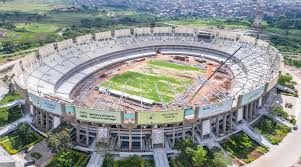
On Sports, the CS expressed the President’s commitment to promoting sports and an important driver of the economy hence the partnership to upgrade the Jaramogi Oginga Odinga Stadium to a 20000-sitting capacity in effort to make it an international Stadium.  

On maritime issues, a ship yard will be constructed. A technical TEAM led by PS will bring together the officers from DoD and CECMs, COs and Directors relevantly appointed will be meeting in Siaya between 17th and 19th June to survey the grounds, do master plans, do designs and generate estimates and work plans that will see significant progress by September.

The CS also wrote on her X handle “discussed opportunities for collaboration between the ministry of defense and Siaya county government in infrastructure development and maritime security with the governor James Orengo at Defence Headquarters.”

Mod, through defense forces will oversee the upgrading of Jaramogi Oginga Odinga stadium to a 20,000 sitter, ultra-modern multi -sport facility and modernization of the Siaya level 5 hospital.

Ahead of the State House visit, Orengo also met with cabinet Secretary for Treasury and Economic Planning and wrote on his X handle “held discussions with Hon Mbadi  on development priorities in Siaya ahead of tomorrow’s meeting with the president William Ruto together with a delegation of Siaya leaders.”

During the Statehouse visit, President Ruto promised to invest Sh 1 billion to develop the Usenge pier and the attendant port infrastructure to stimulate blue economy.

President also promised to construct 16 markets in the county at a cost of Sh 2.5 billion and allocated Sh 1.6 billion in the connection of more than 16,000 households to power to drive entrepreneurship.

Orengo in his speech said “Please come to our aide in transforming Siaya, because where Agriculture is having impact on society, what national government invests in infrastructure and direct investment in enterprise, you can change the life positively on the communities.

We believe that if in the agricultural sector, in Siaya like you have said there are interventions in terms of infrastructure and investment, like in cotton, I think Siaya would be doing very well.

When you are talking about agriculture, we are excited and blue economy, because for impactful and positive transformation, we think that agriculture and blue economy is key to Siaya.

By the way, Siaya used to grow coffee, and we were happy to have received your cabinet secretary Mr. Wycliff Oparanya, he came and had a session with the farmers.”

Tuju said “I want to request the people of Siaya that there is something we should not take for granted, in this country.

That is peace and stability that enables us to even talk about the development agenda that we have here today.

And I like to congratulate his Excellency, the President and of course congratulate Prime Minister Raila Odinga for the very possible positive step that the two of them have taken to make us be where we are today.

I don’t take it for granted because, because I know out of the 10 failed states in the whole world, six are in our region.

So, it is very easy for us to make a lot of noise and to say a lot of things in funerals. Please this is a window of opportunity.

Let’s focus,” he said.

Siaya senator Dr Oburu Oginga said Siaya people are united and visited the state house as team and that the Siaya people want development.

“We are in broad-based government.

This is not time for us to be talking too much.

Let us work and work together, because development fears noise,” he said.

Edited by: Hope Barbra

Reality Check: Honeymoon is Over for Governor Wanga as the Palace is on Fire

0

By Team

The first woman Governor from Western Kenya and also the first woman Orange Democratic Movement (ODM) National Chairperson, Gladys Nyasuna Wanga, is currently facing a reality check with the unfolding political events in her backyard.

The celebrations that marked Wanga’s election as the Homa Bay Governor and subsequent appointment as ODM National Chairperson are fast coming to a screeching halt.

Homa Bay, the county of endless potential, is turning out to be the county of endless trouble for the Governor, with emerging political dissent within her government, battles and power struggles at the county assembly, protests by contractors over pending bills, the death of a key ally, fallout among allies, allegations of corruption and financial impropriety, and the changing narrative over performance and service delivery.

Homa Bay Majority Leader Mr Richard Ogindo may have inadvertently opened the lid when he accused some of the County Executive Committee Members (CECs) and nationally elected leaders of being behind plans to impeach him—an effort, he claims, meant to sabotage the Governor’s ongoing development agenda.

“I want to appeal to all the elected Members of the National Assembly and the Senate from Homa Bay that we only have one elected Governor and they should let her work,” Ogindo said.

Ogindo asserted that the planned impeachment was not meant to affect the Assembly but was targeted at the Governor.

The statement is powerful and telling, and with accusations levelled against CECs in her cabinet, it could point to a divided government reading from different scripts.

Ogindo survived impeachment after chaos erupted in the Assembly when Speaker Mr Polycarp Okombo denied receiving a petition motion to impeach the Majority Leader.

Ogindo, a key ally of Wanga, hails from the vote-rich Ndhiwa Constituency and is currently preparing to run for Parliament, which has led to a fallout between the Governor and area MP Martin Owino.

Ogindo, the immediate former Speaker Mr Julius Gaya, and former Budget Chairman Jeff Ongoro formed the “kitchen cabinet” in Wanga’s administration from the Assembly.

They were so powerful that most Members of the County Assembly were often forced to pledge allegiance to them. But following the fallout, Gaya was forced to resign as Speaker, declined an appointment to the cabinet, and instead settled for the largely ceremonial role of the Governor’s political advisor.

Ongoro also fell out of favour and was removed from the powerful Budget Committee. He is now leading a faction of MCAs attempting to impeach Ogindo.

The assassination of Kasipul MP Charles Ongondo Were was a hammer blow to Wanga, as he was the counterweight to her Deputy, Joseph Oyugi Magwanga.

Magwanga and Ongondo were bitter political rivals who never saw eye to eye. Ongondo often claimed that he would be Wanga’s running mate in the 2027 General Election.

His death has left a vacuum and exposed Wanga to vulnerabilities within the greater Rachuonyo political matrix, where some leaders are uneasy with her leadership.

Wanga had previously rallied a section of Homa Bay MPs to support the awarding of a direct ODM nomination ticket to Boyd Were, the son of the deceased.

However, this proposal is facing opposition from within her own cabinet, especially from CEC Joash Aloo, who has expressed interest in the seat and defied the Governor’s proposal that he step aside for Boyd.

Interestingly, Aloo was proposed for a cabinet appointment by Ongondo, who had been grooming him to take over the Kasipul seat in 2027, if circumstances remained unchanged.

Aloo has been holding a series of political meetings in Kasipul and other towns to marshal support, which has not sat well with the Governor, who wants him to abandon his ambition.

It is only a matter of time before Aloo either resigns or is sacked for defying the Governor over the Kasipul by-election.

There is growing disquiet within the cabinet, with some CECs said to be unhappy with the Governor’s management and leadership style. The county may soon witness a shake-up or an open rebellion.

Similarly, her efforts to enlist her deputy’s support for Boyd’s candidacy also failed when Magwanga declined and instead declared that he would support all candidates.

In what could be interpreted as a veiled attack on Wanga, Magwanga said interference with the Kasipul nomination and by-election by outsiders would not be tolerated.

“Let me say, the people of Kasipul should be allowed to make a choice of their preferred MP who will serve them. Unnecessary interference and peddling of cheap propaganda by some quarters will be rebuffed accordingly.

I was nominated by my party ODM and we ran on a joint party ticket with Governor Gladys Wanga. If anyone intends to bring a stranger into the mix, let us all resign and go back to the electorate to get a fresh mandate.

I want to state it here: I will not run for the parliamentary seat. I have graduated from that to the next level. So anyone dreaming of Magwanga going back to Parliament must be out of their mind,” he said in a recent interview.

The massive historical pending bills dating back to the reign of the first Governor, Cyprian Awiti, along with the current ones, have overstretched the county government and put it in frequent conflict with contractors.

The administration’s cat-and-mouse game over payment of these bills may trigger a flurry of activities, including litigation and demonstrations by contractors.

Likewise, the administration has come under scrutiny for alleged corruption and mismanagement of public and donor funds.

A red flag over the suspected misappropriation of public funds in the Department of Health was raised by the Head of Treasury, who called for disciplinary action against the Chief Officer.

In a letter dated 26 June 2024 from the County Executive Committee Member for Finance, Mr Solomon Obiero, to the County Secretary, titled “Suspected Misappropriation of Public Funds”, he wrote:

“Reference is made to a letter by the County Chief of Public Health and Medical Services, Ref No MOH/HB/CTY/COH/GEM/VOL.c9/FIN/6/23/Vol.2 (iB) dated 12 June 2024. I raised concern over the expenditure of NHIF and Linda Mama reimbursements amounting to Sh325,531,365 at source by his approval without the funds being transferred to the FIF-SPA.

In this regard, it is my belief as the Head of County Treasury that the accounting officer has, pursuant to Section 156(2)(b) of the PFM County Government Regulations, 2015, and the Homa Bay County FIF Act, 2023, issued AIEs contrary to our financial management procedures.

Therefore, the purpose of this letter is to refer the matter to you as the Head of Public Service for appropriate action under the statutory and other conditions of employment applicable to his improper conduct.”

However, Chief Officer Dr Kevin Osuri confirmed receipt of the letter from the Head of Treasury, saying the action was in line with the FIF Act and PFM regulations.

“The 2024 letter was in keeping with the FIF Act and PFM. Completely in order. It wasn’t an issue after we demonstrated that all facilities adhered to the Act,” he responded.

Concerns have also emerged over Sh500 million—part of the Sh1.4 billion allocated for infrastructural development by development partners under the Kenya Informal Settlements Improvement Project (KISIP 2) in Homa Bay County.

The Sh500 million was the first disbursement tranche of the total fund, but no work has commenced despite the release of the money.

Equally, questions have arisen over the awarding of the tender, with allegations that the first two bidders were overlooked in favour of the third.

The Principal Secretary in the State Department of Housing and Urban Development responded to an information request by a Homa Bay-based civic organisation, stating that implementation of the infrastructure upgrade had not yet commenced.

The five-year project began in March 2021 and is expected to close in July 2025 for International Development Agency (IDA) financing and in December 2028 for Agence Française de Développement (AFD) financing.

The question remains: Who will bring water to stop the fire?

Edited by Sandra Blessing.