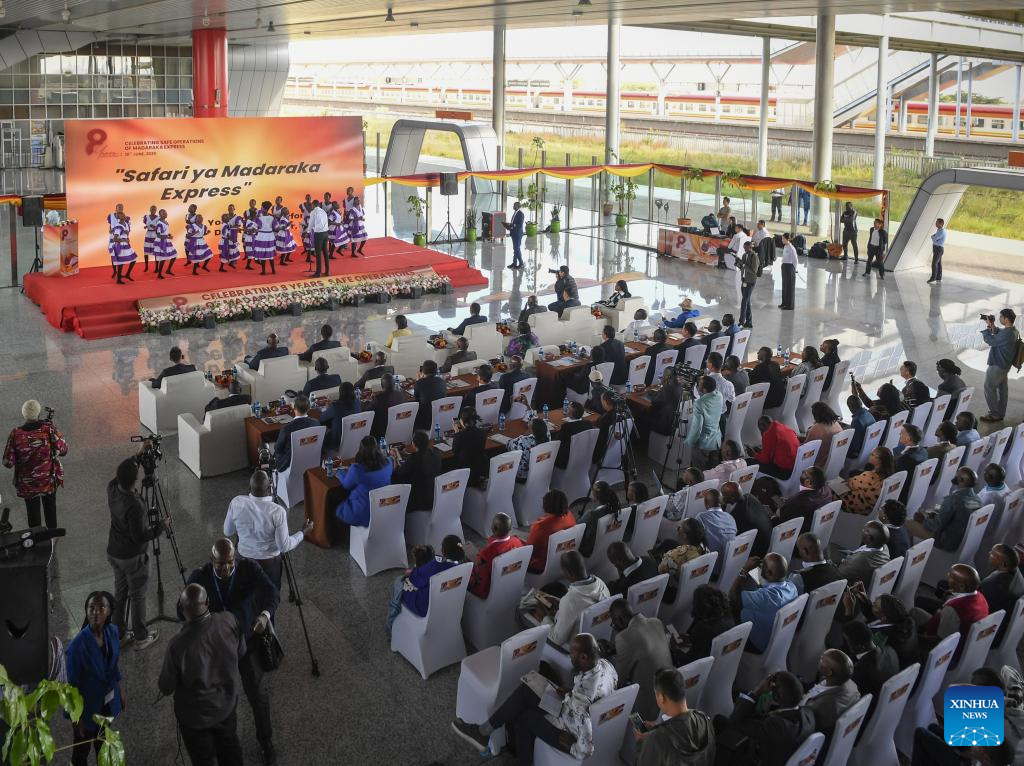
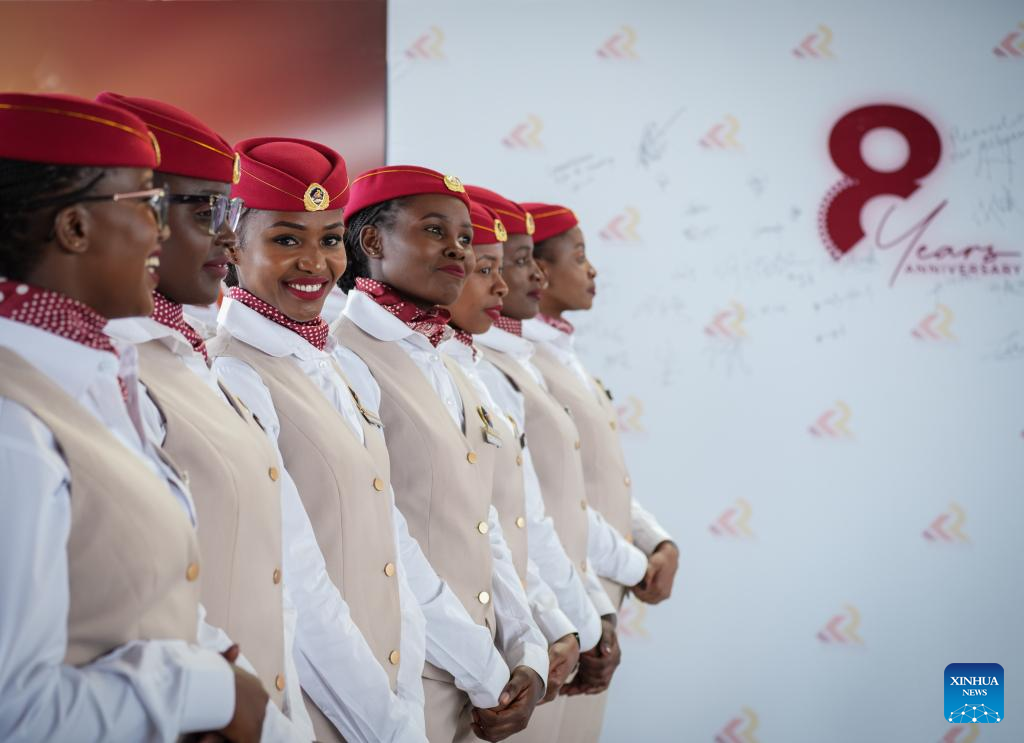
Dancers perform during a celebration to mark eight years of seamless operation of the Chinese-built Mombasa-Nairobi Standard Gauge Railway (SGR) in Kenya in Nairobi, Kenya, June 10, 2025. (Xinhua/Wang Guansen)
NAIROBI, June 11 (Xinhua) — A celebration to mark eight years of seamless operation of the Chinese-built Mombasa-Nairobi Standard Gauge Railway (SGR) in Kenya was held here on Tuesday.
Addressing the ceremony, Chinese Ambassador to Kenya Guo Haiyan praised the SGR as a flagship project of the China-proposed Belt and Road Initiative (BRI) and a vital step in Kenya’s journey towards economic transformation.
China stands ready to work with Kenya to implement the important consensus of the two heads of state and strengthen cooperation in infrastructure, said Guo.
“It is now eight years and we are still going strong with notable improvement over the years in response to customers’ expectations,” said Abdi Bare, chairman of Kenya Railways Corporation. Bare added that both the SGR passenger and freight service have revolutionized mobility in the country, promoting connectivity, trade and industrial progress.
By the end of May 2025, the SGR has transported over 15.3 million passengers and over 40.3 million tons of cargo. ■
Students of the University of Nairobi perform during a celebration to mark eight years of seamless operation of the Chinese-built Mombasa-Nairobi Standard Gauge Railway (SGR) in Kenya in Nairobi, Kenya, June 10, 2025. (Xinhua/Wang Guansen)
A celebration to mark eight years of seamless operation of the Chinese-built Mombasa-Nairobi Standard Gauge Railway (SGR) in Kenya is held in Nairobi, Kenya, June 10, 2025. (Xinhua/Li Yahui)
A woman takes a photo with a board marking eight years of seamless operation of the Chinese-built Mombasa-Nairobi Standard Gauge Railway (SGR) in Kenya in Nairobi, Kenya, June 10, 2025. (Xinhua/Wang Guansen)
A celebration to mark eight years of seamless operation of the Chinese-built Mombasa-Nairobi Standard Gauge Railway (SGR) in Kenya is held in Nairobi, Kenya, June 10, 2025. (Xinhua/Li Yahui)
Railway workers attend a celebration to mark eight years of seamless operation of the Chinese-built Mombasa-Nairobi Standard Gauge Railway (SGR) in Kenya in Nairobi, Kenya, June 10, 2025. (Xinhua/Li Yahui)
The Author is a Strategic Thinker, an Advocate of the High Court of Kenya, former Kisumu County Attorney, and a Civic Educator passionate about Youth Empowerment, National and International Development, and Generational justice.
A significant public feud has erupted between the current U.S. President Donald Trump and tech billionaire Elon Musk, marking a dramatic shift in their once-close alliance. The fallout began when Musk criticized Trump’s sweeping tax proposal, the “Big Beautiful Bill,” labelling it a “disgusting abomination” and suggesting the formation of a new centrist political party. Trump responded by threatening to revoke government subsidies for Musk’s ventures, including SpaceX and Starlink .
This clash has had immediate financial repercussions, with Tesla shares plunging over 14% and Trump Media & Technology stocks falling by 8%. The dispute has also raised concerns about the future of U.S. space programs and the political landscape, as Musk contemplates launching a new political movement.
Implications for Africa: A Complex Landscape
While the Trump-Musk feud is primarily a U.S. domestic issue, its ramifications are being felt across Africa, particularly in the realm of digital infrastructure and international relations.
1. Starlink’s Impact on African Telecommunications
Elon Musk’s satellite internet service, Starlink, has expanded rapidly across Africa, including Kenya, where it began operations in 2023. While the service promises to provide high-speed internet to underserved areas, it has faced regulatory challenges. In Kenya, for instance, local telecom giant Safaricom has raised concerns about potential interference with mobile networks and has urged the Communications Authority of Kenya to reconsider granting independent licenses to satellite service providers.
Additionally, Starlink’s pricing strategy has been criticized for predatory pricing, potentially undermining local internet service providers. Jamii Telecommunications, a Kenyan ISP, has requested an investigation into these practices, which could stifle competition and harm the local market.
2. Geopolitical Tensions and Foreign Aid
The Trump administration’s threats to cut funding to countries like South Africa over land reform policies have raised concerns about the politicisation of international aid. Such actions could strain diplomatic relations between the U.S. and African nations, potentially affecting cooperation on various fronts, including trade, security, and development assistance.
3. Regulatory Challenges and Digital Sovereignty
African governments are increasingly scrutinising foreign tech companies operating within their borders. Kenya’s recent hike in licensing fees for satellite internet providers, including Starlink, reflects a move towards ensuring that these companies contribute fairly to the local economy and adhere to national regulations.
This trend underscores the importance of digital sovereignty, as African nations seek to maintain control over their digital infrastructure and protect their markets from potential monopolistic practices by foreign entities.
Conclusion: Navigating a Shifting Landscape
The escalating feud between Donald Trump and Elon Musk is more than a personal dispute; it is a reflection of broader tensions between political power and corporate influence. For Africa, the outcome of this rift could have significant implications for digital infrastructure, economic policies, and international relations. As the continent continues to embrace digital transformation, it must navigate these challenges carefully, balancing the benefits of technological advancements with the need to protect local interests and maintain sovereignty.
Siaya County, the heart of opposition politics, is set to discard the hard ball politics for development projects, as the fiery governor, James Orengo moves from one government office to another to consolidate the emerging gains.
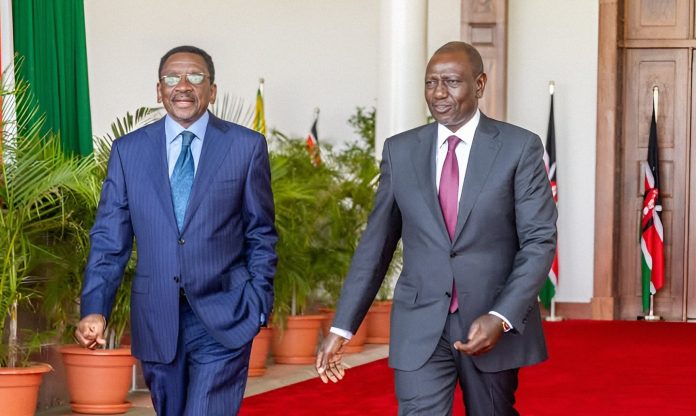
After the recent visit to State House to meet President William Ruto, where Orengo led delegation from the county and taking a cue from former Minister Raphael Tuju, who asked the local leaders to focus on the emerging opportunity, the governor is proving to be up to the task.
During the consultative meeting, Orengo requested President Ruto to help him to develop the county and from the visit, he went back to Siaya with basket full of goodies.
On Wednesday, Orengo was at the office of cabinet secretary for Defence Soipan Tuya where they discussed opportunities for collaboration between the Ministry of Defence and Siaya County Government in infrastructure development and maritime security.
Orengo wrote in his X handle “I had a successful meeting with the CS Ministry of Defence to discuss implementation of the presidential directive on development projects in Siaya County.”
The discussions which brought together the Governor and his relevant technical teams on the one hand and the CS with her technical team including her PS were specifically on Health, Sports and Maritime.
On health, the Ministry will partner with the County Government to design and construct a new block towards elevating the hospital to Level 5.
On Sports, the CS expressed the President’s commitment to promoting sports and an important driver of the economy hence the partnership to upgrade the Jaramogi Oginga Odinga Stadium to a 20000-sitting capacity in effort to make it an international Stadium.
On maritime issues, a ship yard will be constructed. A technical TEAM led by PS will bring together the officers from DoD and CECMs, COs and Directors relevantly appointed will be meeting in Siaya between 17th and 19th June to survey the grounds, do master plans, do designs and generate estimates and work plans that will see significant progress by September.
The CS also wrote on her X handle “discussed opportunities for collaboration between the ministry of defense and Siaya county government in infrastructure development and maritime security with the governor James Orengo at Defence Headquarters.”
Mod, through defense forces will oversee the upgrading of Jaramogi Oginga Odinga stadium to a 20,000 sitter, ultra-modern multi -sport facility and modernization of the Siaya level 5 hospital.
Ahead of the State House visit, Orengo also met with cabinet Secretary for Treasury and Economic Planning and wrote on his X handle “held discussions with Hon Mbadi on development priorities in Siaya ahead of tomorrow’s meeting with the president William Ruto together with a delegation of Siaya leaders.”
During the Statehouse visit, President Ruto promised to invest Sh 1 billion to develop the Usenge pier and the attendant port infrastructure to stimulate blue economy.
President also promised to construct 16 markets in the county at a cost of Sh 2.5 billion and allocated Sh 1.6 billion in the connection of more than 16,000 households to power to drive entrepreneurship.
Orengo in his speech said “Please come to our aide in transforming Siaya, because where Agriculture is having impact on society, what national government invests in infrastructure and direct investment in enterprise, you can change the life positively on the communities.
We believe that if in the agricultural sector, in Siaya like you have said there are interventions in terms of infrastructure and investment, like in cotton, I think Siaya would be doing very well.
When you are talking about agriculture, we are excited and blue economy, because for impactful and positive transformation, we think that agriculture and blue economy is key to Siaya.
By the way, Siaya used to grow coffee, and we were happy to have received your cabinet secretary Mr. Wycliff Oparanya, he came and had a session with the farmers.”
Tuju said “I want to request the people of Siaya that there is something we should not take for granted, in this country.
That is peace and stability that enables us to even talk about the development agenda that we have here today.
And I like to congratulate his Excellency, the President and of course congratulate Prime Minister Raila Odinga for the very possible positive step that the two of them have taken to make us be where we are today.
I don’t take it for granted because, because I know out of the 10 failed states in the whole world, six are in our region.
So, it is very easy for us to make a lot of noise and to say a lot of things in funerals. Please this is a window of opportunity.
Let’s focus,” he said.
Siaya senator Dr Oburu Oginga said Siaya people are united and visited the state house as team and that the Siaya people want development.
“We are in broad-based government.
This is not time for us to be talking too much.
Let us work and work together, because development fears noise,” he said.
The first woman Governor from Western Kenya and also the first woman Orange Democratic Movement (ODM) National Chairperson, Gladys Nyasuna Wanga, is currently facing a reality check with the unfolding political events in her backyard.
The celebrations that marked Wanga’s election as the Homa Bay Governor and subsequent appointment as ODM National Chairperson are fast coming to a screeching halt.
Homa Bay, the county of endless potential, is turning out to be the county of endless trouble for the Governor, with emerging political dissent within her government, battles and power struggles at the county assembly, protests by contractors over pending bills, the death of a key ally, fallout among allies, allegations of corruption and financial impropriety, and the changing narrative over performance and service delivery.
Homa Bay Majority Leader Mr Richard Ogindo may have inadvertently opened the lid when he accused some of the County Executive Committee Members (CECs) and nationally elected leaders of being behind plans to impeach him—an effort, he claims, meant to sabotage the Governor’s ongoing development agenda.
“I want to appeal to all the elected Members of the National Assembly and the Senate from Homa Bay that we only have one elected Governor and they should let her work,” Ogindo said.
Ogindo asserted that the planned impeachment was not meant to affect the Assembly but was targeted at the Governor.
The statement is powerful and telling, and with accusations levelled against CECs in her cabinet, it could point to a divided government reading from different scripts.
Ogindo survived impeachment after chaos erupted in the Assembly when Speaker Mr Polycarp Okombo denied receiving a petition motion to impeach the Majority Leader.
Ogindo, a key ally of Wanga, hails from the vote-rich Ndhiwa Constituency and is currently preparing to run for Parliament, which has led to a fallout between the Governor and area MP Martin Owino.
Ogindo, the immediate former Speaker Mr Julius Gaya, and former Budget Chairman Jeff Ongoro formed the “kitchen cabinet” in Wanga’s administration from the Assembly.
They were so powerful that most Members of the County Assembly were often forced to pledge allegiance to them. But following the fallout, Gaya was forced to resign as Speaker, declined an appointment to the cabinet, and instead settled for the largely ceremonial role of the Governor’s political advisor.
Ongoro also fell out of favour and was removed from the powerful Budget Committee. He is now leading a faction of MCAs attempting to impeach Ogindo.
The assassination of Kasipul MP Charles Ongondo Were was a hammer blow to Wanga, as he was the counterweight to her Deputy, Joseph Oyugi Magwanga.
Magwanga and Ongondo were bitter political rivals who never saw eye to eye. Ongondo often claimed that he would be Wanga’s running mate in the 2027 General Election.
His death has left a vacuum and exposed Wanga to vulnerabilities within the greater Rachuonyo political matrix, where some leaders are uneasy with her leadership.
Wanga had previously rallied a section of Homa Bay MPs to support the awarding of a direct ODM nomination ticket to Boyd Were, the son of the deceased.
However, this proposal is facing opposition from within her own cabinet, especially from CEC Joash Aloo, who has expressed interest in the seat and defied the Governor’s proposal that he step aside for Boyd.
Interestingly, Aloo was proposed for a cabinet appointment by Ongondo, who had been grooming him to take over the Kasipul seat in 2027, if circumstances remained unchanged.
Aloo has been holding a series of political meetings in Kasipul and other towns to marshal support, which has not sat well with the Governor, who wants him to abandon his ambition.
It is only a matter of time before Aloo either resigns or is sacked for defying the Governor over the Kasipul by-election.
There is growing disquiet within the cabinet, with some CECs said to be unhappy with the Governor’s management and leadership style. The county may soon witness a shake-up or an open rebellion.
Similarly, her efforts to enlist her deputy’s support for Boyd’s candidacy also failed when Magwanga declined and instead declared that he would support all candidates.
In what could be interpreted as a veiled attack on Wanga, Magwanga said interference with the Kasipul nomination and by-election by outsiders would not be tolerated.
“Let me say, the people of Kasipul should be allowed to make a choice of their preferred MP who will serve them. Unnecessary interference and peddling of cheap propaganda by some quarters will be rebuffed accordingly.
I was nominated by my party ODM and we ran on a joint party ticket with Governor Gladys Wanga. If anyone intends to bring a stranger into the mix, let us all resign and go back to the electorate to get a fresh mandate.
I want to state it here: I will not run for the parliamentary seat. I have graduated from that to the next level. So anyone dreaming of Magwanga going back to Parliament must be out of their mind,” he said in a recent interview.
The massive historical pending bills dating back to the reign of the first Governor, Cyprian Awiti, along with the current ones, have overstretched the county government and put it in frequent conflict with contractors.
The administration’s cat-and-mouse game over payment of these bills may trigger a flurry of activities, including litigation and demonstrations by contractors.
Likewise, the administration has come under scrutiny for alleged corruption and mismanagement of public and donor funds.
A red flag over the suspected misappropriation of public funds in the Department of Health was raised by the Head of Treasury, who called for disciplinary action against the Chief Officer.
In a letter dated 26 June 2024 from the County Executive Committee Member for Finance, Mr Solomon Obiero, to the County Secretary, titled “Suspected Misappropriation of Public Funds”, he wrote:
“Reference is made to a letter by the County Chief of Public Health and Medical Services, Ref No MOH/HB/CTY/COH/GEM/VOL.c9/FIN/6/23/Vol.2 (iB) dated 12 June 2024. I raised concern over the expenditure of NHIF and Linda Mama reimbursements amounting to Sh325,531,365 at source by his approval without the funds being transferred to the FIF-SPA.
In this regard, it is my belief as the Head of County Treasury that the accounting officer has, pursuant to Section 156(2)(b) of the PFM County Government Regulations, 2015, and the Homa Bay County FIF Act, 2023, issued AIEs contrary to our financial management procedures.
Therefore, the purpose of this letter is to refer the matter to you as the Head of Public Service for appropriate action under the statutory and other conditions of employment applicable to his improper conduct.”
However, Chief Officer Dr Kevin Osuri confirmed receipt of the letter from the Head of Treasury, saying the action was in line with the FIF Act and PFM regulations.
“The 2024 letter was in keeping with the FIF Act and PFM. Completely in order. It wasn’t an issue after we demonstrated that all facilities adhered to the Act,” he responded.
Concerns have also emerged over Sh500 million—part of the Sh1.4 billion allocated for infrastructural development by development partners under the Kenya Informal Settlements Improvement Project (KISIP 2) in Homa Bay County.
The Sh500 million was the first disbursement tranche of the total fund, but no work has commenced despite the release of the money.
Equally, questions have arisen over the awarding of the tender, with allegations that the first two bidders were overlooked in favour of the third.
The Principal Secretary in the State Department of Housing and Urban Development responded to an information request by a Homa Bay-based civic organisation, stating that implementation of the infrastructure upgrade had not yet commenced.
The five-year project began in March 2021 and is expected to close in July 2025 for International Development Agency (IDA) financing and in December 2028 for Agence Française de Développement (AFD) financing.
The question remains: Who will bring water to stop the fire?
Chaos rocked Homa Bay county assembly after a section of member of the county assembly were barred from gaining entry into the house after alleged attempt to impeach the majority leader Mr. Richard Ogindo.
And Homa Bay speaker, Mr. Polycarp Okombo denied having received any petition in his office regarding the impeachment motion against the majority leader.
While separately, Ogindo accused some of the County Executive Members, National elected leaders of being behind the plans to impeach and was meant to sabotage the ongoing splendid development agenda of Governor Gladys Wanga.
“I want to appeal to all the elected Members of the National Assembly’s and the Senate from Homa Bay that we only have elected Governor and they should let her work,” Ogindo said
Ogindo said the planned impeachment were not meant to affect the Assembly but were targeting the Governor.
Okombo said his office had not received any petition motion against the Majority leader.
“My office has not received any petition regarding the impeachment of the Majority leader Richard Ogindo. What has been going around are just rumors from the social media and none of the members has forwarded any signed petition against the Ogindo,” he said.
The Speakers statement comes after a seven of Members of the County Assembly accompanied by close to 50 youths tried to storm into the Assembly compound citing plans to impeach the Majority leader.
However their attempts to gain entry into the house were thwarted the Security Officer, leading to chaotic scenes with police forced to use teargas to contain the situation.
“What we are hearing are just rumors from the social media and none of the Members has ever come to my office with any petition indicating enough signatures to remove the Majority leader,” Okombo said.
“As a Speaker I always advocate for unity, we accept divergent opinions from everyone and we are working as one I’m the house since we want to exist as a whole without losing any member,” he added.
The Speaker hit out at the seven members who tried to storm the house saying looking at their history they used to manipulate the past regime for financial gain.
“We could never ascertain the reasons behind the alleged impeachment since, there was no available documents to prove that,” he said.
The Speaker who was in company of the Majority leader and other 43 MCAs were speaking at the Assembly grounds after the morning session.
Ogindo however accused some of the bloggers of fueling the impeachment motion.
Ogindo said that according to the law, Majority Leader can never be impeached but can only be removed by party members and the party he or she serves.
According to Ogindo, on Tuesday they had a business in the house as usual which was successfully transacted until the house was adjourned after the chaotic attempts.
Support for Governor Wanga
Florence Ouma, an ODM Nominated MCA said it is unfortunate that some MCAs elected on ODM ticket were out to disrupt the assembly operation.
“This Assembly has given us equal treatment, it is in this Assembly that we have three nominated members who are chairs of various committees,” she said.
“Our Governor’s, Speakers and even the Majority leader Offices are open, instead of a member maligning their names outside there, why can’t they just walk into any office and express their grievances?” She questioned.
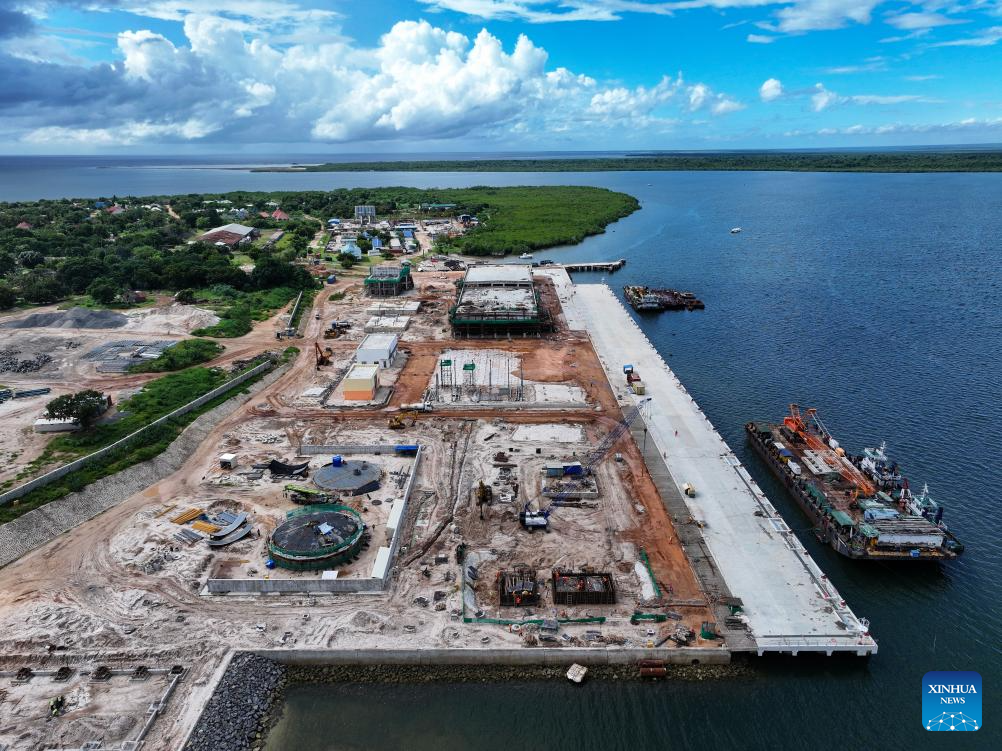
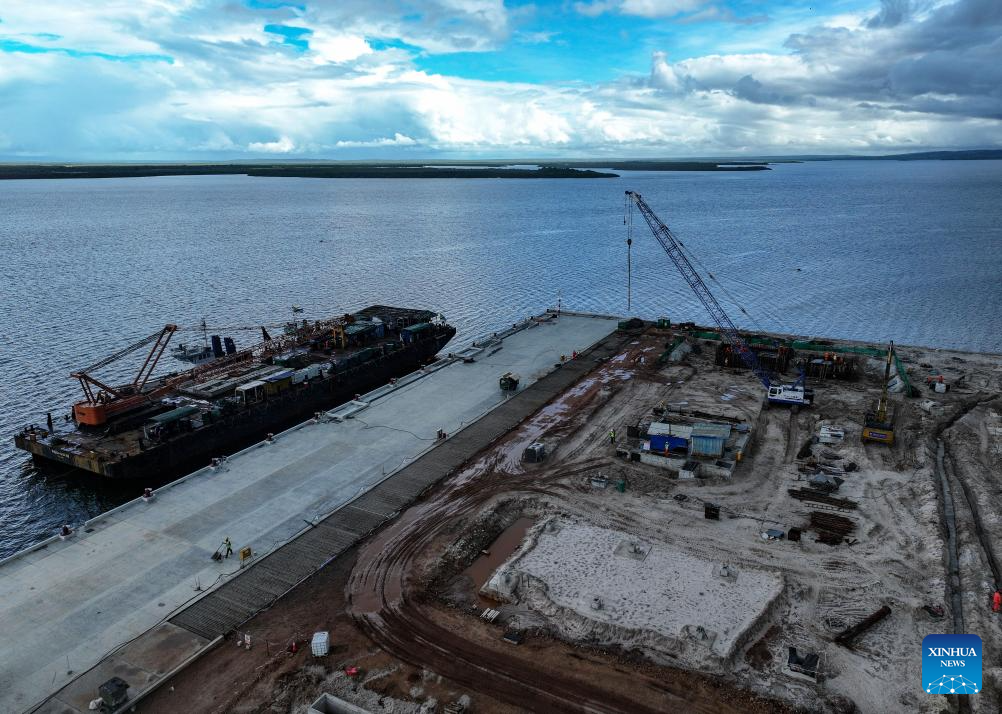
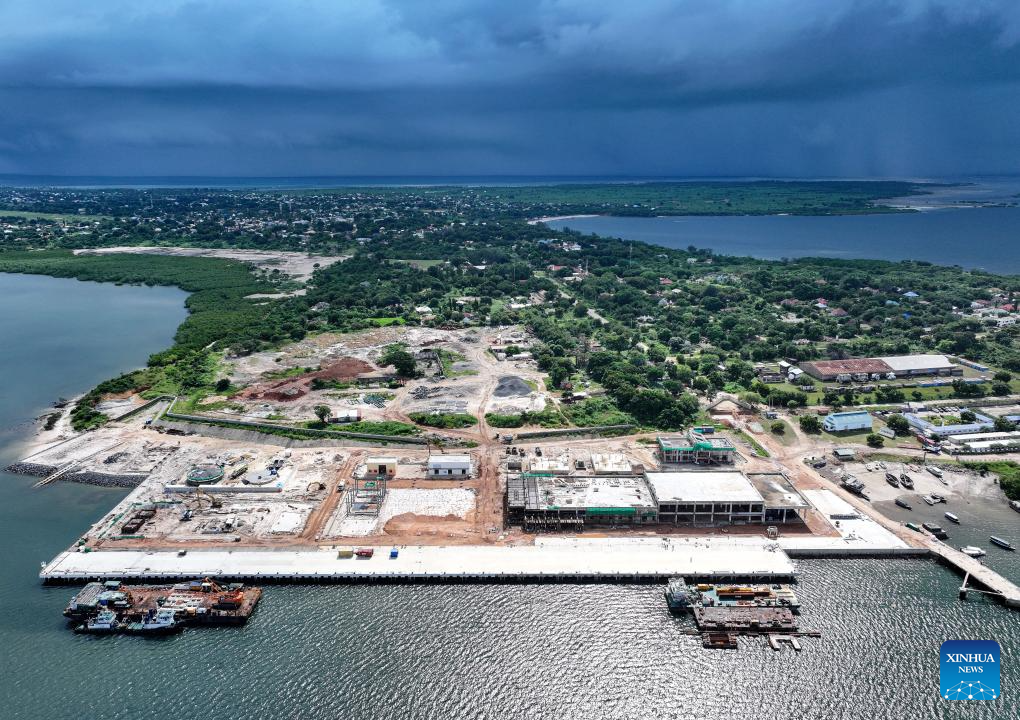
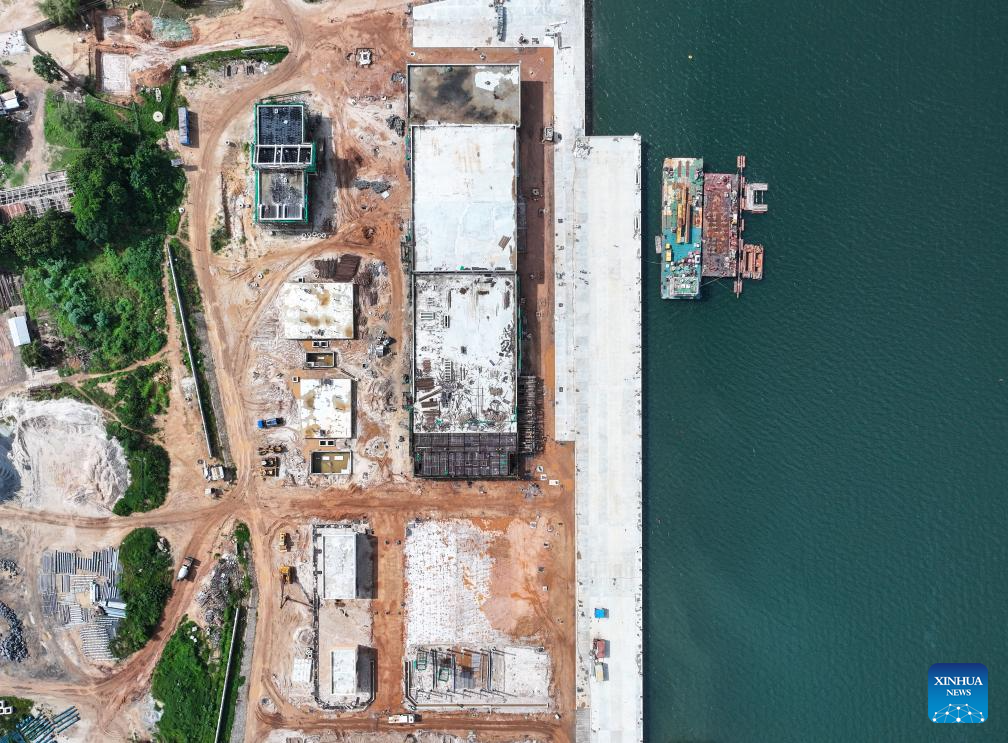
An aerial drone photo taken on April 23, 2025 shows the Kilwa Fishing Harbor under construction near Kilwa Kisiwani, Tanzania. The project, constructed by China Harbor Engineering Company Ltd (CHEC), a leading Chinese construction company, is Tanzania’s first modern large-scale fishing harbor. Covering about 5.6 hectares, it is designed to handle 60,000 tonnes of fish annually and can dock deep-sea fishing vessels, according to Chen Zhifeng, vice project manager of the CHEC Tanzania maritime project department. (Xinhua/Li Yahui)
by Xinhua writer Hua Hongli
DAR ES SALAAM, June 9 (Xinhua) — A gentle sea breeze stirs the trees on a quiet island off the southeastern coast of Tanzania. Here lie the ruins of Kilwa Kisiwani, once a bustling port on the Indian Ocean trade route, where ships loaded with gold, spices, and porcelain gathered in significant numbers.
Now, just across the water, another port is taking shape. The Kilwa Fishing Harbor, dubbed a “port of the future,” is rising with ambition.
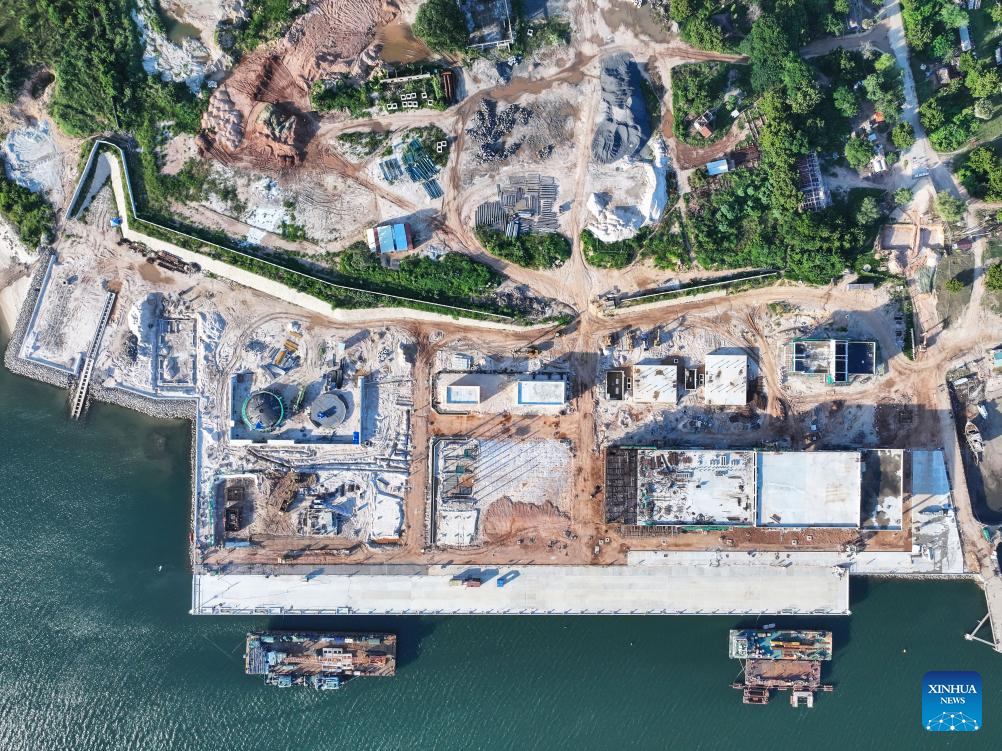
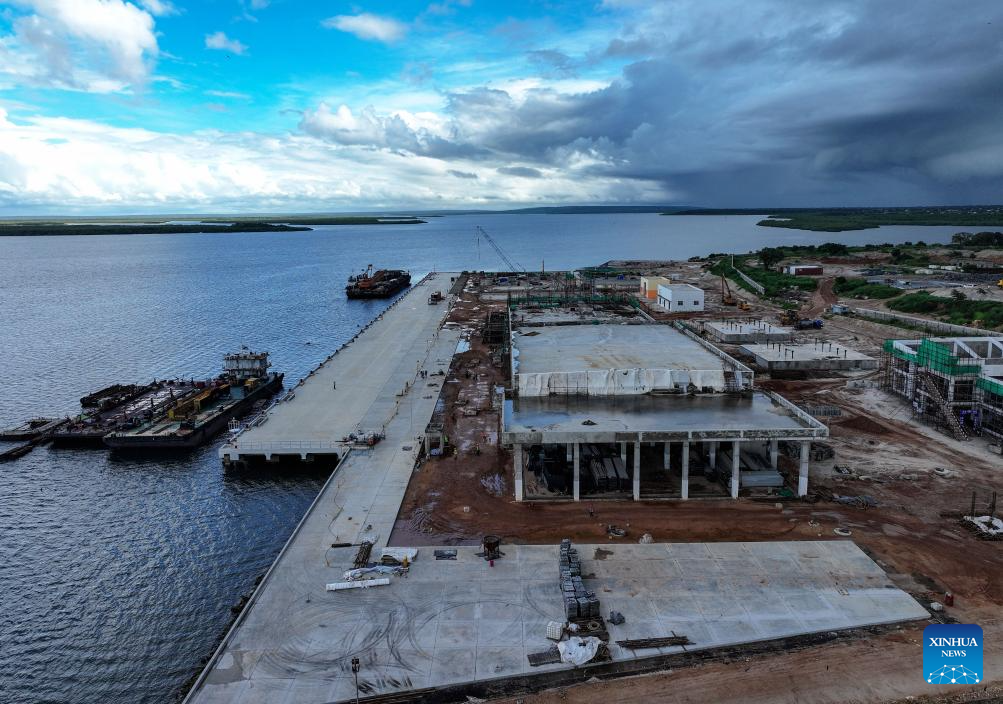
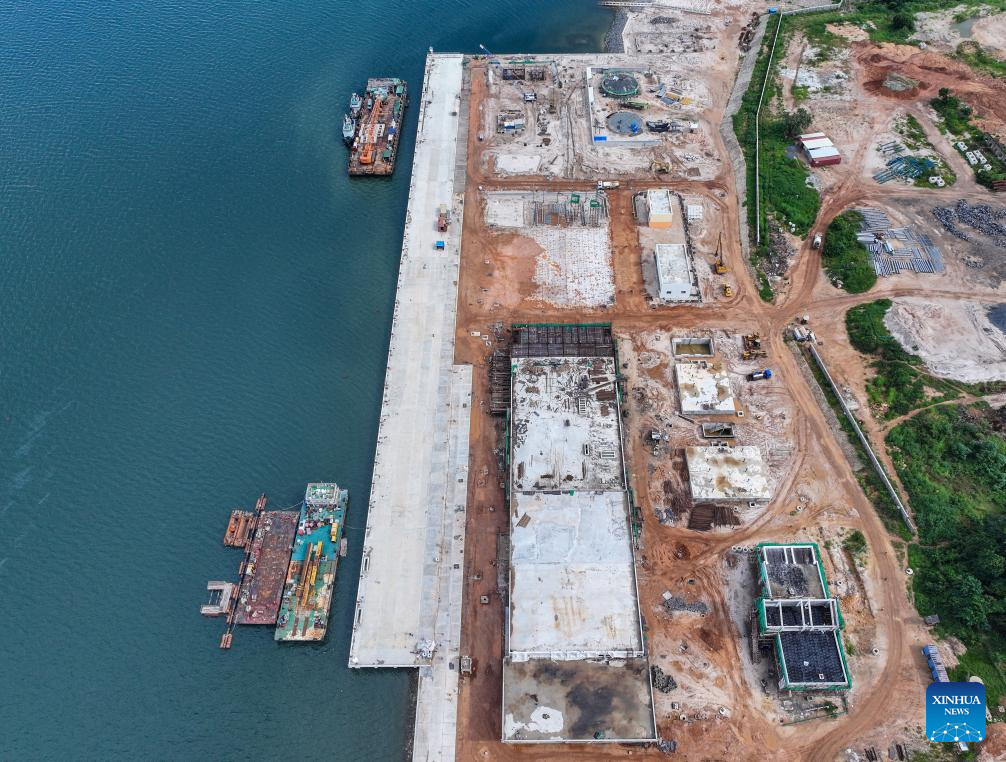
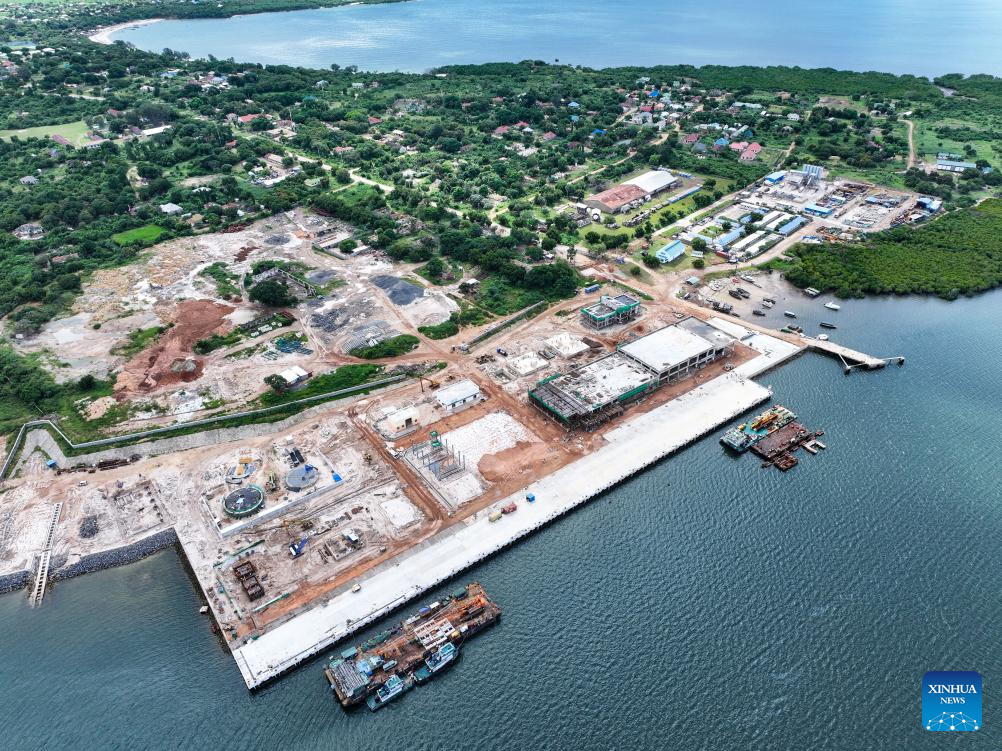
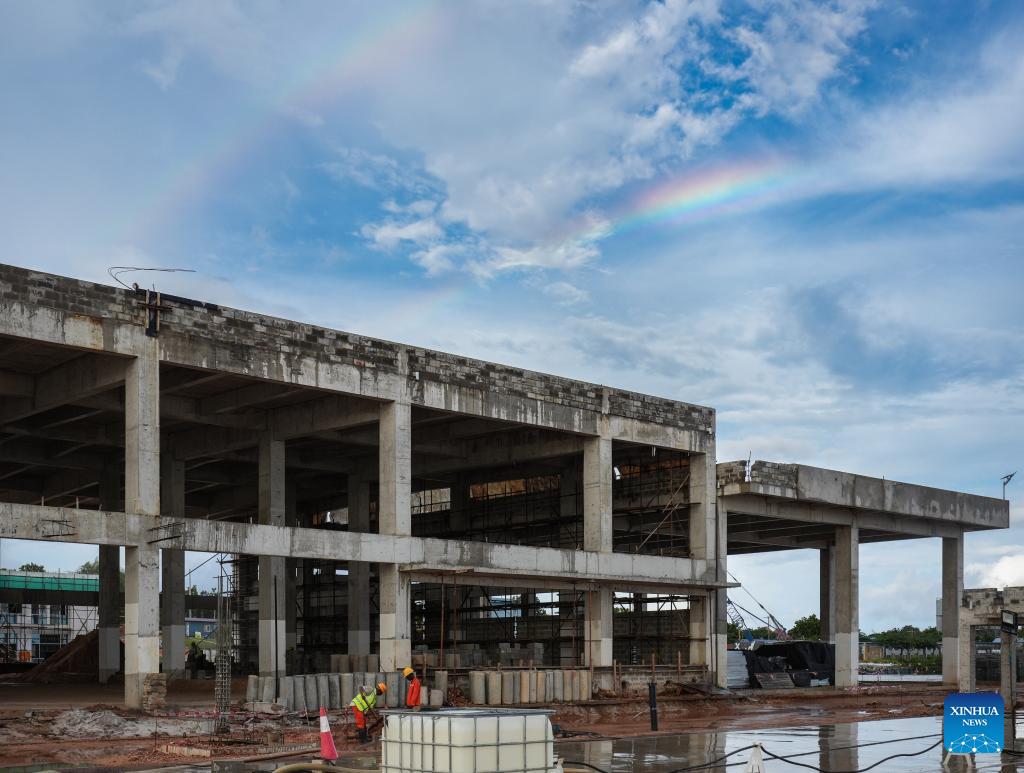
A 315-meter-long jetty extends into the ocean like a steel arm. Nearby, construction is in full swing on cold storage facilities, a trading market, office buildings, and a sewage treatment plant. This new harbor is expected to anchor Tanzania’s blue economy for years to come.
Historical records show that Chinese navigator Zheng He led massive fleets during the Ming Dynasty (1368-1644 AD) on seven expeditions to the Indian Ocean, reaching as far as East Africa and the Red Sea.
“Many pieces of Chinese porcelain have been unearthed at the Kilwa Kisiwani site. It shows how long the friendship between Tanzania and China has existed,” said Shomari Rajabu Shomari, historical curator of the National Museum of Tanzania.
“Six hundred years ago, the Chinese came in peace to trade. Now, six hundred years later, they are helping us build a port that leads to prosperity,” he told Xinhua in an interview, pointing to an old chart of a 15th-century Chinese fleet.
The project, constructed by China Harbor Engineering Company Ltd (CHEC), a leading Chinese construction company, is Tanzania’s first modern large-scale fishing harbor. Covering about 5.6 hectares, it is designed to handle 60,000 tonnes of fish annually and can dock deep-sea fishing vessels, according to Chen Zhifeng, vice project manager of the CHEC Tanzania maritime project department.
The project is expected to be completed in September. Tanzanian President Samia Suluhu Hassan attended the groundbreaking ceremony in 2023, emphasizing its significance to the national economy and people’s livelihoods.
Tanzania boasts abundant marine resources, and the waters around the Kilwa District lie along the migration route of tuna. Yet, for years, the lack of modern fishing facilities has forced local fishermen to maneuver small boats close to the shore. Without proper cold storage, their catch spoils easily, resulting in unstable incomes.
The fishermen’s hardship mirrors a major bottleneck hindering Tanzania’s development of a blue economy. While the East African country has an extensive coastline, its deep-sea fishing capacity remains limited.
“Once completed, the cold storage and trading facilities will solve the preservation problem. Fishermen won’t have to worry about unsold catch, and deep-sea fishing will be viable,” said Chen.
At the construction site, nearly 600 direct jobs have been created, including skilled roles like welders, crane operators, and excavator drivers.
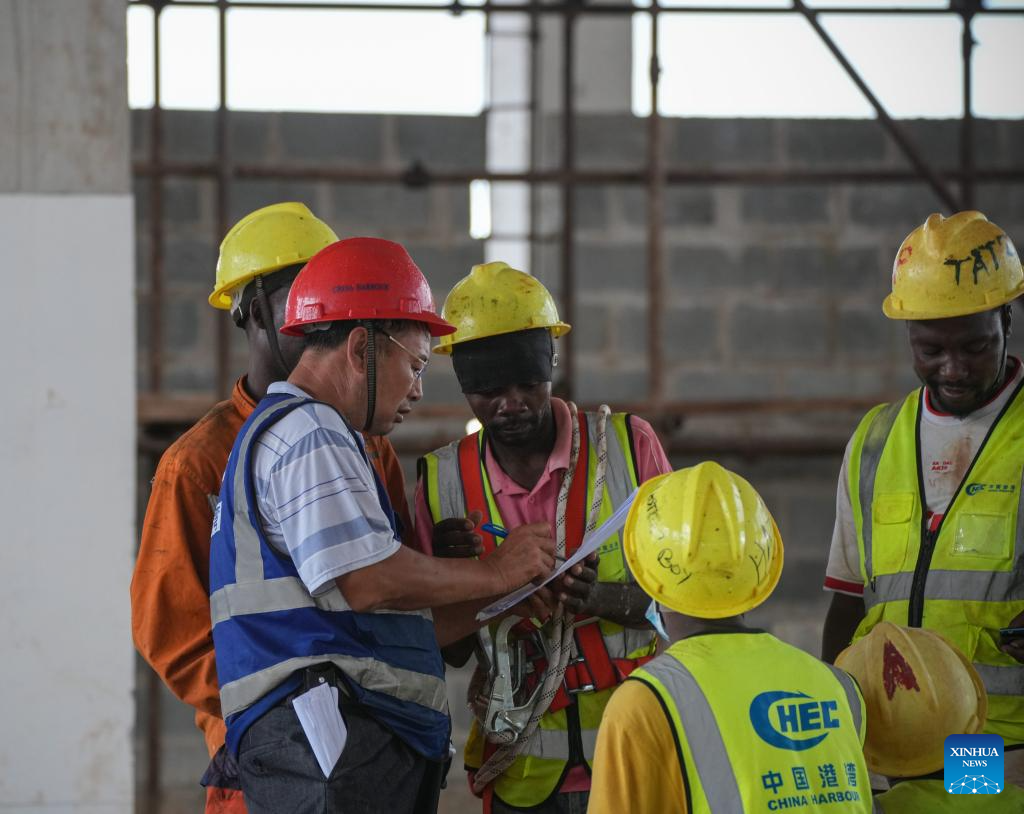
“Each Chinese engineer mentors a dozen or so Tanzanian workers, occasionally entrusting them with independent operation. This approach to training has enhanced the practical skills of local workers,” said Edwin Christopher, the project’s human resources and administration manager. “We believe that after the project, these trained workers will be capable of holding jobs in related sectors.”
The Chinese company is committed to sustainability as well. For the surrounding mangroves, they have established protective boundaries where machinery is prohibited. An environmental team conducts monthly beach cleanups to remove marine waste. Additionally, to ensure visitor experience and safety at the ruins of Kilwa Kisiwani, a boarding ladder was relocated away from the construction zone.
On a sightseeing boat, local guide Daudi Gideon gazed at the emerging fishing harbor, his eyes glittering with anticipation.
“When visitors come to see Kilwa Kisiwani, they will also see this remarkable new port. Once it’s completed, more people will come to learn about our history and witness our new chapter,” he envisioned. ■
An aerial drone photo taken on April 23, 2025 shows the Kilwa Fishing Harbor under construction near Kilwa Kisiwani, Tanzania. The project, constructed by China Harbor Engineering Company Ltd (CHEC), a leading Chinese construction company, is Tanzania’s first modern large-scale fishing harbor. Covering about 5.6 hectares, it is designed to handle 60,000 tonnes of fish annually and can dock deep-sea fishing vessels, according to Chen Zhifeng, vice project manager of the CHEC Tanzania maritime project department. (CHEC/Handout via Xinhua)
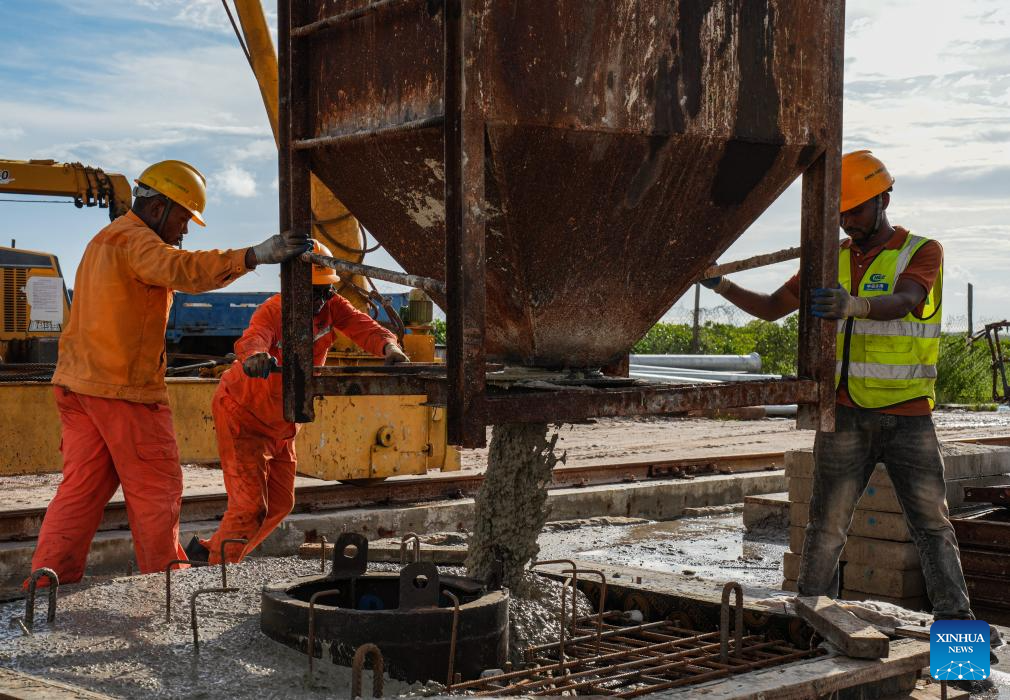
People work at the construction site of the Kilwa Fishing Harbor near Kilwa Kisiwani, Tanzania, on April 23, 2025. The project, constructed by China Harbor Engineering Company Ltd (CHEC), a leading Chinese construction company, is Tanzania’s first modern large-scale fishing harbor. Covering about 5.6 hectares, it is designed to handle 60,000 tonnes of fish annually and can dock deep-sea fishing vessels, according to Chen Zhifeng, vice project manager of the CHEC Tanzania maritime project department. (Xinhua/Li Yahui)
An aerial drone photo taken on April 23, 2025 shows the Kilwa Fishing Harbor under construction near Kilwa Kisiwani, Tanzania. The project, constructed by China Harbor Engineering Company Ltd (CHEC), a leading Chinese construction company, is Tanzania’s first modern large-scale fishing harbor. Covering about 5.6 hectares, it is designed to handle 60,000 tonnes of fish annually and can dock deep-sea fishing vessels, according to Chen Zhifeng, vice project manager of the CHEC Tanzania maritime project department. (Xinhua/Li Yahui)
People work at the construction site of the Kilwa Fishing Harbor near Kilwa Kisiwani, Tanzania, on April 23, 2025. The project, constructed by China Harbor Engineering Company Ltd (CHEC), a leading Chinese construction company, is Tanzania’s first modern large-scale fishing harbor. Covering about 5.6 hectares, it is designed to handle 60,000 tonnes of fish annually and can dock deep-sea fishing vessels, according to Chen Zhifeng, vice project manager of the CHEC Tanzania maritime project department. (Xinhua/Li Yahui)
An aerial drone photo taken on April 23, 2025 shows the Kilwa Fishing Harbor under construction near Kilwa Kisiwani, Tanzania. The project, constructed by China Harbor Engineering Company Ltd (CHEC), a leading Chinese construction company, is Tanzania’s first modern large-scale fishing harbor. Covering about 5.6 hectares, it is designed to handle 60,000 tonnes of fish annually and can dock deep-sea fishing vessels, according to Chen Zhifeng, vice project manager of the CHEC Tanzania maritime project department. (Xinhua/Li Yahui)
An aerial drone photo taken on April 23, 2025 shows the Kilwa Fishing Harbor under construction near Kilwa Kisiwani, Tanzania. The project, constructed by China Harbor Engineering Company Ltd (CHEC), a leading Chinese construction company, is Tanzania’s first modern large-scale fishing harbor. Covering about 5.6 hectares, it is designed to handle 60,000 tonnes of fish annually and can dock deep-sea fishing vessels, according to Chen Zhifeng, vice project manager of the CHEC Tanzania maritime project department. (Xinhua/Li Yahui)
An aerial drone photo taken on April 23, 2025 shows the Kilwa Fishing Harbor under construction near Kilwa Kisiwani, Tanzania. The project, constructed by China Harbor Engineering Company Ltd (CHEC), a leading Chinese construction company, is Tanzania’s first modern large-scale fishing harbor. Covering about 5.6 hectares, it is designed to handle 60,000 tonnes of fish annually and can dock deep-sea fishing vessels, according to Chen Zhifeng, vice project manager of the CHEC Tanzania maritime project department. (Xinhua/Li Yahui)
An aerial drone photo taken on April 23, 2025 shows the Kilwa Fishing Harbor under construction near Kilwa Kisiwani, Tanzania. The project, constructed by China Harbor Engineering Company Ltd (CHEC), a leading Chinese construction company, is Tanzania’s first modern large-scale fishing harbor. Covering about 5.6 hectares, it is designed to handle 60,000 tonnes of fish annually and can dock deep-sea fishing vessels, according to Chen Zhifeng, vice project manager of the CHEC Tanzania maritime project department. (Xinhua/Li Yahui)
People work at the construction site of the Kilwa Fishing Harbor near Kilwa Kisiwani, Tanzania, on April 23, 2025. The project, constructed by China Harbor Engineering Company Ltd (CHEC), a leading Chinese construction company, is Tanzania’s first modern large-scale fishing harbor. Covering about 5.6 hectares, it is designed to handle 60,000 tonnes of fish annually and can dock deep-sea fishing vessels, according to Chen Zhifeng, vice project manager of the CHEC Tanzania maritime project department. (Xinhua/Li Yahui)
An aerial drone photo taken on April 23, 2025 shows the Kilwa Fishing Harbor under construction near Kilwa Kisiwani, Tanzania. The project, constructed by China Harbor Engineering Company Ltd (CHEC), a leading Chinese construction company, is Tanzania’s first modern large-scale fishing harbor. Covering about 5.6 hectares, it is designed to handle 60,000 tonnes of fish annually and can dock deep-sea fishing vessels, according to Chen Zhifeng, vice project manager of the CHEC Tanzania maritime project department. (Xinhua/Li Yahui)
Guests and performers pose for a group photo after the opening ceremony of the 2025 China-Kenya Culture and Tourism Season and the commemoration of the 40th anniversary of China-Kenya acrobatic exchanges in Nairobi, Kenya, June 6, 2025. (Xinhua/Yang Guang)
The vitality of China-Kenya cooperation in culture and tourism was on full display Friday night at the opening ceremony of the 2025 China-Kenya Culture and Tourism Season and the commemoration of the 40th anniversary of China-Kenya acrobatic exchanges.
NAIROBI, June 9 (Xinhua) — The vitality of China-Kenya cooperation in culture and tourism was on full display Friday night at a gala event filled with music, dance and acrobatic performances.
Senior government officials, diplomats, scholars, industry leaders and members of the public attended the opening ceremony of the 2025 China-Kenya Culture and Tourism Season and the commemoration of the 40th anniversary of China-Kenya acrobatic exchanges.
The event was jointly hosted by Kenya’s Ministry of Gender, Culture, the Arts and Heritage, the Ministry of Tourism and Wildlife, and the Chinese Embassy in Kenya.
Hannah Wanjiku Cheptumo, cabinet secretary in the Ministry of Gender, Culture, the Arts and Heritage, praised the thriving cultural and tourism collaboration between China and Kenya. “Kenya and China enjoy cordial and fraternal relations based on mutual trust and benefit. This collaboration has deepened mutual understanding and fostered people-to-people connections,” Cheptumo said.
Actors perform acrobatics at the opening ceremony of the 2025 China-Kenya Culture and Tourism Season and the commemoration of the 40th anniversary of China-Kenya acrobatic exchanges in Nairobi, Kenya, June 6, 2025. (Xinhua/Yang Guang)
She said that Kenyan President William Ruto’s state visit to China in April marked a new chapter in cooperation across various sectors, including culture, education, media and the arts.
According to Cheptumo, Kenya has forged a strong partnership with China in building skills and expertise in cultural heritage and paleoanthropology, leading to award-winning discoveries at several archaeological sites.
Cooperation between Kenyan and Chinese media organizations has promoted content sharing and enhanced cross-cultural understanding, she added.
Cheptumo said the Kenya-China Film Festival, launched in August 2023, has revitalized the local creative economy by nurturing artistic talent and underscoring the two nations’ commitment to strengthening cultural bonds.
During the gala night, Kenyan youth showcased their acrobatic and lion dance skills, while Chinese artists captivated the audience with a cappella performances, ballet and traditional guitar strumming.
Actors perform acrobatics at the opening ceremony of the 2025 China-Kenya Culture and Tourism Season and the commemoration of the 40th anniversary of China-Kenya acrobatic exchanges in Nairobi, Kenya, June 6, 2025. (Xinhua/Yang Guang)
Chinese Ambassador to Kenya Guo Haiyan said there are broad opportunities and immense potential for deepening cultural and tourism cooperation between the two countries.
Guo said the series of events will further energize China-Kenya cultural and tourism ties, contributing to the building of a closer China-Kenya community with a shared future in the new era.
John Ololtuaa, principal secretary for tourism, said that culture and tourism have become vital pillars in strengthening bilateral relations between China and Kenya.
By the end of 2024, Kenya had received over 90,000 visitors from China for leisure, business and adventure, Ololtuaa said, noting the significant potential for growth in tourism cooperation.
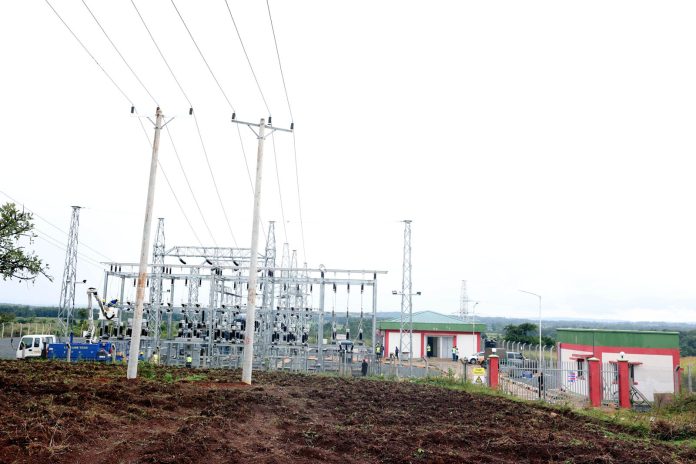
Residents and industrial electricity consumers have a reason to smile after Kenya Electricity Transmission Company Limited (KETRACO) has successfully energized the Awendo–Isebania (Masaba) Transmission Line.
This is a major milestone in improving electricity reliability and supply stability across Migori County and the broader South Nyanza region.
The 28-kilometre, 132kV single-circuit line is part of the Kenya Power Transmission Expansion Project (KPTEP), which seeks to enhance access to electricity in underserved regions.
The project also includes the construction of a new 132kV substation at Isebania (Masaba) and the extension of the existing 132/33kV Awendo Substation.
The works were executed by China Aerospace Construction Group Co., Ltd (CACGC), with joint financing from the Government of Kenya and the EXIM Bank of China, at a cost of Sh. 1.32 billion.
A new bulk supply point at Masaba will now directly serve Isebania, Migori and Kehancha towns.
This strategic upgrade shortens Kenya Power’s distribution lines, significantly cutting down the frequency and duration of outages. The improved power quality is set to benefit key regional institutions including the Sony Sugar Factory, Migori County Referral Hospital, Getonyanya Sweet Potatoes Factory, and the Isebania One Border Post (IOBP).
It is also expected to spur growth in small businesses, manufacturing and investment.
Previously, the region relied on a stretched 33/11kV line from Awendo Substation covering nearly 26 kilometres—an inefficient setup that led to unstable power and frequent disruptions, especially with rising demand.
KETRACO Managing Director, Dr. Eng. John Mativo hailed the energization as transformative.
“By introducing a new bulk supply point at Masaba, we’re significantly reducing line losses and improving voltage stability. This is a game-changer for Migori and the greater South Nyanza,” said Dr. Mativo.
The energized line sources electricity from the upgraded Awendo Substation, which is powered by both hydroelectric energy from the Sondu plant and geothermal energy from Olkaria, ensuring a stable, resilient, and sustainable power supply for the region’s homes, hospitals, industries, and businesses.
The Author is a Strategic Thinker, an Advocate of the High Court of Kenya, a former Kisumu County Attorney, and a Civic Educator passionate about Youth Empowerment, National and International Development, and Generational justice.
The recent directive by the Inspector General of Police, Mr. Douglas Kanja, placing the burden of fighting corruption squarely on the shoulders of County Commanders has reignited a national conversation on the integrity of Kenya’s police service. It’s a bold administrative move—but is it enough?
Across the nation, the infamous phrase “kitu kidogo” continues to define the everyday experience between citizens and traffic police. The systemic nature of this corruption, so casual it has become cultural—is symptomatic of a deeper institutional problem. It raises a fundamental question: Can the police effectively police themselves?
The Entrenched Culture of Corruption
Whether it is the matatu driver paying a bribe to avoid a ticket or a police officer demanding a ‘kitu kidogo‘ tokenism before releasing an impounded vehicle, the reality is stark: corruption is not an occasional misstep but a structural flaw. Numerous studies by bodies such as Transparency International place the Kenyan police force among the most corrupt institutions in the country.
Who benefits? The rot is rarely isolated to the officer on the ground. The money flows up the ranks. In return, there is silence, protection, and impunity. It is a shadow economy that thrives on secrecy and fear, and the victims are not just those who pay bribes but the justice system itself.
The Limits of Internal Oversight
While the National Police Service has internal mechanisms for discipline and conduct, expecting a force riddled with corruption to effectively self-regulate is optimistic at best and naive at worst. While the Inspector General has operational control, the law under the National Police Service Act envisions a professional and accountable force. However, the gap between policy and practice remains vast.
County Commanders, under this new directive, are now the front-line defenders of integrity. But are they empowered and incentivised to do so? What happens when the commander is complicit, or when whistleblowers are intimidated? Institutional culture must change, not just policy on paper.
Enter the Oversight Bodies: IPOA, EACC, and the DCI
The Independent Policing Oversight Authority (IPOA) was established to provide external checks on police operations. Its mandate includes investigating misconduct and recommending prosecutions. Yet, IPOA’s capacity is limited. Understaffed, underfunded, and often undermined, it struggles to keep up with thousands of cases annually.
The Ethics and Anti-Corruption Commission (EACC) and the Directorate of Criminal Investigations (DCI) also have roles in anti-corruption enforcement. However, jurisdictional overlap and bureaucratic inertia often blunt their effectiveness. Worse, the perception that law enforcement officers operate with impunity makes victims hesitant to report abuses.
What Can Be Done? Learning from Others
Globally, countries that have made significant strides in curbing police corruption share a few common threads:
Independent, Well-Resourced Oversight Bodies: Hong Kong’s Independent Commission Against Corruption (ICAC) is often cited as a success story.
Use of Technology: Body-worn cameras, GPS tracking of patrol units, and digitized traffic fines have reduced face-to-face bribery.
Transparent Recruitment and Training: Vetting processes and ethics training from day one set a different tone for service.
Public Participation and Community Policing: In Brazil, community-led policing forums have improved trust and accountability.
The Power of Citizens and Civil Society
In Kenya, citizen participation remains underutilised. Whistleblower protection is weak, and fear of retaliation keeps many quiet. Yet, involving citizens through community policing committees, feedback apps, and independent legal aid centres could build pressure from below.
This is where institutions like the Centre for Crime Prevention Initiatives in Kisumu can play a transformative role. Through civic education, capacity building, and collaboration with oversight bodies, they can bridge the gap between citizens and institutions. Their ability to collect data, document abuses, and empower local communities is essential to long-term reform.
A Call to Action
Inspector General Kanja’s directive to County Commanders is a start—but real reform requires a synchronised approach. Internal discipline must be complemented by external pressure, empowered oversight, community vigilance, and political will.
Kenya’s police service must evolve from an institution feared and distrusted to one that is professional, accountable, and citizen-centred. Only then can the fight against corruption move from rhetoric to reality.
With 784 days remaining until Kenya’s August 2027 general elections, the nation stands at a perilous crossroads. Political elites are resurrecting old ghosts of ethnic division, threatening to unravel decades of democratic progress. At the heart of this turmoil is former Deputy President Rigathi Gachagua, whose incendiary rhetoric and new party, Democracy for the Citizens Party (DCP), championing “Skiza Wakenya” (Listen to Kenyans), openly courts ethnic loyalties in Mount Kenya. This strategy mirrors historical patterns where politicians exploit tribal identities for power – a tactic Auditor General reports confirm Gachagua employed, with 46% of his office staff drawn from one ethnic group, violating national cohesion laws.
The Anatomy of a Crisis: Ethnic Politics Reborn
Kenya’s political landscape is fracturing along familiar lines:
Gachagua’s Gambit: His DCP frames itself as a “moral insurgency” for the marginalised. This risks cementing ethnic bloc voting. The party’s launch descended into chaos, revealing the volatility of this approach.
Elite Alliances Collapse: The 2022 Kikuyu-Kalenjin détente that elected Ruto has shattered. Gachagua’s impeachment (282-44) in October 2024 paved the way for a new Kalenjin-Luo alliance between Ruto and Raila Odinga, sidelining Mount Kenya leaders.
Historical Cycles: As scholar Peter Kagwanja notes, Kenya’s “ethnic aristocracies” (Kikuyu, Kalenjin, Luo) have repeatedly formed and broken coalitions since independence – each collapse fuelling distrust and violence.
Kenya’s Shifting Ethnic Alliances (2013 – 2027)
2013 – 2017
Kikuyu-Kalenjin
Uhuru-Ruto victory
2018 – 2022
Kikuyu-Luo (“Handshake”)
Constitutional reforms; Ruto sidelined
2022 – 2024
Kikuyu-Kalenjin
Ruto-Gachagua win
2024 – present
Kalenjin-Luo
Gachagua impeached; Ruto-Odinga pact
The Gen Z: The Wildcard for Democracy
Amid elite manoeuvring, a record 13.7 million youth (29% of the population) could decide 2027’s fate. Their influence is already palpable:
Low Registration, High Impact: Only 39.8% of youth were registered in 2022, but their 2023 anti-tax protests forced presidential apologies and policy reversals.
Rejecting Tribal Scripts: Gen Z activists dismiss ethnic patronage, demanding jobs (unemployment is 27%), police reform, and climate action. Programmes like NYOTA (Sh20 billion youth fund) and Climate Worx aim to co-opt this bloc.
Digital Vanguard: Social media’s role is pivotal. As Murang’a Governor Kang’ata observes, “offline/online congruence” now shapes politics – a shift from 2013.
Institutions Under Siege
Kenya’s safeguards against polarisation are eroding:
NCIC’s Toothless Watchdog: The National Cohesion Commission faces budget cuts and parliamentary scorn despite tracking 28 active hate speech cases. MPs accuse it of “failing to execute its mandate”.
Disinformation Warfare: Fake newspaper front pages (e.g., false “Ruto 62% victory” projections) and fabricated stories (e.g., Gachagua backing secessionist “Itungati”) flood social media. Meta’s Oversight Board is now reviewing Kenyan political slurs like “tugeges”.
Violence Resurgent: Stage-managed “Storming” of Gachagua’s rallies signals a return of hired gangs. NCIC’s “hotspot mapping” aims to pre-empt election violence, but resources are thin.
Pathways from the Precipice
Kenya’s democratic survival hinges on:
Reclaiming the NCIC: Bolstering its authority to enforce the National Cohesion Act, including its “Walls of Shame/Fame” to name offenders.
Gen Z Mobilisation: Converting youth activism into voter registration. The IEBC’s constitutional mandate (Article 55) must ensure 70%+ youth participation.
Policy over Patronage: As Nandi Governor Stephen Sang argues, 2027 will favour leaders addressing “kitchen-table issues” – not ethnicity.
“Respect is earned,” Kenya’s Gen Z declared after Ruto’s apology for police brutality. This mantra now defines their political ethos: performance, not pedigree.
The Shadow of History
Kenya’s 784-day countdown echoes Churchill’s 1945 UK defeat: a war hero rejected for a peacetime visionary. Ruto and Gachagua, architects of the “hustler” narrative, now face a generation demanding substance over symbolism. If ethnic entrepreneurs prevail, Kenya risks repeating the “tragedy then farce” cycle Marx described. But if institutions hold and youth engage, 2027 could mark the rise of a “natural mystic” – a politics beyond tribe.
We use cookies to ensure that we give you the best experience on our website. If you continue to use this site we will assume that you are happy with it.