Home Blog Page 156

Stakeholders to plant 50 million trees to restore the degraded Mt Elgon Forest

0

By Anderson Ojwang and GPU

In a move aimed at restoring and conserving the degraded Mt Elgon Forest, stakeholders have embarked on an ambitious program to plant 50 million trees.

In a recent stakeholders consultative meeting in Bungoma, ominously agreed to protect and conserve the forest and contain human activities that degrade the facility.

Subsequently, several stakeholders have come together to ensure the degraded Mt Elgon Forest is conserved to its former glory.

At the consultative stakeholders meeting, the County Conservator Eric Abung’u said concerted efforts have been placed to conserve Mt Elgon Forest one of the five water towers in the country.

The Country’s water towers include Mt. Kenya, Aberdare Ranges, Mau Forest Complex, Cherangani Hills, and Mt. Elgon.

Mt. Elgon, a crucial water tower for Kenya and Uganda, is facing significant threats, including deforestation, over-extraction of groundwater, and climate change, impacting the water supply and local livelihoods. 

Mt. Elgon is a vital water tower, supplying major rivers like Nzoia, Turkwel, and Malakisi, which are crucial for households, farms, and industries in Western Kenya and beyond. 

Deforestation which includes the clearing of forests for cultivation, charcoal, and timber has dramatically impacted wildlife, infrastructure, and the livelihoods of communities. 

Deforestation and climate change have led to diminished surface water flows and groundwater levels, impacting communities that rely on irrigation for their farms. 

An increasing number of people are turning to groundwater as a reliable source of water, putting pressure on the aquifer.

Abungu mentioned areas of intervention which include soil restoration, agroforestry, siltation and taking care of riparian areas along the rivers and wet lands.

“We have embarked on efforts to replant trees in the Kiptogot and Suam Forests within the Mt. Elgon water tower to help reestablish a sustainable water supply. 

We will focus on sustainable water management practices, such as land and soil conservation, precision in fertilizer usage, and proper sewage and industrial effluent treatment, which is crucial. 

And we are engaging local communities in conservation efforts and ensuring they benefit from the ecosystem is essential,” he said 

Bungoma County Executive Committee member for Agriculture Mr. Herbert Kibunguchu appealed to the stakeholders to plant fruit trees like coffee and also herbal medicine trees to conserve the environment.

“This is the only way we will be conserving our environment and at the same time making money, I advocate for the conservation of our forests through growing money-making trees,” he said.

Ecosystem steward Director Apollo Edewa said they were advocates of the environment and campaigning for the growth of 50 million trees in Mt Elgon water tower by the year 2032.

“Cutting down trees for charcoal and timber has caused a lot of havoc to Mt Elgon Forest, as an organization we are campaigning for the growing of many trees to bridge the gap so that we don’t completely lose our ecosystem,” he said.

He said Mt Elgon was one of Kenya’s most critical water towers, supporting biodiversity, livelihoods and climate resilience for millions of people in Western Kenya.

This initiative aligns with the government of Kenya’s national tree growing and restoration campaign which seeks to plant 15 billion trees by 2032.

The campaign aims to mobilize multi-stakeholder support, including government, corporate entities, NGOs, academic institutions and Community groups to contribute towards ecosystem restoration in Mt Elgon.

Water company launches it’s website to enhance service delivery

0

By Erick Otieno

Migori Water and Sanitation Company (MIWASCO) has launched a website to streamline service delivery to Wananchi.

The website www.miwasco.ke is live after a colorful launch on Monday in Migori town.

MIWASCO Managing Director Sam Nyandiga said the website will be key in allowing for interaction between the company and their clients, partners, revenue clerks, staff and general members of the public.

“Now our clients will be able to reach us through the website and they can easily read their meters online, pay and track their bills online in addition to application of water connections,” he said.

He said the biggest beneficiaries will be clients and business people who can’t physically visit the office because they are far away and need to manage their water supplies from far.

“Once a photo of the meter is taken and uploaded to our website we can help in tracking payment, especially to homes and premises which are inaccessible,” he added.

The website also has an interactive interface for clients to chat with MIWASCO, and report on pipe leakages and illegal connections for prompt action.

For ease of response, clients can pin their locations and have a direct chat via the site and WhatsApp.

Migori Water and Energy Executive Silas Onyango who attended the launch said the move will be key in ensuring the services of the company are streamlined and ISO Certified.

The two said the company had over 7,600 clients and an audit reduced the number to about 4,000 paying clients with the rest riding on illegal connections.

“As we strive to take water services closer to the people, we also work hard to improve our revenue streams and seal all loopholes. From the website clients can easily get water bousers, get water drilling and exhaust services apart from other services,” Waziri added.

The website also has a history of the company, contact information, financial statements, job and tender opportunities, and services offered by MIWASCO.

Recently MIWASCO started a drive to mop out illegal water connections and is streamling high cost of electricity to pump water to clients while strengthening revenue streams stopping salary delays to workers.

Mudavadi Calls for Renewed Concerted Efforts in Finding Lasting Peace in Eastern DRC

0

By OPCS Press Service

HARARE – There is a need for renewed and concerted efforts towards addressing the deteriorating humanitarian and security situation in eastern Democratic Republic of Congo, Prime Cabinet Secretary Musalia Mudavadi has said.

Mudavadi stated that the security situation remains fragile, with the conflict escalating and rapidly mutating into other forms of threats to human security and dignity, such as sexual exploitation, abuse, and gender-based violence as a mode of war, illicit exploitation and trafficking of natural resources, and the erosion of state institutions and authority.

The Prime CS, who is the EAC Council of Ministers Chair, was speaking in Harare, Zimbabwe, where he co-chaired the joint ministerial meeting for the East African Community (EAC) and the Southern African Development Community (SADC) to assess progress made on the implementation of the February 2025 resolutions adopted in Dar es Salaam by the Heads of State and Government on the fluid humanitarian and security situation in eastern DRC.

The directive by the Heads of State and Government to merge the Luanda and Nairobi processes calls for EAC and SADC to consider accelerating a unified process to avoid duplication of outcomes geared towards the same goal. We need to fast-track the immediate, medium, and long-term implementation measures, including resource and finance mobilisation capacities aimed at supporting the peace process,” said Mudavadi.

Mudavadi regretted that several illegal armed groups, including local and foreign militias, have continuously precipitated protracted insecurity and the displacement of populations. He emphasised that all parties must converge at the negotiating table, as dialogue remains the most viable option for achieving sustainable peace in DRC.

The rising humanitarian toll calls for urgent regional and international intervention to prevent further suffering and displacement. It is high time the consolidation and adoption of key resolutions take place before the situation further spirals out of control,” said Mudavadi.

There is a need for an immediate cessation of hostilities and a ceasefire as a precursor to the ongoing peace initiatives, since all warring factions must be willing to engage in dialogue in search of a lasting solution,” added Mudavadi.

Monday’s ministerial meeting deliberated on, among other issues, the report by the EAC-SADC Chiefs of Defence following the Nairobi and Dar es Salaam meetings, and addressed other residual matters related to the attainment of sustainable peace and security in eastern DRC.

Mudavadi presented Kenya’s position, advocating for a non-partisan, non-coercive, and collective process based on diplomatic and political initiatives, collectively driven by African leadership.

As we look into the future, we need to establish mechanisms through which African problems and challenges receive African solutions via Africa-led processes. Many other countries outside Africa have now shown clear signs that they are focusing on their own issues, and this is a wake-up call for Africa,” noted Mudavadi.

We should uphold the sovereignty and territorial integrity of DRC, including minimising the influence of external actors, such as the involvement of mercenaries and foreign militaries, and the imposition of unilateral sanctions by the West against Rwanda, which undermines the authority of regional organisations, including the AU, EAC, SADC, and even the UN,” he added.

He stated that the EAC and SADC joint efforts recognise the need for the international community to support regional and continental initiatives to restore peace and stability in eastern DRC, but that this support should align strictly with the framework adopted under the ongoing new initiative.

He urged the ministers to support United Nations Security Council (UNSC) Resolution 2773, adopted by the Security Council at its 9865th meeting on 21 February 2025, which, among other points, endorses regional efforts, including those by the African Union (AU), the East African Community (EAC), the Economic Community of Central African States (ECCAS), the International Conference on the Great Lakes Region (ICGLR), and the Southern African Development Community (SADC). In particular, it acknowledges the high-level meetings and efforts under the Luanda and Nairobi mediation processes.

He highlighted the AU’s request to establish a Joint AU/EAC/SADC Coordination Mechanism to provide technical support to enhance, coordinate, and complement the Luanda and Nairobi Processes, in close collaboration with other concerned Regional Economic Communities (RECs) and Regional Mechanisms (RMs).

I commend the African Union for endorsing the communiqué of the Joint EAC-SADC Summit of Heads of State and Government convened on 8 February 2025 in Dar es Salaam, Tanzania; the communiqué of the Extraordinary Summit of the Heads of State and Government of the Southern African Development Community (SADC) held on 31 January 2025; and the communiqué of the 24th Extraordinary Summit of the East Africa Community Heads of State on the recent developments in eastern DRC held on 29 January 2025. In this, we are looking at the support from the AU, particularly in resource mobilisation capacities and mechanisms for accessing peace funds to support the process,” noted Mudavadi.

The Harare meeting resolved that there is an urgent need to finalise the appointment of an expanded panel of facilitators to aid in the ongoing process, with former African leaders being proposed, including ex-Presidents Uhuru Kenyatta of Kenya, Olusegun Obasanjo of Nigeria, and former Prime Minister Hailemariam Desalegn of Ethiopia, to lead regional peace efforts.

There was also a call for the inclusion of a fourth facilitator from the SADC bloc, with consideration for gender balance by recommending a female leader to join the existing list ahead of ratification by the Heads of State Summit scheduled for 31 March 2025.

290 Trainees Graduate from DigiTruck Digital Skills Training Program by Huawei

0

By Habil Onyango

Interior Permanent Secretary Dr Raymond Omollo has said that the Government is committed to expanding digital inclusion across all parts of the country.

Omollo, who chairs the National Computer and Cybercrime Coordination Committee, said that they will continue to bring digital skills to more communities, empower more youths, and foster greater innovation.

The PS, however, said that the Government cannot achieve this alone and called on local leaders, businesses, and stakeholders to join in this mission.

Omollo said that by investing in digital education, the nation invests in people, and through this, the country builds stronger communities, which creates stronger communities and a stronger and more prosperous country.

As Chair of the National Computer and Cybercrime Coordination Committee (NC4), I reaffirm our commitment to expanding digital inclusion across Kenya. We will continue to bring digital skills to more communities, empower more youth, and foster greater innovation,” said Omollo.

However, we cannot do this alone. We call on local leaders, businesses, and stakeholders to join us in this mission. Because when we invest in digital education, we invest in people. When we invest in people, we build stronger communities. And when we build stronger communities, we create a stronger, more prosperous Kenya,” said the PS.

The PS was speaking at Oriwo High School in Homa Bay when he presided over the graduation of 290 trainees from the Huawei DigiTruck digital skills training programme.

He was accompanied by Adam Lane, Director for Government Affairs and Policy, Huawei Kenya.

Omollo said that the country is not just producing digital users but is shaping digital leaders, entrepreneurs, and change-makers who will help Homa Bay and Kenya embrace the digital future.

To our 290 graduates, today is a proud moment not just for you, but for your families, your communities, and for all of us who believe in the power of education and technology,” said Omollo.

“Today, we mark a significant milestone here in Homa Bay, where 143 women and 147 men graduate after completing a six-week intensive digital skills training.

Like many counties, Homa Bay faces challenges in digital literacy, job access, and technology-driven entrepreneurship. That is why the Government, in partnership with Huawei, is bringing digital training directly to communities, ensuring that no one is left behind in this digital revolution,” he said.

Our graduates have completed an intensive program, gaining essential digital skills to thrive in today’s economy. They have mastered basic computer literacy, explored online job opportunities in remote work and the gig economy, and studied digital marketing and financial literacy to grow and sustain businesses.”

Most importantly, they have been trained in online safety and cybersecurity, ensuring they can navigate the internet responsibly, protect personal data, and avoid cyber threats,” he added.

This is not the end of your journey; it is just the beginning. You now have the knowledge, skills, and tools to compete, innovate, and thrive in a rapidly evolving digital world,” he added.

We expect to see higher enrolment rates into ICT-related courses as graduates apply their skills, increased self-employment driven by digital entrepreneurship, and a notable rise in the usage of digital solutions, particularly in rural areas.

According to Omollo, the programme is aligned with Kenya’s bottom-up economic transformation agenda of fostering growth in the digital superhighway and creative economy, which provides training in computer literacy, digital marketing, entrepreneurship, and online safety, ensuring that participants have the tools to thrive in today’s digital economy.

Digital skills are no longer optional; they are mandatory. Whether you aim to start an online business, work remotely, or leverage technology to enhance your daily life, digital literacy is the key to unlocking opportunities,” he said.

According to Alan, the programme has already been rolled out in Trans Nzoia, Kiambu, Nairobi, Uasin Gishu, Marsabit, and Homa Bay counties.

In 2024 alone, the program has equipped 1,648 individuals with digital skills, 906 of whom are women, reinforcing our commitment to gender inclusivity in digital empowerment.

The Role of Government in Regulating Religious Education: Encouraging Self-Regulation in Faith-Based Institutions

0

By Dr.Edris N.Omondi 

Sometimes last year, the Association of Pentecostal Vocational Training Institute of Kenya (APVOTIK) engaged me, as a second eye, to legally help them draft a self-regulating law, an alternative Bill to the Religious Organization Bill No 44 of 2024, that was withdrawn from parliament due to inadequate consultative processes.

Within the religious practices are the element of trainings. These trainings are not necessarily conventional in nature to attract government competency to regulate their training curriculum but are sacred in nature.

 Imagine a government official, let’s call him the Government Inspector, who’s tasked with regulating religious institutions in a small town. One day, he walks into the “Miracle Worker Ministry” where people are claiming to heal the sick, raise the dead (well, they’re working on it), and perform other extraordinary feats, all in the name of faith.

The Government Inspector, determined to bring order to this chaotic scene, starts questioning the leader of the ministry, Pastor Okello. He says, “I see here you’re offering a “Certificate in Miracle Performance.” But, uh, where’s the curriculum? Where are the standardized tests? You can’t just go around giving certificates for ‘miracle-working’ without some form of accreditation!

Pastor Okello, unfazed, raises his hands dramatically and replies, “Government Inspector, the miracles aren’t for your regulation—they’re a gift! The only accreditation here is divine!”

The Government Inspector, baffled but determined to maintain control, presses on: “But how can we be sure that these ‘miracles’ are authentic? We need evidence. Proof. Maybe some written exams, perhaps? Or a board of examiners to observe the ‘miracle’ process?”

Pastor Okello chuckles, “Well, Mr. Inspector, miracles don’t work well with exams. You can’t put ‘turning water into wine’ on a multiple-choice test. It’s not exactly in the syllabus!”

At this point, one of the “miracle” candidates in the background suddenly shouts, “I’ve been healed!” He runs up to the Government Inspector and throws a handful of paperwork at him. “I’m healed from bureaucracy! No more paperwork for me!”

The scene ends with the Inspector scratching his head, realizing that regulating faith-based miracles is like trying to force a square peg into a round hole. He walks away, muttering, “Maybe I should stick to regulating parking lots instead.”

I have intentionally painted a dramatic illustration of what actually happens within our Pentecostal circles. 

Let me explain-Governments are competent in regulating formal education systems, where standardized knowledge, such as academic subjects and professional training, is imparted. These formal systems are structured to meet specific criteria- within a pedagogical lifetime of an individual, examine through nursery schooling to higher learning environment, ensuring that degrees, certificates, and qualifications adhere to established standards as set by the Government formal learning examining bodies. 

However, governments face limitations when it comes to informal education, particularly in faith-based or religious settings. These types of education are not confined to the rigid structures of conventional academic curricula, and the government’s intervention in regulating them can be seen as a victimization paradox.

For example, as painted through the pastor Okello illustration above, spiritual gifts like the gift of miracles or speaking in tongues are often emphasized as part of personal and communal faith. Such spiritual practices, while integral to the religious experience, fall outside the scope of traditional academic systems. The Commission for University Education (CUE) in many countries is tasked with overseeing formal education programs at colleges and universities. CUE is not equipped to regulate religious teachings, especially in areas that involve spirituality, miracles, and other non-academic phenomena. When the government attempts to classify or dismiss these experiences as “fake” because they fall outside the recognized academic framework, it undermines the lived realities and practices of these communities. It is my believe, I might be wrong-that conversely, such sacrosanct trainings thrive in the unseen world and phenomenon, the kind that exorcises demons and expose witchcraft and black magics in the society. This kind of knowledge cannot be harbored under CUE.

This issue extends beyond Pentecostal communities. Similar dynamics are observed in other faith-based setups, including Islam, Hinduism, and traditional African religions. Religious institutions often provide theological education that shapes the beliefs and practices of their followers. However, the education imparted in these settings is distinct from secular education and cannot, and should not, be subjected to the same regulatory standards. Theological training is inherently personal, deeply rooted in belief systems, and varies widely across cultures and religions. Government control or intervention in these matters can be viewed as an imposition on the freedom of religion and belief, an aspect of fundamental human rights.

The Need for Self-Regulation in Faith-Based Institutions

Rather than exerting control or imposing punitive measures on religious education, governments should encourage faith-based institutions to regulate themselves. Faith communities, such as Pentecostal churches, Islamic organizations, and Hindu councils, should be empowered to establish their own standards for religious education and training. This self-regulation would allow these institutions to maintain their autonomy while also ensuring that their teachings align with their core beliefs and traditions.

Organizations like APVOTIK or equivalent bodies for Islamic and Hindu organizations could play a pivotal role in these self-regulations. These umbrella organizations are already familiar with the nuances of their faiths and can create frameworks that guide religious education within their communities. For instance, an Islamic council can set its own criteria for the training of imams and graduating successful candidates out of the madrasa, while a Hindu or Buddhist organization might establish guidelines for those pursuing spiritual leadership. By allowing these bodies to regulate their education systems, the government can maintain a neutral stance while respecting the autonomy of faith-based institutions.

Such an approach ensures that the government does not become an intrusive force in matters of religion but instead plays a supportive role in ensuring that education is both relevant and non-harmful. This would also foster a sense of responsibility within faith communities to uphold the integrity of their teachings and to prevent exploitation, such as unqualified individuals assuming religious authority.

International Approaches to the Dilemma

This issue is not unique to any one country but is a global dilemma. Several nations, particularly those with diverse religious populations, have already adopted consultative approaches to balancing the regulation of formal education and the freedom of religious expression. For example:

1. India: I did study my Law in India, and always mesmerized by its democracy and approach to religious matters. The Indian government recognizes the distinct nature of religious education and allows various religious communities to regulate their own theological schools. Religious groups such as the Roman Catholic Church, the Hindu community, and Islamic organizations have their own regulatory bodies that set educational standards, ensuring their education systems are consistent with their faith’s tenets while not imposing on the secular education system.

2. United States: In the U.S., the separation of church and state is enshrined in the Constitution, which means that religious institutions, including schools and seminaries, are free to teach according to their beliefs without interference from the government. However, accreditation for religious institutions that wish to issue degrees may come from independent, non-governmental bodies that ensure educational quality without infringing upon religious freedom.

3. United Kingdom: In the UK, religious education in schools is managed under the framework of agreed syllabuses, but religious communities retain the right to impart faith-based teachings through religious schools. For higher education, institutions like theological seminaries operate independently, with their own accreditation mechanisms that align with religious practices.

These examples show that governments do not need to exert direct control over religious education. Instead, they can adopt policies that recognize the autonomy of faith-based institutions while encouraging self-regulation and accountability. Governments should consult with religious leaders and faith-based organizations to understand how religious education works within their contexts and support the development of standards that align with both spiritual beliefs and educational objectives.

The Separation of Sacred and Secular Education

A critical point in this discussion is the need for a clear distinction between sacred and secular education. Sacred education, which pertains to the teachings of faith and spirituality, operates on different principles than secular education, which is based on universal knowledge and academic inquiry. The government should recognize this fundamental difference and ensure that sacred education is not conflated with formal, secular education.

Attempts to regulate or control religious education through secular frameworks not only create tension but also undermine the diversity of belief systems that contribute to the rich tapestry of human cultures. Religious institutions must be allowed to operate according to their own internal logic, free from unnecessary interference or punitive measures. Theological education should remain separate from secular standards, not because it is less important, but because it operates in a different domain entirely.

Conclusion

In conclusion, the government’s role in regulating education should be confined to formal, secular learning environments. Faith-based institutions must be allowed to regulate their own theological education systems, empowering them to develop curricula and standards that align with their beliefs and practices. Governments should adopt a consultative approach, respecting the autonomy of religious organizations while providing support where necessary. Sacred education, distinct from secular education, should not be subjected to the same regulatory processes, as doing so would infringe on the rights of individuals and communities to practice and propagate their faith freely. Encouraging self-regulation within faith-based institutions is the most effective way to ensure that religious education remains relevant, authentic, and protected from unnecessary governmental intervention.

The writer is an Advocate

Strengthening Kenya’s Fiscal and Debt Management Framework, What we could do manage Debt and Keep the Economy Robust.

0
Junior Secondary Schools

By Billy Mijungu

Suspension of the Debt Anchor & Reinstatement of a Debt Ceiling

The debt anchor is beneficial for a growing economy, but in an economic downturn, meeting revenue targets becomes difficult, leading to higher debt distress.

A fixed debt ceiling provides a clear borrowing limit, reducing fiscal risk and ensuring sustainable debt levels.

Zero-Based Budgeting (ZBB) & Expenditure Alignment with Revenue, Zero-Based Budgeting ensures every expenditure is justified from scratch rather than based on historical allocations.

Aligning expenditures strictly with revenue helps avoid fiscal deficits and ensures efficient allocation of resources.

Consolidation of Revenues & Loans in the Exchequer

All government revenues and loans must be deposited in the Consolidated Fund before expenditure authorization.

The Controller of Budget (CoB) should oversee withdrawals to enforce transparency and accountability.

Mandatory Parliamentary Approval for Government Borrowing

All government loans must be subjected to Parliamentary approval to ensure proper scrutiny of:

▶️ Nature of the loan (concessional vs. commercial).
▶️ Ownership & conditionalities (hidden clauses, collateralized assets).
▶️ Repayment structure (impact on future budgets).

Strengthening Foreign Reserves to Reduce Exchange Rate Volatility

Increasing foreign exchange reserves strengthens the local currency and reduces reliance on external borrowing.

A strong reserve position lowers the cost of external debt servicing, making foreign-denominated loans cheaper.

Strategies to boost reserves:

▶️ Encouraging Foreign Direct Investment (FDI) and remittances.
▶️ Promoting exports through value addition.
▶️ Optimizing diaspora remittances via incentives and efficient banking channels.

Reducing unnecessary imports to protect forex reserves.

These measures will enhance fiscal discipline, debt sustainability, and economic resilience while reducing exchange rate risks.

Integrity: Is it an Evasive Truth? Time for an Honest National Conversation

0

By Dr. Edris N. Omondi (Advocate)

attorneyedris@ywcg.org

Integrity—something that seems simple in theory, yet proves to be an elusive quality for many in practice. It is a value we are all taught to uphold, inscribed in our constitution, preached in our religious comforts, but how often do we truly see it in action? Does the pursuit of high standards compromise our character, or are we simply overlooking the small ways we stray from our ideals?

Some time ago, I wrote an article that appeared in one of our daily newspapers titled, “We Need More Kenyans Whose Moral Values Are Not for Sale.” The article garnered wide reading in the country, reaching as far as the UK, where a university professor, requested for my rights to use the article in one of his discourses. It was indeed a spine-tingling moment to see my thoughts impacting great minds afar. However, despite the positive response, I couldn’t shake off the nagging thought: Why hasn’t there been any real impetus to change and how comes dis-integrity has become a norm, a habit accepted as normal from our pulpits to secular lifestyle, affecting the very fabric of our day to day lives, no matter how pretentious we point fingers at others, it seems we have all become victims?

This is the question that needs to be at the heart of our national conversation.

It’s a soul-searching question to all of us as Kenyans, whether we are truly committed to upholding integrity in Kenya, or are we too gullible and feeling helpless, comfortable with compromise, or enjoying the ping-pong integrity game, with the powerful individuals taking advantage of the weak, a dice roller of fate, targeting its next victim-God for us all.

To begin this conversation, we need to break it down into smaller, manageable parts and involve every Kenyan from all cadres of life. The time for a genuine discussion on integrity is now, there has to be a beginning point-from the known to the unknown, no matter how scrambled or untidy it might look like, our starting point is a citizen participatory effort, hopefully, coordinated by the body mandated in law, the Ethics and Anti-Corruption Commission (EACC), an inspirational launch I cannot afford to miss. If it does so happen!

1. The EACC Prosecutorial Mandate:

We all know the headlines. The public figures, the politicians, the business tycoons—often caught up in cases of corruption, bribery, and abuse of power. Despite the loud accusations and the visible trials, the public is left with a growing sense of skepticism. How many times have we heard about high-profile individuals facing charges, only for the cases to fizzle out, leaving the public frustrated?

One light example that comes to mind is the infamous “Goldenberg” scandal that involved massive loss of public funds. Despite years of investigations, how much has actually been recovered? The endless delays and prolonged investigations cause Kenyans to wonder if the systems are too weak or, worse yet, too complicit.

While prosecutions are essential, they often feel like a band-aid solution, fixing a small part of the systemic issue. A real conversation on integrity must go beyond just prosecuting wrongdoers; we need to dig deeper into why these crimes happen in the first place and what can be done to prevent them from happening again.

2. The EACC Ethics Mandate:

Ethical standards are the foundation upon which any society is built. When integrity is compromised, it leads to a breakdown of trust, not only in public institutions but in the very fabric of society. But ethics cannot only be enforced from the top down—it has to be embedded in the daily practices of the citizens themselves.

Take, for instance, the small acts of corruption we witness daily: the police officer asking for a bribe on the road or the government official taking a backhander for a “speedy” service. These micro-corruptions, while seemingly insignificant on their own, cumulatively degrade the moral fiber of the nation. In the long term, they normalize the idea that “it’s okay to break the rules if no one is watching.” We need to address this culture, starting with educating the younger generation on the importance of moral values that cannot be bought or sold.

3. The EACC Prevention Mandate:

The prevention of corruption and unethical behavior should be at the heart of any national conversation on integrity. While prosecuting corruption is important, preventing it before it happens is even more critical. Prevention means addressing the root causes: the lack of accountability, the ease of manipulation, and the absence of transparency in systems.

Imagine a scenario where we overhaul how public procurement works—by introducing transparent bidding processes, ensuring public officials’ assets are disclosed regularly, and holding individuals accountable for the mismanagement of funds. This is where the prevention mandate comes in, but for it to succeed, we must have systems in place that make it hard for unethical behavior to thrive.

4. Involving the public, the fourth dimension to strengthen the EACC structures:

The EACC can only do that much and the involvement of the public is limited to their legislative mandate. However, we can incorporate a final piece of the puzzle, which would involve their logistical support, and that is, the involvement of the public. Integrity is not just a top-down approach; it must be a collective effort. Citizens need to be aware of the role they play in upholding integrity in their communities. From reporting small acts of corruption to demanding accountability from their elected leaders, public involvement is crucial.

In practical terms, how can we get the public involved? Let’s begin with an autochthonous solution! The involvement of EACC to encourage citizens integrity assemblies can be a step in the right direction, involving civic educational practice and partnerships with, pro right CBO’s, NGO’s and similar bodies. This would ignite honest conversation and community-based solutions teased out.

Furthermore, this can be escalated by creating national campaigns to educate citizens about the importance of integrity at every level—whether in the workplace, on the roads, or at home—would help to gradually shift attitudes. We need to redefine what integrity looks like for the everyday Kenyan and ensure that it is a value shared by all, from our religious comforts, the village to the urban center.

Where Do We Start?

To begin this honest national conversation on integrity, we must focus on small but meaningful actions. For example:

Encourage Reporting: Make it easy for people to report unethical behaviour without fear of retribution. This can be done through anonymous tip-off lines, local community forums, or digital platforms.

Build Ethical Education Programs: Launch campaigns in schools, universities, and workplaces that focus on the importance of integrity and ethical behaviour. Teaching young people that their moral values are not for sale is the first step to creating a generation that upholds these standards.

Strengthen Institutions: While the EACC plays a vital role, we must ensure that other institutions like the Judiciary and the Police are also empowered to hold individuals accountable. Systems that lack the capacity to pursue corruption cases should be strengthened to deliver justice wittily and swiftly. In fact, corruption courts can integrate the Alternative Justice System, depending on the merit of the actions.

Public Leaders Leading by Example: Public officials, business leaders, and community heads must lead by example. If the leaders in society are seen engaging in corrupt practices, it sets a precedent for the rest of the population. Integrity must start at the top. We have a Luo adage that say’s Rech chako top gi wiye’ a fish rots first from the head.

Conclusion

Integrity may indeed be an evasive truth in some parts of our society, but that does not mean it is unattainable. With a clear, collective effort and a willingness to address the hard truths, Kenya can begin a national conversation that will lead to real change. It’s time for all of us to ask ourselves: What role am I playing in either upholding or compromising integrity? The choice is ours, and the time to act is now.

Swallowing humble pie! Is Gachagua ready to bite the bullet for Raila?

0

By Anderson Ojwang

From placing traps and spies everywhere in State House and declaring that former Prime Minister Raila Odinga should humbly retire to Bondo, to seeking a political alliance—has the impeached Deputy President Rigathi Gachagua swallowed the humble pie?

At a burial in Murunga, Rigathi’s ally and area senator, Joe Nyotu, bit the bullet by saying that his boss was ready to support Raila to become president in the 2027 election.

I come from Murunga County, Your Excellency Prime Minister Raila Odinga, where SK Macharia comes from. For the sake of SK Macharia, who has really wanted to see you become president, you can only achieve that if you run in 2027.

Gachagua is ready to support you. If you support Ruto, you will have to play second fiddle. You will frustrate our honourable SK Macharia. Support Rigathi and Kalonzo Musyoka, and you will be president,” he said at the funeral attended by Raila.

After Raila failed to secure the African Union Commission Chairman seat, Rigathi extended an olive branch to him so that he could join his camp.

Africa needed you most, but God, in his own wisdom, found that Kenya—your motherland—indeed we Kenyans, your beloved brothers and sisters, have unfinished business with you as a coveted son as we unshackle our country from recklessness.

In any case, the outcome at the AU doesn’t, in any way, undermine your leadership and your energy to fix our nation. Welcome back home, our son Raila Odinga, with your head held high. East or West, home is best.

After the 2022 presidential election victory, Rigathi went into overdrive to demonise Raila at the slightest opportunity and asked him to retire peacefully to Bondo, his village.

Nimepanga hiyo Ikulu, nimeweka mitego kila corner, kila corner…na niko na watu wakionekana tu karibu napigiwa simu kwa sababu huwezi kubali mtu ameharibu serikali nne aingie ya tano. (I have laid traps everywhere in State House. I have my spies who inform me should Raila be seen near State House. We cannot allow someone who has destroyed four governments to destroy the fifth.)

Mimi nalala na jicho moja, ingine nalala ikiwa on. Nikisikia maneno nakimbia hapo. Hii serikali tulitafuta na shida nyingi sana hatuwezi kubali mtu aharibu. (I sleep with one eye open. If I hear anything, I run to State House. We struggled so much to get this government, and I cannot allow someone to destroy it.)

“Juzi nimeenda ng’ambo, nimeenda Italy, wanajaribu kupitia huko…nikarudi haraka. (Recently, I travelled abroad, to Italy, and I heard they were trying to get to the president. I came back immediately.) He is a Saul who has now become a Paul.

This government belongs to shareholders.

Nawaambia hawa watu wa upinzani hakuna serikali ya nusu mkate. (I tell these opposition people there is no broad-based government.),” Rigathi said in the past.

Raila, who spoke at the funeral, said it was important to unite the country and avoid placing it in a campaign mood.

I have heard what the young man from Murunga said. That if I want to become president, then I should go and see Gachagua and Kalonzo.

You do not know where I have come from. Relax. Kindly relax. The country can burn if the people don’t compromise. The democracy we are building and nurturing in this country—we have come a long way.

We brought reforms through sacrifice and the blood of Kenyans. That is why we are here today.

In the 1992 elections, it was not fair. In 1997, Mwai Kibaki won, but it was rigged through an extension of the voting day. In 2002 was the first and only time we had free and fair elections. The subsequent ones, just like SK Macharia has said, have gone that way.

I have won several times, but I have simply not been declared the winner. Kenya is bigger than all of us.

Democracy is a project—it is not like instant coffee that you brew and drink at the same time. What is important is that Kenyans remain together and peaceful.

There is no need to say, ‘Raila should vie for the presidency in 2027.’ We cannot allow the country to burn. Kenyans need to live between now and 2027. The cost of living is high, Kenyans are suffering, and we must address their plight. We agreed on 10 agenda points.

You say Ruto should go. Where should he go? What will happen next? Previously, it was ‘Ruto should go and Gachagua should take over.’ Now, it is ‘Ruto should go, and Prof Kithure Kindiki should take over.’ Then, it will be ‘Kindiki should go,’ and after that, they will bring a new person. That is a charade.

We cannot do politics for five years non-stop. The country cannot develop through continuous politicking. We cannot put the country in a campaign mood. It will be noise with no work. We must work.

I had a consultation with Kenyans about working with Ruto to unite the country, and they asked me to do so.

It is not a must that Raila must contest for the presidency. He can stay at home. You said Raila is old.

Homa Bay MP Opondo Kaluma said Gachagua and the Mt Kenya region cannot support Raila for the presidency and that these overtures are just political gimmicks aimed at masking the fact that they are still bound by the oath against a Luo presidency.

Muturi: A Cabinet Secretary double edged conflict

0

By Remny Buta

The role of a Cabinet Secretary in any government is one of immense responsibility, requiring unwavering loyalty, collective responsibility, and a commitment to the administration’s agenda. However, the recent actions of Hon Justin Muturi, a serving Cabinet Secretary for Public Service and Human Capital, have raised serious questions about his ability to fulfil these obligations. Muturi, who is expected to be a key pillar in President William Ruto’s government, has instead chosen to publicly criticize the administration he serves, bypassing internal cabinet mechanisms and taking his grievances to the media. This behaviour not only undermines the government’s unity but also raises ethical concerns about his continued role in the cabinet.

A Cabinet Secretary at Odds with the Government

Hon Justin Muturi’s public criticism of the government is a clear breach of the principle of collective responsibility, which binds all cabinet members to support government decisions publicly, regardless of private disagreements. By airing his grievances in the media, Muturi has effectively broken ranks with the administration, creating an image of a fractured government and eroding public confidence in its ability to govern effectively.

This approach is particularly concerning given Muturi’s position as a senior government official. Instead of addressing his concerns through internal channels, he has chosen to wage a public battle, a move that many interpret as a calculated attempt to gain political leverage or sympathy. This tactic not only undermines the government’s credibility but also sets a dangerous precedent for other cabinet members who may feel emboldened to air their grievances publicly, further destabilizing the administration.

The Democratic Party’s Exit from UDA: A Political Statement

Adding fuel to the fire, Muturi’s party, the Democratic Party (DP), has issued a notice to quit the United Democratic Alliance (UDA), the ruling party led by President William Ruto. This move is a significant political statement, signaling a growing rift between DP and UDA. As a prominent member of DP, Muturi’s actions and public statements are likely influenced by this political realignment. However, his continued presence in the cabinet while his party distances itself from the ruling coalition creates a conflict of interest that is untenable.

If Muturi’s party no longer supports the UDA-led government, it raises the question of why he remains in the cabinet. His continued service under these circumstances suggests a lack of commitment to the government’s agenda and undermines the trust placed in him by the president and the Kenyan people.

Resignation: The Honorable Path Forward

Given the clear conflict between his public statements and his role as a Cabinet Secretary, Hon Justin Muturi should take the honourable path and resign from his position. Resignation would not only demonstrate integrity but also allow him to freely join the opposition, where he can openly critique the government without the constraints of collective responsibility.

Waiting to be dismissed by President Ruto would be a disservice to both the government and the Kenyan people. Such a move would likely be interpreted as an attempt to seek sympathy, particularly in the context of the recent impeachment of former Deputy President Rigathi Gachagua, who also hails from the Mt Kenya region. Muturi’s dismissal could be misconstrued as a sign of the president’s disfavor toward the Mt Kenya region, further exacerbating political tensions. By resigning voluntarily, Muturi would avoid fueling such narratives and demonstrate that his actions are guided by principle rather than political expediency.

Hon Justin Muturi’s actions as a serving Cabinet Secretary have placed him in an untenable position. By publicly criticizing the government he serves and aligning himself with a party that has distanced itself from the ruling coalition, Muturi has breached the trust placed in him by the president and the Kenyan people. His continued presence in the cabinet undermines the government’s unity and creates a perception of instability.

The honorable course of action for Muturi is clear: he should resign from his position and join the opposition, where he can freely express his views without compromising his role as a public servant. Resignation would not only demonstrate his commitment to ethical governance but also help preserve the integrity of the government and the trust of the Kenyan people. In a political landscape often marred by opportunism, such an act would be a powerful statement of principle and a reminder of the values that should guide public service.

Muturu: A Cabinet Secretary Double-edged conflict

The role of a Cabinet Secretary in any government is one of immense responsibility, requiring unwavering loyalty, collective responsibility, and a commitment to the administration’s agenda. However, the recent actions of Hon Justin Muturi, a serving Cabinet Secretary for Public Service and Human Capital, have raised serious questions about his ability to fulfil these obligations. Muturi, who is expected to be a key pillar in President William Ruto’s government, has instead chosen to publicly criticize the administration he serves, bypassing internal cabinet mechanisms and taking his grievances to the media. This behaviour not only undermines the government’s unity but also raises ethical concerns about his continued role in the cabinet.

A Cabinet Secretary at Odds with the Government

Hon Justin Muturi’s public criticism of the government is a clear breach of the principle of collective responsibility, which binds all cabinet members to support government decisions publicly, regardless of private disagreements. By airing his grievances in the media, Muturi has effectively broken ranks with the administration, creating an image of a fractured government and eroding public confidence in its ability to govern effectively.

This approach is particularly concerning given Muturi’s position as a senior government official. Instead of addressing his concerns through internal channels, he has chosen to wage a public battle, a move that many interpret as a calculated attempt to gain political leverage or sympathy. This tactic not only undermines the government’s credibility but also sets a dangerous precedent for other cabinet members who may feel emboldened to air their grievances publicly, further destabilizing the administration.

The Democratic Party’s Exit from UDA: A Political Statement

Adding fuel to the fire, Muturi’s party, the Democratic Party (DP), has issued a notice to quit the United Democratic Alliance (UDA), the ruling party led by President William Ruto. This move is a significant political statement, signaling a growing rift between DP and UDA. As a prominent member of DP, Muturi’s actions and public statements are likely influenced by this political realignment. However, his continued presence in the cabinet while his party distances itself from the ruling coalition creates a conflict of interest that is untenable.

If Muturi’s party no longer supports the UDA-led government, it raises the question of why he remains in the cabinet. His continued service under these circumstances suggests a lack of commitment to the government’s agenda and undermines the trust placed in him by the president and the Kenyan people.

Resignation: The Honorable Path Forward

Given the clear conflict between his public statements and his role as a Cabinet Secretary, Hon Justin Muturi should take the honorable path and resign from his position. Resignation would not only demonstrate integrity but also allow him to freely join the opposition, where he can openly critique the government without the constraints of collective responsibility.

Waiting to be dismissed by President Ruto would be a disservice to both the government and the Kenyan people. Such a move would likely be interpreted as an attempt to seek sympathy, particularly in the context of the recent impeachment of former Deputy President Rigathi Gachagua, who also hails from the Mt Kenya region. Muturi’s dismissal could be misconstrued as a sign of the president’s disfavor toward the Mt Kenya region, further exacerbating political tensions. By resigning voluntarily, Muturi would avoid fueling such narratives and demonstrate that his actions are guided by principle rather than political expediency.

Hon Justin Muturi’s actions as a serving Cabinet Secretary have placed him in an untenable position. By publicly criticizing the government he serves and aligning himself with a party that has distanced itself from the ruling coalition, Muturi has breached the trust placed in him by the president and the Kenyan people. His continued presence in the cabinet undermines the government’s unity and creates a perception of instability.

The honourable course of action for Muturi is clear: he should resign from his position and join the opposition, where he can freely express his views without compromising his role as a public servant. Resignation would not only demonstrate his commitment to ethical governance but also help preserve the integrity of the government and the trust of the Kenyan people. In a political landscape often marred by opportunism, such an act would be a powerful statement of principle and a reminder of the values that should guide public service.

How Rironi-Mau Summit and SGR Will Unlock Western Kenya’s Economic Potential

0

By Anderson Ojwang

The economic potential of Western Kenya has, for aeons, been undermined by poor infrastructural development and a lack of investment in road and rail transport.

This has prevented the vibrant Western Kenya economy from expanding into other regions such as Nairobi, Central, Eastern, and Coast, as well as globally.

While some regions have enjoyed better and dual road transport networks, along with reliable rail services for decades, Western Kenya has remained isolated in terms of rail and road investment and development by successive regimes.

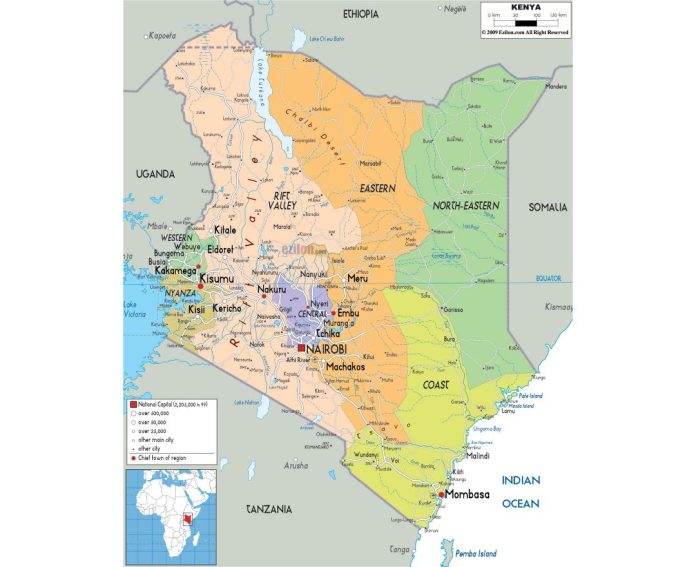
That is why the recent resolution by the Cabinet to dual the Rironi-Mau Summit road and extend the Standard Gauge Railway (SGR) from Naivasha to Bomet, Kisumu, and Malaba is an economic game-changer for the region.

The 475-kilometre extension project is expected to be transformative for the agricultural, tourism, and transport sectors in the region.

The government has earmarked the construction of Phases 2B and 2C of the railway, which is set to commence in 2025, with an estimated cost of Sh 648 billion.

Kenya Railways Corporation has already engaged a technical team to conduct an environmental and social impact study ahead of the SGR extension to Kisumu.

In the words of Treasury and Economic Planning Cabinet Secretary John Mbadi, the decision by successive regimes not to develop and invest in rail and road transport in Western Kenya was akin to economic sabotage.

Today, Your Excellency, I was speaking to one of my friends who is from Bungoma. He is returning to Nairobi and has to drive from Bungoma through Kakamega to Kisumu via Narok because the Nairobi-Nakuru highway is impassable.

Yet we borrowed money to build roads up to some villages. Some people take minutes to reach their homes, but an important road like the Nairobi-Nakuru highway was never made into a dual carriageway, so we also could reach our homes in good time.

Which was of more economic value? The SGR, for which we borrowed money, was a great idea, but did it have to terminate at Naivasha?

That railway should reach Malaba as originally intended. We must stabilise this economy and ensure that what should have been done gets done.

Mistakes were made, but they cannot be corrected in a day. Your Excellency, as I committed when I was sworn in, I will help you steady this economy. We will work hand in hand to improve the lives of Kenyans. Let other regions also benefit from the fruits of their taxes,” he said.

Nandi Senator Kiprotich Arap Cherargei wrote on his X handle, formerly Twitter: “The marginalisation of Western Kenya has finally come to an end with the beginning of the dualling of the Nairobi-Nakuru highway.

The traffic gridlock will soon be a thing of the past, with no more fuel and time wasted during such times, thanks to President Ruto’s administration. We need an equitable country in terms of development and representation.

This road development is expected to ease transport and travel from Nairobi through Nakuru to Western Kenya, a route that has long suffered from serious traffic congestion on weekends and during national holidays,” a recent Cabinet dispatch stated.

The 170-kilometre project will take 24 months to complete. Initially, the dualling of the road was delayed after President William Ruto cancelled a tender awarded to a consortium of French firms last year ahead of the Forum on China-Africa Cooperation (FOCAC) summit with Chinese President Xi Jinping.

The project will upgrade the road from a two-way single carriageway to a four-lane dual carriageway, significantly improving traffic flow. This road development is expected to ease transport and travel from Nairobi through Nakuru to Western Kenya, a route that has long suffered from serious traffic congestion on weekends and during national holidays,” the Cabinet dispatch read.

The Rironi-Mau Summit road is part of the Northern Corridor trade route, which runs from Mombasa to the East and Central African hinterlands.

Nakuru Governor Susan Kihika wrote on her Facebook page: “I am excited and gratified, at the same time, that the Cabinet has finally approved the dualling of the Rironi-Mau Summit Road.

I thank President William Ruto for this decision and for setting the commencement and completion dates for this key transport artery—not only for Nakuru County but also as a gateway to Western Kenya and the North Rift.

In addition to easing traffic jams along the Nairobi-Nakuru Highway, the dualling of the Rironi-Mau Summit Road will spur the growth of Nakuru City and attract investors to the county. Without a doubt, this is a significant and much-welcome development for us in Nakuru County at this early point in the year.

Kisumu Senator Prof. Tom Ojienda wrote on his X handle: “For far too long, our people have not had access to the full benefits of modern railway infrastructure, which is essential not only for lowering transport costs but also for boosting regional integration.

It is for this reason that I sought a statement on the status of the SGR extension to Kisumu. This project is of immense strategic importance to the region, with a promise to enhance trade, tourism, and economic growth for Kisumu and the greater Western Kenya region.”

Political analyst Mike Agwanda said that the two investments in road and rail transport would open Western Kenya to new economic dynamics and spur economic growth.

We will witness an economic boom in the region, and this will finally open up the area to new economic opportunities. This is a game-changer and a move in the right direction,” he said.